The Total Prog Excellence of Toto: “Hydra” in My Head! @toto99com @yesofficial

So, here it is, five days after the concert happened, and today I wake up at 5am with the chorus from Toto’s “Hydra” running through my head!

Now, that song totally has one of the coolest riffs ever.

And, clocking in at 7:32, it is proof of Toto’s total prog excellence.

This was the third song into the set they played at their recent concert here with Yes.

Check out my review of the Toto and Yes concert for more details (such as the Toto song that stuck in my head immediately that night and kept on running through it during the post-concert, celebratory midnight burger session).

But isn’t it amazing proof of the indomitable catchiness of Toto’s songwriting excellence that FIVE DAYS LATER one of their hook-laden masterpieces is functioning as my own personal alarm clock?!

Truly amazing… what a band…

By the way, old glories like “I’ll Supply the Love” and “Hydra” and all the rest sounded even better in concert than they do on the original album recordings. How many times does that happen?!? Wow…

Again, more proof of Toto’s total prog greatness. They are the real deal.

And the royal prog family of Yes did right to anoint them and share the bill with them on this amazing tour!

Another Progarchist’s View of the 1980’s

Oly Pattaya 3

I very much enjoyed reading Brad’s post about the 1980’s. It made me feel a bit nostalgic, and got me thinking about my music-related experiences of that decade. He and I both (and perhaps a few other Progarchists) came of age in the 80’s. I’m a few years older than him, me being born in June 1964, but this difference in age is minor, not generational. Despite this, our experiences of the 1980’s – both musically and otherwise – were significantly different. I’ll spend the next few paragraphs elaborating on the latter before proceeding to the former.

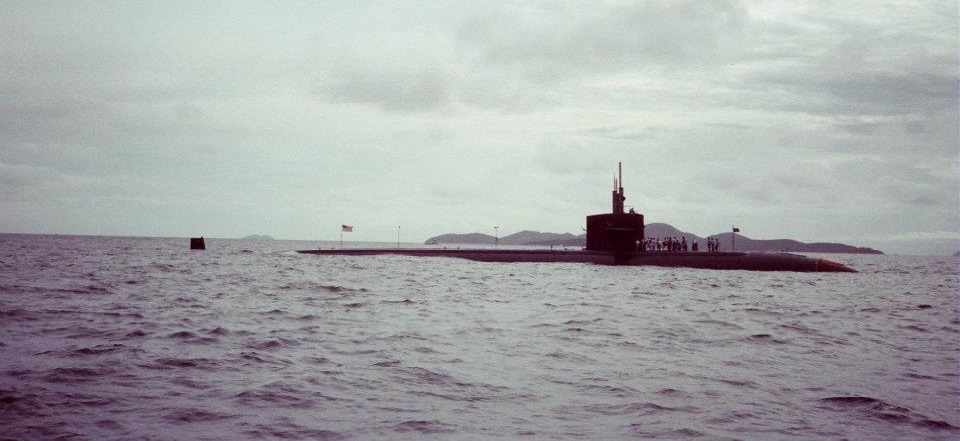
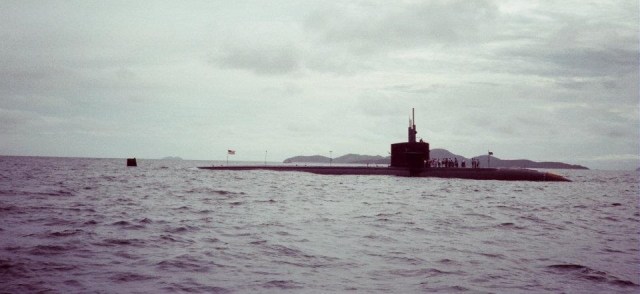
The picture above is of the USS Olympia (SSN 717) – my home for much of the 1980’s – at anchor in the Gulf of Thailand, July 1988. It represents what might be the single most consequential decision of my entire life entering the US Navy. At the time I graduated high school in 1982, I knew two things – that I wanted to go to college, and that I was nowhere near ready to do so. My high school years occurred in a rather permissive environment. I needed discipline, so I decided the military was the vehicle for that objective. After doing well on my entrance exams, I was offered both submarines and training in advanced electronics (sonar in particular) in exchange for six years of my life, namely 1982-1988. For me, these six years would define the decade.

In relation to the larger culture, submarine life can be defined almost as much by what you miss as what you witness. Among the things I missed while at sea were Michael Jackson’s hair catching on fire. I missed four straight Super Bowls, beginning with Super Bowl XVIII (18 for you non-Romans). In missing Super Bowl XVIII, I missed the most iconic TV commercial of the decade – the 1984 ad introducing the Apple Macintosh. I missed the explosion of the Space Shuttle Challenger – returning to port one day later. I missed Ferris Bueller’s Day Off in the theaters, but saw it underway months after it came out (I still remember, vividly, exploding with laughter at Cameron’s reaction from seeing the odometer). And for one, agonizing week in 1987, I awaited the results of the much-anticipated fight between Marvin Hagler and Sugar Ray Leonard – knowing from the calendar the fight had taken place, but having no idea who had won.

A few weeks before I entered the Navy (in November of 1982), I purchased my last vinyl album – Signals, by Rush, from Grapevine Records in Charlotte, NC. Just about six years later, a few weeks prior to separating from the Navy I purchased my first CD, Going for the One, by Yes, at Jelly Records and Tapes in Honolulu. In between those times, I bought a few hundred cassette tapes, and more than one Sony Walkman, in places ranging from Groton, Connecticut to Bangkok, Thailand.

What I’ve described above provides much of the explanation for the difference in my 1980’s relative to Brad’s. Because of the circumstances of life, my exposure to radio – and MTV, which exploded during the 1980’s – was limited. So too was my ability to become fully immersed in the 1980’s zeitgeist.

Musically, some of the bands that defined the decade for us are in common – U2, REM, and the Eurythmics, among others. Others I had heard, such as Tears for Fears, The Cure, Big Country, Midnight Oil, and Oingo Boingo (most notably, for me, in the 1980’s lowbrow classic, Back to School, starring Rodney Dangerfield).   We are of like minds on Wang Chung, loving their soundtrack from To Live and Die in LA, while utterly rejecting the rest of their output. Other well-known artists from that time that affect my perception of the 1980’s include The Police (and later, Sting), Peter Gabriel, and Steve Winwood. The latter two moved in a pop-oriented direction relative to their previous works, but it was high quality pop.

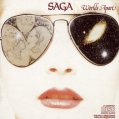
My last concert before entering the Navy was a Jethro Tull show in 1982. The opening act was Saga, touring in support of their album Worlds Apart. I loved this album, and while some debate whether it qualifies at prog, it was definitely an album a saga worlds apartprogger could love. They had a minor hit with the song On The Loose, which received a reasonable amount of rotation on MTV. The remainder of their 1980’s output fell short of this album, but later they produced the excellent concept album, Generation 13 (in 1995). And to this day, Germans love Saga – if not as much as David Hasselhoff ;).
Iron_Maiden_-_Piece_Of_MindIn the 1970’s and early 1980’s, heavy metal for me largely meant Black Sabbath. But while undergoing training in San Diego in 1983, I was introduced to Iron Maiden. First I was dragged to their concert at San Diego Sport Arena by a roommate. I wish I could remember his name now, because I forgot to thank him. Piece of Mind, and later, Powerslave, spent a significant amount of time in my Walkman during the decade. Not just content to write songs dwelling on typical heavy metal subject matter, Maiden covered the gamut of topics, from Greek mythology to the Battle of Britain, Alexander the Great, and the Napoleonic Wars. They even found time to honor us submariners, with Run Silent, Run Deep. I didn’t follow Maiden much after the 1980’s, but recently they returned strongly to my radar with their excellent new album, Book of Souls.

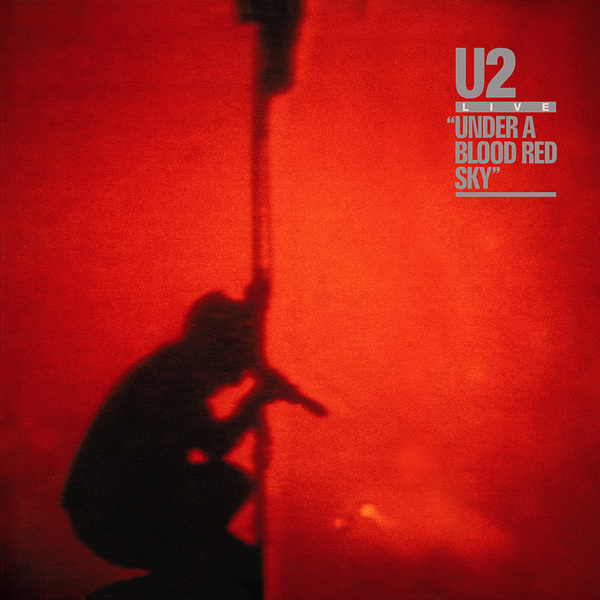
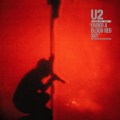
While it was the 1983 album War by which U2 first grabbed my attention, it was a live album released later that year – Under under a blood red skya Blood Red Sky – which cemented my fandom. This is one of the best live albums I’ve ever heard, capturing the band at their intense best. Even better, it was also captured on video, and clips appeared MTV enough that even in the limited opportunities to watch, I saw a number of them. I still listen to this album on occasion, and every once in a while search YouTube for a clip of the concert.
For 1984, one new album that slipped under many radars was Rodger Hodgson’s In The Eye of the Storm. His first solo effort after leaving Supertramp was a good one, and makes one wonder what would have transpired had he remained with his former band. In many ways, it sounded like a Supertramp album anyway, and it’s illustrative of the outsized influence he had in that band.

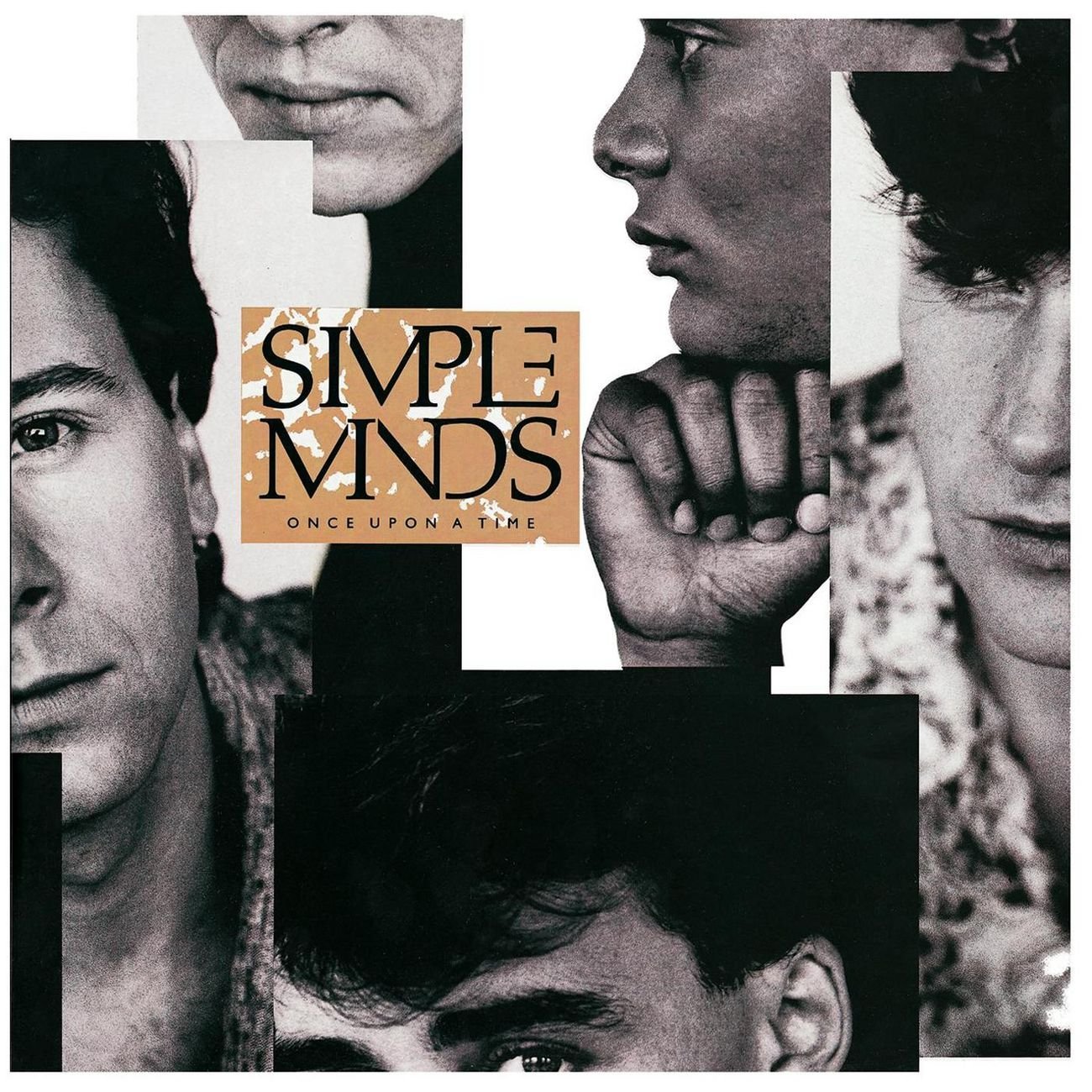
One of the most memorable albums for your truly came in late 1985, Once Upon a Time from Simple Minds. They had simple minds once upon a timestarted making noise in the U.S. earlier that year with their hit from The Breakfast Club soundtrack, Don’t You (Forget About Me). I liked the song, but hearing it on the radio was enough. On the other hand, after hearing a few songs from Once Upon a Time, I had to get this album. This album exemplifies the phrase “lush melodies.” It is simply fantastic from start to finish, every note is pitch perfect. It was in heavy rotation in the spring of 1986, as my boat made a home port change from Norfolk, VA (ugh), to Pearl Harbor, HI (oh yeah). As such, it never fails to bring back fond memories of those first few months in Hawaii. If you see me with an irrepressible smile while listening to this album, now you know why.

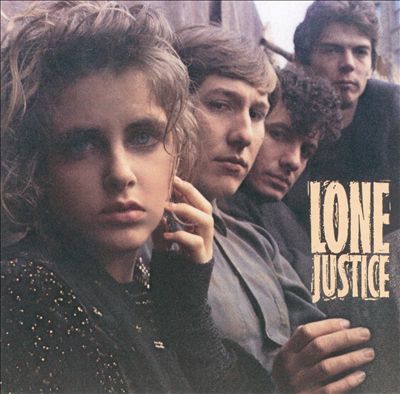
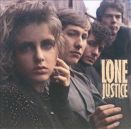
Another one of my favorite 1985 albums was by a band that no longer exists and didn’t make much of a dent in the universe – Lone Justice. The star attraction for these guys was lead singer Maria McKee. In addition to being quite nice to look at, Lone JusticeMcKee had an incredible voice and was a stellar vocalist. Their style was described as “cowpunk”, having some twangy country influences with an 80’s flair. This band didn’t last long, they only released two albums before disintegrating. I’ve always felt they were just a little ahead of their time. With the emergence of the alt-country movement and slight resurgence of southern rock in the 1990’s (most notably from Son Volt and the Drive-By Truckers), I think they would have fit that scene rather well. McKee did go on to have a moderately successful solo career. And notably, she wrote and sang what was by far the best song from the Pulp Fiction soundtrack.
An honorable mention from 1985 was John Mellencamp’s Scarecrow. I’m a bit “meh” on most of his stuff. This particular album, though, had a lot of well written songs.

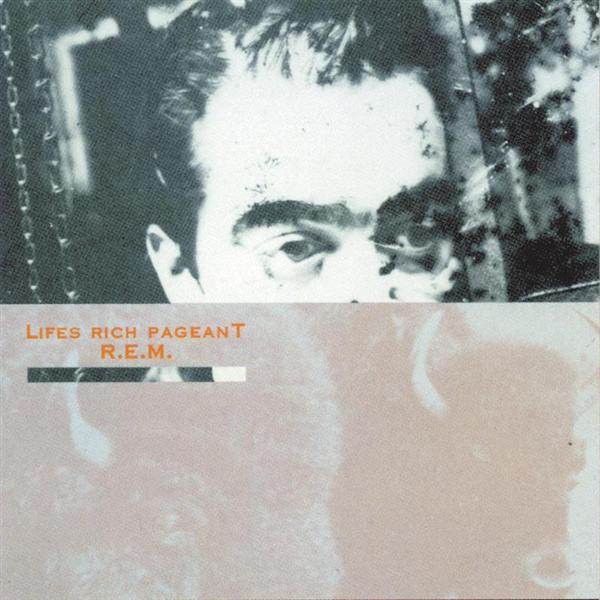
I purchased my first REM album in 1986, Life’s Rich Pageant. To this day, it remains my favorite work of theirs. I bought Life's Right Pageantalbums both preceding and following this effort, and have liked many of them at the time. But, like Brad, they didn’t stick with me, and I began to tire of Michael Stipe’s impenetrable, pretentious lyrics which either seemed to have no discernable meaning or were too clever by half. While this scene from the movie Walk Hard was lampooning Bob Dylan, it was Michael Stipe of whom I thought when I heard these hilariously pretentious (and meaningless) lyrics. Stuffed cabbage is the darling of the laundromat, indeed.

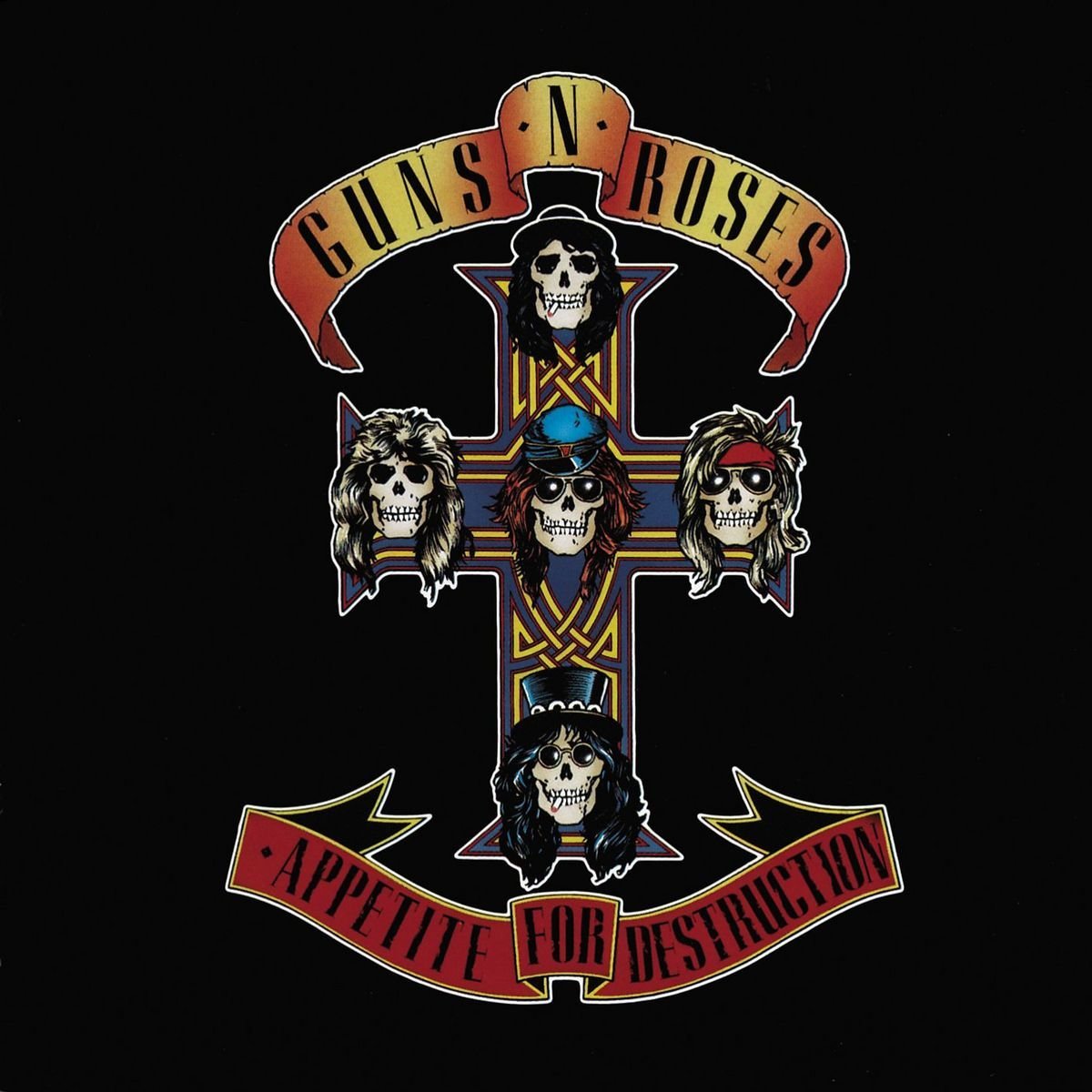
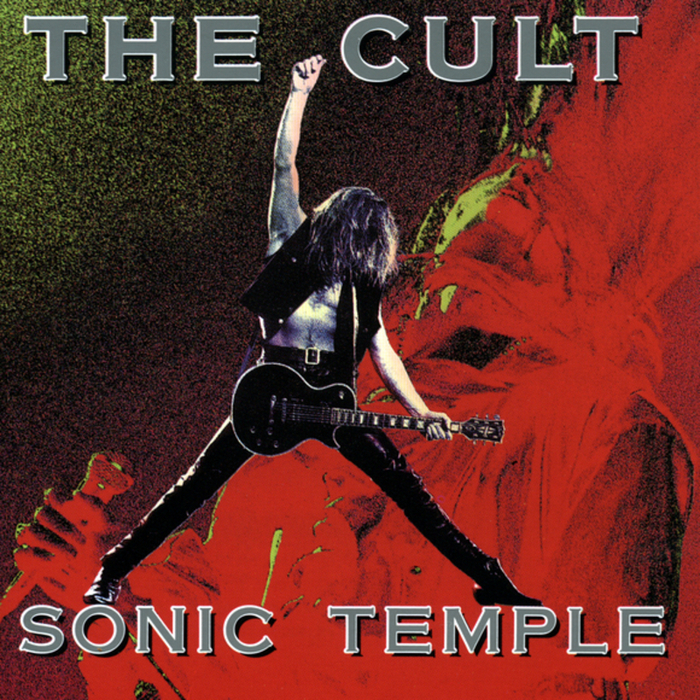
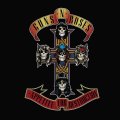
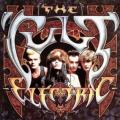
The year 1987 saw two significant releases that helped define my 1980’s. One of those was appetiteElectric, by The Cult, the other being Appetite for Destruction, by Guns N’ Roses. When I think of the prevailing musical trends of the 1980’s up until that time, I think of adjectives such as “dimensionally sparse” (to use Tony Kaye’s words). Much of it was highly melodic, but little of it had that wall of sound quality. To use a food analogy, much of popular music of the 1980’s was like a fine meal in a five-star French restaurant – gorgeous presentation and delightfully tasteful … but maybe it left you a bit hungry. In contrast, the raw, heavy, hard rock guitars of Electric and Appetite for Destruction were pure red meat, a sizzling 20 oz. ribeye. Electric has certainly aged better with me than Appetite, as has The Cult over Guns N’ Roses. The latter gave us not much more than an extremely dark nihilism, The_Cult-Electric_(album_cover)and the non-musical headlines made by meathead Axl Rose became tiresome very quickly. Still, they have a few entries on my iPhone, in particular within a playlist appropriately entitled Nietzsche’s Nihilism. The music of The Cult has, in my opinion, stood up much better to the test of time. And to round out the 1980’s they finished strongly with 1989’s Sonic Temple, which spent the better part of the 1990’s in heavy rotation for me.
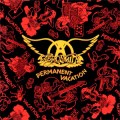
The return of harder (non-metal) rock was also confirmed that year as Aerosmith returned to Aerosmith_-_Permanent_Vacationprominence with Permanent Vacation. A better part of the decade had been spent in the wilderness, due in part to the shifting lineups with the departure of guitarists Joe Perry and Brad Whitford, and their eventual return. Add to that the continued proclivities of The Toxic Twins, Perry and Steven Tyler, and a an eventual band-wide stint in rehab. At the end, they came out of it pretty well, as Permanent Vacation was a pretty good album.
1988? I mention Talk Talk’s Spirit of Eden below, but I missed it at the time. For the rest of that year, there wasn’t much that grabbed my attention. Maybe it’s because my focus was elsewhere knowing of the impending transition back to civilian life. But when I look through the releases that year … there just isn’t much that jumps out at me. I did enjoy several songs off Copperhead Road by Southern/country rocker Steve Earle. I somewhat liked Living Colour’s debut album, Vivid (they would put on a great show the next year, opening up for the Rolling Stones in Raleigh, NC). And I thought Robert Plant’s Now and Zen was decent, although there are better albums in his solo catalog. The Smithereen’s Green Thoughts was a decent enough album, and it was in semi-heavy rotation in my car’s cassette player as I drove across the country in the fall of that year after separating from the Navy. But overall, I struggle to remember much about that year in a musical sense.
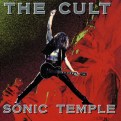
Sonic Temple

The final year of the 1980’s found me readjusting to civilian life and starting college. The previously mentioned Sonic Temple by The Cult was a favorite of mine that year. Trevor Rabin’s solo effort, Can’t Look Away was another one of my favorites of 1989.

Of course, I cannot mention the 1980’s without mentioning the prog of that decade, both what I heard and what I missed. For the latter, I missed the entire neo-prog movement which occurred on the other side of the Atlantic and which received little exposure in the U.S. It would be in the late 1990’s and the release of Edward Macan’s Rocking The Classics: English Progressive Rock and the Counterculture before I started catching up in earnest – beginning with Fish-era Marillion. I really missed the boat on Talk Talk’s latter day masterpiece, Spirit of Eden. I was on deployment in the Western Pacific when that album came out, and mentally getting prepared for my post-Navy life. And besides, to me (at that time), Talk Talk was just a synth-pop band, and thus I would have dismissed the album without a listen had I known of its release. It would not be until our current decade that I realized how utterly wrong my judgment was.

On the other hand, I missed no Rush release during the decade, snapping up every one of them at the first opportunity. I was also lucky enough to see my second Rush concert on the Grace Under Pressure Tour, in Hampton, Virginia. I was elated in the late summer of 1983, when in a barracks rec room in San Diego I read that Yes was coming back with a new album. And despite a significant change in musical direction, I was thrilled with 90125 when my eager ears finally got their first (of many) listens. I wasn’t as keen on Big Generator, but was pleasantly surprised with Jethro Tull’s Crest of a Knave which was released in the same year. And while Pink Floyd’s Momentary Lapse of Reason wasn’t as good as their classic 70’s output, it was still pretty good nonetheless. Anderson, Bruford, Wakeman, Howe put out a decent album in 1989, which later led to the Union album (which underwhelmed), but also to the Union Tour (which was incredible). The eponymous Emerson, Lake and Powell from 1986 wasn’t half bad, and I loved their interpretation of Holst’s Mars, The Bringer of War.

Among the other artists that made headlines during the decade were Van Halen, who ceased to be interesting to me when they became Van Hagar. Sammy Hagar produced some decent pop rock on his own during the early part of the decade, but his union with Van Halen was a case of the whole being less than the sum of its parts. Bruce Springsteen shot to superstardom during the 1980’s, but never did much for me. I never really bought his over-emoting when he sang, it just seemed too forced. Metallica emerged, but to this day I have never really “got” them. One star I was thankful to miss during the 80’s was Madonna, who spent the decade (and subsequent ones) setting a bad example for young girls everywhere.

Obviously, Brad’s list of 1980’s music is quite different from my own. I’m wondering how much different mine would have been had I not taken a huge detour on the way to college. I probably would have delved more into some of those acts, to be sure, if not as deeply as he did. There is one other factor – the prog factor. The 1970’s had less than six months left when the switch was flipped to activate the prog gene in my DNA. Thus, I spent a lot of time catching up, often times listening to stuff that was popular 10 years earlier. And as the decade ended, I was lamenting the fact that prog appeared almost, if not completely dead, as this was (and remains) my favorite of all types of music. Little did I know that the prog flame hadn’t quite died out. Within a few short years, a project by the U.S. Dept. of Defense, ARPANet, would be made available for public access and become known as the internet. Although not obvious at the time, this provided much needed fuel for the prog movement. And the rest, they say, is history.

Progarchy’s Best Commentator Ever: Indieun7

As we approach our third anniversary, it’s fun to look at the stats for the site.  And, one stat really sticks out.  One man has commented on nearly half of our posts, sometimes more than once.  Thanks, Indieun7!  We really appreciate the support.

And, here’s all we know of him.  He’s an American man of mystery.

Indieun7

Off the Rez.

I’m a mild-mannered Native-American writer who’s true-identity is the superhero known as “SUPA-NATIVE”!!!

Seriously though……….I’m a writer who writes WHAT he feels,WHEN he feels it!!! The one true thing I can guarantee You after reading my words,ARE…… it’s complete and total “Honesty”!!! For Honesty is NOT what You “think”……but what You “Feel”…….and in this case………ALSO……..what I “write”!!! ~Peace~

Review: TELERGY – Hypatia

Telergy - Hypatia

According to various online source, the definition of the term “telergy” is “a hypothetical action of one person’s thought and desire upon the brain of another person by the transmission of some unknown form of energy.” Somehow this very description feels very fitting with the subject of this review.

I’m always on the lookout for new prog bands releasing new albums, so I was quite pleased when I received Telergy’s third studio album “Hypatia” from the good folks at Prog Sphere Promotions. I was even happier when I started listening and found out that I loved the album. I’ll go more into detail on the music itself in a little bit, but first, some history.

Robert McClung is a New Hampshire based composer, producer, and multi-instrumentalist with a long history in the music business. In 2009 he decided to abandon the world of popular music and dedicate himself full time to the music he truly loved – instrumental, symphonic, progressive rock. He wanted to create a project that could feature amazing artists from all over the world and provide the framework for the epic, classically inspired music he longed to create, and thus, Telergy was born.

Over the last three albums (including the newest release “Hypatia”), Telergy has featured performers from groups such as Pink Floyd, Jethro Tull, Yes, Kansas, Queensrӱche, Trans Siberian Orchestra, Living Colour, Symphony X, Kamelot, Rhapsody of Fire, Savatage, Whitesnake, Twisted Sister, Night Ranger, Porcupine Tree, Hawkwind, Spock’s Beard and more, as well as musicians from some of the world’s finest orchestras and opera companies.

Now that I’ve bored you all to the verge of leaving this page forever, let’s get back to music.

“Hypatia” is divided into 17 tracks, from which the odd numbers are the spoken-word tracks which actually tell the story that inspired this record, and that is Hypatia – the mathematician and philosopher of Alexandria, who was the daughter of the mathematician Theon Alexandricus. The most obvious thing about this record is, as mentioned above, the presence of guest contributors who helped Robert McClung present the work: Chris Caffery, Durga McBroom-Hudson, Bryan Hicks, Mike LePond, Oliver Holzwarth, David Ragsdale, Anna Phoebe, Oliver Palotai, to name but a few.

The whole album exudes an inspiring atmosphere, and symphonic harmonies go in favour to that. Unlike previous two albums, “Hypatia” moves away from regular song structures in exchange for a more spontaneous theatrical flow; the musical ideas feel structured episodically. Perhaps that has a lot to do with how the whole album is conceptualised and adjusted to story-telling. There are nine “scenes,” spoken-word tracks that help to understand the story of “Hypatia.” These scenes are intersected with “standard” songs that musically follow up. Fusion of traditional progressive metal, ambient, and classical music really shines here, and this eclectic approach to instrumentation and style feels consistently fresh and engaging.

“Hypatia” has so many brilliant moments that deserve to be heard by any self-respecting fan of modern prog. Telergy have once again delivered a complex, bombastic, no-holds-barred progressive rock epic with “Hypatia.” It will be really interesting to hear what comes next.

Track listing:

1. Scene, No.1 (0:38)
2. Astronomer (7:16)
3. Scene, No.2 (0:37)
4. Philosopher (11:44)
5. Scene, No.3 (0:39)
6. Mathematician (4:24)
7. Scene, No.4 (0:25)
8. Teacher (6:57)
9. Scene, No.5 (0:29)
10. The Burning of the Library of Alexandria (11:37)
11. Scene, No.6 (0:39)
12. Scapegoat (2:55)
13. Scene, No.7 (1:05)
14. Murder (9:30)
15. Scene, No.8 (1:04)
16. Martyr (3:12)
17. Scene, No.9 (0:27)

Line-up:

Robert McClung – guitar, bass, violin, viola, mandolin, piano, organ, keyboards, flute, balalaika, ukulele, sitar, lap steel, bodhran, percussion, tenor and baritone vocals, mob vocals

With:

Chris Caffery (Savatage, Trans-Siberian Orchestra)
Durga McBroom-Hudson (Pink Floyd, Blue Pearl) – Hypatia
Bryan Hicks (Trans-Siberian Orchestra) – Theon
Corey Glover (Living Colour) – Synesius
Blake Carpenter (The Minstrel’s Ghost, Corvus Stone) – Cyril
Peter Kelley – Peter the Reader
Almus Kenter – The Professor
Chris Bonito – drums
Kyle Wybranowski – drums
Mike LePond (Symphony X, Silent Assasins) / bass
Oliver Holzwarth (Rhapsody of Fire, Blind Guardian) – bass
Kristen Miller – cello
Adam Nunes – cello
Tim Nunes – violin, viola
David Ragsdale (Kansas) – violin
Anna Phoebe (Jethro Tull, Trans-Siberian Orchstra) – violin
Scott Page (Pink Floyd, Toto, Supertramp) – saxophone
Parker Lundgren (Queensryche) – guitar
Chris Caffery (Savatage, Trans-Siberian Orchestra) – guitar
Angus Clark (Kitaro, Trans-Siberian Orchestra) – guitar
Connor Wybranowski – guitar
Oliver Wakeman (Yes) – keyboards
Oliver Palotai (Kamelot) – keyboards
Mattan Klein – flute
Scott Page – saxophone
Jaimee Joroff – harp
Jennifer Lanter – French horn
John Halloran – clarinet
Barbara Lafitte – oboe
Mac Ritchey (Esthema) – oud
Mike Dolan – mob vocals
Tim Clark – mob vocals
Gary Wheaton – mob vocals
Laura Sanscartier – soprano vocals
Tamara Mcshea – soprano vocals
Stephanie Slabon – soprano vocals
Angeliki Theoharris – mezzo vocals
Joshua Collier – tenor vocals

https://www.facebook.com/telergymusic

http://www.telergymusic.com

Metal Mondays: Iron Maiden’s latest arrives in the mail! DELUXE BOOK EDITION

Iron Maiden for the win!
The next best thing to a vinyl gatefold album. Iron Maiden for the win!

Well well well… look what arrived in the mail just in time for METAL MONDAYS here at Progarchy… Iron Maiden’s latest, The Book of Souls, which is 2 CDs full of prog-length metal goodness!

If you’re going to buy the album, this is the package to get. It’s the deluxe edition that comes with the lyrics, pictures, and liner notes all nicely laid out in multiple pages in a hardcover book that is the size of a typical paperback book. It will look great on the bookshelf next to Samuel Taylor Coleridge!

If we can’t have gatefold vinyl on a regular basis anymore (those were the days!), then I say that this is the way to go. Buy a digital download, sure, but follow through by getting a physical copy that is the right size for your hands to peruse at glorious leisure… just like this. Nicely done, dudes!

New Spock’s Beard and Flying Colors

This just in! 2 Amazing Releases!

Spock’s Beard Releases “Best Of” Collection with a NEW track written by Neal Morse featuring all members of Spock’s past and present!
  Legendary Californian progressive-rockers Spock’s Beard are set to release ‘The First Twenty Years’ collection on November 20, 2015. Arriving as a special 2CD & DVD package, it includes a selection of the best tracks from their entire career, as well as a brand new 19-minute long track titled ‘Falling For Forever’ that features every member of Spock’s Beard past and present performing, including Neal Morse (who also wrote the track), Nick D’Virgilio & current vocalist Ted Leonard. All the tracks have also been re-mastered by long-term collaborator Rich Mouser, and the DVD portion of the release will include rare footage of the band in the 90’s, featuring vintage live performances from Progfest ’97 as well as the band rehearsing and recording “The Kindness of Strangers” album.
Pre-orders begin Now!
And..

In 2014, on the 8th show of their fall tour, Flying Colors took to the stage at Switzerland’s storied Z7 venue, and on film, captured a breathtaking live performance. With their critically acclaimed sophomore album Second Nature out for only a week, the concert recorded an exceptional rarity: band and audience, together, discovering an album for the first time. Release date November 13, 2015

We have bundled these 2 great releases in a special package and the first 200 people to pre-order this bundle will receive an exclusive signed frameable graphic signed by ALL seven members of Spock’s Beard past and present!
 
Pre-Order NOW!!!
Don’t miss your chance to get these 2 great releases at a great price and the free signed rare collectors item!
Get your Bundle HERE

Interview with UCAN2

Ucan2_band1

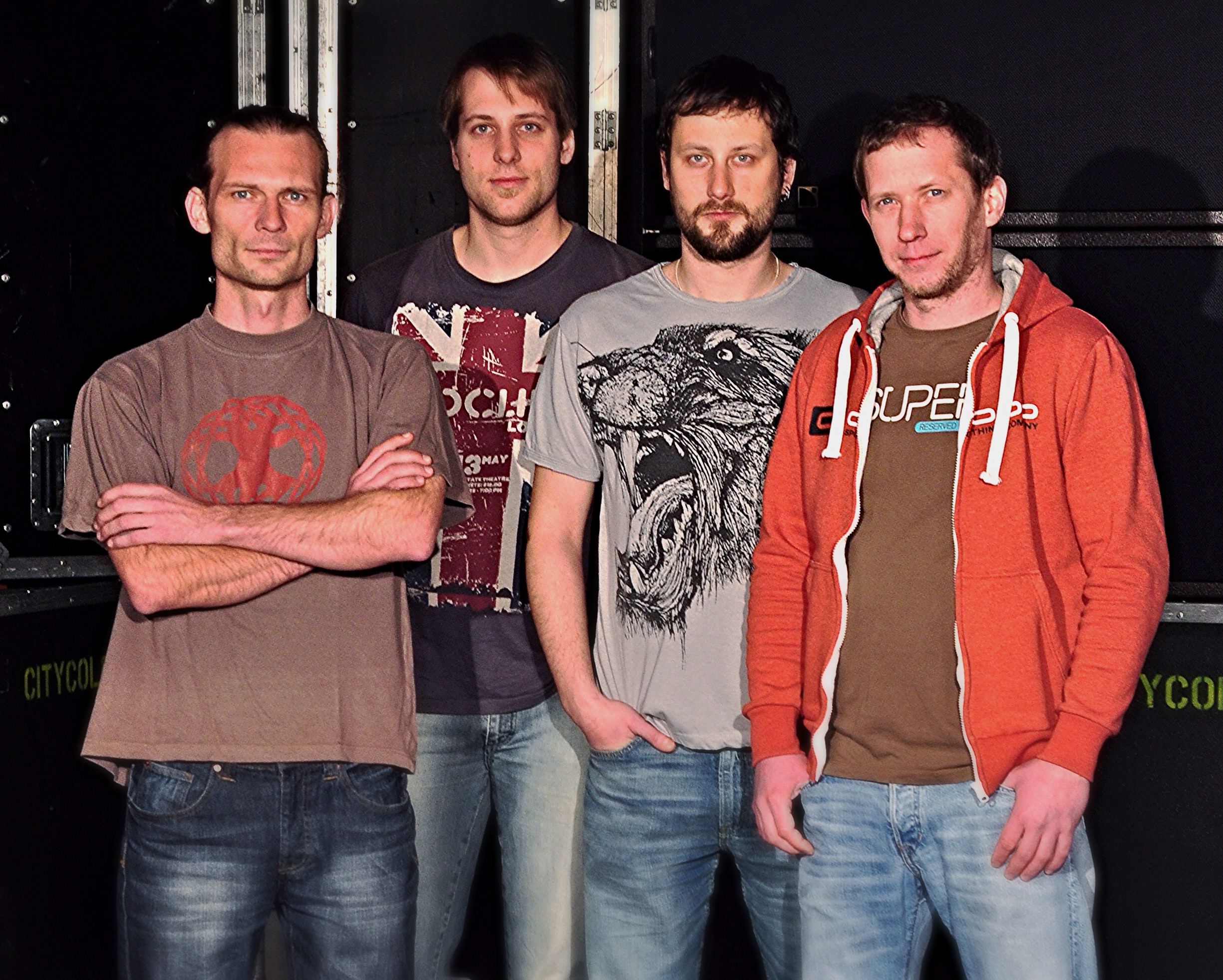
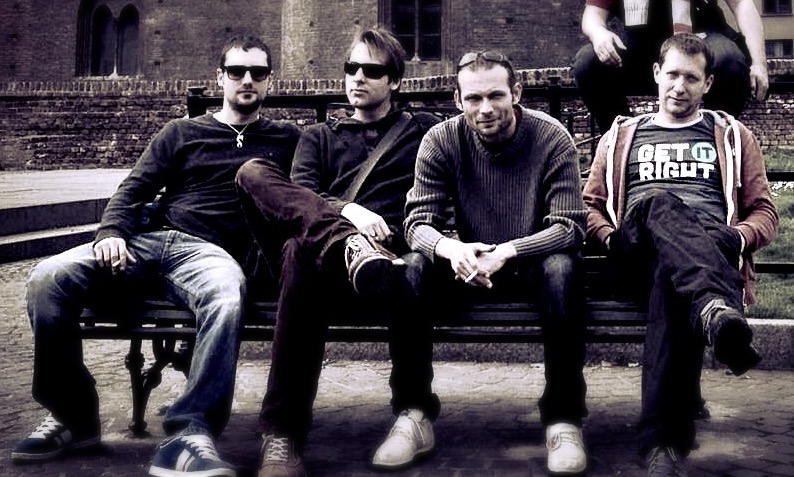
Instrumental rock band from Brno in Czech Republic, Ucan2 have recently put out their new single titled “Pompeii.” Check out what the band had to say about it, among other things.

How do you feel now that “Pompeii” has been unleashed?

We are so amazed for all the reactions we got from all over the world, it’s just amazing! We didn’t expect that at all, thank you everybody for downloading and for listening! The numbers speak for themselves, just great!

Are you satisfied with feedback you received so far for the new single?

YES, very satisfied! Lots of new fans and a lot of questions which we answered concerning gigs all over the world. We promise that we’ll do our best to fulfill our fans’ wishes to perform for them live in their city.

What was recording process like for “Pompeii”?

We had the song quite well prepared and figured out so it was just about going to the studio. As usual we recorded the drum track and then layed down the bass and guitars. Everything was recorded on Positive Grid app, great mature sound and no time wasted on setting up the mics in the studio, then we just did the master mix in the studio. We played a bit with the pans of the guitars and some sounds thats true, so we made 6 different versions and then just sat down and picked the one closest to what we felt is truly us.

How do you feel about the single’s production?

We did it all by ourselves so we had full control of the out come but the promoters did a great job, it just couldn’t do any better.

What inspired “Pompeii”? Any references to Pink Floyd?

No, we didn’t even thought of Pink Floyd when naming the song. It was about the feeling we had inside of us when we first played the whole song through, and it was definitely a crazy/burning feeling in the chest. So we looked for the right word and Pompeii came as the best one.

Ucan2_band2

How do you feel “Pompeii” differs musically from the previous work?

Previously, Petr wrote all the music and the rest of the band did some tweaks here and there so it would be fun for the whole band to play, but this time, on the single we started writting together and more thought out the little details which make the song special, the Indian part in the middle with the 12 string acoustic was obvious right from the start.

Are you working on the album no. 2, when can we expect to see it out?

We are waiting for the right time, we are really not in a hurry, all the preparations just take time and we want it to be BIG next year. At this moment we are leaving Pompeii do its work for the band, we have been introduced to the world of music by this song and there is still our 1st record which we would like the new fans to discover and get used to our work.

What does the future hold for Ucan2?

We have in plan to record two more records named after the rest of two elements left, which will close one chapter of our band’s life. Other than that we think the most important thing nowadays is to play gigs all around Europe since we got so many invitations we would have to quit our work to perform everywhere. So we’ll do our best. We all love travelling and meeting new people and fans. We love to go site seeing in every city before we perform there just to feel the energy of the city and learn a little bit of the culture. Our biggest plan is to fly to Japan.

Is there anything else you would like to add?

Yeah, we are having a great time and we enjoy every little bit of it.

“Pompeii” is now available from Bandcamp. Check out the band on Facebook here.

Interview with THEREIN

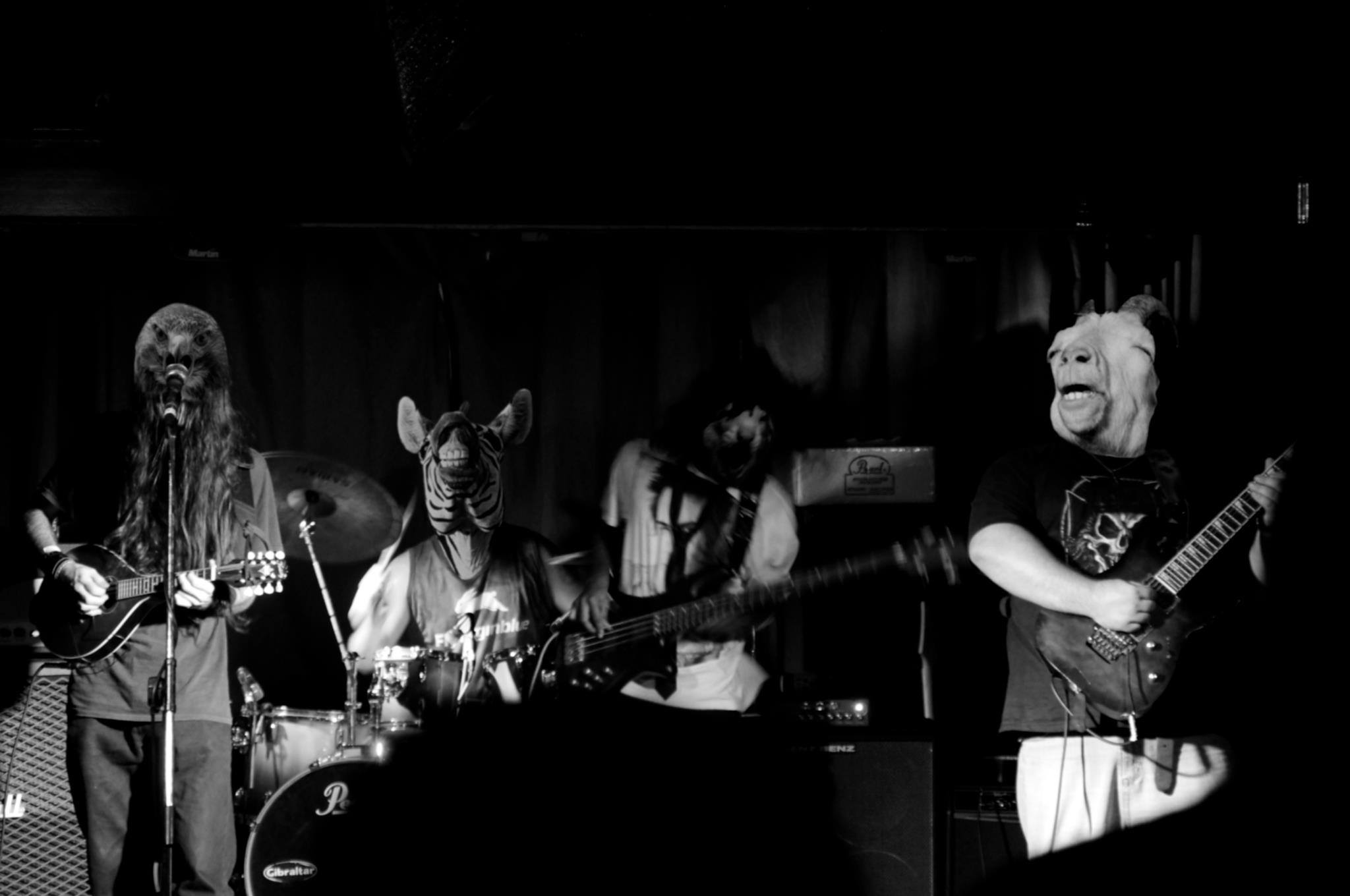
Therein

Brisbane prog metallers, Therein recently re-released their debut album “Nobelium.” Guitarist, singer and mandolinist Cameron Whelan answered our questions.

How did you guys come together in Therein?

I moved to Brisbane to recruit people for Therein, and I was introduced to Kned (drums) through a mutual friend. Then I met our old bassist Krishan at uni. Shortly after, Ryan (guitar) joined as he happened to be studying with Kned and was keen on some Prog. It all came together rather easily come to think of it.

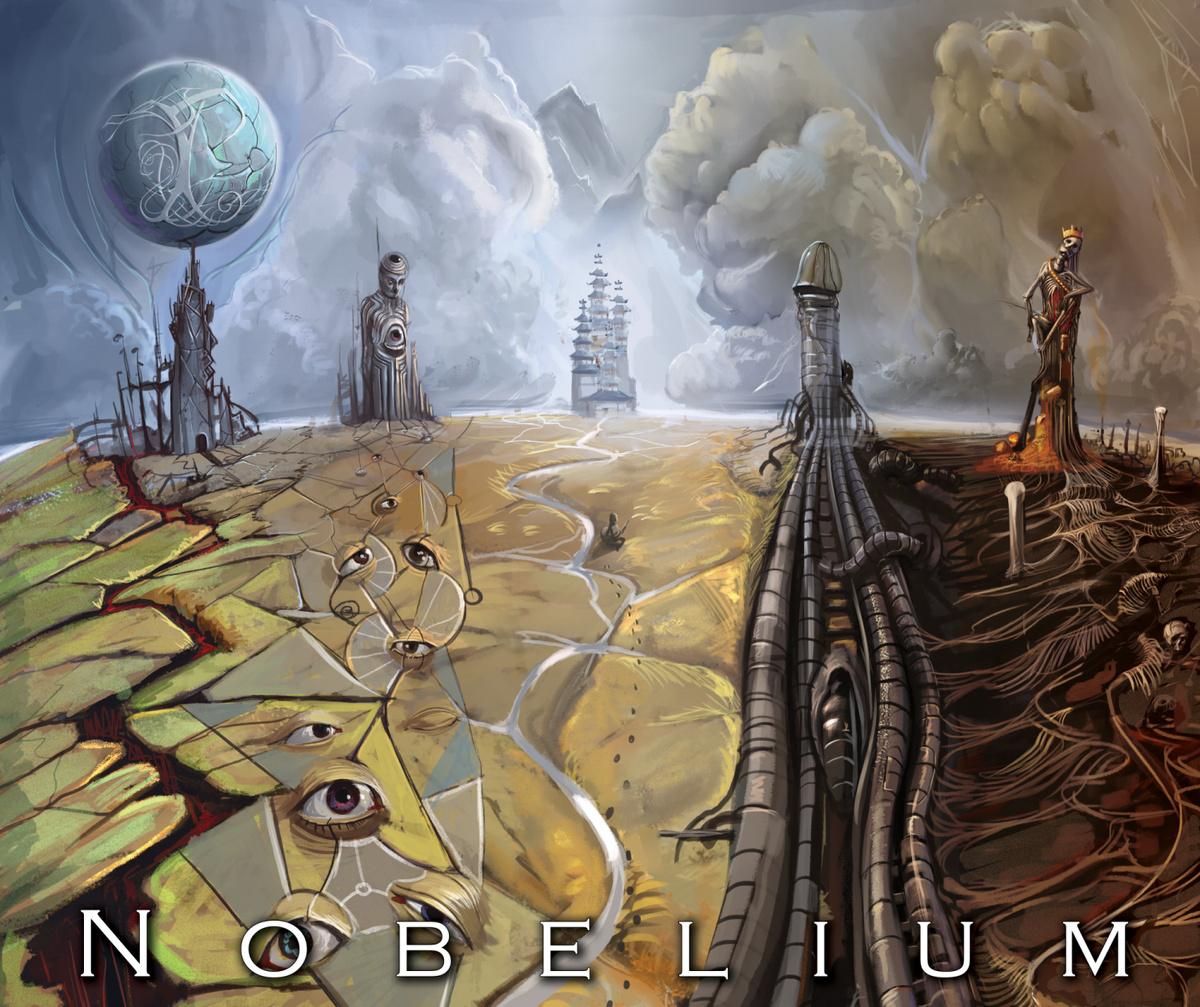
Your debut album is titled “Nobelium.” What does its name mean, and how does it reflect on the material?

It’s sort of a silly title, but it stuck. Nobelium is a synthetic element, and it’s chemical properties are not entirely known yet. But it definitely exists. It also sounds like an imaginary place. I’m not sure exactly how it came to be, but I felt it was an appropriate title when Nobelium first came together. We had just finished our first collection of recordings and it felt complete, it made sense. But it was something new for us, we didn’t fully understand it.

“Nobelium” was recently reissued . I suppose that there were quite a few outtakes from the original recording, is that right?

Actually, no! The extra tracks were recorded during the years after it’s initial release, but we felt that they belonged on Nobelium.

Nobelium

What are some of the themes you explore in your lyrics?

Quite a few things. On Nobelium we have (in tracklist order) – Greed, introspection and self-repair, optimism, debauchery, sadness, horror and possession, fishing and fighting, and culture. So human things mostly, though it really depends on the song. One of our new songs is about a meteorite!

What are you referring to when saying “Every changing of habit makes a change in the machine” in “Introspect”?

It’s a quote from George Gurdjieff. I don’t follow his teachings or anything, but he had some good ideas. It’s the last line of the song, everything before it was pointing to looking inwards and realizing you are the cause of your own problems. So in this context the line is saying that for every small change you make to fix it, you make a change in yourself as a person.

Are you satisfied with how “Nobelium” turned out? Do you believe in improvement?

Yes, for both questions. Nobelium was our first real crack at recorded work. I think it turned out pretty well for the time, but we’ve improved significantly since then. As long as we’re working, there will always be room for improvement.

Therein logo

I guess that “Samual’s Reel” is a showcase of your Tom Waits influences. What is your way in general to maintain a good balance between employment of acoustic and electric guitars in a song?

Firstly I just need to point out that Tom Waits has nothing to do with Samual’s Reel. We’ve had this comparison once before. It’s very much rooted in Celtic music and Tom Waits is… well, Tom Waits. Experimental Jazzy-Blues-Something… I’m not sure what to call his music. But it’s pretty great, even if it isn’t Irish!

But, to answer your question. I think a good way to maintain that balance is to identify which guitar is the lead, and build the other guitar parts around that. In the case of Samual’s Reel, the acoustic guitar took the lead. So the electric parts bounced off of that to draw out some of the rhythmic and melodic elements.

What do you guys do in your spare time?

Drink beer and play music… Sounds awfully similar to what happens during our working hours too.

What is the last concert you attended?

WACKEN.
Oh, and Plini.

To people who don’t know about Therein, what would be your message in order to get their attention?

Listen up!

You can buy “Nobelium” from Bandcamp, and like the band on Facebook.

Concert Review: Yes & Toto (Hard Rock Vancouver, Sept 12, 2015) @yesofficial @toto99com

Yes played a true fan's dream concert with a set list stacked with both obscure delights and time -tested classic favorites. Here you can see them perfectly executing a stunning live version of one of Yes' greatest but least appreciated songs:
Yes played a true fan’s dream concert with a set list stacked with both obscure delights and time-tested classic favorites. Here you can see them perfectly executing a stunning live version of one of Yes’ greatest but least appreciated songs: “Tempus Fugit.” Props to Billy Sherwood for tying it all together seamlessly with that genius Chris Squire signature bass line. And all the vocals were uniformly superb in an expertly balanced and crystal-clear live mix.

It was a mind-blowing two concerts in one.

Toto took the stage promptly at 8pm and then played a perfectly-paced, flawlessly professional 90-minute set. Then after an intermission for the equipment on stage to be switched out and in, and for concertgoers to have a bathroom break and buy more libations at the bar, Yes began their own 90-minute set with a classy tribute to Chris Squire at 10pm: a single spotlight on his bass, a video tribute in the background, and “Onward” played over the speakers.

I hadn’t read about the tour, so I was unprepared for the delightful surprises that ensued. Yes took the stage and proceeded to fill their set with a bunch of obscure songs that only true fans would know about and be thrilled to hear! It was pure Yes heaven, not only for that reason, but also because I have never heard a better sound mix at a Yes concert: everything was clean and crisp and detailed and pure sonic perfection. Toto’s mix was a little muddy with vocals and keyboards often being somewhat lost, which I have heard even at shows by Yes in the past, but this time Yes’s mix was everything I could ever ask for and then some: it was even better than listening to an album version!

And how many times can you say that about a band? Usually not. But on this night Yes proved to me that they are in a whole musical class by themselves, with definitive and irrefutable sonic proof. Even the Steven Wilson and Rush concerts I saw in the summer didn’t sound this good.

Despite some audience members being baffled (obviously the Toto-only fans) by the set list, once the band played “Owner of a Lonely Heart,” the crowd again rushed the stage and started back up with the frenzied audience participation that had marked the Toto set. Those antics from the previous two hours had been expertly stoked, thanks to Toto’s expert intuition for fulfilling every audience craving and for executing truly genius live arrangements designed to give the crowd maximum enjoyment.

From this “Lonely Heart” point on, Yes played more of their classic “greatest hits” and basked in the intense love from an appreciative audience. You know, I must note that the audience was having so much fun at this prog double bill that the joy echoed even in the banter in the restroom at intermission. As the washroom jammed up with a massive crowd (the mature crowd obviously had treated themselves to multiple rounds at the bar that they never could have afforded in their younger days), concertgoers loudly traded, above the din of the water closet, their respective happy memories of Yes concerts they had seen in the past. It was proggy locker-room camaraderie at its finest and it was totally hilarious. And the concert was still only half over!

Blame Toto for it, I guess, because they had whipped the audience into such a delirious state of prog bliss. Radio hits like “Rosanna” and “Africa” were extended into concert-tailored specialities with extra, prog-length guitar and keyboard solos and audience participation-singing shenanigans.

It’s hard to pick a favorite song from the Toto set, because every single song was live perfection, but personal highlights for me included the chance to hear “Great Expectations” live, as well as “Orphan”, off of Toto’s XIV — easily, but surprisingly, one of the very best albums of 2015 (and much better than Yes’s recent Heaven and Earth which sounds shockingly unfinished and I have to blame the producer for that failure). “I’ll Supply the Love” also blew me away live.

In fact, “Running Out of Time,” which Toto opened with, was so blisteringly perfect and infectious the I could not get it out of my mind for the whole night after the concert ended. I couldn’t stop singing it during post-concert burgers! Which just goes to show you how Toto has achieved total Jedi mastery of sonic hooks; somehow, I think those amazing vocal harmonies must be part of the method by which they can pull off such mind tricks.

I was stunned by how perfect the vocals sounded live. These guys are totally pro and settle for nothing less than the heights of musicianship. It is very satisfying to see such standards upheld in today’s live venues and I am proud to be part of the Toto generation that carries this torch.

And Billy Sherwood really impressed me with the undeniable vitality he brought to Yes’s sound, as his vocals blended in perfectly with everything and his bass skills were an exquisite match for the virtuosity of Steve Howe.

As I listened to Steve, I had to say to myself that this guy is the greatest guitarist on the planet; he sounds like he has gotten better with age, if that makes any sense. And it does. Perfect sense. His playing is so tasteful and not a single note is wasted or ever excessive, which is quite the realization once you remember the conventional knock against prog.

Geoff Downes totally shone at the keyboards and laced everything together with his nimble playing. Every note could be heard with such clarity that it was a real treat. To hear such music on a record makes your jaw drop, but to hear it so effortlessly reproduced live without missing a beat is unbelievable.

But what I liked best was how Geoff even selected a bunch of unique keyboard sounds and timbres that were not in the original recordings but that were truly surprising and delightful live, making you wonder if you have just heard the greatest version of that Yes song ever! Probably. And you will never be able to hear it again! Wah. But what a happy memory!

Alan White, what can I say, the dude is amazing. He is so humble and does his thing without showing off but any musician with a brain knows just how essential what he does is. I envy the lucky fan that Jon Davison gave one of Alan’s drumsticks to. Alan makes me want to applaud his every drum fill, but I contain myself so that the other audience members can hear the show.

And finally we should note what a bundle of positive energy Jon Davison is, making him the perfect guy to lead up front. When he flashes that peace sign in “Your Move,” you cannot stop from smiling because it’s 100% genuine and no pose. With the rest of us true believers in the spiritual positivity of Yes, it is only something to which I can say, “YES!” Yes, Jon, you are awesome, and thank you for keeping Yes to be the greatest band ever (to quote Toto).

And on that note, total thumbs up to Toto for being such unrestrained Yes fans. They kept praising Yes throughout their set, which shows you what a class act they are. And those were not empty words: what better tribute can be paid to your lifelong inspiration, other than to make your own music that is perfect in its integrity and sealed with the highest standards of musicality?

Steve Lukather (guitar), David Paich (keys), Steve Porcaro (keys), Joseph Williams (vox), David Hungate (bass), Shannon Forrest (drums), you guys are incredible, and your integration of Mabvuto Carpenter (vox), Lenny Castro (perc), and Jenny Douglas-Foote (vox) into the show is totally pro. I admire your intense dedication to giving people a live experience that can never be matched by any audio reproduction. You may consider your musical flights to be lesser in comparison to Yes, but all I can say is, hey, “little wing,” fly on! (Yes, Steve, our minds are still blown by your solo.)

If you were lucky enough to catch this tour, count your blessings. For me, it was a rare and special occasion the likes of which we may never see again. Just last year, I was taking for granted meeting Chris Squire at a concert. Now, today, I look at that photo and I know that you never know what tomorrow may bring. So, carpe diem and savor those notes while you can. Long live prog!

In a match made in heaven, Yes and Toto closed their 2015 Summer Tour with a flawless show in Vancouver, Canada.
A match made in prog heaven, Yes and Toto closed their 2015 Summer Tour with a flawless show in Vancouver, Canada.

TOTO SET LIST:
Running Out of Time
I’ll Supply the Love
Hydra
Hold the Line
Afraid of Love
Holy War
Pamela
Instrumental (Steve Porcaro duet with Lenny Castro)
Keyboard Solo (David Paich)
Great Expectations
Without Your Love
Little Wing
On the Run / Goodbye Elenore
Orphan
Rosanna
Africa

YES SET LIST:
Onward (song played over speakers, with video as a tribute to Chris Squire)
Don’t Kill the Whale
Tempus Fugit
America
Going for the One
Time and a Word
Siberian Khatru
Owner of a Lonely Heart
Roundabout
Starship Trooper