|
Alfahanne Blod Eld Alfa Dark Essence Records 11 September 2015 |
| With a mix of Black Metal with Classic Rock and Punk, and topped off with some New Wave and Goth influences, Alfahanne has created a style of music that is powerful and beautiful, yet ugly at the same time. With members from 90’s Black Metal bands such as Vinterland and Maze of Torment, Alfahanne formed in 2010 and released their debut album, “Alfapokalyps” in 2014. The debut got a great response, and the band followed up with live appearances at festivals like Inferno, Blastfest, Mörkaste Småland and Incineration.
“Blod Eld Alfa” buileds on the style Alfahanne started on “Alfapokalyps”, with an overall sound that combines a unique mix of the dark and grim atmospheres of Black Metal, the attitude and energy of Punk and Classic Rock and the melodies and feeling of 80’s New Wave and Goth. The band have been able to attract the services of Kvelertak’s Erlend Hjelvik, Shining’s Niklas Kvarforth, Spellgoth (Horna, Baptism) and Nattfursth (Sorhin) as guest vocalists, on one song each. With Alfahanne, there is one way in and no way out! SELLING POINTS TRACKLIST Band website: www.facebook.com/alfahanneofficial |
|
RochaNews: Receiver

THE RECEIVER, NYLON.COM LAUNCH “TRANSIT” MUSIC VIDEO New album “All Burn” out now on Kscope |
|
COLUMBUS, Ohio – Midwest symphonic dream-prog duo, The Receiver, has teamed up with Nylon.com to launch a music video for the track “Transit,” taken from the band’s recently released full-length, All Burn, out now on Kscope. The video was shot in Beirut by director Youssef Nassar, a Lebanese-born Canadian responsible for the acclaimed promo for Steven Wilson’s recent single “Perfect Life.” Stream the new “Transit” music video exclusively at: http://www.nylon.com/articles/video-premiere-the-receiver-transit. “The music is simply superb!” said Nassar of “Transit.” “Very dreamy, filled with layers of sounds and emotions and I did my best capturing that feel in its video. I think the video has a strong concept behind it, showing a certain type of a fantasy happening, in an abstract and emotional way.” The band commented: “‘Transit’ was written during the beginning of a new relationship. It expresses the emotional highs associated with falling in love, and makes a promise of commitment, regardless of whatever change or loss may come. Youssef played well off of these themes. As the lyrics speak of undying love and unwavering commitment, the video expresses the heartache, tension, and feelings of loss that we all experience.” Comprised of brothers Casey (vocals, synths/keyboards, bass) and Jesse Cooper (drums & vocals), the siblings call All Burn their “best material to date which focuses on a dreamier aesthetic than our earlier work.” All Burn, the band’s Kscope debut, is also the first self-produced Receiver album, with mixing handled by Danny Kalb (Beck, Ben Harper, Foster the People, Karen O) and mastering by Brian Lucey (Sigur Ros, The Shins, The Black Keys, Arctic Monkeys). All Burn can be purchased now via iTunes at: http://smarturl.it/TR_AllBurn_Download and Amazon.com at: http://www.amazon.com/All-Burn-The-Receiver/dp/B00XIQNL36.
1. Drift 2. Transit 3. To Battle an Island 4. Collector 5. Dark Matter 6. April Blades 7. The Summit 8. Let It Dry 9. All Burn 10. How to be Young 11. These Days
“a majestic, expansive record filled with electronic flourishes, soaring vocals and melody to spare.” – AllMusic.com “Every element of [‘All Burn’] is pristine, poignant, and poised, basking its forlorn melodies and harmonies in glistening regality.” – Big Takeover “On their third album, ‘All Burn,’ brothers Casey and Jesse Cooper set complex, bright melodies and heartbeat-pulsing rhythms adrift.” – NPR.org Formed in 2005 at The Ohio State University, The Receiver released its debut album, Decades, in 2006 on the New York-based, Stunning Models On Display Records. The duo returned with the sophomore offering, Length of Arms, in 2009 through Vital Music Records. The Receiver is an incredibly active touring partnership, having played throughout North America and sharing the stage with notable acts such as St. Vincent, Midlake, The Album Leaf, Mono, Dawes, Royal Canoe, Maserati, Telefon Tel Aviv, Mr. Gnome and Operators to name a few, as well as performing at 2014’s CMJ Festival in New York. The brothers have been featured on MTV2’s “Bands on The Rise,” and have songs included on the FX Network’s series, Dirt, as well as a number of independent shorts and films. Stay tuned for more information on The Receiver and All Burn, out now on Kscope. -###-
|


| The Receiver is…
Casey Cooper – vocals, synths/keyboards, bass Jesse Cooper – drums, vocals The Receiver online… |
Shoe gazers Look Up: Maff
 |
Maff Maff EP 6 July 2015 |
|
Shoegaze altrock clan MAFF emerges from Chile with debut ‘Maff’ EP
FOR FANS OF: Editors, Bob Mould, Husker Du, Pavement, Dinosaur Jr. and Slowdive (for ‘Someday’) RECOMMENDED TRACKS: Linger Around, Walking On Fire, You, Million Year Picnic, Blue Seas, Someday
“Magical and ethereal. A shower of electric noises that echo out into the swirling space that is song. Reminds me of early Flaming Lips and Yo La Tengo with more shoegaze tendencies“ – The Equal Ground
“Where shoegaze meets grunge, but with wavelengths of beaming positivity“ – The Record Stache
Hailing from Chile’s capital Santiago, Maff present their debut self-titled EP, featuring 8 tracks that delightfully whisp you in a whirlwind through such genres as shoegaze, alternative rock, noise pop and indie verging on grunge, but with a dose of electronica thrown in the blend. They are inspired by bands such as The Jesus and Mary Chain, The Pixies, Ride, Sonic Youth, and My Bloody Valentine.
It’s no wonder that Maff has caught the attention of Creation Records’ Joe Foster (also producer of both MBV and Jesus & Mary Chain), who says “Maff’s music shows the worldwide spread of this particular style of very non rock electric guitar music. A whole world exists in which these guys excel. Love em”. Maff is clearly having a beautifully combined love affair with guitar pedals and synth, bringing the listener into a cosmic zone, with feelings ranging from revolution-bent to melancholic and even romantic at times. “After 15 years of personally searching and making music, each band member came to encounter an inflexion point in their lives called Maff,” says Richi Gómez, founding member of Maff. “Maff is about serving music that liberates us from all our prior misconceptions,” explains bandmate Talo Correa.
Although a young band, their sound has made its way into some notable ears. Upon hearing them, celebrated dreampop duo Ummagma has embraced their music and even created a radio edit for ‘Walking on Fire’, which is premiering on The Record Stache. “It’s rare that music this good from as far away as Santiago, for instance, finds a place among your faves, but that is exactly what has happened here. This warms your skin and gives you goosebumps,” explains Ummagma.
Maff was originally founded in 2012 by Ricardo (Richi) Gómez (Vocals / Bass / Guitar) & Nicolás (Nek) Colombres (Drums), who have been friends since childhood and have previously played together in various punk rock bands. They were later joined by Martín Colombres (Guitar) and Gonzalo (Talo) Correa (Guitar / Bass / Vocals / Synth). Maff composed, recorded and produced this EP in their own studio, lovingly called ‘The Lab’ owing to the experimental output they concocted there. This album explores such themes as innocence, mystycism, true love, loss, drugs, freedom and timelessness.
The Maff EP is available on Bandcamp both digitally and on CD. “Our flavour of the month, immersed in post-punk echoes” – The Blog That Celebrates Itself
“A stunning band” – Primal Music Blog
“Maff bring something new and refreshing to the musical scene, despite the fact that they are based as far as you can get from its “hub”, but that is perhaps why their music can be so noticeably rooted in positive atmosphere” – Jammerzine FOR SHARING
Bandcamp https://maffmusica.bandcamp.com/album/maff-2
Soundcloud https://soundcloud.com/maffmusica/sets/maff-ep-2015 YouTube sampler https://www.youtube.com/watch?v=3RgcpXqDPyE TRACKLIST
1. Act 1 03:30
2. Linger Around 02:54
3. Walking On Fire 04:57
4. Million Year Picnic 04:33
5. Someday 06:13
6. You 05:06
7. Planet Wave 03:10
8. Blue Seas 04:00
9. Walking On Fire (Radio Edit) 03:20
Keep up with Maff
Keep up with Shameless Promotion PR
|
|
Timelapse by Admiron is now Out
ITALY – Italian progressive metal act ADIMIRON launches a drum playthrough for the track “The Burning Of Methuselah” taken from the band’s fourth studio album, Timelapse, out fall 2014 on Scarlet Records .
The video also celebrates Federico Maragoni officially joining the Gold Music’s ranks and other endorsements with Vater Percussion Italy and Istanbul Agop Cymbals.
“I’m really proud to announce a series of important agreements that will give even more support to my work as a drummer, important goals that can be reached only with work, dedication and love”, says Federico. ”Chops, musicality and stamina around the drum-set are the only weapons to win the track’s structure, feeling and odd time signatures. ”
Check “The Burning Of Methuselah” at: https://www.youtube.com/watch?v=7DJ4vyPSlVQ&feature=youtu..be
Released late last year, Adimiron’s new album, Timelapse, mixes furious riffs and progressive/avant-garde atmospheres with a post-death metal touch. This new, dark, sinister effort combines all of the elements that make Adimiron’s sound so distinctive: rhythmic spasms and asymmetric textures embedded in a progressive and dramatic scenario. Focusing on the synthesis, Timelapse reveals fascinating and obscure landscapes with no boundaries of any kind.
Timelapse can be purchased online via Bandcamp at: https://adimironband.bandcamp.com/album/timelapse, iTunes at: https://itunes.apple.com/us/album/timelapse/id922895713 and Amazon.com at: http://www.amazon.com/Timelapse-Adimiron/dp/B00NWHKFEO.
Fiona Grey, “Maybe I’m Selfish” — @FionaGreyMusic
Fiona Grey has a new song coming out July 22. Here’s a taste of her talent, a great song from back in 2013:
Like that? Then I think you’re gonna like this too.
Where’s the red Prog circle in Apple Music?

Where’s the red Prog circle in the new Apple Music?
Perhaps Prog is not a genre but transcends all genres…
Music video: “The Lie” by @DaveKerzner

Download the three-song EP or watch the new video for Dave Kerzner’s “The Lie” (from the modern prog masterpiece New World) right over here.
I would embed the video here, but it is currently unlisted, so please use the link above.
This is one of the best songs on an entirely brilliant album.
Heart of the Sunrise — Tribute to Chris Squire

Shakira should pay tribute to Chris Squire too. I wonder what her favorite Yes song is?
Neal Morse over at The Prog Report:
“A lot of songs changed my life. I’ve been shaped by music all along. I guess if I had to pick one, I’d pick Heart of the Sunrise, in reverence to our dear departed Chris Squire. Heart of the Sunrise was a big, big life changer for me.”
Neal goes on to explain the first time he saw Yes in concert. “I saw them open for Black Sabbath when Fragile had just come out and that was my moment. That was my big ‘Woah!’ I didnt know this was possible. I didn’t know you could have classical music side by side like that with pop and rock music and everything else. Then the next year I saw them on the Close to the Edge tour. That was right after Bruford, so I got to see them with Bruford the very first time.”
3RDegree: The Proggiest Temperature for the Summer of 2015
3RDegree: Ones & Zeros Volume 1
10t Records; Release Date August 18th 2015
Produced by: Dobbs, Kliesch & Pashman
3RDegree is:
Patrick Kliesch/ Electric Guitar, acoustic 6-string, synth programming, backing vocals
George Dobbs/ Lead vocals, keyboards, percussion, backing vocals
Robert James Pashman/ Bass, additional keyboards, backing vocals
Aaron Nobel/ Drums, percussion
Eric Pseja/ Electric Guitar, acoustic 12-string, backing vocals
Bryan Zeigler/ Electric Guitar, backing vocals

It’s hard for a band to follow a good to near great album (The Long Division, 2012) with an even more superior outing, but 3RDegree has done just that. Ones & Zeros is simply a great piece of progressive music. It is to The Long Division as Close to the Edge was to Fragile and Moving Pictures was to Permanent Waves.
Ones & Zeros is 3RDegree’s 5th and latest studio album. The ten track album is a concept piece that submerges the listener into both the current high-tech, omni-present surveillance state (the panopticon social media saturated society) as well as a dehumanized and dystopic near future where the eternal questions of life, death, and meaning intersect with hubris, power, and control.
I refrain from a detailed track by track analysis as each song builds on its predecessor in weaving a themed arc. In a general way the music inhabits a near-future world where the protagonist (and the listener) is confronted by the ubiquitous Valhalla Biotech Corporation and its death-defying, age-enhancing science of perpetual longevity—at, and for, a price…the price of freedom, dignity, and humanity.
From the 17 second electronic “sci-fi” voice introduction to the final track’s synthetic “fade out” the big smile on my face and the bobbing of my head hardly dissipated. This is an inspiring, ambitious, intelligent and tight work of musical story-telling. The lyrics are deep and clever, worthy of a Roger Waters, if Waters was encouraging and hopeful in assisting and guiding broken and subjugated victims of technology’s amoral metastasis. While somewhat reminiscent of the best of IQ’s social commentary, the libretto of this disc hearkens to Orwell and Heinlein in these current days of Edward Snowden, but trapped in the amber of corporate and soulless medical archiving of bodies and lives. You just know the music is deep when as you’re listening to it you reminisce about the discovery of reading the best of Philip K. Dick or even Vonnegut.
The music in some ways is a perfect throw-back to the classic ‘70s era. When George Dobbs starts to sing “These are extraordinary times…” on track 2, one is almost reminded of Jon Anderson on some long lost YES classic. But 3RDegree is no Starcastle/YES clone. And while at times they make me think of Ambrosia meets Glass Hammer (i.e. stunning studio musicianship filtered through an uplifted human decency) they have their own sound—and it’s a poetic and tight swirl of cautious optimism. Though I may have been a bit underwhelmed by George Dobbs on The Long Division, here he ‘notches’ it up and shows what a remarkable set of pipes he has—clear, strong, and suitably emotive; I’m impressed!
I wish I had had a printed sheet of lyrics while listening (though, this will joyfully cause me to re-listen multiple times) as the many clever lines bear fruit upon reflection, to-wit: “every gadget’s an extension of my motives and my ego. And now that I’m totally integrated I’d be foolish not to upgrade” and “try keeping a secret in the age of a diode” and again “we’ve come so far, from Saturn devouring his own son.”
If modern and contemporary radio were sane, Track 3, This Is the Future would be a popular “single” with its catchy and infectious drive. Track 4 with its almost lullaby like opening is a delicate love song to life with a desperation of sorrow beautifully realized by Dobbs. The drumming of Aaron Noble is muscularly aggressive and he really shines on Track 5, The Best & Brightest, as well as Track 6, Circuit Court. The 8:49 epic Track 7, Life At Any Cost may be the most brilliant composition with a stunning instrumental break around the 3 minute mark where drums, killer guitar riffing, and then keys, coalesce into melodic prog greatness! Robert Pashman also turns in some really fine lumbering Bass work—a brontosaurus ninja with precisely crushing weight!
Mirroring a line in the second song, this entire album is a very PRESENT “singularity” of what the band itself calls its music: “song-centric” progressive rock. Indeed.
This is not just another futuristic, sci-fi derivative, or empty piece of generic “concept” bandwagoning. 3RDegree has constructed a compelling symphony of energetic songs with truly meaningful lyrics that take the listener on a journey. And no, it isn’t Valhalla Biotech that we thank for delivering its predatory singular relationships with ersatz and faux fragmentation, stasis quarantine, and finally deletion from the human family of love and joy, but rather the six artists from Bergen County, New Jersey who have given us hope for, if not a “better” future, than at least one with a glimmer of a transcendent day.
A++, 10 of 10, “must-buy” rating.
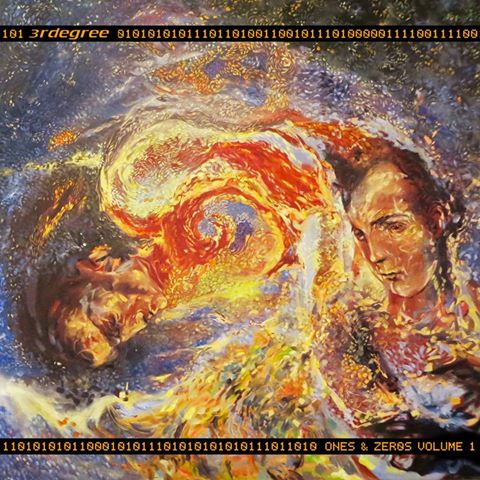
I’m hoping fellow Progarchy “archivists” also weigh in on this disc with additional reviews. I really love this album. It’s being added to my “best of” for 2015…with a “bullet” and I expect it will be on many other best of year lists as well. Special mention should be made of the colorful and impressionistic artwork that adorns this disc. A swirling of yellow and reds (that’s probably NOT Elvis) that evokes the legendary Moodies. The 10t web-site indicates this “Vol 1” of One & Zeros will be followed by a Vol. 2 next year. 2016 can’t get here soon enough!
I really love this album.
Links:
3RDegree Facebook: https://www.facebook.com/#!/3RDegree?fref=ts
3RDegree 10t web site: http://www.3rdegreeonline.com/3RDegree/Home.html (some great photos and bio’s of the guys)
3RDegree Bandcamp: http://3rdegree.bandcamp.com
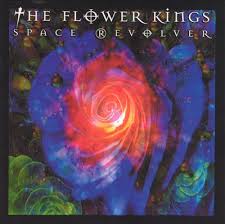
Happy 15th, Space Revolver
A huge, ginormous happy 15th birthday to one of the greatest rock albums of all time, and certainly a top-ten album of the prog era, SPACE REVOLVER!
–your devoted friends at progarchy.com