
Yes, I mean Neil Peart. . . but also the guy who makes and controls this puppet! Wow. Just wow.

Yes, I mean Neil Peart. . . but also the guy who makes and controls this puppet! Wow. Just wow.
Last night, as I was getting ever closer to sleep, I decided to check out the website for Rocket 88 Books.

I’ve been reading and throughly enjoying their book on the history of Dream Theater, LIFTING SHADOWS.
Lo and behold, what did I find on the website? That Rocket 88 will soon be releasing a paperback version of the 2012 coffee-table book, THE SPIRIT OF TALK TALK.
For those of you who know me, you know how much I adore Talk Talk. But, even with my normal lack of frugality and my love of the band, I just couldn’t bring myself to pay the price that was being asked for that hardback–no matter how beautiful–three years ago.
And yet, here it is.

So, of course, I ordered it. Immediately. Here’s the response I awoke to from the press:
Hello Bradley,
Congratulations, you were the first person to pre-order the new paperback edition of the Spirit of Talk Talk book! And before we have even told anyone it is avalable, impressive work
The email that was sent to you to confirm the order bounced back though, that address you gave us was bradletbirzer@xxxxxxx.com
We have taken a high level executive decision and reckon it should have been bradleybirzer@xxxxxx.com and have updated it.
We can also confirm we have your order, reference number: xxxx.
We will keep you updated along the way on progress we can tell you that books are planned to be in the UK in October but will take a little longer to get to our warehouse in the US, so you should expect to have your book in November.
Best wishes,
Rocket 88
Books with extra thrust.
Here’s my response to their response:
Hello Rocket 88,
It sounds like you’re very, very good at executive decisions.
Yes, bradleybirzer@xxxxxx.com is correct. I can only blame large, clumsy fingers on my typo. I don’t want to badmouth my fingers too much, though, as they’ve served me well in handshakes, eating, opening doors, etc.
I just happened to be on the Rocket 88 website and saw the new books. Great press, by the way. I’m just finishing up the LIFTING SHADOWS about Dream Theater.
Again, thanks for taking the time to clarify. No worries on October or November. Either way, I’ll be happy.
Yours, Brad
And, finally, their response to my response to their response:
Ha! Yep keep those fingers handy.
Thanks for your kind words and great to hear you’re also enjoying Lifting Shadows. We have a couple more titles coming in that area too which may interest you as we are presently working feverishly to finish books from Devin Townsend and from Opeth.
Best wishes,
Rocket 88
Books with extra thrust.
Ok, so I know that I wasted some poor person’s time. But, you know what? They now have my total loyalty. If every one in the world brought this kind of excellence and humor to what ever it is they do, we’d have a pretty great world.
Thanks, Rocket 88!
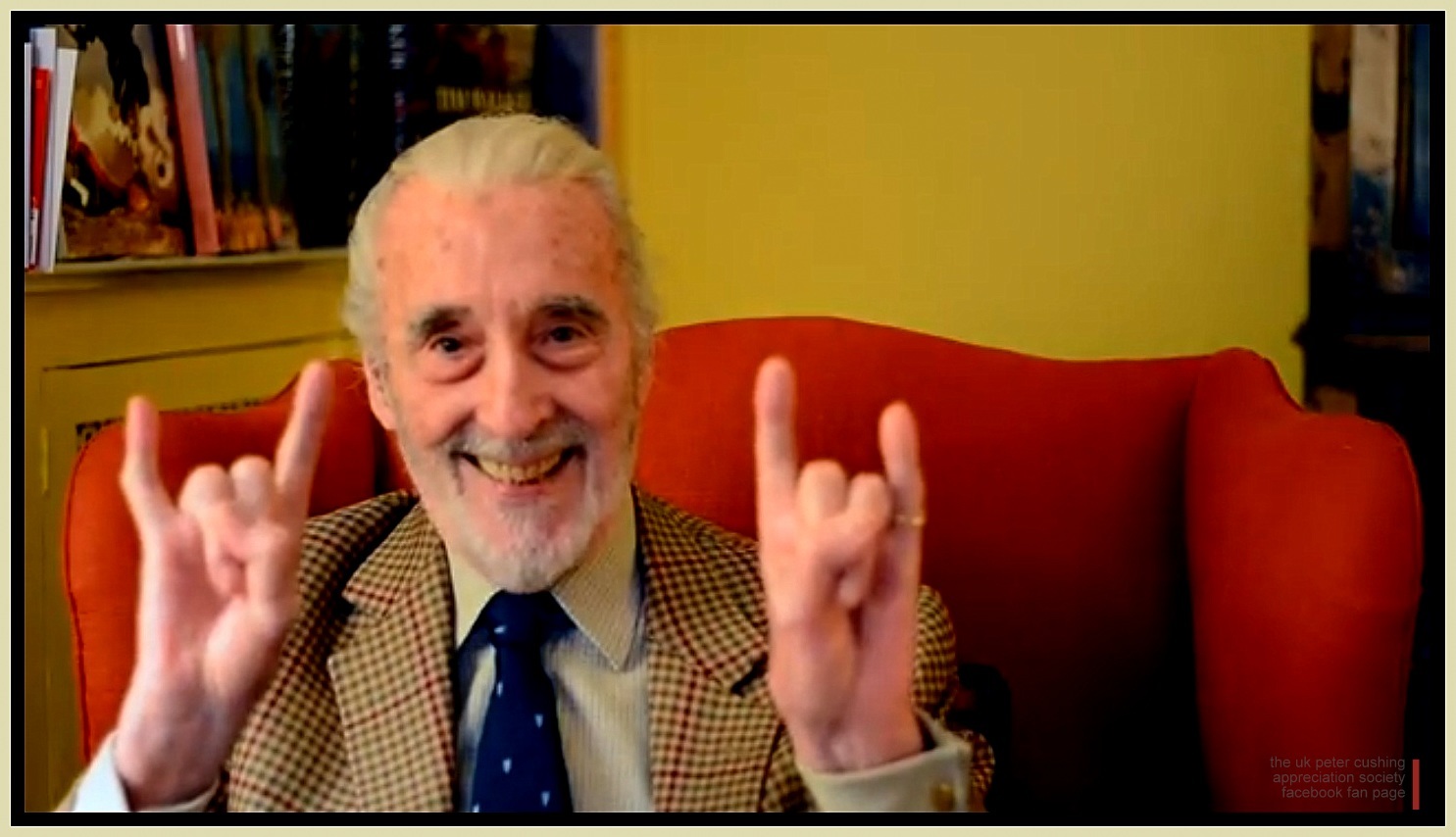
Sir Christopher Lee, the renowned British actor best known for playing Dracula in countless films, Francisco Scaramanga in the James Bond film The Man With the Golden Gun, and Saruman the White in The Lord of the Rings films, passed away Sunday, June 7, at 93 years old. Although many know him as an actor, we here at Progarchy also appreciate Lee for his musical talent. An imposing man who possessed an extraordinary voice, Lee proved an adept heavy metal singer late in his life, releasing a Christmas song as recently as December 2014. He was a great talent, and he will be sorely missed.

Muse finally released their seventh studio album Drones this week after months of releasing individual singles – six to be exact.
Fully, it’s 12 (let’s just call it 10) songs are not as inventive as 2012’s The 2nd Law but is certainly awash with Matthew Bellamy’s soaring vocals and guitar chords, Chris Wolstenholme’s thumping bass and is just about everything you’ve come to expect from Muse. It’s arena rock in some areas, keyboard heavy in others, a touch of pop in one and a couple of surprises in some.
Muse is not shying away from their political commentary either as Drones gives plenty of discourse starting with the album cover clearly illustrating mind control. It’s a concept album they pull off well because what else could it be once you hear what’s inside?
Drones starts off with “Dead Inside” which is such a Muse song complete with Dominic…
View original post 763 more words
Keith Jarrett is 70 years old, and his best known album — The Köln Concert — is 40. I still remember the first time I heard Köln. It was about 1978, in a college radio studio on a good set of JBL monitors. It was a religious experience for me. That feels like a lame thing to write, but there are ultimately no words. Yes, I even love the vocalizations, the grunts, the groans, the stomping. I probably shouldn’t get started. For some readers it may be off-putting enough that this is not “prog” in any standard sense. But I can’t let pass the opportunity to tell Keith happy birthday when I have the platform from which to do it, or to call your attention to his latest solo piano disc. I’m banking on (my prog guru) Brad Birzer’s championing of a broad tent in these matters. Jarrett’s solo piano music seems to me genre-defying and epic enough, at any rate, for prog sensibilities.
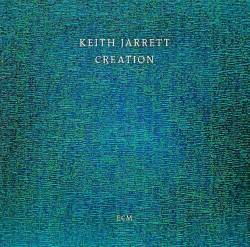
 The title of this latest entry, Creation, is not particularly a surprise from Jarrett, who is primarily known for the lack of distinction in his work between creation and performance. But there is a surprise here, as Jarrett departs from his whole-concert-uncut approach. Creation’s movements are selected from several different 2014 concerts, arranged after the fact into a whole. Jarrett thus “had to become a producer,” as he explains in an interview on NPR. But it’s still Jarrett as creator, as composer, performing as he produces.
As I listen to Creation, I’m reminded how consistently Jarrett’s work draws my listening beyond what I ordinarily think of as listening. I hear the music, I drink it in as I do any good music. But my listening is also pushed to hear itself, to hear in some sense what listening is. Good listening is an interesting mix between impatience and patience. Impatience because it needs to be eager, voraciously anticipatory, and open to mystery. Patience because it wants to trust the artist, to wait for what takes careful preparation and painstaking development. All of us who listen probably develop comfortable listening styles, familiar ways of moving along the border where impatience and patience meet. Keith Jarrett has long struck me as one of those artists who play up that border, reminding us that it is a fault-line of a sort, that we can still be knocked over when the ground shifts violently enough.
 If you know Jarrett’s work, but have trouble with patience on his longer solo piano outings, I would especially urge you to give Creation a try. The shorter-time format of his recent solo efforts tends to concentrate the development and give food to the impatient appetite, but (to my ears) without sacrificing any of the artisan’s craft and care.
Kudos to you, Keith, as you celebrate threescore and ten! May our gift to you be (im)patient listening!
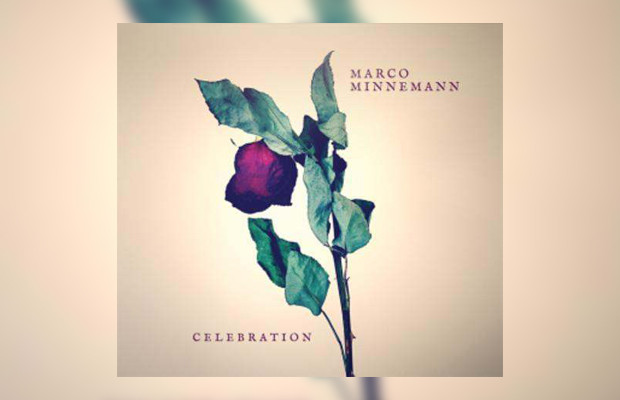
Marco Minnemann, a true Renaissance man in the field of music, will delight listeners with his excellent solo effort Celebration. Minnemann, who plays all the instruments, showcases his talents on bass guitar, keyboards, guitar, and, of course, drums. The album has a metal/hard rock edge to it, but for the most part it sounds as if Frank Zappa himself is playing along. And like a typical Zappa album, Celebration has its quirks and idiosyncrasies, but it is an expression of pure talent and a joy to listen to. From the funky opener Miami to the hard-rocking Better Place, Minneman’s newest effort is a gem.
There are eighteen songs on the album, but the majority are under four minutes in duration. The longest – Print Club – is just under eleven minutes in length, granting Minnemann an opportunity to demonstrate his skill on the keys. If you find yourself craving a Zappa-influenced album by a top-notch musician, then this album is certainly worth a listen. You can purchase it here.

I’m a little late to the party, but John Mitchell’s solo project, Lonely Robot: Please Come Home has taken over my sound system the past couple of weeks, and I have to spread the good word about this extraordinary album.
John Mitchell is getting close to Neal Morse and Mike Portnoy for earning the award for participating in the most groups: he is a guitarist for Arena, he’s played in Frost*, he’s been in It Bites for almost a decade, and he put together the prog supergroup, Kino (hat tip to Progarchist Frank Urbaniak for that info). However, according to Mr. Mitchell in an interview in Prog Magazine (Issue #54, March, 2015), Lonely Robot has been “the most refreshing thing I’ve ever done.” Freed from any preconceived expectations based on a particular group’s history, Mitchell has crafted an album that excels on multiple levels.
While not a full-blown concept album, Mitchell has stated in his series of video blogs that Please Come Home has a unifying theme: how can life on earth in all of its glorious diversity have sprung from nothing? Whether we are the result of primordial alien seeding or a divine architect is left to the listener to decide, but Mitchell’s musings are fascinating. “God vs. Man” is a neat little history of the human race, from building a fire, to building a city, to building armies, to building rockets:
So then you build a rocket, and you point towards the sky
No end to the ambition and no cause to wonder why
You start the search celestial to find the one who made
For reckoning the architect will stand across your way
Of course, as far as I’m concerned, the lyrics could be Shakespearean and the album would be worthless without the music to support them. In this department, Mitchell delivers – in spades. From the cinematic opening track, “Airlock”, to the delicate and emotional closer, “The Red Balloon”, Please Come Home is a collection of songs that will satisfy the most discriminating connoisseur of prog. In addition to having phenomenal chops on guitar, Mitchell’s vocals are outstanding – soulful with a little Peter Gabriel rasp to them. There are also a couple of duets that are heartbreakingly beautiful: “Why Do We Stay?” with Heather Findley, and “Oubliette” with Kim Seviour. “Oubliette” is my nomination for song of the year, with its catchy chorus and snaking lead guitar line. “Are We Copies?” is the current single, (video below), which laments the failure of humanity to live up to its enormous potential. The next track, “Humans Being”, is a comforting response:
Oh don’t be so hard on yourself, so hard on yourself
All we have done, and all of the people we’ve been
Take this flag and wave it again, just wave it again
All we have done, and all of the things we have seen
We’re only humans being
Mitchell has gathered a stellar group of supporting artists for Please Come Home: the aforementioned vocalists, as well as Jem Godfrey, Peter Cox, Steve Hogarth, Nik Kershaw, Nick Beggs, and Craig Blundell. I hope this album is the first of many from Lonely Robot; American prog fans should embrace the music of John Mitchell – he is a top-tier talent who deserves to explode worldwide.
Big Big Train, Wassail (English Electric, 2015)
Tracks: Wassail; Lost Rivers of London; Mudlarks; and Master James of St. George.

As far as I know, I’ve never tasted Wassail.
Of course, I come from Bavarian peasant stock and possess, sadly, not a drop of Anglo-Saxon or Celtic blood in my veins. My wife, however, is blessed with Celtic as well as Swedish ancestry, and I’m more than happy to have played a role in passing those genes on to our rather large gaggle of children.
As far back as I remember, though, my very German-American family drank something that sounds quite similar, at least in essence if not in accidents, to Wassail, Gluhwein. Even the very word Gluhwein conjures not just the scents of warm cinnamon, cloves, and anise, but also the idea of heavenly comfort and satiation.
Much the same could be said of all of Big Big Train’s music. Not that it doesn’t have its share of tensions and darker moments within the music, but, it’s hard to imagine a band in the world today that better understands the goods and beauties of this world than does Big Big Train. They find glory in even the most ordinary of things. And, rightly so.
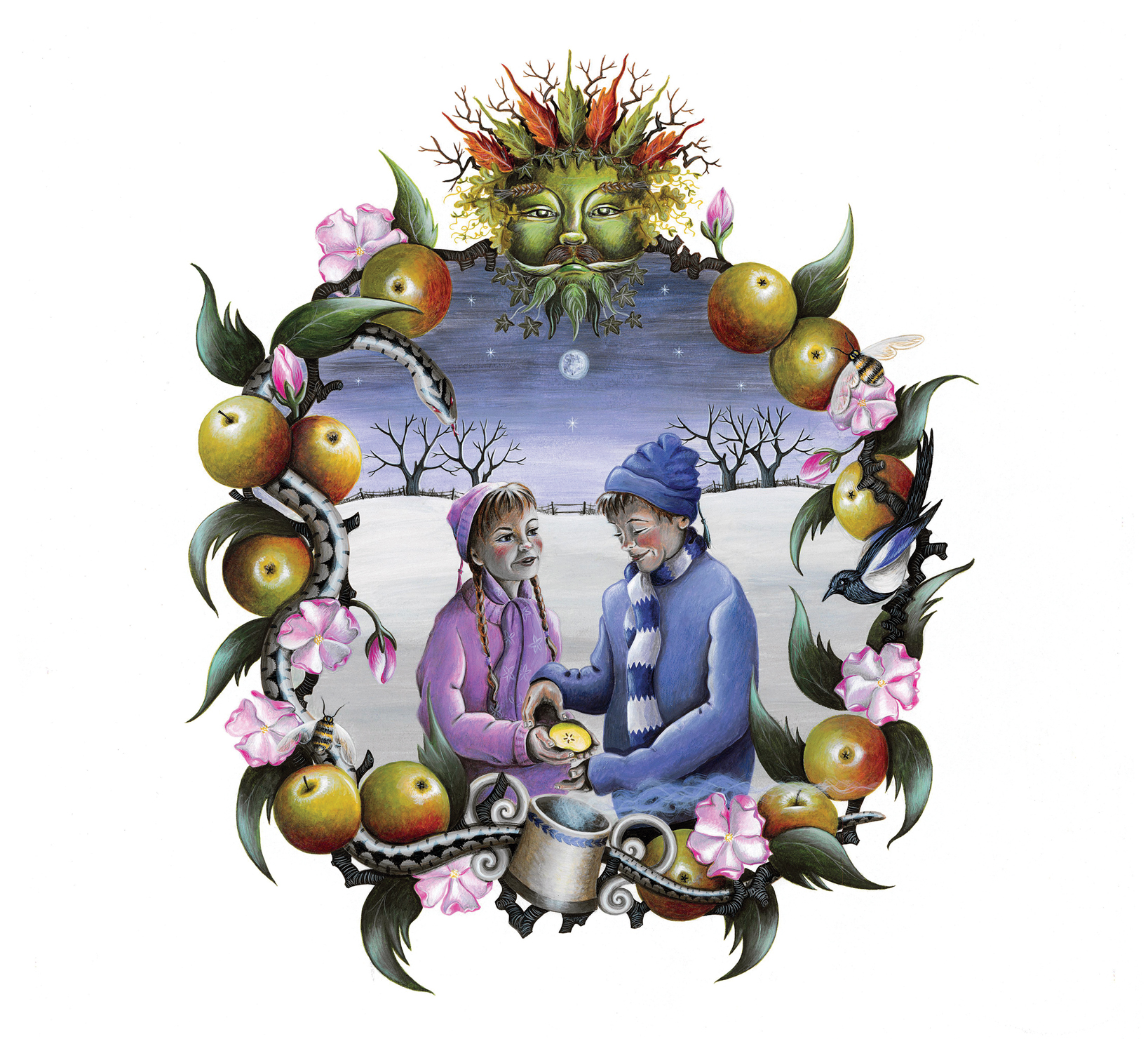
Wassail is a triumph, frankly. Not a huge triumph in the way The Underfall Yard or English Electric were each immense, almost overwhelming, triumphs, but a triumph, nonetheless.
A good, little truth.
In Greek, one would employ a word that has become utterly perverted over the last hundred years to describe Wassail best: a “dogma.” Literally, translating it from Greek to Latin, a dogma means a “good little thing,” a thing good in and of itself whether we understand its relation to larger truths or not.
Such is Wassail. A good little truth, whether we understand its relation to anything else or not. Only four songs at 25 minutes and 39 seconds, Wassail ends all too quickly. And, yet, for those nearly 26 mintues it plays, it fills our souls to the brim.
The opening song, “Wassail,” is a sing-songy English folk tune, completely with poetic and thoughtful lyrics. Here is the apple—the symbol of the devil, the instrument that caused the Fall, and the fruit that, to this day, brings so much love and joy. How can one thing be so loaded down by so many meanings—from the very existence of the universe and our relation in it, to the very thing that serves at the heart of what our grandmothers make best? This is a Longdon song, pure and simple. It is, for all intents and purposes, the sequel to Hedgerow, but without the rock edge.
The second song, “Lost Rivers of London,” is as much a Greg Spawton-song as the first was a Longdon song. What remains of the ancient world under the very streets of the city that represents so much good and truth in this world? What has nature wrought, our ancestors cultivated, and our current generation forgotten? These are quintessential Spawton questions, and, of course, true to Gregorian form, he serves as our modern natural historian, our urban archeologist, and our prog bard.
The third song, “Mudlarks,” is also a Spawton song, but its fullness comes across as a Big Big Train song more than the song of any one person. On “Mudlarks,” every member of the band, contributes and plays his or her heart out. Of the four songs, this is the most pop-rock oriented, despite the use of a whole set of rather folksy strings.
The final song of the EP, “Master James of St. George,” reveals just how much the band has evolved since the song first appeared—rather gloriously—on The Underfall Yard. Recorded live at Peter Gabriel’s Real World Studios, this version of “Master James” is much more layered than the original. Whereas the original offered a folksy minimalism, this version is layered almost beyond reason. The new strings add much but what really comes to the fore in this version is Danny Manner’s keyboards.

The Wassail version of “Master James” in no way makes the original obsolete. Quite the opposite. This new version just makes those of us who love BBT justifiably a little prouder of them. For, really, this version shows just how truly alive their music is, how much depth it possesses, and long it will be remembered. . . long after any of us have vanished from this world.
Let us just hope when we get there (wherever “there” is), we know which apple to choose. It’s pretty clear that BBT wishes us well, and they’ve even kindly provided the soundtrack for that journey.


