

We are pleased to announce that Josiah Baker is joining our team as our first Artist Representative! Josiah will be bringing to Radiant Records and Radiant Studios years of experience in artist development, booking, social media management, promotion, and networking. If you’re an artist looking for a label or some fresh exposure, Josiah is here for you! Contact him today to find out how you can record in the same studio as Flying Colors, Neal Morse, and the Prog “Album of the Year” award artists, Transatlantic!
Josiah is accepting downloadable material submitted through email or physical copies through mail. All contact information is below.
Josiah Baker,
Artist RepresentativePhone: 904-495-9011Email: josiah@radiantrecords.comMailing Adress:322 Blue Lake CircleAntioch, TN 37013God Bless,Megan BatistaRadiant Records

Big band and jazz guitar take bold journey to “Dark Side of the Moon”
It is, as AllAboutJazz.com notes from the top, a “bold concept”: A big band and a jazz/fusion guitarist reinterpreting (“covering” isn’t it at all, not by a long shot) Pink Floyd’s “Dark Side of the Moon”—that modest little 1973 album that sold a bazillion copies and cemented Waters, Gilmour, and Co. as rock legends. The chances of such an audacious project going sideways,  upside down, or simply “splat” are fairly high. Most Floyd purists, I suspect, would dismiss it immediately, and most jazz purists would be right behind them. (I hope I’m wrong, but I think that’s a fair guess.) That would be unfortunate, because “Celebrating the Dark Side of the Moon” is a stunning album, a splendid example of what can happen when exceptional jazz musicians take on exceptional rock/prog material with an equal measure of respect and experimental energy.
The album is the brain child of ACT-director Siggi Loch (ACT is a German label focused on contemporary jazz), and Stefan Gerdes and Axel Dürr, producers for the NDR Big Band; they enlisted legendary composer and arranger Michael Gibbs and the wildly eclectic, always surprising guitarist Nguyên Lê. The sleeve notes read, in part:
Nguyên Lê enlightens the Floyd’s repertoire – pure happiness – and enchants it with the collusion of the NDR Bigband and its brilliant soloists, deploying new sound-textures created by the uplifting orchestrations of Michael Gibbs. The arrangements here – Gibbs wrote three, Nguyên Lê wrote the others – provide choice settings for inspired improvisations and also reveal other compositions which appear as natural extensions of the original opus. The guitarist’s playing sparkles with those fiery, oriental accents we’ve learned to love, sustained by guests he can trust: Jürgen Attig, Gary Husband, or Youn Sun Nah, whose chalice is brimming with magnetic grace. “Celebrating The Dark Side Of The Moon” is no simple tribute to a record which made history. It fervently expresses the re-creation – exempt from all imitation – of a score which you can hear in filigree. This is a palimpsest. The writing can still be (re)read, with warm hues forged by respect for the original matrix and the multiple expressions of its identity. Like a principle of Life.
The playing throughout, no surprise, is top of the line; but what really jumps out is the muscular, bold, and detailed quality of the arrangements, as well as the propulsive fluidity of the solos and ensemble playing. Yes, you know you are hearing Pink Floyd songs, but you hear them in a new and invigorating way. Lê is especially dynamic; he plays the vocal parts in several songs, and his tone is as rich and expressive as any vocal, bringing out melodic qualities deep in the original material. Listen, for example, to “Money,” with the solo starting at the 1:00 mark:
The other stunner is South Korean singer Youn Sun Nah, whose solo work has always demonstrated a willingness to push—and sometimes simply flatten, by virtue of her power and precision—musical boundaries, moving from sweetness and light to primal, raging darkness at a moments notice (check out her rather harrowing version of “Enter Sandman”). Here she is singing “Breathe”:
The Telegraph gave the album a begrudging decent review, stating, “The remarkable thing is that eventually, the album persuaded me to forget the original. It does this very cleverly, by confirming and subverting our expectations at the same time.” Meanwhile, AllAboutJazz.com concludes its far more positive review by saying, “Nguyên Lê’s CTDSOTM is an ambitious, uplifting and frequently exhilarating project whose textural layers and conceptual riches are gradually revealed upon repeated listening. It should appeal to Floyd freaks, progressive big-band addicts and the musically curious alike.” I hope so!
Andy Tillison Speaks, February 19, Boulder, Colorado
I’m privileged to announce that Andy Tillson (PO90, The Tangent) will speak tomorrow night at the University of Colorado-Boulder. If you are within driving range, please join us. Tillison will speak at the Old Main Chapel, Boulder campus, 5:30-7.

Jimmy Page and Alex Lifeson: Mutual Admiration Society

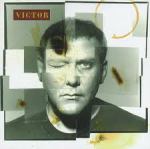
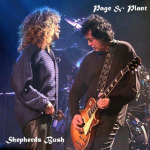 Alex met his guitar idol Jimmy Page in 1998, when Page and Robert Plant were briefly reunited for a series of shows, one of which was in Toronto. Alex was home at the time and had been invited backstage to say hello, so he brought a copy of Victor, his 1996 solo album, to give to Page. “I was freaking out
  and my hands were shaking,” Alex has said in interviews about that meeting.
But the admiration was mutual. Page has said that he has long been an admirer of Rush. That’s saying something when you consider how much disdain he held for a lot of the hard-rock bands that tried to look and sound like Led Zeppelin. First among the bands singled out for Page’s disdain over the years is Def Leppard, but Page really didn’t like any of the so-called hair bands. There was one exception: Whitesnake…
View original post 234 more words
Album Review: Imagine Dragons – Smoke + Mirrors

So, Imagine Dragons just might be for real.
After wringing as much as they could out of their 2012 smash album Night Visions the quartet hailing from Las Vegas finally stopped releasing individual singles that seemed to serve only as fuel to keep afire the momentum to their ostensibly endless, and sold out arena tour the last few years and dropped their second full-length album.
Imagine Dragons released Smoke + Mirrors today and unlike what tends to happens to bands after a highly successful first album only to see a sophomore effort fall flat, Smoke + Mirrors holds up quite well to its predecessor.
The band gave fans a taste of what’s to come with their leak of the singles “I Bet My Life” and “Gold” both of which are on this album and sure to be accompanied by several more hits radio should eventually play ad nausea.
Singer Dan…
View original post 684 more words
Most Anticipated Album Releases of 2015 – Part 4

I know, I know, it’s getting a little silly now isn’t it? I’m beginning to lose count but here are another ten or so bands that either are or may be likely to release new material during 2015. It was all sparked by the first band in my list who I only just realised were in the process of writing new material. Knowing this, I couldn’t afford to miss them off my list as they are such a great band.
If for any reason you’ve missed parts 1-3, you can access them here:
Part 1
Part 2
Part 3
But now, here’s the next (and probably last) instalment in this series…probably…I hope.
Wolverine
As stated, Wolverine are one of the main catalysts for this fourth instalment ever since I realised a new album was on the horizon for 2015. The Swedish progressive metallers are a special and unique band and…
View original post 1,304 more words
PJMedia’s “Best 6 Rush Albums”
In honor of Rush’s upcoming R40 tour, PJMedia’s J. Christian Adams ranks their top 6 albums. The list may surprise you!
Here’s an excerpt:
Geddy Lee, Alex Lifeson and Neil Peart have been producing music since they they first took the stage together at the Pittsburgh Civic Arena in August 1974. Peart was the new guy in the band then, but has since become its voice, penning lyrics that made hipster critics cringe – touching on, in chronological order – Tolkien, male baldness, the Solar Federation, starship Rocinante, forced equality of outcome, FM rock, automobile bans, Space Shuttle Columbia, concentration camps (Lee’s parents survived Auschwitz), Enola Gay, China, clever anagrams, chance, AIDS, the internet, expectations shattered by 9-11, more expectations shattered and finally, carnies. It’s hard to find a list of rock’s greatest drummers that doesn’t include Neil Peart.
Over the decades, hipster critics praised acts like Elvis Costello, Tom Waits and the Talking Heads while they mocked Rush. But 40 years later, Rush fills arenas and tops album charts, forever reinventing a sound that defies categorization. It’s just Rush.
You can read the whole thing here.
Steven Wilson – HAND. CANNOT. ERASE. LOVE.
Steven Wilson – HAND. CANNOT. ERASE. (Kscope, 2015).
Tracks: First Regret; 3 Years Older; Hand Cannot Erase; Perfect Life; Routine; Home Invasion; Regret #9; Transience; Ancestral; Happy Returns; Ascendant Her On
Geddy Lee I. Rating: 9.5/10
If you’re looking for a review comparing HAND. CANNOT. ERASE. to any of Wilson’s other solo albums, his work with Porcupine Tree, the fruits of his many side projects, or the work of other artists, this isn’t the review for you. This review is solely about HAND. CANNOT. ERASE. within it’s own context and within my ear. It will be flawed and fraught with me struggling to put into words that which the music captures so easily.
Something about the ambient intro of First Regret gives me imagery of children running around on a playground, having the time of their lives. Then the music really takes off and suddenly I feel like I’m no longer observing the children, but one of them, and now I’m running frantically after the others, having the time of our lives. Track 1, First Regret, is strangely named, to me at least, unless the frivolity of childhood is regretful. To this point, I’m probably missing what this song is really about.
In track two, 3 Years Older, I dig the break for some melodic acoustic work, especially accented by that bass in the opening. Lyrically we seem to be departing from the schoolyard heading into life, a complicated life, filled people we cannot connect to for long. The imagery I get is of someone despondently sliding through life catching a few highs and lots of lows. After a few verses, the music peaks again and when it crashes it hits this beautiful piano section that I never saw coming, but man does that hit my ears just right. Lovely stuff that. Then the music rips off again but harder than ever and we get some really proggy stuff as the piano is substituted for some intense organ work and the musical theme spirals out a bit exploring other parts of itself.
The title track Hand Cannot Erase will, to some, sound like pop, but I think this song ends up being a prime example of Wilson’s ability to take simple musical ideas and push them further in such a way that the listener never trips and is along for the whole ride. Also, the lyrics, while still hinting at the difficulties of love and life, are surprisingly positive and perhaps help drive the upbeat nature of the song.
Perfect Life sees us slipping into ambient narrative performed by a female I believe to be the character the theme of this album seems to be shaped around. This song is steady and offers a slow build that you’ll probably only enjoy if you like listening for the subtle little shifts of things in the background of the music that really make up the song.
I’ve just realized that I’m not quite halfway through the album and that I’m running out of ways for me to say basically the same thing time and again which is that, I’m a creature of melody, and this album offers so much on that front that I can’t help but love it. We get some beautiful female vocal work, the tone of the guitars isn’t mired in distortion but rather a shimmering ambience, there are several musical themes explored making for a dynamic listen throughout, and we see an album that is essentially about love, and not the cliche kind of love song where it’s pure bliss or about ridiculous break ups. It’s a realistic approach to having a heart and traveling through a world where those you love can give you great joy one day and immense pain the next. Such is love.
Though I only covered the first four tracks in detail, this isn’t to say that the latter half of the album has less to offer or that I didn’t enjoy it. I flat loved it! I’m just trying to avoid writing a book about it. For me, this album is 63 minutes of beautiful melody, both musically and lyrically. It’s not flashy though it does have moments of awe inspiring musicality. It’s musical exploration and the attention to the mix and the overall sound quality is immaculate and really what drives this album home. I admit, I’m not the most versed in Wilson’s works, but HAND. CANNOT. ERASE. offers so much that my ears enjoy and revel in that it will sit on its own at the top of my mind for some time when thinking about Wilson.
Steven Wilson sine ira et studio

I’m somewhat mystified by the accusations of arrogance and hubris against Steven Wilson. The remarks I read him making don’t strike me as being uttered in that spirit.
He strikes me, rather, as more of a Peartian “most endangered species”: viz., “the honest man.” The evidence brought forward against him, as evidence of his alleged ego, seems to me, rather, to be evidence for his lack of ego.
He frequently stresses how art holds up a mirror in which we can find a common experience. This seems to me to be the opposite of an egoist who insists on his own special uniqueness.
Here is Wilson’s spiritual apologetic for how he operates; I think he does quite well correcting the unfair misunderstandings about him with his own words:
With Grace for Drowning, I was moving into the next phase of my creativity, which is a balance between me as a producer, editor or architect, and being able to draw on musicians that are more spiritual in how they approach music.
I suppose as a catch-all, you could say “spiritual” just means “done for the right reasons.” What I mean by that is there is no attempt on this album to fit the music into a specific market or genre, or appeal to the existing base, managers or record companies. I’m not suggesting I’ve ever done that, because I’m pretty much incapable of doing that. [laughs] I think I have a willful streak in me in that whatever I do, I have to do it in a way that ultimately pleases me. So, being spiritual in that sense is a need to get in touch with my own soul to fulfill my own creative needs.
The music industry is full of people that are clearly not being fulfilled by their work. They do things for reasons that are perhaps different from when they started or when they first fell in love with the whole creative process. There are plenty of people doing it for the same reason as when they fell in love with music—I’m not suggesting I’m unique in that respect. But the industry all too often crushes people into thinking they have to make music to please other people. That situation is the antithesis of spiritual music. The bottom line is spirituality means something that touches you and can touch other people as well. It’s the idea that art is a kind of mirror. You create something in a very selfish way and then when you release it into the world, it becomes a mirror. If other people see themselves reflected back in what you’re doing, then there is a sense of touching people. Touching people means making people understand that they’re not alone in feeling the emotions they’re feeling. In that sense, spiritual music is about making people feel they are part of a collective consciousness. None of the things we feel in this world are unique to us, no matter how bad or good they may feel.
I think that if one listens to Wilson’s new album sine ira et studio (to use Tacitus’ apposite phrase) then one might conclude this is the finest album of the year (nota bene: Dave Kerzner’s New World is excluded only on the technicality that it was half-released last year already, in order to avoid any conflict between these two masterpieces).
Wilson is hardly some small-minded egoist who merely steals from others and recycles without attribution. People are free to prefer the work of other artists, but it is hardly fair to make invidious comparisons that pronounce Wilson merely a lesser version of one’s own favorite artists. He does not seem to be jockeying for position or rank, but rather has loftier, more spiritual goals.
The words I have quoted above, I think, are truly spoken in the spirit of Rush’s “Spirit of Radio,” and thereby illustrate that Wilson is not simply an artist with talent, but also an artist with unusual integrity.
No wonder he finds himself a target.
Steven Wilson — Hand. Cannot. Erase. ★★★★★

Some of my initial thoughts on Steven Wilson’s five-star masterpiece, Hand. Cannot. Erase.:
The title track, Hand Cannot Erase, which is already available, explores the theme of the transcendence of love. Significantly, it is a hopeful affirmation, albeit a fragile one, offered amidst the brokenness unflinchingly explored by the album’s other songs.
Perfect Life, for example, depicts the main character’s ecstatic discovery, at the age of 13, of a sister she never knew. They become best friends, but their “perfect life” together lasts only for six months.
The narrative relates how their family life is again shattered. Once more, brokenness eclipses the moments of bliss: “For a few months everything about our lives was perfect. It was only us, we were inseparable. Later that year my parents separated and my sister was rehoused with a family in Dollis Hill. For a month I wanted to die and missed her every day.”
Wilson’s album also includes a lengthy track, Ancestral, that to my mind offers the most frightening sonic depiction ever rendered of the weight of original sin, of the weight of the guilty dragging down the innocent. Remarkably, Wilson’s song cycle ends by presenting the main character’s death in the luminous context of a celestial boys’ choir breaking though a rainstorm. There is a return to the happy sounds of innocent children playing in a playground, sounds first heard at the beginning of the album.
 Progarchy