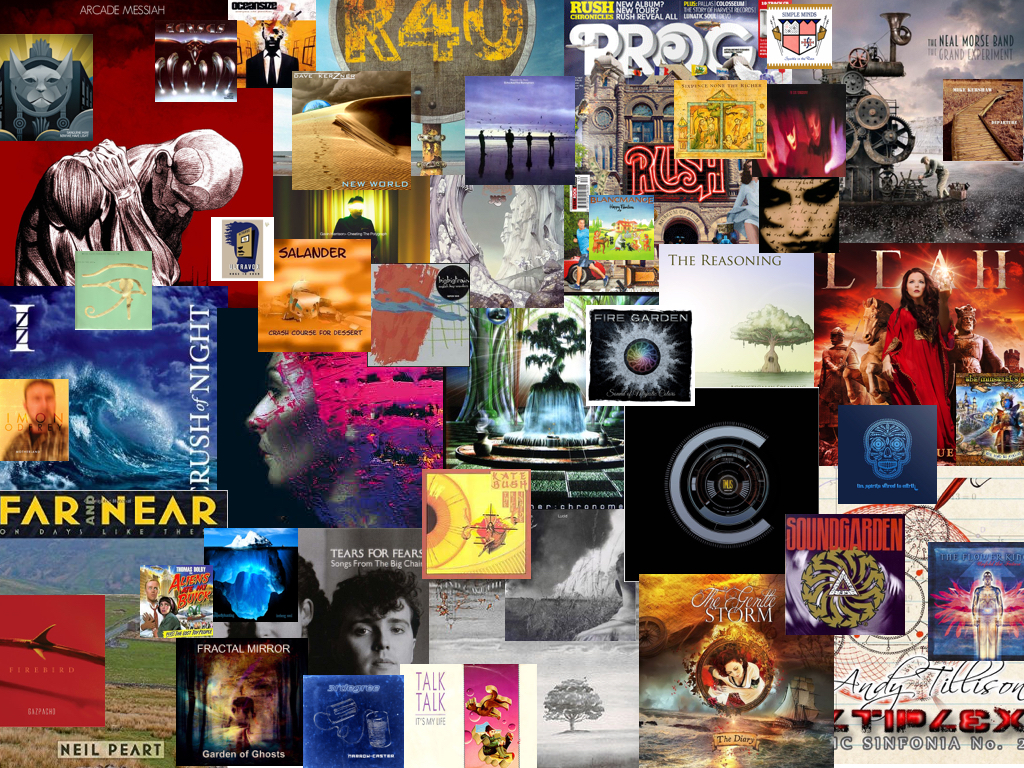
Having had a chance to listen to a stream (a review copy from the fine folks B/W/R PR) of the new Steven Wilson, I’m very glad to write that it’s profound and good and true and wonderful. I wasn’t so taken with the last album (the RAVEN one), though I thought the first two solo albums quite astounding. And, I pulled out my Chicago DVD show of Porcupine Tree. Sheesh, when Wilson wants to be, he’s incredible. The last solo album I thought a poor mimicry of the work of that ever-wonderful genius, Andy Tillison.
This new album pays homage to late 1970s Rush, but it does so in a way that honors Rush. All to the good.
As the Grammy’s are happening as I write this, I remember how utterly disappointed I was with Wilson a few years ago when he tweeted how sad he was not to have won a Grammy. I responded in my own tweet: “Dear Lord, you are so much better than that!” Or something akin to this.
I meant it.
A Grammy is an albatrossian weight, not a mark or a sign of anything other than bland, tapioca conformity on a corporate scale.
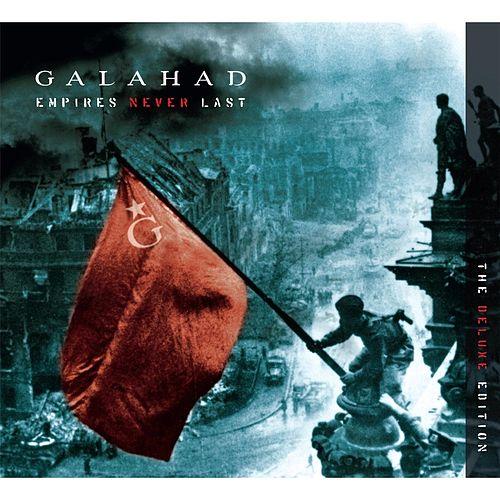
Not watching the Grammy’s, I can happily report that I’m listening to the brand new, deluxe version of Galahad’s EMPIRES NEVER LAST. Let me offer another “sheesh.” What a great album, made even better through remixing and editing. Glorious.
Yesterday, my family and I devoured the new Neal Morse, THE GRAND EXPERIMENT. We are all rather smitten.
Today, I listened to all of Dave Kerzner’s NEW WORLD (deluxe edition) as I made Sunday evening pizza. Again, I’m a rather happy fan.
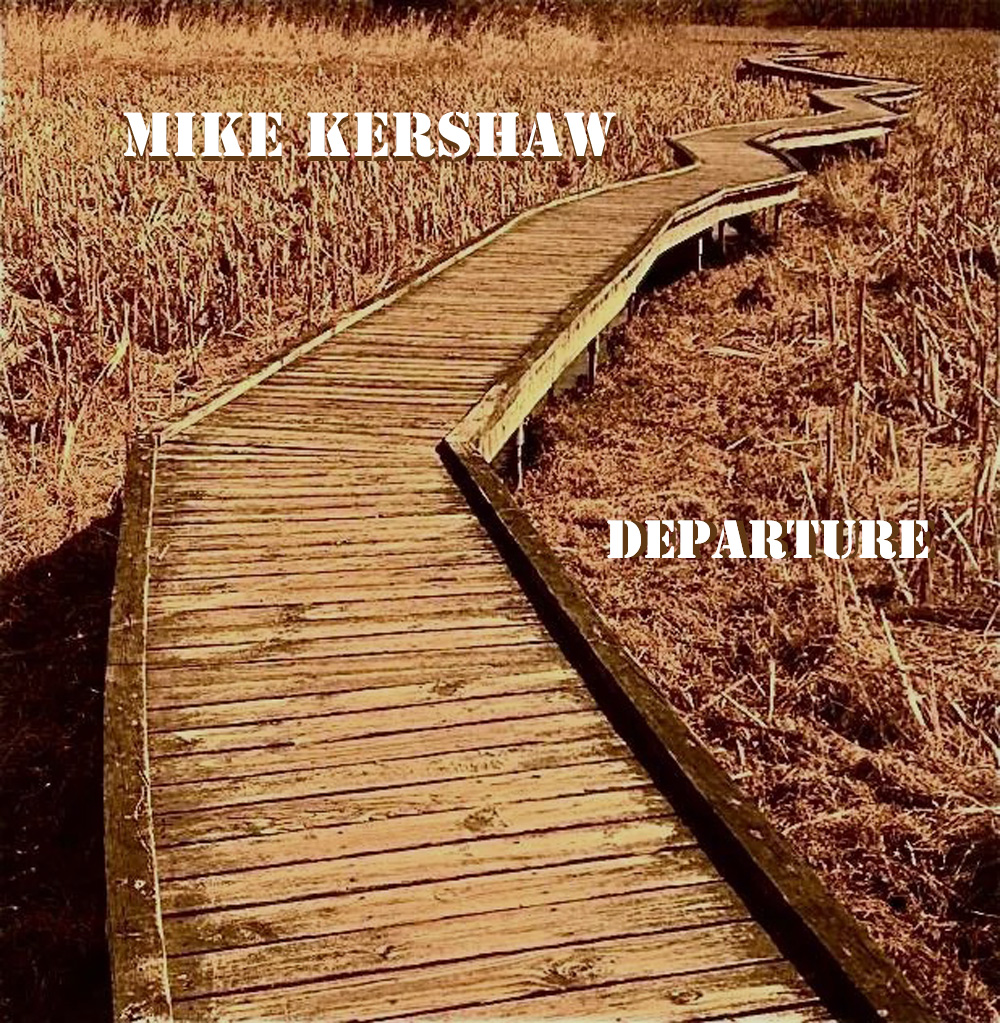
I also read Bryan Morey’s insightful review of Mike Kershaw’s latest EP, DEPARTURE, featuring lots of FRACTAL MIRROR talent. This got me to thinking about Greg Spawton and his ability to form communities–not only around himself immediately in BBT, but also through the internet. Kershaw, Urbaniak, Kull. . . what a crazy bunch of proggers we all are. And, that Morey. He’s a natural.
And, now, I patiently await the arrival of the new Glass Hammer.
I’m sorry–what awards show is going on tonight? Yeah, I’ve got much better things to listen to, thank you very much.
Way back at the end of August, in my review of Mike Kershaw’s Ice Age, I said I was looking forward to future releases from Mike. Well, here we are! And Departure is even better than Ice Age!
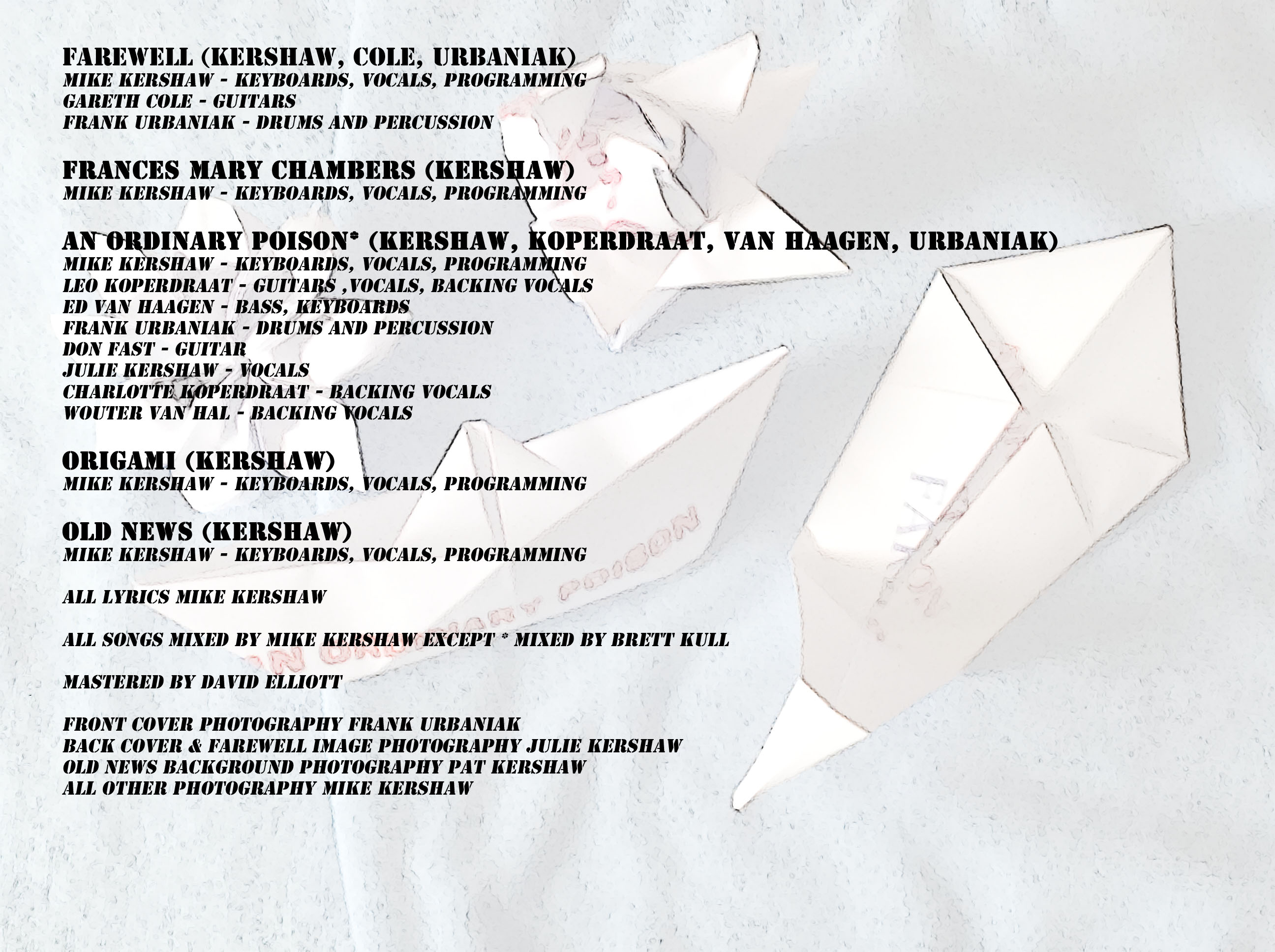
Departure basically picks up where Ice Age left off. The first track, “Farewell,” is a goodbye to the long winter spoken of at length in the previous album (sounds great right about now in the frozen tundra of southern Michigan). This song is my favorite on the album. It is very upbeat, and it features Progarchy’s very own Frank Urbaniak (Fractal Mirror) on drums, as well as Gareth Cole on guitar. I believe the collaboration took Mike Kershaw’s musical ideas to the next level. The song is reminds me very much of Fractal Mirror. Interestingly enough, when I first heard Fractal Mirror, it reminded me of Mike Kershaw’s music. I was really excited when I saw that Mike collaborated with them on this EP.
Thematically, Departure is not as structured as Ice Age, presumably because it is a shorter EP, and because not every song here is new. The song “Origami” was recorded during the Ice Age sessions, and “An Ordinary Poison,” which was recorded with Fractal Mirror, is a re-recording of an older song Mike Kershaw made. This is also especially good. Overall, the EP is heavily synth driven, just like Mike’s earlier work. It seems like there is a little more guitar work here as well, which I think is a nice improvement. Frank Urbaniak’s drums are fantastic, bringing a smooth rhythm and driving beat to the music. The added vocals from Fractal Mirror’s Leo Koperdraat, among others, was a nice added touch. As always, Mike’s deep, quiet vocals add a wonderful sense of contemplation to the music.
The songs on Departure do a wonderful job of combining Mike’s creative talent with his collaborations. The songs that are strictly Mike Kershaw are more like his older work, with a darker, brooding sense to them. The collaborated pieces have a more upbeat and fuller sound to them. Overall, there is a good balance of styles on this EP. For those that couldn’t quite get into Ice Age, I’m sure you will find Departure to be more accessible. I believe that this EP marks a definite step forward for Mr. Kershaw, and I am excited to see what else he has forthcoming in the months ahead.
A diary-like album begins by documenting a relationship in its death throes. On melodic opening track Stonemilker, written before the break-up, Björk sings like a veteran soul diva about her need for ‘emotional respect’.
Growing aware of the warning signs, however, she then admits: ‘I’d better document this.’ And document it she does. By the mid-point of the album, the misery is palpable.
When Björk does a big heartbreak ballad, the sense of wintry desolation is all-consuming, and Black Lake — a ten-minute epic in which one particular chord lasts for 30 seconds — is almost too discomforting to listen to.
Much the same goes for Family, a long, tuneless dirge that is Vulnicura’s low point, both musically and in terms of the singer’s ability to come to terms with heartache. But the darkest hour leads to a new dawn. With Antony Hegarty on backing vocals and Björk singing about ‘dancing towards transformation’, Atom Dance is jaunty and life-affirming, while Mouth Mantra finds her rediscovering her own voice.
Björk knows things aren’t quite so simple. With the final track Quicksand examining the damage a broken union can inflict on subsequent generations, her unflinching honesty remains.
Two decades after leaving indie band The Sugarcubes to turn solo, she hasn’t lost her capacity to surprise.
I wouldn’t normally descend so low as to engage in shameless self-publicity. But…
I am going to be doing an AmericanProg show which should be of interest to folks on here.
Progzilla Radio—the eleven-headed monster: On 2 March, Progzilla Radio is going EXTRA LARGE!
The popular progressive rock music station will be expanding from Cliff Pearson’s weekly Live at Progzilla Towers to DAILY shows from ten new presenters covering every aspect of prog.
We have collected the cream of the UK broadcasting talent and we are launching the new, super-sized Progzilla Radio on 2 March at 20:00, with a live kick-off party, featuring all our presenters who will discuss their plans and play some of the music they’ll be featuring on their shows.
The list of presenters includes many names known throughout the industry, such as Jon Patrick, David Elliott, Stacy Doller, Emma Roebuck, Cliff Pearson, Brian Watson, Andrew Wild, Ed Wilkins, Geoff Banks and Ian Fairholm. http://www.progzilla.com Each Monday
19.00-21.30
Stacy Doller starts the week with Prog Brittania—Stacy’s long-running and popular programme with all that’s good about current and classic British Prog Rock. And his socks. Each Tuesday
20.00-22.00
A Certain Prog, presented by Ed Wilkins—the much needed youth perspective. Each Wednesday
20.00-22.00
Live from Progzilla Towers with Cliff Pearson. Cliff’s usual mix of current and classic progressive music, irreverent humour, interviews, news and audience participation. Each Thursday
20.00-22.00
Emma Roebuck takes you through the Diversity of Prog—sometimes mainstream sometimes arguably not prog but always interesting. Each Friday
20.00-22.00
The Epileptic Gibbon One of the UK’s longest running podcasts comes to Progzilla! The Eppy Gibbon show is devoted to the best mixture of independent and small label prog rock, art rock, post rock, prog metal, jazz rock, folk rock, math rock, downtempo, chill-out, ambient electronica, IDM, chamber pop, folktronica, psychedelia, neo-classical, film & TV soundtracks and experimental/avant garde music. Each Saturday
20.00-22.00
The Amazing Wilf brings you the best in British and European progressive music, with a particular focus on the current scene and occasional detours to the dim and distant past. Each Sunday
11.00-13.30
The Geoff Banks Sunday Brunch – get bouncing on a Sunday morning!
20.00-21.00
Progzilla Sundays—punchy hour-long programmes on all aspects of Prog from four rotating presenters
• First Sunday of each month (starting 8 March)—Andrew Wild presents The Progzilla Files, exploring the dusty side roads of prog’s back catalogue
• Second Sunday of each month (starting 15 March)— Jon Patrick blatantly plugs The House of Progression live shows in London by playing the bands, interviewing them and forcing a few to record exclusive sessions. There will also be a bit of rock and some inspiring tunes.
• Third Sunday of each month (starting 22 March)— Brian Watson presents The American Prog Show- playing the best North American progressive rock past, present and future.
• Fourth Sunday of each month (starting 29 March)—a surprise big name presenter … oooh!
Come and listen to the show that never ends.
It’s not strange that many bands on today’s progressive rock scene try to recreate the golden era of the genre by conscious applying it to their sound. Dublin based prog rock quartet, M-Opus, are about to launch their debut album titled “1975 Triptych,” and as its name suggests, it represents the band’s effort to put out a record that is 40 years old in spirit.
In this interview, singer and keyboardist Jonathan Casey talks about the album and how it came into existence. He is a professional musician who previously worked with David Cross (ex-King Crimson).
Tell me about the musical concept behind M-Opus and your upcoming full-length release “1975 Triptych.”
We’ve got quite a fun concept – M-Opus albums will be ‘from’ different years in the past, as if these are old albums that are only being released now. Our debut album pays respect to 1975, the year I was born! So the album is meant to sound like it’s from that time.
“1975 Triptych” seems to be quite a challenging work. Lead me through the creative process that informed the album.
It really started out with me writing without any practical aim, in a 70s style, loving the process. Then my muso buddies Colin (guitars) and Aran (drums) said they’d love to get involved, so we started demoing parts of it. I kept writing and the concept began to take shape. We all agreed, it should sound vintage and not super punchy and modern.
Speaking of challenges, is there a creative challenge to deal with in that the band members occupy similar sonic spectrums?
Yes that’s a real producer’s issue, standing back from it all and making sure individual parts are working together. Colin and I always edge towards an equal sound, there’s a lot of unison playing between keys and guitars. I’ve composed for orchestras and you soon get over the idea that you should avoid tutti passages in that world.
It’s obvious where your influences lie. Was it your idea since the beginning to create an album that recalls the golden era of the progressive rock genre?
Definitely, 100%. I feel that the vintage sound is part of the experience, part of the love we have for it. Classic prog rock with a big, modern production cuts across me. Think of ‘Moonlight Serenade’, I don’t want that sounding massive and maximised – that style has got a charm in its evocative, wartime-ballroom sonority. In traditional music, jazz, blues, it’s not unusual to treat the music in that time-stamped way. I’m after the same thing with prog, a sound that suits the music.
M-Opus – 1975 Triptych
What have you been listening during the songwriting process of “1975 Triptych”, and in which measure it shaped the album’s final structure?
I listened to a lot of what was going around that year and leading up to it, to keep my writing reasonably contemporaneous. Then for fun, I really love listening to a lot of different music; one car journey could include John Adams, James Brown, Joni Mitchell, Queens of the Stone Age and Mahavishnu!
The album structure was more influenced by my background in art history. In that world, it’s all about the inspiring presentation of the concept. A Triptych is a 3-panelled work, 1 small, 1 large, 1 small, each panel relating to the same subject, just like our record.
As its name suggests, “1975 Triptych” is comprised of three songs, including centerpiece “Different Skies” clocking at over 33 minutes. Describe the creative process behind this song, in particular.
It was a little like when a sculptor releases the figure from within the slab, knowing the form already in the marble, just having to reveal it. I’d write and arrange some of it, stop and listen and I would hear the music that wasn’t there yet, maybe earlier or later in the piece. So off I’d go and realise that hidden music. Eventually, I knew it was complete!
M-Opus
I understand that M-Opus is for you some sort of fresh start or creative renewal for you. Elaborate on it.
I’m fortunate in that I get paid for writing music on TV and film. After some years, I realised that I like this process, regardless of the style I was asked to work in. In my teens, I thought modern songwriting was the ‘real’ me, it was my true voice. But I discovered I’m as happy doing cartoon scores, horror stings, melancholic string pieces as anything else. So I had to ask myself, if that’s the case, what truly is the music you’d most like to write? And it turned out to be M-Opus!
Before M-Opus, you’ve been a part of the David Cross (ex-King Crimson) Band, with whom you toured and recorded two albums. How did this collaboration help you to define yourself through M-Opus?
It was so wonderful. I suppose it convinced me that working in this area of music is a reality, not just a dream. It encouraged me to make my own path out there.
I read that the next M-Opus release will be from 1978. How come? Tell me more about it.
It’s going to tell a story. A lot of narrative concept albums have somewhat elusive, spiritual stories – I wanted to try a clear, plot-driven sci-fi thriller and hopefully visualise it as a graphic novel. I have the story mapped out and about 30 minutes of music so far. I’m making it 1978 as it seems the right time for an album that is influenced by the success of Star Wars the previous year.
From the same source I found out that you will be recording an album dating back in 1982. 80’s in particular are not much loved period by progressive rock fans, mostly because of New Wave. How will this reflect on the music?
It will be a little challenging for sure. I want it to be authentic, but as you say, many prog bands released albums that are deemed their worst in this period! So there will be some very catchy songs on there but a healthy, exploratory aspect to it too. Peter Gabriel managed that very well on 3 and 4, of course.
You performed live with M-Opus. What is the reaction of audiences on your music? Are you satisfied with responses you receive?
Although this outfit have played live before, this will be our first time as M-Opus playing this stuff. Previously, we’ve done free-form stuff, heavy-ish things; audience members were often bemused or horrified! This new stuff is quite structured and lively, so I hope it’s going to be a great show.
What comes next for M-Opus?
Next up is live dates and working on ‘1978’. If anyone out there knows a thing or two about graphic novels/comic books, give us a call! It’s time to collaborate!
Guitarist Alexander Kitaev introduces us to Sibefor, in an interview where he talks about the band’s beginnings, the way they give birth to songs, gear, influences, and more.
How did you go about forming SiBefor?
SIBEFOR was formed back in 2010 by two experienced musicians tired of clichés, of bands copying each other with the aim of making original music never heard before.
What does the name of the band mean, what do you refer to?
It’s a combination of three words. Our music is for experiments, harmony, of what is inside.
Alexander Kitaev
Describe your songwriting process. What are the biggest challenges you face when writing music?
It all usually starts as bass and drums. Alberto and Ivan spend much time together; they understand each other without any words spoken and they pushy enough to polish the grooves until they shine. At this point of time, we add guitars, vocals and keyboards, revise constructions, order of the parts etc.
The biggest challenge? To put some interesting stuff in, mix some unusual ideas without making music too much elaborated.
Do you tend to follow any pre-defined patterns when composing a piece?
We believe that Music itself leads you to the right form. It will show you the way if you attentive enough.
What kind of gear do you use for recording your music?
Yamaha drums, paiste cymbals, warwick bass and amps, Paul Reed Smith guitars, Mesa/Boogie amps.. Various effects, keyboards, samplings pads..
How would you describe SiBefor’s music to someone who didn’t hear you before?
Unique sound, mystique atmosphere, pure emotions. A mix of rhythmic alternative and progressive rock, eastern melodies and contemporary melodic rock is what drive this music beyond familiar genres and forms.
Which bands or artists influence your work with SiBefor?
Somehow those who listen our music associate it with acts like System of a Down, Muse, HIM. Yet it’s a mystery why.
What are you up to these days?
Playing live. We just started getting out of our hometown. Playing around Baltics countries and Finland. And getting ready for some bigger tours to Spain and Italy.
Where do you draw your inspiration from and how do you go about channeling it into writing?
Live performances is what really inspire us toward new horizons. You get back from live shows to rehearsal room full of energy, filled with ideas and willingness to create. At this point most of our best pieces were born.
What is your view on technology in music?
Technology is a two-sided coin. Modern technology dramatically facilitate recording process, gives you tools which previously were used by elite musicians exclusively. However, with these amount of cool new tools it’s too easy to forget that it’s not technology who make music, it is you.
What are your plans for the future?
We are about to start a crowdsourcing campaign with hope to raise some money to record our first real LP. If we are lucky enough to cover half of studio costs, we will barricade ourselves in a studio for the whole summer. This means new album out by autumn, followed by whole Europe tour, I hope.
When I was 13 I had a sister for 6 months. She arrived one February morning, pale and shellshocked, from past lives I could not imagine. She was 3 years older than me, but in no time we became friends.
We’d listen to her mix tapes; Dead Can Dance, Felt, This Mortal Coil…
She introduced me to her favourite books, gave me clothes, and my first cigarette.
Sometimes we would head down to Blackbirds moor to watch the barges on Grand Union in the twilight.
She said “The water has no memory”.
For a few months everything about our lives was perfect.
It was only us, we were inseparable.
Later that year my parents separated and my sister was rehoused with a family in Dollis Hill.
For a month I wanted to die and missed her every day.
But gradually she passed into another distant part of my memory.
Until I could no longer remember her face, her voice, even her name.







 Progarchy