Well, they’ve yet to capture the imagination of Tim Cook and the PowersThatBeiTunes, but they have our attention. And, we’re absolutely thrilled. A second Fractal Mirror is just about here. Amen, amen, amen.
But, I’ll let the guys of FM speak for themselves:
***
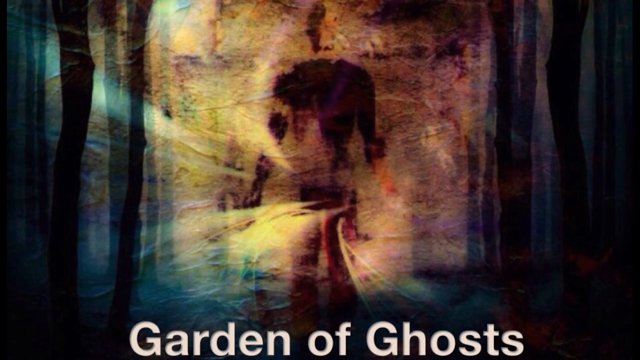
We are very proud to be able to announce that we have started taking pre-orders on our Bandcamp site for our second album Garden of Ghosts . The release of the album is scheduled for November 2014. The album contains 11 tracks and includes a 12 page booklet with artwork from Brian Watson and all the lyrics. The album has been co produced by Brett Kull (Echolyn) and Fractal Mirror. Brett Kull also mixed the album. Larry Fast mastered the album. People who pre-order the album receive an immediate download of the albums opening track “House of Wishes”. During the pre-order period the price of the album will be EUR 10,00 (ex shipping).
Brett Kull also plays guitars and background vocals on all the tracks of the album and there are also guest appearances by other members of Echolyn, Jacque Varsalona, Don Fast, Larry Fast and The Stephanus Choir.
One of my great Facebook friends and a sometime former student (I’m probably claiming too much here. She was a participant in a summer conference at which I taught!), Ashley Rae, posted this wonderful picture of herself this morning. Talk about great advertisement for Dark Side of the Moon!
Anyway, a huge thanks to the lovely Ashley for permission to repost here.
Ashley Rae and Pink Floyd. A lovely match, indeed.
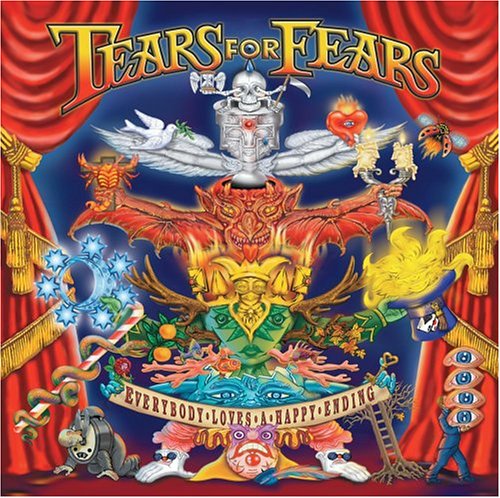
Ten years ago this Sunday, Tears for Fears released its last full album, Everybody Loves a Happy Ending. As I realized this this week, it hit me hard that it has been this long since the band’s last album. A decade. Of course, that album appeared nine years after the previous one, Raoul and the Kings of Spain. Still, in between the two albums came Orzabal’s truly brilliant solo album, Tomcats Screaming Outside. Thus, the gap seemed less severe.
This is not to suggest that TFF has fallen off the radar of popular culture completely since 2004. Far from it.
Released last spring, but only on vinyl.
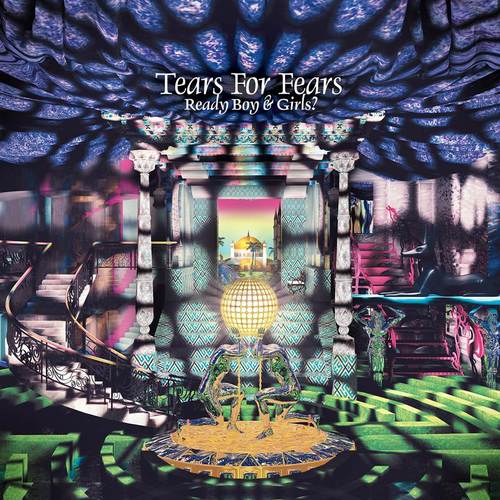
In fact, they’ve been quite active in a variety of ways. In addition to some infrequent touring, TFF released a three-song EP of covers, Ready Boys and Girls? (only on vinyl and with a gloriously psychedelic cover) last spring and is, according to the news available, hard at work on a new album, a rather dark one it seems.
Roland has also just this year released his first novel, Sex, Drugs, and Opera. I’ve yet to read it, but I most certainly will as soon as time allows. Reviews of it have been strong, most reviewers noting with some surprise that this is Roland’s first novel. The guy is obviously immensely talented.
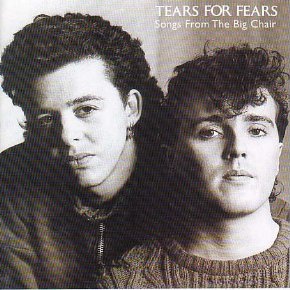
For what it’s worth, I’ve been interested in TFF since I first heard “Everybody Wants to Rule the World.” This was the first single to make its way to the U.S. and to the Great Plains of central Kansas. It was the second single, “Shout,” that convinced me to (made me?!?!) fall in love with the band. I immediately purchased Songs from the Big Chair as well as The Hurting. I’ve detailed my thoughts about Songs from the Big Chair elsewhere on progarchy. Suffice it state here, I consider it—along with Pet Sounds by the Beach Boys and XTC’s Skylarking—as the three best and greatest examples of progressive pop. https://progarchy.com/2013/03/27/about-as-good-as-pop-gets-songs-from-the-big-chair-1985/
If pushed, I might also throw in some of World Party’s songs (but not the albums).
As far as I know, I own a copy of every single song TFF has made with the exception of the vinyl releases mentioned above. I’ve even bought multiple copies of certain albums (such as Songs from the Big Chair and Raoul) just to get the b-sides included with each new release. So, it would be fair to state that I’m a rather huge fan and have been for decades.
***
To commemorate the tenth anniversary of Everybody Loves a Happy Ending and in anticipation of a full album, I’ve decided to rank all TFF albums. So, here they are:
Songs from the Big Chair (1985). As I’ve tried to argue elsewhere, this is a perfect progressive pop album, beautifully conceived and constructed. No stand out tracks as they’re all stand out. Not a flaw on this album. 10/10
Everybody Loves a Happy Ending (2004). Not at the level of Songs from the Big Chair, but pretty close. The album suffers from two problems. First, it’s not nearly as cohesive as Songs. Second, it has a few weak tracks. Still, the album as a whole is so good that it makes the weak tracks even better. The best tracks: Call Me Mellow, Who Killed Tangerine?, Quiet Ones, The Devil, Killing With Kindness, and Lady Bird. 8/10
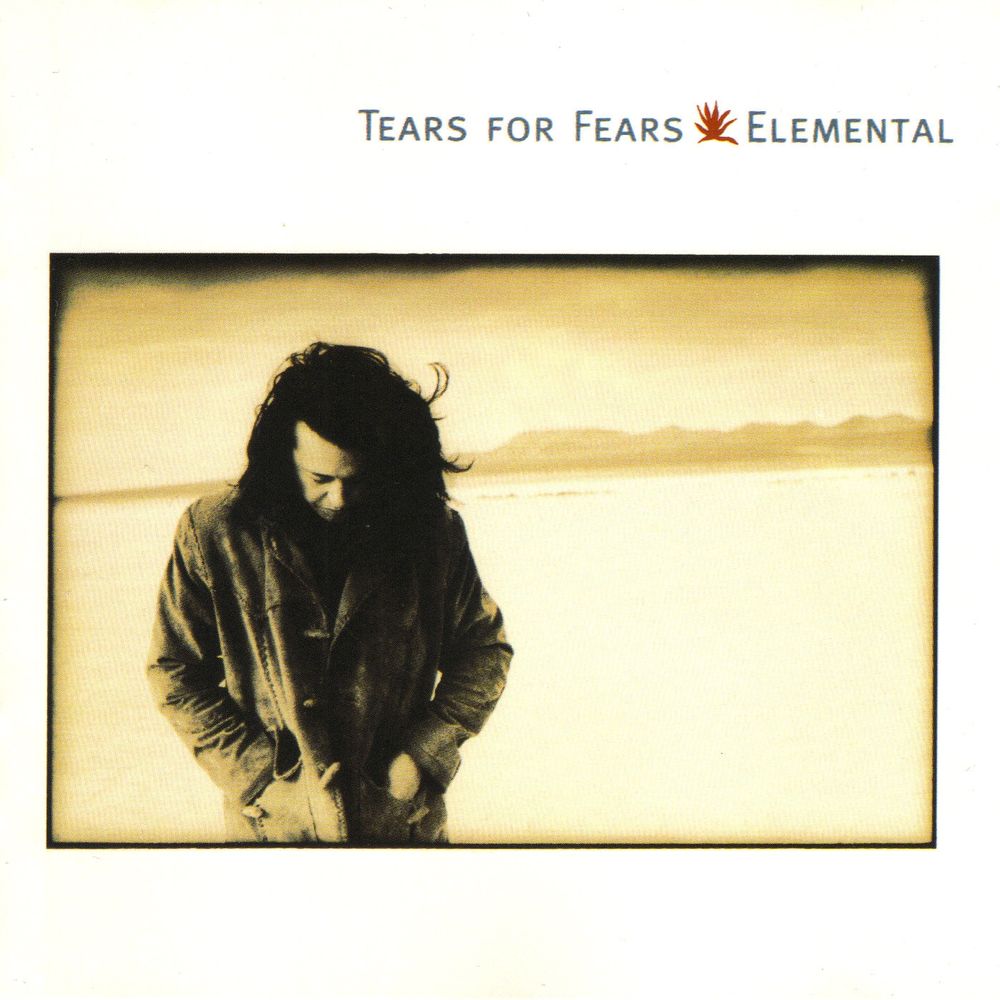
Elemental (1993). Again, a nearly perfect album. If I had to label it, I’d call it prog electronica. As the title suggests, the atmospherics on this album are just stunning, as are the lyrics. Stand out tracks—all of them, really. Not a dud on the album. But, I most like: “Elemental,” “Cold,” “Mr. Pessimist,” “Fish Out of Water,” “Gas Giants,” “Power,” and “Brian Wilson Said.” Everybody Loves a Happy Ending ranks higher, in my opinion, only because its best songs are better than the best songs on Elemental. But, barely. 8/10
The Hurting (1982). Artistically, this is a brilliant album. It is almost pure art rock. Yet, it’s so claustrophobic, it’s hard for me to listen to too often. Still, who couldn’t recognize its genius? 7/10
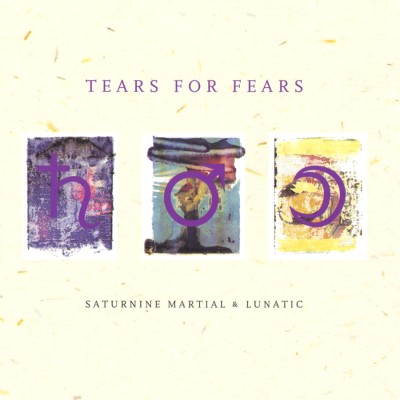
Saturnine Martial and Lunatic. When it comes to b-sides, TFF writes the best. Indeed, the b-sides of TFF not only rival their main album singles, they usually better the very best of other bands. Only Talk Talk, U2, and The Cure rival TFF when it comes to b-sides. Saturnine contains 18 songs from the studio sessions of the first four albums. Even the most experimental, “The Big Chair,” “The Marauders,” and “Empire Building” are interesting. Again, not a failure here. Everything is either brilliant or fascinating (usually both). The weakest song is “New Star,” a pop rocker. But, in context, it’s pretty good. 7/10
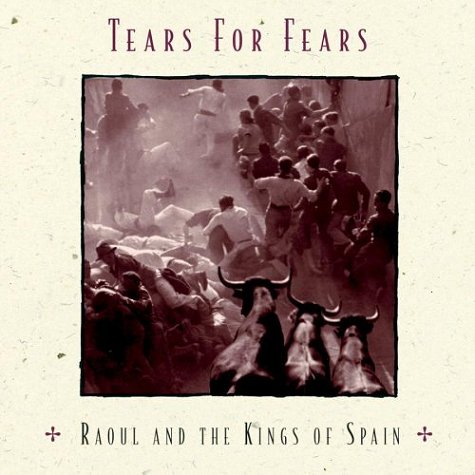
Raoul and the King of Spain (1995). There’s much to love about this album. Indeed, the first five songs are some of the best songs I’ve ever heard. They can best be described as earnest. Here we have the complete Roland—he gives his every thing on these five songs. The remainder of the album is good, but it begins to feel overproduced, beginning with track six. And, unfortunately, that album that started so amazingly simply fizzles out. “Falling Down,” track two, might very well be the single best song Roland has written, and this is saying a lot. 5/10
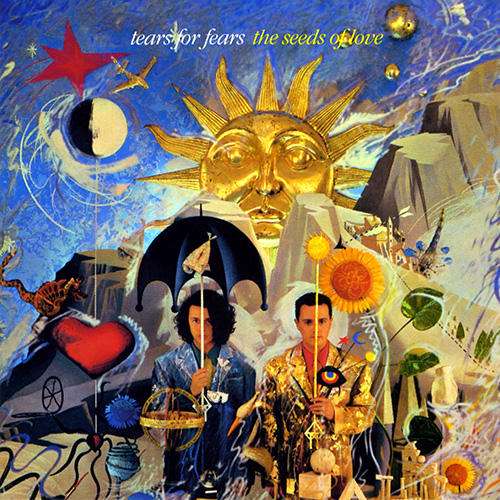
The Seeds of Love (1989). This is, by far, TFF’s least successful album, in my opinion. Successful, that is, measured artistically. Overall, the album is way too bombastic in tone and over-produced. Every time I listen to it, I feel as though the band is screaming at me. Two songs I do enjoy: “Standing on the Corner of the Third World” and, especially, “The Year of the Knife.” Otherwise, I just don’t get this album or why it was so financially successful. 2/10
Joshua Tree era U2. Young, angry Irishman in the New World.
As is more than well known, U2’s latest album showed up in every single person’s iTunes library, wanted or not. A cursory google search reveals how angry this gratuity made a whole lot of folks out in the world. The complaints run as follows: if rock is free, it’s not rock; pulling out guys in their fifties to celebrate the latest piece of technology is just tacky; the music is terrible., etc., etc., etc.
My reaction to these reactions is so strong, my head (and maybe my soul) really really really want to explode. Really.
Admittedly, I’ve not kept up with U2 as well as I once did.
For what it’s worth, I was rather obsessed with them from 1982 to 1987. My love of U2 never came close to equaling my love of Rush, Talk Talk, Yes, or even Thomas Dolby at the same time, but I still knew about everything there was to know about the four guys from Ireland.
To this day (September 12, 2014), I think October and The Joshua Tree are two of the greatest rock albums ever made, “New Year’s Day” a contender for the greatest rock song ever written, and “Under a Blood Red Sky” second only “Exit Stage Left” as the greatest live album of all time.
I still can’t listen either to October or The Joshua Tree (the latter especially) without becoming emotional. The first time I listened to The Joshua Tree, I cried and cried. Perhaps not very manly, but certainly very human. Bono’s voice and lyrics spoke to my lifelong desire for social justice.
As strange or paradoxical as it is seems to me now, I can state with some certainty that while Neil Peart’s lyrics taught me to love myself, Bono’s lyrics taught me to love that which is not myself.
I thought Rattle and Hum a great rockumentary, and I continued to defend—sometimes vehemently—U2’s music post “Rattle and Hum.” I couldn’t do that now. While I think post-Rattle and Hum U2 is very, very good, it’s not excellent. U2 enjoyed a streak of genius from Boy to The Joshua Tree. After 1987, though, it did great things but not brilliant ones. The song with Johnny Cash on Zooropa and Fez from No Line on the Horizon still show that old brilliance, but the glimpses of genius have become rarer as U2 has aged.
I’m sure there are reasons for this, though I’m not sure I could identify them easily. I do think that U2’s social justice made much more sense in the Cold War than it does in the post Cold War period. By this, I don’t mean that Social Justice is less important than it was in the 1980s. It’s ALWAYS important. It’s just that the social justice U2 espoused was anti-Cold War, a focus on problems that did not fit into the Cold War scheme of things. With the Cold War over, U2’s position seems less full, somehow watered down. In hindsight, I think their positions were necessarily anti-Cold War as opposed to a-Cold War. The troubles of early 1980’s Ireland or South Africa just don’t hold the kind of gravitas they once did.
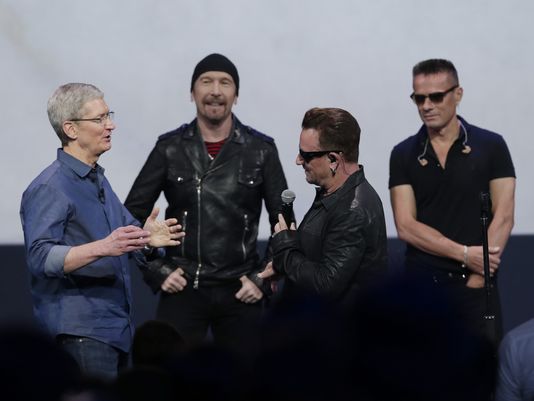
Tim Cook and three members of U2, September 9, 2014.
This is all a very long way of saying to U2 and to Apple, thank you. When I look back at my 1980s, Steve Jobs stands next to Bono as heroes. Both spoke for excellence in the human condition. I have no problems with the two being connected, in my memory or in the actual present. Do the guys of U2 looks like they’re in their fifties. Three of the four do. The Edge still looks young. But, hey, who cares? Age is utterly and completely relative. Do I at 47 act like I did at 22? Thank God, NO! Wouldn’t it be much worse if U2 spent their money on plastic surgery rather than advocating aid for the poor in Africa?
And, I really, really like the new album. Is it The Joshua Tree. No. Is it even Actung, Baby? No. Is it good? Yes. Bono’s voice still sounds excellent, the lyrics are quite strong, and, perhaps most importantly, the music is completely earnest. No gimmicks, no fads, no tricks—just four older guys making music.
Thank you, Tim Cook. Thank you, four guys from Ireland.
[P.S. This is my 500th post at progarchy. Tempus fugit.]
This makes me sad. Apparently, a few months ago, Steve Walsh announced his retirement from the great American band, Kansas. He performed his last concert with them on August 16. His absence leaves Phil Ehart and Rich Williams as the only original members left in the band. The band has a replacement singer, but I know that it just isn’t the same, just like David Ragsdale, while a fine violinist, isn’t Robby Steinhardt, and Billy Greer isn’t Dave Hope. They never even tried to replace Kerry Livgren, a seemingly impossible task.
Ronnie Platt is the new singer and keyboardist, and his first show with the band is today, September 12. David Manion has also joined the band to handle the majority of the keyboard work, as well as vocals. Honestly, I would have liked to see John Elefante rejoin the band, but I doubt if that’s what he wants to do at this point in his life. Oh well.
On June 30, 2014, Steve Walsh informed the members of KANSAS that he is resigning from the band. His last performance with KANSAS will be August 16, 2014, in Sioux City, Iowa, at the Hard Rock Hotel & Casino.
As KANSAS continues on, the band wishes Steve only the best in his future endeavors, and thanks him for the 41 years.
I’m going to go pout about the sad decline of arguably the greatest American progressive rock band ever. I’m glad I got to see them live with Steve Walsh, Rich Williams, and Phil Ehart several years ago.
Just thought of an epic supergroup, though. Kerry Livgren, John Elefante, Neal Morse, Mike Portnoy or Phil Ehart, and Dave Hope. Ya, sounds more like a reincarnation of Kansas. But, with Morse, it could be the best attempt at Christian rock ever. Ok, fantasy time over. Bye Steve Walsh.
On Tuesday afternoon, U2’s new album was just there, waiting for you. Like an Ikea catalogue. Or a jury summons. Or streptococcus. The latest inescapable unpleasantry for anyone who’s chosen to participate in our great digital society — more specifically, the 500 million human beings on this planet who use iTunes.
…
As for the album itself, it’s called “Songs of Innocence,” perhaps to suggest that U2 is abandoning a swaddled orphan on your doorstep, not an intrusive cluster of idea-starved rock songs. Yeah, okay, this might be the largest album release in history. It’s also rock-and-roll as dystopian junk mail.
…
In this brave new farrago of medium and message, U2 seem to have transmitted all of rock-and-roll’s misguided egotism into one ridiculous statement: Our music is technically worthless and everyone in the world should hear it. That’s what this band is “all about,” and Apple is happy to do its part, making you the owner of these songs without asking your permission. Which is disgusting.
Well, I don’t know how dystopian this event is. Giving away free stuff: isn’t that just a promotional stunt, calculated to generate PR to sell more stuff?
U2 and Universal Music Group will face some hurdles due to disgruntled retailers. Sources say Target has a policy of not carrying any title that was first released to digital retail. Target refused to initially carry Beyonce’s self-titled album following her surprise iTunes exclusive, and Amazon withheld the usual prime page placement. To entice retailers, Universal is offering four tracks that iTunes will not have until November, according to sources. Some retailers could walk away with more tracks, as sources say Universal has three additional tracks for select retailers.
The awareness surrounding the Apple giveaway and related advertising efforts could be a financial boon to U2’s catalog. As such, Universal is said to be planning the most aggressive catalog program it has ever executed for U2. The band’s catalog has already been sale-priced at iTunes and is promoted as “limited-time pricing” on the iTunes Music Store home page.
BONO, the lead singer for U2, has written a letter on the band’s website explaining why iTunes is offering their new album, Songs of Innocence, for free. Read on.
Hello, bonjour, ciao, hola, hallo, zdravo, dobar dan, Dia duit, hæ, hej,hei, cześć, olá, ćao, namaste, sawatdee, jambo, pozdravi, Γεια σου, привіт, שלום, مرحبا, こんにちは, , سلام, 你好, Привет….
Remember us? Pleased to announce myself, Edge, Adam and Larry have finally given birth to our new baby… Songs of Innocence. It’s been a while. We wanted to get it right for you/us. We just finished it last week and thanks to Apple and iTunes it’s with you today. That’s already amazing to me as it normally takes a few months to turn this stuff around.
Part of the DNA of this band has always been the desire to get our music to as many people as possible. In the next 24 hours, over a half a billion people are going to have Songs of Innocence… should they choose to check it out. That is so exciting. People who haven’t heard our music, or weren’t remotely interested, might play us for the first time because we’re in their library. Country fans, hip hop afficionados from east LA, electro poppers from Seoul, Bhangra fans from New Delhi, Highlifers in Accra… might JUST be tempted to check us out, even for a moment. What a mind blowing, head scratching, 21st century situation. Over 500 million people… that’s a billion ears. And for the people out there who have no interest in checking us out, look at it this way… the blood, sweat and tears of some Irish guys are in your junk mail.
You’ll have noticed the album is free to U2.com’ers from the band. It’s also free to everyone on iTunes thanks to Apple. To celebrate the ten year anniversary of our iPod commercial, they bought it as a gift to give to all their music customers. Free, but paid for. Because if no-one’s paying anything for it, we’re not sure “free” music is really that free. It usually comes at a cost to the art form and the artist… which has big implications, not for us in U2, but for future musicians and their music… all the songs that have yet to be written by the talents of the future… who need to make a living to write them.
We’re collaborating with Apple on some cool stuff over the next couple of years, innovations that will transform the way music is listened to and viewed. We’ll keep you posted. If you like Songs of Innocence, stay with us for Songs of Experience. It should be ready soon enough… although I know I’ve said that before…
I hope after listening to our new long player a few times, you’ll understand why it took so long. We really went there… it’s a very, very personal album. Apologies if that gets excruciating… actually, I take that back. No apologies if it gets excruciating. What’s the point in being in U2 if you can’t go there?
There is no end to LOVE.’
BONO
It’s Matt here, and I hope that I find you all on fine form. As you may have noticed, The Reasoning have been somewhat off the radar lately. This is primarily because we have been concentrating so much on album writing, but more on that later.
First of all, whilst it saddens me greatly to say this, it has been necessary to cancel the forthcoming shows scheduled for October and November as part of our Great Escape tour. This was a difficult decision to make, but for a variety of non-musical work related reasons, logistical complications have proven to be insurmountable on this occasion. We would like to apologise wholeheartedly for this: full refunds will of course be available from all points of sale. I also extend my deepest apologies to our good buddies HeKz, who have been nothing but professional in response to the situation.
Secondly, we can tell you that the intended title for the album is Horrorscopic (with some stunning artwork by Graeme “Twig” Bell!)… but given this enforced respite, we’ve decided to take some time away from the music, in order to allow it to grow and develop more naturally. This will also enable us to think carefully about how best to produce, record and promote it. It must be said that, with 40,000 physical album sales and 100,000 digital downloads to our name, as well as 10 years of musical history, 4 albums, 1 acoustic album, 1 EP, 1 DVD, 1 Christmas single and a Top 10 Amazon chart single already under our belts – not to mention some truly amazing headline tours, shows in Europe and the US, alongside gigs such as High Voltage, shows with Marillion, FISH and many other awesome bands – a breather is probably well-deserved! There’s no finite limit to said breather: whether it takes us six months or two years to create an album that we’re genuinely proud of, then it will have been more than worth the wait. We hope that you will agree and understand. In the interim, of course, you’ll still see many of us out and about at other gigs, pontificating online and (if you’re really lucky) doing the weekly shopping [insert supermarket of your choosing].
As always, from the bottom of our hearts, we cannot thank you enough for all of your continued and incredible support, and we are humbled by the enduring love that you have shown us over the years
Much love, Matt, Rach, Jake, Keith, Rob and Seb The Reasoning xxxxxx
PS The wonderful HekZ will be arranging new dates to promote their fantastic new album. Go and check them out. An amazing band…….
A brilliant piece of pop (“prog pop” would go too far; but more than mere pop; pop in a SKYLARKING kind of way), EVERYBODY LOVES A HAPPY ENDING, came out 10 years ago on September 14.
Roland, where art thou? Please write something more. And, soon. The world needs your infectious progressive pop.
Well, at least, I need it.
The best TFF album since Elemental, 2004’s EVERYBODY LOVES A HAPPY ENDING.