If there is any justice in the world…

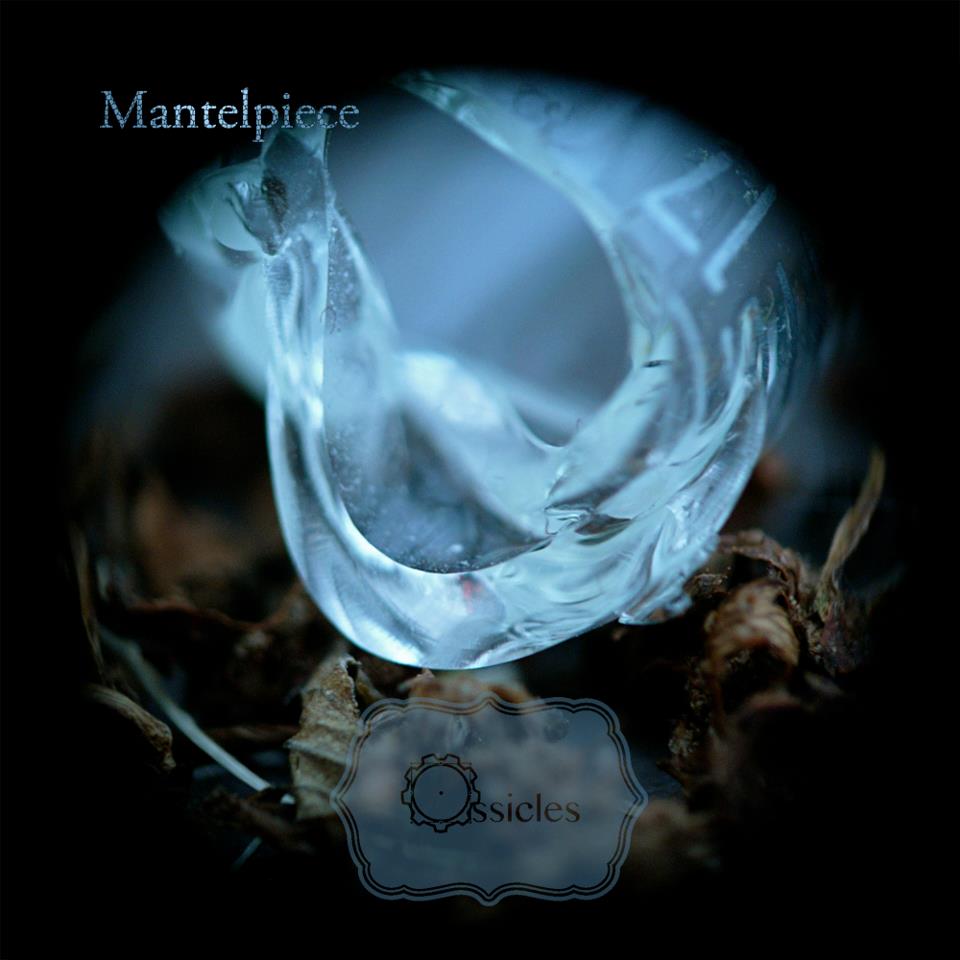
Ossicles – Mantelpiece (Dec 2012)

Image

Sometimes an amazing album comes your way that you wonder how the rest of the world missed it.
Over a year ago two 20 year old guys from Norway produced a breathtaking double CD called Mantelpiece.

It’s a breathtakingly rich and accomplished piece and it deserves to be noticed.
Have a listen to the video and see what I mean…

A Most Humane Prog Epic: Where Are They Now? by The Tangent

A week or so ago I had the privilege of writing about what I consider to be one of the few songs of the rock era (that glorious era starting ca. 1955 with the release of Black Board Jungle) to have come close to reaching perfection.  I don’t mean perfection without flaw, I mean perfection as the attainment of purpose, a thing reaching its end, the kind of perfection that is fully attainable only in the realm of the heavenly spheres.  In the here and now, we reach for it, but we know we can never quite touch it.  Still, we don’t despair at our failings, we glory in the possibilities.  At least those of us who love prog want so very badly for those we love and admire to reach it.  When they strive, we feel the weight of their struggle and their achievement.

That first post dealt with Rush’s “Natural Science,” the final track on Permanent Waves.  Really, this is how it should have been.  After all, if Neil Peart hasn’t spent his adult life striving for excellence (perhaps, perfection) in all things, no artist has.

This week, I have the equal privilege of writing about another masterpiece, one written a bit closer to the present day.  In fact, much more than a bit. It’s only five years old. But, what a song. Even though we have thirty-four years of hindsight regarding Natural Science and only a half decade for the subject of this post. . . well, it works.

thetangentinterview1So, for my second progarchist track that comes so close to perfection is the first track of The Tangent’s 2009 album, volume V in The Tangent Chronicles, Down and Out in Paris and London (Insideout Music).  Entitled “Where Are They Now?,” the epic takes the listener on one very intense journey from betrayal to regret to repentance and, finally, to a well-earned forgiveness.

And, of course, who else but Andy Tillison could have authored such a song?  Tillison is, after all, our beloved prog hero who offers the world, so openly, equal parts the modern and post-modern muse, the chronicler, and the critic in all that he does.  Though deeply skeptical of almost all things unworldly, he always presents a full earnestness of emotion, an intellectuality rarely seen in this world, and a passion for all things good and loving.

Not surprisingly, Tillison’s lyrics are some of his best ever, offering Waste Land-like vignettes of a number of different persons, including a stock broker and trader; a former Spitfire pilot; and a physician.

Tillison’s title comes from George Orwell’s first lengthy book, a fictionalized autobiographical account of poverty and injustice in Europe.  Though the two works are separated by seventy-six years, they have almost everything in common.  As Tillison would do with his greatest work (so far), Le Sacre du Travail, a reconsideration of 1913 and Stravinsky, Down and Out in Paris and London puts a new spin on Orwell’s great work dealing with post-Great War betrayal, financial collapse, the voicelessly downtrodden, and the desire of demagogues to capture the misery for their own nefarious purposes.

In many ways, Tillison has the right to claim the mantle of Orwell.  They share a similar outlook on life, on politics, on social justice (and the deep failings of our wealthy society to deal with its problems), and on the sacred essence of the human person as well as of the written word.

Take the following lyrics from the opening of Where are They Now?:

Caught in the lights in the underpass

A guy who needs no name

Lights a cigarette and thinks back. . .

He lost the winning game.

The Range Rover is long gone now,

The folks he bought and sold

Are transitory commodities

When investors turn their eyes on gold.

What gives these lyrics so much meaning is Tillison’s depth of conviction when singing them. Indeed, only he could make “Range Rover” a poetic lament, a symbol that ties together the depths of depravity in the one who uses another for his own benefit.

[It’s also wonderful that Tillison references the “Winning Game” from volume II of The Tangent Chronicles, The World That We Drive Through.  But, this is a side note.]

It’s hard not to love Tillison’s voice as—in his vocals—he always matches the seriousness of the music and the lyrics perfectly.

This proves as true in Where are They Now’s beginning as in its end.  The song ends with imagery that could be taken literally or symbolically.

Like a bolt from the blue,

Like a shot from above,

He talked with the folks from the valley below

–and found love!

This reads like the best of Greek myth. Hubris vanquished and humility and love rising superior to all things prideful.

One of the things I about progressive rock is the unexpected segues.  By this, I mean, in particular, that dropping of the stomach or perhaps that explosion of soul we experience, for example, when we peer, for the first time, at Chicago from the observation platform of the Sears Tower. Genesis did this so well, especially, in their immediate post-Gabriel era.  In their longer pieces, Rush mastered this as well, but no where more so than with Exit Stage Left and Broons Bane/Trees/Xanadu.

In modern prog, no bands write segues better than Big Big Train and The Tangent, though there is stellar competition out there.  In Where Are They Now?, there are four of these moments—the kind that makes the stomach drop—that get me every time I listen to this outstanding work of art.  Almost always these involve some interplay of guitar, keyboards, and Andy’s terrific vocals.

What strikes me most about Where are They Now?, though, is the absolute humanity of the song.  In lyrics, music, and flow, this song just exudes the humane qualities Tillison so abundantly possesses.  We feel sick when we realize how corrupt the former owner of the Range Rover is.  We feel equally exalted and forgiving when the corrupt seek redemption and forgiveness.

Whether it’s Stravinsky, Orwell, or Tillison, this is a mark, always, of the highest accomplishments in art.  It is also, to my mind, a mark of accomplishment in the race toward excellence and perfection.

John Simms on John Bassett’s solo album, Unearth

An excellent review of Bassett’s solo album, out tomorrow.  http://flightoftheskypilot.blogspot.com/2014/03/john-bassett-unearth_30.html

Pono, Hawaiian for Snake Oil

ImageI wrote a scree yesterday indicting Pono for all kinds of crimes.  I put it aside.  Like one of Lincoln’s unsent letters, it will cast its heat alone, sitting on my google drive like a hot stone, until that too passes into ether.

Much of my anger came from frustration — in my professional life as an audiovisual archivist I have some sense of the limited capabilities of high resolution audio — and also a lack of information.  I had believed Pono, the high-res audio player Neil Young is backing to rectify what he regards as decades of digital’s abuse of music, was set to use a proprietary format, and would essentially be a platform for selling new releases of old albums that could only be played on Pono.  This is not the case.  PonoMusic will be using FLAC, an open-source audio codec that’s been around nearly as long as folks have cried “foul” at MP3.  FLAC is known as a “non-lossy” compression scheme, meaning that while it will compress the source audio file (whether that file is a high-resolution WAV or merely CD quality), the information it dumps in compression isn’t the actual audio data but rather the metadata that describes the audio and makes it work on various playback systems.

So it’s not in the music file but in the guts of the Pono player, with its advanced circuitry and digital-to-analog conversion system, where the magic happens that Young and Pono’s engineers are claiming.  Which, given the range of gadgetry out there to reproduce sound, makes me shrug my shoulders.  What’s nice to know, though, is that Pono will play those higher-res FLAC files that often inhabit a bandcamp page (as well as WAVs and, for those of us who are unwashed, MP3s).

While I’m no longer out for blood, Neil Young and his Pono provoked my ire in a couple of other ways.  In interviews regarding Pono, Young has suggested that if you’re not listening to high-res audio, and doing so on a player like Pono, that you’re not really listening, that you have a tin ear that can’t truly enjoy the music because of the digital garbage in lower-res files.  There are a ton of counter-arguments here, but I think Neil’s old man snarky-ness in itself is disappointing.  Despite his reputation, he IS a part of the big music business, and has sold to dedicated fans the same record on LP, then cassette, then CD (often multiple re-masterings), then MP3.  To tell them now they need fork over another $15-$25 for the new high-res release and $400 for a player compromises his integrity and smacks of money grab.

It also ignores the fact that most people treat music as a part of a larger experience, whether they’re cranking Pandora through the earbuds at work or enjoying a Sunday morning with a Zeppelin gatefold.  Listening context and setting are everything.  But let’s say you do want to experience what Neil’s talking about.  Good luck.  The real elephant in the room not being mentioned here is the playback system, and by that, I mean the amp and speakers (and listening space, for that matter) Pono might use to reproduce the audio, to actually push the air to your ears.  Without good reproduction, and I mean very, very good reproduction (and in this context headphones just don’t count), Pono’s reproduction of high-res audio — and we’re talking about a sampling rate up to 4x CD quality — is no better than my iPod shuffle.  Will PonoMusic sound great? Sure, if your playback system has a few thousand dollars in it.  Would it hold up to a taste test against a well-mastered CD or higher-quality MP3 played back on a solid but cheaper system? That’s a shootout I’d like to see.

Further reading from the stalwarts at CNET:

http://www.cnet.com/news/sound-bite-despite-ponos-promise-experts-pan-hd-audio/

It’s Time to Connect With John Wesley

Disconnect-coverInsideOut Music  recently signed John Wesley to its label, and his new album, Disconnect, will be available March 31 in Europe and April 1 in the U.S.  I’m not pulling an April Fools’ joke when I say that it is my favorite album of 2014 so far (despite stiff competition from  the likes of John “KingBathmat” Bassett, Gazpacho, and Transatlantic).

Who is John Wesley? Hailing from Tampa, Florida, he’s an enormously talented guitarist and vocalist who has toured with Porcupine Tree, Fish, and Steven Wilson. Check out Porcupine Tree’s DVD, Anesthetize, to see how integral he was to their live show. As a matter of fact, after watching that DVD, I wondered why Steven Wilson didn’t go ahead and make Wesley an official member. His guitar playing and vocals added a new and exciting dimension to Wilson’s songs.

Approaching Wesley’s new solo work, I had low expectations – sidemen often fail to carry the load of an entire album. (Tony Levin is my all-time favorite bassist, but his solo stuff just doesn’t do anything for me.) Suffice it to say, from the opening chords of the first track, “Disconnect”, to the spacey fadeout of “Satellite”, this is a jaw-dropping collection of songs. There isn’t a weak track in the whole bunch as Wesley runs through a wide range of styles, all the while rocking like a maniac.

I hear hints of Pink Floyd in the aforementioned “Satellite”, Rush (none other than Alex Lifeson lends a hand on “Once a Warrior”), and Lindsey Buckingham in “Windows”. “Gets You Every Time” is an aural blast of pure joy in the vein of classic Cheap Trick.

The highlight has to be the transcendent and chiming “Mary Will”. In it, Wesley sings like a desperate man clinging to his last hope:

“In the cleansing rain, you stand by her.

In the roses, miracles will occur.

Never to forgive, never yourself,

Not even Mary’s son dared to offer help,

But maybe Mary will stand for you.

Maybe Mary will stand for you.

Maybe Mary will have a word for you”.

A spiraling, yearning, yet perfectly restrained guitar solo brings this brief masterpiece to a close.

John Wesley is a major talent in rock, both as a performer and a songwriter. Kudos to InsideOut Music for making his music available to a larger audience. Disconnect is a must-have if you value passion, brilliance, and depth in your music.

Here’s the official video to “Mary Will”:

Lessons in humility from the cover of the Rolling Stone

Here are a few more thoughts on Dennis DeYoung’s Vancouver concert. The article begins:

“Babe, I love you,” sings Dennis DeYoung in the hit song he wrote for the rock band Styx. It was 1979. “Babe” was on Cornerstone, the band’s ninth album. It went triple platinum, selling over three million copies.

The last time Dennis visited Vancouver was in 1981. Styx had just released Paradise Theater, their tenth album, which also went triple platinum, thanks to phenomenal songs like “Too Much Time on My Hands” and “The Best of Times.”

But in 2014, Dennis finally returned to British Columbia, with six other musicians alongside him to play a concert, “The Music of Styx,” at the Hard Rock Vancouver. One of them, on background vocals, was his wife Suzanne.

Dennis introduced Suzanne to the audience as the woman he sings about in the song “Babe.” He also pointed out that their marriage has lasted forty-four years. After all these years, the song still stands strong as an inspired testimony to true love.

Although he is himself sixty-seven years old, Dennis sang all the songs at this year’s Vancouver concert with the same stunning, mega-talented voice and passionate conviction that he had in his youth.

Dennis and Suzanne are both Catholics. Both half-Italian, they grew up in the same Chicago neighborhood. They met at the ages of seventeen and fifteen as visitors to a dance at Mendel Catholic High School.

The article continues over at The B.C. Catholic Web site.

20 Looks at The Lamb, 11: All We Like Sheep

What do you get for pretending the danger’s not real?
…the valley of steel
(Pink Floyd, “Sheep,” from Animals)

TheSheepLookUpYou pay attention to an instance of saying, or an instance of writing (or, by extension, an instance of singing).  The hardest thing to notice is quite often nothing that is there; it’s what is not there.  Oh yes, an absence can definitely be a presence, but I’m not just rehearsing on that saw again.  This time, I’m thinking of what’s just not there at all, and does not demand your attention by its absence.  Yet noticing its absence can change things.  Maybe a lot.

So, what Lamb?  What Lamb lies down?  Which Lamb is it?

An easy answer that I explored before:  The Lamb whose Supper was Ready in 1972.

But now let’s look at our text again.  If you have your liner notes, please turn with me to Isaiah chapter 53, verse 6.

What do we actually know about this Lamb?  It lies down on Broadway (Duh!!).

Meanwhile from out of the steam a lamb lies down. This lamb has nothing whatsoever to do with Rael, or any other lamb – it just lies down on Broadway.

Nothing to do with Rael, even though it’s our TITLE?  Nothing to do with any other lamb?  Would this include the Lamb for whom Supper’s Ready?  It’s really only one section of the title song that tells us much of anything more than this(and it isn’t that much):

The lamb seems right out of place,
yet the Broadway street scene
finds a focus in its face.
Somehow its lying there
brings a stillness to the air.
Though man-made light
at night is very bright,
there’s no whitewash victim,
as the neons dim, to the coat of white.

When Rael meets the Crawlers, he notes: “There is lambswool under my naked feet.”

It seems as though that’s all.  I can’t find any more right now.  Not explicitly there, at least.  In fact, there are no more lyrical references to The Lamb after the title track, except the wool.

This especially strikes me today.  The album does not provide an answer to my question:  What Lamb?

Push aside (though only for now; only for this look) the strong associations of ‘lamb’ with sacrifice.  It occurs to me that a lamb is a young sheep.  Notice the grammar here:  “It occurs to me.”  It is an event that happens to me.  I’m the fly again, and it’s a windshield that I didn’t see coming.  It’s not that I didn’t know it, in some broad and technical sense of ‘know.’  Sure, I knew it.  But it just occurred to me.  And when that word, ‘sheep,’ came as part of the occurrence, a whistle blew and I heard a voice shout, “ALL CHANGE!”

cat
[If going to Wikipedia is too much effort, here’s a picture of a cat.]

Take a look at the opening section of the article on ‘sheep’ on Wikipedia.  It’s right here if you click.  I’ll wait….

Back?  Good.

A sheep is a ruminant mammal.  Rumination.  “The process typically requires regurgitation of fermented ingesta (known as cud), and chewing it again.” (Wikipedia again).  As my students like to say nowadays, “I just threw up in my mouth a little,” and I need to chew some more.

So let’s ruminate a bit on sheep.  This is my suggested background for our next listen.  (You are listening again each time, right?  No, there will not be an exam.  Not besides the exam that you administer yourself.)

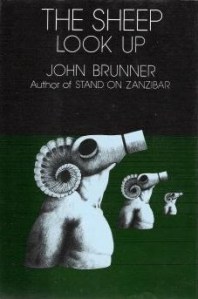
The title betrays my first association.  “All We Like Sheep Have Gone Astray” (You thought of Handel or Bach — or both — just as quickly as the Bible, or perhaps even more quickly, right? A body which was baroquen for you?  Oops, we put aside the sacrifice thing, didn’t we?)  Second association in the opening epigraph:  Pink Floyd’s “Sheep.”  Third association:  John Brunner’s 1972 novel, The Sheep Look Up (its title a reference to Milton).  More upbeat, following on the reference to Bach: “Sheep May Safely Graze.”

Pink_Floyd-Animals-FrontalBut here’s where the wool begins to rub.  Sheep suggest peace, and the protection of a shepherd.  I was a lost sheep, but the shepherd found me, and it’s so good to be back with the fold again.  But sheep follow.  Sheep go with the herd (not unlike cattle).

Meek and obedient you follow the leader
Down well trodden corridors into the valley of steel

Sheep-Image11Sheep’ is plural, so there’s no ‘s’ to remove in order to make it singular.  Does it ever really become singular?  We think of sheep as followers in a very negative sense.  They are also boring in just the right way to put us to sleep if we count them.  It may be only the clothing that is sheepish, the wearer being a wolf.  If the sheep is black, we don’t want it in our family (which suggests racism, as well as having three bags full of wool).  If the sheep are lost, leave them alone and they’ll come home.

Ewe rock!

Ram on!

Where in the flock is this associative chain headed?

My experiment this time is with taking the detour via the word ‘sheep,’ but then coming back to the Lamb.

lamblyingIf it is a Sheep that Lies Down On Broadway, what did that shout (“ALL CHANGE!”) portend?  When we know that we don’t know more than this about The Lamb, how does this change how we hear The Lamb?  If the lamb that lies down is not actually singular, even though it supposedly has nothing to do with Rael or with any other lamb (the latter being singular, perhaps?), what then?


Let us listen again and see.  Yes, I will be doing it with you.  There will be a number of us, over the next couple of days, on at least two continents (if Progarchy stats are believable), but who’s counting?  Perhaps we should also try to be aware of each other, in some way.

Don’t think of it as following.  Think of it as an individual choice to explore “following.”

And don’t fall asleep.  If you do, it means that you were counting rather than listening.

<—- Previous Look     Prologue     Next Look —->

Cosmograf News

cosmograf

One of our heroes, Robin Armstrong, just posted the following at Facebook:

Album update – It’s finished!, well very very nearly. Last night was spent holed up in Aubitt Studios with Rob Aubrey, working into the wee small hours putting the final mixes in place. Just final tweaks and then the final master next week. Expect some sort of pre-order info next week…. and of course the big reveal for the title and artwork.

Progarchists everywhere await this with eager enthusiasm.

The Yes Family Tree

PROG mag (Issue 40) has a great poster to help you keep track of the sprawling epic that is Yes! Click to enlarge:

A Little Neil Peart Every Now and Then. . .

Rush_Permanent_Waves. . . is healthy for the soul.

In their own image

Their world is fashioned

No wonder they don’t understand

—Neil Peart, 1980

***

Rush-SignalsSome will sell their dreams for small desires

Or lose the race to rats

Get caught in ticking traps

—Neil Peart,1982

***

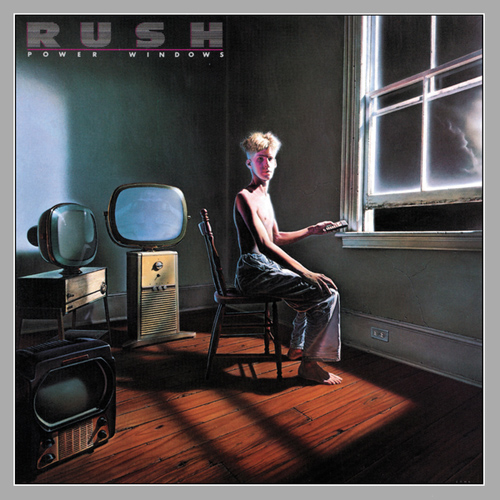
power windowsYou can do a lot in a lifetime

If you don’t burn out too fast

You can make the most of the distance

—Neil Peart, 1985

***

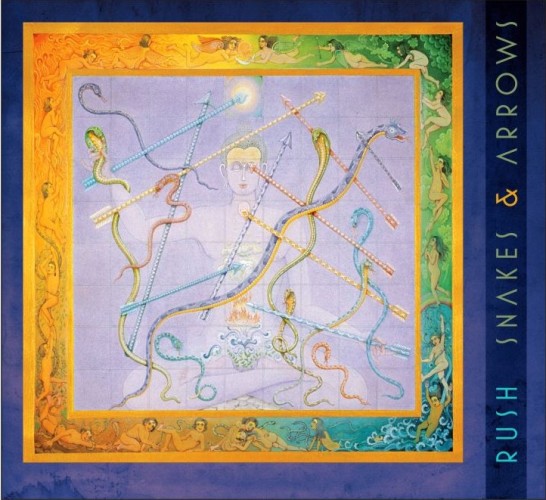
rush snakes arrowsNow it’s come to this

It’s like we’re back in the Dark Ages

From the Middle East to the Middle West

It’s a world of superstition

—Neil Peart, 2007

***

rush clockwork angelsThe future disappears into memory

With only a moment between.

Forever dwells in that moment,

Hope is what remains to be seen.

Forever dwells in that moment,

Hope is what remains to be seen.

—Neil Peart, 2012