Seen Better Days

Pop culture is forever stuck in its past.

Dan Flynn nails it over at The American Spectator:

We use our futuristic devices to play ancient music. Starting sometime in 2012, catalog albums outsold new releases (eighteen-months old or younger) for the first time since Soundscan began tracking sales. When stale tastes better than fresh, something’s gone terribly wrong with the market where you shop.  

What do we bequeath in 2014’s time capsule? The dearth of truly popular and remotely cultural pop culture is enough to make one feel sorry for posterity employing postmodern technology to relive the early 21st century.

The past regarded nostalgia as a mental illness. We experience it as a normal aspect of contemporary life. What does this say of our collective health?

Our preference for Fleetwood Mac’s “Rumours” over Frank Turner’s “Tape Deck Heart” isn’t an indication of the superiority of the past to the present. It merely demonstrates the choke that memory lane holds over current creativity. Great is out there. But you have to look in spots that are really out there.

Tori Amos – 20yrs of Under the Pink

Happy 2014 everyone, I thought I’d write about something different this time, have a look at someone who changed the way I viewed music and how I appreciate it, and approach it.
Back in 1994, not quite 17, I was discovering and developing my own musical tastes, stepping away from Radio 1 and the bland dirge it was playing in the mid 90’s, I have never returned there.
Instead I was delving through my parents shelving, borrowing LP’s and listening avidly, bands like The Strawbs, ELO, Sky and Mike Oldfield, all artists who’ve accompanied me on my musical journey, with my developing love of all things Prog, Pink Floyd, Yes, Led Zeppelin, Black Sabbath, it’s fair to say that my musical tastes were all male orientated, and mostly guitar led, if there wasn’t a killer riff buried in there I wasn’t interested.
I was slowly moving away from the diet of Dire Straits or Chris Rea that I had been listening to throughout 1992, Britpop didn’t interest me at the time, retrospectively the only band of any note in my opinion to come from Britpop was Pulp, and they were making weird and wonderful music long before Phoney Tony and ‘Cool Britannia’ came along!
Post Radio 1 and before I graduated to Radio 2 there was, in the early 90’s a national pretender to the throne, Virgin 1215, a radio station playing more rock than pop, and one which I gravitated to like a moth to a flame, where else could I hear Yes? Black Sabbath? Zeppelin? My beloved Beatles? And then one day, out of the ether, I heard her.
Myra Ellen Amos to use her Sunday name, Tori Amos to you and I, born 22nd August 1963 (we share the same birthday, but not the same year)
The song in question still nestles comfortably in my top ten singles, and is the brilliant Cornflake Girl, with its nursery rhyme esque lyrics, its driving piano, and catchy as hell tune, kicked open a door I’d never opened before, and within weeks its parent album, Tori’s 2nd solo long player, Under the Pink was mine.
The first album I’d ever bought by a female musician, and blimey, what an album, more assured, more experimental, stronger and more confident than her debut (Little Earthquakes 1992) from the hauntingly beautiful opening Pretty Good Year, Tori’s delicate piano playing, her intimate, breathy vocals and amazing vocal range, then, the strings sneak it subtly, and then building with Tori’s vocals and lyrics, nothing random or abstract here, just her and a piano, and it draws you in to the album, slowly building to the middle where the crescendo increases and a burst of guitar and bass, suggests more than sugary ballads are the order of the day.
God then takes any notion you may have been harbouring that Tori was a pretty girl with a piano, and throws them out of the window, the grinding funk, the backward distorted guitars and the lyrics suggesting God would be better with female company, and that voice, that beautiful voice of an angel singing the words of a cheeky devil, what a dichotomy.
The album is nicely paced between the softer tracks like Bells for Her and Baker, Baker, with the gritty, haunting and funky Past The Mission, with its story telling and backing vocals from Nine Inch Nails Trent Reznor, harmonising beautifully with Ms Amos.
The wonderfully quirky The Wrong Band, feels like a lot of the songs on the album, that we’re getting lyrical snapshots or vignettes of bigger pictures, like looking through someone’s photo album without knowing who the people are, or the context in which they were taken, and its this lyrical brevity and beauty that is part of the magic.
No song is too long, nowhere outstays its welcome, and we know all we need to know about the characters in these songs.
Then we get to the second part of the album, the wonderfully vitriolic The Waitress (but I believe in Peace, Bitch) with its snarled lyrics and angry fuzzy guitar, with the restrained drums that are threatening to explode at any moment, then the single, the fantastic, wonderful, sublime Cornflake Girl, I still don’t know what its about, and frankly I don’t care, its music, its chorus, its lyrics, the closing piano and guitar duel, Tori’s double and tripled tracked vocals harmonising, all come together to create a fantastic record that possesses the power of time travel, no matter where I hear it, it transports me back to 1994 and what I was doing then.
Cornflake Girl, Icicle, Cloud on My Tongue, Space Dog and the epic Yes, Anastasia is one of the strongest closing sequences on any album out there.
This, of course was recorded, programmed and designed in the days before MP3, and downloading, so, as with every great album from that era its designed to be listened to as an overall experience, not to be dipped into, as you lose the magic of the album, and the way the moods ebb and flow leading into each other.
From the mania of Cornflake Girl, to the reflective, introspective Tori and piano elegy that is Icicle, with her piano playing out of this world, intuitive, talented, classical, and with the pause between the notes as important as the notes, we’re nearly 2 minutes in before she even starts singing, and when she does, the voice melts your heart like the Icicle in the song title, the following Cloud on My Tongue, with its lush strings and its direct lyrics is a wonderful love song, and keeps the calmer mood started with Icicle.
The mood picks up again, with Space Dog, the beat and piano driving the song along, with the song being superficially about the animals sent in to space, never to return, but, as with all of Tori’s lyrics there’s always something much more going on in the undertow, and this hints at betrayal and back stabbing, sometimes you can decipher the hidden meanings, sometimes the meanings are ambiguous, which is one of the joys of her lyrics and performances.
The closing finale, the epic, 9 minutes plus of Yes, Anastasia, with its lyrics about the Grand Duchess Anastasia Romanov, mixed in with references to Amos herself refusing to be a victim and fighting through her own personal trauma from having suffered a serious sexual assault (see the harrowing Me and a Gun, from her 1992 debut Little Earthquakes), a theme that runs through the whole album on tracks like Past the Mission and Baker, Baker, whilst the instrumentation is amazing, the orchestra soars, the piano sings and Tori’s voice is like an instrument throughout, pulling the strands together and tying them up.
With its closing refrain ‘We’ll see how brave you are’ and the sheer musical talent on display here, this is a mighty piece of work by anyone’s standards.
To someone like me raised on a musical diet of rock and guitars, hearing the piano freed from the traditional group format and on its own as the principle instrument on the album, was like seeing the difference between seeing a caged animal, and seeing the animal in the flesh.
This blew my mind when I first heard it, nearly 20 years ago, and opened me up to a new kind of music, a new way of listening, and as an album has been with me every step of the way from 1994 to today, and whilst Tori Amos continues to make fantastic music, and has produced a fine body of work over the last 20 years, it is this, Under the Pink, to which I return first, time and time again, and is one of those albums that have made me the person I am today.
If any album out there needs a deluxe edition, then this is it, how about it Warners? A nice 20th Anniversary edition, with all the b-sides and live tracks as well?

Cailyn Lloyd’s VOYAGER in Progress

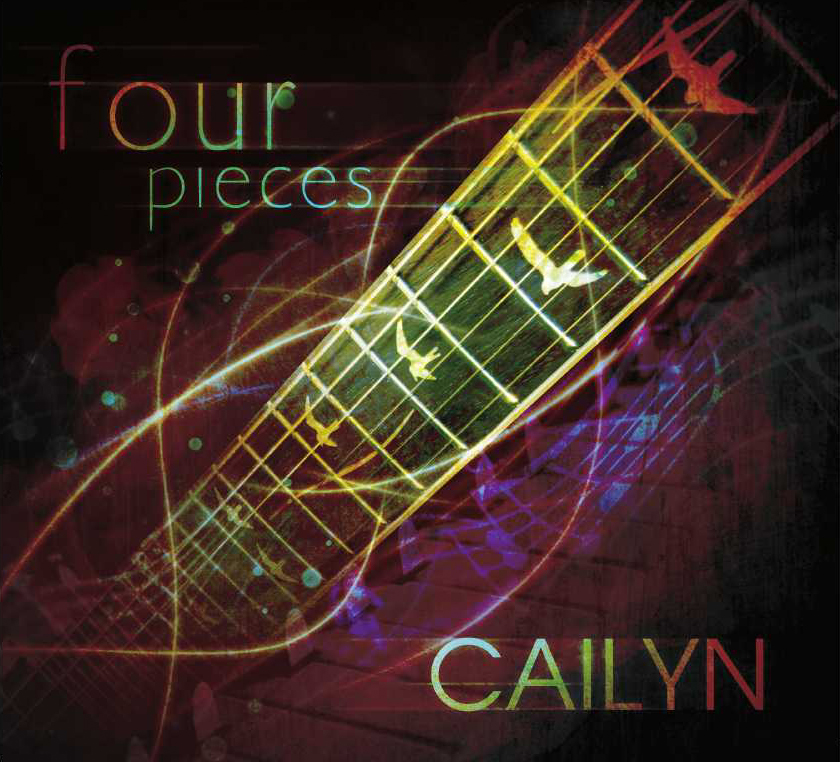
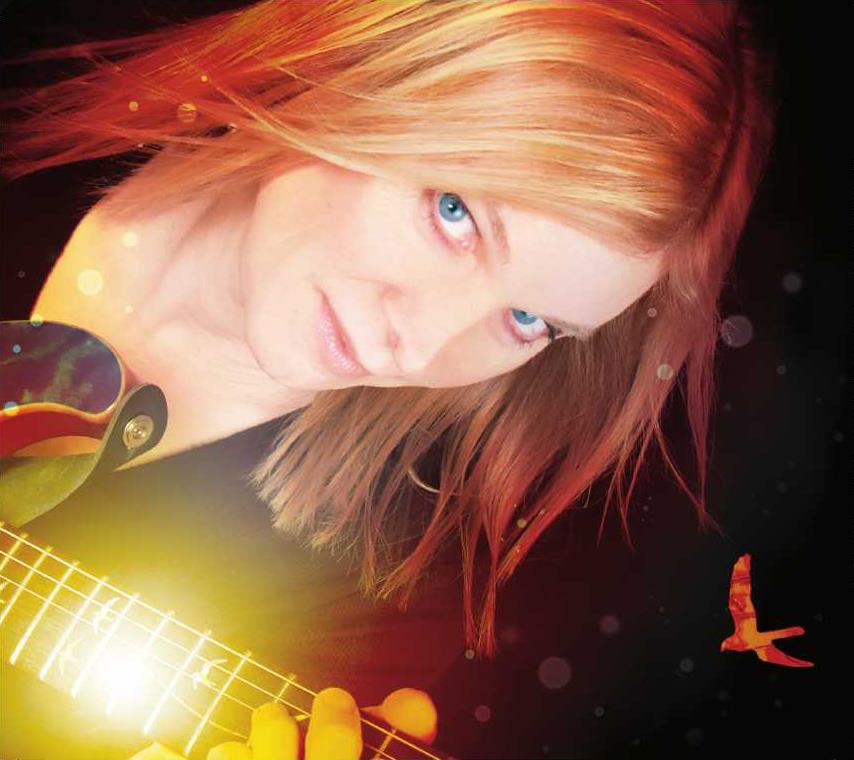
Our friend, Cailyn (she of Four Pieces fame), just released information today about her fourth album, VOYAGER.  Here’s a bit of what she has to say:

4082394417-1-2

I am in the studio, working on a new project called Voyager.  This project arose from my interest in the Planets Suite by Gustav Holst. Problem was, the music as it stood did not easily lend itself to a rock interpretation and the opening movement, Mars, had already been explored extensively by better artists than I.  The idea gradually evolved from there to a musical interpretation of the Voyager Space Project.

Voyager will include excerpts from Jupiter, Saturn, Uranus, and Neptune from the Planets Suite as well as ten original pieces of music (see track listing below).  I have finished the composition for all of the tracks and I am now working on the instrumentation and programming.

While I originally imagined this as a progressive rock suite, it will be more eclectic, not adhering to any single genre.  Much of it is classically inflected symphonic prog, particularly the Planet Suite excerpts as well as Io, Titan, and Triton.  Europa and Pale Blue Dot are more New Age with blues inflections.  Enceladus is free form without time or key signature.  Ariel and Miranda are classic-progressive rock hybrids.

Voyager will primarily be an instrumental work though I have sketched wordless vocals for several of the tracks. Most of the drumming will be recorded on an acoustic set and I am now looking for the right a session drummer for this project. The bass guitar and keyboards will be more prominent, especially the keys as much of the original music is being written at the keyboard.

Run time: about 56 minutes.  Track listing with brief descriptions:

Voyager – A quiet symphonic introduction leads to a bluesy guitar progression followed by a powerful progression of chords that builds to a grand crescendo before a return to the opening theme complete with synths, voices, guitars, and drums.

To find out more (and you should!), including a full track description, click here.

575176_10151022165457603_490734598_n

DPRP Yes Special Pt 2

So we come to Pt 2 of DPRP’s overview of Yes’s works up until Keys to Ascension which features guest contributors Theo Travis, Adam Holzman, Rob Reed and Luca Scherani.

http://www.dprp.net/reviews/201380.php

New Background Image, January 2014

The background image, subject to change.  The picture behind the header and in the overall background is taken from Jim Trainer’s painting for the remixed Goodbye to the Age of Steam by Big Big Train.

progarchy bg 3 jan 2014.001

Leah — Otherworld (Best EP of 2013)

leah-otherworld

My favorite EP of 2013 came from Canada’s Leah, who has transported us again to the Otherworld.

A lot of artists don’t feel constrained by the old “singles and album” format. Because this new era of technology enables and encourages it, we see more and more EPs happening.

There were a lot of great EPs released in 2013, as artists shared their gifts in small bursts of creativity. For example, I really enjoyed the EP releases from Sean KellyHalestorm, Chasing Dragons, Anthrax, and Adrenaline Mob.

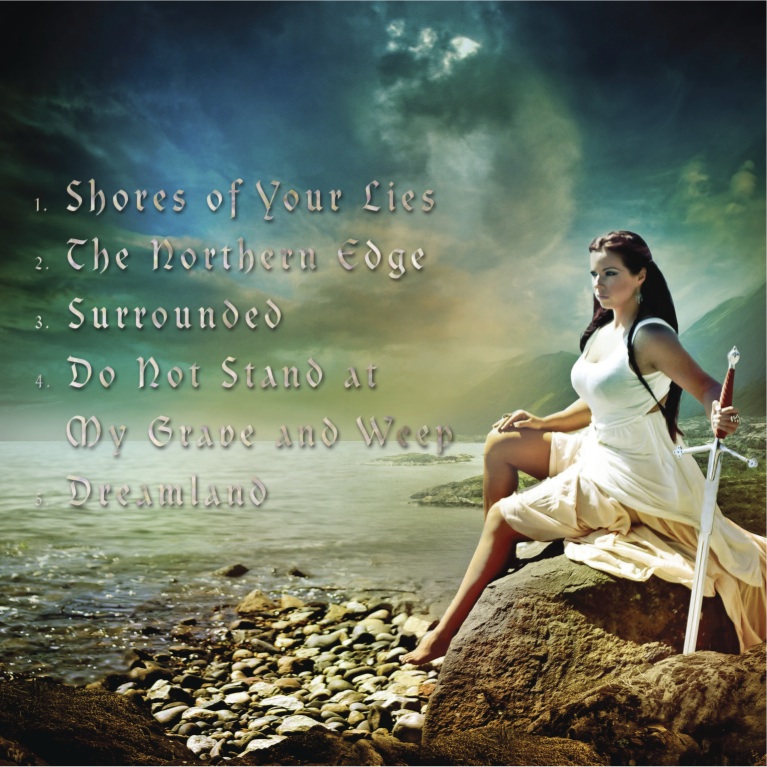
Leah released Otherworld on All Hallow’s Eve. I know that Brad and Carl are big fans; so too are Socrates and Count Floyd, who had an interesting discussion about the new EP on Halloween, and here’s a brief excerpt from their dialogue:

Socrates: Thank you for playing your music so loud, Floyd. I am glad that it attracted me inside to your studio, so that I could learn about this amazing Canadian songstress. This EP is one that I will recommend to Plato, and to all my other young friends who enjoy beautiful poetry and inspired artistic craft. I really do love how this EP tells a musical story by moving through five stages, in five tracks. Remarkable!

Count Floyd: What story is that, Socrates? Is it scaaaary?

Socrates: The story of Otherworld, as I understand it, is this:

[1] Being challenged by the difficulties of life (“Shores of Your Lies”);

[2] trying to fight back (“Northern Edge”);

[3] then, after the battle is done, surrendering spiritually to a Higher Power (“Surrounded”), thereby turning the physical defeat into a spiritual victory (hence, the title has a lovely twofold meaning);

[4] then, from this higher vantage point, singing from beyond the grave — to those still alive — about the “Otherworld” — the hope of the resurrection of the dead (“Do Not Stand At My Grave And Weep”); and, finally,

[5] a “saving tale” of the sort that Plato tells — a myth that just might shock your soul into taking your life seriously (“Dreamland”).

Four Years Ago Today: Recollections

More reflections from the past.  This one from four years ago today, January 1, 2010.  Still lots of love for Steven Wilson.

***

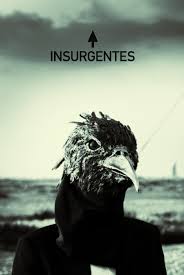
mobile_pic1A Steven Wilson solo albums can only come out every so often, sadly.  Technically, “Insurgentes” came out at the beginning of 2009.  But, for us Wilson nerds who follow his career way too closely, “Insurgentes” came out in 2008, even only in Wilson’s self-proclaimed hated MP3.  According to my iTunes stats, “Insurgentes” remains my most played cd of this past year.

It was closely followed, again according to my iTunes stats, by Guilt Machine, “On This Perfect Day,” Oceansize, “Frames,” and Riverside, “ADHD.”

Like the cat who adopted us in the summer of 2009 and with whom/which I fell in love, Guilt Machine has been a constant for me since its release in the summer.

There were however, two really, really disappointing CDs.  So disappointing in fact that I’m embarrassed I own them:

  • Dream Theater                      “Black Clouds and Silver Linings”
  • Pure Reason Revolution       “Love Conquers All”

Not sure what either group was thinking in the direction taken.

And, finally, a fun and novel album, but almost assuredly nothing that will stick with me for years to come:

  • Muse                           “The Resistance”

Lyrically, a great album, and moments of absolute musical genius can be found everywhere.  But, excess whimsy mars the album, and everytime I doubted how serious the musicians were about this, I doubted my interest in their project.


[Additional note found: “Thus far, 2009 has been bleak.  Dream Theater’s new album, “Black Clouds and Silver Linings,” serves as an incoherent exercise in notes chasing notes and embarrassingly written lyrics.  Pure Reason Revolution’s “Amor Vincit Omnia” offers nothing but miserable sexual decadence and ridiculous Euro dance-type music.  The title should’ve been Lust Conquers All, not Love Conquers All.  How this could be the same band that released the captivating “The Dark Third,” I have no idea.”]

Steven Wilson’s Insurgentes

As we close 2013, I thought it would be fun to go back to some earlier writings.  Here’s my take on Steven Wilson’s first solo effort, Insurgentes.  I wrote this December 31, 2008.  As is obvious, I was rather smitten.

***

insurgentesThe most prolific and interesting musician of 2008, however, has to be Steven Wilson of Porcupine Tree, Blackfield, and No-man.  A true audiophile, Wilson loves perfection and innovation as much as he loves beauty and tradition. Born November 3, 1967 (three days less than two months after I was born), Wilson is a masterful songwriter, singer, and lyricist.  This year, Porcupine Tree released the EP “Nils Recurring”—outtakes from the outstanding 2007 cd, “Fear of a Blank Planet.”  Like the members of Rush and of Riverside, Wilson takes his art very seriously.  Even the outtakes are brilliant.  I was especially struck by the third track, “”Normal,” an alternate take of “Fear of a Blank Planet”’s fifth track, “Sentimental.”  Frankly, as good as “Sentimental” is, “Normal” is a much better and more interesting song.  And, I’m sorry Wilson chose “Sentimental,” as “Normal” would’ve made “Fear of a Blank Planet” a nearly perfect album.  As it is, it’s a great album. `

But, what struck me most about “Normal” was how similar it is to Kevin McCormick’s “Soleares” from several years back.  Wilson claims to listen to nearly 10 new CDs a week, and he travels the world over playing and collecting music, so it’s possible he’s heard McCormick’s music.  The similarities between the two men and their music is startlingly enough, even without “Normal” sounding like “Soleares.  Only a week apart in age, they obviously listened to the same music growing up, and they each have an amazing ear for complicated, beautiful music.  I can only imagine what astounding works the two of them might create if they ever worked together.  They might very well re-make the music scene.

Wilson’s true genius, though, revealed itself in late November with the preliminary release of his solo album, “Insurgentes.”  From the beginning to the end, it move ebbs and flows, but it never fails to captivate the soul and the mind.  It is, to my mind, the best non-classical album of 2008, and it is the best thing Wilson has made.  This is in no way, shape, or form minor praise, as 2008 has been a great year for progressive music, and Wilson has made some truly outstanding albums.  The opening track, “Harmony Korine,” reminds me of what U2 might have done, had they ever embraced—fully—seriously complex and progressive music.  The third track, “Salvaging,” is a worthy successor to Talk Talks “The Rainbow.”  The fifth track, “No Twilight within the Courts of the Sun” has a Robert Fripp feel to it.  The vocals (Wilson and Irish singer, Clodagh Simonds) on track six, “Significant Other,” are simply heavenly.  Wilson’s guitar work on “Insurgentes” feels fresh, but it also reminds me of Robert Smith’s guitar work on The Cure’s 1993 live album, “Show”—but especially “From the Edge of the Deep Green Sea,” “Never Enough,” “Cut,” and “End,” some of the finest 30 minutes of live music I’ve ever heard.  The musicians on “Insurgentes” include bassist Tony Levin and keyboardist Jordan Rudess.  The entire album grabs a hold of the listener until the last note plays.  Even after, the music and the ideas linger.

Nick’s Best of 2013 (Part 3)

Following on from Part 1 and Part 2, here is the third and final part of my ‘Best of 2013’ list: positions 5 to 1 in my Top Ten.

(By the way, if you are wondering at the absence of Big Big Train’s magnificent English Electric: Full Power, remember that I am excluding rereleases of older material; without that restriction, it would most certainly be up near the top of my list!)


5. Maschine – Rubidium

The debut release from the formerly-dubbed Concrete Lake, featuring two alumni of The Tangent: guitarist Luke Machin and bassist Dan Mash. Be prepared for a rollercoaster ride through a dizzying array of different musical styles as this album jumps effortlessly from prog metal shredding to jazz to salsa (yes, really!) and back again. It’s bonkers, but I love it to bits.


4. Riverside – Shrine Of New Generation Slaves

A minor change in direction for Poland’s premier prog rockers finds them flirting with more straightforward hard rock, blues and even jazz influences in places, to great effect. The resulting album is more cohesive conceptually than any of their previous work and touches on similar issues to those explored by The Tangent’s latest opus. Disc 2 of the special edition features over 22 minutes of instrumental music quite different in tone from the main album but highly enjoyable nonetheless.


3. Sanguine Hum – Weight Of The World

An accomplished follow-up to 2010’s Diving Bell from Joff Winks, Matt Baber & Co. Sanguine Hum’s sound calls to mind Turin Brakes, Pierre Moerlen’s Gong, the layered electronica of North Atlantic Oscillation and even Porcupine Tree in their more reflective moments. It’s captivating, however you describe it, and the songs on this album are beautifully constructed. Apparently, the band have two album’s worth of new material already written, which bodes well for the future.


2. The Tangent – Le Sacre Du Travail

The best release yet from the ‘Steely Dan of prog’, offering a more coherent vision than their earlier high points Not As Good As The Book and A Place In The Queue. With music loosely inspired by Stravinsky’s Rite Of Spring and a thought-provoking, opinion-polarising message regarding the mundanity of the daily grind and our role as wage slaves, this is a progressive tour de force as far as I’m concerned.


1. Steven Wilson – The Raven That Refused To Sing

Quite simply, Steven Wilson’s finest work to date. Opting for a live recording approach over meticulous overdubs has paid off handsomely and the music frequently builds to a thrilling intensity as this masterful band of players feed off each others’ energy. It is difficult to pick out highlights from something so consistently brilliant, but Guthrie Govan’s guitar solo in Drive Home really does take the breath away, leaving us wondering how in the name of prog Wilson is going to better this.

Nick’s Best of 2013 (Part 2)

Following hot on the heels of Part 1, here is the second part of my ‘Best of 2013’ list: positions 10 to 6 in my Top Ten.


10. Ulver – Messe I.X-VI.X

This liturgically-themed piece, recorded with the Tromsø Chamber Orchestra, was my introduction to Ulver. It had a powerful effect on me when first I heard it and I shall certainly be exploring their back-catalogue in future. Messe is solemn, haunting and mysterious – best heard on headphones late at night with the lights turned off.


9. Freedom to Glide – Rain

A richly atmospheric, superbly recorded album, evoking the grandeur of Pink Floyd in places and with liquid guitar solos that Dave Gilmour would be proud to call his own. Rain‘s story is set during World War I and is based on the experiences of band member Pete Riley’s grandfather. It’s a powerful and moving piece of work that assumes particular relevance with the imminent centenary of that awful conflict.


8. Henry Fool – Men Singing

A welcome return by Tim Bowness & colleagues, a mere twelve years after their debut release. The title is a neat little joke, given that this is an entirely instrumental album, Tim electing to merely play guitar rather than treat us to his wonderful and distinctive voice. What you get for your money here are four tracks of proggy, jazzy, semi-improvisational brilliance.


7. Bruce Soord with Jonas Renkse – Wisdom Of Crowds

This collaboration between The Pineapple Thief’s frontman and Katatonia’s vocalist is a revelation. The album consists of nine simple, elegant songs written by Soord with Renkse in mind, and the clean, minimalist production gives that spellbinding voice the space to work its magic. A modern masterpiece.


6. Haken – The Mountain

Haken are arguably progressive metal’s leading proponents in the UK. Each album has improved upon its predecessor and The Mountain is their best yet. These guys have the musical chops of Dream Theater but are considerably more adventurous. They also don’t take themselves too seriously, as this brilliant video for The Cockroach King shows.


See Part 3 for my five favourite albums of 2013…