Top 10 for 2013 – my quick list

What a year for music. What a year for Prog.

I had every intention of writing reams and reams about my top 30 albums and eulogising in great detail about their many nuances, but to be honest, I was eating into my listening time and I’ve still got at least a dozen albums from last year to listen to properly.

So this is my list in terms of the albums I have enjoyed and played the most during 2013 :


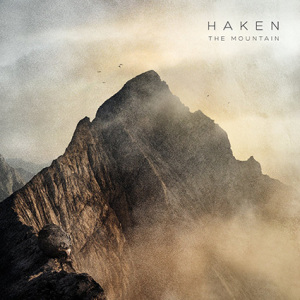
1. Haken – The Mountain
haken1

A brilliantly conceived and executed album with riffs galore, melody in abundance, emotion pouring out of it with a message and cover art that sits close to my heart as those of you who know me will realise. To see this performed live recently at the Borderline, along with several Twitter friends who I met for the first time, puts this album into a special place.


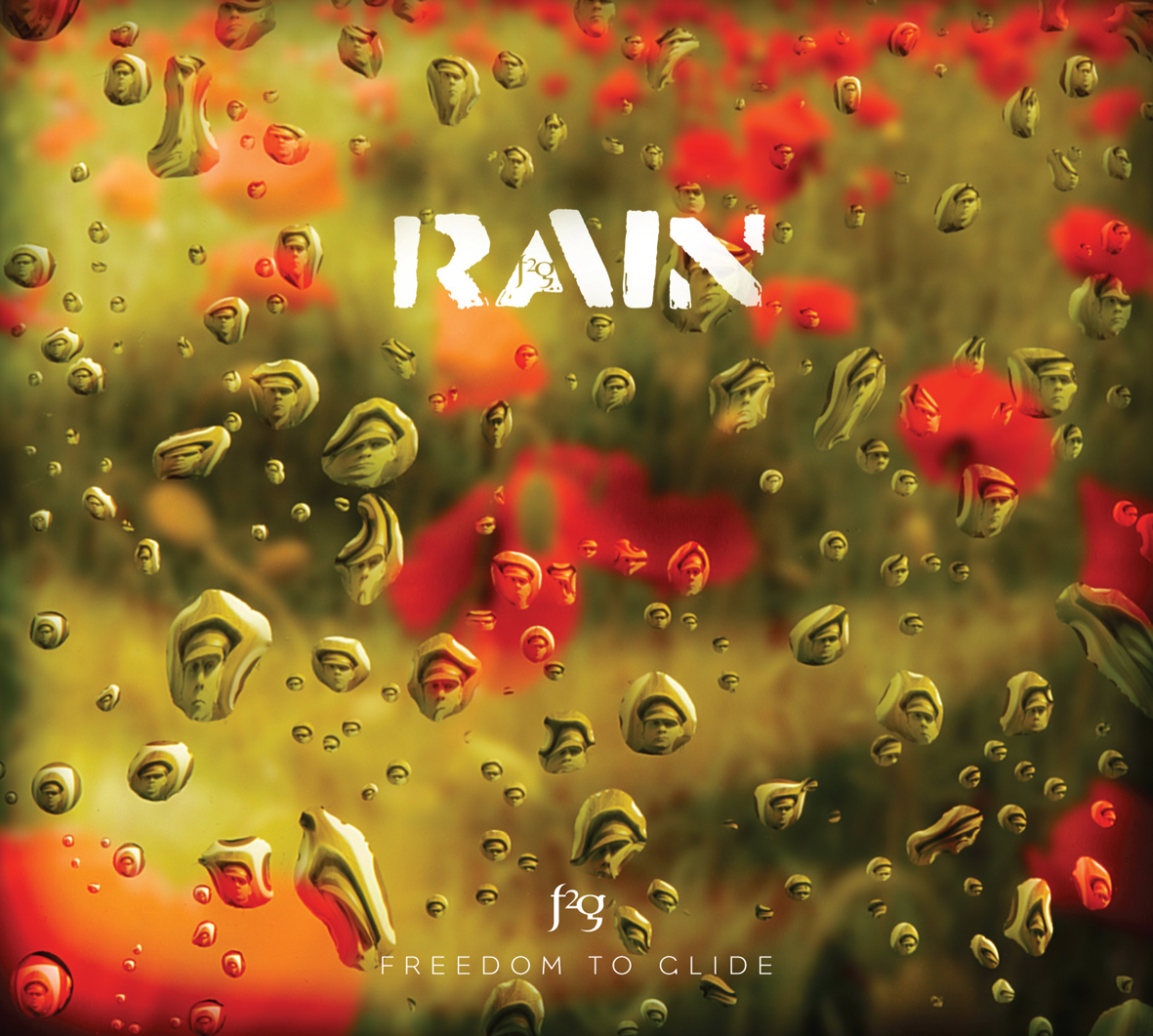
2. Freedom to Glide – Rain
Rain

A beautifully produced and immensely moving album. A distinct Floyd and Waters vibe but shot through with it’s own sound. In many ways this is a perfect album for me. The theme is clear, it is not ‘overdone’, it does not become hectoring, the sound is truly gorgeous and the level of detail bears repeated listens. Quite simply a stunning album.


3. Days Between Stations – In Extremis

days_between_stations_in_extremis_resized

A smorgasbord of prog references put together with loving detail to produce one of the major highlights of my music year.  I can hear Big Big Train, Porcupine Tree, Pink Floyd and other great artists – but I also hear the wonderfully crafted musicianship of Eggshell Man and the title track which, albeit with subtle and not so subtle references to other groups, soar above any suggestions of plagarism. A wonderfully fulfilling and rewarding album ….

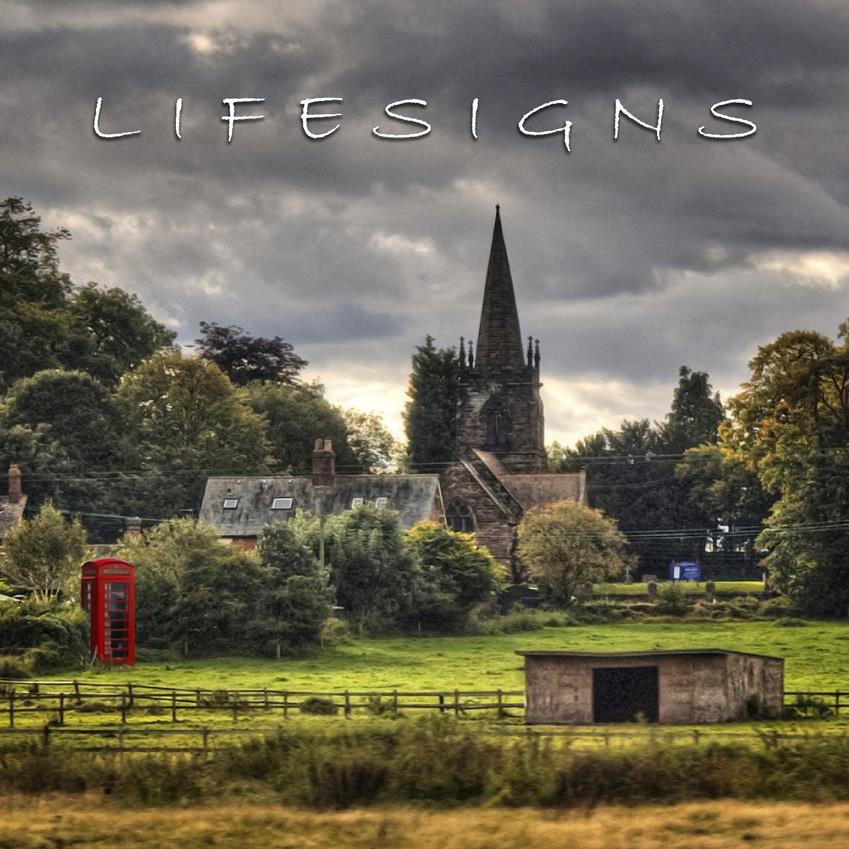
4. Lifesigns – Lifesigns
Lifesigns CD (2)

 A genuine ‘feelgood’ piece of music – uplifting, joyous and engaging.  Refreshingly different yet reassuringly familiar. A summer album to play on a sunny day.  There is complexity and skilfully tricky arrangements but the overriding feel is one of melodic genius.


5. 65 Days of Static – Wild Light
Wild Light

These guys are old favourites of mine, right back to their anthemic Fall of Math album.  This revisits some of that territory again but this time with soaring synths, staccato beats and pulsating slabs of electronica to lift this album into places it is sometimes quite difficult to get down from …. a dramatic cinematic masterpiece. Top class.

6. Steven Wilson – The Raven …..
raven-that-refused-to-sing

Everything that can be said about this album has already been said……. I’m still gutted I missed it live in Manchester otherwise I’m sure it would be higher in the list, but I hold grudges badly 🙂

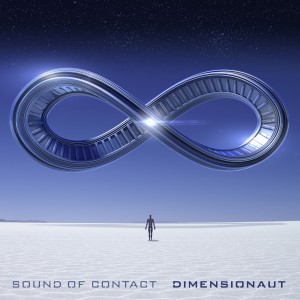
7. Sound of Contact – Dimensionaut
Sound-of-Contact-Dimensionaut-Cover-300x300

A great album that is a joy to listen to. Nothing too heavy or in your face, great melodies, hooks to die for that linger and give you earworms for days …. a nice antidote to some of the tricker albums and one I constantly return to. Excellent stuff.

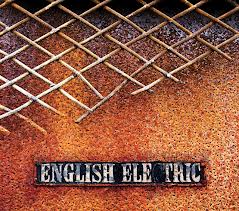
8. Big Big Train – English Electric Pt 2
ee2

This would have been my album of the year but for the annoying fade outs and rather weak middle section that, over time, have become wearisome.  However, any album that contains East Coast Racer (an absolute masterpiece), Curator of Butterflies and The Permanent Way has to be in my top 10. The re-arrangement of tracks on Full Power hides some of the issues on Part 2 but I can’t consider this a 2013 release in it’s own right.

9. Omnium Gatherum – Beyond

Beyond

Melodic doom metal of the highest order. A breathtaking tsunami of sound that cascades out of the speakers and provides layer upon layer of drama. Yes there are growls, but there are also soaring melodies from both the vocals and the layered guitars. Epic in scale and epic in production. I am enjoying this genre more and more and if Insomniums’ ‘One for Sorrow’ had been released this year that would be a leading contender …..

10. Vienna Circle – Silhouette Moon

Vienna

This couldn’t be further from the above album if it tried. A gossamer light blend of melody, skilful playing and wonderfully constructed songs that entrance and enchant in equal measure. There is a shimmering feel to this album that is an absolute delight. This is super music that improves with every listen.


Special mentions must go to Airbag, Votum, Anta, The Fierce and the Dead, Subsignal, Maschine (who’s Rubidium album was really brought to life when they supported Haken at the Borderline), Subsignal and Jet Black Sea –  all their albums are on more or less constant rotation when the time allows.

There are also albums from Humanfly, TesseracT, Spocks Beard, Amplifier and Dream Theater that have been played but not yet ‘discovered’ and I dare say one of these could well have burst it’s way onto my list had it clicked at a particular time.  The delights of these plus many others have still to be explored and as with so many other things in life, time is the pressing issue.

What a year it has been and quite frankly, if no albums were released at all in 2014, we would have enough riches to survive a long time on the output of 2012 and 2013.

See you all soon and have a great break over the next week or so …..

Frost* – The Rockfield Files DVD Trailer

Lest anyone think the lack of Jem Godfrey’s often hilarious “Frost* Reports” means the band have been hibernating, fear not: The boys are back with a new DVD just in time for the holidays!

Aside from brilliant re-workings of Frost* staples, the photography and lighting are REALLY good here, so do check out this trailer. Cheers!

Marillion’s Prog Ghosts of Xmas Past

Once your laughter at the video subsides, you’ll want to go download Marillion’s Carol of the Bells.

BillyNews: Brand X

Gonzo Multimedia To Release Rare CDs By UK Prog-Fusion Legends Brand X and Bass Icon Percy Jones
 
London, UK – Although typically considered an off-shoot band for Genesis legend Phil Collins, UK prog-fusion group Brand X was much more than that. Featuring several virtuosic musicians (as well as Collins), Brand X took the genre of fusion to a whole new level of expertise. Along with Collins on drums, the band featured Percy Jones (bass), John Goodsall (guitar) Robin Lumley (keyboards), and Morris Pert (percussion), with sometimes Mike Clark, Kenward Dennard (drums), and John Giblin (bass). Active from 1975-1980, Brand X was another one of those bands who were beloved by other musicians, and the more discerning critics, but despite everything never had the commercial success they deserved. The band released several critically acclaimed albums on the Charisma label in the UK and Passport label in the US, including ‘Unorthodox Behaviour’, ‘Moroccan Roll’, ‘Livestock’ and ‘Product’. Now much to the excitement of Brand X fans and fusion music fans worldwide, Gonzo Multimedia is releasing 3 rare Brand X titles on CD (Missing Period, Live At The Roxy LA 1979, Is There Anything About?), as well as bassist Percy Jones’ hard to find solo offering from 1989 ‘Cape Catastrophe’.
 
Says Percy Jones, “I’m really happy that Gonzo is releasing this stuff. It was recorded over 25 years ago, so it’s great that it’s still available to anyone who is interested.”
 
Brand X – “Missing Period’: This album represents the earliest known recordings of Brand X circa 1975-76. Recorded shortly before the group’s debut album ‘Unorthodox Behaviour’, the source tapes for this material were recently recovered by John Goodsall from family members in England, who presented John with a box containing all sorts of Brand X memorabilia. At the bottom of the box were some old reels of tape of unknown origin. Upon review John and Percy realized that they had uncovered a long lost treasure – excellent quality recordings of Brand X’s classic lineup performing previously unreleased material. This documents a period of the band’s history which has been missing for over 20 years.
 
Tracks: 1. Dead Pretty, 2. Kugelblitz, 3. Ancient Mysteries, 4. Why Won’t You Lend Me Yours?. 5. Miserable Virgin, 6. Tito’s Leg
 
 
Brand X – ‘Live At The Roxy LA 1979’: Recorded at the Roxy Theater in Los Angeles, CA on Sunday, September 23, 1979 shortly after the release of ‘Product’. This is a previously unreleased soundboard recording of Brand X captured live at the peak of the band’s career.
 
Tracks: 1. Disco Suicide (intro) Algon, 2. Dance Of The Illegal Aliens, 3. Don’t Make Waves, 4. Malaga Vergen, 5. …And So To F…, 6. Nuclear Burn
 
 
Brand X – ‘Is There Anything About?’: Not long after Brand X released their 1980 album ‘Do They Hurt?’, the band members went their separate ways (until their comeback in 1992 which only featured Goodsall and Jones). However, they still owed their record label one more album. The solution? Release a rarities album! The problem was that there was very little unreleased material in the vaults – about three or four tracks at the most. But with a little doctoring and remixing of tapes, keyboardist Robin Lumley extended that number to six tracks and the label released Brand X’s appropriately-titled collection ‘Is There Anything About?’ in 1982.
 
Says Gonzo Magazine’s Jon Downes, “It is the last album to feature Phil Collins on drums and includes some absolutely gorgeous slices of Brand X at their very best. This is a peculiar album; at the time many critics panned it, often because it didn’t sound anything like the anodyne pop music that Phil Collins was making elsewhere in his career. However, in my opinion and that of thousands of fans worldwide it acts as a satisfying coda to a body of work which has very few parallels in the world of jazz fusion.”
 
Tracks: 1. Ipanaemia, 2. A Longer April, 3. Modern, Noisy and Effective, 4. Swan Song, 5. Is There Anything About?, 6. Tmiu-Atga
 
 
Percy Jones – ‘Cape Catastrophe’: Several years after the release of Brand X’s final album ‘Is There Anything About?’, bassist Percy Jones moved to New York City and began infiltrating the music scene there. He recorded ‘Cape Catastrophe’ in 1988/89 at a studio in East Harlem. Using an array of hardware and instruments available at the time, including a Casio synthesizer, Roland sequencer. Yamaha drum machine and Korg digital delay, Percy recorded a several tracks ranging in length from 2-and-a half minute to 23minutes.
 
Says music writer Dave Lynch, “There is certainly a lot here for electric bass-aholics to enjoy: Jones’ burbles, pops, and plonks are all here, and his tone on sustained notes is rich with harmonic overtones as expected. But the music through which the bass slips and slides is often more like twisted instrumental techno-funk than fusion, along with ominous electronic textures that sometimes sound like an ethereal chorus or gruff, agitated shouts distorted beyond recognition.” Gonzo Magazine’s Jon Downes adds, “Jones composed everything on the album himself, except for the closing number. The album is a peculiar, though satisfying mix of jazz fusion and electronica, and is another one of those classic albums that slipped through the cracks at the time, which is just unfair.”
 
Tracks: 1. The Lie, 2. Cape Catastrophe, 3. Slick, 4. Hex, 5. Barrio, 6. Tunnels, 7. Thin Line, 8. Symphony In F Major
 
 
Press inquiries: Glass Onyon PR, PH: 828-350-8158glassonyonpr@gmail.com


John Kingbathmat Bassett: Acoustic News

A note this morning from the mighty John, regarding the forthcoming acoustic album.  Enjoy.

Kingbathmat OTM***


“Parasomnia Acoustic Looping Version”

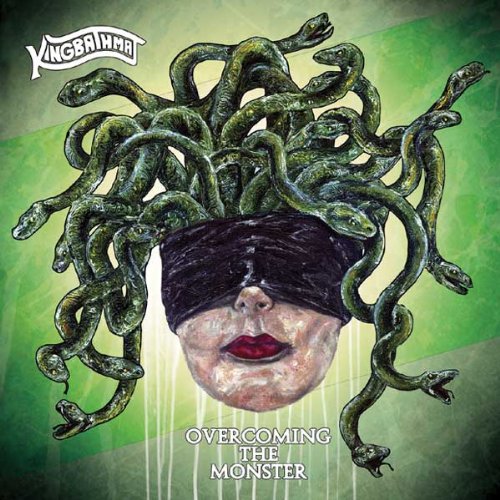
Heres a 7 minute live acoustic version of “Parasomnia” from “Overcoming The Monster”, first time out using a Looping Pedal. The John Bassett acoustic album is nearly finished musically, just the album artwork and the name yet to be decided, release should be announced early next year.

Parasomnia Live acoustic looping version
http://www.youtube.com/watch?v=8zOOGMN4ico

You can keep up to date with the new album release details at facebook page and athttp://www.johnbassett.co.uk

KingBathmat to play at Headway Festival
KingBathmat are confirmed to be playing at Headway Festival in Holland in May 2014, our first gig out of the UK. More detals about this festival can be found athttp://www.headwayfestival.com/

Power Windows: Rush and Excellence against Conformity

It’s the power and the glory

It’s a war in paradise

It’s a cinderella story

On the tumble of the dice

—Neil Peart, “The Big Money,” 1985

***

rpw

Power Money

It would have been impossible to avoid Power Windows in the Fall of 1985, I being a senior in a Kansas high school, even if I had wanted to.

And, I didn’t.

Every where I turned that fall—in ways far more than any other Rush song since Tom Sawyer—I heard “The Big Money.”  MTV played the video repeatedly (we didn’t have MTV, but friends did), and our wonderful local radio station—KICT95 out of Wichita—had it in constant rotation.  Of course, being a massively obsessed Rush fan since first encountering them in 7th grade detention, I was thrilled to see Rush get so much attention.

Sadly, though, I became overly saturated with “The Big Money.”  It’s the only Rush song that has ever grown tiring for me.  For years, it stood up there with “Stairway to Heaven.”  I just shut both out of my mind, flipped the radio dial when either played.  As Power Windows is one of my all-time favorite albums, this has been rather difficult for me to accomplish.  For nearly two decades, though, I merely started the album with the second track, “Grand Designs.”

Then, on September 18, 2012, at the Palace in Auburn Hills, Michigan, standing next to my good friend, Dom, Rush played it as the second track of the Clockwork Angels tour.  Straight from Subdivisions to The Big Money to Force Ten and then, three songs from Power Windows in a row: Grand Designs; Middletown Dreams; and Territories.  Half of the album!  Freaking brilliant.  Poor Dom.  He’s only a college student, and he had to hear my sound byte reminiscences for every track.  I was reliving a huge part of my high school experience.

Seeing “The Big Money” live made me realize why that song is so wonderful.  Alex, Geddy, and Neil brought immense energy to it (and Force Ten, as well—the most rocking version I’d heard from Rush; Alex even played one of his best guitar solos for this song on this tour).  Suddenly, whatever tiredness and reluctance I’d felt about “The Big Money” over the last several decades dissipated at the moment the opening few notes began.  Add video of spinning and printing dollars as well as the Three Stooges, and I was sold.  (Sorry, bad choice of words).  But, really, everything was perfect—the drumming, the bass, the guitar solo.  And, of course, the Austin Powers moment at the end: “One million dollars!”

Now, as of the end of 2013, I’m back in and with those autumn days of 1985.  Let “The Big Money” reign.  I’ve also re-discovered my love of Led Zeppelin 4.

But, the point of the post is not to praise “The Big Money” specifically, but to remember Power Windows.  I’m happy to praise both!  And, frankly, I’ve been offering praise of Power Windows since it came out, but only with the caveat that The Big Money is a weak point.  Now, in 2013, I realize how wrong I was.  The whole thing deserves praise, and one cannot separate any song from the whole.  It is what it is, and it’s a thing of immense beauty.

pw boy

Power Jazz

In Contents Under Pressure (by Martin Popoff), Neil argues that he sees Power Windows and Hold Your Fire as two sides of the same coin, separate from Grace Under Press, but also from Presto.  Certainly, there’s an argument to be made here.  In terms of bass and drums, Power Windows and Hold Your Fire, have the most distinctly jazz feel of any Rush albums.  At times, taking the rhythm section alone, the listener might be enjoying a Chick Corea album from the same time period.  In production, though, Power Windows comes across as rather raw power, while Hold Your Fire feels rather lush.  Whatever similarities—and they are many—the albums seem very different to the listener.    Again, as Neil states, the first is an extrovert, while the second an introvert.

As a fan, though, I tend to hear consistent themes in Moving Pictures through Hold Your Fire.  Moving Pictures stresses the need to be an individual against the crowd; Signals warns that being such an individual will cause pain, but is worth it; Grace Under Press deals with recovery from such persecution (sometimes in the hallway, sometimes in the concentration camp); Power Windows deals with excellence against conformity; and Hold Your Fire pleads for restraint in the now comfortable individual looking at those he’s made uncomfortable.

Granted, these themes are, for me, autobiographical, in the sense that I grew up with them, and each album plays a key role in my own understanding of the world.  That is, these themes might not have been intended by Peart, and, admittedly, perhaps I’m alone in seeing them this way.  As I’ve mentioned before, Neil Peart has influenced me as much as anyone in my life—ranging from Plato (I teach western civ for a living, so allow me a little pretense here) to St. Paul to my mother.  Plato-Paul-Peart!!!  The three Ps.

For me:

  • Moving Pictures: 7th Grade
  • Signals: 9th Grade
  • Grace Under Pressure: 11th (Junior) Grade
  • Power Windows: 12th (Senior) Grade
  • Hold Your Fire: sophomore year of college.

imagesPower Themes 

In terms of wordplay and poetry, Neil is at his best on Power Windows.

In The Big Money, Peart considers the good and the evils of what we now refer quite commonly as “Crony Captialism.”  As with much of this album, the shadow of cultural critic, socialist-turned-libertarian and anti-war novelist, John Dos Passos, hangs over The Big Money.   Dos Passos also called his style “The Camera Eye.” 1936’s The Big Money concluded Dos Passos’s famous U.S.A. Trilogy.  Much like Peart, Dos Passos traveled incessantly, offering a fine cultural criticism over everything he surveyed.

Grand Designs, track two, comes from the final part of the “District of Columbia,” trilogy published by Dos Passos in 1949.  It examines individual genius in line with nature and against nature.  In the conflict of style and substance, Peart is also referencing the grand Anglo-American poet, T.S. Eliot, and his 1925 poem, The Hollow Men.

The third track, Manhattan Project, anticipates the history-telling prog of Big Big Train, offering a rather neutral analysis of the development of the first three atomic bombs.  Interestingly enough for Peart, he continues to harken back to religious language and themes, specially Catholic, referring again and again to “a world without end.”

Marathon echoes a number of other Peart songs, but it does it with extraordinary energy.  A celebration of the battle of the Athenians over the Persians in the Fifth Century, BC, it also, of course, deals with the virtue of fortitude.

Territories offers a scathing criticism of propaganda, nationalisms, and nation states.  In his criticisms and in the clever examples, Peart echoes the anti-statism of Mark Twain.

Taken, most likely, from the famous 1925 sociological report of Muncie, Indiana, entitled Middletown.  Not surprisingly, given the state of sociology in the 1920s, the report considers the every day habits and desires of rural Americans.  In his own Middletown, Peart examines the life of rural America as well as the dreams of those wishing to escape, generally unfulfilled.

Emotion Decter is one of Peart’s most Stoic songs, offering something against both the extremes of optimism and the cynicism of despair.  In the end, in a common Peart theme, man must restrain his reaction toward others, recognizing that one does not need approval of another should integrity already exist in the original act.  A true man judges himself.

The final and most proggish/artistic song of the album is Mystic Rhythms.  Rush ends with wonder at the intense diversity of the world and of all of the universe.

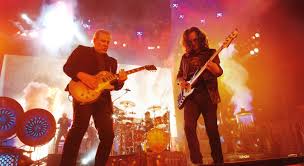
alex and geddy

Power New Wave

Finding a producer for Power Windows proved difficult at first.  After replacing the long-lived Terry Brown (every album up through Signals) with Peter Henderson (Grace Under Pressure), Rush found their third producer in Peter Collins, best known for his work with Nik Kershaw and Blancmange.  Making the connection to Britain even stronger, Rush recorded much of the album at Abbey Road Studios and in parts of London.  They also worked with Anne Dudley of the Art of Noise, who directed the strings.

Though Power Windows rocks with full force throughout almost all of the album (the final track, Mystic Rhythms, being the very proggy standout), it has also a strange New Wave feel to it.  Ok, this needs explaining.  Neil and Geddy sound as though they’re playing in a rocking jazz band from the 1980s, but Alex sounds as though he could be playing for The Fixx.  Alex, like Jamie West-Oram, seems to be creating immense but punctuated guitarscapes.  One of the things that makes Power Windows so effective, is this strange but powerful synthesis of jazz bass and drums with New Wave guitar.  In ways that Drama (some of the same production crew worked on both) attempted to be for Yes in 1980, Power Windows succeeds at bridging prog, rock, New Wave, and jazz.  I think Drama is a fine album (in fact, a favorite), but I think that Power Windows is truly successful at this attempt to bridge genres.  Perhaps, of course, Power Windows couldn’t have come about without Drama first—but an exploration of this would be well beyond the intent of this post.

Suffice it say, I love both.

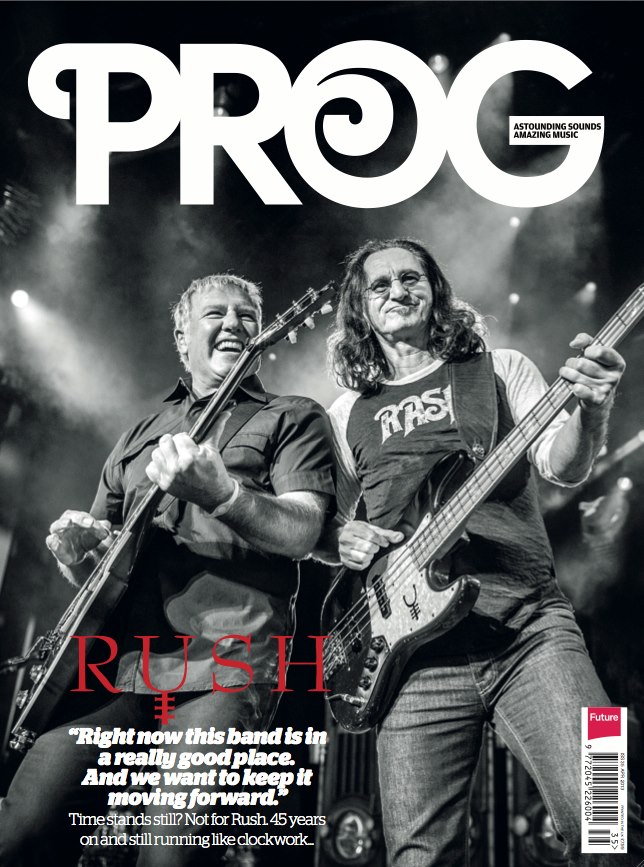
prog-35

Power Sources: 

  • Martin Popoff, Contents Under Pressure (2004).
  • Jerry Ewing, ed., Prog #35, Special Edition (April 2013).
  • Neil Peart, Roadshow (2006).
  • Power Windows liner notes (1985).
  • Jim Berti and Durrell Bowman, Rush and Philosophy (2011).  This book includes an essay by the brilliant economist (and philosopher), Steve Horwitz.

20 Looks at The Lamb, 8: Gesture and Context

If I could only point at something immovable,
Point or gesture, with complete accuracy
Accuracy dependent on no general context
Dependent on no central metaphors
Like Lamb or Broadway or Knock and Know-All

It shouldn’t even be “I” who points, but only
A pointing, only a line of force gone out
From no particular finger, to a meaning that
Hangs there nowhere, above nothing, nothing
Providing anchor or hook for hanging, as if
Hanging were no death sentence at all, but
A gesture that no one could misinterpret

Or no one even there to interpret, why not
The thing itself, ripped from Wallace Stevens’ verse
Presented without these images caked with mud
With blood, with sinews of significance that hang
Together so stubbornly, despite my rage for clear
And distinct seeing that is not seeing by any eye

If meaning could hang in midair, simply meaning
(without division like that, as noun and verb)
Then Rael would never have had to die, the lamb
Would never have had to lie, the meaning
(Whatever that “thing” might be) would freely float
The pointing only being at itself, and to itself

The interruptions are what I notice today, the songs
That elsewhere sing, but jut out into the Lamb’s domain
With lights that are always bright, or clouds that
Wander lonely as a single word, or the man
Who can’t be a man if he doesn’t smoke Winstons
Knocking and knowing as if it were rocking and rolling
Referrals that leap across chasms of signifying space
With nothing on Evel Knieval aside from invisible
Rocket-powered turbo-booster fuel-injected nothings
Pushing meanings that need no push, that cannot move
At all, because context isn’t needed after all

Pointing, meaning, indicating, showing, having in mind
They all require difference, don’t they? Distinction or
Maybe “long division,” that phrase that scared us silly
As schoolkids, when we first were learning that truth
Instead of sitting nowhere, somehow requires our work
Requires a toil, a test, an effort extended into a quest
A narrative form with suffering and death and noise
And uncomfortable silence too at times. Difference.

John and Rael are like that, have you noticed?
Difference, sameness, difference, oscillation of identity
Seeming in the seventies nearly trite or formulaic
With all that Eastern stuff, that Cozmik Debris said Frank
Dessert must be Eastern though Supper was Christian
The difference like John vs. Rael is the gesture
The pointing that signifies only from symbolic friction
From images bumping and grinding and sparking
Only with violence meaning what they mean

Ravine and rapids, a rip in the world as text, as story
Cage and cave, an eddy in a semiotic flux and flow
Windshield on freeway, an apocalyptic anticlimax
Freudian Slippers slimy with ambiguous tension
Can’t the said here simply be said, a saying
Accomplished, enthroned, entombed, embalmed
And mounted on an appropriate plaque to hang
(Again with the hanging?) upon a museum wall
But no, there’d still be seers, trooping by on tours
Not the fixed, denoted gesture minus pesky context

lamb_cover1

If Rael is a gesture, if Rael’s story is a gesture
If every word about Rael is a gesture the whole
Damned thing is a gesture and nods the direction
It wants understanding to go from its context
Not from a hardbound volume or notarized script
If The Lamb Lies Down on Broadway’s a text
It only succeeds as a text within a larger text
The texts get larger, but never cease being texts
Rael dies, and loves, and suffers, and cries for
The brother that all of us long to find the same
But is stubbornly endlessly infinitely Other

Listen to the otherness there in The Lamb that is
Really no otherness at all but the same cursed
Otherness always required for anything anywhere
Anytime at all to have a meaning.  For whom?
For anyone other than The Lamb who would listen
Though listening makes the difference dissolve
And mean, and point, and gesture at something
That we wouldn’t have without Rael and John
And have it we can, though the having is never
A having and holding for death does its part

Listen in context, be taken from context, and shown
Within context that context is always required
And we never break out from context to meaning
But never is context all there is.  Never.

<—- Previous Look     Prologue     Next Look —->

The Big Big Tangent

Subtitle: “Or, How Plato Made Me Realize We Need to Love 2013.  And, If We Don’t, Why We’re Idiots.”

A week or so ago, I had the opportunity to list my top 9 of 11 albums of the past 11 months.  Several other progarchists have as well, and I’ve thoroughly enjoyed looking at their lists as well as reading the reasons why the lists are what they are.  I really, really like the other progarchists.  And, of course, I’d be a fool not to.  Amazing writers and thinkers and critics, all.

Another page from the booklet.  Courtesy of the band and the artist, Matt Sefton.
From the 96-page BBTFP booklet. Courtesy of the band and the artist, Matt Sefton.

I’ve been a bit surprised, frankly, that there hasn’t been more overlap in the lists.  I don’t mean this in the sense that I expect conformity.  Far from it.  We took the name progarchists—complete with the angry and brazen red anarchy sign in the middle—for a reason.  We’re a free community—free speech, free minds, free citizenship, and free souls.  We have no NSA, CIA, or IRS.  Nor would we ever want any of these.  And, we’ve really no formal rules.  We just want to write as well as we can about what we love as much as we love.  Any contributor to progarchy is free to post as often or as infrequently as so desired, and the same is true with the length of each post.

I, as well as many others, regard 2013 as the best year of prog in a very, very long time, perhaps the best year ever.  I know that some (well, one in particular—a novelist, an Englishman, and a software developer/code guy; but why name names!) might think this is hyperbole.  But, having listened to prog and music associated with prog for almost four decades of my four and one-half decades of life, I think I might be entitled to a little meta-ness.  And, maybe to a bit of hyperbole.  But, no, I actually believe it.  This has been the best year in the history of prog.  This doesn’t mean that 2012 wasn’t astounding or that 1972 was less astounding than it actually was.  Being a historian and somewhat taken with the idea of tradition, continuity, and change, I can’t but help recognize that the greatness of 2013 could never have existed without the greatness of, say, 1972, 1973, 1988, or 1994.

In my previous posts regarding 2013, I thanked a number of folks, praised a number of folks, and listed some amazing, astounding, music—all of which, I’m sure I will continue to listen to for year to come, the good Lord willing.  And, I’m sure in five years, a release such as Desolation Rose might take on new meaning.  Perhaps it will be the end of an era for Swedish prog or, even, the beginning of an era for the Flower Kings.  Time will tell.

So, what a blessing it has been to listen to such fine music.  My nine of 11 included, in no order, Cosmograf, The Flower Kings, Ayreon, Leah, Kingbathmat, The Fierce and the Dead, Fractal Mirror, Days Between Stations, and Nosound.

The cover of the new Sam Healy solo album, SAND.

And, there’s still so much to think about for 2013.  What about Sam Healy (SAND), Mike Kershaw, Haken, Francisco Rafert, Ollocs,and Sky Architects?  Brilliant overload, and I very much look forward to the immersion that awaits.

No one will be shocked by my final 2 of the 11 that have yet to be mentioned.  If you’ve looked at all at progarchy, you know that I can’t say negative things about either of these bands . . . or of Rush or of Talk Talk.  Granted, I’m smitten.  But, I hope you’ll agree that I’m smitten for some very specific and justified reasons.  That is, please don’t dismiss the following, just because I’ve praised them beyond what any reasonable Stoic with any real self respect would expect.  No restraint with these two, however.  Admittedly.

So, let me make my huge, huge claim.  The following two releases are not just great for 2013, they are all-time great, great for prog, great for rock, great for music.  In his under appreciated book, NOT AS GOOD AS THE BOOK, Andy Tillison offers a very interesting take on the current movement (3rd wave) of progressive rock.

The current, or third wave of new progressive rock bands is as interesting for demographic and social reasons as much as for its music . . . . Suddenly a wave of people in their late thirties began to form progressive rock bands, which in itself is interesting because new bands are formed by younger people. . . .

I’m not sure how much I agree with Andy regarding this.  I’m also not sure I disagree.  I just know that I’ve always judged eras or periods by what releases seem to have best represented those eras.  Highly subjective, highly personal, and highly confessional, I admit.  But, I can’t escape it.  For me, there have been roughly four periods: the period around Close to the Edge and Selling England by the Pound; the period around The Colour of Spring, Spirit of Eden, and Laughing Stock; a little bit longer—or more stretched out—period around Brave, The Light, Space Revolver; and Lex Rex.

Of course, I’ve only listed three.  We’re passing through the fourth as I type this.  Indeed, the fourth is coming from my speakers as I type this.  Over the last year and a half some extraordinary (I’m trying to use this word in its purest sense) things have happened, all in England and around, apparently, some kind of conflicted twins.

When asked about why he participated in latest release from The Tangent, Big Big Train’s singer, David Longdon, replied:

Amusingly, [Tillison] has said that The Tangent is Big Big Train’s evil twin.

In this annus mirabilis, does this mean we have to choose the good and the evil?  Plato (sorry; I’m not trying to be pretentious, but I did just finish my 15th year of teaching western civilization to first-year college students.  And, I like Plato.) helped define the virtue of prudence: the ability to discern good from evil.

Well, thank the Celestial King of the Platonic Realm of the Eternal Good, True, and Beautiful, we get both, and we don’t have to feel guilty or go to Confession.

Progarchy Best All-Around Progger, 2013, Brit: Sally Collyer.

Aside from being the Cain and Abel of prog, The Tangent and Big Big Train offer the overall music world three vital things and always in abundance of quality.

First, each group is smart, intelligent, and insightful.  Neither group panders.  The music is fresh, the lyrics insightful—every aspect is full of mystery and awe.  The listener comes away dazzled, intrigued, curious, and satisfied, all at the same time.

Second, each group strives for excellence in every aspect of the release—from the writing, to the performing, to the engineering, to the mastering, to the packaging.  And, equally important, to interaction with fans.  Who doesn’t expect an encouraging word and some interesting insight on art, history, and politics—always with integrity—from either band?

MARTIN STEPHEN COVER PICAs maybe point 2.5 or, at least, the culmination of the first two points, each band has the confidence to embrace the label of prog and to embrace the inheritance it entails without being encumbered by it.

In Big Big Train’s English Electric Full Power, there are hints of Genesis and, equally, hints of The Colour of Spring and Spirit of Eden.  But, of course, in the end, it’s always Greg, Andy, David, Dave, Danny, Nick, and Rob.

In The Tangent’s Le Sacre du Travail, there are obvious references as well as hints to Moving Pictures, The Sound of Music, and The Final Cut.  But, of course, in the end, it’s always mostly Andy.

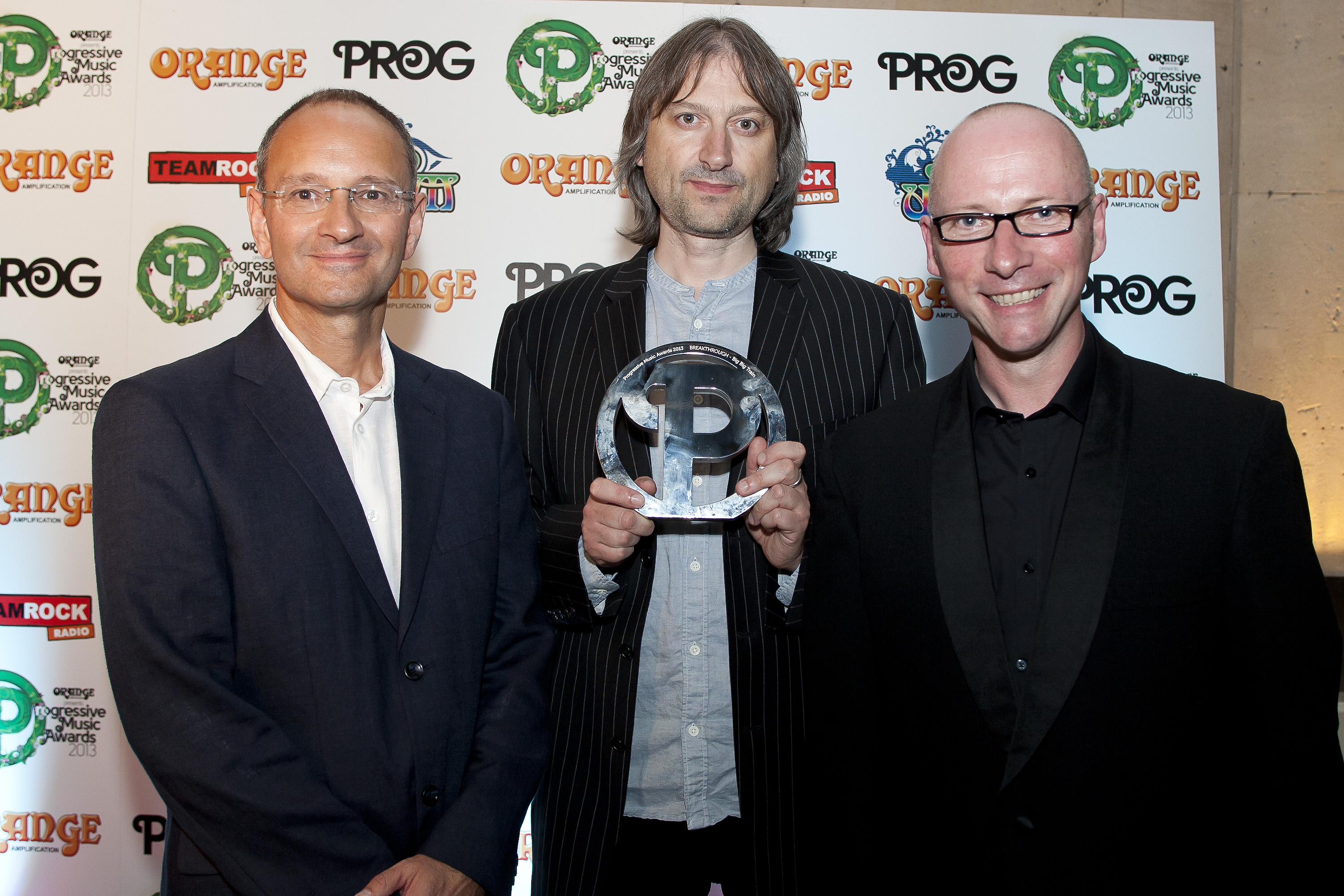
Big Big Train's justly deserve award, "Breakthrough Artist of 2013," by Jerry Ewing and the readers of PROG.
Big Big Train’s justly deserve award, “Breakthrough Artist of 2013,” by Jerry Ewing and the readers of PROG.

Regardless, each gives us what David Elliott masterfully calls “Bloody Prog™” and does so without hesitation.  Indeed, each offers it without embarrassment or diversion, but with solidity of soul and mind.

Finally, but intimately related to the first two, each band releases things not with the expectation of conformity or uniformity or propaganda, but with full-blown art.  Each band loves the art for the sake of the art, while never failing to recognize that art must have a context and an audience.  Not to pander to, of course, but to meet, to leaven.

Life is simply too short not to praise where praise is due.  Life is too short to ignore the beauty in front of us.  And, no matter how dreary this world of insanities, of blood thirsty ideologies, of vague nihilisms, and of corporate cronyism, let us—with Plato—love what we ought to love.

The Tangent and Big Big Train have given us art not just for the immediate consumption of it, or for the year, 2013,—but for a generation and, if so worthy, for several generations, perhaps uncounted because uncountable.


[Ed. note–if there are any typos in this post, I apologize.  I’ve been grading finals, and I’ve been holding my two-year old daughter on my lap.  She’s a bit more into Barney than Tillison or Spawton at this point.]