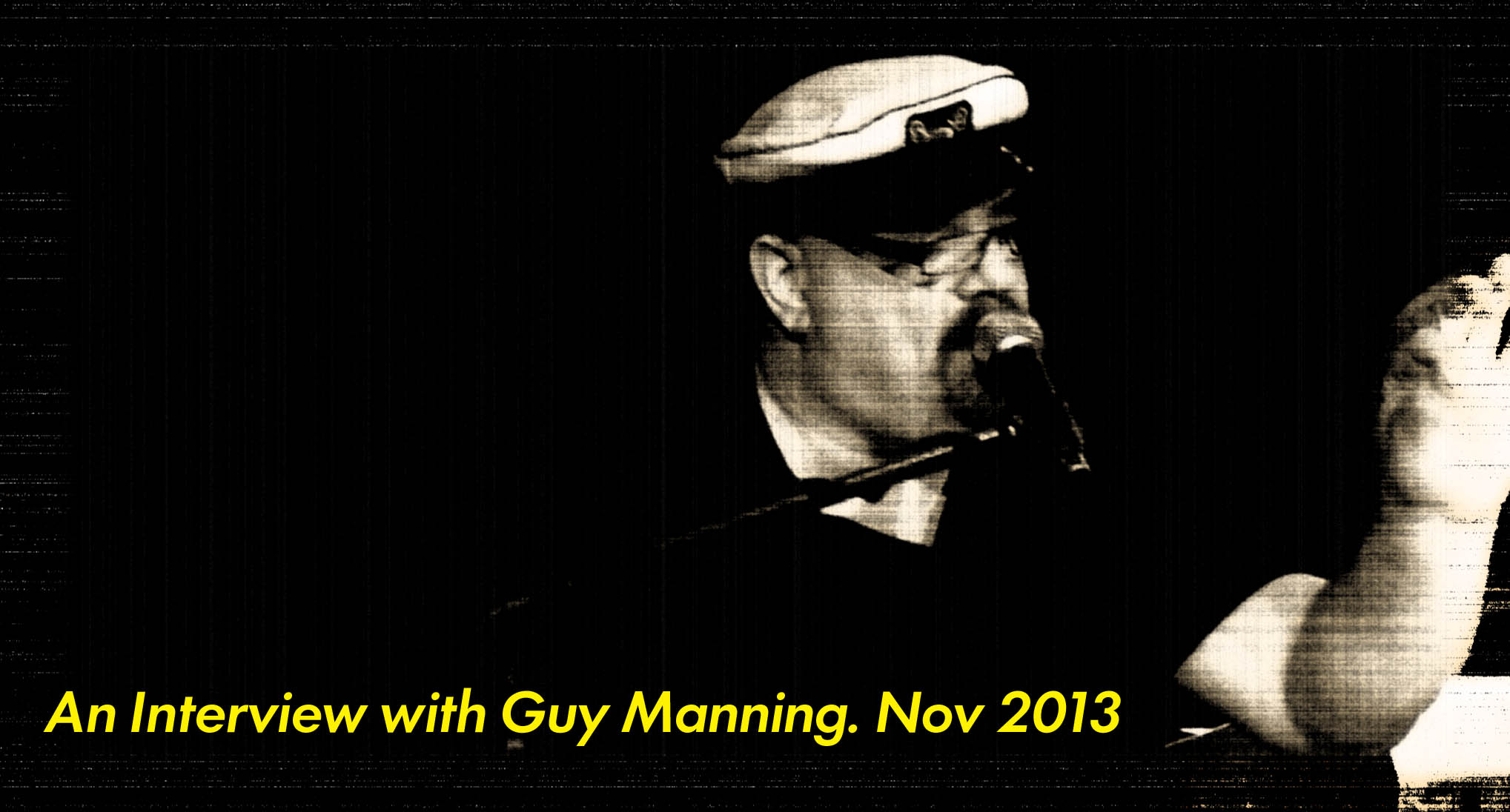
Exclusive: An Interview with Guy Manning – Nov 2013

guy

By Eric Perry

 Manning’s latest album, ‘The Root, the leaf and the bone’ was released on the Festival Music label in October this year. On the lead up to the time of its release I was fortunate enough to hook up with Guy and put a series of questions to him about the ideas behind the album and the process of getting it ready for release.

Eric Perry: In the new album, “The Root, the Leaf & the Bone”, you refer to a village that you chose as your original concept design to highlight the charm that is lost when progress builds up on top of things and I wonder if your view of progress is ultimately cynical because of the way you use the ‘sleazy banker’ in the song.

Guy Manning: I suppose I am a little cynical yes, but all I am really saying is to just take care, consider before you change anything.  But really I know that there are certain things that are we don’t want to go back to. No one wants to suffer from typhoid if they can help it and no one wants to send mail by pony express instead of email and so there are things that are definitely good about progress and there are some things that are also bad about progress but I am not standing on a soap box! I’m not throwing my clog into the machinery and I’m not a Luddite. What I am saying is that there is always something traded in when we move forward and sometimes we are glad to get rid of that. I am taking the opportunity to be nostalgic and share a romantic view of things. There is sometimes, something rather comforting about things from the past, especially the further in time we get away from it.

Funnily enough, I was talking to some people the other day and they were saying how good the war years were: “We never had it so good in the war years, what a sense of camaraderie, we never felt so close.”  I thought are you potty?  You were being bombed and shot at! There is something about the fact that the further you leave something behind, the more you develop a romantic view of it and I don’t know why that it is…it’s a weird, somewhat blinkered vision of the past.
As we go through life and we change as we get older, like in the song “Palace in Delights”, our viewpoints change. You know when we go through any change, whether it’s in ourselves or towns or races of people or technology or whatever it is, there is always something traded in. That’s okay for some things, but not for everything.
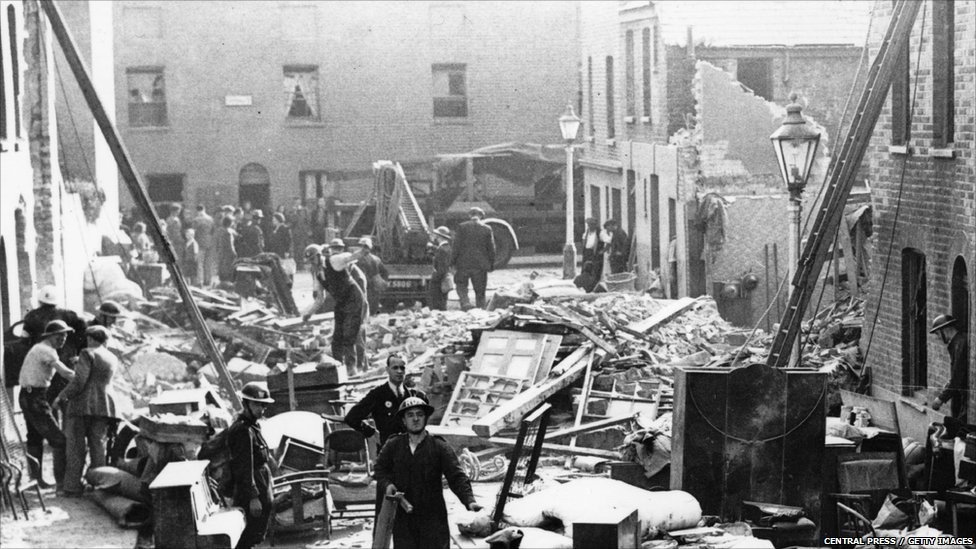
blitz

The Blitz, times were hard and actually not that great either….

I don’t know about you but sometimes when I see a vintage car, I look at it and I think about how much I would love to own it, but you know what? Would I really want to take it on? The maintenance and so on?  Probably not!

EP: With ‘The Forge’, there is a theme that seems to be about progress but is it showing things from that Luddite perspective? Were you saying that the art of crafting in the heat of the furnace was better than the time when the machines took over and automation came along?

GM: Not Luddite because I know why we need certain things and I am not saying “Stop the machinery running!” There are 2 ways of looking at the Forge. There is the romantic view of the man struggling on his own in a battle of wills, just a man with his tools, crafting something unique out of raw metal. Or it’s about this factory where you don’t want anything unique, you want everything to be exactly the same and it’s about the juxtaposition of those two ideas. I’m not saying we should turn off the machine and go back to the old way of beating it out. I know that we need cheap pots and pans if money is tight.

EP: The whole of ‘Root’ seems to be similar to your others albums in that it concentrates more on the elements of storytelling than the soap box you mentioned earlier…

GM: Well I do write songs about us all but not as a great social commentator, however, I do write about the human condition. From the aspirations of a man working alongside Newton or someone sailing on a boat between Charlestown and Bristol…

I do think there’s a lot of hyperbole around these conceptual albums though. Sometimes the work has been cited as a Masterpiece, which is absolute rubbish! When I released “Charlestown”, a lot of reviews said it was a Masterpiece. It’s not a Masterpiece! I had to laugh. It’s just a series of good tunes…a Brandenburg Concerto, now that’s a masterpiece, Beethoven’s Pastoral symphony, that’s a masterpiece.

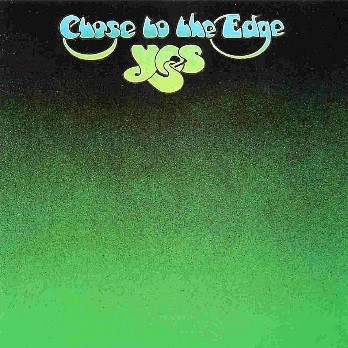
EP: Close to the Edge?

GM: Maybe yes, it’s close (no pun intended?) But to me, it cannot be compared with something like the Pastoral symphony. “Close to the edge” is rooted at its creation time and so I am not sure it’s as timeless. Sure, it’s got longevity but I’d be surprised if they are holding it up in 500 years alongside the former.

EP: Maybe they won’t with Beethoven either.

GM: Possibly, of course!. But Beethoven never released an “Open your Eyes’’ or did he?
Beetclose

Arguably two masterpieces…or just one?

EP: My question of the Soap box was related to the track ‘Old School’ on the new album which harks back to the old school days and the systems within them. It sounds like it’s a message about change, which has been for the better, when the old ways, corporal punishment and so on was still a part of school life. “Make a stand against draconian violence”. Yet some people argue from the other side on this.

GM: Yes, well I think there is that element in  there, but you know, I lived through some of that era and I didn’t like it to be perfectly honest, but some kids DO get away with murder today…God!! I sound like my granddad!
In the old days, if we’d talked in class we’d have had our knuckles rapped with a ruler or we’d have the board duster hit us on the head or we’d get the cane or the slipper.
(“Didn’t do me any harm.” He whispers as an aside!)
But, at the time, yes, it bloody well did! But, who’s to know if it wasn’t a character defining moment and that as a result, I did not buck my ideas up. I don’t know, I’m certainly not preaching, all I’m saying is there is a certain not so romantic view of the old school life that I lived through. The song gave me a chance to air some of my resentments as a kid…

EP: Yet it’s not a very romantic view like hopscotch and short trousers. You refer to the somewhat nasty, authoritarian side of the old school ways.

GM: It gave me a chance to vent my spleen. Basically the kid in my story is saying “I’ve had enough!”
In his mind he rises up and says ‘Bollocks to all this’ and he takes over the school. But it’s all in his head. In the end we don’t see him marching off triumphantly. In the end, he’s standing in the corner, facing the wall with a sore bum, because that was the reality.
Some of it was quite horrible then, and I think things in education have changed for the better now. I don’t think there is anything good about beating a child into submission to get them to understand something. Especially when the child has maybe got some learning difficulties and some frustrated arsehole is whacking the hell out of them because he hasn’t got the insight to realise that the kid needs actual help and isn’t stupid.

The soap boxiest piece on the album isn’t that track however, it’s ‘Decon(struction) Blues’ that’s where I’m on my soapbox shouting “Don’t tear it down!”
Let’s consider what you’re doing. You tear things down and then bitterly regret when they’ve gone. So let’s take some time before we deconstruct and consider what should stay and what should go and what should be listed.

Going back to my point about me venting my spleen though, my school experience was not great and I hated some lessons. So, this song gives the kid at school a chance to see what it would be like to throw off the manacles and the shackles and take over the place – kick some ass, before he gets a beating from the headmaster.

EP: There is a strong theme on the album of nostalgia throughout…

GM: There is, I do like looking back quite a lot….

EP: I can see the theme of nostalgia at its most obvious in the track ‘Palace of Delights’

GM: That’s right.

EP: From a commercial angle?

GM: It isn’t really meant to be in those terms.
The “Palace of Delight” is overtly a shop in an old town which houses every element of your childhood on those shelves, like it’s been waiting for you your whole life and when you get to the age of 40 you go to this shop and suddenly you are transported to a time when you were 9.
Everything you got for Christmas when you were a child is waiting for you in that shop. It’s one of those strange shops where everything is juxtaposed together, Fishing nets, Diana and Charles wedding mugs, old Dinky model cars, stamp collections (which are way out of date), scouring pads, Ajax cleaner and clown balloons. You name it, it’s all in there and it’s all mixed up and higgledy-piggledy and, as soon as you close the shop door behind you, you’re transported to the time of your youth.
The Palace of Delights is the mind’s eye of what it’s like to be a child, to have your formative years presented back to you.

EP: The joy is revisiting that, is it?

GM: Yes, and everyone’s Palace of delight POV would be different. My Palace of delight would be the things I mentioned in the song, like the Man from U.N.C.L.E. bubble gum cards which I used to collect. When I went to school in 1969, I used to trade them round the school yard.
“I’ll give you two Mr Waverley’s for an Ilya Kurayakin” (Look that up if you don’t know what that is referring to…)
You used to have to collect the set of them but you’d always end up with five of the same card!uncle

So in the shop I would see these ‘Man from U.N.C.L.E .’ cards, as well as Waddington’s game Railroader and ancient Beano annuals and suddenly I’m back at Christmas 1966…
It’s a pictorial representation of nostalgia and memories.
I believe that nearly every village has a shop like this in it somewhere.  You find one and you are transported out of time – it’s a TARDIS shop!
It creates the emotional response between you, the object and the joy of remembering pure nostalgia.

EP: After you have done this album, Number 14, do you find it possible to keep discovering inspiration?

GM: I think I’ll write a reggae rock opera next.

EP: Did this album occur easily or was it a painful process?

GM: I find writing songs easy-ish, I find writing songs ABOUT something to be hard. Because you need an idea, a kernel of something. Once I get it, I’m off and running. “Charlestown” was a perfect example of that. I had snippets of melodies but I didn’t know what the hell I was going to write about. I went on holiday thinking this is all shit and I’ve got no ideas at all. I’m all washed up and quite depressed.
We went to Cornwall and happened to pop into this place, Charlestown. I went to the harbour and there is this great big four-master (Ship) you know…

I went on board. It’s one of those ships that has been used on ‘the Onedin Line’ and every other BBC sea related period drama going.
It was then that I started wondering where this thing had gone when it was a ‘real’ voyager. It was a grey day and it started me thinking…everyone gets this romantic vision of the sea and the ship cutting through the waves with people shouting “Avast Ye.”, but, in reality it must have been bloody horrible, setting off from Cornwall on a miserable grey, grisly day, carrying clay of all things. They were lucky to get to the other end alive in a lot of cases.
So that’s it, the light goes on and I get the idea. I went to the Charlestown maritime museum to find out more about the ships, the cargo and common voyage problems. I went to look up facts about it and there is was, that was Charlestown…It was all from that one thought. And once I get the idea about what I’m going to write about… VOOM! That’s it, I’m off. I find I can write.
I wrote the main structures of “Margaret’s Children” in about two weeks.  I had a family tree on the wall and would look at who was on there. Once I know what I am going to write about its so much easier, I don’t think that writing the songs is a problem for me, I can probably write songs until the cows come home, but writing songs about something that’s worth listening to and has got something to say, that’s much harder.
Where I get the ideas from, I don’t know, I don’t question it, it beats the hell out of me. I don’t have a clue where some of it comes from, it’s peculiar some of it

The idea for ‘Root’, was all about this village and that there were things buried below the surface. Things that have changed, you know?

EP: The village is your creation, not one that you have visited, like say Haworth?

GM: No, it is imaginary, but I did do research. I did lots of reading. I have a folder here on my computer called ‘Dying Village’ and in it there’s lots of stories of old Yorkshire towns that have been lost, you know? Through some mining disaster or some other sort of disaster. I’ve been looking into how some of the places have changed completely. The pit has closed maybe and everyone has had to leave, and then the town got levelled, turned into a quarry for a while, and levelled again and then the site got redeveloped into an off-the-motorway retail park. You know, a Retail Centre or something like that.
The original idea was about this old village, with ‘Root’ it’s never really concerned with the new, it’s not really concerned with what is going on now, mainly with what was.
The title track looks at what is going on under the ground.
‘Decon(struction) blues’ warns you about tearing communities down.
‘Autumn song’ looks at the natural changing of the seasons.
‘Palace of Delights’ is about going back in time (for a moment).
‘Old School’ is also about looking back at an earlier time.
‘Mists of Morning’, again, even though it’s a ghost story, it’s about looking backwards. It’s going back to the beginning of the village, where they saw these trades people off – violently, and it came back to haunt them, literally.
‘Huntsman and the Poacher’ is also about an older way of life and ‘Amongst the sleepers’ is about remembering the personal Past.
A lot of it isn’t about modern times but it’s concerned with where we stand today.
village

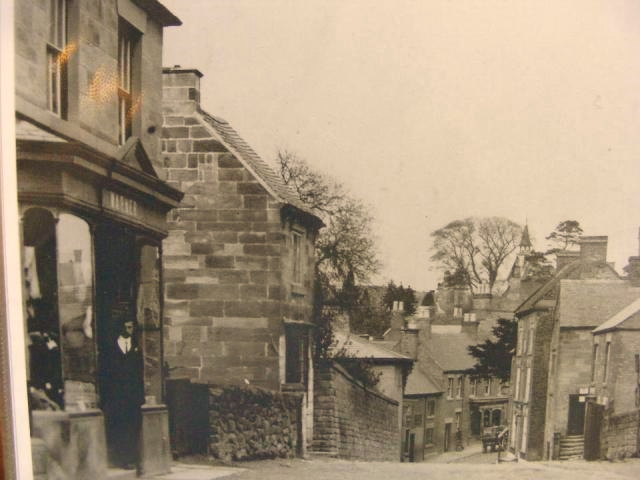
The village, torn down and lost forever…

EP: You’re looking in that direction…

GM: Yes, over my shoulder basically.

EP: I’d like to ask you about the production. One thing that is notable about Root’s production is that it’s rich in Strings and Wind instruments, in particular the latter. There seems to be a bigger range of Saxes, Trumpet and Bassoon on the album. Was that a conscious decision when you were beginning the writing process or did that evolve? The texture of sounds appears to fit the album.

GM: It does, well in actual fact the textures fit the songs, and the songs fit the album. That’s the way it works. I don’t write to order as a rule, although there have been exceptions to that. I just write songs and if I happen to write one that’s got a funky soulful vibe, I can somehow hear the horns in the background already.

I do listen to Stax Motown and that sort of stuff. If I hear a rich horn section and I play a pop song-(and that’s what a lot of these songs are), I would then add to one of my demos a sort of synthetic brass sound and then I pass it along to Marek Arnold who does the saxophones…What I would get back from him are multiple tracks of Saxophone, but arranged slightly differently. So instead of my three fingers on the keyboard they are all done with different Saxes with different intonations, and he’s arranged them together as a brass arrangement. And…I got a lot of that back from him this time.

The way the sax songs fell, a lot of them had that brassy punch to it. I didn’t set out saying. “You know what I haven’t used brass than much, I’m going to use brass on this album.” It’s just that I wrote the songs and they happened to require brass IMO and when Marek got hold of them, he went wild really, he sent back far more than I could use.
I liked the arrangements this time and I didn’t do what I normally do which is pare it down. Instead I left a lot of the solid arrangements in because they were really good and because a lot of them have got a pop rock feel this time. There are some folky acoustic songs but a lot them are not folk songs per se, they’re more pop songs really, if you break them down.
I do love those brass arrangements
The thing about the Bassoon was that it was just fortuitous. I’d seen ‘Knifeworld’ at Summers End and I thought they were absolutely brilliant and I went over to chat with Chloe (Herrington) and Kavus (Torabi) to tell them how much I really enjoyed it. I’d seen her on stage with this bloody great Bassoon and she said ‘Can I have a bit more Bassoon in the monitor…’  (Laughs) You don’t hear that a gig very often do you?
….and it was just about the most wonderful noise and I thought…You know what… I bet that would sound really good on something like ‘Autumn Song’. It’s got that ‘Camberwick Green’  / ‘Ivor the Engine’ kind of feel to it, slightly rustic you know. It’s a folky-out-in-the-wilds folky feel.

EP: It just seems like a natural fit that the song which poetically describes the change of the season, combines with the wind instruments perfectly. It wouldn’t work in many other songs.

GM: You write each song as an individual piece you know…like an artist paints individual pictures. You don’t paint an exhibition, you paint pictures and then you put them in an exhibition and it’s the same with songs. I write them and quite by luck they all go together into the same collection.

I’m not constantly having to throw them out because they don’t fit with the other ones. I don’t care if they don’t fit, normally.
Just look at ‘Margaret’s Children’, perfect example. You’ve got something as big and symphonic as ‘Perfect Childhood’ then you’ve got ‘A Night at the Savoy’ with a slinky acoustic piano.

EP: That was one album where you seemed to go with what seemed right with each song…

GM: That’s right and ‘Root’ was no different. There was no great overarching plan with ‘Root’. It’s just the way the songs turn out and hopefully they run in the right order to keep you on board. The running order is crucial for an album like that. A lot of the time you’re not guided by chronology like in ‘Anser’s Tree’ or ‘Margaret’s Children’ where the first song had to be ‘Years of Wonder’ because it’s set in the 1600’s and the last one had to set in the future – so it runs from the past to the future…this one could be ordered anyway.
I knew that ‘The Root…’ (The title track) was going to open it and …Sleepers’ was going to finish it. It was where to put to put the ones in the middle that we had some debate about. Hopefully the songs come together and create a unified flowing album and you hear it and think that it couldn’t be any other way.

EP: I hear the pop elements on this album too and wanted to ask you about the song ‘Decon(struction) Blues’. It seems that this is a good example of one of your pop songs because it’s very clever in the way you also seem to blend in a wide range of styles successfully, like the middle rock-out section of guitar, with the chorus which is pop with a bit of soul and the wind segment which feels like something of a classic 60s TV theme tune. How did you make all that fit together?

GM: I don’t know. I didn’t set out to make it clever, it’s just the way it came together.

EP: Are the elements parts of the files that you keep gathering called ‘Newbies’?

GM: No, it didn’t happen that way. You have to realise that with ‘Decon(struction) Blues’ I could pretty much play the a full demo of it before anyone got their hands on it, and it didn’t change apart from some chopping of bits out, you know, being concise about things. The original flow and shape and arrangement was always going to be like that. The players (in the band) out there can bring it to life because they can understand their instruments far better than I can. But there’s nothing clever about it, I just wrote it as a complete song. I didn’t agonise over it. I didn’t aim to put a ‘stax’ bit in it. I just kind of go ‘Blurgh‘ and there it is. I work on the basic verse, chorus, verse and chorus and then decorate it with the instruments.
I try to use everyone’s performances. There’s far more material produced than ever gets used on the album though. Marek played loads of solos which just aren’t on there. Steve played some flute parts that aren’t there either, I just snip things when I think there’s enough of it. There might be 20 minutes worth of solos and I only want 3!
I assemble them like a relay race, one follows the next. Like stitching a collage together of all the people’s parts. If there is any art involved it’s in how I bring all these parts together so that it hopefully sounds natural.
As a solo artist you have to be objective and bring out the parts that you think people will want to listen to, not just the bits you have worked on. Otherwise it will just sound like Guy Manning’s greatest 5 minutes all over the place, you know. So even though it might be my favourite bit of piano I don’t stick it at the top of the mix, that’s not what it’s about.  The Song is King!

The whole thing has to match the song, the song has to match the lyrics, the song and the lyrics have to match the artwork and everything comes together to provide the listener with the materials they need to build up that world in their minds. And if it’s unnatural, it will wake you up from that journey and the spell has been broken. So the art is to try to meld things in and also hope it lasts as long as it should last without becoming boring.

I’ve been bloody lucky really that it has turned out alright. Sometimes I don’t know how it’s going to end but I know it’s going to turn out alright, when you start you have to believe it’s going to turn out alright.
You know, one night I’m going to go to bed and the little cobblers elves are going to come into my studio overnight and sort out all the crap I recorded the night before. And in the morning I will go,
“You know what? It’s much better than I remember it last night. The little elves have been and sorted it all out for me.”
No…nothing clever. I don’t think of myself as clever.

EP: Do you find it easier to write the 3-4 minute pop song that the 12 minute sweeping epic?

GM: No not really because the 12 minute sweeping epic is just a series of 3-4 minute pop songs with just some linking passages in between. ‘Charlestown’ is 35 minutes but its 35 minutes of small songs which talk to each other.
‘Suppers ready’…Is that ONE song a cohesive piece? It is now! But it wasn’t that way when they wrote it. They stitched it together and yet you wonder how else could it have been? That’s just the way it was always meant to be. ‘Willow Farm’, that was just a small, little bit of nothing until it was in the middle of ‘Suppers Ready’ and suddenly it became very important you know.
Whatever it is, it just needs to have a good melody or a good tune. I firmly believe that having things without a melody is just silly. You don’t have to be discordant to be adventurous. Melody for me is extremely important. I want people to be able to hum the tune. I want a Dave Gilmour type solo you know, as in one that you can sing afterwards. I want you to be able to sing the guitar line. I don’t need speed. No matter how wonderful and dextrous it is, I want melody in there, I want it to build.
I like to sing my guitar solos – ‘Southern Waves’ you know, I can sing that guitar solo, it was one of ‘those’. We could all include shredding for shredding sake. I can shred with the best of them, you know! ‘Oh look at me, aren’t I so gifted? Look how fast my fingers blur as they go up and down the neck…’ But I do not like to, it all has to have purpose.

You might get away with it in a live concert, but on the album you’re going to listen to it time and time again and that shredding becomes fairly boring to me very quickly.

EP: After all the writing, when that’s done and it’s time for the mixing and mastering, is it then that the process seems like a Herculean task? Is this the least enjoyable part would you say?

GM: You play to your strengths don’t you? I think I’m a pretty good songwriter, and I think I’m a bloody awful producer to be honest. My albums at best sound like well-produced demos. You can hear everything and everything is nicely balanced. I know I’m not a great producer and I think that’s why it’s a Herculean task… because I am going into it knowing it’s never going to sound as good as how I think it could be (as in in my head).

I listened to “Charlestown” recently for the first time in two years. There’s nothing more depressing than going back and listening to your own albums. When you’re thinking…ah!!! where’s the bass, you know, or what was I thinking, that drum sounds terrible, what the hell was I doing there?
I know I’m not a great producer but I’m not a bad songwriter though.
I like writing songs best. I like producing them less, and somewhere in the middle I like playing live. Even then, I only like the performance bit, playing for an hour and half or so…It’s always a bit of a struggle and I really hate the packing away!
My stage of choice is that moment of writing the songs and working with the guys to make the parts of the song mature and evolve. Once I have all the parts and I know how it’s going to sound, I can lose interest in it altogether. I then have to seal myself away and pull myself into the zone. It’s not something I take any pleasure with. I don’t fixate about how a bass drum should sound for hours on end and you should do that when you are producing!
I liken it to a man walking into a desert with a canteen of water, you know? You walk and walk until you can’t go on anymore and you drop to your knees and then fall flat on your face.  It’s that point where I never want to hear the album again and I just can’t do anything to it after that point. I just don’t have the grit to actually go back over it. I purposefully do not go back and listen to the album because if I found something I ought to do something about, my heart would drop. That’s not the way you should be about your own work. That’s not say that I’m trying to’ polish a turd’ that it’s really crap and I’m struggling with it. I just never get it to sound as good as I think it could.

I do give it to someone else on occasion and it sounds….yeah… ok…it takes the pressure off me, but in actual fact I don’t think anyone’s ever remarked on it. The only other person who’s ever done any real production on my albums is Andy (Tillison) who’s a far better producer than I am and he knows far more about how the sound should be.  When he did ‘Bilston House’; admittedly it’s a popular album and it’s a good sounding album, but no one has ever put anything in a review to say…
“Thank God Andy’s producing this one because it sounds so much better than the others.”
But I do take my hat off to him, he did some good work on that album and he really took the pressure off me!
But it’s a great act of faith when you put your work in the hands of someone else, even someone you trust. You’re losing something and yet you can’t say anything.
You keep your mouth shut because someone has listened to it objectively and with no axe to grind and no emotional attachment with it. They don’t feel the need to preserve a piano part that personally took 2 days to master; they just look holistically at it, as a song.

My main problem is that normally I don’t have the money to give it to someone else. I can’t pay Trevor Horn to have a go at ‘The Root, the Leaf and the Bone’ He just wouldn’t have the time anyhow!  There are no large record company advances that pay me to go into the studio with the London Philharmonic orchestra to do an arrangement. So you can either get someone you trust to do it at very little cost or you do it yourself.

You know the end of ‘Misery’ (Stephen King) where he has his glass and his one cigarette and he gets to the end and he say’s “That’s it.” I get to the same point and I say, you know what, that’s as far as I can take it. After that point I’m just fiddling around…

EP: How do you hold down the multirole aspect of your career? Writing, recording, rehearsing, mixing, organising live dates, doing the website, doing interviews and holding down a day job?

GM: I’m used to it. I’ve been doing it for more than 14 years. It’s a cycle, each year. I just do one thing and then I go on and do the next. I keep the website ticking over, they are small increments. You do things in small manageable chunks, like decorating a house. You don’t think about decorating the whole house at once, you just deal with the wall in front of you that you are about to paint, and then you paint the next wall and so on. So over the course of a few weeks, the house gets painted.
It’s time management. I take on a lot basically because I’m responsible for it.
I try to keep everything simple and just fit anything in that I can.


EP: You sound very organised…

GM: You have to be organised. I like getting things into diaries. For the radio shows, I get in touch with the presenters months in advance. I want to know when I’m doing the interviews and I want to know when the shows are going out. The ‘Special Guest’ questionnaires (for the Root album) now published on the website, I had them lined up in my diary. I have them there and I know exactly when I’m going to release them…it has to be planned or its chaos….chaos!

EP: Another thing I have noticed that you have added to the work load is that you’ve changed the bands image….

GM: (Laughs) you could say that…

EP: It’s quite a big change and I thought it looked quite impressive when I saw it in Prog Magazine.

GM: It was time to change! I have always said that I wanted to make an effort, I didn’t want to just turn up, set up the gear and take my pullover off and play. I wanted set up, go off and come on looking like we made an effort to change into something. I don’t mean that we have to put batwings on or anything like that, or come on in capes. I wanted people to realise we were taking the performance side of it seriously. We wanted to put on a show because we are not the most animated band to watch, you know? We’re quite sedate in what we do and there are not a lot of visuals or loads of posturing and’ air guitaring’ and so on. We play the songs and some of them are complicated and we have to sit down and concentrate on what the hell we are doing. While that’s happening there isn’t a lot of action!

But, the way I see it, you can at least you can look good sat at the keyboards. Beforehand we would come on in black shirts and Julie came out in a dark dress. We all looked neat and tidy but we looked like we were at a convention for funeral directors or barbers or waiters or something. So I said that we should do something about sprucing up the stage act.

For the past few shows I have been off to the off to the side of the stage and yet, everyone expected me to be in the middle. People think that because I sing and I wrote the songs that I ought to be in the centre with all the spotlights on me, but  I put myself at the side because if you are set up over there, your stuff is less likely to be moved and I had quite a complicated set up and I didn’t want anyone to dismantle it and move it around.
Anyway, that’s all going to change. I’m going back in the middle again because it became apparent practically, not egotistically, that people want to come and see me.

Not Guy Manning...So how do we look? The way we are is best described as storytellers. We don’t act it out like Gabriel did, you know? I’m not coming on dressed up as Rael or putting Slipperman costumes on and all that stuff. The nearest I got is putting a Captains hat on for Charlestown So I did suggest a bit more visual interest and I think it was Kris who came up with the Steampunk idea. I don’t know why, I think he had been watching ‘The Golden Compass’ or something like that and he quite liked the waistcoats and goggles and top hat look and stuff. So once we got that idea, everyone went running off to Oxfam and took great pride in doing their own costume/look. It wasn’t coordinated from the middle or anything. It was just “Go out and kit yourself out.” And we had great pleasure in showing everyone…here is my costume.

EP: Was it taken in good spirit?

GM: There were some people who found it more comfortable than others. I think in the end though we all embraced it. When you see the Prog magazine in Nov (2013) you’ll see Martin has this lovely little waistcoat and goggles and he looks like some sort of demented mole or something. He looks really good and Julie… well Julie looks like a dark version of ‘Mary Poppins’ dressed up in this sort of corset and long dress and tied up boots. And I look like some sort of mad professor, well not mad…probably like some sort of country squire in my long coat and waistcoat, my thin glasses and a sort of 1930’s Genevieve car riding hat and pirates boots up to my knees. We all look very odd!
I just hope people take it in the spirit it’s being given and just embrace it for being fun. Some people might say we look like a bunch of pretentious twats and I’m quite expecting to get some sort of backlash. You know, some people are going to look at those photos and say “What the bloody hell do they think they look like?”

But I tell you what, I am so sick of seeing five guys in black t-shirts standing with their arms folded. I hate those shots, or the ones of guys leaning against a brick wall. I don’t want to do that. We are going to do something a bit different. We went a Heritage railway museum and we dressed my youngest, Nathanial, up as Death (with Scythe and everything) and every time there was a photograph he was lurking in the background, hauntingly hanging around you know? We brought him in because there are a lot of Manning songs about Death and we had a right old laugh when we did it. The whole thing was a great day out, it was absolutely boiling hot, we had a lot of fun and we just hope that when people do see it that we don’t come across as pretentious arty farty basically.

It’s fun, it’s just fun. It’ll be bloody hot sitting on stage in it though, I can tell you.

EP: Have you tried it, a dress rehearsal.

GM: Not yet but the day we shot it, it was bloody hot, probably the hottest day of the year. But I know we will be warm. I’m hot in a t-shirt and joggers so I know it’s going to be tough. But we’ll see.
I think you have to suffer for your art!

 EP: So you hope to bring your songs to life through what you are wearing?

GM: Yeah, hopefully. Like I say we are not going to act them out. But we want to bring a sense of style to the proceedings. It’s not meant to be taken seriously. It was more to do with Alice in Wonderland than anything else.

EricEP: Thanks Guy, I enjoyed our chat and look forward to catching up with you again soon.

GM: Indeed…Very, very enjoyable. Thanks.

For more information about Manning and the latest album visit: 

Manning Website

Root the Leaf and the Bone promo video

Sample track – ‘The Huntsman and The Poacher’

My best of, must owns, of 2013

Prog7 - Version 2I realize it’s not the end of the calendar year, but it is the second day of Advent, and it seems like a proper time to list what I love about the music of this past year.  

The year, frankly, has overwhelmed me—but all in a good way.  As someone who has followed prog rather consciously since about 1981 (age 13) and has been exposed to it since about 1971 (age 3), I love the genre.  Frankly, I love many forms of music, including classical, opera, and jazz.  I’ve never learned to appreciate anything about country and rap, and, given that I’m 46, such prejudices will probably remain.

Sometime around age 22 or 23, though, I realized that financially, I was going to have to chose a genre if I wanted to collect and listen with any seriousness.  Perhaps it’s the slight OCD or some other quirk I possess, but I’ve never liked doing any thing half way.  In fact, as my maternal grandparents taught me—whether in taking care of the yard or cooking a meal or baking a loaf of bread or even in helping a neighbor—there’s no sense at all in doing something only partially.  In fact, to do anything partially was to slap yourself, integrity, and God in the face.  If you’re going to do something, do it well.  In fact, do it with excellence, if you possibly can.

So, if I wanted to throw myself into a genre, and not do it halfway, I had to choose between jazz and prog.  I love poetry too much, so prog seemed the best genre, as I find much to appreciate in fine lyric writing.  And, even in psychedelic lyric writing, there’s a joy to figuring out the puzzle of imagery.

And, so choosing prog, I realized soon after that I’d chosen a genre made up a lot of folks like myself—a number of OCD perfectionists!  And, I found that almost everyone making prog was (and is!) deeply committed and intelligent.  And, so were (and are!) the fans.  No one who loves the superficial of life becomes a prog musician, artist, or aficionado.

The problem was, of course, that when I was age 22 (1990), there wasn’t a lot of prog happening.  At least not much new was coming out.  Yet, prog could be found all throughout the rock world—though not always in the likeliest places.  As a genre, though, prog was probably at its lowest point in terms of what was being released.  Yet. . . yet. . . we were only a few years away from Brave and The Light and The Flower King . . .

Flash forward 23 years.  Holy schnikees.  What a year 2013 has been.  Really, could it be better?  Doubtful.  And, as I mentioned in my Preliminary Awards piece a few days ago, an argument could be made that we’ve reached the pinnacle, the Mount Everest of Prog!  I know, I know.  Eric Perry is going to slap me down for being hyperbolic.  Damnit, Eric, I’m from Kansas!  We’re not exactly subtle!!!

Phew.  Ok, I feel better getting all of that out.

Two quick comments.  First, these are in no order, other than alphabetical.  Frankly, these albums are just too good to allow my own will to separate one from another by “better or better.”   With one exception.  I would think any lover of the genre would want to own each of these.  Second, there are several albums that I suspect are wonderful, but do to my loan limitation because of family and work, I didn’t have time to absorb.  This latter list includes releases by Sam Healy (SAND is en route to the States as I type this), Mike Kershaw, Haken, Francisco Rafert, Ollocs,and Sky Architects, I apologize to these artists, as they took the time to contact me, and I was unable to give them credit where credit is due.  In due time, I will, however.

***

So, the list of the must-own cds of 2013, with two important exceptions.

ayreon

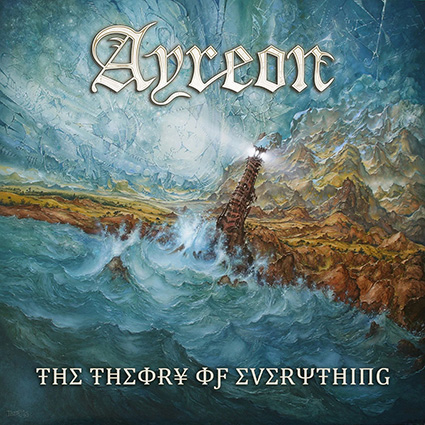
Ayreon, The Theory of Everything.  I hope to offer a full review of this soon, and I think fellow progarchist Tad Wert will as well.  The earlier series of Ayreon albums—possibly and arguably one of the most complex science fiction stories ever written—seems to have become self contained and at an end.  Now, if I’m understanding the lyrics from Arjen Lucassen’s latest correctly, Ayreon has become a project about exploring the self rather than about the self exploring the universe.  This is not easy listening, in terms of music or lyrics.  The former is a shifting feast of glory, no idea lasting more than two or three minutes before gorgeously transforming into some new idea, and the latter is deeply introspective and intelligent.  I’ve never had the chance to meet Arjen, but I would guess that he must be about as interesting as possible.  For him to keep such a huge range of ideas in one album, musically and lyrically, screams brilliance.  I only have one complaint with this release.  I’m a huge fan of Arjen’s voice, and he relies on the voices of others.  All good, if not outstanding, but I want Arjen’s voice.

***

cosmograf

Cosmograf, The Man Left in Space.  Phew.  Yes, let me write that one more time.  Phew.  That English chronometric and entrepreneurial demigod, Robin Armstrong, has now released four albums under the project name of Cosmograf.  Each is better than the last.  And, each of “the last” was pretty amazing and astounding and outstanding and lovely and meaningful and . . . you get the point.  The Man Left in Space is existentialism at its best.  Just as Arjen has written one of the finest science fiction stories of the last century, Robin has given us the musical equivalent of of the works of Albert Camus and Gabriel Marcel.  Add to near perfect story telling the musical work of Greg Spawton, Matt Stevens, Nick D’Virgilio, and, among the best, Robin himself, and you have a work of art that will stand the test of time.  A family man who loves speed, Robin also loves excellence.

***

days_between_stations_in_extremis_resized

Days Between Stations, In Extremis.  This one was a complete surprise to me.  A review copy arrived in the mail, courtesy of the band and the master of American prog PR, Billy James.  I was intrigued by the cover [que, background sound, Brad’s mother: “Never trust a book by its cover. . . “], though I frankly don’t like it that much.  It’s by the famous Paul Whitehead, but it’s a little too psychedelic for my tastes.  But, then, I looked at the musician list.  Holy smokes!  Tony Levin, Billy Sherwood, Colin Moulding, and Rick Wakeman.  How did this come about, I wondered?  Sherwood and Moulding sing on the album, and neither has ever sounded better.  Indeed, they seemed to have been created and birthed for this album.  Overall, In Extremis is symphonic prog at its best.  At 8 tracks over 70 minutes, the album never lags.  It flows together beautifully and movingly.  There are some of the most gut-wrenching passages, emotionally, I’ve ever heard in a prog album.  And, the two main members of the band, Oscar Fuentis Bills and Sepand Samzadeh, know exactly when to linger over a musical part and when to move on.  The high point: The Eggshell Man.  I have no idea who or what he is, but I’d like to meet him.

***

firece spooky action

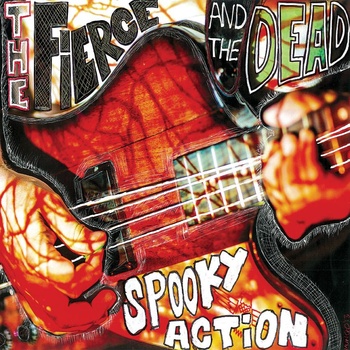
The Fierce and the Dead, Spooky Action.  Four great guys—Matt Stevens, Kev Feazey, Stuart Marshall, and Steve Cleaton—making the best music possible for two other great guys, David Elliott, European Perspective Guy (I think this is official superhero name) and founder of Bad Elephant Music, along with the hilarious and artful James Allen.  Matt Stevens is a stunning person and artist.  It’s been fascinating and heartening to watch him struggle as he makes his way into the profession.  He very openly asks about opportunities.  Should he pursue fame first or art first?  I always know where Matt is going to land.  Probably many of us do.  He always comes down on the side of art, knowing the fame will follow when it follows.  I hope and pray he never changes his mind or soul regarding this.  There are lots and lots of folks out there—not just progarchists—cheering these guys on.  As my close friend and fellow progarchist, Pete Blum, has said, nothing has hit him so hard since the days of Zappa.  And, for Pete, this is a massive and important statement.  Everything on this album is wonderful.  In particular, I’m quite taken with Parts 4 and 5, a continuation of a theme that Matt and the guys started with Part I, their 19 minutes epic from their very first release.  TFATD, not surprisingly, also seems to have started somewhat of a sub genre within prog, the prog instrumental album.  In otherwords, what TFATD is doing is roughly equivalent to what progressive jazz was in the 1960s and 1970s.  A good sign for the health of all concerned.  In particular, newly emerging bands such as Ollocs and Rafert are also releasing instrumental albums, all of them quite good.

***

"Pure Flower Kings, pure prog and Kingly epic."

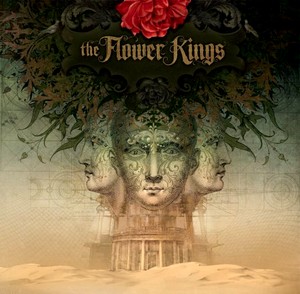
The Flower Kings, Desolation Rose.  This release surprised me as well, but not for the reason Days Between Stations did.  As far as I know, I own everything Roine Stolt has made or contributed to since about 1994.  Every side project, everything.  So, there was never a question about whether or not I would buy the new Flower Kings album.  I would certainly list Space Revolver (2000) and Paradox Hotel (2006) as two of my favorite albums of all time.  Stolt always has the power to release wonder in me.  Whether it’s the wonder about the first day of creation (Unfold the Future) or John Paul’s Pizza (Space Revolver), I love the libertarian, hippie, playful spirit of Stolt and the band.  Really, think about the members of this band.  Stolt, Bodin, Reingold, Froberg, and Lehrmann.  Already reads like a “supergroup.”  Not that they can’t be as serious as they can be trippy. One only has to listen to “Bavarian Skies” or the “Ghost of Red Cloud” to know just how deep they can be.  What surprised me about the new album, “Desolation Rose” is just how political and angry it is.  I don’t disagree with the anger or the politics.  In fact, I think I totally agree.  But, “Desolation Rose,” lyrically, is about as far away from “Stardust We Are” as one could possibly imagine.  This diversity just demonstrates how talented this Swedish band really is.  The entire album builds until it reaches its highpoint (in terms of intensity) in “Dark Fascist Skies.”  The final two songs, “Blood of Eden” and “Silent Graveyards,” offer a rather calming denouement.

***

fractal mirror

Fractal Mirror, Strange Attractors.  I’ve already had a chance to write a long review of this excellent album on progarchy, and it was (and is) a great honor do so.  Strange Attractors is not only one of the best releases of 2013, it’s the freshman release of a brand new group.  Three folks—all of whom met one another through the internet prog community (how cool is this!)—makes up this band.  Leo Koperdraat, Ed Van Haagen, and Frank Urbaniak.  But, we have to add a fourth.  It’s art comes from Brian Watson.  This is really important.  Not only is Watson an amazing artist, but he also creates an image for the band in the way one associates Yes with Roger Dean, Talk Talk with James Marsh, and Jim Trainer with Big Big Train.  It’s one of the joys of prog.  The art can be (and should be!) as beautiful and meaningful as the music and lyrics.  But, back to the music.  The three members of Fractal Mirror have created a stunning progressive soundscape, gothic and heavy in tone, but light in the space created.  I realize this sounds like a contradiction, and I wish I had the ability to explain it better.  I don’t, sadly.  It’s really not like anything I’ve heard before.  Suffice it to state, it’s quite refreshing and welcoming in its own intensity.

***

leah otherworld

Leah, Otherworld.  This is the only EP to make the “best of” list this year.  It’s also the only release I’m listing in which the artist (Leah McHenry) doesn’t consider herself a progger.  She places herself more in the metal camp, and this becomes obvious in the final song of the EP, “Dreamland,” a beauty and the beast duet with lots of metal “growling.”  Whatever one wants to label Leah’s musical style—and I would call it a cross between Sarah Maclachlan and Arjen Lucassen—it is very artful.  Leah’s voice could haunt a moor!  So much depth, truth, and beauty in every note.  The EP is only five songs long—Shores of Your Lies, Northern Edge, Surrounded, Do Not Stand, and Dreamland.  The first four possess a very Celtic/Nordic northern edge to them.  In fact, I called my initial review of the EP, “On the Northern Edge of Prog.”  I’m not bragging, but I am rather proud of this title.  it seems to capture exactly what Leah is.  Arjen Lucassen, if you read this blog, please look into Leah’s music.  I could see the two of you working very well together.  Leah, as it turns out, is also about as interesting a person as one might find anywhere.  Since Otherworld first arrived at progarchy hq, it’s been in constant listening rotation, and I pretty much have every note and lyric memorized at this point.

***

Kingbathmat OTM

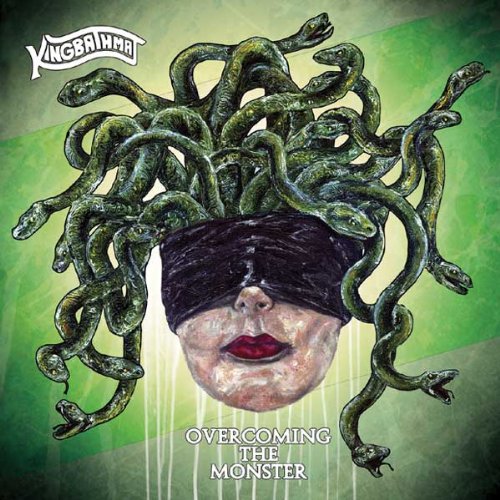
Kingbathmat, Overcoming the Monster.  When we first started progarchy just a little over a year ago, I received a note from Stereohead Records of the U.K., asking me if we’d be interested in reviewing a cd by Kingbathmat.  Sure, I thought.  Of course.  Only the dead wouldn’t be intrigued by a band with that name.  Well, since then, I’ve not only listened to about as much Kingbathmat as exists (still missing a small bit of their back catalogue, but this will be rectified at the beginning of 2014, when the new tax year begins!).  I love these guys.  I’ve had the chance to get to know John Bassett and Bernard (he seems to have several last names on the internet!).  What incredible guys.  Really a band of Peart’s “Tom Sawyers.”  Mean, mean stride, never renting the mind to god or government.  Smart, insightful, unafraid.  Frankly, these are the kind of guys I would want next to me should I ever find myself under fire.  As with Leah, I’m not sure that Kingbathmat is perfectly prog.  But, then again, if it’s “perfectly prog,” it’s probably not prog at all.  Kingbathmat mix a number of styles, many of them heavy, to form a mythic maze of musical inspiration.  They are by far the heaviest in my list for 2013.  The “Tom Sawyer” reference is not just lyrical.  Parts of Kingbathmat pay great homage to early and mid-period Rush.  Of all Rush albums, Counterparts is my least favorite.  That doesn’t mean I don’t love it.  I’ve been a Rush man since 1981, and I will die a Rush man.  So, any criticism is relative.  But, if you could imagine Rush entering the studio with the music of Counterparts, the lyrics more intense than culturally sensitive, and a producer who wants to rock, really rock, you’d have an inkling of what “Overcoming the Monster” is.  Every song is a joy.  Not in the precious, sappy sense, but in the satisfying, just sense.  Everything is really quite perfect: vocals, bass, guitar, drums.  Since I first received a copy of OVERCOMING, I’ve probably listened to it every other day.  After a hard day of teaching (a job I love) or writing something scholarly, there’s nothing quite like putting this cd on, sitting back, and saying, “yeah, it was a good day.”

***

KSCOPE245

Nosound, Afterthoughts.  Giancarlo Erra might be the anti-Kingbathmat.  Erra, an Italian demigod of sound in his own right, loves silence and space as much as Kingbathmat loves walls of Rush/Soundgarden-like sounds of thunder!  Indeed, Erra has a lot of Spirit of Eden and Laughing Stock in him, a lot of Arvo Part, too.  If there are three notes, maybe there should be two.  If there are two notes, maybe there should be one.  If there is one note, maybe you should let silence have its say.  I’ve been following the work of Giancarlo Erra for almost a decade now.  He always entrances and entices me.  He creates soundscapes so powerfully delicate that one wants to drown in their dreamlike, twilight quality.  He’s also every bit the lyricist Hollis was at his best.  He’s also really a complete artist.  He not only writes his music and lyrics, he creates his own packaging, is a rather jaw-dropping photographer, and even designs his own computer apps.  I was thrilled that Kscope just re-released his early masterpiece, Lightdark (2008), remastered.  As with Lightdark, Afterthoughts just flows.  Gentle, punctuated, quiet, loud, emptiness, walls.  Listening to Afterthoughts is akin to standing on a peak in the Idaho Rockies, watching a violent storm pass under you in an adjoining valley.  Nothing is unneeded, and nothing needs to be added.  Afterthoughts is what it is, another Erra masterpiece.

***

Two more to go, but supper’s ready . . . .

Kscope Postcast 45

Billy Reeves, Kscope Podcast.

Billy Reeves never disappoints.  Check out his latest podcast featuring Nosound, Ulver, and Sam Healy (focused on Healy).  #45.  Quite good.

https://soundcloud.com/kscopemusic


And Then There Was One…

I’ve heard a lot of great Genesis covers, but this single-handed version of “Supper’s Ready” has got to take the prize.

It is yet more evidence that Canada is a prog paradise… O, Canada! Land of Rush.

Okay, maybe I should have called this post, “And Then There Were Two,” because although it is a one man band doing all the instruments,  the vocals are done by a second dude.

But I wanted to emphasize the insanely great instrumental skills on display in this video…

The Permanent Way: Preliminary Awards, 2013

neil four corners
Ghost Rider, Neil Peart. Somewhere in the Four Corners, U.S.

Well, as tomorrow is Advent and the beginning of the Christian New Year, it seems as good a day as any (or better, frankly) to list my “best of 2013.”

Before I get to my own choices, however, I want to extend a huge, gargantuan, ginormous thanks to my fellow progarchists and to all of you who have supported us over our mere 14 months of existence.  I’m proud of us.  Extremely proud.  A good pride, I hope—not the kind that goeth before the fall.

As with almost every one we write about (in fact, most musicians in all forms and genres of music), we each have full-time jobs and many of us have big families as well.  We write for progarchy because, as I assume is obvious, we love music.  So, again, a major thanks to all who have contributed through their time and talents.  Even after 14 months, progarchy.com still boasts some of the best writing and analysts in the blogosphere.  Indeed, I would gladly hold up our writers against any group of writers.  We don’t agree on religion, politics, and a billion other subjects.  But, we each believe the reviewer must attempt to write as art, at a level commensurate with what is being reviewed.

Though our intention in the first few days of our existence was to be a kind of Dutch Progressive Rock Page/ “European Perspective” (our models and favorites) for North America, we realized pretty quickly (after a week or so), that there’s room for some thing larger than just the music scene in the U.S., Canada, and Mexico, also recognizing how intimately connected we each are, one to another, across this increasingly small globe.  As I often remind my students in the history of western civilization, modern technology allows us to know of events in the world often much faster than large news agencies and governmental bureaucracies.  How different from the six to eight weeks it once took to cross the Atlantic.  One of my favorite moments over the last several years was receiving a demo copy of a song from Greg Spawton.  I commented in real time as I listened to the music, and I think Greg and I both sighed in awe at our ability to communicate instantly, though separated by 4,500 miles.  May we never take such things for granted.

The same is true with music.  The internet has allowed us to form communities that geography once prevented.  We can interact with the artists (should they be willing, and most are) in ways that were impossible 20 years ago.  I’m sure this puts a certain strain on the artist, but it also has to be satisfying as well.  We can react to songs, lyrics, and artwork in a truly satisfying manner.  T.S. Eliot once argued that no poet can write in a vacuum, in pure originality, as art is always a communal experience, building upon the past and reaching out to those of one immediate family, kin group, and society.

I especially want to thank (in no particular order): Greg Spawton, Leah McHenry, David Longdon, Andy Tillison, Giancarlo Erra, Arjen Lucassen, Matt Stevens, Matt Cohen, Steve Babb, Robert Pashman, John Bassett, Sam Healy, Jim Trainer, and Jerry Ewing.  Each of these men answered every question I asked them, usually very quickly and without any justified “why are you bugging me, Birzer?!?!”

haunting Leah
Lovely Leah, Metal Maid. Leah McHenry.

An equally important thanks goes out to all of you who have trusted us with your art, your music, and your ideas.  I hope you feel we’ve treated it with respect, a sacred trust.

Progarchy is also a way of saying thanks to the musicians and artists we love and who have inspired us.  I’m rather happy to say that I’ve been listening to prog—in some form—since 1971, the year I turned four.  Having two older brothers, I found the music of Yes, Jethro Tull, and Kansas immediately inviting.  Even before 1971, I was rather obsessed with the theme song to the Banana Splits, often putting it on the turntable, blasting it, and waking the entire family at around 3 in the morning.  My mother can verify this.  She and my brothers would come down the stairs in our duplex in Great Bend, Kansas, to find 2-year old me dancing like a madman.

At the risk of my friend and fellow progarchist, Eric Perry, calling me out as “hyperbolic,” I state this with gusto and conviction.  2013 has the best year for music in my lifetime.  I know of no other year that has been so filled with such innovation, harmony, varied time signature, and lyric quality.  And, this is saying a lot.  There have been a lot of great years for rock over the last five decades.  From my perspective, third-wave prog is now in the position jazz was between about 1955 and 1975.  This is OUR golden era, building up the brilliance of 40 years ago without imitating, mocking, or denigrating it.  Whatever small part progarchy has done to contribute to this, amen.  Again, I say, AMEN!

Preliminary Awards, 2013

Last year, I began December by offering a few “awards” to some amazing folks who are not themselves out front as musicians.  This year, I’d like to do the same, especially as I offer the “best all around progger” award.  This is the person who makes what so many others do possible.  I have to split it this year, between an American and a Brit.  For me, the American has been Billy James, president extraordinaire of Glass Onyon PR.  This guy not only loves the genre of prog, he serves the indispensable role of promoting our genre in every venue possible, and he always does it with grace, class, and enthusiasm.  Billy has been as kind and helpful as he has been informative.

Progarchy Best All-Around Progger, 2013, American: Billy James, Glass Onyon.
Progarchy Best All-Around Progger, 2013, Brit: Sally Collyer.

Our Brit “all around progger” is none other than Sally Collyer.  Sally contacted me about a year ago, saying, “I’ve seen your name and your ideas, and I think we have a lot in common.”  Absolutely.  Not only have we bonded on prog, but we have on the unlikely subject of horses as well!  Progressive equines.  Or, something like this.  Again, a brilliant person, Sally answers everything, helps with everything, and continues to offer a brilliant support.  We also all know she’s an absolute mainstay in the British prog community and an equally lovely person.  The significant other of Andy Tillison, Sally keeps brightness, purpose, as well as levity, in the prog community.

So, to Billy and Sally: thank you, thank you, thank you.

Progarchy Audiophile Award Winner, 2013 (and 2012), Rob Aubrey

Audiophile Award.  This one, again, goes to Rob Aubrey.  I know there’s a famous guy out there, now even more famous for his 5.1 mixes.  But, for my money, the best man in the business is Aubrey.  One only has to listen to his work this year for Big Big Train and Cosmograf to realize what an ear and mind he possesses.  Exact, precise, yet imaginative.  A hard combination to beat.  He is our generation’s Phill Brown.

fractal mirror
Progarchy Best Debut of a Band, 2013: Fractal Mirror.

Best emergence of an artist/group.  Fractal Mirror.  Combining the talents of several spectacular musicians, including the drum work of Frank Urbaniak, the keyboard and bass playing of Ed Van Haagen, the artwork of Brian Watson, the haunting goth vocals of Leo Koperdraat, and the advice of a number of major figures in the scene, including Giancarlo Erra, what more could we want?  I wish them all the well-deserved success in the world as they begin their journey as a group.

Greg Spawton and John Betjeman.
Progarchy Best Single Song, 2013: Greg Spawton and John Betjeman.

Best single song.  Big Big Train, The Permanent Way.  From the opening notes, David’s vocals move us into the twilight realms of quiet nostalgic, but without reason.  The first few times I heard this, I couldn’t quite figure out what was happening?  Was Aubrey cutting him out.  Then, I realized, David is a gentleman artist.  The voice of the song is John Betjeman.  David, rather impressively was deferring to this great poet.  From there, David build, flows, lulls, and, then, of course, rocks.

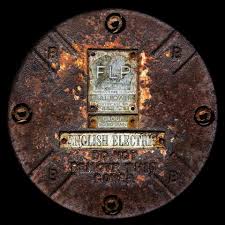
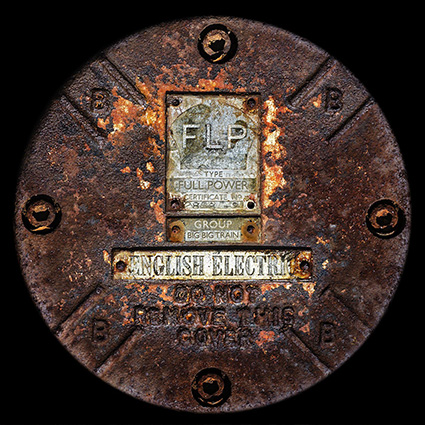
Progarchy Best Packaging, 2013: Big Big Train, English Electric Full Power.

Best Packaging.  What’s not to love about a cd or two accompanied by explanations, lyrics, and photos.  This year, the award goes to the ninety six page booklet that comes with Big Big Train English Electric Full Power.  The photos are gorgeous, the notes are meaningful, and the tributes to past and present allies of the band is heart warming, to say the least.


More to come. . . .

My arrogant choices of 2013

The more I think about prog music in the last year, the more I think that things are not as rosy in the garden as they first appear. Sure, the sheer volume of music, some of which is slickly produced and marketed, is something to be jolly pleased with. But underneath it all lies a pervasive style which is taking over the genre and reinventing it to fit its own requirements. I’m talking about Heavy Metal.

For decades the sound of metal has evolved and reinvigorated itself through many sub genres within itself. Hair metal, thrash and so on. But in recent years the progress of metal has been slowed somewhat with the lack of any new direction. Step forward progressive rock, a style that has its roots in hard rock, and features lengthy passages of intricate playing. It would seem that the two genres are naturally going to dip into each other. But the result is mostly one way. This is the time of progressive metal, and not heavy progressive. There’s a significant difference. Metal takes a style, be it, funk, dance or whatever and assimilates it, making it metal, like a Borg, or cyber man takes the bits it wants and discards the rest, and it does it in such a way that we barely notice.

I look around at the top tens and beyond of this year and see the evidence. Of course as I said earlier, there still diversity and alternatives. But it’s slipping.
Haken, Maschine, Kingbathmat, Tesserac T, Steven Wilson, are the obvious candidates for this year, hugely popular and increasingly heavy. However it’s reach extends into the heavier Flower Kings, Cosmograf, Also Eden. For many the tendency to slip into a drop key, low, thunderous chug seems hard to avoid, and it’s that element that is obliterating the intricacies, the delicacy and subtly of prog. I’m not saying that metal prog isn’t intricate, far from it. But it centres around clever time changes and thrash like shredding and histrionics, rather than melody and space.

Prog through all its incarnations and technological advances has largely stayed true to its origins for the most part until recent years. Does it need to change to survive? We think so, because that’s the kind of world we live in. Things need to keep moving and evolving towards new styles because that’s the future. But is it?
What we say and what we do are at odds with each other. The pop music charts strives to be new but revisits the past for all its ideas and polishes them, representing them, hardly different at all.

If the editors of Prog magazine are to be believed, and I’m sure they are, the design and content of their publication is designed to maximise sales, based on what the buyers want. That usually means 70s style prog music, Yes, Tull and Genesis. Is that a bad thing? Possibly if there is be to a younger audience going forward.
Should we really care that much about a younger audience? Not really. We are an ageing population with more youthfulness and money to spend that the younger end of the music scene, and we have staying power. It’s this age we need to keep on board.

I don’t believe we should sacrifice the music to the gods of metal in the belief that this is in some way the path the future. I would like to see more from the likes of Big Big Train, and The Tangent, and Sound of Contact, and a return to the subtler Flower Kings, all whom employ far more shades in their palates than the grinding technical wizardry and Wayne’s world style head bobbing of an ever increasing number of bands.

I must point out, I have ‘The Raven’, ‘Overcoming the monster’ and a few others. But the tipping point away from the music we fell in love with isn’t far away. A top ten in a year or two will resemble something from Kerrang, it’s coming….

My top albums of 2013-
1: The Tangent – ‘Le Sacre Du Travail’
Epic, important and classically inspired.
2: Big Big Train – ‘English Electric part 2’
Sophisticated, moving and sleek. More of the same but wow, that’s okay!
3: Sound Of Contact – ‘ Dimensionaut’
Space prog, alien, and catchy. Great first effort!

Two Thousand Thirteen Top Ten Tracks

Look at all those ‘T’s in the title. Beautiful! Alliteratively awesome! You don’t know how long it took me to come up with that!

I must admit to being slightly uncomfortable about dropping the ‘and’ though. It’s so…ahem…un-British.

The things I do for my art. Ho hum.

Anyway as we are fast approaching the last day of the ISO8601-designated year Two Thousand AND Thirteen (phew, payback!) it’s time to reflect on the high points of the past solar cycle. Life’s too short to dwell on stuff I hate, therefore this post won’t contain anything about politicians, rap or raw celery. Yes – only raw. Cooked is nom.

If my ears could talk* (or access a Twitter account) they would no doubt mention the fact that 2013 has been a fantastic year for them. My tinnitus definitely not included, some truly virtuous vibrations have occupied my ossicles, careened around my cochleas, camped in my cortexes (insular, cingulate and prefrontal, naturally,) harassed my hypothalamus and hippocampus and attacked my amygdala. They have emancipated my endorphins and endocannabinoids, drenched me in dopamine and nurtured my nitric oxide. Laughter, tears and all that lies in between have resulted.

Now, I’ve always been an albums kind of chap. My particular brand of OCD means I must listen to an entire album from end to end. I distrust the very concept of track shuffling, mixtapes and best-ofs – it just seems wrong, somehow disrespectful to the skipped tracks and to the artists. Perhaps it’s just my egalitarian nature – share the love!

This year, however, I am going to go against my nature. Here I present my list of favourite individual tracks from the past just-under-365-and-a-quarter-days.

Yes! Mr Clarke lives on the edge like this every day of his life…

Anyways, without further ado, I present my list of fave choons from this year!

…OK…just a little more ado.

My ranking system is simple. It’s a list of n tracks (where n is a number probably,) presented in no particular order. To get into this list, a song must:

  1. Be released in 2013.
  2. Still be played regularly by me.
  3. Make me grin / laugh / cry / dance (!) / drive erratically.
  4. Ermmm…that’s it.

Simple!

Right, no more ado. I promise. All the ados have been used up. They’re all gone. Yes, no more ados whatsever. No siree Bob! This is now an ado-free zone! What’s an ado, by the way?

Big Big Train – East Coast Racer

She flies!

Yes she bloody does!

’nuff said.

http://bigbigtrain.bandcamp.com/track/east-coast-racer-2

 Camelias Garden – Some Stories

While the entire album ‘You Have a Chance’ is a great listening experience, there’s something about the opening track that’s so warm, so inviting, and so delightful, that it has wormed its way into my brain, settled there, laid eggs and had a very large family. It has since built an extension onto its bungalow. And then the grandchildren came along…

I don’t really begrudge that it’s not paying rent.

http://cameliasgarden.bandcamp.com/track/some-stories

Big Big Train – The Lovers

This was first released on the Make Some Noise EP, and then soon after on the utterly sublime English Electric: Full Power album which, if I was doing a Two Thousand Thirteen Top Ten Albums post, (which I’m obviously not…) would have easily taken at least the first 7 positions.

The track starts off relatively sedately and simple with acoustic guitar and flute, but soon builds into the most incredible listening experience. The instrumental break (surely meant to portray a love scene – which it does so well!) is just legendary – Danny’s electric piano, Greg’s bass and Nick’s drums doing something absolutely amazing to my brain – and then Dave’s guitar – oh the guitar! On it goes before reaching a very satisfying climax (so to speak) via sweeping melloton and David’s soaring vocals. So! Damn! Good!

http://bigbigtrain.bandcamp.com/track/the-lovers-2

Cosmograf – When The Air Runs Out

If you haven’t heard how good the Cosmograf album ‘The Man Left In Space’ is, you must have been left in space.

‘When The Air Runs Out’ is a track I can’t get enough of. Its a brooding epic – its musical acrobatics send a shiver down my spine every time I hear it. Actually I get a shiver every time I think about it. It’s definitely my favourite sad moment of 2013 – oh come on, we’ve all got  to have one!

The rollcall of the ‘giants of their time’ is quite sobering – we’re all brilliant until we’re not – so what should we do when the air runs out?

A true tragic gem.

http://cosmograf.bandcamp.com/track/when-the-air-runs-out

Thieves’ Kitchen – Of Sparks And Spires

There’s something about this song that got stuck in my head the first time I heard it, and it’s still there. It’s such a delightfully-put-together track with a real earworm of an organ riff. Lyrically this song tugs at my (admittedly somewhat idealised) view of an England far away in time and place. And what a great, uplifting finish! It’s crescendo almost takes the crown from the closing track of their 2008 masterwork The Water Road. Brilliant!

http://thieveskitchen.bandcamp.com/track/of-sparks-and-spires

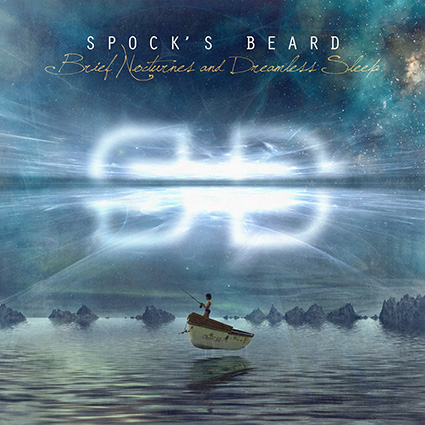
Spock’s Beard – A Treasure Abandoned

Uplifting and bombastic. And just when you thought you were fully lifted up and bombasted, it lifts you up and bombasts you even more.

This track seems to use every move in the prog playbook so in some ways I feel I’ve heard it all before but it’s just done so beautifully all is forgiven!

The Beard’s latest album ‘Brief Nocturnes and Dreamless Sleep’ has been a welcome return to a form that’s been missing for me since their last great album – V.

http://spocksbeard.bandcamp.com/track/a-treasure-abandoned-2

Big Big Train – The Permanent Way

I still remember the moment I first heard this track, and exploded in laughter and tears, pretty much all at the same time. I adore ‘Hedgerow’ from EE:Part 1 –  I can’t sing along to ‘That is where you will find me…’ without choking up. Hedgerow perfectly captures so many of the feelings I have about my erstwhile homeland. Every time I hear it I’m taken back to happier, simpler times. So imagine my surprise and delight when the same refrain made an appearance in TPW!

Boom! It was an amazing moment to find so much new meaning in a phrase that had already become an old friend. Kudos, BBT!

http://bigbigtrain.bandcamp.com/track/the-permanent-way-2

Haken – Pareidolia

‘The Mountain’ surprised me this year. We were on holiday in Europe when I first heard a snippet of it and couldn’t wait to get home to order it. The album’s opening tracks ‘The Path’ and ‘Atlas Stone’ are immensely, arse-kickingly satisfying, but the standout track for me is Pareidolia. The roiling opening moments of bass, sitar, guitar, tabla build to what must be the most yellable chorus of the year:

Be the moon and sun
Be the wind and cross the storm
See the stars begin to swarm
Read the writings in the stone

Go on, try it!

Big Big Train – Seen Better Days

What can I say about this song?

Quite a lot actually.

Big Big Train’s four most recent albums have dealt pretty-much exclusively with the country in which I was born and raised – a country that I grew to dislike and then hate, and eventually in 2001 leave in a bit of a huff.

9 years pass…

…and so to the reconciliation…

I was very fortunate to stumble across BBT’s The Underfall Yard. Through listening to that album I faced and (mostly) resolved the disdain I had for my homeland, projected from the shores of New Zealand, where I now reside. Music is a very healing thing, you know! English Electric Parts One, Two, and now Full Power brought more stories of the amazing and the ordinary, of epic and personal themes, all of which I felt I have a strong connection to. So what does all that have to do with Seen Better Days? Well, to me it takes everything from the past 4 BBT albums and distils their essence to what, for me, is a most compelling story of greatness, decline, love and loss.

I don’t need to mention the incredible level of musicianship on display here as you all know BBT are second-to-none in that department, but I must give special props to Greg’s bass playing on this track. ‘MAJESTIC’ is the only word that’s appropriate.

http://bigbigtrain.bandcamp.com/track/seen-better-days

And finally…

Anyway that’s my list. Thanks for reading. Have a splendid December however you choose to celebrate whatever it is you celebrate. Personally I will be celebrating not having to go to work.

…ok not finally!

2013 has been a very special year, mostly because of Scott and I schlepping across the Equator to Europe and the UK (yes, the Brits don’t like to think they’re part of Europe. At least they and Europe agree on something.)

I may have mentioned this a few times, but The Big Big Weekend was a simply fantastic couple of days spent in the south west of England. Thanks to everyone for making it such a special occasion – the memories stay with us and I hope we can all get together again one day.

If, dear reader, you are one of the few who have managed to miss my incessant spamming of Facebook with these videos, it’s your lucky day. Never has Youtube contained video of such a delightful bunch of chaps and chapesses. And if you have seen it all before, watch it once more just for shits and giggles!

Mary Christmas! Whoever she is.

*Rest assured, if my ears did start talking I would have them removed immediately, kind of van Gogh-like. The voices I already have in my head – the ones telling me to eat celery (raw), listen to rap and politicians – are more than enough to keep me company thank you very much indeed.

Three Cheers for William F. Buckley, Jr!

With apologies.  In my other life, I’m a historian and biographer.  That is, when I’m not reviewing prog (I’m always listening!).  I came across this exchange from September, 1955, and it made my heart smile.

Russell Kirk: “Nor do I own a radio, or any such contraption of the devil.”

William F. Buckley’s response: “To face life without a good high fidelity phonograph is to be doctrinaire about the industrial revolution, which is something we conservatives don’t, if you will remember, approve of being about ANYTHING.”

Thank you, Mr. Buckley.

Prog 2013 – An Unordered List

Last year was an incredible year for Progressive Music (note: upper case), but in my opinion, 2013 has been even better. Thanks to this community (Progarchy) and the ever-lively Big Big Train Facebook group, I have been exposed to more new prog in 2013 than in any year since the halcyon days of the early 70s. As a result, my wallet has been considerably lightened, but my musical universe has been enriched way beyond mere monetary value.

What follows is a brief review of my top ten purchases in 2013 – albums received for review or borrowed from friends are not included, however much I enjoyed them. The list is alphabetic, as each of these albums is my favourite when I’m listening to it, depending on my mood.

Steven WilsonThe Raven That Refused To Sing: A superb album from start to finish, replete with powerful, hard-rocking passages, beautiful melodies, jazzy interludes, lush arrangements, and oodles of emotion (not something SW is renowned for). Much as I enjoy SW’s guitar playing, I’m delighted that he has handed over most of the guitar work to the incredible Guthrie Govan and stepped back to be more of a musical director – he has always been an excellent songwriter, but I think his compositions have benefitted greatly from this change of focus. I also think this is Wilson’s strongest and most confident vocal performance ever. Of course the rest of the band members are all outstanding, but in particular I love Wilson’s use of Theo Travis’ woodwinds to add an extra dimension that was sometimes lacking in the Porcupine Tree soundscape.

SW

Spock’s BeardBrief Nocturnes and Dreamless SleepI love Nick D’Virgilio’s singing and drumming and was concerned when I heard that he’d left Spock’s Beard, but I needn’t have worried. I thought X was an excellent album, but Brief Nocturnes is even better. Ted Leonard not only brings his powerful and emotive vocal delivery to the band (I think he’s the best vocalist the Beard have had to date), but also his strong compositional skills, which were always evident with Enchant. And Jimmy Keegan is a monster drummer, a worthy full-time successor to the vacated “batterie” stool (he’s been touring with the band for years). Ryo’s keyboard work has also been going from strength to strength since Neal Morse, the uber-controlling force, left the band, while Alan Morse and Dave Meros seem to be even more energised by the injection of new blood into the band. A strong set of songs, powerfully delivered by a great band.

SB

Sanguine HumThe Weight of the World: Sanguine Hum are one of my favourite “new” finds. This Oxford-based band deliver layered and beautifully structured compositions with plenty of dynamics, which never fail to surprise and delight. One reviewer described their approach as “polymath”, but I think this may give the wrong impression – while their music is precise, it is never clinical, and while complex, it is never complicated for the sake of it. Although I slightly prefer their first album, “Diving Bell”, “Weight of the World” is an excellent album that gets repeated listening, and will continue to do so.

SH

RiversideShrine of New Generation Slaves: “SoNGS”, to my ears, is the best Riverside album since their impressive debut “Out Of Myself” in 2004. With greater emphasis on songwriting rather than thrash, and more varied textures that their last few albums, this album is imminently listenable, apart from the rather tiresome first few minutes of the opening song, which seems to stutter along for ages before it gets going. Mariusz Duda’s side project, Lunatic Soul, is definitely bleeding back into Riverside, which I’m delighted about. More, please Mariusz…

Riverside

HakenThe Mountain: For me, the find of the year. Two months go I’d never heard of this band, but now I have all three of their albums and can’t stop listening to them. “The Mountain” is a real tour de force, with light and shade, strong melodies, excellent harmonies, tight ensemble playing and impressive pyrotechnics that are just right in context of each song, when they explode. I think their “Gentle Giant” moment (The Cockroach King) is one of the finest since the great band themselves were performing – far better than Spock’s Beard’s efforts (which are nevertheless uniformly good), and rivalling Kevin Gilbert’s genius in his “Suit Canon”. This band has everything (except a permanent bass player – sad that I’m living on the wrong continent, too old and simply not talented enough to audition for the post… !). Great album, and great band with a stellar future.

Haken

CosmografThe Man Left In Space: I’m a sucker for good sci-fi – combine it with superb songwriting and musicianship from wide range of musicians and I’m in there, lead boots, space suit and all. The first time I heard this album, I thought some of the the interludes caused the album to lose momentum musically, but repeated listening has completely dispelled that impression. I now think this is a beautifully balanced album, lyrically and musically, and I’m really looking forward to the next Cosmograf album (which is always a good sign).

cosmograf

Big Big TrainEnglish Electric Full Power: “English Electric”, parts 1 and 2, were already two of my all-time favourite albums, but the combined and expanded package, “Full Power”, has raised the bar even higher. I have already written full reviews of the individual albums (here on Progarchy and elsewhere), so suffice to say that the re-ordering of the songs and the additional material has created one of the most satisfying listening experiences I’ve had since I first became “aware” of music. Brilliant songwriting, meaningful lyrics, exemplary delivery, superb, lush production. And of course, there’s also the magnificent packaging…

BBT

AyreonThe Theory of Everything: Two adjectives often associated with Ayreon are “bombastic” and “overblown”, but I prefer to use adjectives such as “majestic” and “melodic”. Arjen Lucassen has more musical ideas than is reasonable for any single human being, and he seems to be a helluva nice guy as well. “The Theory of Everything” is his best work, including side projects, since “The Human Equation”, which was my first encounter with his music and still my favourite. However, I’ve only had TTOE for two weeks, and already it is threatening to nudge THE aside. With a stellar cast of musicians and singers, including major prog alumni John Wetton, Rick Wakeman, Keith Emerson, Jordan Rudess and Steve Hackett, he’s created another intense epic work that soars and delights, while examining the very human themes of genius, deception, ambition, pride and love. As a scientist, I also appreciate the recurring symbol of the lighthouse, representing intellect and science casting illumination through the gloom. Brilliant album.

ayreon

The AristocratsCulture Clash: This band has literally blown my socks off (it’s OK, it’s summer in the southern hemisphere, so I’m not too uncomfortable). I bought the “Boing! We’ll Do It Live” DVD earlier this year, and was mesmerised by the incredible technical abilities of the three musicians, Govan Guthrie (guitar), Marco Minnemann (drums) and Bryan Beller (bass). But this is not just a musical show-off band – not only do they write splendid (instrumental) music that crosses a vast range of genres (truly Progressive), but their obvious enjoyment of the music, and each other, is completely infectious. “Culture Clash”, their second album, sees them settling into their relationships and interactions, and writing music specifically for each other – and it’s a sheer delight. Want more!

aristocrats

Antione FafardOccultus Tramatis: I get to listen to a lot of new music while I’m working, putting science textbooks together. Much of it tends to slip by me while I’m concentrating on the work, but every now and then an album wrests my attention from whatever I’m doing and forces me to focus on the music. “Occultus Tramatis” was one of those albums. Canadian bassist Antione Fafard has put together a star-studded cast of jazz, jazz-fusion and progressive rock performers including Jerry Goodman and drummers Simon Phillips, Chad Wackerman, Terry Bozzio and Gavin Harrison, and produced an outstanding album of prog fusion, which despite its musical complexity and ever changing time signatures is nevertheless fresh and rewarding, revealing different possibilities every time you listen to it. Each track has its own feel, with changes of pace, a variety of complex rhythms and contrasting instrumental arrangements, but the album still still has an organic flow. I listened to my review copy twice straight through, and immediately ordered the CD. Challenging, but excellent.

af

Honourable mention:
Thieves’ Kitchen – One For Sorrow, Two For Joy: I marginally prefer The Water Road, but this is a strong collection of jazzy prog songs.

Roy Harper – Man and Myth: Powerful, emotional work.

The Flower Kings – Desolation Rose: Their darkest album to date, but a real return to form. May have made it into my top 10 if it had arrived earlier.

Amplifier – Echo Street: Gorgeous guitar-based, atmospheric music.

Airbag – The Greatest Show On Earth: Only arrived last week. Excellent album that is rapidly growing on me.

Notable omission:
Lifesigns: This is a strange one for me. I really like the instrumental work, but some of the compositions seem to meander for long periods. And I can’t get into the vocals – the delivery seems flat and unidimensional to me. Sorry.

Not considered (see above, but added to my wish list):
Comedy of Errors – Fanfare & Fantasy
Days Between Stations – In Extremis
Dream Theater – Dream Theater
KingBathmat – Overcoming the Monster
Levin Minnemann Rudess – LMR
Magenta – The Twenty Seven Club
Moon Safari – Himlabacken Vol. 1
Persona Grata – Reaching Places High Above
PFM – Da Mozart A Celebration
Shadow Circus – On A Dark and Stormy Night
Sound of Contact – Dimensionaut
The Tangent – Le Sacre Du Travail
TesseracT – Altered State
Verbal Delirium – From The Small Hours of Weakness
Von Hertzen Brothers – Nine Lives

Verdict:
So much to listen to, so little time.  Prog has never been healthier.

Craig Farham/faroutsider

Twelve Reviews of Christmas…mind how you go!

Dedicated to all my superlative friends….

On the first day of Christmas a Prog Fan gave to me:

A review full of Hyper-bo-le

On the second day of Christmas a Prog Fan gave to me:

Two Masterpieces and

A review full of Hyper-bo-le

On the third day of Christmas a Prog Fan gave to me:

Three must haves, Two Masterpieces and

A review full of Hyper-bo-le

On the fourth day of Christmas a Prog Fan gave to me:

Four re-re-re-re-mastered classics, Three must haves, Two Masterpieces and

A review full of Hyper-bo-le.

On the fifth day of Christmas a Prog Fan gave to me:

FIVE OUT OF TEN!! (Basil)

Four re-mastered classics, Three must haves, Two Masterpieces and

A review full of Hyper-bo-le.

On the sixth day of Christmas a Prog Fan gave to me:

Six Youtube links, FIVE OUT OF TEN!! (Basil)
Four re-mastered classics, Three must haves, Two Masterpieces and

A review full of Hyper-bo-le.

On the seventh day of Christmas a Prog Fan gave to me:

Seven repeating posts, Six Youtube links, FIVE OUT OF TEN!! (Basil)
Four re-mastered classics, Three must haves, Two Masterpieces and

A review full of Hyper-bo-le.

On the eight day of Christmas a Prog Fan gave to me:

Eight game changing albums, seven repeated posts, Six Youtube links, FIVE OUT OF TEN!! (Basil)
Four re-mastered classics, Three must haves, Two Masterpieces and

A review full of Hyper-bo-le.

On the ninth day of Christmas a Prog Fan gave to me:

Nine works of genius, Eight game changing albums, seven repeated posts, Six Youtube links, FIVE OUT OF TEN!! (Basil)
Four re-mastered classics, Three must haves, Two Masterpieces and

A review full of Hyper-bo-le.

On the tenth day of Christmas a Prog Fan gave to me:

Ten best albums ever, Nine works of genius, Eight game changing albums, seven repeated posts, six video links, FIVE OUT OF TEN!! (Basil)
Four re-mastered classics, Three must haves, Two Masterpieces and

A review full of Hyper-bo-le.

On the eleventh day of Christmas a Prog Fan gave to me:

Eleven album polls, Ten best albums ever, Nine works of genius, Eight game changing albums, seven repeated posts, six video links, FIVE OUT OF TEN!! (Basil)
Four re-mastered classics, Three must haves, Two Masterpieces and

A review full of Hyper-bo-le.

On the twelfth day of Christmas a Prog Fan gave to me,

 Twelve ‘bands of the future’, Eleven album polls, Ten best albums ever, Nine works of genius, Eight game changing albums, seven repeated posts, six video links, FIVE OUT OF TEN!! (Basil)
Four re-mastered classics, Three must haves, Two Masterpieces and

A review full of Hyper-ber-leee!!


A merry Christmas and a happy new year to all to all the writers and reviewers and promoters of Prog at https://progarchy.com/,  http://www.dprp.net/ as well as CRS, Stephen Lambe, Geoff Banks (Prog Dog), Cliff ‘Progzilla’ Pearson, Brad Birzer, Prognosis, Celebr8, Live Prog (Marcel Haster),  Sally Collyer, Steve Petch, Alison Henderson, Prog Magazine and so many others who put in the effort to make Prog the best music scene there is! (Hyperbole, but who cares?)

Keep on spreading the word!