Andy writes the following at Facebook (here’s hoping he doesn’t mind me reposting here. . . .)
Pleased to announce number 2 in our Tangent Historical Artefacts Download Series. This time it’s a Po90 album – the very first one recorded in 1994-6. Apart from 30 home burned copies sold via the newly discovered “Information Super Highway” the album was subsequently released for a 500 copy limited run by Cyclops records AFTER the release of our Second album (Afterlifecycle). Like Porcupine Tree of the first couple of albums, Po90 was largely just one person.. in this case me. The album always included a 20 minute long BONUS track from the last days of GFDD which is the second version of the song “A Gap In The Night”. A Third version appeared on the Tangent’s album “The World We Drive Through”. This second version includes contributions from Guy Manning and Hugh Banton (VDGG) who recorded some organ for it (well actually there’s a story there.. he recorded it for ANOTHER song that we incorporated into this one) during rehearsals for a gig in Peterborough in the early 90s.
The album also includes a recording of the track we claim to have been the First Mp3 promotional file available for net download – “The Third Person”. The album is lyrical, very Tangent related and highly seminal to the rest of the dynasty’s output.
For the first time we’ve published a full set of lyrics with this album, the original 4 page cover plus all the new lyrics are included as a PDF virtual CD booklet and there’s a tray jpg if you wanna make the thing up. I’ve annotated the songs and written acouple of pages giving more info about the album. Hope some of you will go and see where what I’ve always seen as Chapter TWO started…
All funds we get from this are being ploughed into future projects (which includes tonight’s tea ) and I hope those of you who get it enjoy it. Hint… Put the PDF onto a tablet/pad/phoney thing and browse it with the album! A nostalgic look back at the early days of the Third Wave…. And of course you get it at www.thetangent.org
In the history of Peter Gabriel’s solo career there are glittering moments of genius and other times where the ideas fell short of success or backfired. The Womad festival of ’82, the ‘Realworld’ theme park and the development of world music through Real World have either struggled or remained unfinished.
This is probably the truth for any artist who pushes the boundaries and tries to innovate. So with a couple of albums of cover versions, first by Gabriel himself and then by celebrated international artists, singing essentially the greatest hits on both sides, this should be a moment of playing safe. The last three years from 2010’s ‘Scratch My Back’ and the release of ‘And I’ll Scratch Yours’’ (2013) have been far from straight forward and the latest release has proved that Gabriel has once again bitten off more than he could chew.
2010 release was hard to digest.
It was likely the latest release was always going to be a tough call. Gabriel’s first solo release for eight years (‘Scratch’) was a series of reinvented versions of songs by Bowie, Neil Young and Radiohead. However innovation appeared to give way to deconstruction and the results seemed to alienate a number of the participating artists. Radiohead’s reaction in particular to the minimalist, almost spoken word version of ‘Street Spirit’ was predictable. Overall it was deemed by many of Radiohead’s fans to be one of the worst pieces of music anywhere, with Shatner like comparisons. The band declined to follow up with ‘Wallflower’ on the return to new album and this was the view of Bowie, Young, and Ray Davies in regard to return participation.
The impact to the project was worsened by the slow response from bands such as Arcane Fire who remained on-board for the follow up. To lessen the delay, some of the tracks have been released via iTunes during the three year gap between albums and so this new release actually represents only half an album of new material.
With Gabriel now reliant on the artists to interpret the songs rather than his own bleak, stripped back formula there was hope that ‘And I’ll scratch yours’ would be more accessible and enjoyable. However there are areas where the production has been managed to the point where expression and looseness are lost to an inflexible rigidity. In effect Gabriel is not allowing his own back to be scratched.
David Byrne’s opening track, ‘I don’t remember’ is a difficult proposition to begin with. His overtly high vocal sounds Scissor sister like, with no real heart or commitment in the tone, even when it settles to a lower key for the chorus.
The lack of spark from the artists concerned seems to continue throughout the rest of the album, with some input feeling almost unwilling, rather like it it’s going through the motions. Bon Iver’s cover of ‘Come talk to me’ has a similar lack of drive to it and loses the focus of the song in the progress.
Laboured and clunky
‘Shock the monkey’ comes at you like a slow distorted dirge, barely half the speed of the original. The effect of the slow pace is the loss of the quirky spirit of the original.
The pattern continues throughout, Arcade Fire seem to miss the potency of ‘Games without frontiers’ with a faithful but ultimately fainthearted showing.
It’s probably the Feist cover of ‘Don’t give up’ that shows us how empty the covers appear on this album. Drafted in as a ‘replacement’ band for the sequel, they deliver a bland version of the original that strips away all the emotional charge that made the 1986 version so powerful. An attempt at an interesting take on the Gabriel/Bush duet sees Feist, feat Timber Timbre using a reversal of roles. However the delicate vocal of Bush that offers tenderness and hope is eradicated in a performance which is a low, almost monophonic response in tone by Timber Timbre. It’s not a convincing reply to the desperation felt by Gabriel in the original, and hard to see how this would inspire anyone to keep going.
In fairness there are moments that shine briefly on the album, Randy Newman’s, ‘Big Time’ has a great delivery to it as does the cover of ‘Solsbury Hill’ by Lou Reed. The Reed version is a paradox in it alienates in a positive way. Destroying the sweetness of the original, the typical Reed trademark voice sits on top of a slow, distorted guitar that results in a grimy, low grade alternative that works. The track is bound to polarise opinion with many people unable to accept the style.
Overall it’s hard to believe that Gabriel’s ambitions for this record have been met. Describing the process of pulling the bands together for the project as similar to “Herding cats” this has been a tough process that feels laboured and clunky. His own covers on the first outing did not do him any favours when it came to completion and the lack of mutual interpretation on the albums has led to dissolved partnerships which were not filled adequately. The ideology behind the projects was sound and could have resulted in some excellent covers had things been managed better.
It does needs to be approached with open eyes as you might expect and if you felt alarm at the extent of variation in the recent Steve Hackett release -‘Genesis Revisited 2’ then you will no doubt feel a resentment to the handling of classic material on this outing. What many fans would hope for after this album is for Gabriel to return to the studio and produce a solo effort that matches the heights of the late 70’s and early 80’s, rather than a 90’s style experiment.
Track Listing:
1. “I Don’t Remember” David Byrne 3:38
2. “Come Talk to Me” Bon Iver 6:20
3. “Blood of Eden” Regina Spektor 4:39
4. “Not One of Us” Stephin Merritt 3:49
5. “Shock the Monkey” Joseph Arthur 5:49
6. “Big Time” Randy Newman 3:29
7. “Games Without Frontiers” Arcade Fire 3:22
8. “Mercy Street” Peter Gabriel feat. Elbow 5:28
9. “Mother of Violence” Brian Eno 3:00
10. “Don’t Give Up” Feist feat. Timber Timbre 5:28
11. “Solsbury Hill” Lou Reed 5:24
12. “Biko” Paul Simon 4:19
No “Black Hole Sun”? No “Billie Jean”? No electric guitars or drums? No ten-minute versions of “Slaves and Bulldozers”?
No problem.
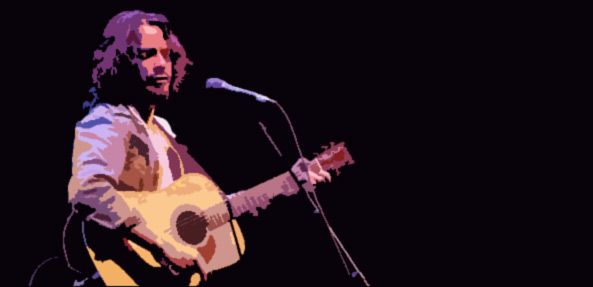
Chris Cornell, the once-again front man of Seattle’s legendary Soundgarden (see my review of King Animal) and one-time front man of super group Audioslave, walked onto the stage without any introduction at 9:00 pm promptly, setting off an eruption of applause and whistles from the sold-out crowd. The Shedd is an intimate (and somewhat cramped) venue that seats around 700 or so, and my wife and I had excellent seats: dead center, front of the balcony. The lanky Cornell is fit and relaxed; he acknowledged the crowd with a warm grin, placed the needle on the record player set up in front of seven guitars, and launched into “Scar On the Sky,” from his second solo album, Carry On (2007), which happens to be the first full Cornell album I ever heard.
Although Soundgarden achieved fame while I was in college, I didn’t pay attention to Cornell until years later, having mostly ignored the entire grunge movement during the 1990s, mostly because of a dislike for the music of Nirvana—a dislike I maintain to this day, without apology. Nirvana may have sold more albums, and Kurt Cobain may have attained a semi-mythical status because of his suicide at the age of 27, but Cornell, who is now nearly 50 years old, has earned respect the old-fashioned way: by staying alive, writing songs about suicide rather than committing suicide, producing a steady stream of good to great albums and songs, and by touring often in recent years in support of the same.
Some rock stars burst onto the scene as bright stars and then become fading, falling stars—or drug-addled recluses, muttering nut-cases, or sad shells of their former selves. But others, such as Cornell, start slowly, build steadily, hesitate for a while (oddly enough, I think of Sinatra going silent in his late 30s before embarking on his stunning albums for Capitol in the ’50s), and then find their footing at a decisive point in mid-career, and demonstrate that they are, in fact, real musicians and not just brands and products.
Cornell’s two-hour-plus long set this past Saturday was a case in point, for it highlighted both the legendary voice—which was in exceptional form—and the stellar and varied songwriting. The former is the immediate draw, for there is nothing quite like Cornell’s multi-octave, raw, amazingly textured voice, which can move from face-melting howl to falsetto sweetness to blurred darkness to startling, clear heights—often all in the course of a single song. But the acoustic show brought out facets of Cornell’s songs not always obvious in full studio dress: the unusual chords and progressions, the subtle shifts in tempo and tone, and the masterful balance of melody and rhythm. “Sunshower”, for example, is a ballad-like number that slowly builds and morphs into a series of gospel-ish chords full of longing and a sense of rhapsody.
Conversely, the rocker, “You Know My Name” (from the 007 film, “Casino Royale”) is one of Cornell’s most straight forward (and popular) tunes, albeit with some sly humor: “I’ve seen angels fall from blinding heights/But you yourself are nothing so divine/Just next in line…” While he is not a finger-picking virtuoso, Cornell is a more than capable guitarist, energetically wringing out walls of sound at one moment and then playing delicate, swirling lines the next.
Between songs, Cornell’s banter was often quite funny and self-deprecating, as when he recalled that he had only played in Eugene once before, with Soundgarden in the late 1980s, “in somebody’s basement, with two people in the crowd: the guy who booked the show and the janitor. No one even bothered showing up just to get drunk!” He noted that his first solo acoustic show, so to speak, was a small event in Sweden while touring with Audioslave; although it was “nerve wracking,” it was also surprisingly enjoyable, like walking a tightrope without a net: “If you screw up, everyone knows!” While the younger Cornell sometimes seemed intent on playing rock god—and unleashing his aggressive, freakish wail on audiences—the middle-aged Cornell seems to truly enjoy digging into the songs and revealing their more subtle riches.
Crowd favorites included the beautiful “Seasons,” the Temple of the Dog classic, “Hunger Strike” (with opening act, Bhi Bhiman, performing the vocal part originally performed by a certain Eddie Vetter), and Soundgarden’s “Fell on Black Days,” which featured the full range of Cornell’s vocal powers.
Somewhat surprisingly, the huge hit, “Black Hole Sun” did not make the evening’s set list, despite plenty of screamed requests. Nor did Cornell’s cover of Michael Jackson’s “Billie Jean,” although he did joke of how one reviewer thought it was an “ill-advised” song to record. But it was a delight to hear under-appreciated gems such as “The Day I Tried to Live” (one of my favorite Soundgarden songs, from the classic album, Superunknown), the Audioslave tune, “Like a Stone”, and the piano-driven, gospel-ly “When I’m Down” (from Euphoria Morning, Cornell’s first solo album). An unusual twist came when Cornell played U2’s “One”—but using the lyrics from Metallica’s “One,” a mash-up that proved the value of combining musical talent and a wry sense of humor.
For an encore, Cornell played a new song, the blue-inflected “Misery Chain,” written for the upcoming film, “12 Years of Slavery,” and concluded the show with an extended version of “Blow Up the Outside World,” the dreamy-to-screamy, controversial hit from the 1996 Soundgarden album, Down On the Upside.
Here is video of Cornell singing “Fell On Black Days” at The Shedd:
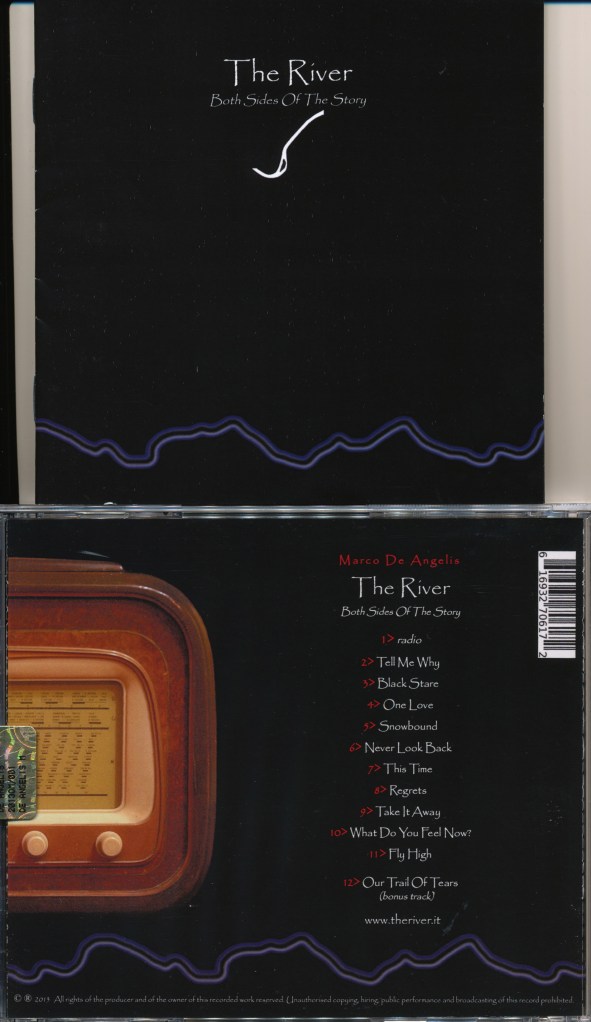
Two things arrived today, much to my happiness. First, via post from Roma, Marco De Angelis, The River: Both Sides of the Story. For more info on de Angelis, go here: http://www.marcodeangelis.com.
Marco De Angelis, The River (2013).
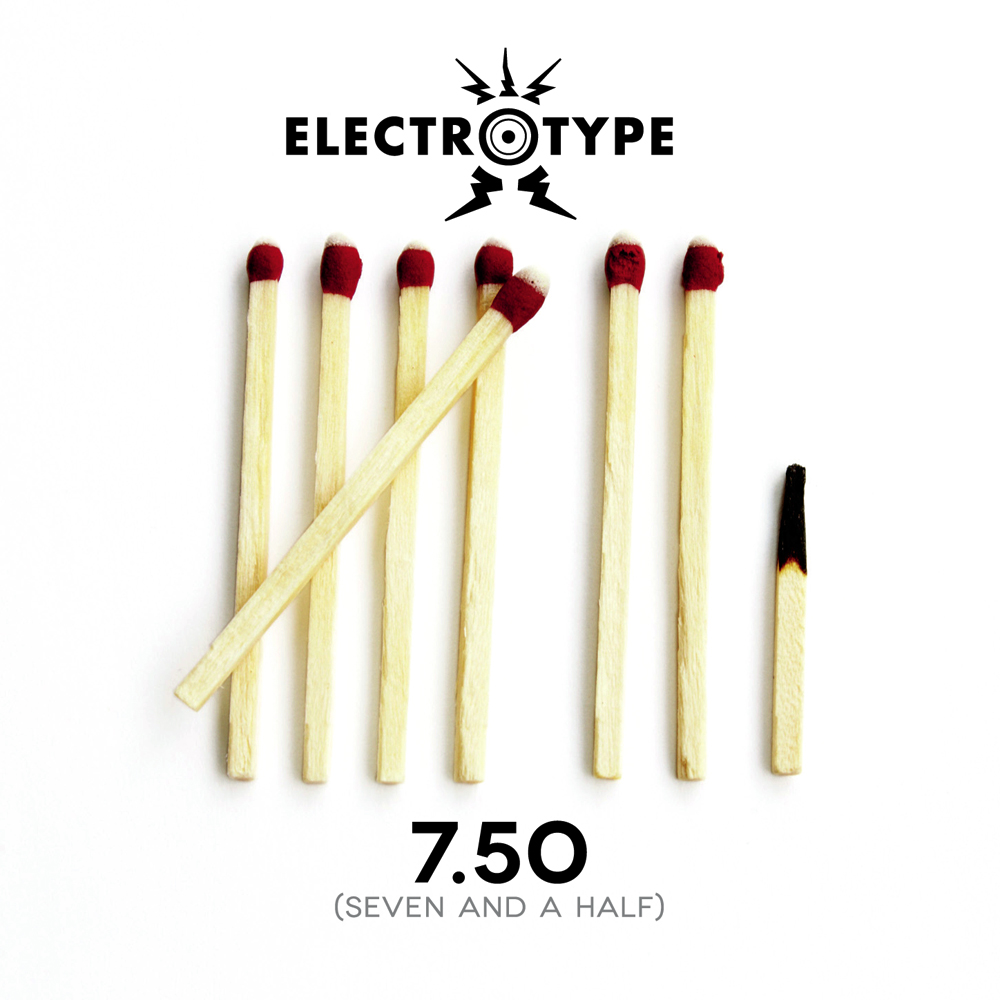
And, via the web, Electrotype, a one-person prog act. That one person is Beth Maplesden. She describes Electrotype as: “an independent art/prog rock uno based in the Philadelphia, PA area. The latest Electrotype EP, 7.50 (Seven and a Half), fuses art rock and alternative rock—New Prog and “old” prog with touches of garage, punk, metal, and grunge.”
Over at The Prog Report, “Nick D’Virgilio, drummer for Big Big Train, talks to The Prog Report about his time as Spock’s Beard frontman, his work with Genesis and Tears For Fears and his love for golf”, in what Greg Spawton calls a “prog-length interview (25 minutes)”:
This post deviates slightly from my series focusing on the old and the obscure. I decided to review this album per request of Brad, who suggested this band to me. I must say I was skeptical as I set forth on my quest to tackle this project, as I am not an avid fan of prog-metal. Nonetheless, there is beauty in all prog, so I gave it a try and I must say I was impressed, but I’ll expound on that later. Unified Past is the brainchild of singer/guitarist/keyboardist Steve Speelman and drummer Victor Tassone. This group has actually been around for about 20 years, but this was my first introduction. Their music can best be described as a blend of Rush and Dream Theater, although Genesis and Pink Floyd influences manifest themselves in some of their songs. Their album Spots, released in June 2013, features Speelman and Tassone as well as bassist Dave Mickelson, all in top form I may add. Here’s a brief description of each song:
Blank– excellent heavy drumming, similar to Mike Portnoy; solid guitar that sounds like Alex Lifeson and John Petrucci; the vocals are not that great, but the instrumentation more than compensates for Speelman’s subpar voice
Deep– similar to Blank in sound; solid bass performance by Mickelson
Hot (instrumental)- a fun song with a jazzier feel; would be perfect for a jazz metal swing dance class (if you were so inclined to begin one)
Seeing– opens with a riff that may remind some of Slash’s riff in Sweet Child o’ Mine; the heavy sound of the album continues
Tough– a longer song with a great instrumental passage; Speelman really shows off his guitar skills here
Age– features an intro heavy with a synthesizer, reminiscent of Pink Floyd’s Shine on You Crazy Diamond; picks up the pace eventually though
Sun (instrumental)- explosive opening with loud drums and louder guitar; fine guitar soloing by Speelman
Big (instrumental)- my favorite piece on the album (overall the instrumental pieces appeal to me more); solid bass line; Genesis and Steve Hackett influences are present: listen to Hackett’s Ace of Wands from his debut album Voyage of the Acolyte after you listen to this song and you’ll know what I mean
Wet (instrumental)- another Genesis influenced song similar to Big, but with a heavier sound; picture Hackett, Collins, Gabriel, Rutherford and Banks playing with raw intensity (and a dash of ferocity) and you’ll get the picture
G (instrumental)- shortest piece on the album; Mickelson showcases his talent on bass guitar much like Chris Squire did on The Fish
The Final– the band states on their website that this piece was inspired by Genesis and Pink Floyd, and it’s hard not to agree; a solid ending to a solid album; Speelman is great on both guitars and keyboards; a Rick Wakeman-like synth solo is featured near the end
Overall I was impressed by this album, considering I rarely give prog-metal much of a chance. For those of you out there who love Rush and Dream Theater, this album will be music to your ears (no need to laugh at that one). For those who love Genesis, Pink Floyd, and other symphonic prog bands, this album is certainly worth a listen. Steve Speelman is equally impressive on guitars and keyboards, Tassone can rival any metal drummer, and Mickelson laid down some thunderous but catchy bass lines. For all those out there who appreciate solid prog (even those like me who don’t care much for prog-metal), this is one album worth a shot. The songs are available for purchase on iTunes.
Last month, we posted Haken’s very entertaining “Cockroach King” video. Here’s the official video to another song from their excellent TheMountain album, the epic “Pareidolia”. Blending Indian and Greek elements (bouzoukis anyone?) with scorching guitars and tremendous vocals, Haken has come up with a prog/metal classic.
Pareidolia “is a psychological phenomenon involving a vague and random stimulus (often an image or sound) being perceived as significant” (according to Wikipedia). You can watch the curling smoke and cascading light in the video and experience your very own pareidolia.
Fans of Rush, Dream Theater, Ayreon, Riverside, and Devin Townsend will be all over this album.
We love music because of how it makes us feel. We listen to some works more than others because we want to experience the feelings they stir in us. But feeling is not primary in music, nor is it always the reason why we listen. Most of the time we listen to a piece of music because, well, we want to hear it. We take pleasure in the hearing. But the pleasure is not in the pleasure, as though music were a drug used only to produce a “rush.” The pleasure is in what we are hearing, in the distinctive aisthêton or object of perception. Sometimes we listen to a musical work because we wish to hear a quality or perfection that is present in it. We listen for the sake of an active, even strenuous, contemplation in which we participate in, are one with, the life and shape of the musical object. To be sure, feelings are aroused, but these are grounded in, and prompted by, what we perceive in the tones, in what is there in the phenomenon we call music. We might say that in responding to music we perceive feelingly and feel perceptively. But in saying this, we must bear in mind that perception is primary. We do not, except incidentally, hear musical sounds and associate them with various feelings, images, or experiences. On the contrary, we perceive what is there and take on the condition that rhythms and tones communicate to us. [See Victor Zuckerkandl, “Words and Tones in Song,” Chapter 3 of Man, the Musician, Bollingen Series, Princeton: Princeton University Press, 1973, pp. 31-43.]
Kalkavage then quotes Paul Valery, from whose lecture (“Poetry and Abstract Thought”) he took the phrase:
The musician is … in possession of a perfect system of well-defined means which exactly match sensations with acts. From this it results that music has formed a domain absolutely its own. The world of the art of music, a world of sounds, is distinct from the world of noises. Whereas a noise merely rouses in us some isolated event—a dog, a door, a motor car—a sound evokes, of itself, the musical universe. If, in this hall, where I am speaking to you and where you hear the noise of my voice, a tuning fork or a well-tempered instrument began to vibrate, you would at once, as soon as you were affected by this pure and exceptional noise that cannot be confused with others, have the sensation of a beginning, the beginning of a world; a quite different atmosphere would immediately be created, a new order would arise, and you yourselves would unconsciously organize yourselves to receive it. [The lecture can be found in Paul Valéry, An Anthology, Bollingen Series, Princeton: Princeton University Press, 1977, pp. 136-165.]
I find this highly interesting because of the uncanny way that the musical universe of Rush is evoked for me at many points whenever I listen to the new Dream Theater album.
When I hear the interplay between guitar and drums on “The Looking Glass,” for example, the world of “Limelight” is evoked for me; or when I hear “Surrender to Reason,” the world of “Natural Science” is evoked for me. Either way, I enter into a Rush-like universe.
Kalkavage describes the experience well when he says that what gives me please is “the distinctive aisthêton or object of perception”, because what is happening is that I am not feeling certain things created by Rush-like noises. Instead, I perceive a Rush-like “musical universe” that is only indirectly evoked by some musical activity that takes my perception there—which then brings about certain magical feelings.
There are no direct quotations of Rush; there is only a display of a highly refined musical sensibility (all hail the gentlemen of Dream Theater!) that is able to perceive a certain musical universe of meaning, and then to take me there—me, along for the ride.
The Flower Kings have been an essential part of my life for the last thirteen years. In 2000, one of my students (now, rather happily, a colleague) lent me his copy of Flower Power. I’d never heard of the band up to that point, though I’ve been a progger since the age of 4, way back in 1972.
Courtesy of Insideout Music.
I’d purchased my first Spock’s Beard album (their first as well) when it first came out in the fall of 1994, and I knew that Morse had been working with a Swede (all I knew about him) in a new a “supergroup,” Transatlantic. I remember thinking, “Wow, this phase of progressive rock truly is mighty if it can have a ‘supergroup.’”
It’s almost humorous now to think there was a time when I didn’t know the work of Roine Stolt. Through Stolt’s work, I found out about The Tangent. And, really, life without The Flower Kings or The Tangent? Too weird to even contemplate.
From the opening few notes of Flower Power, I was hooked. I loved the packaging, the music, the dreaminess. I immediately purchased the back catalogue of The Flower Kings, and I’ve since purchased every release upon its release date. And, I’ve done the same with all of Stolt’s projects. I was also lead, of course, to Tom Bodin’s solo work, Agents of Mercy, Kaipa, and Karmakanic.
Be ware, gentle reader, the rabbit hole into the world of Swedish Prog is a winding but glorious one.
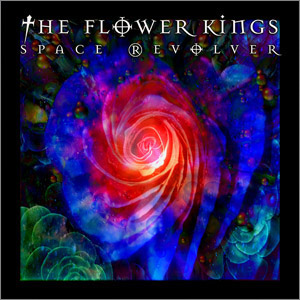
A desert-island disk, Space Revolver (released July 4, 2000).
While there’s no album by The Flower Kings I dislike (quite the opposite), Space Revolver has always been my favorite. It has a perfect flow to it, and it only grows increasingly interesting with each listen. It served as a real life saver for me when traveling fourteen days for my job. I’d never been away from my family that long, and it was painful. This was back before I owned an ipod (did they exist then?; I can’t remember), and I only took about ten cds with me. It was Space Revolver that gave me the most joy and comfort on that trip. But, this is getting too long winded, and I’ll save this story for another time and another post. Let me just state here, Space Revolver is a desert island disk for me. I think it might very well be one of the top ten albums of the rock era. If you don’t own it, you should. In fact, you should stop reading this right now and order it now. Yes, it’s that good.
Admittedly, I’ve listened to the band so much, I’m really not sure I could even pretend objectivity when reviewing them. Nor at this point in my life, do I really want to be objective. All of the Birzers love The Flower Kings.
Additionally, whatever creativity I might possess, I owe a lot to The Flower Kings. Space Revolver served as the sound track for my first book, Unfold the Future for my second, and Paradox Hotel for my third. The Sum of No Evil and Banks of Eden have played a major role in the one I’m currently writing.
As I’ve stated too many times before, I dislike labels, as they’re almost always used to bypass real engagement with a person, an idea, or a work of art. But, even if I appreciated labels, I really don’t know how I’d label this band. The Flower Kings have produced so much beauty, and in such diversity, that they’re almost fully resistant to categorization. Well, that is, to label properly. For me, every Flower Kings album is a mood or a state of being.
The Flower King: Humanity.
Back in the World of Adventure: Exploration.
Retropolis: Playfulness.
Star Dust We Are: Redemption.
Flower Power: Mythic.
Space Revolver: Appreciation.
The Rainmaker: Warning.
Unfold the Future: Righteousness.
Adam and Eve: Confidence.
Paradox Hotel: Tranquility.
The Sum of No Evil: Love.
Banks of Eden: Elegance.
Desolation Rose: ?
The most common description I’ve seen of the Flower Kings is “retro.” But, of course, this is meaningless. The band pays homage to those they love. Shouldn’t we all? I deeply admire my maternal grandfather, and I’ve tried to live my life in accord with the dignity he displayed. Does that make me “retro”? I speak the same language as my mother. Does that make me “retro”? The Flower Kings love Genesis and King Crimson. So do most proggers. At some point, labels become not only offensive, but absurd. But, enough of this rant. . . . If anything, pietist might be better than retro. Ok, now, really, the rant is over.
Desolation Rose
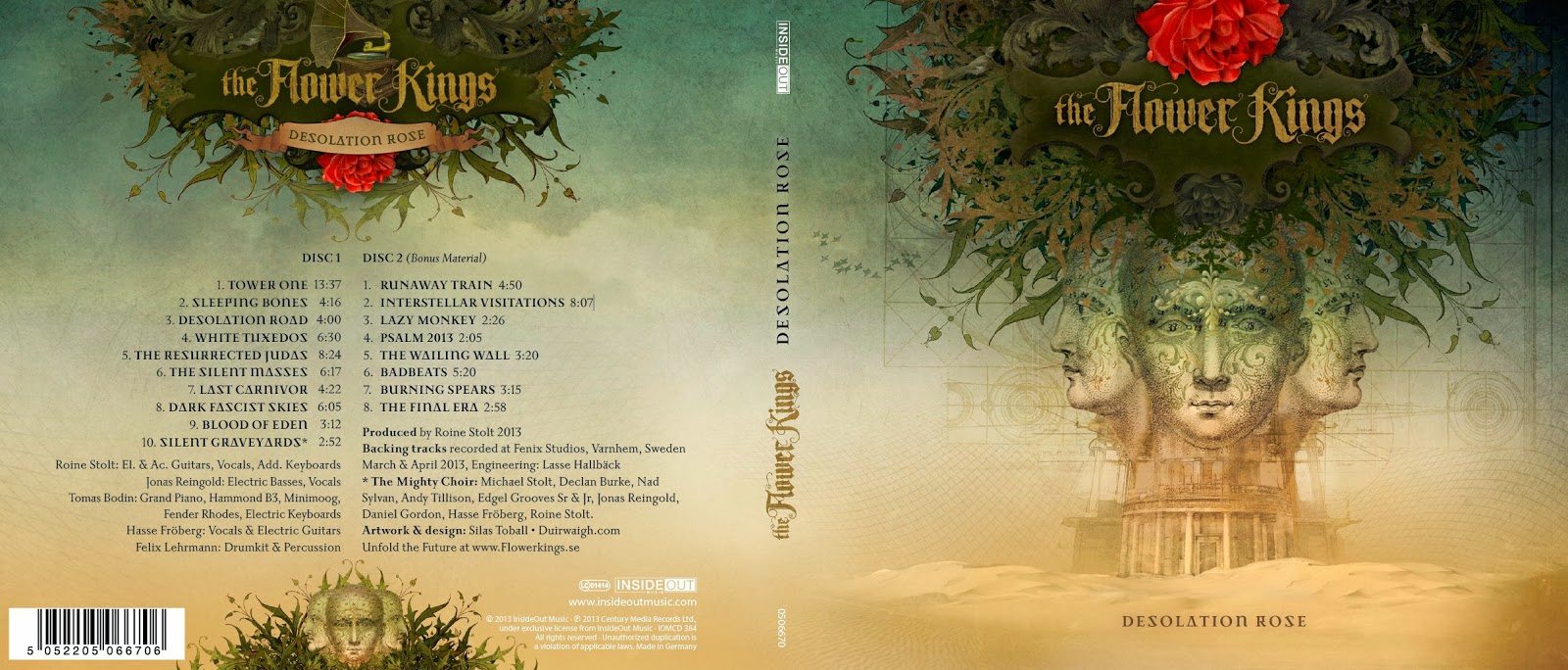
Through the good graces of Edge at Insideout Music, I was able to receive an advanced release of Desolation Rose.
The first thing to notice about this release is the darkness of the art as well as of the subject matter. The cover art depicts three tattooed human heads resting atop a deserted (and in a desert) classical structure. Above the heads blooms a bright red rose, surrounded by nesting birds of paradise intertwined in intricate greenery. From a distance, the image could be an explosion, possibly atomic. There are visual references to the cover art of Space Revolver as well as Unfold the Future.
The title could mean many things. Desolation almost never has a positive connotation, unless one might be referring to the landscapes of the American West. But, Rose? Rose is almost always good, at least as a noun and a proper name. Who couldn’t love a Rose? It’s the middle name of two of my daughters. And, traditionally, the rose is almost always associated with the mother of Jesus. She’s not exactly been absent from the art of The Flower Kings. She appears weeping in the lyrics of Space Revolver, and the devil hides from her in his playground in Unfold the Future. It’s worth noting again, the cover art of Desolation Rose refers to the albums that already have a reference to Mary.
Unfortunately, as with Eric and Tad, I don’t have the lyrics in front of me, and I’ve had to interpret them simply through listening to them repeatedly. I’m fairly sure that I am probably hearing what I want to hear, and I hope any interpretation I make will be taken with this caveat.
Though ten separate tracks appear on the main disk, the music flows from one song to another without a moment of silence. The album as a whole, however, ebbs and flows, and every track bleeds into the one following it. This only adds to the intensity and urgency of the record. A number of images and lyrics recur as well: revolution; false kings and false idols; mechanized man; the abuse of power; our place in the order of existence (“we’re the third from the sun”); our life as a game or a false dream; the soil of Eden; silent graveyards (where is the voice of the ages?); and, above all, the need to be individuals, unchained by the restraints of corrupt authorities and mass thinking.
TFK, live. Photo courtesy of Roine Stolt.
All of the songs build to a climax in “Last Carnivore” and “Dark Fascist Skies.”
This has to rank as one of the darkest and most politically charged and angry (righteously so) of all Flower King’s tunes. It’s also absolutely brilliant. At the end of the song, the album rather quickly embraces a quiet denouement in the very short “Blood of Eden” and “Silent Graveyards.” In the end, the Flower Kings affirm that “we are stardust/we are sunkissed/we are brothers and still we’re strangers.”
Songs: Tower One; Sleeping Bones; Desolation Road; White Tuxedos; The Resurrected Jadas; Silent Masses; Last Carnivore; Dark Fascist Skies; Blood of Eden; and Silent Graveyards.
The album, itself, is flawless. Every instrument has a punctuated clarity to it. Upon my first listen, it was the bass I heard most. On the second, it was the guitar. On the third, it was the keyboards. On the fourth, it was the interplay of Stolt’s vocals with Frosberg’s vocals. On, probably, my fifth listen, I realized it was everything. Stolt has produced this album with an eye toward perfection. This album feels, at least at this point in my listening, less symphonic than other modern prog masterpieces, such as Big Big Train’s English Electric. In terms of urgency, it has a similarity to The Tangent’s latest studio album, Le Sacre Du Travail.
Stoic Kings. Photo courtesy of Roine Stolt.
The only thing I find painful in Desolation Rose is the sampling of Richard Nixon’s voice in “White Tuxedos.” Don’t get me wrong. The song works, and it works well. But, having been born in 1967 and having been raised in a very politically libertarian family, Nixon was always the bad guy. His voice, to this day, makes me wince. And, as many times as I’ve listened to this album over the past week, I still cringe every time his voice pops up. Equally creepy, the voice from “Bavarian Skies” returns, but so does one of the coolest guitar lines ever (think The Good/The Bad/The Ugly meets Chris Isaak). Even the song, “Silent Masses,” makes me pause a bit, as Nixon continuously attempted to appeal to those he called the “silent majority.”
I can’t end a review with THAT man’s name in my conclusion.
So, on a much happier note, this year, 2013, has been nothing short of an annus mirabilis. When the new year hits, every prog lover will be, materially, worse off after having survived 2013. Every prog lover will be, also and more importantly, enlivened spiritually and intellectually after having survived 2013.
In the top of this astounding year of Prog is Desolation Rose. Empty your pockets. Another must–absolute must–buy.






 Progarchy