Reviewing Progressive Rock: An Editorial

The Good.
The Good.

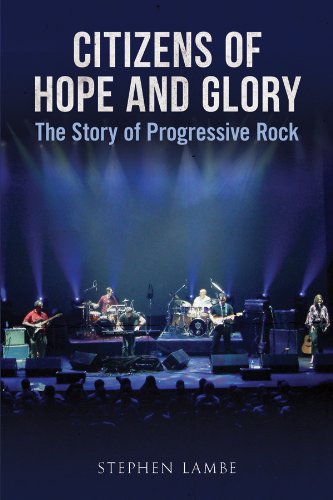
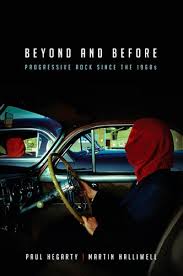
I’m reading a couple of books related to progressive rock right now.  They range from the wonderful (Stephen Lambe’s Citizens of Hope and Glory (2013)) to the arrogantly bizarre (Gareth Shute’s Concept Albums (2013)) to just plain and unadulterated absurdity (Paul Hegarty/Martin Halliwell, Beyond and Before (2011)).

I will freely admit that I can be more than a bit fanboyish in my writing.  I know what I like, and I know what makes me happy.  I consciously choose to be as loyal as possible to that which I believe good, true, and beautiful.  Plato once argued that we must love what we love and hate what we hate.  Amen, Greek pagan, amen.

But, I also strive like mad (as do all progarchists) to have the writing style match in excellence the work of the musicians and the lyricists we review.

If the art of the review doesn’t match the art of the album, why bother?  Writing poorly about Big Big Train, The Tangent, or Talk Talk, for example, would not only be tacky, it would be an insult to the art itself.  And, really, what kind of character dwells on the thing she or he hates, that is, as an art (supposedly), unless of course called to be a prophet.  And, there are very few of those.

Additionally, if the art of writing and reviewing does not strive for the highest style, what use is criticism?  What effectiveness of criticism can there be?

The Ugly.
The Ugly.  Sadly, I couldn’t find an image of The Bad: Shute’s Concept Albums.

Messrs. Shute, Hegarty, and Halliwell, you should keep your cynicism and ignorance to yourself.  Or, if you must be nasty and foolish, at least find a good writer to emulate.

Longer reviews of each book to follow.

John Bassett Solo Album

Great news from our rocking friend (and very, very interesting social commentator), John Bassett.  He has just announced a solo album.  If John’s work with the fabulous Kingbathmat is any indication–and I would bet much of my life savings that it is–this should be excellent.

Here are the details directly from John:

John Bassett, creator and producer of KingBathmat,

Sketch of Bassett by the wonderful and captivating Anne-Catherine de Froidmont.

is releasing an acoustic prog album this winter, the album will be released under  his own name “John Bassett” and promises to be a subtle, sophisticated album of modern acoustic songs, imbued with melancholic melodies and a progressive slant, you can hear a brief audio snippet from this fortchcoming album at http://www.youtube.com/watch?v=Dtq3hOsMk2Q
A website to support this release will soon be launched at http://www.johnbassett.co.uk and there is a facebook page athttp://www.facebook.com/johnbassettsolo

Also, an announcement of a free Kingbathmat gig in two days.  Once again, jealous about living on this (wrong!) side of the Atlantic strikes your dear progarchy editor.

Kingbathmat Gig this Sunday (Oct 13th) at The Dublin Castle
We will be playing in London, Camden Town this Sunday night (October 13th) at the The Dublin Castleit is Free Entry. Be lovely to see you there.

Pavlov’s Dog: Midwestern Rush

Pavlovs-Dog-band

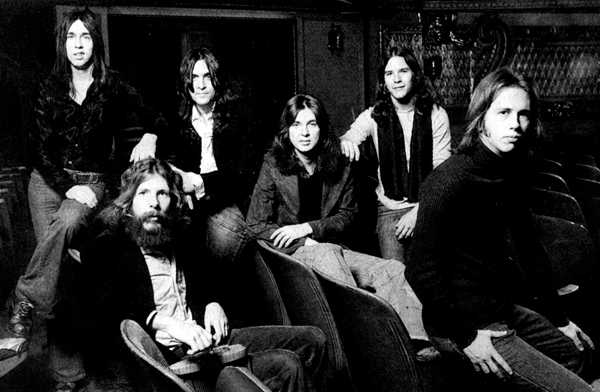
Pavlov’s Dog was a little known band from St. Louis, Missouri. Over the years, they have been compared to Rush, mainly because singer David Surkamp’s voice is eerily similar to Geddy Lee’s. With that said, this is a band that you will either love or hate, because Surkamp’s voice is even higher and has more vibrato than Geddy Lee’s voice. Even if you are not a fan of Lee’s voice, do not let that deter you from listening to Pavlov’s Dog because they have a very unique sound. The original band was made up of David Surkamp (Lead vocals and guitar), Rick Stockton (Bass guitar and vocals), Mike Safron (drums), Steve Scorfina (lead guitar), David Hamilton (keyboards), Doug Rayburn (mellotron and flute), and Siegfried Carver (violin). This band offers a little bit for everyone, with great guitar, bass, and the violin as a nice added touch.

Their first album was “Pampered Menial,” released in 1975. The soaring vocals on this album truly stand out above all else, but musically it is very good as well. From their use of flute to the use of the violin, they create a distinctive sound. While their lyrics are similar in style to that of Rush pre-Peart (Rush’s self-titled album), they create a more complex sound than early Rush did with their utilization of many different instruments. Their second album was “At the Sound of the Bell.” This album is remarkably quieter than their first, with Surkamp’s vocals blending in with music more. On “Pampered Menial,” the vocals sounded distinct from the rest of the music, but not so in their second album. His voice seems to be a little more refined and in sync with the rest of the music. All in all, Pavlov’s Dog was a very good American Prog band that never really caught on. Maybe if they had hit their stride in Rush’s wake they could have made it big, but it is what it is. Give this band a listen, and let the music speak for itself. For those of you that are early Rush fans, Pavlov’s Dog just might be right up your alley.

Listen to “Pampered Menial” here: 

Listen to “At the Sound of the Bell” here: 

20 Looks at The Lamb, 7: Cages

My body is a cage that keeps me
From dancing with the one I love
(Arcade Fire)
lamb-picto-2 (cage)Descartes, widely touted as the father of modern philosophy, taught us to think that what we are most certain about, what we grasp most confidently and most tightly, is “in here.”  I know that I exist if I am thinking, he said, and this implies that I am a thinking thing regardless of what is “out there.”  It’s a picture that has been rejected by most recent philosophers, but it still casts its long shadow over Western culture.  It’s the picture that makes both The Matrix and Inception compelling.  I am my mind, and my mind is an inside that knows no outside, what Leibniz called a “monad.”  Even if I have a body, the body is outside, like a cage that imprisons me, from which I might hope to be set free in an afterlife.

Whatever life (in any strong sense) that I have, I have “in here.”  “I’ve got sunshine in my stomach. But I can’t keep me from creeping sleep.”  And worst of all, I might be truly alone.  Others are outside too.   Outside the cage, Rael sees his brother John (a name meaning “graced by God”).  It’s a cage not only because I am kept in, but also because others are seemingly kept out.

If my body is the cage, then it is so, so tempting to think that the “windscreen wiper,” the dick that the doc docks, might be some sort of key, but when it disappears into the ravine, isn’t it still radically unclear whether anything is really unlocked?

Bruce Cockburn reminds us that a cage is something that an animal might pace, that we catch ourselves “pacing the cage.”  And the cage in that context implies darkness, too:

Sometimes the best map will not guide you
You can’t see what’s round the bend
Sometimes the road leads through dark places
Sometimes the darkness is your friend
(Bruce Cockburn)

The cage is dark like a cave.  Rael’s cage, congealing after the cuckoo cocoon, is in fact a cave.  Here it’s difficult to avoid thinking of Plato’s cave, where prisoners are chained, watching shadows of reproductions of supposedly real things.  And the real things are outside.  Cages are joined together in a network, yes.  But John sheds a bloody tear and turns away from Rael’s cries for help.

When the cage dissolves, it’s still the body (another cage?) that revolves.

Palpating the texture of Rael’s story at this point, we find cages within cages.  But are any of them really cages?  They come and go (perhaps dreaming of Michelangelo?).

If I could change to liquid,
I could fill the cracks up in the rocks.
I know that I am solid
And I am my own bad luck.

Is it just too simple, too freaking trite, to suggest that we forge all of these cages ourselves, that we are our own jailers?  If so, perhaps it is even more trite, even more oversimplified, to think that I can find the keys to my own cages, all by myself.  The suggestion that there are others, that there may be an Other who must take part in our various releasements, may bring us back toward what I am broadly characterizing as “religious.”  I don’t mean that to be a narrow, highly controlled veering-back.  I don’t have a dogmatic agenda.

Or, maybe at one level, I sort of do.  If you pick up the idea that release from cages is necessarily tied to others, to An Other, then you are getting a major element of my drift.

But it’s only a drift, and I hope it carries you back to Rael’s story so that you may test it yourself.  In your own cages.

<—- Previous Look     Prologue     Next Look —->

Leah’s New Website

leah coverThe Canadian Celtic Metal Maiden, Leah McHenry, a brilliant (and rather gorgeous) young musician, has a nice, new website.

Visit it here. Leah will be releasing her new EP, Otherworld, on October 31.  Leah has been a very good friend to Progarchy, and we’re honored to be associated with her.  She’s very much her own person.  If, however, I had to categorize her for our progarchy readership, I would say it would be best to imagine Sarah McLachlan and Arjen Lucassen getting together for a project.

Leah’s voice is rather stunning, as is her sense of drama.  Here’s a teaser for Otherworld.  And, it really does sound as if she’s singing from Avalon.

The Best Prog Bands You’ve Never Heard Of (Part Three): Osibisa

Osibisa

The third band I’d like to review has been around since the early 1970s and is active today.  They are not exactly progressive rock, but they certainly have a creative aspect that many prog bands share.  This band is Osibisa.  The original line up consisted of four African and three Caribbean musicians.  They have quite a unique sound, blending pop and Caribbean reggae with traditional African music.

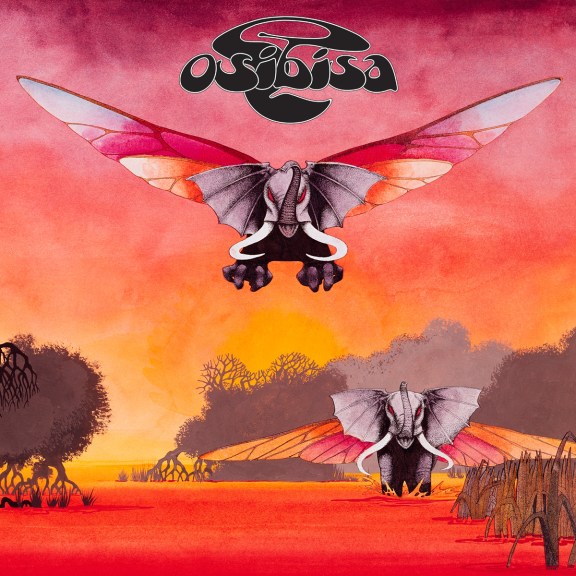
Founded by Teddy Osei, a native of Ghana, Osibisa consists of seven versatile musicians.  The standard guitar, bass, drums and keyboards are present in the band’s sound, but so are flutes, saxophones, trumpets, cowbells and congas.  This synthesis of traditional and modern rock instruments created a distinct sound and put Osibisa on the map as one of the first “world music” groups.  Again, they are not a typical prog group: their lyrics are fun and simple, they do not perform in complex and diverse time signatures, and their songs are generally under seven minutes long.  Nonetheless, their versatility and dynamic live performances place them somewhere between prog and Afro-pop.  Furthermore, Roger Dean, the famed prog artist, designed Osibisa’s logo and their first two album covers.

Although this is not the standard prog that most of us listen to, Osibisa provides us with some fun music (with an experimental and improvisational touch).  Look past the Afro-pop label and give them a shot.  They are too good to ignore forever.

https://www.youtube.com/watch?v=I-RbQjI3g-A

Raw, charming post-folk-rock from England …..

The Monroe Transfer and Her Name is Calla – “An Enclave

Review by John Deasey

 Image

It’s always interesting when you are asked to review music from a band you really don’t know much about. No preconceptions, no axe to grind – a blank sheet of paper and a clean mind.  When Echoes and Dust (www.echoesanddust.com) sent this through for me to listen to, I was intrigued 

The Monroe Transfer (from London) and Her Name is Calla ( spread between Leicester, Leeds and York) already work closely together and have toured with each other and contributed to each other’s music, but no official collaboration has ever been done until now. 

A coming together of two ‘Post Rock’ outfits would generally suggest a huge, over the top, Mogwai-meets-GYBE-meets Explosions in the Sky down a dark pub and battle it out to see who can be the most post-rock ! 

Thankfully, this couldn’t be further from the case and this EP turns out to be a bit of a charmer. 

A lot of this charm may stem from the way the EP was recorded over a four day spell which, by all accounts, includes camping out, roughing it and freezing their backsides off.

Sometime the words ‘home spun’ and ‘kitchen sink’ can be the kiss of death for music, when what was intended to be intimate and urgent can come across as annoying, irritating and up itself. Again, this isn’t the case here.

From the acapella opening of the first track (#5) to the closing ambient sounds of the last track (#7), we are treated to a lovely, mournful ocean of sonic tragedy.

There are five tracks, no titles, just numbers, and not even in sequence, but it doesn’t really matter as there is a flow to the whole thing which goes with the urgency of the recording I guess. No time for overdubs, re-recordings, second takes or any such luxury – often the first thing you hear is the best and they’ve done pretty well with this approach I’d say. 

The album opener is a mournful sea-shanty with a background drone so typical of this style and it sets the tone with an air of sad misfortune. This morphs beautifully into the second track as the same refrain continues with a lone cello which gently builds up with violins, guitars and more vocals until we have a swelling tide of folk-tinged post-rock beauty.

There are echoes of GYBE here, a touch of Radiohead there, but this is just a hint of the overall sound and nowhere does anything feel contrived or borrowed. Indeed, the fourth track has a rawness and edge to it that jolts you out any reverie that might have been setting in. This is an angry, percussive led piece with group chanting and a lead vocal almost shouting :

          “the path to righteousness is always out of reach….”

         “I screamed and I shouted … I demanded to be heard” 

Guitars start to scream in the background and we have a fantastic cacophony of demented anger, home-spun charm and a feeling that great fun must have been had recording this.

A gentle ambient closing track calms things down again and with a running time of 21 minutes, there is not a moment wasted.

A super little EP. A little different, a little rough round the edges but well worthy of your time.

For a pre-purchase listen try  www.hernameiscalla.bandcamp.com

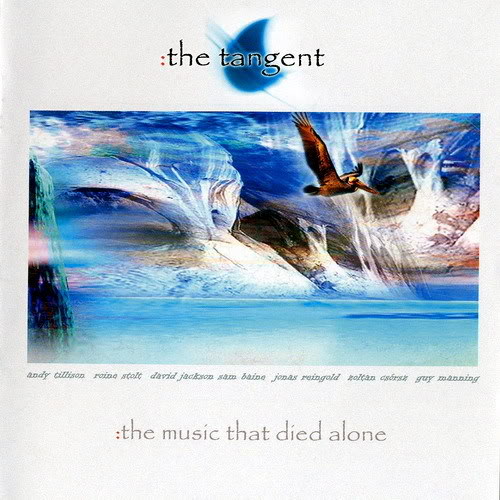
‘The Music that died alone’ – 10 years on…

A long time ago in a galaxy far, far away, long before the reflection of the ritual of work and tales of forgotten war heroes searching the radio waves there was a time when the music died alone.

Back in October 2003, ten years ago this week, a Prog super group came together  over international borders between the UK and Sweden and produced a monumental debut album ‘The Music That Died Alone’

Lead by Andy Tillison of Parallel or 90 degrees and joined by fellow members of the group, Guy Manning and Sam Baine, The Tangent was formed from Tillison’s original prog solo idea and was bolstered by other prog heavyweights Roine Stolt, Jonas Reingold and  Zoltan Csörsz from The Flower Kings as well as David Jackson from Van Der Graaf Generator.

Of course this is history and well known by many of the prog rock community, and the Tangent door has revolved again and again since then , even now with the releases of ‘Le Sacre du Travail’ and ‘L’Etagère du Travail’ (2013) some of the first people to work on the debut album have returned.

Ten years has passed since and a lot has changed, and yet some things have remained the same, but it is worth remembering this marvelous release and why it is so special.

Ed Unitsky's wonderful cover art.
Ed Unitsky’s wonderful cover art.

It should be considered in the context of this look-back that Prog in 2003, was still emerging on the back of a new wave lead mainly by the charge from Swedish groups as well as Neil Morse and a few American metal based groups such as Dream Theater, Tool and Symphony X, (a top ten of the time would have revealed a large predominance of Prog metal entries.)

Rising up in the UK was the development of Steven Wilson and Porcupine Tree and defying this heavier progression was a group that drew on Jazz influences and the Canterbury scene.  More Hatfield and the North, Caravan and National health than metal,  it was blended with a healthy love of Symphonic influences from the 70’s, Tillison and Co developed a sound that felt familiar and yet it wasn’t too retro to be seen as old.
The standout feature of the album was its truthfulness, an aspect that resonates through every subsequent Tangent album. Tillison’s lyrics lamented the loss of the music he loved in the title track, (which ironically was making a return on the back of albums like this one) and spoke openly of the issues of night terrors, a sleep disorder which affects many through their early years. These were honest feelings which felt grounded and real, a million miles from Shastric scriptures and the moans of a screwed up super rich rock star.

The album has aged well, and stands out above many of its contemporaries mainly because people could identify with it. Within the band’s own releases there have been few greater moments that the songs on this release.

Many of the bands fans rate this as one of the best from the group, indeed it was a wake up call for some who were looking for a musical belonging and found it when they listened to it for the first time. Ultimately this reflected in the end of year results when it was catapulted to the top spot on many music website polls.
2013 has been a spectacular year with a pocket busting choice of new music and yet if this album lies in amongst your growing collection of releases from the past, give it a spin, gaze into the lush artwork of Ed Unitsky and be reminded of something special.

“Flying Colors – Live In Europe” Streaming Now!

cover-bluray

Only 12 hours removed from seeing The Winery Dogs in my hometown, I was greeted this morning with news that Prog Magazine is streaming the new live album from my favorite Mike Portnoy band, Flying Colors.

Recorded last year in The Netherlands, the album captures the lineup of Neal Morse, Casey McPherson, Steve Morse, Dave LaRue, and Portnoy playing their debut album – a blend of rock, pop and, yes, prog – and rounding out their performance with tracks from the members’ previous bands, such as Spock’s Beard’s “June” and Dream Theater’s “Repentance,” which DT fans will know as part of Portnoy’s “12-Step AA suite,” featuring Portnoy on lead vocals.

Prog fans will no doubt enjoy the closing track, “Infinite Fire,” the 12-minute epic showcasing the vocal and instrumental talents of the entire group.

“Flying Colors: Live In Europe” will be released in numerous audio and video formats the week of October 13th. You can listen to the stream here: http://www.progrockmag.com/stream/premiere-flying-colors-live-album-in-full/


An aside: Having saw The Winery Dogs last night, I can’t recommend them enough if you like a lot of playing in a hard rock format, plus you’ll never see a harder-working rhythm section than Billy Sheehan and Portnoy, who treated last night’s club setting as if it was Radio City Music Hall.

TrinityLive–May 2014

Matt Cohen.  Shamelessly stolen from Matt's Facebook Page.  Unless progarchy gets a letter from Matt's lawyer, it will remain the image for this post.
Matt Cohen. Shamelessly stolen from Matt’s Facebook Page. Unless progarchy gets a letter from Matt’s lawyer, it will remain the image for this post.

One of our progarchy favorites, Matt Cohen–the Welsh Odysseus of the rock world–posted something quite intriguing today.  The TrinityLive show, forthcoming in May, 2014.  The trinity in question–no, not that Trinity!–The Reasoning, Magenta, and Touchstone.

This is where being an American is a real limitation.  Jealous of our British and European friends who can attend.  Plan now to enjoy.

http://www.trinitylive.co.uk