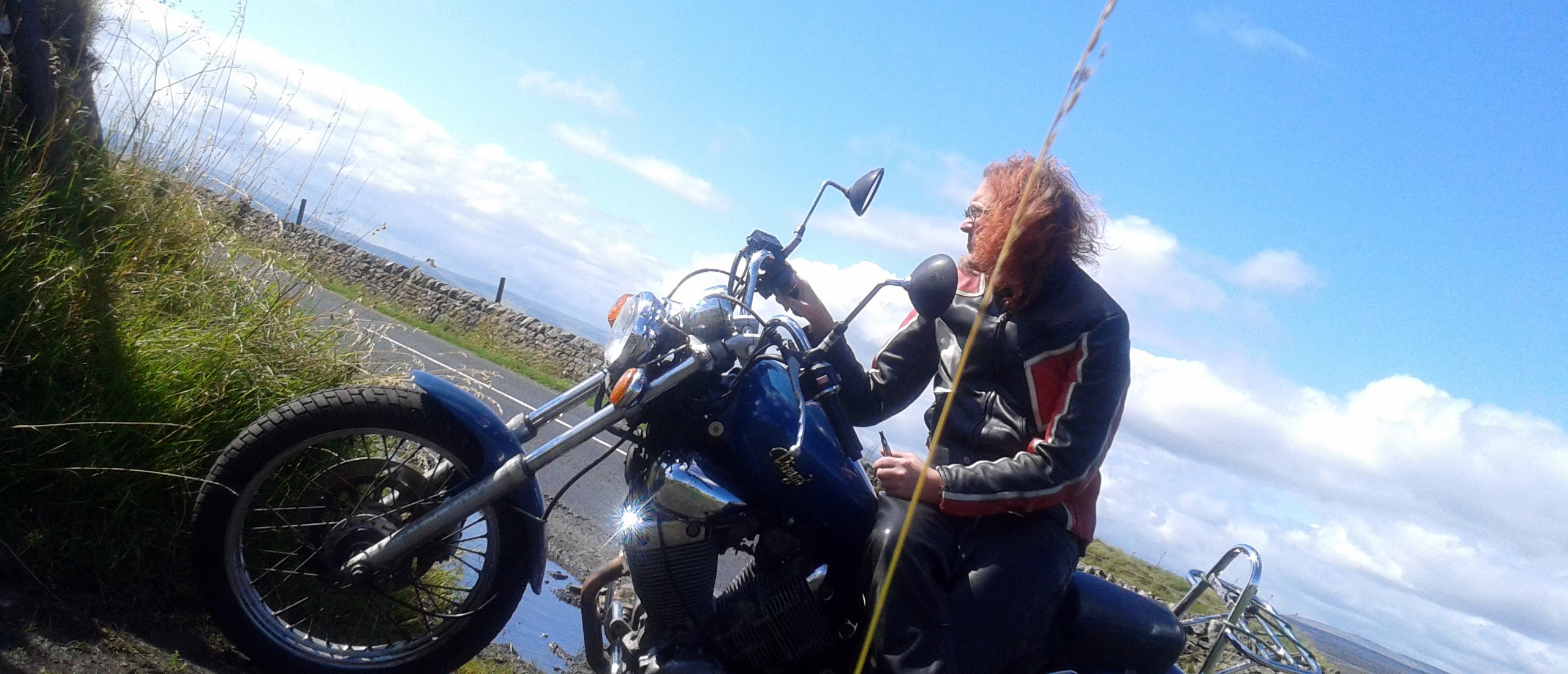
Andy Tillison on PROG AWARDS

The "red-headed" one.  Stolen from Tillison's FB page.  Without permission but not with malice.
The “red-headed” one. Stolen from Tillison’s FB page. Without permission but not with malice.

Andy posted this at his personal facebook page.  Very well worth reading and yet another reminder as to why Andy is a sheer modern (well, maybe post-modern) genius.

Some thoughts on the Prog Awards that took place in KEW, London last week. First of all, I had a great time and as I have already shown off on another thread, I got to share a table with three quarters of Transatlantic, Arjen Lucassen and the people from Insideout music who’d invited me. This in itself was a bit of a “wow” thing.

Looking around at the famous faces was worrying. I kind of realised that some hanger-on-to-1979-NME “everything must die so that punk may live” journalist could probably have wiped the genre from the face of the earth with a dodgy batch of Salmon Mousse. Rick Wakeman was right behind me, Ian Anderson, Dave Brock, Steve Hillage, Steve Hackett, Robert John Godfrey – Jeez!!! – if anyone had told me when I was at school that I’d be at this thing I’d have not believed them.

Most of my friends know that this kind of shindig is not really my scene. I felt a bit awkward in all posh clothes, a bit nervous to be with all the great and good – and this is not something that applies just to awards ceremonies, it goes back as far as “terror of the sixth form disco” and those student parties where you really DID find me, always in the kitchen. I’m just a bit nervous of formal events. Can’t be myself and that’s as simple as I can put it.

The formalities of the awards kicked off after a meal. Some of you know that my personal relationship with the organisation (PROG magazine) did not start quite as well as it might. My relationship with the editor and big chief there, Jerry Ewing, was worse than frosty for more than a year. Actually my fault when all is said and done – I really think most of it was to do with a bit of Northern Cantankerousness mixed with sense of humour failure and a little bit too much pride. And the fact that the mag had said that The Tangent looked like a bunch of Sheep Farmers and Accountants. I SHOULD have had a right old laugh about that. Because at the time, my partner Sally was working in accounts and we DID live in the middle of a sheep farm. Maybe it was just too close to the bone.

Ewing kicked off the proceedings with what, to my surprise and delight, was the most motivational speech of the night. It focussed heavily on the new bands both “real new” and “established new” and far from being corporate gesturing which is so often evident at this type of event, I got a real feeling that he MEANT it all, and that he didn’t actually see the third and fourth waves of Prog as some kind of pro-active fan club of the first and second. That was more than refreshing. And to watch the Von Hertzen Brothers claim their award, Big Big Train and Steven Wilson etc was great, knowing that there is, was and will be a lot of life in the genre AFTER 1977.

I’m always gonna be happier in jeans and a t-shirt, wrestling with a monitor mix at The Peel, The CRS, Summer’s End or Celebr8 than at a posh three course meal. And of course I did note that there were more people at the awards than are at most of the gigs. If all the musicians were to support each other at each others events we could significantly audience sizes – (but NOT ask to be on the guest list!!). But what’s really really great about these awards is that we’re all HERE, the old heroes and legends, the guys who want to follow them and the people who want to make it happen. I’ve always felt as a Prog musician to be “part of something” – of course I have.. but where so many negative correspondents have portrayed Prog as a safe, middle class and system supporting genre, I have always seen it as sticking up two fingers to the classical music establishment and saying “we can do that too” After all the shit, lies, misrepresentations and misunderstandings we’re ALL STILL HERE. Bring on the Salmon Mousse!!! We’ll survive that too!–Andy Tillison, Facebook, September 8, 2013
Viva la revolution!

We’re not getting any younger, none of us are… (Brad Birzer-Happy Birthday!)

I’m now rather depressingly at the stage where I find myself saying out loud,
“In my day things were better than they are now…” or “When I was a young lad we played outside every day, walked two miles to school in shorts in six feet of snow and tortured frogs for fun.
When it comes to Prog though it’s not the case, things are better now than they were, even with its relative obscurity and damn near financial bankruptcy.
What are you mad Eric? The Prog scene is better now than it was forty years ago?
Sure, some of the best loved and most successful albums of the Progressive rock genre belong to the seventies, sales were in the millions and concerts were gigantic spectacles and the artists were larger than life characters. But that was short lived and the years that followed were lean and as one clever Yorkshire man summed it up it was a time that the ‘Music died alone.’ It was tough, I remember it well and yet the one thing that saved me was the beginnings of the revolution we now use twenty four hours a day, seven days a week.

The Lamb dies down…
I was a late entry to University in ’89 and consequently I didn’t quite fit in. I was too old for the fresh-out-of-school-club, and too young for the mature student category. Combine that with the most unpopular and uncool taste in music and my first year a Uni was a lonely time.
It peaked one evening when I got lucky and walked a girl back to my room in the halls after a few drinks in the student bar. She told me with a shout over the noise of a rather poor student rock band, that she was a fan of Genesis. My spirits soared and I couldn’t believe my luck. She was gorgeous, truly sensational and so far out of my league that I didn’t stand a chance, but none of that mattered, she liked my favourite group. I was going to get married and planned out the rest of my life with her before I got back to my room.
Sadly it was rather short lived. Moments after she settled back into a beanbag on the floor I nervously slid out my vinyl copy of ‘The Lamb Lies Down on Broadway’ and turned round to face her as the tinkling piano of Tony Banks began to build in intensity.
“What’s this you’re playing?” she inquired.
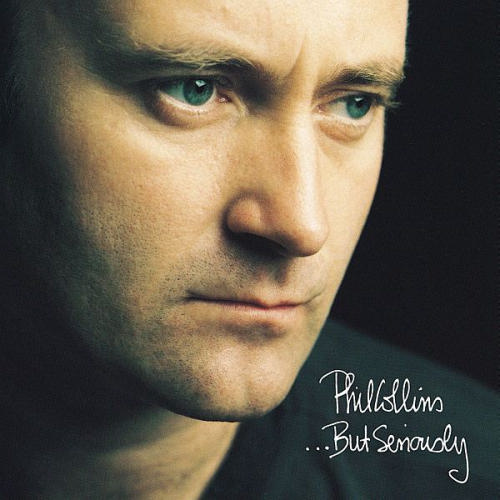
I will never forget the baffled look on her face when I told her that she was listening to Genesis. It turns out she though Genesis was Phil Collins and Phil Collins was Genesis and wondered what it was I was playing, it wasn’t  ‘Another day in Paradise’ (for her or for me…) and when Peter sang “The lamb seems right out of place,” it seemed that there was never a truer word spoken.
She didn’t stay and made an determined effort to avoid me whenever she saw me around and about.
I got rather down about Prog, I mean, how could someone instantly lose their attraction for a person because of their musical taste? After that and for a short while I didn’t play much and dabbled with the Stone Roses and some of the early punk- grunge from Seattle.

Not the Lamb lies down on Broadway...apparently.
Not the Lamb lies down on Broadway…apparently.

Dialing back to my roots…

Going back to my point, it was the revolution in technology that brought me back from the wilderness and helped me to rediscover my love of Prog and it’s the same technology now that makes it a strong, independent force today, underpinning  a passionate fan-base, and it’s the technology that’s the future for the music, not any one band.

Before HTTP and web browsers there was Usenet, the newsgroups and bulletins through the College network. These were a lifeline to me at University in 1990. Basic text discussions with people in America about YES and Pink Floyd was suddenly a reality. And email too! I used to print off the discussions to read in my room in my own time. Stacks and stacks of stripy paper from the dot matrix filled with a love of Progressive Rock.
Naturally the first browsers followed and dial up with 14440 BPS which was stupidly expensive but it gave me home access to the newsgroups.
It’s no coincidence that Prog’s third wave began soon after in the mid-nineties and has gathered pace ever since. Andy Tillison with his first MP3 upload, Marillion and their cottage industry rebirth after EMI and of course digital mail order (1998 and an early web purchase of ‘Stardust we are’) with the rest of the world all ensured its survival and its future.

I might have recently said that Hyperbole on the social networks was the work of the horned beast and that it was the fault of the internet in general. It’s still true and I stand by that but I need to clarify that despite all that, I think we need it for Prog to avoid being lost in the wilderness again. Ironically I realise it makes me look like I’m caught between the devil and the deep blue sea.

Actually no I’m not, anything but.

Viva la revolution, long live Prog, and long live the internet!

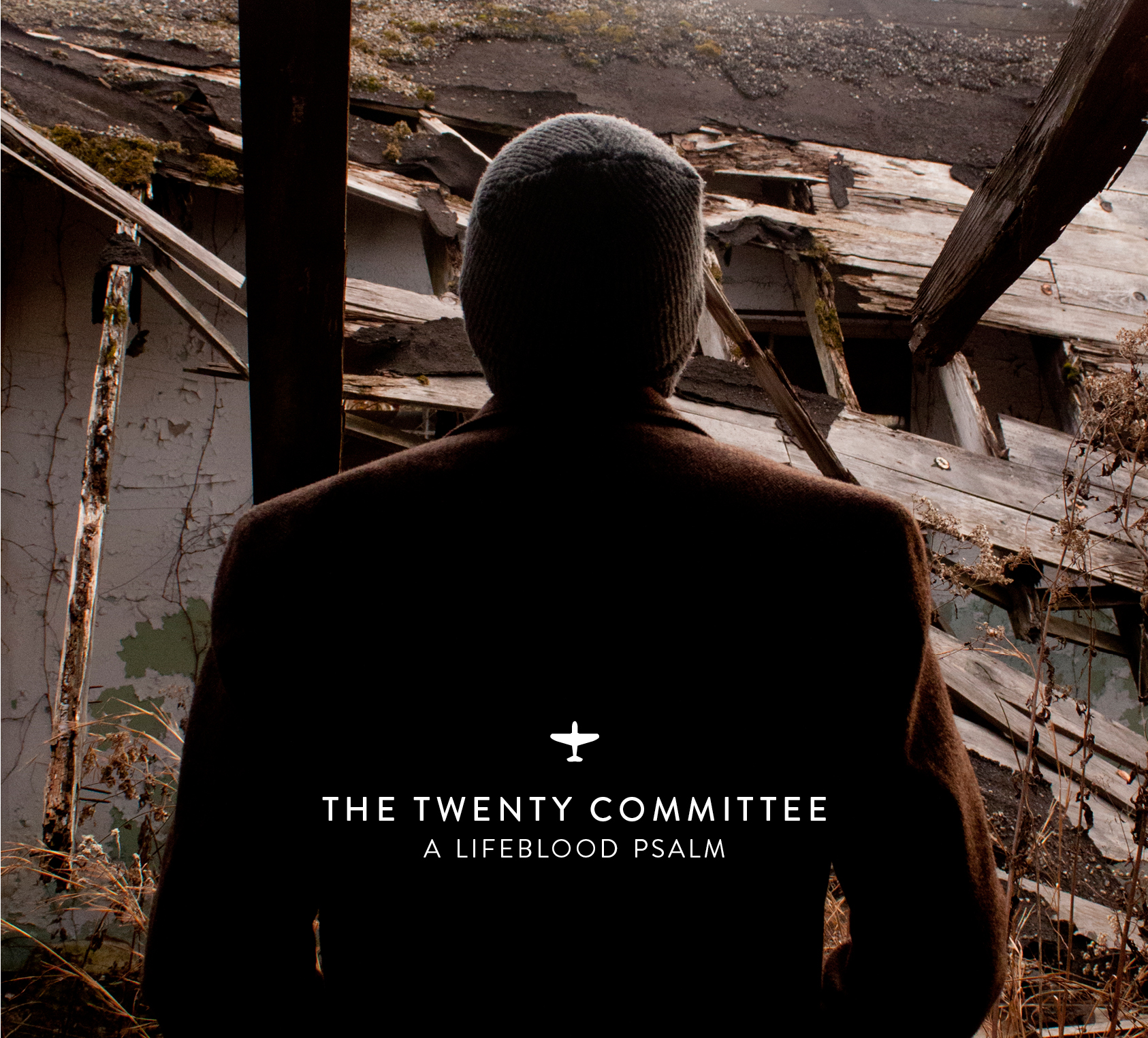
A Lifeblood Psalm – The Twenty Committee

One of the delights of the internet is the opportuinites it offers to discover something new. In the realm of music, one site that offers a cornucopia of fresh delights is Bandcamp. One of its strengths is that it allows you to stream whole songs and albums before committing to buy, as well as the capacity for bands to provide music cheaply, and sometimes freely.

Image

It’s there that you will find the debut album by The Twenty Committee, a five-piece from New Jersey, who have produced an excellent collection of gentle progressive tunes. The set comprises 9 tunes, the last five of which comprise a 21 ½ minute suite – ‘The Knowledge Enterprise’.

The title of ‘A Lifeblood Psalm’ resonates with me as a clergyman. The Psalms are ancient songs of praise, lament, anger, penitence – every human emotion is found within their canon. This collection has a certain element of spirituality about it, albeit subtle and understated. The opening track – ‘Introduction’ – begins with spoken words which include prayers, and this leads into ‘How Wonderful’, which, although it is essentially a love song, has for me the feel of a modern praise song, particularly in its musical intro and the lyrics of the chorus, that could grace the stage of many a mega-church.

Next comes the 10-minute ‘Her Voice’. This drives along quite nicely for about 4 minutes, then starts to get a bit ‘random’ with atonal guitar and keyboard parts for about a minute and a half, before returning to some ‘sanity’, with some Emerson-like keyboards towards the end.

‘Airtight’ is a quieter song. It begins with an acoustic guitar and harp (!) intro, and builds layers of vocal harmonies that for me had echoes in places of Snow Patrol. The song builds to a pleasant crescendo, then ends with guitar and strings.

‘The Knowledge Enterprise’ ends the album. As I’ve said, this is a five movement suite of over 21 minutes in length. It begins in good symphonic style with an instrumental overture, developing themes that will recur later. As with the album as a whole, this piece has changes in tempo, texture and time signatures throughout, but not in a clumsy or intrusive way.

For a debut this is an accomplished, consumate piece of work that has grown on me and endeared itself to me with every listen. Get over to their site at http://thetwentycommittee.bandcamp.com/ and give them a listen. I don’t think you’ll be disappointed.

New Ayreon Album Images

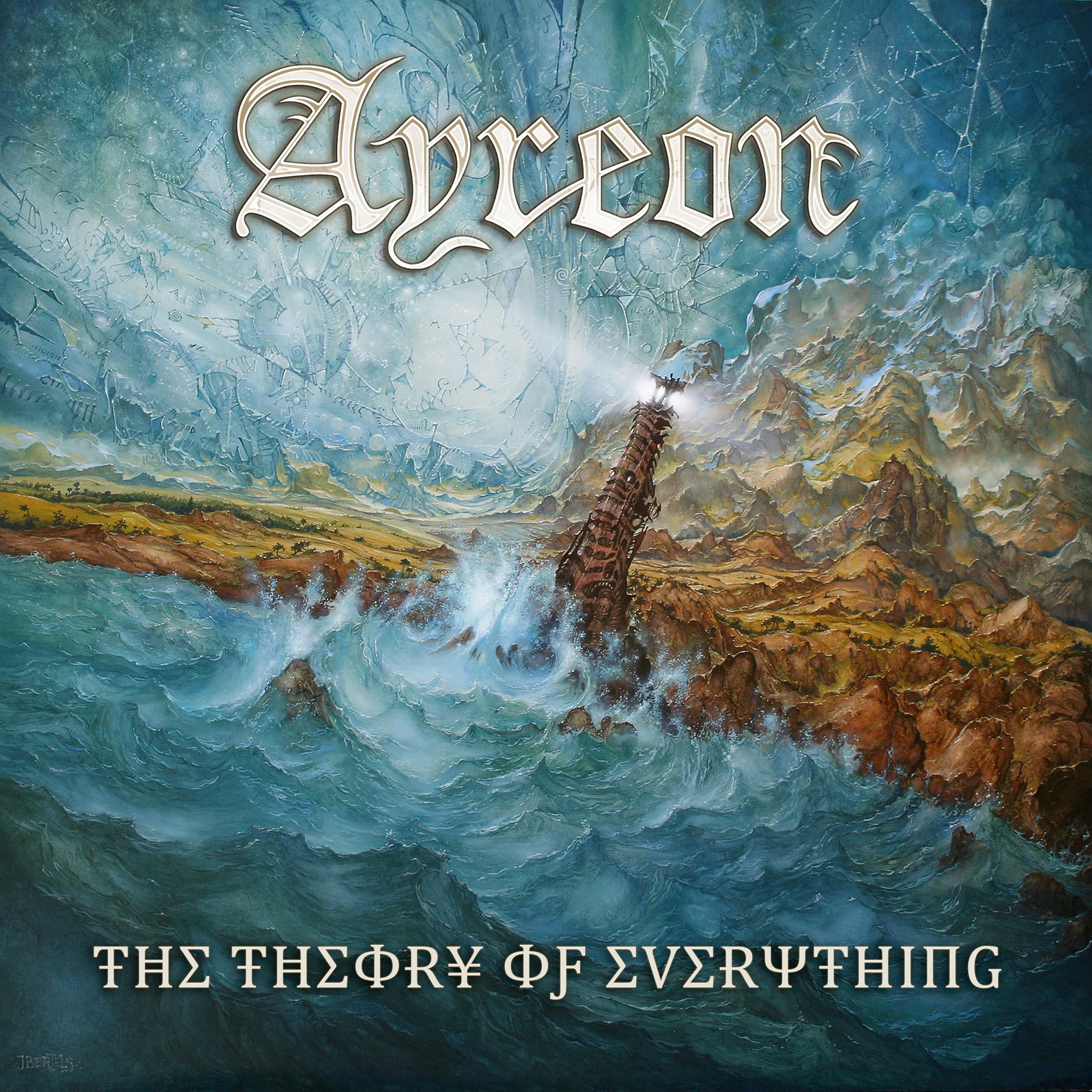
Arjen Lucassen has released some images of the forthcoming Ayreon album, The Theory of Everything.  Enticing!

aryeon cover

ayreon 2

1990: A Little Psychedelia Is Good for the Soul

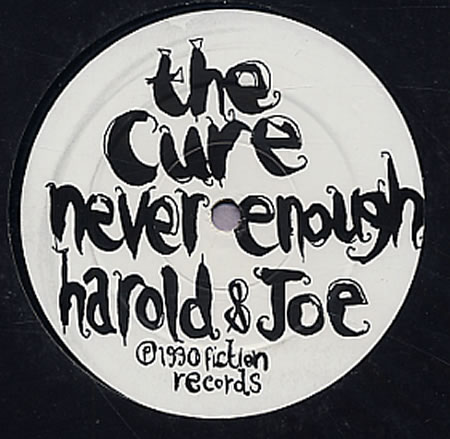
The-Cure-Never-Enough-207441990 has always been a special year for me.  Communism was on its last legs, the economy boomed, and the world seemed a rather friendly place.  There were never lines at airports, and I could see a John Hughes movie about any time I so desired.

I also graduated from college in May, 1990, and I spent the next three months living with my great friend, Ron Strayer, in Lawrence, Kansas, sleeping on his couch.

In late August, I packed up my Mac Classic, some of my books, and my outdoor gear, and I moved out West to the Rockies.  Once there, I began editing an academic journal with fellow progarchist Craig Breaden, and we became fast friends.

For two years, I wrote, edited, hiked, listened to music, and played lots of Canasta.  My older brother lived in Boise, and we met at least once a  month for a hike and some excellent fellowship.  Usually, we talked about the natural order of things and our mutual love of science fiction.

1990 also introduced me to more music–and, perhaps more importantly,  more types of music–than any year I can remember.  I had been a rather straight-forward prog rock and New Wave/alternative rock kind of guy for most of my life.  Ron and Craig,however, each introduced me to a rather wondrous variety new groups and genres.

Of the new material released some time during 1990, here are some my favorite songs and albums, in no particular order.

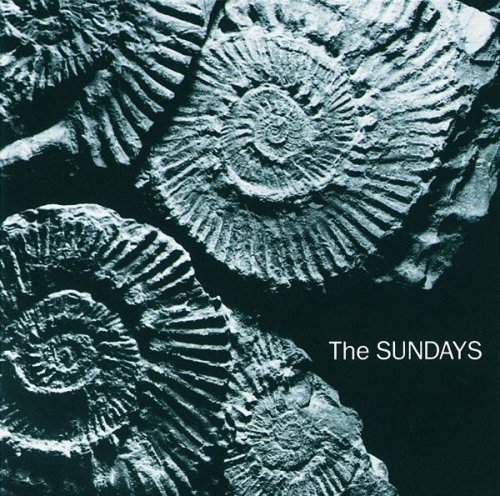
sundays

House of Love–“Hannah” and “Shine On.”

Cure–“Never Enough”

World Party, Good-bye Jumbo

Peter Murphy–“Cuts You Up”

Stone Roses, The Stone Roses

Charlatans, Some Friendly

The Sundays, Reading, Writing, and Arithmetic

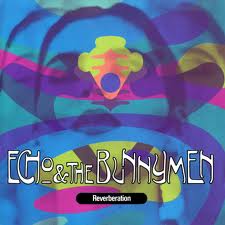
Echo and the Bunnymen, Reverberation [and, yes, I think this is fine Echo album, even without Ian]

French Frith Kaiser Thompson, Invisible Means

echo reverberation

Big Big Train–Justice!

I’m so proud of these guys.  For the full article, click here.

The host of The Prog Magazine Radio Show on TeamRock Radio, Philip Wilding presented the Breakthrough award and he highlighted exactly why that honour has been bestowed on him with an hilarious intro based on schoolboy rivalry between Gavin Esler and Jeremy Paxman. The award was won by Big Big Train who were clearly very pleased with their achievement as three members of the band – Greg Spawton, David Longdon and Andy Poole – paused to thank everyone who had helped them. It’s important to remember who’s helped you get to where you are, of course!–Jerry Ewing


Andy Poole, Greg Spawton, and David Longdon at the Prog Awards.  Photo taken from Prog's website.
Andy Poole, Greg Spawton, and David Longdon at the Prog Awards. Photo taken from Prog’s website.

The greatest blog you will ever read….ever!

You know there’s one thing that really gets my goat…
Before I carry on I should point out that there are many things actually, including false opening statements like the one above. I’m now in my mid-forties and true to form my dormant grumpy gene has kicked in, and having an online social network presence is not the ideal place for someone with a growing affiliation to Victor Meldrew. (Sorry people of the US, pick another great pompous moaner from TV, Fraiser Crane perhaps?) Reading people’s comments and sweeping generalisations on a daily basis pushes all the buttons to get me to DEFCON 1, it’s not good.

And it’s not your fault or mine; we are all a product of the social revolution with all its benefits and woes.

Okay back to my point, the one thing that annoys me on a daily basis, oh bollocks, here I go again. It’s not one thing. Actually…this is my point. Exaggeration used to create a strong impression. The dreaded HYPERBOLE.

Actually Hyperbole isn’t all bad, I should say this now. In literary terms it has great uses and allows us to understand the character or story in a short, effective passage. “He’s got tons of money.” or “I have a million things to do.” These types of hyperbole work. However it’s when we look online, visiting blogs and forums and reading people’s updates and reviews that Hyperbole becomes the engorged tool of the devil. It all turns a little triumphalist. I know. I have seen it a million times….

“Mila Kunis is the sexiest woman alive,” apparently.
Well she is pretty and probably a contender. But come on! How would anyone know that? Has the person who made this crap piece of lazy journalism walked the length of the earth like some obsessed Forrest Gump type checking on all the women alive before deciding it is in fact Kunis? Yes indeed he might have, it’s highly likely he’s done some research late at night on the computer when his wife is asleep in bed, but that still doesn’t qualify the statement. Yes it’s a judgement call based on a tiny sample of the voting public, but for crying out loud, it’s just not true.

Sexier than progressive rock...
Sexier than progressive rock…

Progressive Rock fans are no exception, especially those that write about it online.
In fact in music genre terms they are perhaps the World’s worst for hyperbole. (see what I did there…)
Maybe it’s something connected to the epic quality of the music that brings out the overblown statement, or just the fact that as fan’s we know that the world isn’t really listening and they should be, so we bolster the music with exaggeration and unrealistic amplification? As  fans go, they stand out for committing this particular writing sin more so than many other music categories.
With Pop music  the opposite of hyperbole seems to happen (What is the opposite? Hypobole?)
Rather than resort to overstatement, we are bombarded with sky high superlatives instead, against the backdrop of choral theme music and a man with a ridiculously deep shouty voice. See the X-Factor/American Idol for evidence of this.
“Have you heard the new single by Jessie J? It’s a masterpiece!” 
Somewhere, someone online may be saying this yet if this is so, it’s not close to the grand scale of trumpet blowing that follows each new Prog release.  Does this mean that Progressive rock is better than everything else and the only true source of music perfection, or are we occasionally in danger of disappearing up our own epic-length arseholes?

So far this year we have seen a dozen of entries in the “album of the year contenders” category and, probably the same again in ‘masterpieces’ and classics. I can’t walk through some of the popular discussion groups without tripping over these pedestals.

Is it really true that the new ‘Haken’ album is a masterpiece or the latest ‘Magenta’ release? Both are certain to be excellent and well worth a look, for sure. But masterpieces they are not, nowhere near. By ranking them as this we do a disservice to the very music we love because we elevate it far too much and look subjective and a little obsessive, like musical equivalents of anoraks to the uninterested music world.
“Who cares, we’re fans and we can review our albums just how we want, why should we be worried?” Well we should, because the next band to break through and make Progressive rock massive again is probably out there but they are weighed down by huge amounts of hyperbolic bling from their core fans.

Putting that aside, let’s take a look at example of the new Haken again as a potential masterpiece and see if the cap fits. If the term masterpiece can be applied to any music of the last fifty years then lets classify ‘Close to the Edge’ by Yes and ‘Dark side of the moon’ from Pink Floyd as such and add Haken’s “The Mountain” into that club. Suddenly I see everything that winds me up about the internet. Short sightedness and a need to make everything better than everything else, ever. How can we take a review seriously that boasts about a new album, barely two weeks warm, summing it up as a true masterpiece? Ten out of ten. The danger is once we use the term we then have to find new ways of describing something even greater. Like the race for the next size of storage capacity or super-fast processor, we need a ‘mega-masterpiece’ or a ‘giga-piece’.

Ultimately it’s fair to say that none of the above are masterpieces, not even Yes or Pink Floyd. It’s hard to see any of these albums influencing and inspiring people a hundred years from now in the same way that Bach, Mozart, Debussy or Stravinsky have done for centuries and still do. Hell, even my spell check knows who these people are. These are the truest representations of the word and need no hyperbole to remind us how magnificent they were. If you ever doubt the validity of this, have a chat with those musicians whose work we elevate to such lofty heights, in fact I did and this is the result.

As for the over statements on the internet, I couldn’t change it in a million years. No word of a lie.

The Red Priest Rides Again

Vivaldi

I highly recommend this recording (available from DG) by Daniel Hope, an amazing reconception of the most famous work by “the red priest”:

Today the “Four Seasons,” with more than 1,000 available recordings, are not just rediscovered—they are being reimagined. Astor Piazzolla, Uri Caine, Philip Glass and others have all created their own versions. In Spring 2012, I received an enigmatic call from the British composer Max Richter, who said he wanted to “recompose” the “Four Seasons” for me. His problem, he explained, was not with the music, but how we have treated it. We are subjected to it in supermarkets, elevators or when a caller puts you on hold. Like many of us, he was deeply fond of the “Seasons” but felt a degree of irritation at the music’s ubiquity. He told me that because Vivaldi’s music is made up of regular patterns, it has affinities with the seriality of contemporary postminimalism, one style in which he composes. Therefore, he said, the moment seemed ideal to reimagine a new way of hearing it.

I had always shied away from recording Vivaldi’s original. There are simply too many other versions already out there. But Mr. Richter’s reworking meant listening again to what is constantly new in a piece we think we are hearing when, really, we just blank it out. The album, “Recomposed By Max Richter: Four Seasons,” was released late last year. With his old warhorse refitted for the 21st century, the inimitable red priest rides again.

Over at The Imaginative Conservative, you can also find more recommended recordings of “the red priest” for your listening pleasure.

Given what Richter and Hope have done, don’t you think it’s time for someone to do a prog presentation of music by “the red priest”?

It could be epic!