Progressive Rock, Regressive Listening

Spin up aural reader’s aid here or here.

Years ago, before I was old enough to know better, I gave myself a gift:  I didn’t sell, trade, or give away my LPs.  Not that I treated them that great.  They spent a season or two in a damp garage, and then were loaned for a decade to my nephew, to do with what he would — he just wasn’t allowed to get rid of them.  That nephew is now getting close to graduating from college, and last fall my wife and kids and I moved just down the street from his parents, who graciously stored (and moved, on occasion) those four or five hundred LPs longer than anyone should have to.  So I’ve now recovered them — although I think, and my sister isn’t denying it, that there may be another box of records lurking somewhere — and put them in the old cabinet my dad built for his LPs back in the 1950s.  I’m going through them slowly, alphabetizing, cleaning, playing.  It is a satisfying process, and a relief from the digital melee life has increasingly become.  What was once cutting edge technology now appears quaint, matched up against things like randomized online playlists and noise-cancelling headphones.  A side of an LP takes some patience and some tolerance:  pop and rumble can lead to madness or joy, depending on the baggage one’s ready to let go of.
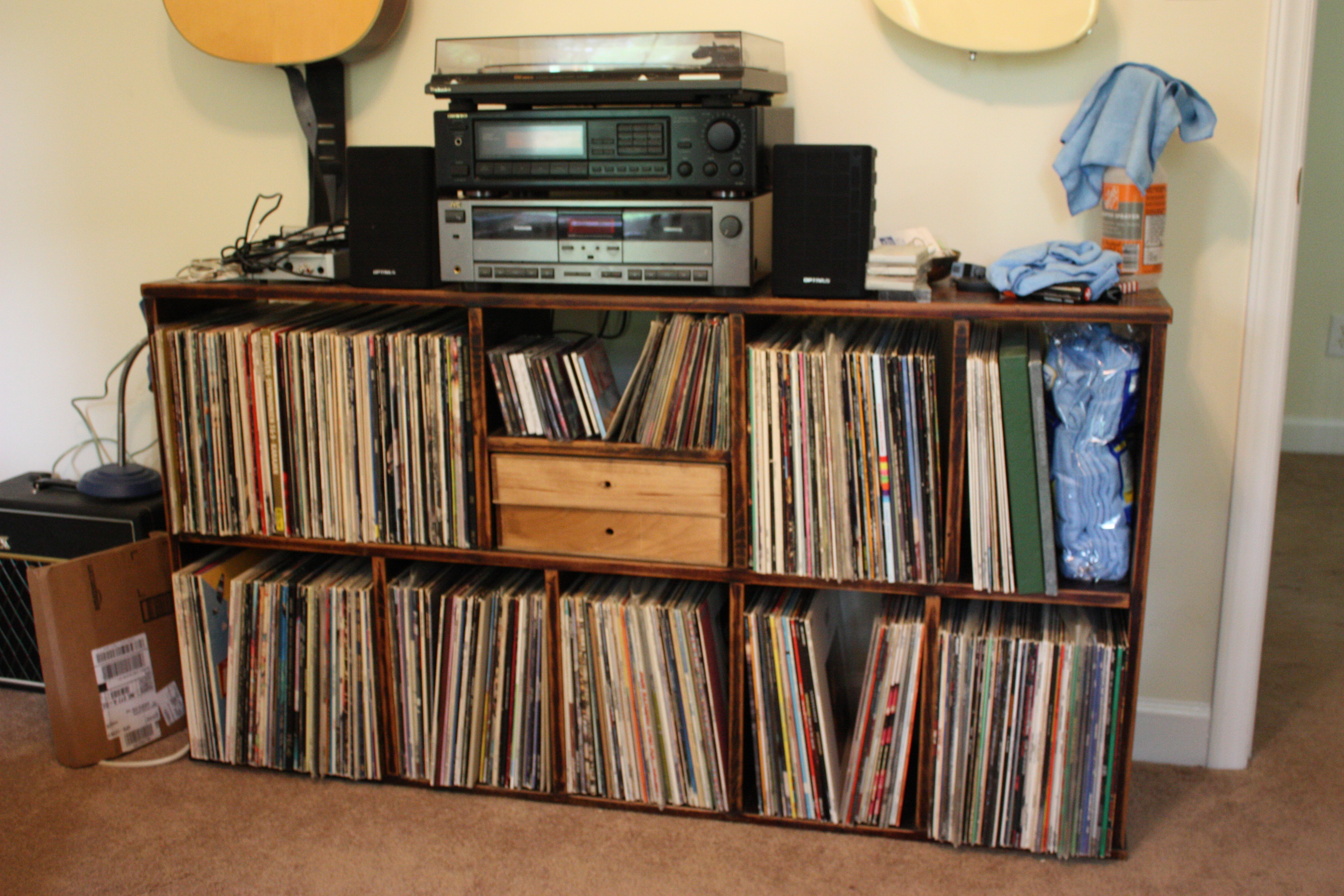
The Temple
The Temple

The increased hipness of vinyl amongst the cognoscenti (such as they are) is for me a mostly marvelous thing.  It means I continue to have access to old records, and in some cases to newly minted ones, and also to things like styli and cartridges and cleaning tools.  I’m jazzed, too, that this seems driven by an impulse towards the physicality of the medium — music has always been something in the ether, but the grooves in a phonodisc, as a mechanical representation of sound, not to mention the marvel of the gatefold sleeve, is a very tangible and human-scaled thing.  It is not digital and it is not nano, and for many of us its immediacy has beauty and warmth.  However, I’ve found that the new vinylistas have inspired a kind of fetish cult, something I relate to to some extent, I’ll admit, that worships the process over the music.  The revival is a retro-geek early tech adopter kind of thing, except in this case the technology is a Rube Goldberg version of something the digital crowd (which I’ll own to being a part of as well) thought they’d exterminated.  Like I said, I get this and relate to it, but mostly, my return to the LP has been an experience in nostalgia — a reliving of the days where I would put on a record without a lot of fuss and listen to an album side — and an awakening to an appreciation of the sound that I never would have been able to define in the era before compact discs.

That sound is not quantifiably better, as some would have you believe (IF you have a $3,000 turntable, IF your stylus fits the disc, IF your preamp and amplifier are tube-driven, and on and on and on…).  It misses a point, rarely addressed, that music is mastered for vinyl differently, that equalizations are important at that stage to avoid mechanical failure, that is, the needle popping out of the groove.  You’re left with a high-end that can veer towards sibilance with wear or if the disc was not mastered well, but also with muscular, defined lows that lend rhythm sections a rounded bounce.  The rest, really, is all mojo.  This is different for everybody, but for me it is a combination of a couple of things:  the vision of the lazily spinning phonodisc, like a river unwinding its story, touches my sense of the real and palpable.  And then there’s the presence, that constant background, made up of rumble and clicks and pops, instantly identifiable, unavoidable, reflecting a mechanical process that is not perfectly replicable.  Replicability is the stuff of the digital world, the download, the OS.  That the LP, with all its noise and uniqueness, seems to coax from me an emotional response that approximates a sense of comfort and familiarity, is something I’m still attempting to wrap my head around.  Maybe it’s better that I can’t fully articulate it.

FinalVinyl
My modest vinyl playlist in iTunes as it currently stands.

As real worlds and humans are imperfect and usually a little cracked, so is the world of my LPs and my own behavior with regard to them.  I am enjoying them immensely, finding deep joy and satisfaction in what they hold and in the memories I have of when I first bought and played them, when the world, not that long ago, was more analogue and still just that much more slowly paced.  I am also…digitizing them.  Ha!  Ironies abound, as friends have observed.  I am converting full sides of LPs, taking care NOT to break them into their constituent songs, as a deliberate attempt (as a midlife crisis?) to recapture the original experience I had with many of them.  So yes, progress is slow but more and more my iPod is playing back crackle and pop and Rush.

Billy News–Krautrock Rerelease


For Immediate Release

Purple Pyramid Records To Reissue Seminal 1971 Debut Album By Krautrock Legends Brainticket ‘Cottonwoodhill’ On CD May 7, 2013

Warning! Only listen once a day to this disc. Your brain might be destroyed!


Los Angeles, CA – Much to the excitement of Krautrock fans and music collectors worldwide, Purple Pyramid Records will be reissuing the seminal 1971 debut album and psych-groove masterpiece by legendary Brainticket titled ‘Cottonwoodhill’ on CD May 7, 2013. Featuring full digital remastering for superior sonic clarity and packaged with extensive liner notes by music historian Dave Thompson!

Brainticket is the brainchild of Joel Vandroogenbroeck, a Belgian based in Switzerland who grew up studying classical piano before switching to jazz. He received the Art Tatum prize as “youngest jazz pianist” at the tender age of fifteen, and was soon touring around Europe and Africa. By 1967, Joel was still playing jazz but he found new inspiration in the sounds emanating from German Krautrock artists Amon Duul II, Can and Tangerine Dream.Under the influence of these groups, Joel and guitarist Ron Byer recruited drummer Wolfgang Paap and formed the trio that would become Brainticket. The group’s 1971 debut album ‘Cottonwoodhill’ immediately ran into a storm of controversy for its association with psychedelic drugs. The album came with a warning label that insisted you should “Only listen once a day to this record. Your brain might be destroyed,” which led to the album being banned in several countries including the USA.

From then on, Brainticket’s reputation as a band of experimentalists at the forefront of underground, avant-garde music had been solidified. Following the death of Bryer, Joel began exploring electronic sounds, moved to Italy and met an American woman named Carole Muriel. A pair of Swiss musicians, guitarist Rolf Hug and bassist Martin Sacher, followed and the group released 1972’s ‘Psychonaut’. A rock opera collaboration with Academy Award winning film composer Bill Conti (‘Rocky’) followed before Joel began work on a new Brainticket album based on the ‘Egyptian Book of the Dead’. The new album, ‘Celestial Ocean’, told the after-life experience of Egyptian kings traveling through space and time, from the desert land to the pyramids. Released in 1973, the album was hailed as the definitive Brainticket experience and earned the band their greatest acclaim.

Joel has continued to explore new creative avenues over the decades, releasing two more albums under the Brainticket moniker, including 2000’s ‘Alchemic Universe’. Recently, he teamed with Cleopatra Records to release the first ever Brainticket box set, ‘The Vintage Anthology 1971-1980’, a 4-disc compilation containing the complete first three albums along with several rare recordings. The box set is a celebration of Brainticket’s enormous contributions to electronic and ambient music that would provide inspiration for progressive bands from Emerson Lake & Palmer to Yes as well as modern acts such as Radiohead.

Joel recently discussed Brianticket with writer Dave Thompson, “We were not a group, we were a place where creation was made and this place was Cottonwoodhill, even if it was never mentioned in the later albums. Besides myself trying to keep this together, every recording has different people. In general, it did work to our advantage. There was an encounter, an inspiration, a production and after that everyone went away on his own path. I believe that this concept is what made Brainticket so original as we never were the ‘perfect concert band.’ We had something different to offer.”

They still do. In 2012, Brainticket went out on the road, touring the US with a set that reached all the way back to these magnificent beginnings. And when he was interviewed at tour’s end, Joel was still flying high. “At the start I didn’t believe that this would be possible, but I can say now that this was one of my best experiences with Brainticket. New blood flew in my veins. I was invited all over the place and the concerts were a huge success. People my age that were still huge fans of Brainticket mixed with young generations that wanted to learn from me, what I knew, and experience what I had done with music. It was like a dream. A space rock invasion!”

And now, with the re-issue of Brainticket’s debut album ‘Cottonwoodhill’, fans can experience where it all began!

Advice… After listening to this disc, your friends won’t know you anymore!

To purchase Brainticket’s Cottonwood Hill CD: http://www.amazon.com/Cottonwoodhill-Brainticket/dp/B00BSHYWMQ/ref=tmm_acd_title_popover

For more information: http://brainticketband.com

Press inquiries: Glass Onyon PR. PH: 828-350-8158, glassonyonpr@gmail.com

From Out Of A Progarchist’s Hometown: Tim Morse’s “Faithscience”

faithscience_album

I’ve never been a huge follower or fan of Sacramento’s music scene. Even with popular groups such as Cake and Tesla hailing from my hometown, the only local group ever I really dug was ’80s eclectic pop group Bourgeois Tagg (I highly recommend their two albums).

So, some 25 years later, it was a lovely surprise to see that Tim Morse’s second CD, ‘Faithscience,” the follow-up to his 2005 debut album, “Transformation,” was generating buzz among fellow progheads.

I’ve known of Morse for years through his involvement with Parallels, a Yes tribute band that I believe I once spoke to him about drumming for (but regrettably skipped out on). Since then, Morse has occasionally popped up on my radar either for Parallels or for After The Beatles, a group that covers the solo work of the Fab Four.

So, it’s fitting and with a strong dose of local pride that “Faithscience” is my first album review.

Initially conceived as a concept album about the life of Charles Lindbergh, the themes on “Faithscience” grew to include themes of love, spirituality and loss taken from Morse’s real-life experiences.  It kicks off with an instrumental opener, “Descent,” calling to mind a Neal Morse/Spock’s Beard overture. It’s clear that Morse has no shortage of ideas to present and here he makes a bold statement about his progressive rock prowess.

“Voyager” feels much like a a two-movement track. The first part combines traditional prog stylings with a tight, song-oriented arrangement, leading to a dense, anthemic solo section – a chill-inducing moment.  As the section gradually winds down, one would think the next song is about to begin. Rather, a second section of “Voyager” begins, fueled by a melodic bass line, leading to some fine soloing before an intricate synth sequence picks up an earlier acoustic guitar pattern and leads us out.

“Closer” is another prog showcase with its many twists, tuns and tones, and just when I think the track might leave us in a sonic place far from where it began seven minutes prior, Morse reprises the song’s intro to wrap things up nicely.

Morse provides a soft landing to the thrill ride that are the first three tracks with “Window,” a nylon-string guitar interlude that immediately reminded me how Steve Howe’s “Masquerade” on Yes’ “Union” – yes, a “Union” reference; sue me – broke up “I Would Have Waited Forever” and “Shock To The System” on one side and “Lift Me Up” on the other.  The accompanying crickets provide a dreamy background for the guitar to lull us into a daydream, which Morse then extends with “Numb,” the companion to “Window,” that features wonderful piano/acoustic guitar interplay accented by strings and oboe.

“Myth” shakes us from the daydream with an arena rock intro, haunting verses sections and even a touch of “prog swing” – Progarchists, I hold a copyright on that term – to lead us out.  “Found It” and “Rome” are tracks where Morse’s songwriting skills really stand out. He kicks off “Found It” with a MiniMoog-esque solo over a synth soundscape, then thunders into the track with arguably the heaviest riffs on the album, plus we’re treated to fantastic guitar soloing over the last half of the song.

“Rome” gives us a lyric delivery reminiscent of the late, great Kevin Gilbert in the verses and chorus. Again, Morse has no shortage of ideas in his “prog arsenal” but I found these more traditional song arrangements more to my taste.  The track closes with a fine violin solo courtesy of guest David Ragsdale of Kansas, blending soulful playing with technical prowess.

Morse throws the proverbial kitchen sink at the instrumental “The Last Wave,” kicking off with a Beard-like section of stops and starts, along with syncopated melodies and rhythms. A quieter guitar section takes over in the vein of “Thrak”-era King Crimson with its chorsed, delayed guitar parts, and from there it’s more prog goodness to the end.  This one is really all over the place yet Morse makes it work, ending with a heavy riff we heard at the start.

The album closes on emotional notes, first with the soulful “Afterword,” a tribute to those who help shape one’s life, beginning as a ballad and ending on an more upbeat tone. Finally, Morse brings us to “The Corners,” inspired by the tragic death of a former student of Morse’s and somewhat structurally reminiscent of “Exit Song,” the emotional epilogue to It Bites’ “Map Of The Past.” An oft-quoted passage from Thornton Wilder’s play, “Our Town,” is spoken over a moving piano part – perfectly fitting for this – then transforms into an anthemic, symphonic conclusion, taking us from grief to a sense of hope…all in just under two minutes. Beautiful.

The fine collection of progressive rock songs on “Faithscience” showcase Morse’s command of the genre. My hometown is all the much better with a talent like Tim Morse making great music in it and we’re all better off that he shares his talents with us. Do give it a listen.

A Treat From Frost*

A “weekend treat” has just appeared on the Frost* website – a demo of new track Heartstrings.

http://www.planetfrost.com/post/50645781510/heres-a-little-weekend-treat

(Incidentally, my review of performances by Frost* and other bands at last weekend’s Celebr8.2 festival is coming soon…)

The May Kscope Podcast: Nosound’s “Afterthoughts”

Kscope Music puts out an entertaining and informative monthly podcast featuring conversations with and performances by the label’s artists. It’s free, and you can subscribe to it via iTunes, or listen to it here.

This month’s podcast focuses on Nosound’s new release, Afterthoughts (see our review of this extraordinary album here). It features interviews with Giancarlo Erra and Chris Maitland, and we’ve embedded it below for your convenience!

Jazz phenom Eldar Djangirov performs Radiohead’s “Morning Bell”

The young pianist Eldar Djangirov (website) has already released several exceptional albums, featuring a wealth of stunning virtuosity and musicality. Dave Brubeck, who knew a thing or two about jazz piano, called him a “genius”, which gives you a sense of his talents. His early albums were sometimes criticized (and fairly so) for being heavy on flash and flair and light on interpretive depth and emotional resonance. But his work has matured with each release and I think his new album, “Breakthrough”, is his finest work yet. And I was pleasantly surprised to see that he took a page from the great Brad Mehldau and performs a Radiohead tune, the lovely “Morning Bell”. Here it is:

Bad Elephant Music Manifesto or BEMM!

Doing a little research on the new record label, BEM, I found this today.  A manifesto.  In the most emphatic but non-religious sense, I write the only Aramaic word I know: “Amen.”  Thank you, David Elliott.  Brilliant.


BEM-Separate2The BEM Manifesto

Every record label needs a manifesto – here’s ours…

Bad Elephant Music (BEM) is a record label with a difference.

The music industry has changed immeasurably in the last ten years, a change which we at BEM see as good for everyone (with the possible exception of major record company executives!). It’s now possible for musicians and songwriters to make professional-quality recordings of their material for very little outlay, and the low costs of production of CDs together with high-quality digital distribution means that releasing an album no longer requires the backing of a Sony or an EMI.

But artists are in the business of creating. Releasing a recording involves a lot if work – getting tracks mastered, arranging for artwork to be produced, sorting out duplication of CDs, advertising, setting up mail order and digital distribution – the list goes on. Musicians want to be free to create, to have the space to make the very best music they can.

This is where BEM will help, Working in very close collaboration with musicians we bring the results of their creativity to the listener. Not only can we get CDs made and sort out the digital world, we’ll publicize and market the music with the enthusiasm of fans.

Because fans is what we are, first and foremost. We know that BEM isn’t going to make us rich, and that’s not how we measure success. We’ve got ‘day jobs’, just like most of the artists we work with, we’re not relying on BEM for our livelihood. If we can help bring some great music into the world, cover our costs, make a small profit for the ‘talent’ and maybe afford the occasional curry, then we’ll consider the job done.

What’s In It For Me?

The Music Lover
As fans ourselves we know the thrill of unwrapping a new CD, putting it into the player and hearing it come alive for the first time…the uncovering of new depths with repeated listens…the feeling of satisfaction when the artwork complements the sounds. The demise of the CD has been widely predicted over the last few years, but we think it’s a format that’s still in great health, and it’s the way we prefer to buy music ourselves.

So you will get CDs from us, professionally made and presented, and at a price that’s fair for everyone – for you, for the artists and for us. We offer a fast and friendly mail order service, with postage and packing charged at cost, to anywhere in the world. Our returns service is second to none – if you’re unlucky enough to get a disc that’s defective in any way at all, we’ll replace it at our expense, no questions asked.

If you prefer to buy your music as downloads then that’s fine by us, and we apply the same quality criteria in the digital realm. We’ve chosen CDBaby as our partner for downloads, providing high-bitrate (that’s good quality) MP3s of all our releases. We also recognize that with downloads you often miss out on the artwork you get with a CD, so we make special versions available on our own website.

Whichever way you like to buy your music, you can be sure of one thing – to BEM, quality music and quality service go hand-in-hand.

The Artist
To us it’s all about building relationships. If you sign with BEM you’re entering into a partnership with us. We’ll talk to you before anyone signs anything to find out what makes you tick, who your audience is, where you want your music to go. Only when both you and we are happy that we can work together will we put pen to paper.

There’s no such thing as a ‘typical’ BEM artist, so there’s no standard contract. We arrange things to work for you, tailoring the package to suit. Maybe all you need is someone to arrange for your latest album to be duplicated and distributed. Maybe you need help right from the start, finding a producer and a studio. Maybe you’re somewhere in between. We’ll work out the right deal for any situation.

We can’t promise to make you rich, but we do promise to give you a fair deal. Weasel words like “recoupage”, “breakage fees” and “container charges” don’t appear in your contract with us, which will be written in plain English, easily understandable by non-lawyers. We’ll be investing in your project, and we will expect to get our money back, but we will make sure you understand how that’s going to work.

You should expect to get a profit from you music…after all, we do! Our basic model is that once we’ve recovered our investment (the money we put into production, duplication and marketing) we’ll split the profits with you equally. We’ll also be absolutely transparent about what we’re paying out, so you can see precisely how the business end works. The contract we make with you will cover a specific album or project, with a fixed period of time during which we have sole rights to distribute it. We never own the music itself – you made that, and you deserve to keep it. At the end of the ‘distribution period’ you’ll have the option of staying with us (we hope you will) or being free to sell the music yourself, or through someone else.

Not all musicians perform live, but fortunately there are other ways to promote your music. If you do gigs, then we’ll be there, and we’ll make sure you have CDs to sell to the punters, but if you don’t then we’ll look at what we can do with video, internet marketing, the press, and so on. It’s in our interests to promote you as much as it’s in yours.

And that’s it, plain and simple. No hidden agenda.

BEM – music is our passion.

To read the statement as originally posted, please go to the BEM website.

The Incarnational Art of Van Morrison

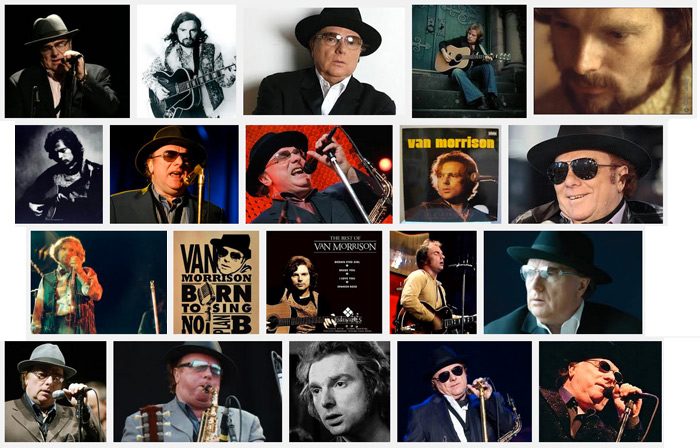
VanMorrison_collage

Note: No one will mistake Van Morrison as a “prog” rocker, but everyone acknowledges he is one of the most important popular musicians of the past fifty years. He has long been one of my five or six favorite musicians, ever since I first heard his music back in the summer of 1991. I wrote the following article in 2002 for Saint Austin Review, and since it has never been available online, I’ve decided to foist it onto Progarchy readers. I’ve made a couple of minor corrections, but otherwise it is unchanged and so it is, of course, somewhat dated. — Carl E. Olson

Ask most people (at least here in America) if they’ve heard of Van Morrison, and they will likely mention “Brown Eyed Girl,” the late 60s hit with a catchy chorus of sha-la-la-la-la-la-la’s. Although it’s a fine pop song, there is, fortunately, far more to Van Morrison than “Brown Eye Girl.” Since 1968 and the release of his classic album Astral Weeks, Morrison has created an impressive body of popular music that defies categorization. Using elements of folk, rock, jazz, soul, R&B, traditional Irish music, and even country music, the Belfast Cowboy molds songs that are earthly, emotional, spiritual, and, at times, transcendent.

Legendary for his difficult personality and his dislike for the press, Morrison has often sent confusing signals about his religious affections. Yet his finest work can rightly be called incarnational. This is not to say it is strictly “Christian,” but that it is rooted in reality (uncommon in much pop and rock music) and seeks to incarnate spiritual truth and meaning in concrete forms, themes, images, and narratives. Morrison is not interested in proselytizing, creating propaganda, or lecturing, flaws common in “contemporary Christian music” (mostly evangelical Protestant) and in the music of rock artists attempting serious statements about ecology, politics, and social ills. Such ends irritate Morrison, who seems to appreciate the power and limits of popular music.  Once asked about fans looking to musicians for political guidance, he responded with irritation, “Why do people expect us to solve the world’s problems? It’s absurd. I mean, if politicians can’t do it, how . . . . can musicians?”

Although he has produced some mediocre albums and has occasionally alienated his fans and the press, Morrison has maintained a remarkably consistent artistic vision. His music is worth considering, I believe, for several reasons. As music, apart from message and lyrical themes, most of it is very good. Morrison’s mastery of styles and his ability to mesh seemingly divergent musical forms is impressive. The best of these stylistic marriages have a timeless quality, conveying a spiritual longing that is honest, vulnerable, and often moving. This mixture of earthy, cerebral, and spiritual is uniquely its own, providing Catholic musicians who work in popular music much to consider and appreciate.

The Childlike Vision

Born in Belfast in 1945, Morrison had an ordinary boyhood, with the notable exception of his father’s passion for American jazz, R&B, and early rock and roll. He spent hours listening to the records of legendary artists such as Jelly Roll Morton, Little Richard, and various blues singers. By the age of fifteen he was playing full-time in a skiffle band, eventually putting together the group Them in the early 60s. After releasing the hits “Here Comes the Night” and “Gloria,” Morrison went solo and eventually landed in New York City. Although “Brown Eyed Girl” was soon a hit, Morrison was miserable. Feeling trapped in his recording contract and misunderstood by everyone around him, he still managed to record Astral Weeks in two days – this despite not knowing the session musicians and (according to those musicians) not communicating with them.

Although it produced no hits and didn’t sell well, Astral Weeks soon became legendary within musical circles. The twenty-two year old Morrison had created a song cycle that was timeless, poignant, and spiritual, combining folk, rock, and jazz in open-ended compositions. Multi-layered and elusive, the lyrics describe people and places in Belfast, impressionistic sketches imbued with a mystical longing free of nostalgia and sentimentality. The songs are loosely structured around Morrison’s emotive vocals, the singer wrapping his voice around keenly detailed lyrics. In “Beside You”, he describes the approaching evening with minimalist precision, “Just before the Sunday six-bells chime, six-bells chime/And all the dogs are barkin’.” He then follows a mysterious woman as she moves down the roads and “way across the country”:

Past the brazen footsteps of the silence easy
You breathe in you breathe out you breathe in you breathe out . .  .
And you’re high on your high-flyin’ cloud
Wrapped up in your magic shroud as ecstasy surrounds you

“Sweet Thing,” a more obvious love song, is also filled with images of walking the countryside, seeking and experiencing a timeless wonder: Continue reading “The Incarnational Art of Van Morrison”

TFATD (A Quick Altar-Call)

TFATDThere are a lot of things I’m not good at.  One of them, in fact, is thinking of things that I AM good at.  I’ve been accused of being some combination of Eeyore, Puddleglum, and Charlie Brown.  More to the point I’m headed for here, I’m not very good at consistency, or at finishing things that I start.  Oh, don’t worry (if you care); I’m NOT finished with either Spock’s Beard or Looking at the Lamb.  And I guess I do have a SORT of good excuse because it’s the end of the semester, when academics are in even more danger of alcohol abuse than usual.

Anyway, I DID finish something that I started this week, and finished it the same day I started it.  It was definitely, as the stereotypical smoker reclining on the pillow puts it with a smirk, very good for me!

The Divine Ascension of The Fierce and the DeadWhat I both started and finished in the same day was listening to all I could access from The Fierce and the Dead.

Now granted, this is not of the same scope in listener-hours as my discovery a few years ago that I was liking everything I heard by Lou Reed, even the stuff Reed fans would say you shouldn’t like.  Or, some will understand how difficult it is to respond to queries regarding what Zappa one should sample first.  It’s nothing like that.  Still, it’s the first time I’ve done that with an artist for a while.  I mean, done it so voraciously.

I’ve complained here before about the “drinking from the fire hose” phenomenon.  (Was it Erik who brought that up?  Ian?  I forget.)  Lately, when it comes to the music to which I don’t seem to have time to pay attention, I’m tempted by the image of going for a drink at a huge waterfall with a disposable bathroom cup.

On VHS - The Fierce and The DeadBut here, in the rich and deep sense, is something.  It started with some ear-opening forays into Matt Stevens” breathtaking solo work, and now I’ve found the most wonderful dram of single-malt (neat).    I’ve not been so suddenly and deeply struck by the textures, the moods, the goosebump-inducing wonder of a band’s recordings since King Crimson.  I’ve confessed my newfound faith to my “current stuff guru” Birzer, who has bid me write.  Hence, I write, though with much more rough effusion than thoughtful creativity (for the moment).

If I’m slowly beginning to build my own small pantheon of current “prog-related” (sorry, I just can’t leave off the scare-quotes) artists, I’m ready to affirm the divinity of TFATD.  I gladly join those who look longingly toward autumn, and the promised Bad Elephant release.

.