Fierce And The Dead sign to Bad Elephant Music for 2nd Album

[I was very happy to wake up on this Sunday morning to find this press release and this note from one of our friend, Matt Stevens, and his outstanding and innovative band, The Fierce and the Dead–Brad, ed.]

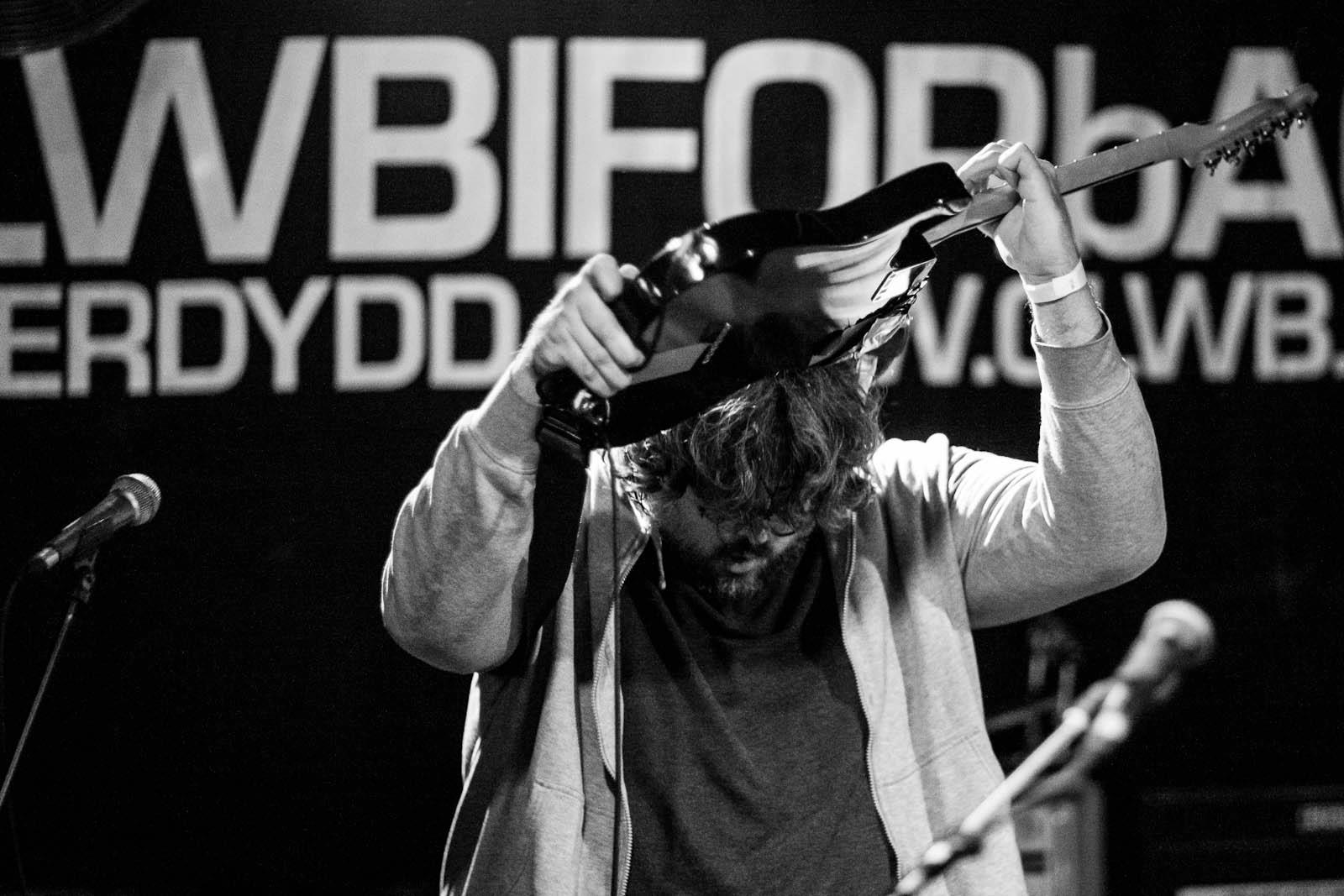
Photo © TheChaosEngineers.  For information:  info@thechaosengineers.com
Photo © TheChaosEngineers. For information: info@thechaosengineers.com

B.E.M. is delighted to announce partnering with The Fierce And The Dead for the production, release and worldwide distribution of the band’s second full-length album.

The Fierce And The Dead – guitarists Matt Stevens and Steve Cleaton, bassist and producer Kev Feazey and drummer Stuart Marshall – was originally born out of sonic experimentation when making Matt’s second solo album, Ghost, and they’ve developed into one of the most original bands in the UK rock scene. Their unique brand of instrumental rock music, fusing rock, post-rock, punk and progressive elements, has made a big impression though one full-length album and two EPs, and their incendiary live performances, most recently as part of the Stabbing a Dead Horse tour of the UK with Knifeworld and Trojan Horse.

David Elliott, founder and CEO of Bad Elephant Music said: “We’re proper made up to be working with The Fierce And The Dead. They’re absolutely our kind of band, and lovely guys too. I’m looking forward to hearing what Matt, Kev, Stuart and Steve are going to produce for us, and of course it will be an absolute monster. Collaborating with a band of TFATD’s calibre is a huge honour for us, and we welcome them with open arms to the BEM family.”Foghat Matt

Matt Stevens, on behalf of The Fierce And The Dead, said: “We are extremely pleased to partner with Bad Elephant on this album, they are true music lovers and believe in supporting the artist. This will allow us to make the music we want to make and have the support to help us gain a wider audience, without in anyway compromising our vision for our new album. And they like a good curry, which is nice.”

The as yet untitled album is scheduled for release in the Autumn of 2013.

Bryan Ferry and The Jazz Age

Any of Progarchy’s Roxy Music or Bryan Ferry followers are probably already well aware that one of Britain’s greatest vocalists of the rock era has released an instrumental album.  A hot jazz album at that.  Ferry’s project was to recast a handful of his classics — for in addition to his distinctive voice the man is a fine songwriter — as Dixieland standards.  The improbable outcome of this ambition is that it works, and then some.  I think this is due to the soundness of the songs, Ferry’s deep feel for melody, and the rich layering that Roxy and his solo bands brought to the originals.  There are a lot of horizons these songs could veer off towards, and to hear “Avalon” and “Virginia Plain” receive a Hot Five treatment could make you think they were written for that type of performance.  “Love is the Drug” becomes a haunting Cab Calloway standard, and it’s possible to hear Ferry’s early influences — there is no way he could not have loved Calloway’s “Minnie the Moocher.”

Ferry brought to these interpretations the desire to emulate not only the arrangements of old jazz records but also their sound.  The band he put together recorded with one vintage microphone in the middle of the room — although he concedes each musician was also miked separately (which more easily accomplished the “stepping up to the microphone” of soloists of the jazz age) — with the entirety mixed and released in mono.  I supposed one could see affectation here, and there are plenty of Ferry followers who would rather the man write new songs or partner with Eno or whatever….  But Bryan Ferry has made a career and art out of affectation, and that he does it so well on The Jazz Age is a real testament, I think, to his talent as a songwriter and his skill as a performer.  I should emphasize, too, that this is not Rod Stewart reinterpreting the standards in front of a full orchestra, or “Pickin’ on Roxy Music,” but rather in its eery mono-ness conjures the craziness of Raymond Scott, the wooziness of the American swamp.  There is edge here.

Last month Bob Boilen interviewed Bryan Ferry on NPR’s All Songs Considered, and while I’ve been a fan of Ferry since Roxy’s Avalon came out, I found his thoughts on his new record illuminating of his career as a whole.  Check it out here.

The Modern Condition: Cosmograf’s “The Man Left In Space”

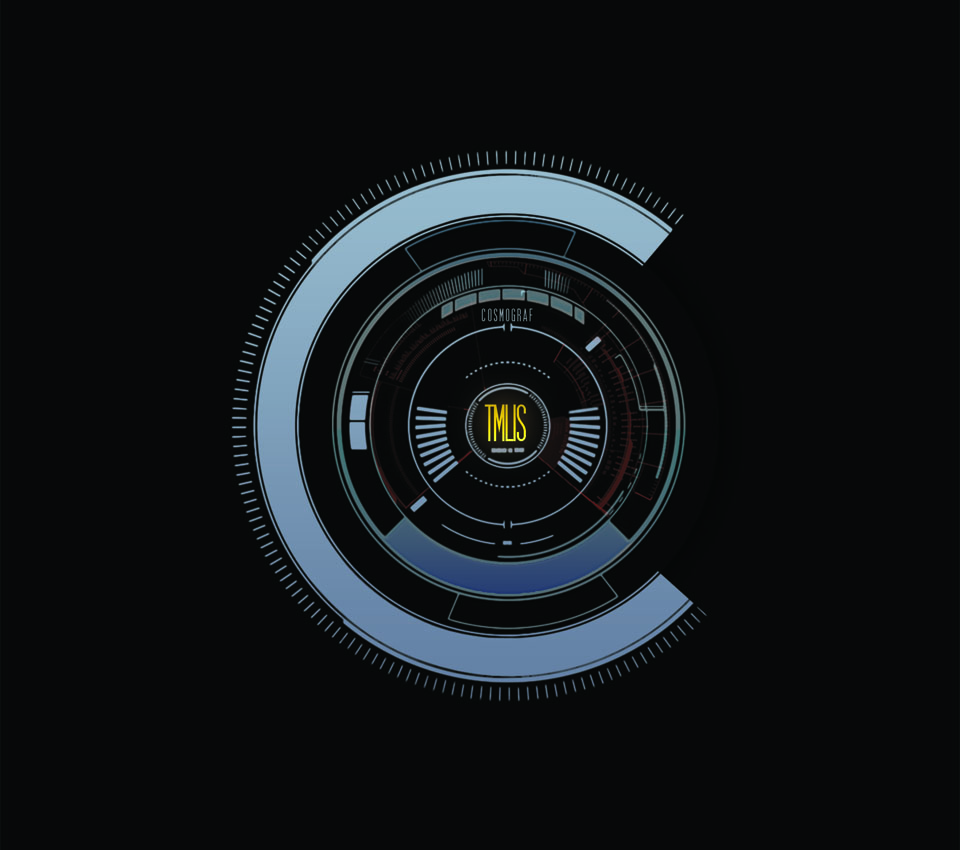
cdcover-tmlisFrom its cover image reminiscent of the all-seeing camera eye of 2001: A Space Odyssey‘s HAL computer, to the final track “When the Air Runs Out”, Cosmograf’s  new album, The Man Left in Space, is a profound meditation on the tragedy of modern man’s surrender to ambition and technology, and the ensuing isolation that results.  

Beginning with a bewildered astronaut, Sam, asking, “How did I get here?”, the listener is transported to the near-future, where Sam is questioning his motives for agreeing to a mission to “change the human race”. Can over-achievement bring satisfaction and happiness?

Ambition brought me here.

A winner in my field.

Dare to be a dreamer.

Find your fate is sealed.

Hidden truths revealed.

Through memory flashbacks, snippets of dialog with the ship’s android, and sampled audio of actual NASA space missions, we share Sam’s growing sense of melancholic disconnection with reality.

I take these pills. They help me numb the pain.

They stop me from feeling blue.

I feel the days getting longer now.

I’d like to dream, but I’ve forgotten how.

He’s even reduced to crooning a love song to his “beautiful treadmill” that will “keep my soul in grace”. Throughout, the ship’s android is monitoring Sam and vainly attempting to create a normal environment.  Earth’s Mission Control tries to contact him, but they cannot get through. Sam realizes that without human contact, he will eventually slide into madness. No simulation, no matter how realistic, can replace the touch of another person.

Eventually, the “man left in space” is forced to face his own mortality:

10 minutes more and the air will run out.

This craft will fall into the sun.

My chance of returning is none. None. None.

As the last chords of the final song fade away, the ship’s android repeatedly asks, “Please respond, Sam?”

Robin Armstrong, who is Cosmograf, has constructed a beautiful, allegorical warning for those of us who would replace face-to-face communication with all the technological means at our fingertips: emailing, texting, Tweeting, “liking” on Facebook, etc. Right on cue, Google is coming out with “Google Glass“, which will add even more distractions to our interactions with others. We must resist the temptation to withdraw into self-imposed isolation and foster real relationships, regardless of the risks.

The Man Left In Space would not be the success it is without having superb music to complement its message. Every track is extraordinary, and the album really must be listened to in its entirety. Highlights include “Aspire, Achieve”, which begins with a delicate acoustic guitar melody and vocal harmonies that shift into crunching metal worthy of Ayreon’s best work. “Beautiful Treadmill” has an indelible hook that will have you singing along in no time. The instrumental, “The Vacuum That I Fly Through”, featuring the marvelous Matt Stevens on guitar and Big Big Train’s Nick D’Virgilio and Greg Spawton on drums and bass respectively, rivals anything Pink Floyd ever committed to tape. Trust me, it’s that good.

Finally, some praise for the artwork. In this age of digital downloads, it’s worth it to get the physical CD. The booklet that comes with the album is essential to fully appreciating the  album. The illustrations remind me of the incredibly realistic sci-fi artwork Shusei Nagaoka did for Electric Light Orchestra’s Out of the Blue album from the late ’70s. The attention to detail is amazing: every page features readouts of various gauges, creating the feeling that you are involved in monitoring Sam throughout his doomed journey. The ship’s android is named ESA-1410-4MY, which pops up in several places and adds to the sense of technological surveillance and control of Sam.

Even though we have yet to finish the first quarter of 2013, Cosmograf’s The Man Left In Space is certain to be in many Top Ten Albums of the Year lists.

Enjoy “The Vacuum That I Fly Through”:

Update: A brief, but illuminating interview with Robin Armstrong.

How To Review An Album

Sid Smith has some interesting things to say about his approach to reviewing albums on his blog, Postcards From The Yellow Room.

Definitely worth a read if you have a few minutes to spare.

Peter Banks (1947-2013), An Appreciation by Linda Dachtyl

The following is contributed by the Columbus Ohio area organist, drummer, educator, and recording artist Linda Dachtyl.  Thanks from the bloggers at Progarchy for her willingness to share it here!  (Pete)

====================

I was saddened to learn of Peter Banks’ passing when I read fellow eSkip bandmate Larry Smith’s Facebook entry this morning.  While I can’t say I have everything Peter ever recorded, I was always inspired and impressed with his playing, his contributions to the first two Yes LP’s, later with Flash, and the various solo works I had heard over the years.

peter-banks-yes-600-031213I am most familiar with his work with Yes as far as any “drop the needle” test is concerned. I became a fan of Yes and progressive music in general from hearing some radio hits and then being introduced to various other progressive bands by my grade school friend and fellow prog rock enthusiast, Pete Blum, who invited me to share some thoughts on Peter Banks.

Fragile was my first introduction to Yes, and to pieces developed beyond the single, or in the case of “Roundabout”, the “single edit”.  The purchase of The Yes Album soon followed, and then came the waiting for the release of Close to the Edge. I immersed myself in these three LP’s and couldn’t wait to hear more.

I recall seeing a couple of earlier Yes albums, which I was not familiar with at all, in various record stores. On a lark, I bought both and thus learned of the fine guitar work of Peter Banks, the original guitarist of Yes and originator of the group name.

One of Peter’s greatest strengths was his skilled improvisation, deeply influenced by jazz in his choice of timbre and linear playing. This was first evident to me on the creatively reworked cover of The Byrds “I See You” from the first Yes LP. Banks and Bill Bruford’s sensitive interplay put me in mind of a Wes Montgomery/Elvin Jones meeting, and opened my ears to free jazz improvisation.

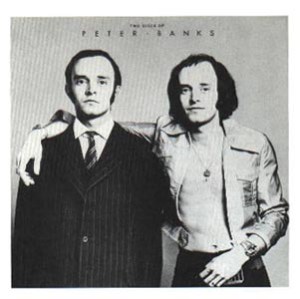
Two_Sides_Of_Peter_Banks_Cover

He added many tasteful guitar leads, accompaniments, and vocal harmonies to the first two Yes LPs. I can’t think of any more easily recognizable use of the minor 6th chord than in the opening of “Astral Traveller” from the Time and a Word LP.   There a single chord becomes the hook of the song, much like the opening chord to The Beatles “A Hard Day’s Night”.  I also always enjoyed his tasteful use of volume swells throughout both albums, and particularly on “Survival”.

The tremendously innovative cover of “Every Little Thing” shows genius. While these were group efforts in terms of finished product, I cannot imagine these tunes without Banks’ original innovative contributions.

Over the years, it’s been nice to see video of his earliest documented work with Yes live, especially on the selections from Time and Word without the orchestral layering.  While enjoyable to listen to on the studio recording, the layering was not necessary to complete any of the arrangements or compositions.

My collection of Banks’ works beyond his time with Yes is a bit spotty, but I enjoy Flash’s “Lifetime” in particular, again looking to the innovative musical arrangement. Peter’s acoustic work on “The White House Vale” is a favorite of mine from Two Sides of Peter Banks.

While I am not a guitarist myself, it was easy to appreciate the tasteful approach Peter had to his music, and he will be missed.

 ====================

Linda_Dachtyl-188x300Chicken Coup recording artist, Hammond B3 organist and drummer Linda Dachtyl is a member of the faculty of Kenyon College, teaching jazz piano and percussion.  She is a graduate of the Conservatory of Music at Capital University (B.M. in Jazz Performance) and The Ohio State University (M.A in Percussion Pedagogy).

Currently she leads a traditional soul/jazz B3 quartet along with her husband, drummer Cary Dachtyl.  She is a member of the eclectic rock group eSkip, drummer for the psychedelic power trio, The Walt James Band, and has appeared on festival dates as a Hammond B3 organist with saxophonist “Blue” Lou Marini, the late B3 organists Trudy Pitts and Gloria Coleman, and on studio recordings and festival appearances with blues singer Teeny Tucker.

(Author photo by LeeAnne Dauwalder-Heath.)

.

Big Big Train and the birds

I’ve been in love with a band called Big Big Train since late 2011. It was very many years since I got so moved by music as I have been by the music of BBT. Many great posts have been published here at Progarchy about the music and lyrics from the pens of David Longdon and Greg Spawton. So now it’s my pleasure to here in my blog premiere make a little detour to the world of birds… Why, you may think, is that? Well for starters I couldn’t add much new to what’s already been said about the themes in the music and lyrics and then I’m a birdlover and have been so delighted by the use of birds in the lyrics and even in songtitles (Brambling). It’s apparent that the songwriters are quite familiar with some of the common birds in Britain (they’re also common in Sweden. I mean the fantastic Hedgehoppers’ Chorus line where blackbird, redwing, song thrush and yellowhammer are mentioned is something that I can connect to as well. Those are birds that are typical for the Swedish countryside too. And they are all birds that signal springtime by letting us enjoy their melodic songlines from March onwards until Midsummer or something.

The thing that distinguishes Big Big Train from many other bands and artists is that they not only use the general expression “birds” in the lyrics but actual names of real species. You also find the partridge in the lyrics on Uncle Jack and Hedgerow. This precise way of describing what kinds of birds that inhabit their lyrical landscapes is something that put Big Big Train in the same league as literary giants such as our very own (Swedish giant) August Strindberg who was a keen naturalist and knew much about birds and plants. In his novels you always find the names of actual species as well, not only the general terms “birds” and “flowers” for instance. This way of namedropping species adds much to the feel of a very alive lyrical landscape within the musical landscape that is Big Big Trains. And for me who know what all those different birds look like, when they can be expected to come back from their winter quarters, when they start singing and also what they sound like when they do it, the picture widens and gets deeper colours so to speak.

So is birds in music a novelty then? Of course not. We all remember the second movement of Beethoven’s Pastoral Symphony (No. 6) where several birds lend their voices to the great master’s musical creativeness. There we can hear the nightingale, the quail and also the cuckoo.  Within the bird theme Big Big Train also connect in a very fine way with Vaughan Williams. How is that? Well, Mr Williams wrote that absolutely wonderful piece of music called The Lark Ascending which makes us think about the eighties masterpiece Skylarking by the wonderful band XTC whose guitarist Dave Gregory nowadays as we all know resides in…Big Big Train. Skylarking is by the way such a fantastic album title. For me the word skylarking doesn’t actually mean what it’s supposed to mean (playing boisterously or to sport or something like that) but to lie flat on the back in the sun on a green meadow watching the skylark hanging there on its invisible string singing its heart out about spring, love and joy underneath the deep-blue dome….but that’s a meaning I’ve made up all by myself. But the music of Big Big Train’s always makes me want to go skylarking – in my meaning of the word.

Words for a Time We’ll Wake on a Perfect Day

As I’ve listened to NdV-era Spock’s Beard, I’ve been reflecting on words, meaning, their problematic relationship, and how music swirls around that relationship, clarifying but never really clarifying.  Some things begin to come together as I listen again to the opening of the eponymous album (2006).  “Perfect Day” in the song title reminds me of Lou Reed, which in turn reminds me of a viscerality in rock music without which…  I guess I’d say: without which not.  That’s all.

And that viscerality is here, as much as on its predecessors.  Sure, I can hear the proggishness, but damn, it’s wonderful rock music.  Alan’s guitar leads on this album as much as Nick’s vocal, with a confidence that breathes.  I can feel the respiration, like I might notice the breathing of a companion, reminding me forcibly in a needed moment of the companionship even though nothing is said

SpocksBeardSelfTitledBut as I’ve been noticing, there are things that are said.  The words, I’m hearing here, are for another time.  YES!  Of course they are for another time.  A more “perfect” day, whatever that might mean.  Their meaning is deferred, but is not any less meaning for that.  It’s as though I do have the meaning, even though I don’t really have it, and may never have it.  Still, I have it.

And now I can read back the viscerality more clearly, read it back into the respiration that was Feel Euphoria and Octane.  Yes, I have to admit it, though I hate to…  There’s a profundity and an ecstatic cohesion to those two prior efforts that has retreated a bit here.  I lean in the direction of disappointment, but I’m surprised by how slight is that leaning.  Why?  Because, damn, this is wonderful rock music!  One of the things I remember about my seventies-self is the expectation I developed that there should be something sustained over the course of a whole album.  It became such a strong expectation that even the albums coming closest to perfection in this regard (many of which were NOT “concept” albums) were not without a pinch of that disappointment, a little of that leaning.

If there is something that the eponymous album does for me at a deep level, it is reinforce the viscerality, the album-long sustenance, of which these guys seem so consistently capable.  It makes the previous two discs shine even brighter across the current landscape of my listening.

“So, you’re saying it’s not quite as good as the last two, then?”

You could take that to be what I’m saying, I guess, and you wouldn’t really be wrong.  But I have to say it again…

Damn, this is wonderful rock music!

(Special mentions:  That exquisite transition, all piano, from the fading dischord at the end of “Wherever You Stand” into “Hereafter.”  And the very much up-to-snuff suite, where the textural high points of the album seem especially to lurk, beginning with the irresistible “Dreaming in the Age of Answers.”)

And this brings me to a scary place in the journey with SB.  One more studio effort with NdV (whom I’ve already shyly followed onto his next Train).  What will I think of that?  Yes, there’s the latest release too, and I WILL do SB the service soon of getting all the way to that place.  My resolve is still strong to remain something of a heretic, and wait a while yet before I go back to a serious sojourn with the earlier recordings with Neal.  I will get there, but I will risk irritating the true believers by refusing to hurry.

With Spock’s Beard, I very much recommend avoidance of hurry.

Rock Docs, Volume One – It Was Twenty Years Ago Today

In May of 1987 I had just finished my sophomore year at Texas Christian University, was one year away from getting my first computer, and had a fairly serious obsession with rock and roll, mostly of the classic variety and with a heavy dose of the Texas blues-rock revival thrown in.  I had maybe two dozen CDs at this point, my riches were all vinyl, and I read Rolling Stone and Spin voraciously.  No VH1 Behind the Music or Classic Albums Series, no 33 ⅓ books, Lester Bangs was dead, cultural interpretation of rock was in its infancy, and while MTV was redefining the visualization of music, there weren’t many filmed histories of rock’s great bands — I think maybe this was because the idea of a “rockumentary” as historical narrative didn’t occur to a lot of the era’s musicians, simply because they were still actively working.  There had been great rock documentaries, but they generally captured a moment in time, a tour or concert:  Martin Scorsese’s The Last Waltz, Albert and David Maysles’ Gimme Shelter, D.A. Pennebaker’s Monterey Pop and Don’t Look Back, Michael Wadleigh’s Woodstock.  Rather than tell a story of an artist or era, these films became a part of their respective subjects’ legends, and only occasionally, as with the movie Jimi Hendrix, released three years after Hendrix’s death, was there an attempt to provide historical perspective or commentary from contemporaries.

Derek Taylor in 1970, from Wikipedia

Into my 1987 world dropped the British documentary It Was Twenty Years Ago Today, which, as you might expect, looked at the Beatles album Sgt. Pepper’s Lonely Hearts Club Band, echoing in its title the first line of the first song on the album.  But, rather than profile just that record, or just the Beatles, the movie used Sgt. Pepper’s to explore the larger cultural shifts happening across the world in 1967.  By combining new interviews with vintage footage, and maintaining an appreciative but balanced perspective, It Was Twenty Years Ago Today manages in its 105 minutes to be both entertaining and speak with some authority on rock’s coming of age.  Produced by Derek Taylor, the Beatles’ press officer up until his death in 1997, the film is both an “inside job” and broadly illuminating, portraying 1967 through the lens of one of that year’s, and rock’s, greatest recordings.  Taylor also published an accompanying book. [It’s interesting that when the documentary came out none of the Beatles albums were yet on CD — Sgt. Peppers still had to be dealt with in its original linearity.]

Needless to say, the local public broadcasting station (KERA — also the first PBS station in America to broadcast Monty Python’s Flying Circus!) played this film through the summer of 1987, and on one occasion I managed to tape it.  The VHS cassette bounced around the country with me for another twenty years before I transferred it to a DVD, and now I bring it to Progarchy.  It exists in bits and pieces on YouTube, but it’s hard to upload there because of YouTube’s copyright protections — it “hears” the Beatles songs embedded in the video, god knows how — and returns a polite but firm notification that Apple Corp won’t allow the post.  Fair enough (I guess), but meanwhile the piece languishes in the dustbins, unavailable on any format commercially.  So with that said I’m posting it here, and if anyone objects I’ll take it down.

https://docs.google.com/file/d/0B0MgFPeY1q4HekFULUY5ZVh4MWM/edit?usp=sharing

Give Lobate Scarp some time and space—and volume!

January was incredibly busy. And February was incredibly surreal. When you edit a magazine titled Catholic World Report and the pope resigns while you are fighting the nastiest flu known to mankind, it is really surreal. And a new pope will soon be elected. Whew!lobatescarp_cover

But I’m putting all of that on hold for a few moments so I can write what is apparently my monthly—or is it bi-monthly?—post. I have grand plans to post much more often, but for now it is a monthly splurge. I intended (and promised, I’m ashamed to admit) to review the recently released Lobate Scarp album, “Time and Space”, several weeks ago. Russell Clarke has already penned a Progarchy.com review, but I wanted to also share a few thoughts about the album, in part because Russell and I have different takes on a few things about the album and because I have, at the moment, nothing to add to the many reviews of the excellent new Big Big Train album.

Upon first listening to “Time and Space”, my initial impression was quite positive. I’m happy to say that having now listened to it another 10 or 12 times, that impression remains and deepens.

Three things stand out. First, the production is exceptional. This album sounds fabulous: the sound is clear, warm, rich, and with a lot of depth and “room”, if that’s the right term. This album is worth getting just to listen to with headphones, volume up, in order to enjoy the variety of tones, the tasteful cello passages, the top-notch rhythm section, the robust harmonies, and lots of nifty details.

Now, beginning a review with praise for production values is usually the kiss of death, with a big, fat, “But…” to follow. But, no—there is no “but” to follow as, secondly, the music is also exceptional. Russell mentioned Spock’s Beard as a point of comparison, and I would add Neal Morse and Transatlantic. Considering that Adam Sears, the band’s leader, is the main lyricist, singer, and keyboardist, it seems apt that the group might draw some comparisons to Morse. The band’s site states, “From progressive rock influences like Genesis, Yes, and Phish, to the rock sensibilities of bands like Kansas, Muse, Faith No More and Styx, and a pop infusion of catchy vocals like Simple Minds, The Killers, The Police, Queen, and Foreigner; Lobate Scarp’s unique Progressive Space-Opera Rock music will surely take you on a musical journey you won’t forget.” That’s an interesting mix of musical influences and comparisons, and I can best hear Kansas, Styx, and Queen in the mix, as well as some Pink Floyd, especially in some of the guitar work by Hoyt Binder. The “space-opera” connection is, however, mostly lost on me; in fact, it is a bit confusing, because to my ears there isn’t much in the album—at least musically (more on they lyrics later)—that warrants such a description. Then again, I’m not exactly sure what a space opera is in a musical context, although the album that comes to mind for whatever reason is ELO’s “Time”, a personal favorite. While we at Progarchy.com rightly disdain most labels, or at least treat them as necessary evils, I would hazard that “Time and Space” is much more of a cross-over prog, or neo-prog, album, if only because the songs—while fairly complex and played with obvious skill—have an immediate accessibility. In fact, one of the real joys of this album is the presence of very good melodies, all of which stick with you and don’t become tired or stale after a few spins.

Third, and closely related to the first two, is the playing. The band’s promo material highlights the abundant contributions made to the album:

Over 50 musicians were involved in this progressive space-opera rock extravaganza. Guitars, Drums, Synths, Organs, Trumpets, Saxophone, Viola, Violin, Cello, Theremin, Glockenspiel, and a Latin singing choir were all recorded on this one. Peru Percussionist Alex Acuña (Weather Report) appears as a special guest percussionist and Rich Mouser (Spock’s Beard, Transatlantic, Tears For Fears) mixed and mastered the album.

One might understandably think the resulting album would be overly busy, with endless layers of keyboards, guitars, strings, and whatever else. Surprisingly—and happily—this is not the case, at least not until the climax of the final cut, “The Mirror”, which features a full-blown choir (and to good effect, I think). As mentioned, this album has a lot of room; it breathes well, and part of that is the restraint shown by Sears and Company, who are clearly aware that there is a time and place for a wall of sound approach (at the Big, Choral-Driven End!) and a time for a less-is-more approach. The majority of the album features a very tight four-piece rock group that uses proggy time changes and proggy solos, but without being overtly, relentlessly proggy. This approach, I suspect, might annoy the more purist prog fans, but I think the band demonstrates they know what they want to do, and they do it very well. Besides, the mastery of various styles—notably jazz, classic rock, and some Latin based motifs—is obvious and adds a lot of flavor to the proceedings.

For instance, “Save My Soul” begins with a prog-icized classic rock riff that eventually works into a muscular bass line before Sears enters with a steadily gaining vocal line that finally releases into a big, power-chorded chorus. Then, at about the 3:20 mark, the song breaks down into a funky, fusion-ish segue with vintage keyboards that brings to mind late ‘60s albums (“Bitches Brew”, etc.) by Miles Davis, before eventually works back into a ripping rock song with horns and organ joining the chaotic fray at the end.

And while all of the playing, again, is exceptional, I must single out Sears for his fine vocals (clean and pure in many places; rocking and more raw in others), Binder for his tasteful guitar playing (the sequence in the middle of “Beginning of Us” stands out), and Andy Catt for some dynamic, propulsive bass playing.

Finally, the lyrics. Contra Russell, I heard (and read) the lyrics as working on a couple of different levels: one inter-relational and the other spiritual, or metaphysical. This was confirmed by Sears, who shared the following in an e-mail regarding the song, “The Contradiction”:

I’m sure one may look at it and think that it is about a struggle in a relationship. While this can be true, the deeper meaning of “Contradiction” is about the connection of the spiritual world and the physical world. It is spoken from the point of view of the soul which exists in the spiritual/metaphysical world and this soul is talking to its physical world inhabiter, who is struggling with the contradictions of existing in both worlds. For instance, if there is indeed a spiritual or meta-physical world, this computer I’m typing only exists in the physical world and doesn’t exist at all in the meta-physical world. So it exists, yet doesn’t exist at the same time. If you respect and accept the contradiction your physical self and your soul will be brought together in a strong bond, but if you think too much about the contradiction or try picking it apart, it can drive you mad. “The Contradiction will bring us together or tear us apart.”

I’m not sure I’m on board with the metaphysics outlined here (they sound neo-gnostic, but that’s for another discussion), but the seriousness of the searching is hard to overlook (also readily evident in “Save My Soul”); this is not an ordinary love song. And I suppose the lyrics are what are most obviously “space opera” about the album. Regardless of the descriptive used, I think “Time and Space” is a very good album by a young and talented band that rewards repeated listens—especially loud and with headphones!


Listen to the Upcoming David Bowie Album (for free!)

You can stream it free for a limited time at iTunes. I think his last two, Heathen and Reality, are two of his best albums. See what you think of this one.

Here is the track listing:

01. The Next Day 3:51
02. Dirty Boys 2:58
03. The Stars (Are Out Tonight) 3:56
04. Love Is Lost 3:57
05. Where Are We Now? 4:08
06. Valentine’s Day 3:01
07. If You Can See Me 3:16
08. I’d Rather Be High 3:53
09. Boss Of Me 4:09
10. Dancing Out In Space 3:24
11. How Does The Grass Grow 4:33
12. (You Will) Set The World On Fire 3:30
13. You Feel So Lonely You Could Die 4:41
14. Heat 4:25

(Hat tip to wired.com)