COMM, The Tangent

Image

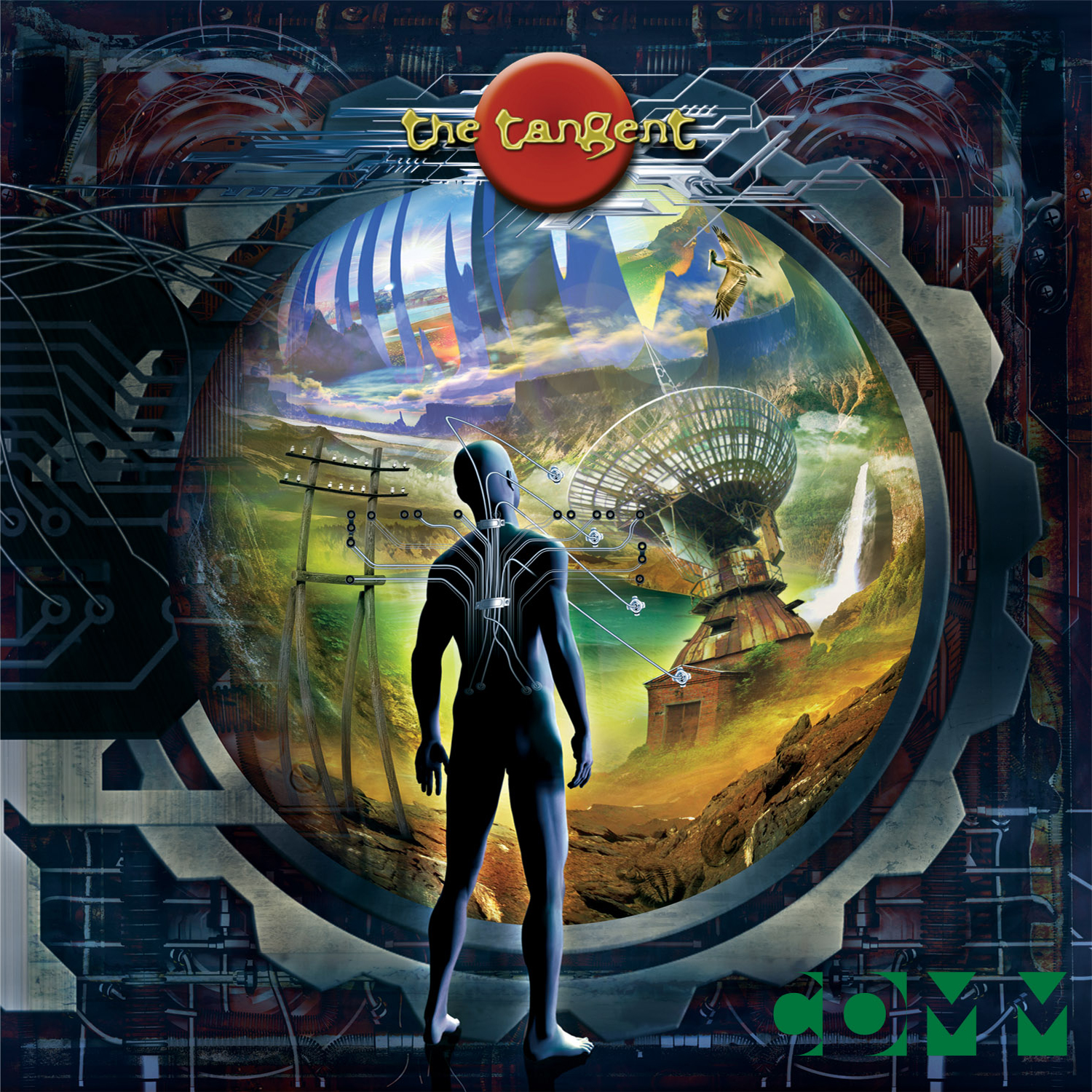
The impact of technology on society seems to be a recurring theme in progressive rock releases of recent times.  Already in this young year, King Bathmat has released ‘The Truth Button’, reviewed by Ian below, which deals with some of the darker aspects of our technological world.  In 2012, Arjen Anthony Luccassen released ‘Lost In The New Real, reviewed earlier by Brad, which follows a protagonist awakened in a distant future as he navigates the reality of a world he does not recognize – while also inviting us to imagine what our world would look like to someone from the past.  And preceding those two, is The Tangent’s COMM from 2011, which explores aspects related to the communications enabled by our digital world. 


COMM opens with sounds that now seems ancient – the squawking of two modems making a connection over a phone line, perhaps for someone’s dialup internet connection or perhaps somebody preparing to send a fax.  This provides the opening for the 20-minute epic ‘The Wiki Man’, which explores both our dependence on the internet and some of the various ways we use it.  Full of witty and biting observations, the piece also includes some incredible keyboards, including a nice, jazzy piano interlude that starts at about the 7:00 minute mark. 


The next two tracks, ‘The Mind’s Eye’ and ‘Shoot Them Down’ are not part of the concept proper, according to this interview with Andy Tillison.  ‘The Minds Eye’ refers to how we see and think of ourselves, and I find this piece more interesting lyrically than musically.  With respect to ‘Shoot Them Down’, it’s the opposite, as it relates to internal British political matters with which I am not familiar, but it does have some excellent guitar work.


‘Tech Support Guy’ returns us to the theme of the album, chronicling a very bad day for the tech support guy Adam.  Adam, it seems, is to be blamed for everything that goes wrong with his company’s network, never mind the fact that he didn’t build the servers, or write the software while the source of the problem is an ocean away.  The lyrics illustrate one of the darker effects of all of the instantaneous communications technology that surrounds us today, mainly the virtual loss of even minimal patience when something goes wrong (as it most certainly will sooner or later) and the impulse to blame someone for the problem with out thinking things through.  ‘Tech Support Guy’ will leave you sympathetic for the thankless tasks performed by all of Adam’s real life counterparts – and might also leave you hoping that the marketing manager’s boss walks into his office during the early moments of the system outage (you’ll understand the reference after you read the lyrics).


It’s in ‘Titanic Calls Carpathia’ that the concept of this album is really driven home.  Clocking in at a bit over sixteen minutes, ‘Titanic Calls Carpathia’ is divided into six sections.  The first two sections deal with two of history’s most famous distress calls, the first being referenced by the title of the piece, the second being Jim Lovell’s call to Houston during the ill-fated Apollo 13.  These two sections lyrically set the theme for ‘Titanic Calls Carpathia’, which can be interpreted as a distress call to our modern culture and society, many members of which who become obsessed with their gadgets and gizmos without realizing or stopping to think that what that obsession is doing to them. 


And now we can all talk across oceans

If we get things sussed we don’t even have to pay!

We get “FREE iTunes songs” when we return an empty bottle

But there’s so much around

That we throw the damn thing away


                        …


Beyond the rusting pylons, beyond the looted homes

People scrabble around for batteries to get more talk time for their phones

We want so much without paying, we forget someone has to make

The things we want for ourselves so we just eat each other’s cake


I’ll leave it to the reader to interpret the meaning of those lyrics for themselves, and indeed they could have different meanings to different people.  Needless to say, that in ‘COMM’, Tillison chooses to look at the dark side of technological advance on everyday lives, focusing on our trivial uses thereof, our loss of perspective resulting from its use, and in general, and how much we have let it spoil us. 


I’m not a technophobe, far from it – I’m very pro-technology.  But the message here is nevertheless something worth pondering.  Technology is a tool, and as such is neither good nor bad.  The various uses and abuses of technology is what makes it one or the other.  It’s great that we can all communicate with one another through avenues such as this blog, Facebook, email, and so on.  And it is certainly incredible that we have access to so much information almost instantaneously.  At the same time, it’s not so good when the use of technology becomes the preoccupation of one’s life to the exclusion of almost everything else.  I guess the real message here is one that applies to much more than just the realms of technology – everything in moderation.

Dolby’s Flat Earth. Half Perfect.

A few days ago, I had the honor of remembering–in some admittedly rather nostalgic ways–the spring of 1982 and my first encounters with Thomas Dolby. Two years later, Dolby released his second album, The Flat Earth. I have no doubt that I was the first person in my hometown of Hutchinson, Kansas, to buy the album. Certainly, I bought it the day it came out; one of the anticipated magical Tuesdays when the new albums appeared on the shelves. Well, I suppose that maybe there was a secret Thomas Dolby fan club in my Kansas town, meeting randomly in the wheat fields under waning moons, but I suspect not.

I’m fairly certain I was the most die hard Thomas Dolby fan west of Kansas City and east of Denver.

I remember devouring The Flat Earth, wanting to understand and deconstruct every element of it, and cherishing the entire encounter. “Only a fool would blame the death of rock n roll. . . .”

I was fifteen, possessed a good vinyl collection, a solid stereo system, and some top-notch Sennheiser headphones. At that time–the kind of time and leisure that only a modern teenager of western civilization enjoys, before video games kidnapped our young–I would finish my school work, turn out all of the lights, start an album, and listen intently with the headphones.

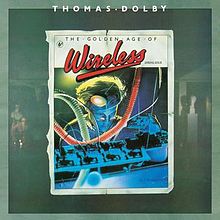
This Thomas Dolby sounded nothing–and I mean nothing–like the Thomas Dolby of The Golden Age of Wireless. At least to my young ears. Where Golden Age was electronic, Flat Earth was organic. Where Golden Age was clever, Flat Earth was wise. Where Golden Age was curt, Flat Earth meandered. Where Golden Age told one Bradbury-esque story after another, Flat Earth offered images, doubts, and questions. Indeed, if Golden Age was more Ray Bradbury, Flat Earth was more Philip K. Dick.

Side one especially grabbed me. The images floated through my head, caught between the poles of the left and right phones. Stereo and yet more so. Anti-communists smuggling out information from within the Soviet Union as typewriters become sampled and drummed and sampled some more; a man limited by his own securities, his imaginative longings wanting to find liberation; a wistful love for some film noir Hollywood starlet.

Side two never held up quite as well as side one in my mind. The strings and wind chimes beg the listener to wonder and enter into a dark Southern California urbanscape for about 24 glorious seconds, but the bass and drums come in way too forced, shattering the mythic aura Dolby so expertly created on side one. It’s never fully absent on the first song, but “White City” goes quickly from being a thing of beauty to a pounding repetition. “Mulu the Rain Forest” manages to recapture some of the magic, as does the brilliant remake of “I Scare Myself.”

“Hyperactive,” while certainly clever, comes across as a song that should’ve have been made a b-side, breaking any coherent possibilities for The Flat Earth. The mad scientist of “She Blinded Me with Science” returns, and novelty, rather than beauty, defines the album as a whole.

Side one, though, even nearly 30 years later, holds up perfectly. It is sheer musical genius.

Through it all, Dolby’s utterly earnest (if not always beautiful) voice and Matt Seligman’s bass hold everything together.

While I’m probably being more harsh than I should about side two, I would highly recommend picking up a copy of the album. Side two only seems less than perfectly interesting precisely because side one is so perfect.

I would also forego buying the 2009 expanded edition, as the additional songs really do nothing except further demonstrate Dolby’s novelty side. There’s too much “Purple People Eater” in this music.

Cosmograf–only 3 days before release

Make sure you head over to http://www.cosmograf.com to order Robin’s latest album.  It will be released in three days.  So, make sure to order now.  Lots of our progarchy favorites–including Greg Spawton, Nick D’Virgilio, and Matt Stevens–contribute to the album.  Also, the web is buzzing about what a great album it is–Robin’s best.  So, order away!

Poltergeist

I wonder if any fellow Progarchists have been taking an interest in the Poltergeist project over at PledgeMusic?

This involves Will Sergeant and Les Pattinson, the original guitarist and bassist, respectively, of Echo & The Bunnymen. They’ve ‘gone prog’ (or prog/post-rock, from what I’ve heard) and are recording an album called Your Mind Is A Box (Let Us Fill It With Wonder).

Will has just posted some interesting reflections on his prog/punk roots – although you’ll need to pledge to read them, I’m afraid!

Album art for

Wintergatan – Sommarfågel

I don’t know anything about this band, except they’re from Sweden. I’ve got to admire anyone who wields an accordion with the panache this guy does, and they sure know how to put together an infectious tune. They have a new album coming out soon.


The Madness of Glass Hammer

The horror!  The horror!

Ok, it’s not yet the Feast of St. Valentine, so I won’t go into complete terror.

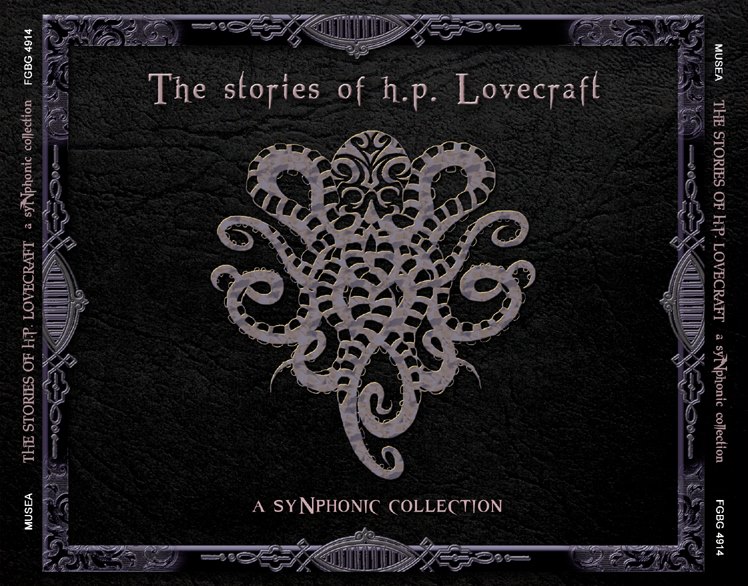
If you have a moment and if you (in the U.S. at least) possess $.99, there’s little better you can do with that money than purchase Glass Hammer’s latest single, “Cool Air.”stories synphonic

It’s their only contribution to a project exploring–through prog–the stories of H.P. Lovecraft.  It’s cleverly subtitled “A Synphonic Collection.”  Here’s the link at amazon.com:

http://www.amazon.com/Cool-Air/dp/B00ASHC30A/ref=sr_1_1?ie=UTF8&qid=1359585412&sr=8-1&keywords=glass+hammer+cool+air

Considering the typical Glass Hammer themes of nobility, whimsy (Steve and Fred can be hilarious), and struggle, the lyrics to “Cool Air” are a bit shocking.  I can’t quite piece the whole story together, but I think it’s about a man who tries to use science (and some kind of gnostic magic) to preserve and extend his life.  He, of course, fails, and the story of the song seems to take place 18 years after his death.

The horror, indeed.

The song has everything: brilliant Glass Hammer music; narration; and creepy lyrics.

I doubt if I’ll listen to the song over and over again, as I do with other Glass Hammer songs and albums, but only because I don’t think I want all of the lyrics running around my head or soul.  Still, it is pretty great, if unusual.

New Thieves’ Kitchen out today

thieves-kitchen-one-for-sorrow-two-for-joy-jan-2013The latest album from Thieves’ Kitchen is now available from a variety of sources.  Long live Anglo-Saxon-Celtic-Scandinavian prog!

http://thieveskitchen.wordpress.com/2013/01/29/14s24j-now-available/

Sha Na Na and the Invention of the Fifties

For my American colleagues..an old blog mailed to me by a friend, this may interest those who like music, myth and the invention of history.

http://www.college.columbia.edu/cct/sep_oct08/features1

The Amazing Wilf’s Great Big Wonderful Day

david elliott amazing wilfOne of our favorite English proggers, David Elliott, aka The Amazing Wilf, is enjoying a birthday today.  He has not attained that really all-important half century mark, but he’s getting really, really close.

If you’re interested in checking out David’s views on prog (and you should!), please go to his renowned radio  show/podcast, The European Perspective.

http://www.thedividingline.com/podcasts/european-perspective/

Happy Birthday, David–from all of us at Progarchy.

Thomas Dolby’s Golden Age

In the late spring of 1982, as I completed 8th grade, I met one of those kids who is always at the height of cool.  But, it was a calm, somewhat cynical, real cool, not the show-off cool of the wealthy socialite kids.  It was the Bohemian cool of the Beatnik not contrived cool of the Hippie or the Yuppie.

Ritchie.

ThomasDolbyTheGoldenAgeOfWirelessOnly a few of us belonged to his circle.

Except for moments of ecstatic outbursts about an idea here or there, he radiated coolness.  He read the Great Books and knew lots of poetry, he worked out in his room (he had the whole upstairs of a late 19th century house to himself) and studied Japanese martial arts, he knew everything about men such as Bill Buckley and Jack Kerouac, he owned the best stereo system of anyone our age, and he possessed an amazing record collection.  He was the youngest of a large family, and his parents were much older, pretty much leaving Ritchie to raise himself.

It was Ritchie who introduced so many of us–in a medium-sized town in the wheat belt of the Great Plains–to English New Wave.  Growing up a progger–addicted from an early age to Yes, Genesis, and Kansas–New Wave was a bit eye opening for me.  It seemed to hold much of the complexity of prog, but it did so with computers and keyboards, often one or two musicians, where prog might have included eight or nine.  Ritchie introduced me to ABC, Kate Bush, The Smiths, Oingo Boingo, Tears For Fears, and, most importantly for me, Thomas Dolby.

Not only was I a prog guy, but I was also very much a sci-fi and computer guy.  All of this appealed to me. Continue reading “Thomas Dolby’s Golden Age” →