Not Yet Knowing The Words

“Drinking from the firehose.”  I know whereof eheter writes.  I probably hesitate a lot more than some of my colleagues here so to drink, remembering those early years fondly and too exclusively.  Sometimes when I stoop for a sample from that ongoing gusher, I’m less than enthused.  I’d mostly rather keep writing of auld lang syne.  But sometimes it’s a new, startling kind of refreshment.

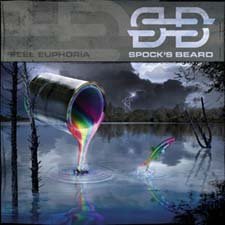
Lately it’s Spock’s Beard.  I missed them long because I was wandering rather far from any prog congregation.  What I’ve sampled over the last couple of weeks is the après Neal Morse SB, dominated (though that’s not quite the word) by Nick D’Virgilio. (Should I be ashamed to say that he’s like a new aural fixation, an object of would-be bromance for my ears?)  While hardly a “review,” what follows is prompted by first listens to Feel Euphoria (2003), Octane (2005) and Spock’s Beard (2006).  Peace!  Peace, friends who are more at home directly in front of the hose’s flow!  I’ll probably get to what you will urge upon me for comparison, but slowly I expect.
SpocksBeardFeelEuphoria

There’s a place where my listening or my mind (or whatever it should be called) sometimes goes.  It’s like an interface, or maybe an interstice, but no huge gulf to be bridged; more a tiny fissure across which some kind of synapse recklessly leaps.  It’s where a sonic upsurge, apparently threatening figuratively to deafen, meets/adjoins/enters an enigmatic lyrical field or opening.  I expect the meaning to be there, in the opening.  I expect it to present itself to me on bended knee, to wash into my cognition as if it had been at home there already for time without beginning.  But it stands aloof.  It regards me suspiciously, as if waiting to see if I am actually worthy of what it has to tell me.  The cleavage (a cut but also a holding contiguous and tight) between the song and its lyric rarely hits me this way, but when it sometimes does, I am a bit undone.

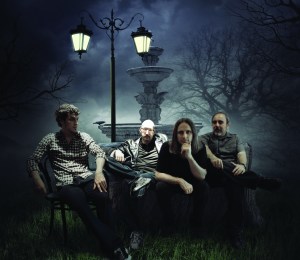
I can glimpse that fugitive sens lurking in the clearing just behind the sumptuous sound of this band.  Band?  Travelers?  Wanderers?  Of course, not all who wander are lost (Tolkein), and this band seems anything but lost.  But I must reach for this meaning that is not yet close enough for me to have under my hand for an actual touch.  The beauty of the music (by musicians acquainted with Muses) has me longing to draw closer to it.  Not to GRASP it as if it could be “held” by the likes of me, but to become a novitiate in its order.

So much more pretentiously verbose, perhaps, than “THESE GUYS ROCK!”

Hey, but they do.

Leave me now if you will, for a while, in this clearing with this beauty.  The words therein elude me for the present, and I must have another go to see what they bring.  I might say more, if the more turns out to be anything that can be put into words.

Or, perhaps you could join me in the clearing if you can, if it opens for you too.
The Lyrics of “Perilous”

GHgroupcolor_000If any of you are looking for profundity in rock, look no further than the new Glass Hammer album, PERILOUS. I finally had the chance to read through the entire story and lyrics last night. What a moment. Indeed, I really doubt that I’ll ever forget that reading.

From the opening line, I fully entered into the story, an immersion that only T.S. Eliot and Big Big Train (Greg Spawton!) have offered me before.

Steve Babb has explained that the lyrics are an allegory, meant to be discovered by each listener.  I must admit, I’m still not sure I’ve figured out the allegory despite having this CD in rotation almost constantly since it arrived in late October.  But, the imagery of the lyrics–or, more properly, the “Imagism”–is more than a bit boggling to the mind.

The best way to describe the obvious meaning of the text is of a man (whether alive or dead; or perhaps on a journey through the purgatory in a Dantesque or Bradburyesque fashion) is of a man crossing through a grave yard, meeting many souls (redeemed, damned, and otherwise) and being offered distractions and temptations the entire way.

Babb is somewhat famous in the prog community for being a master storyteller as well as for being a satirist.  But, these lyrics are even something special for the already brilliant Babb.  This is the kind of album that reminds me progressive rock is not just “rock plus” but true art.


Even if you’re not a prog fan, you will almost certainly find the lyrics stunning.  I’ll offer a full review of the album very soon, but I had to post this now–such is my state of euphoria regarding this album.


Drinking From the Firehose – Some Quick Reviews

drink_from_the_firehose

Like many of you, I “suffer” from the common “problem” that afflicts those of us who are prog fans in this, the Second Golden Age of Prog – mainly, that there is just so much good prog out there that nobody could possibly listen to it all.  In short, it’s like trying to drink from a firehouse.

Happily, this “problem” has been exacerbated for me since joining this site, as I have had the good fortune to be able to borrow a number of albums I had yet to hear.  As such, I’m going to write a few quick reviews (which are more like first impressions).  Please pardon the lack of detail, but do remember these reviews are worth every penny you paid me to write them ;).

The Flower Kings, Banks of Eden:  This is my second foray into Flower Kings territory, the first being ‘Space Revolver’ some time ago.  I thought the latter album was quite good, and ‘Banks of Eden’ only reinforced my good impression of these guys.  Even if there were no other good songs on the album, the hippy-dippy-trippy epic ‘Numbers’ that opens the show makes the price of admission worth it.  Luckily, there are other good songs, and thus I would definitely give this album a thumbs up.

Continue reading “Drinking From the Firehose – Some Quick Reviews”

Our Progarchist Week

GlassHammerPerilous2012borders_001Just in case you missed any of this, we had yet another brilliant week at Progarchy.  Dr. Nick and Alison Henderson reviewed the new Steve Hackett album, Genesis Revisited II (Insideout).  Tad Wert posted about guitarist Michael Hedges.  Chris Morrissey reviewed (briefly) one of his favorite albums of the year, the debut album from Flying Colors, and he posted about the excellence of Mike Portnoy.  I had the great privilege of interviewing Blake McQueen of Coralspin.  Ian Greatorex (doesn’t everyone want an ubercool last name such as Greatorex?) looked at the past of Beardfish.  Roger O’Donnell remembered his time recording Disintegration with The Cure.  Jazz legend, Dave Brubeck, passed away, the day before turning 92.  Carl Olson offered a nice review of his career.  Finally, our Englishman, turned-Kiwi, Russell Clarke, explained why Big Big Train allows him to remember, fondly, his homeland.

Forthcoming, more reviews of Steve Hackett (at least one more, maybe two) as well as a review of the forthcoming King Bathmat.  Several (if not all!) Progarchists will also be explaining our “best of 2012.”  Lots and lots to come before 2012 is done.

On a personal note, I’ve spent much of my free time this week, going back through the myriad interviews with the various members of American prog demi-gods, Glass Hammer.  There’s plenty of quotable material from these guys.  My favorite, though, comes from a 2002 interview with one of my oldest friends, Amy Sturgis.  In response to one of her questions, Steve Babb stated: “We were attempting to repackage progressive rock (which we though had long since vanished) as fantasy rock.”

Continue reading “Our Progarchist Week”

Dave Brubeck on Race

Our own Progarchist, Craig Breaden, came across this fascinating interview with jazz legend, Dave Brubeck, about race.  The interview itself reveals mightily the power of art and integrity to overcome human indignities.

http://www.pbs.org/brubeck/talking/daveOnRacial.htm

An Englishman Abroad

First, thanks to Brad for inviting me along. I hope that I don’t disappoint, at least not consistently. I’ll indulge myself with a short piece to start off, as I’d hate to wear out my welcome too soon.

This post is all about me. Sort of.

An Englishman by birth, I was born and raised South of London. I flew the nest at the tender age of eighteen and spent eight long years at university in the West Midlands and the Shire of Bedford.

During that time I learned a few lessons about myself, crowded towns and how we don’t generally get on. So I settled as far away from civilisation as possible, in a small village called Chedworth, in the South-West of England. There I spent many a happy year, enjoying the simple life in a four hundred year old stone cottage, indulging my loves of folk music and real ale, visiting the local pub most evenings, enjoying the stories of amazing people I’d never meet in the big city, and soaking up the history and nature that was all around me. I later moved further West, to a different stone cottage in a different Cotswold town, but the things I sought were much the same.

Continue reading “An Englishman Abroad”

Mike Portnoy is the Best

So far, I have revealed that Mike Portnoy is on two items of my “Best of 2012” album list.

You know, I agree with what Mike frequently says: there is no “best”; only “favorite”.

I agree that this is a great way to keep the peace when people are being obnoxious and unreasonable.

And it’s also a fine way to habitually cultivate humility on a personal level.

So okay, Mike, you got it. You’re one of my favorite drummers, and you are on many of my favorite albums this year!

But surely something only becomes a favorite because we consider it the best.

And the real reason we share “best of” lists, is not because we claim omniscience, but because we want to share what we know and love, so that others will do the same for us.

If they do, we can thereby learn from them, and thus grow in our love…

We don’t want to merely win musical arguments. We want to learn from the musical experiences of others, and to expand our own experiences, and to enlarge the way we think about music.

But still, when it comes to aesthetic argument, Roger Scruton gets it right:

Perhaps the most persistent error in aesthetics is that contained in the Latin tag that de gustibus non est disputandum— that there is no disputing tastes. On the contrary, tastes are the things that are most vigorously disputed, precisely because this is the one area of human life where dispute is the whole point of it. As Kant argued, in matters of aesthetic judgement we are “suitors for agreement” with our fellows; we are inviting others to endorse our preferences and also exposing those preferences to criticism. And when we debate the point we do not merely rest our judgement in a bare “I like it” or “It looks fine to me”; we search our moral horizons for the considerations that can be brought to judgement’s aid. Just consider the debates over modernism in architecture. When Le Corbusier proposed his solution to the problem of Paris, which was to demolish the city and replace it with a park of scattered glass towers and raised walkways, with the proletariat neatly stacked in their boxes and encouraged to take restorative walks from time to time on the trampled grass below, he was expressing a judgement of taste. But he was not just saying, “I like it that way.” He was telling us that that is how it ought to be: he was conveying a vision of human life and its fulfilment, and proposing the forms that gave the best and most lucid expression to that vision. And it is because the city council of Paris was rightly repelled by that vision, on grounds as much moral and spiritual as purely formal, that Le Corbusier’s aesthetic was rejected and Paris saved.

Check out this great issue (#14) of iDrum, with Mike Portnoy as the cover story: http://bit.ly/iDrum_Issue_14

Lots of interactive goodies in that one!

Stay tuned for more Mike Portnoy on my Best of 2012 list.

The catholicity of jazz (with an idiosyncratic list of jazz albums for people who don’t like jazz)

davebrubeck_progarchyThe following was originally written in May 2011 for the Insight Scoop blog. I’ve decided to share it here as a very modest homage to Dave Brubeck, who died this morning, one day shy of being 92 years young. It sounds like Brad has more about Brubeck on the way. Anyhow, here goes!

I just read a fun post, “The Catholic Roots of Jazz?”, by Joe Trabbic on the “End of the Modern World” blog, and wanted to blather about it for a bit. Joe writes:

Jelly Roll Morton was a key figure in the early development of jazz. Some people even regard him as the first real jazz musician, the man who brought together various musical forms into the new thing that we now know as jazz. Jelly Roll’s real name was Ferdinand Joseph LaMothe and he was raised Catholic, but the dissolute life that he began leading as a teenager, when he secretly took a job as a piano player in a New Orleans brothel, quickly made his Catholicism unrecognizable. But who knows the hearts of men save their Maker?

He goes on to mention early jazz giants Dominic “Nick” LaRocca and Louis Armstrong, and then remarks upon Dave Brubeck, one of the finest (and longest-performing) jazz pianists, saying, “Well, if jazz didn’t have anything Catholic about it, why did one of the greats of later jazz, Dave Brubeck, decide to enter the Church of Rome?”

He admits he is having fun with it, but the two questions are interesting: “Does jazz have Catholic roots?” and “Is jazz Catholic?” The first one, it seems to me, is bound up to a large degree with the history of jazz, which is a complicated matter. But it is pretty evident that jazz, to put it rather simplistically, has roots in both the European cIassical tradition and very American forms of music—ragtime, blues, early country, spirituals, gospel, dance music, etc.—harkening back not only to New Orleans, but Chicago, New York, Texas, and a variety of other places, especially throughout the southeastern United States. Elijah Wald’s How The Beatles Destroyed Rock ‘n’ Roll: An Alternative History of American Popular Music (Oxford University Press, 2009), offers a fascinating and slightly iconoclastic version of that history, especially in the first seven chapters. Jazz was, in the beginning, very much dance music, and was usually associated with a less than upstanding life-style. And that image was hardly helped in the 1940s and ’50s when many jazz musicians came under the spell of heroin and other drugs.

One of my heroes, G. K. Chesterton, had nothing good to say about the jazz of the 1920s and 1930s. I beg to differ with him, but I’m sure it was an unusual and even jarring thing for the Englishman to hear. It was a music filled with great energy, imbued with a beguiling combination of rawness (sometimes sexual in nature) and sophistication (often classical in origin), being both very rhythmic and melodic, with an ever-increasing harmonic complexity. I own dozens of books on jazz (and close to 11,000 songs classified as “jazz” on my iTunes), and they all agree that defining “jazz” is a very difficult matter. Barry Ulanov was one of the first great jazz critics (he was also a Catholic scholar—more on that in a moment), the author of A History of Jazz in America (Viking Press, 1954) and A Handbook of Jazz (Viking, 1960). He wrote, in the latter book, “The harder one listens to jazz, the more one hears European rather than African influences—the folk songs of England, Scotland, and Ireland, of France and Germany and even the Balkans, rather than the music of the jungle and the coast settlements from which the slave ships came.” Continue reading “The catholicity of jazz (with an idiosyncratic list of jazz albums for people who don’t like jazz)”

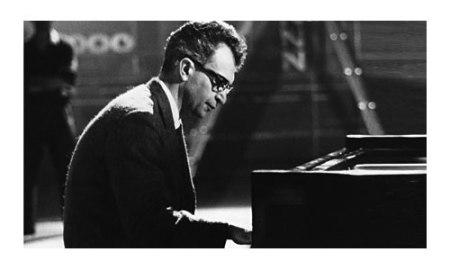
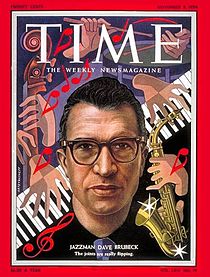
Dave Brubeck, RIP

ImageWell, I’ve been working on a piece on Dave Brubeck–focusing on Time Out and Time Further Out–for over a month now, and it’s still not ready.  Today, he passed away.  Amazingly, he would have been 92 tomorrow.  What a brilliant artist.  Rest in Peace, Mr. Brubeck.  How many minds did you boggle during your life?  Thank you.

Roger O’Donnell and the making of The Cure’s Disintegration

A huge thanks to my friend, Pablo Daniel Bujan Matas, for posting this on Facebook.

People often ask me what I remember about making Disintegration, it’s over twenty years since it was released in April 1989 and perhaps now is a good time to put my thoughts and memories into words. I know that this record is important to a lot of people for many reasons and in many ways it has had a big effect on my life.

The whole process of Disintegration started for me while on tour in 1987. I had joined The Cure on the basis that I would just tour in support of the Kiss Me album, I was hired as a musician for just the period of the tour and that was it. I really didn’t know very much about the band at that time and was on tour with the Psychedelic Furs, all I knew about the Cure was that one of my best friends was the drummer Boris Williams. When there was talk of adding a keyboard player he asked me if I was interested and initially I wasn’t until I heard KMKMKM and realised what an amazing band this was aside from all the weird hair and make up! After about a week of the tour in a hotel room sitting on the floor next to Robert he said to me “I want you to be a part of the group, I want you to play on the next record and be a member of The Cure.”

For the full recollection, go here: http://www.rogerodonnell.com/disintegration/