Groovy rumble of eight-string guitar, robotic barking, and this blunt calculated tempo variation – all Meshuggah signatures. Built on a musical skeleton forged from groove and death metal, obZen is akin to a cybernetic monster — mechanistic and precise. By constantly adopting math metal, jazz and progressive attributes, the band has always been pushing music into unimaginable territories. obZen is no exception.
Album is an excellent crossover from 90s to modern Meshuggah, basically more groove metal than djent. Needless to say, Jens Kidman’s vocals blend in as if it’s another discordant machine in this mechanistic orchestra. Odd rhythmic structures, Tomas Haake’s jazz like drumming, and down-tuned proggy leads – all simply inspire still reverence, not moshing.
Both for the artist and the listener, maximum creative bliss is at the margins. Meshuggah has been constantly placing themselves at those very structural margins of numerous demanding genres. Habitually creating novel classifications for what’s considered exceptional. obZen is yet another extraordinary dissonant chapter.
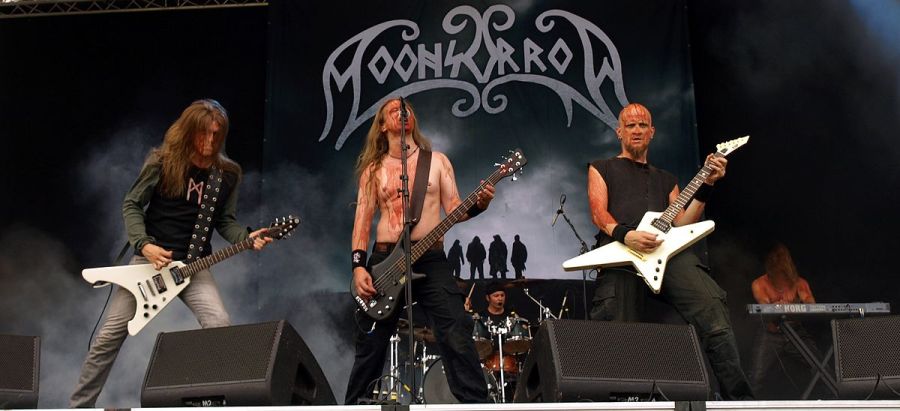
V: Hävitetty bridges folk metal with an intense dose of symphonic black sound. With songs clocking close to thirty minutes, it’s progressive. Moonsorrow elegantly layers their folk compositions with some rich symphonic keyboards. Songs do take the frequent detours down the rabid blast beat-tremolo picking passages, but consistently maintains that mythological theme. In short, listener should be ready to get teleported to the land of legends and poetry – of ancient Finnish folklores.
“Jaasta Syntynyt , Varjojen Virta” starts with the sound of scorching wood and progresses headlong into an absolute death like aggression — peaking right around the 7 minute mark. Sound of that crackling fire simply exemplifies the lull Scandinavian winter ambiance. Song leads to more folk instrumentation, but it’s always interleaved with some biting sound. Mid-paced riffs, screeching black metal vocals and that restrained sonic onslaught — all makes for a captivating thirty minutes.
“Tuleen Ajettu Maa” starts with two minutes of eerie chants and guitar strumming, but rather quickly explodes into riffs. Even here the pattern of composition remains the same – folk instrumentation building up to some aggressive passages — but finally receding back into mellow sophistication.
Scorching firewood, whistling northern winds and pagan chants — all tend to conjure up vivid mystical imagery — almost like we are reading high fantasy. Finnish lyrics, mandolin, accordion and mouth harp – all essential folk elements layered with an Emperor like symphonic artistry. A mandatory listen.
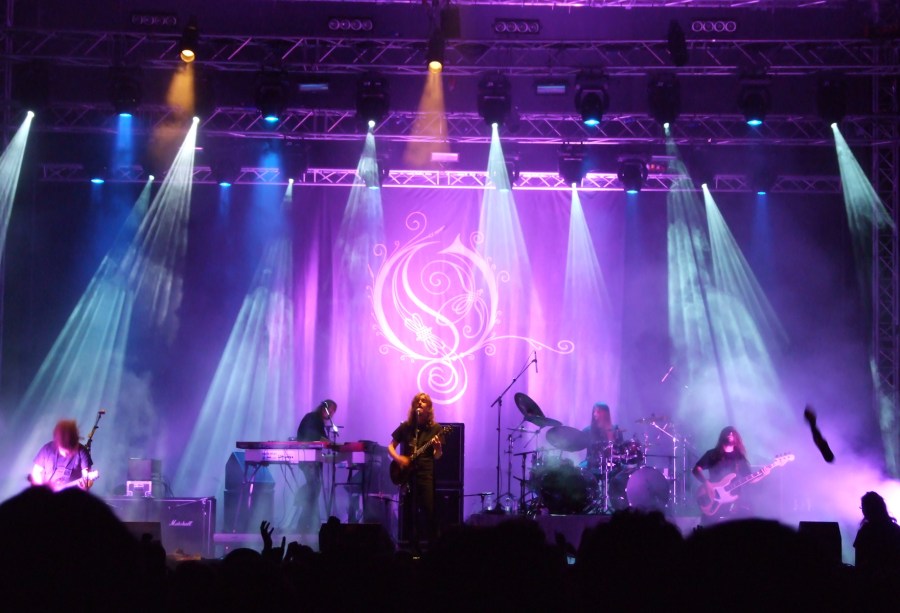
Opeth’s debut is a rare blend, it’s good old British metal melody, but decked with prog, folk, black and death metal textures. It’s the most accessible elements of metal combined with the least. Songs effortlessly transition from murky black metal to deathly blast beats, and then frequently into melodic folk passages — and they are also interestingly devoid of that punk dissonance integral to extreme metal. In short, it’s a unique cross-over. Guttural riffs, acoustic melody, and Akerfeldt growls with clean vocals – all stitched together into 10 minute epics.
Not surprising that Dan Swanö is the producer, Edge of Sanity is reflected all over the long and meandering eclectic passages. That infamous ‘Thomas Gabriel Fischer’ like curt grunts is also frequent and numerous. Opeth weaves that Celtic Frost like textures into the more accessible 70s and 80s metal progressions. Orchid is composed of those two divergent heavy metal strands, but spun seamlessly into one prog symphony. Examine long enough and we can discover Black Sabbath to Bathory to jazz elements – even for early 90s metal this is avant-garde. With drawn out extreme metal sound, but still illustrating that melodic classic metal roots, Opeth comfortably slingshots a casual metal listener — straight into the abyss of 90s Scandinavian scene.
“This is so hardcore”, responded one of my colleagues at work. At that time, ‘Left Hand Path’ CD was running in my Jeep stereo. So, along with the engine, ignition turned on some Swedish death metal. My usual reflex is to adeptly switch the channel, but he insisted on listening. Perception is really an evolutionary product; going headlong into the margins of a genre might just inspire bewilderment, not fascination. So, without that musical context, he was quite puzzled about the incoherent riffs and that defiant buzzsaw guitar sound.
Early death metal is a blend of punk like structures with melodic guitar. But, 90s Swedish scene exhibits significantly more punk influences. Someone evolving from hardcore punk to metal would certainly find Entombed and Dismember more familiar than Obituary. One of the main hurdles to grasping Entombed is also that punk like dissonance. It’s that same dissonance which separates Slayer from Metallica, and also Motörhead from Judas Priest.
Pitch and tempo progressions will sound chaotic; it often contradicts our mental conception of melody. These compositions will simply not progress in those familiar comforting directions. 80s crossover thrash also seems to be a part of this whole cross-pollination. They illustrate similar blast beat and riff patterns, but with significantly less speed and distortion. In fact, last month D.R.I played at SF, and it was difficult to ignore the striking similarity across these seemingly different genres.
Entombed’s first two records are absolute death metal classics. Especially ‘Left Hand Path’, an unrelenting train of melodic guitar hooks, heavy down tuned riffs, exploding drums and deep growls. Even the leads are down tuned and always layered with grinding riffs. But, in between endless growls and distant echoing screams — almost like an accident – we have a full total of two seconds of desperate clean vocals. Undoubtedly, lyrics are even more morbidly tailored, and intended to finish off anyone who manages to survive this buzzsaw assault.
Within this broad genre, Entombed is an icon. Once I had weathered 60 miles of rain storm and flu on a weekday night to see them live. A relatively small venue, crowd was sparse and probably not more than a few dozen. Set list dominated by songs from their first two records – it was an absolute head-banging feast. Swedish death metal legends, tiny venue, and tickets priced at an affordable $19 — perks of listening to sounds not many care about.
Whether it’s songs like “Cosmic Sea” or “Trapped In A Corner”, Death manages to capture a unique musical terrain. Deriving from primal thrash structures, they took that Celtic Frost like blueprint to a threatening, bleak, and a more refined direction. Instead of the more gruesome death metal attributes like blast beats, atonality and deeper growls — this album emphasizes coherent structural progression and melody.
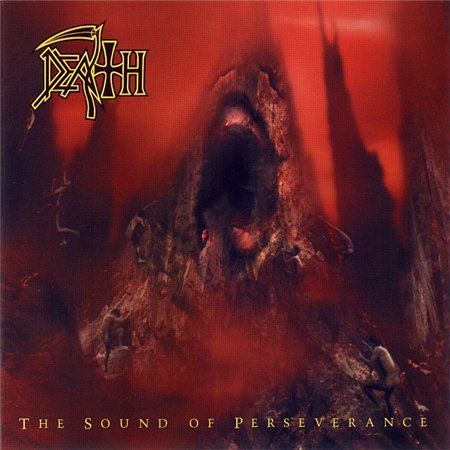
‘The Sound of Perseverance’ (1998) is a genuinely dazzling confluence of these early influences and more. It’s tailored to quickly envelop a progressive metal disciple or a death metal-head. The record straddles this complex ground between progressive musical sensibilities and sheer sonic savagery. At the margins of these two demanding genres, Death crafts an exquisite bridge from a Dream Theater to a Morbid Angel. This overall immersive experience can be elegantly summarized in Chuck Schuldiner’s own lyrics: “touch, taste, breathe, consumed”.
Widely varying transitions are graceful and numerous. Baffling how an At The Gates like guitar imprint runs into a razor steel Priestly guitars, finally exploding into an Obituary like mid-paced chugging. The good old signature riff-drum pattern of Death is also omnipresent. ‘The Sound of Perseverance’ acknowledges the progressive side to Death, and does that without deviations from their death metal roots. Essentially the same old harsh melodic guitar tones, screaming vocals and scathing leads interleaved with intricate passages — but now restructured into a progressive death symphony.
While firmly grounded in thrash roots, over the years, Death pursued a guided musical trajectory of progressive refinement. Emphasizing that crucial New Wave of British Heavy Metal artistry and sophistication – it’s essentially Iron Maiden’s melody reconciled with Hellhammer like brutal force. This constant duality in Death’s composition was always shifting in a progressive direction. So, for the longtime fans, ‘The Sound of Perseverance’ must have been a lot like the very last song from the record – “Open my eyes wide to see a moment of clarity”.
I know, I’m a bit late with this one, but I just wanted to write a review of this beauty, which was released in August this year. I also reviewed Bruce Soord’s solo album which was released earlier this year, but I think that Bruce is way better in his element in his band The Pineapple Thief.
This is a rock solid album, something you can always expect from this band. Not something that I would call 100% progressive rock, but the prog elements can be heard clearly. It also lingers to some post rock moments. I do have to say that this album sounds calmer than other works of The Pineapple Thief.
Gavin Harrison provides the drums on this album, and I have to admit that I didn’t “hear” it was him, which is actually a good sign! I start to appreciate his drum work more and more lately, because I was always afraid that he was that kind of drummer that has the need to fill up everything. Bruce is a good singer, but you have to like his voice.
The album starts with In Exile, which is one of my favourite tracks. The catchy drum rhythm and mellotron sounds make this song very interesting. Later on it gets heavier and more haunting. No Man’s Land starts with a lovely acoustic guitar and Bruce singing. Later on more instruments join and make the song more heavy. Another favourite on this album. Tear You Up is more up tempo and thicker, but it breathes the same atmosphere as the previous song. That Shore has lingering soundscapes and the calm vibe that carries through is beautiful. Take Your Shot is a real rock track that is very accessible and would do great as a single. Fend For Yourself is a more tranquil song that contains a wonderful clarinet solo by John Helliwell (Supertramp). The Final Thing On My Mind is the longest track on the album, and is a real epic. It slowly builds up while there’s a heavy haunting vibe hanging around like fog. Gavin gets enough space to show his talents on this track. Where We stood is an affable song to end the album with. The serene guitar sound also does the trick.
The complete album is a lovely package of songs that can be listened as a whole or just as freestanding tracks. This is something that is certainly enjoyable for a lot of people. Another recommendation from me!
PS: I adore the album cover!
***** Iris Hidding
In Exile (05:40)
2. No Man’s Land (04:20)
3. Tear You Up (4:53)
4. That Shore (04:36)
5. Take Your Shot (04:34)
6. Fend For Yourself (03:49)
7. The Final Thing On My Mind (09:52)
8. Where We Stood (03:46)
An album that was originally released back in 1994, and recorded in the year 1975. The music is made for the movie Le Berceau De Cristal, which was released in 1976. All music is recorded in Studio ROMA, except the title track Le Berceau De Cristal, which was recorded during a live concert at Palais du Festival in Cannes. The CD has a booklet where the complete story of the making of the album is written.
The album was made by two members of Ash Ra Tempel; Manuel Göttsching (who composed most of the music) and Lutz Ulbrich. Ash Ra Tempel can be categorized as pure German Krautrock. The music is instrumental, it’s vivacious but most of the time very lingering. It has its roots in psychedelic and experimental moments. Both Manuel and Lutz play several (acoustic and electric) guitars with effects, and Manuel also plays on a Farfisa Organ and EKO drum/rhythm computer.
This is not an album that you can listen to track by track, you have to see it as a whole. It’s exactly one hour long, which makes it quite a long, but interesting trip. First track Le Berceau De Cristal is also the longest one, and lasts almost fifteen minutes. A slow song that moderately builds up. Some moments sound haunting and spooky halfway through, while the outro is more placid. L’Hiver Doux is the second longest track, and is mostly one big but interesting solo moment of the organ. Later on more sounds start to occur, making it more spacey. Silence Sauvage is filled with a catchy rhythm and space like soundscapes that lingers through the track. Le Souire Volé is quite up tempo because of the firm and steady rhythm loop and organ. Deux Enfants Sous La Lune is just like the previous track quite up tempo and also has a steady rhythm loop, but with a guitar sound that prevails above it. Le Songe D’or is more serene compared to the previous songs and reminds me a bit of the first track. Le Diable Dans La Maison is the shortest track, and also the most inimitable. There are a lot of spacey sounds and things happening. Last song …Et Les Fantômes Rêvent Aussi carries a nice atmosphere. It’s a more calmer track and there isn’t too much happening. It gives you a certain mellow feeling.
This is something you would listen to on the background, and still it sucks you into the swirling psychedelic world. I haven’t seen the movie where this music is made for, but I think that the music has been very important for this movie. If you don’t like krautrock and psychedelic music with tedious moments, then this is something you probably avoid, but I do recommend to listen to this album at least once. It also feels very “time bound”, but I’m a big fan of a lot of (experimental and psychedelic) music that was made back in the seventies.
Yes, I know… Another review of an old Porcupine Tree album, but I just couldn’t resist! Released back in the year 1999, the album that came out three years later after my favourite album Signify.
A new studio album by the one and only John Wesley. His eighth it seems, while he also worked (and still works) with a lot of different artists/bands as guest or tour musician. Busy guy! I really like his previous studio album named Disconnect, so I was very curious about this one!
The album contains ten tracks and is almost one hour long. John Wesley plays the guitars and provides the lead vocals. The present bass sound is something I quite like, thanks to Sean Malone, and Mark Prator is responsible for the drums & percussion. There’s a special dark grunge undertone in most of the tracks, which I really like a lot, and it’s still “proggy” enough for the die-hard prog rock fan. The album carries the same vibe constantly, so if you don’t like that certain vibe you probably don’t like to listen to the album in its entirety. Luckily I adore that dark vibe. This is probably something a lot of Porcupine Tree friends will appreciate. I don’t say that it sounds like Porcupine Tree, but it somehow carries a special atmosphere that you can really appreciate as a PT fan. I think it’s because of some of the guitar riffs and sounds John uses.
It immediately starts in your face with By The Light Of A Sun. My favourite on the album! A Way You’ll NeverBecarries a bit of a Rush vibe. You think the song is over after four minutes, but it turns into a long instrumental outro, reminding me a bit of the music the bandAmplifier makes. To Outrun The Light is even heavier and darker than the previous two tracks, and I really enjoy the guitar solo. The Revolutionist is a more up tempo track, and carries that Porcupine Tree vibe I mentioned earlier. You would think that Nada is a song that is less heavy than the other ones, but the intro puts you on the wrong track. Another pearl on this album, with lovely heavy guitar sounds and solos, and amazing bass and drum solos too! This would be an amazing live track! The Silence In Coffee (love the title of this one) is a quieter song, but the raw voice of John carries a heavy load. The outro is beautiful and ambient like. Unsafe Space is an instrumental piece, and has that real grungy/bluesy feel. Sun.a.rose sucks you back into the vibe the album carries at the first tracks. Epic has some sort of Black Sabbath meets prog feel, and fades intoPointless Endeavors, which is the last, and also shortest track on the album.
Let me say that John Wesley is a very talented guy! I can understand that not everyone will like his voice, but it shouldn’t be something to avoid this album, so at least give it a try. I have to admit that the album loses a bit of power at the end, but this is something I would recommend to a lot of people to listen to. A must have!
You would say this would be a punk rock album by looking at the album sleeve, probably because of the steampunk-like British flag and the graffiti text on it. I never heard of this artist before, and I actually should be ashamed of it, because I found out this is music that I really enjoy […]




 Progarchy


