
Oh, yeah. As our friend, David Elliott, would say: “Bloody prog!”

Oh, yeah. As our friend, David Elliott, would say: “Bloody prog!”
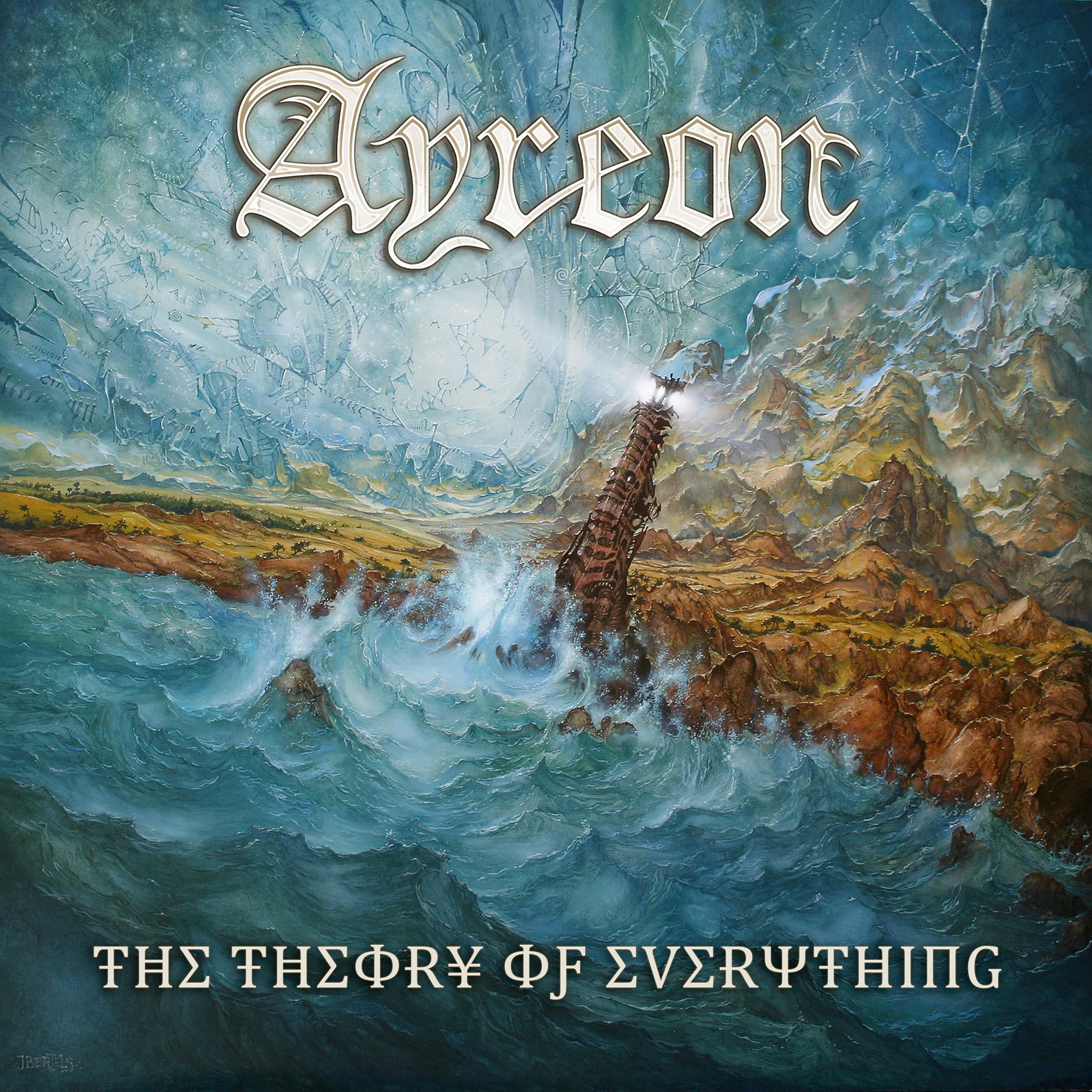
Arjen Lucassen has released some images of the forthcoming Ayreon album, The Theory of Everything. Enticing!

Sometimes you have to put aside the extended epics and experience the simple pleasure of a nicely crafted pop song. With that in mind, here’s a playlist of recently released pop-like songs that prog-lovers can enjoy without guilt:
1. Sound Of Contact: “Not Coming Down”. Coming from their extraordinary album, Dimensionaut, this catchy tune has all the right ingredients: wall-of-sound production, rich vocal harmonies, an eminently hummable chorus, and they even sneak in a Beatlesque bridge. Take a listen, if you don’t believe me:
2. Days Between Stations: “The Man Who Died Two Times”. I’ve written about the wonderful album this track appears on in a previous post, and it features a delightful cameo by XTC’s Colin Moulding. It has an irresistible beat married to an insistent synthesizer riff, with Moulding’s multitracked, wry vocals floating over the controlled chaos. Think classic Alan Parsons Project mashed with 10CC, and you get a glimmer of the genius of this song. Go ahead and spend a buck for the mp3 of it here. You won’t be disappointed.
3. Sanguine Hum: “The Weight of The World”. Okay, this one is almost 15 minutes long, which qualifies it as a genuine epic, but it is so effortlessly melodic and uplifting I have to include it. I’ve always thought Sanguine Hum’s secret influence was Jellyfish, and it’s hard to deny that here. If Jellyfish and “One Size Fits All”- era Mothers of Invention had a child, it would be this track. It lilts, it waltzes, it almost skitters out of control, but it never loses its pop appeal. The first 37 seconds of their promo for the album are taken from this near-perfect song:
4. Big Big Train: “Uncle Jack”. I defy anyone to listen to this song and not end up grinning ear to ear. A jaunty tempo provides a fertile bed for lush vocals that sing the joy of taking a walk outdoors. And when the counter-melody hits at 2:40, you’re transported to paradise. Listen below (but buy the whole album, English Electric Part One):
5. Arjen Lucassen: “E-Police”. It can’t be an accident that Lucassen’s “E-Police” recalls the glories of late-70s Cheap Trick (“Dream Police”?). A big helping of glam rock that will leave you hitting Repeat on your player.
6. Gazpacho: “Mary Celeste”. A Norwegian band does Celtic music, and creates a pop masterpiece. A delicate intro on mandolin and piano blossoms into a full-blown production that includes accordion, guitars, violin, and masterful vocals. It doesn’t hurt that the melody compels you to get up and move.
So there you have it – a playlist that you can use to seduce your friends who are woefully ignorant of prog into the beauty of that genre, or one that you can use yourself when the occasion calls for some sing-at-the-top-of-your-lungs music. Enjoy.
By Brad Birzer
 As you’ve probably noticed, we’ve been having a Big Big Train-love fest for the past several days at Progarchy. Even our criticisms (well, not mine; but I won’t point fingers) have been written out of love and respect.
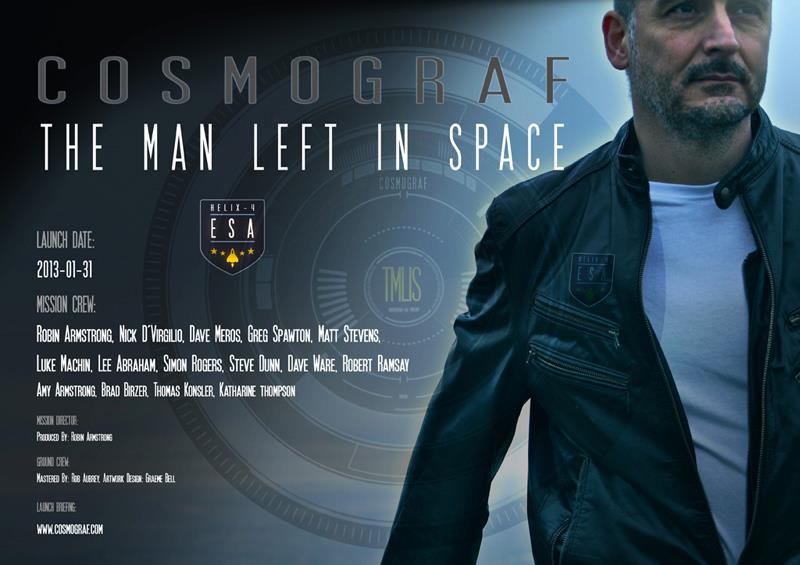
Another recent release that deserves a massive amount of attention is the fourth cd by Robin Armstrong, writing under the name, Cosmograf. Yes, it deserves a MASSIVE (Ok, I’m yelling at you, fair reader; it’s not personal, I promise!) amount of attention. Massive.
Following Cosmograf’s history, it comes across far more as a project than a band. I’m not sure Robin would put it this way, but this is how it strikes me. Each album has been a concept with a variety of guest musicians. For this current album, The Man Left in Space, Robin has chosen the best of the best: Greg Spawton (who wouldn’t love this guy), Nick d’Virgilio (giving Peart a run for his money since 1990!), Matt Stevens (a young guy already inducted in the Anglo-Saxon pantheon of guitar gods), and other brilliant folks such as Dave Meros (ye, of the Beard!), Luke Machin, and Steve Dunn. Robin knows how to get the absolute best, and he knows how to bring the best out of his guests. Then, add the additional production of the ultimate audiophile of our time, Rob Aubrey. Can it really get much better than this? Not really.
By profession, Robin is a master of all things time-related. He’s a watch dealer and a watch repairman. I find this so very appropriate. What better thing for a musician and composer to be than to be a master Chronometer (I have no idea if this is the proper term, but I like the sound of it). Chronometrician? Ok, I’m floundering here, but I assume you get the point. Precision, mystery, time, eternity, space, place, humanity. . . Robin Armstrong. Continue reading “Chronometry, Cosmograf, and Perfection: The Man Left in Space”
 I often joke with my students that I can still remember the days when listening to progressive rock and watching Dr. Who could get a kid beaten up. Yes, 1981. I remember it well. Seventh grade at Liberty Junior High in Hutchinson, Kansas. Yet, it’s now 2013, and I’m still listening to Rush and watching Dr. Who. Obviously, I survived the bullies
But, I can get even nerdier. Much nerdier. I was also a huge Dungeons and Dragons guy. Yes, 1981. I remember it well. Yet, it’s now 2013, and I’m still playing DnD. Now, with my kids.
My love of all things progressive (music; not politics!), science fiction, and fantasy have come together quite nicely in a number of direct ways: Rush, Roswell Six, Rush again, Ayreon, more Rush, Cosmograf, Glass Hammer, The Tangent, Rush, Kansas, Star One, Spock’s Beard, and even more Rush.
Surprisingly, though, only a few rock bands have really explored the Arthurian legends. Those artists that have–such as Rick Wakeman and Gary Hughes–have gone all out, making nothing less than elaborate rock operas. While Wakeman’s Arthur seems rather French, Hughes’s remains very Celtic.
The French legends, generally centering on the love affair of Lancelot and Gwenivere, usually reflect the medieval notions of courtship as inherited from the Moors. The Celtic legends are almost always more mystical, suggesting strong relations between the Celtic gods (a twilight) and the Christian God. Famously, one Celtic god, Bran the Blessed, even went so far as to sacrifice himself so that the Christian God could reign supreme. How often does this happen in pagan myth?
Continue reading “Ayreon: A Dutch Progger in King Arthur’s Court”
 Looking at some of the other ‘Best of 2012’ posts here, you have to wonder how some of the other Progarchists do it. That is, how do they find the time to listen to and fully absorb that much music (and particularly prog)? Not to be snobby or anything, but listening to prog is not a passive thing, it takes an active effort by the listener to fully “get it”. And yet when I read through these posts, I can conclude that my fellow Progarchists are A) listening to a lot of prog, and B) “getting it.” With the other obligations they have in their lives – families, careers, other hobbies, other blogs – it would seem like it would take a superhuman effort to fully absorb all of that music. And yet clearly they do just that.
Alas, I think I’ve figured out their secret – most, if not all of the other Prograrchists are in possession of an ERTEM – short for “Einsteinian Relativistic Time Expansion Machine.” In short, the ERTEM is a machine about the size of a booth or a very small room. A person may enter his ERTEM, shut the door, and emerge in what appears to be only a few minutes to an outside observer. But aaaah, inside the ERTEM, time expands, and the occupant therein can spend several hours of “inside time.” Thus, the Progarchist may receive a new CD or a new album in digital format, step inside his ERTEM, and indulge in hours of listening pleasure, until they fully “grok” (apologies to Robert Heinlein) their most recent prog purchase. They may even be smuggling their laptops in their to write some of their long, detailed, and typically excellent reviews – the type that usually send me lurching toward my computer to make yet another purchase. Continue reading “Some 2012 Thoughts”
 Progarchy