Virtual liner notes for English Electric—Part 1

bigbigtrain

As a companion piece to my “liner notes” post on English Electric—Part 2, here is a compilation of some virtual “liner notes” that expand a bit more upon the ones that are already available at Big Big Train’s album page for English Electric—Part 1:

1. The First Rebreather is “the true story of a man called Alexander Lambert who dived heroically into the flooded Severn Tunnel in 1880. The navvies who built the tunnel and who were hard-drinking fearless chaps were terrified that the river would break in and drown them all. However, when the tunnel flooded, the water was found to be fresh rather than tidal. The navvies had, in fact, struck an immense underwater spring which flowed through a fault in the rock (they called it The Great Spring). Conventional diving equipment was used to try to close an iron door in the tunnel to hold the water back. The equipment failed due to the air-hose continually being snagged.
The tunnel engineer had heard of a man called Henry Fleuss who had developed an experimental diving apparatus called a Rebreather (in effect, it was the first aqua-lung.) Fleuss was persuaded to make an attempt on the tunnel but was so frightened that he turned back and said he would not return to the darkness ‘for £10,000 or more.’ The equipment was handed over to Diver Lambert who carried out a number of dives which involved swimming 1000ft up the flooded tunnel in complete darkness. Lambert, The First Rebreather, confronts his fear in the tunnel whilst the workmen await his return.
‘The first rebreather’ is a strange phrase which sounds almost super-heroic which, indeed, Lambert was.  So, I decided that, for the purposes of the song, The First Rebreather would be seen as a sort of superhuman creature come to save the navvies from the Great Spring.
Lambert would, of course, have looked very odd in his diving gear and, to the superstitious men, I’ve imagined that he would have looked like a Mummer (also known as a Souler). Mummers’ plays generally feature a character who brings back to life a dead person, so that fitted quite nicely as Lambert tries to bring air back to the lungs of the tunnel.
In the song, The Great Spring has also become a character. I remember being frightened as a child by the story of Beowulf swimming into the mere to slay the beast and again, I’ve used that imagery. In Beowulf, his men waited by the water for him to return. He returned ‘at the ninth hour’. The closing vocal section of the lyrics is about the workmen waiting for Lambert to swim back to the surface. As The First Rebreather is also a direct follow-up to Winchester Diver, I have also worked in some references to The Divine Comedy.” [GS]

2. Uncle Jack is about David Longdon’s uncle, John Henry Herring, who was a collier who “worked in the pits around the Heanor (Derbyshire:UK) area. He spent so much time beneath the ground that he truly valued his time on the surface. Jack would walk his dog (Peg) and would take notice of all that was happening around him in the natural world. The changing of the seasons, birdsong, woodland wildlife and the ‘bustle in your hedgerow.’” [DL]

3. Winchester From St Giles’ Hill is about the mutual influence of geography and history; namely, “the development of the city with its place in the landscape.” Greg Spawton explains: “Winchester is a beautiful and historic city in the south of England. St Giles’ Hill lies to the east of the city and forms part of the western edge of the South Downs. From the top of the hill you can see all of Winchester, and the song is an historical view of the development of the city and of (as Peter Ackroyd calls it) the ‘long song’ of England.
Winchester stands at a number of crossroads in time and provides a narrative of British and English history in miniature. There was a prehistoric settlement at Oram’s Arbour, then it became a Roman town and afterwards, a Saxon capital and stronghold. The Normans built a castle and a massive cathedral. It became a centre of learning with the opening of Winchester College and, in Victorian times, the railways came and with them the modern age.” [GS]

4. Judas Unrepentant is about Tom Keating, “an art restorer who eventually turned to art forgery after failing to break into the art market. He was on a personal crusade to destabalise the art world by forging works to fool the experts. He deliberately planted clues in the works that would reveal them as forgeries. He also cunningly managed to falsify provenances for his forgeries.” [DL]

5. Summoned By Bells is about memories from Greg Spawton’s mother “who grew up in a working class area of Leicester called Highfields.” After a family trip to revisit the area, Greg was inspired to write the song by this episode: “As we drove away, we stopped to let a young girl cross the road. If we had been able to stand in that spot 70 years before, that little girl could have been my mum on her way down to Spinney Hill park. With this image in my mind, more clear to me than the changes in Highfields, was the golden thread of continuity running down from the past.” [GS]

6. Upton Heath is “a moment of calm amidst the frantic, flamboyant and epic moments elsewhere. Some Big Big Train songs can be lengthy, dynamic and intense, Upton Heath is none of these things, it is uplifting, relaxed and has its own sense of peace.” Note that “Upton Heath is a place in Dorset, UK and Greg has chosen this title because it is one of his favourite places to go walking.” [DL]

7. A Boy in Darkness is about the children and young people employed in the colleries who “were expected to work down the mines in hard conditions once they had left school”, as well as all “children who suffer at the hand of those to whom they are entrusted.” David Longdon says the song’s message is: “Don’t be afraid to shine bright light into dark corners.” [DL]

8. Hedgerow picks up where Uncle Jack left off, with “a collier’s love of nature, seasons and hedgerows”. David Longdon explains: “It is about my Uncle Jack once again only this time it focusses on the contrast between his life on the earth’s surface and his working life below. The song has an anthemic feel to it as it develops. It includes great musical contributions from Rachel Hall who adds layered violin. Backing vocalists Lily Adams and Violet Adams reprise their nursery rhyme-like list of the sort of things that you would expect to find in a British hedgerow, previously featured in Uncle Jack (track two).” [DL]
Virtual liner notes for English Electric—Part 2

ee2

Big Big Train is keeping the art of the album alive. We may not buy gatefold vinyl anymore, but in conjunction with our CDs or digital downloads, we can nevertheless read blog posts which function to create a set of virtual “liner notes.”

To aid you with your forthcoming enjoyment of the masterpiece that is English Electric—Part 2, here is a compilation of the virtual “liner notes” that Greg Spawton [GS] and David Longdon [DL] have made available on their blogs. And for the last three songs, I also quote from the recent Progarchy interview with the band:

English Electric—Part 2

1. East Coast Racer is about how “75 years ago, on 3rd July 1938, a streamlined locomotive called Mallard set the world speed record for steam trains, travelling at 126mph on a straight, downhill stretch of the East Coast Mainline.” Greg Spawton observes that “it wasn’t so much  Mallard but the people who designed, made, fired and drove her that interested me. And it is their tale we tell over the 15 minutes or so of East Coast Racer.
It is a story with a wonderful list of main characters; designer Sir Nigel Gresley, his assistant Oliver Bulleid, fireman Tommy Bray and driver Joe Duddington. Alongside those with starring roles was a community of engineers and railwaymen who all played a part in the making of a legend.
But, in the end, we come back to Mallard.
Émile Zola said: ‘Somewhere in the course of manufacture, a hammer blow or a deft mechanic’s hand imparts to a locomotive a soul of its own’.
In this short sentence, Zola puts his finger on the connection between the maker and the machine. Mallard has outlived its creators but in it, this company of men and the work they carried out, lives on.” [GS]

2. Swan Hunter is “a song about the inevitable changing world and how these changes impact directly upon local communities.” Inspired by a letter from BBT artist Jim Trainer to Greg Spawton, the song is an evocation of the men in Jim’s family, many of whom shared the same name; the song thus imaginatively “centres around a main character. Let’s call him Jim. Jim is now an old man and he is reflecting back on his life as a shipbuilder who worked at Swan Hunter in the Neptune Yard. Imagine Jim, sitting by his fireside and recounting tales to his son about how it all once was and how much life has changed. Jim accepts the impermanence of material things and the inevitable passing of time.” [DL]

3. Worked Out is about “the mining industry of the Midlands (which featured as a setting in Uncle Jack, Hedgerow and A Boy in Darkness on Part One).
It is difficult to contemplate the immense scale of coal mining in Britain before its relatively recent decline. In the 1920s, there were more than a million coal-miners and the number was still at around 700,000 into the 1950s. By 1994, there were just 20,000 coal-miners.
The loss of so many mines was a disaster for communities which relied on the industry for work. Some have recovered but others still suffer very low levels of employment with all of the problems that lack of work brings.
Worked Out tells the story of a community from a mine which lasted longer than most. The colliery was called Birch Coppice and mined the Warwickshire coalfield until 1987. In the end, the colliery was closed because of a faultline in the coalface rather than for political or economic reasons.” Greg Spawton reflects on the changing landscape, as nature reclaims the sites and greens over the hills, covering up what lies beneath: “Underneath the ground are the remains from over 150 years of mining. … The same type of story can be found in the landscape all over Britain as the physical remnants of the gigantic undertaking that was the Industrial Revolution are lost. Worked Out is a song about the miners of Birch Coppice but it could be about any of the mining communities which have seen the closure of the pits and the loss of a way of life.” [GS]

4. Leopards is a love story “about two people who had gone their separate ways after the end of their relationship. Years pass until one day, by chance, the pair meet again. Their mutual feelings are rekindled and they carefully begin to rebuild their relationship. Inevitably, they both have their insecurities, their baggage and fears.
On the eve of her birthday, he presents her with a small ornate jewellery box which when opened, contains a beautiful Cartier Panther brooch. The jewelled body of the beast sparkles in the light. It must have cost a fortune. She pins the bejewelled feline to the lapel of her dress and as she stands to admire it in the large mirror above the mantlepiece, he drapes her shawl around her shoulders. He gently kisses the nape of her neck as he does so. It may be the champagne or the high emotion of the moment but she finds herself lost for a while in her reverie.
‘Happy birthday darling’ he whispers.
But she is troubled by her rekindled love towards her former lover. Back then she loved him dearly and afterwards she then had to learn to live without him. She remembers her terrible sorrow and it has taken time and courage to learn to trust and to give again.
Her dilemma is this:- He tells her that he was a fool to leave her. He says that not one single day had passed since they parted without him thinking of her and regretting his selfish act. He also says that he has changed but the question she asks herself is this:- Are we really able to change?
On one hand, if she does not surrender herself, she will never know what could be. On the other, will her fear of being hurt all over again outweigh her overwhelming desire to love him and be loved by him? …
The leopard metaphor within the title concerns itself of course with the old proverbial question ‘can a leopard change its spots?’” [DL]

5. “Keeper of Abbeys is about a chap I met at a ruined abbey in the north of England. This man worked from dawn until dusk every day, tending to the stones. I got to know him a little bit but used my imagination to join up the missing parts of his story.” “A few years back we visited the North Yorkshire Moors. We stayed for a few days at an English Heritage cottage within the grounds of an abbey at Rievaulx.” [GS]

6. “The Permanent Way is the pivotal track where we try to bring everything together.” The title phrase “is a Victorian expression which means the finished track and bed of a railway. … On The Permanent Way, which is the penultimate track on the album, we have brought together the stories of the individuals and communities working on and under the land who, along with inescapable geological forces, helped to forge the British landscape. … Where people have helped to shape the landscape it is at the hands of ordinary folk that this has been done. Sometimes this has been at the behest of powerful land-owners and at other times it has been due to the vision of those far-sighted men-of-iron. But in the end it all comes down to ordinary men and women, in communities past and present, working on the land.” [GS]

7. “Curator of Butterflies is inspired by a woman called Blanca Huertas who is the Curator Lepidoptera at the Natural History Museum. I read an article about her where she said the study of butterflies can allow so many tales to be told. The song is about how narrow the line is between life and death. I was very anxious about it sounding trite and so I wove a character into it to make it a story and tempt me away from spouting platitudes.” Life and death: “The song is about the fine line between those two extremes. As I grow older I become more aware of my mortality and the mortality of my family and friends. The knowledge that we hold about our mortality means that life can be a beautiful burden.” [GS]

The Musical Biz

TheMusicalBox

Carlton Wilkinson reflects on the nature of music, arriving at a fundamental principle, which helps him think about the future of music:

Music is inherently live and therefore inherently local. The future of the music business is not in product sales, but in the service of that artist-listener relationship. Artists are thinking about tech. They’re embracing it and using it to reach their audiences directly.

He does this in “Pandora’s Box Is Open and the Music Biz Will Never Be the Same“, which develops a fascinating argument about how music is not a commodity:

It’s not a product that can be assembled in a production line or held in your hands. It’s something that comes naturally from every living person — some better than others — and can be enjoyed by every living person, for free as long as the musician is willing, with no other assistance needed.

The standard business model, perfected in the age of vinyl recordings, presented music as a tangible thing — a record — that a businessman could manufacture and sell like any other widget. But the music on those records is only a captured bit of the ephemeral, constantly changing musical experience.

A Bruce Springsteen song is never exactly the same two concerts in a row. A performance of Beethoven or Bach sounds different depending on who is playing, and were those composers themselves to play their most famous music for us, we would likely hear shocking differences from the versions we know — more radical than any modern interpreter would dare.

The experience of music is determined by its creators and by its listeners. By definition it is never completely recreated, but is created anew every time. It happens in the moment and will change in the next moment.

The traditional music business, built around the sale of fixed music recordings, handles manufacturing, packaging and distributing, middlemen selling something they didn’t make themselves, something never really theirs to begin with.

These days, though, tech is trashing that model, by fits and starts turning the business of music from a product-based market into something more like a social media service directly connecting artists and listeners.

Wilkinson earlier made his impassioned point that music is not a commodity in an insightful review of the music that Obama put on display for his second inaugural, “Obama’s Hit Parade“:

… I can overlook the lip-synching. What’s more disturbing, what I find harder to forgive, is the programming emphasis on pop music performers, including Beyonce and Kelly Clarkson, at the ceremony and elsewhere. …

The world of pop music has always revolved around money, the more the better. Money’s influence alters not just the way the music is presented, but the way it is created and the expectations of the creators and the audience. Success in this field is a dollar figure.

Classical and jazz don’t work that way. The musicians need to get paid, sure, and most aren’t above playing weddings or in some ways tailoring their music to suit their audience. Money pressures exist, but they don’t dominate the art form. Success here is rooted in technical accomplishment and in the musical experience itself.

When a classical artist verges on mass popularity, like Yo-Yo Ma, companies like Sony will maneuver themselves into a position to profit from it. But Ma didn’t get where he is by thinking about money — he got there by being a terrific cellist, and an inquisitive musician, constantly challenging himself, branching into new areas. His success was established long before big money entered the picture and continues largely because he is able to rely on his true artistic nature and ignore the role of money.

Pop musicians sometimes emulate that model, ignoring the financial rewards and following where talent and curiosity lead. Often they find themselves in a better place as a result, connecting more easily and honestly with audiences, developing a longer career trajectory.

They don’t let the money get in the way. …

Early in his first term, Obama made a commitment to present the U.S. cultural landscape in all its diversity. At that first inauguration, he shared the podium with Ma, Itzhak Perlman, Gabriela Montero and Anthony McGill playing a John Williams variation on the Shaker hymn “Simple Gifts.” He followed up on his promise by hosting workshops and concerts in various styles at the White House during the first year or two he was in office.

But at this year’s inaugural, that broader cultural perspective seems to have gone missing, narrowed to focus more fully on the most common commercial tendencies, music as a commodity.

Geddy Lee recently appeared on a TV sitcom in which the episode mocked Canadian culture as backwards, the fictional case in point being that its culture was transformed only much later by grunge. (In reality, of course, Rush’s prog metal had already allowed Canada to transform the musical world. Thus, Lee’s fake testimony on the sitcom imparts a delicious taste of irony to the self-deprecating joke being made at Canada’s expense.) Part of being able to get the joke was being able to comprehend the standard narrative that grunge changed the world of rock forever.

But Jason Notte, inspired by Wilkinson, debunks that standard narrative in “Nirvana’s ‘Nevermind’ and The Death of Guy Rock” by arguing that Nirvana in fact provided a negative example, by making clear only what rock cannot exclusively become—namely, grunge and grunge alone:

So where does Nirvana fit into all of this? Well, the familiar narrative says they did the world a big, huge favor by ridding it of hair bands and arena rock and making it safe for garage bands again. That’s not quite how it played out. The grunge and post-grunge era music world was filled with as much belabored growling, on-stage preening and aggro nonsense as ever, as evidenced by the lineup, fires and ensuing rioting and rapes that engulfed the ill-fated Woodstock ’99.

What Kurt Cobain and, later, Dave Grohl taught and most folks didn’t hear until Napster gave away much of the music and Woodstock ’99 made it very clear was that “rock” and, more importantly, pop music can’t be an exclusionary club filled with angry boys. …

Without making a concerted effort to do so, Cobain was being as inclusionary as he could within the confines of his genre. It’s something you hear echoes of in Jack White’s work and in his previous albums with the White Stripes and it’s something the Black Keys have reached for in their own blues-based fuzz rock and their collaborations with artists from various genres.

Inclusion is the common thread. …

That’s ultimately the key lesson from Nirvana and Smells Like Teen Spirit: It changed music and, more specifically, rock music by making “rock” sound nothing like Nirvana.

In other words, rock continues to progress. And it does so in its history by discovering innovative ways to facilitate inclusion and participation.

And that, arguably, is why progressive rock is the exemplary flower of the rock genre. Because, as is suggested by its lengthy songs and its display of musical virtuosity within the framework of group dynamics, it offers the greatest musical space for the flowering of inclusion and participation and a satisfying local experience.

Witness the relationship between the artists and the listeners of progressive rock. In our own time, Big Big Train is showing us how music, not as a commodity, but as a work of art that invites listeners to an immersive and unrepeatable experience, can bypass the music industry and allow rock to be what it is supposed to be according to its essence: namely, a musical experience of transcendence.

As Greg Spawton has observed:

In The Music’s All That Matters, Paul Stump makes some very interesting observations. Early on in the book, he correctly identifies that the main problem with progressive rock is its name (he calls it ‘the most self-consciously adjectival genre in all rock’). Another point that Paul Stump makes is about what unites the musicians of the genre. He says they have ‘a hankering after the transcendent’. I really like that phrase as it can take on a broader meaning than ‘progressive’. In Big Big Train, we combine our influences in a way, which is often original. But trying to do something different isn’t the be-all-and-end-all. What we are really trying to do is to make extraordinary music.

There’s only one way that prog rock can touch you.

And that is: in the present moment.

So why don’t you let it?

Now, now, now…

Medium-sized Egos, The Seventh Train, Lush Soundscapes, and Big Big Train: The 2013 Interview, Part II

N.B. AP is Andy Poole, DG is Dave Gregory, DM is Danny Manners, GS is Greg Spawton.  Progarchy interview conducted by Brad.

***

Progarchy (BB): When you put EE1 and EE2 together, how do you expect the listeners to see the whole EE? Say, 20 years from now, few will have had the experience of getting one, then the other. It will most likely be just EE. Do you expect your listeners–me, for example, or anyone else–interpreting EE1 differently in light of EE2? In particular, I think about a track like Hedgerow. As you probably know, Greg, I consider this the single finest conclusion to any album.  Ever. Period. Even better than Abbey Road, which had that position for me prior to hearing EE1. But, when I do get to hear EE2, I will now see Hedgerow as the middle song. BBT EE2

GS: You’ve put your finger on something that has caused us a fair bit of soul-searching Brad. At first, we had a fairly straightforward view on this which was simply: ‘it’s a double album, but we’ll split it into two separate releases’. Our reasoning was that 2 hours of music is a lot for the listener to get their head around which can initially cause under-appreciation of the double album in question. We were also aware that if you release so much music at one time, you get one round of publicity then the world moves on. If you split the release into two, the band is in the spotlight for a longer period of time. The only downside to this release strategy is that English Electric becomes seen as two separate pieces of work and so we always planned to release a special double edition bringing it all together. The thing is though, and as your question makes clear, it’s not as simple as we thought it would be. If you’re splitting an album into two you do have to try to make two satisfying separate halves, which is what we have tried to do. And that isn’t the same as sequencing a whole double album. So, the question we began to ask is: what do we do when we prepare the double Full Power edition? Do we simply stick Part One and Two together or do we start from scratch and re-sequence it as a double album? You mention Hedgerow as being a strong concluding track but we’ve also got Curator of Butterflies which is, we think, another strong end-piece. Which one of those takes precedence and gets to close the double album? And what happens with the three extra tracks we’re including? Where do they fit in? What we now think we’ll do is to start again from scratch and re-sequence Full Power as a double album without any reference to the orders on EE1 and EE2. It may be that we find some of the sequencing on EE1 and EE2 also works for EEFP and if it does, it does. Or it may be that the sequencing is completely different. In any case, the additional tracks will inevitably change the feel of things. The other question you raise is what happens when EEFP is released? Does that mean that EE1 and EE2 should go out of print? If not, will any new listeners buy them or will they go straight to EEFP? This is, I think, something we’ll have to keep under review. If EEFP turns out to feel like a very different listening experience to EE1 and EE2, then it makes sense to keep them all in print. Of course, the extra tracks will also be available on an EP and as downloads to make sure listeners don’t feel obligated to buy a double album just to hear three new songs. So, for many people their experience of English Electric will be as three separate releases.

Progarchy (BB):  Tell me about the additional songs added to the full package? Will there be much new artwork?

GS: There are three strong new songs. They are not leftovers from the original sessions but have been recorded specifically for EE Full Power. One of them is a sort of bookend love song to go with Leopards. Another builds on the main album themes of working communities and the English landscape. And the final one is something very different for us.

AP: As regards the artwork, I’m working on a lavish design with a comprehensive booklet telling the stories behind the songs and behind the album.

Progarchy (BB):  After EE2, you’ve announced plans to release Station Masters. Can you give us some details about this? Will it be reworked older tunes? Are there some new tunes?

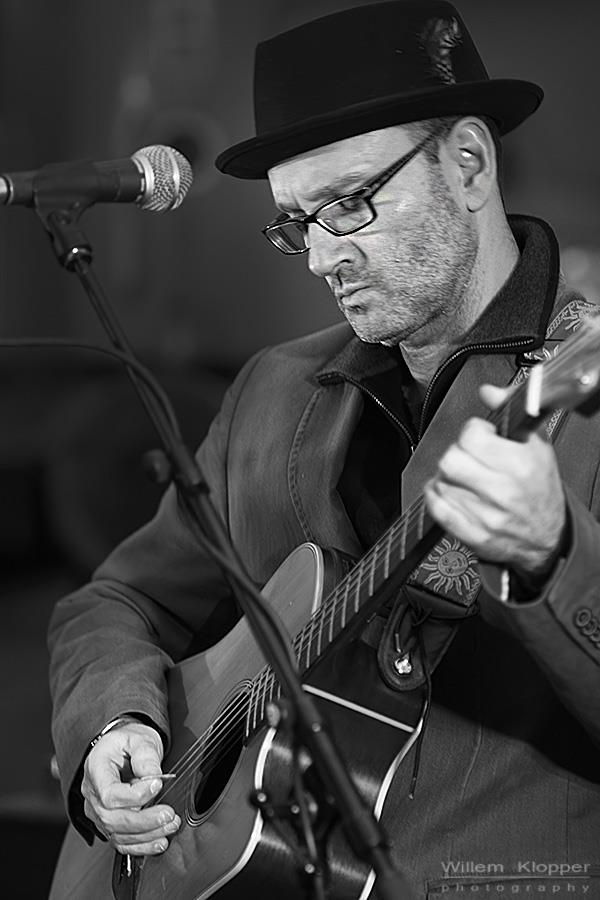
NDV by Willem Klopper.

GS: It’s a triple CD which aims to tell the story of the band. All recordings will be with the new line-up so songs from albums prior to The Underfall Yard will be entirely re-recorded. Some of these are radically re-worked, others are fairly close to the originals but with the strong performances that the current line-up is capable of. Even more recent material may be reworked to some extent. For example, I always wanted to feature violin in The Underfall Yard but we didn’t have a violinist at the time. Rachel Hall will feature on the updated version. Wherever we look back and think something could have been better, we’ll make it better.

Progarchy (BB):  Will anything else come with the CDs? Any kind of BBT timeline or a poster? Concert DVD?

AP: There may be some video or other visual material. We haven’t made any final decisions on that yet.

Progarchy (BB):  Where do you see BBT’s place the history of rock and the history of prog rock?

GS: I think it’s too early to make an assessment. There are many drafts of history. I hope we’ll find ourselves as more than just a footnote when later drafts are written. However, progressive rock is a fairly contained world and we’re a long way away from making any sort of breakthrough in the broader rock and pop worlds.

Progarchy (BB): You have an immensely large and loyal fanbase. How does this affect you or the band’s approach to music and the music world?

GS: We’re really lucky with our fanbase. They seem to us in all of our interactions to be a thoroughly decent and likeable bunch. The feedback we’ve had over the years has been really important. To hear that what we like to write about resonates with others and particularly that we’ve moved people with our music makes a huge difference.

Progarchy (BB):  What is your view on packaging the material? You sell lots of downloads, and we live in a download world (for better and worse), but you also put a lot into the packaging of your CDs. Which I love. As you might remember, after I downloaded all of your albums up to The Underfall Yard, I contacted you because I wanted to purchase physical copies. And, it was worth the investment. Why do you consider it so important for BBT to have such beautiful packaging, especially in day and age? And, would you say such quality packaging should be important for all bands?

AP BBT
Andy Poole by Willem Klopper.

AP: The ideal package for us is a presentation of the words, music & images. The artwork is integral and we have been very fortunate over the years to have teamed-up with Michael Griffiths, Jim Trainer and Matthew Sefton who have each provided inspiring works that both complement & advance the sensory delivery of our albums.

Growing up with vinyl in the 70’s, you had an ingrained sense of interacting physically with an album … the touch, feel & smell of a new gatefold release was savored and an essential part of the experience … quite apart from placing a stylus in the groove and being aurally transformed to a progressive world of music where none of the old rules applied.

The initial advent of hurriedly released compact discs in their horrid plastic jewel cases and Lilliputian inserts amounted to instantly inferior packaging largely forgiven by consumers for the promise of digital sound.

We migrated to digipaks for the enhanced tactile experience, albeit in miniature compared to vinyl, and greater flexibility to represent the visual artists who collaborate with Big Big Train.

Although it is tempting to suggest and hope that other bands disregard the importance of physical product packaging to our advantage, I actually believe that it behooves us all to raise the quality bar up high and to the reasonable limits of affordability.

DG: It was certainly a very important factor with XTC. Andy Partridge claimed that every time he finished writing a song, he’d design a sleeve for it just in case it was chosen as a single! But then, he’s a very talented artist and can’t help himself. I’m certain sales of many of our releases were multiplied as a result of the packaging, as well as boosting the band’s ‘arty’ credentials.

Progarchy (BB):  I’m always amazed at what a community BBT is. That is, it’s clear–from the music as well as things such as FB posts, etc.–that you each really like one another. There’s no sense of brilliant radical individuals working next to each other (such as in certain early Yes albums), but a true sense of group brilliance, an organic whole. What do you think accounts for this?

GS: From my point of view I come back to something I’ve said before – surround yourselves with talented people and things start to happen. There is something else as well though, and that is that the guys in the band are all thoroughly good chaps. We’ll all hold strong positions from time-to-time and we say what we think but good manners are important. Speaking of Manners, you’re the new boy, Danny, do you have any observations?

DM: Some of it is simply that there are no huge egos in the band, whether by luck or by conscious or unconscious choice. (Medium sized, maybe, but not huge!)  However, one musical thing that strikes me is that the band members aren’t over-specialized – BBT doesn’t consist of “the singer”, “the drummer”, “the guitarist”, etc., all vying for the spotlight.  Everyone is a multi-instrumentalist to at least some extent, and everyone also has writing and/or arranging experience, so there’s much more focus on making the music work as a whole.

DG: Don’t forget also that we’re grown men, not ambitious youngsters. We are focused on the music at all times, because we love it. Both Greg and David, as writers, are extremely accommodating in terms of accepting ideas and contributions from all of us; they have yet to display any serious proprietorial tendencies when it comes to protecting their original vision. Which is not to suggest that it’s an open free-for-all; we live with the songs for months, plenty of time to assimilate their essence, so we’re generally united in the common aim, ultimately.

Progarchy (BB):  And, how do you see the role of Rob as engineer or any guest musicians you bring in? That is, how integral are they to a BBT sound, if such a particular thing exists.

146BBT1
The Seventh Train and Phill Brown of our age: Rob Aubrey. Photo by Amy Mumford.

GS: It’s an evolving sound and it will continue to develop. We have some really important collaborators at the moment and I envisage we will continue to work with many of them in the long-term. Certainly, Dave Desmond (who plays trombone and arranges the brass band) and violinist Rachel Hall will have significant input into Station Masters. As for Rob, he’s the seventh Train and our dear friend.

Progarchy (BB):  Where do you see BBT after Station Masters?

GS: I’d like us to be playing some shows at some stage. It would be good to do something around the time of Station Masters and then something around each release after that. As mentioned earlier, we have another album well underway and have started recording it so that is likely to come out in 2015.

Progarchy (BB):  Any final thoughts on the current and future state of rock?

GS: In Britain, the last of the high-street record stores has gone into administration. I guess there are similar issues in other countries. The supermarkets have stepped into the breach and will only really sell music in the pop charts, so the route through traditional music-distribution is closing down to most progressive bands. However, online, the choice is very broad and the issue there is getting noticed amongst all of the competition. Making a living out of music is going to get harder still but it’s been a labour of love for most folk and jazz musicians for years and I don’t see why it should be different for rock bands.ee2

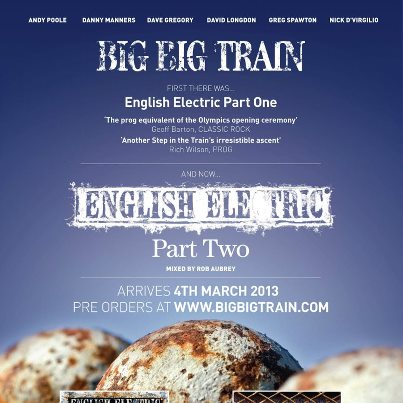
 English Electric Part 2 enters the world on March 4, 2013.  To order, go to Big Big Train’s online shop.

[Well, what does one say after such amazing interview, except—thank you.  Thank you to BBT for giving us so much time for this interview.  An even bigger thank you for making the world just a little bit brighter.—Ed.]

Brown M&Ms, Writing Grooves, Natural Historians, and Big Big Train: The 2013 Interview, Part I

I would love to give an elaborate introduction, but, really, I’ll be very honest with myself–you’re here to read the words of Andy, Dave, Danny, and Greg.  They very graciously gave us a significant amount of their time.  All Progarchists eagerly await the release of Big Big Train’s much anticipated conclusion to the highly successful English Electric Part One.  The first half released only last year represents, for me at least, the finest album in the rock world since Talk Talk’s 1988, “Spirit of Eden.”  No pressure, guys.

Ok, Brad, remember you promised to bloviate only very, very little. . . .

Progarchy proudly presents an exclusive interview with Big Big Train (though, feel free to make this less exclusive and repost anywhere and everywhere).

Spawton bass
Photo by Willem Klopper.

N.B. AP is Andy Poole, DG is Dave Gregory, DM is Danny Manners, GS is Greg Spawton.  Progarchy interview conducted by Brad.

***

Progarchy: Greg, EE1 did extremely well in terms of critical response. Did its success surprise you at all? If so, what part of it surprised you?

GS: We believed we had made a strong album but by the time the mix is finished, all objectivity goes out of the window so you never really know what will happen when others get to hear it. I think we were a little anxious about the number of other albums being released last year, and English Electric started shipping at around the same time as Sounds That Can’t Be Made, so we worried about whether it would get lost amongst all of the attention that CD was going to receive. A couple of weeks ago, Prog magazine published its readers’ polls for 2012. It only really hit home to us when we saw the results of those polls as to quite how much reach English Electric has achieved. It was surprising and very pleasing to be up there with Rush, Marillion, Porcupine Tree and Anathema.

Progarchy: Does its success change at all what you think about BBT?

GS: BBT is six chaps making music. However well we do, that’s all I think of it as.

DM: We haven’t reached the stage yet where our rider has a “no brown M&Ms” clause.

brown_mm_10703016
Photo not by Willem Klopper.

GS: I suspect it has changed how others view us. I read a couple of reviews recently where the album was described as being ‘hyped’ and I felt a little indignant as that misrepresents us. We’ve promoted it sure, but not in an excessive way. If other people write or talk about something, that isn’t hype.

Progarchy: How much of EE2 was written before EE1? That is, how much of this album is a response to the last? Or, are they really two parts of a whole?

GS: All of the songs were written and recorded as part of the same sessions. Any of the songs on Part Two could have been on Part One instead and we had mixes of all 15 tracks before EE1 was released. However, once we knew the track-listing for EE1, those eight songs on the first part got our maximum attention to make sure they were ready for release. As soon as EE1 was out we then went back to the EE2 tracks and continued to work on them.

AP: We wanted to take full advantage of the 6 month gap between the two albums to make sure all of the songs were at their best. That sometimes meant a bit of a rethink about the arrangements. East Coast Racer, in particular, benefitted from us being able to spend more time on it. We always thought it was a good track but now I think it’s one of our best.

Progarchy: Was the writing process much the same as the last album and previous albums? David clearly offered much in terms of lyrics and song ideas. It it the same with EE2?

Nick, Andy, Dave, David, Danny, Greg.  Photo by Willem Klopper.
Nick, Andy, Dave, David, Danny, Greg. Photo by Willem Klopper.

GS: We’re really in a groove with the writing now and have very established way of working within the band. I’ve written more of EE2 than EE1, but that’s just to do with how the track-listing fell. In fact, David has already written a lot of material for our next studio album and we’ve recorded Nick’s drums for some of the songs. The other guys are heavily involved in arrangement and, in truth, there can be a blurry line between writing and arranging. The accepted practise is that the songwriter is the person that composes the chord sequence, the main melody and the words. However, sometimes the parts written by the musicians for those chord sequences and melodies can be as important as the underlying music. So, the songs evolve at the hands of all of us.

Progarchy: Can you tell us about some of the themes–musically and lyrically–of EE2. The titles are poetically enticing, and there’s, of course, a huge anticipation on the web as to what the titles mean. Curator of Butterflies? Worked Out? The Permanent Way? Keeper of Abbeys (my favourite title)? For better or worse, I have lots of James Marsh images floating around in my head as I visualize the possible meanings of the titles.

GS: English Electric isn’t a concept album but it is an album with a number of themes linking many of the songs. On EE2 some of the songs pick up on the subject matter of songs from EE1 whilst others head off in different directions. Swan Hunter and Worked Out are both about lost working communities (from the shipyards and the mines) so those follow on from songs like Summoned By Bells. East Coast Racer is set in the 1930’s when a group of people designed and built a steam train called Mallard which ran very fast indeed. It’s a great adventure story. Leopards is a love song and provides an important contrast with some of the more epic material. Keeper of Abbeys is about a chap I met at a ruined abbey in the north of England. This man worked from dawn until dusk every day, tending to the stones. I got to know him a little bit but used my imagination to join up the missing parts of his story. Curator of Butterflies is inspired by a woman called Blanca Huertas who is the Curator Lepidoptera at the Natural History Museum. I read an article about her where she said the study of butterflies can allow so many tales to be told. The song is about how narrow the line is between life and death. I was very anxious about it sounding trite and so I wove a character into it to make it a story and tempt me away from spouting platitudes. Finally, The Permanent Way is the pivotal track where we try to bring everything together.

Progarchy: There’s lots of excitement about you joining, Danny. Can you tell us a little bit about yourself and how you came to join BBT?

DM: Well, I started off learning classical piano from a young age, and later became very interested in twentieth century classical music – at one point I was fairly obsessed with Stravinsky and had serious ambitions to be a composer. In my teens I also took up double bass (and later bass guitar) and got heavily into modern jazz and jazz-rock. You could say I was always into “progressive” music in the broadest sense of the word. But also, I was at school in the mid-seventies when some of the classic prog rock albums were being released, or had recently been released, and handed round on vinyl. I remember really liking early Yes, and Gentle Giant – still a favourite band. After that, I was more interested in the Canterbury end of prog, probably because of the jazzier connections. At university, as the eighties started, I became fascinated with some of the new wave bands that were combining the more advanced musical ideas I was already into with the stripped-down aesthetic of punk, which I’d initially been completely affronted by! XTC became a particular favourite, and a big influence on a university band I played bass guitar in and wrote for. (It got nowhere, although the members all had interesting careers in music afterwards.)

After that I played a lot of jazz, and some free improvised music, on the London scene – on double bass.  I joined a big band, The Happy End, which mixed up Kurt Weill, Sun Ra, swing, and protest songs from around the globe into a joyful, ramshackle stew, and got heavily involved for a few years gigging and writing arrangements for them – a highlight was working with Robert Wyatt, who made a guest appearance on a Happy End album. Gradually, I also became involved with various alt, leftfield or indie rock/pop singer-songwriters. The notable ones were: Sandy Dillon – that’s a female Sandy – originally from the US, whose band mixed blues and roots with the avant-garde, with Tom Waits and Captain Beefheart as major influences; Cathal Coughlan, one of the best lyric writers I know, whose voice and songs can range from beautiful ballads to corruscating anger; and, most importantly, Louis Philippe, a Frenchman resident in London, whose music mixes influences from the great pop writers like Brian Wilson or Burt Bacharach, classical music, jazz, French chanson…. I’ve worked with Louis for 25 years now, initially as a bassist, but later also as keyboard player and arranger, and as a participant in some of his production work for other artists.

In 1995, I think, Louis showed me a letter he’d been sent by a fan, who turned out to be David Longdon. David had included some of his own music, and was obviously hugely talented as a singer, songwriter, instrumentalist and arranger. So Louis had no hesitation in asking him to do a gig with us, and then to participate in Louis’s next few albums. (Also featured on those was Dave Gregory, who Louis had met when arranging and producing an album for labelmate Martin Newell.) I stayed friends with David, and he kept us informed about the Genesis near-miss, but we didn’t see each other for a while after that as we were both busy with young families. I do remember him telling me he’d joined a prog band, although the name Big Big Train meant absolutely nothing to me at that point. (I hadn’t kept up with contemporary prog at all.) Then a couple of years ago, he asked if I’d put down some double bass for a song called British Racing Green…ee2

Happily, the band liked it. I think David had possibly recommended me for the keyboard chair earlier than this, but Greg and Andy may have been wary because I didn’t have any track record specifically in the prog field. However, when they started work in earnest on EE1 they asked me to see if I could do anything with the piano on a couple of songs. Again, it turned out to our mutual satisfaction, and in the end I contributed to almost every track, did a bit of arranging on Summoned By Bells, and stuck my nose in at the mixing stage as well.  By the time attention turned to finishing off EE2, I was pretty much fully involved, so it made sense to them to ask me to join the band officially. I really liked the fusion they’d arrived at on EE, blending folk  and acoustic instruments into the prog and other elements already there, and it was a great opportunity to work with fabulous players like Dave G and Nick, so I didn’t have any hesitation in accepting.

On EE2 I’m playing keyboards a bit more – including an honest-to-goodness, “I’m prog and I’m proud” synth solo – and it’s going to be quite exciting exploring further on future releases.

Part II tomorrow.–Ed.  To order English Electric Part II, please go here–BBT’s official shop.

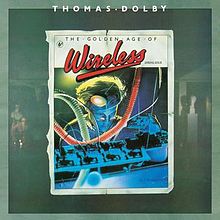
Thomas Dolby’s Golden Age

In the late spring of 1982, as I completed 8th grade, I met one of those kids who is always at the height of cool.  But, it was a calm, somewhat cynical, real cool, not the show-off cool of the wealthy socialite kids.  It was the Bohemian cool of the Beatnik not contrived cool of the Hippie or the Yuppie.

Ritchie.

ThomasDolbyTheGoldenAgeOfWirelessOnly a few of us belonged to his circle.

Except for moments of ecstatic outbursts about an idea here or there, he radiated coolness.  He read the Great Books and knew lots of poetry, he worked out in his room (he had the whole upstairs of a late 19th century house to himself) and studied Japanese martial arts, he knew everything about men such as Bill Buckley and Jack Kerouac, he owned the best stereo system of anyone our age, and he possessed an amazing record collection.  He was the youngest of a large family, and his parents were much older, pretty much leaving Ritchie to raise himself.

It was Ritchie who introduced so many of us–in a medium-sized town in the wheat belt of the Great Plains–to English New Wave.  Growing up a progger–addicted from an early age to Yes, Genesis, and Kansas–New Wave was a bit eye opening for me.  It seemed to hold much of the complexity of prog, but it did so with computers and keyboards, often one or two musicians, where prog might have included eight or nine.  Ritchie introduced me to ABC, Kate Bush, The Smiths, Oingo Boingo, Tears For Fears, and, most importantly for me, Thomas Dolby.

Not only was I a prog guy, but I was also very much a sci-fi and computer guy.  All of this appealed to me. Continue reading “Thomas Dolby’s Golden Age”

Interview with Greg Spawton of Big Big Train (June 2012)

Nick, Andy, Dave, David, Danny, Greg.  Photo by Willem Klopper.
Nick, Andy, Dave, David, Danny, Greg. Photo by Willem Klopper.

[This interview appeared at TIC, June 27, 2012.  A gracious thanks to Winston Elliott, editor of TIC.  I’m reposting it here because 1) it might find a new audience; and 2) Big Big Train just today began pre-sales for English Electric Volume 2–out March 4, 2013]

An Interview with Greg Spawton 
by Brad Birzer

We’re in the middle of perhaps the largest revival of progressive rock—that form of rock music which pursues the artistic and the mythic—since the genre became somewhat suspect as overblown and over-the-top in the second half of the 1970s with the rise of punk. Almost any American over the age of forty can remember the time when long songs such as Yes’s “Roundabout,” Jethro Tull’s “Aqualung,” Kansas’s “Song for America,” and Emerson, Lake, and Palmer’s “Karn Evil 9” dominated FM radio.

The music of these groups, unlike much rock produced in America, originates not as much from jazz and blues as it does from European forms of classical, symphonic, and operatic music.

In this way, the genre of progressive rock has sought to preserve and extend the best of the western tradition while also being willing to incorporate non-western instruments and rhythms.

Those days of FM dominance are long gone, but the emergence of internet sales and music downloading has allowed accessibility to a number of excellent bands and artists that would have been bypassed by corporate labels over the past three decades as not marketable enough for the immediate fashions of the moment.

Numerous forums exist online for the discussion of progressive rock in all of its nuances, complexities, and manifestations. On Twitter, one can turn to @progrocktweets, @alisonscolumn, @mattstevensloop, @thesidsmith, and the accounts of any number of musicians and bands.

On the web itself, sites such as www.2112.net/powerwindowsdprp.netrushisaband.comprogarchives.com, and deliciousagony.com offer all kinds of progressive rock news.

Continue reading “Interview with Greg Spawton of Big Big Train (June 2012)”

East Coast Racer

Mallard steam train

In the run-up to the March release of Big Big Train’s hotly-anticipated English Electric Pt 2, Greg Spawton is delighting us once more with insights into the origins of each track on the album.

Check out the BBT blog for more on opening track East Coast Racer – the story of Mallard, legendary holder of the world speed record for steam trains.

Willem Klopper and BBT

Some wonderful photos appeared on Big Big Train’s FB page today.  All taken by Willem Klopper.

Spawton bass


longdon flute

http://www.facebook.com/media/set/?set=a.452175891514753.106940.203751903023821&type=1

Danny Manners Boards Big Big Train

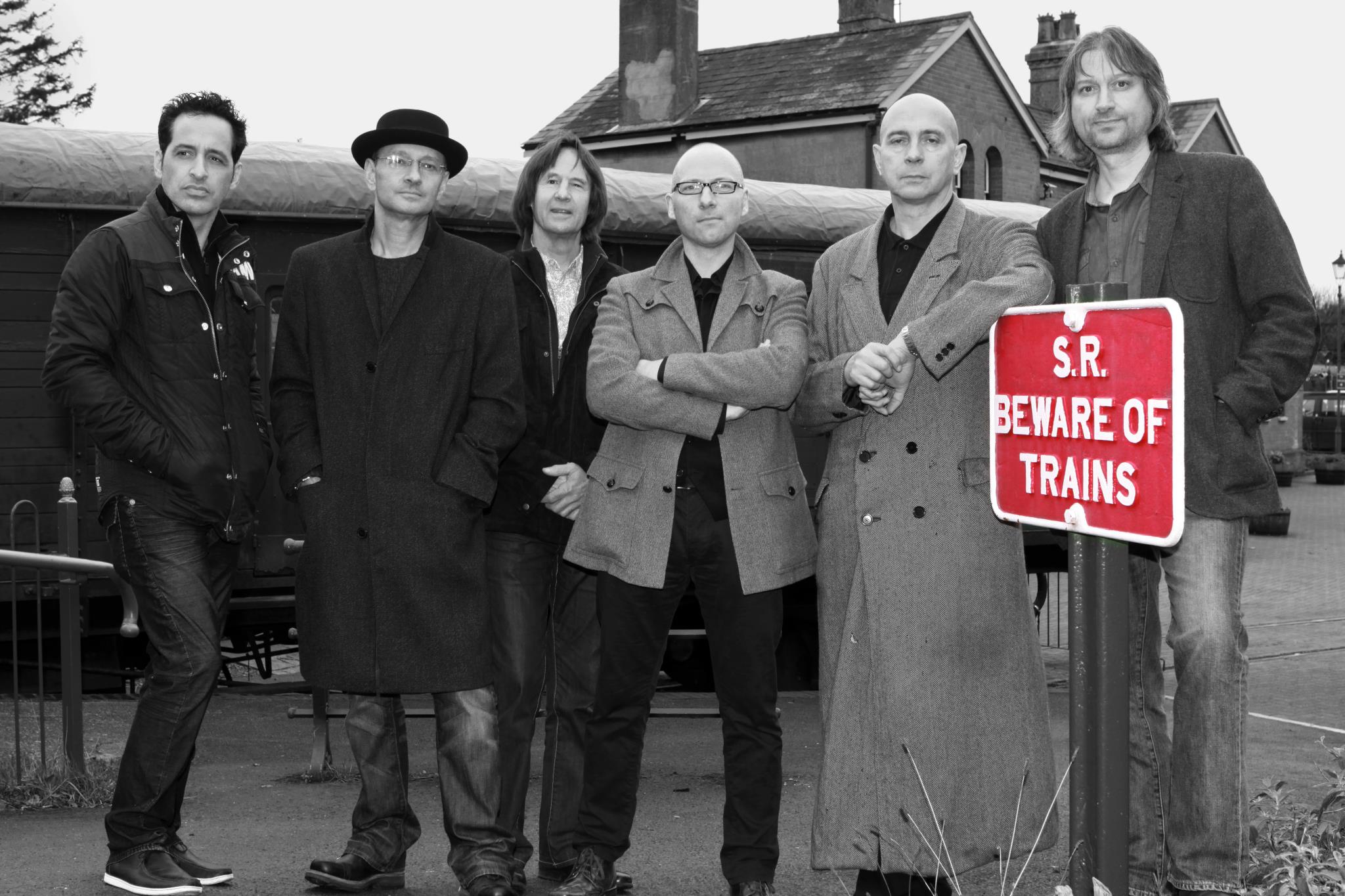
Nick, Andy, Dave, David, Danny, Greg.  Photo by Willem Klopper.
Nick, Andy, Dave, David, Danny, big red sign, Greg.
Photo by Willem Klopper.

Great news today on Facebook from the station master himself, Greg Spawton of Big Big Train.  Bassist and keyboardist Danny Manners has officially become a member of the band, joining Spawton, Andy Poole, David Longdon, Dave Gregory, and Nick D’Virgilio.

Spawton wrote:

We are pleased to announce that Danny Manners has joined Big Big Train as the band’s keyboard player. Danny made a significant contribution to English Electric Part One, playing keyboards and double bass and we are delighted that Danny has accepted our offer to join the band in time for the release of English Electric Part Two on March 4th. Danny’s past credits include Louis Philippe and Cathal Coughlan.

Manners’s training has been mostly in classical and jazz.  He writes of himself at his website:

For those who have stumbled across me: I’m a double bassist, electric bassist, pianist, arranger and composer living in London, England. Starting with classical music as a child and teenager, I worked my way backwards through jazz and finally worked out how to play pop half-decently in my thirties. Along the way I’ve also been involved in improvised and “leftfield” musics. At the moment I’m lucky enough to be doing a little bit of all of these…

He also lists an impressive discography, having played extensively with Louis Phillippe, Louise Le May, Cathal Coughlan, Sandy Dillon, and Muse: http://www.dannymanners.co.uk/albums.html

I must admit, I’m (I–ed., Brad) thoroughly impressed with this addition.  Over twenty years old, beginning with original members, Spawton and Poole, Big Big Train has never ceased to grow, take grand chances, and transform into what is arguably one of the greatest–if not THE greatest–rock band of our era.  With their near collapse after the recording “Bard,” Spawton and Poole have developed the group tremendously with “Gathering Speed,” “The Difference Machine”, “The Underfall Yard”, and “Far Skies Deep Time”.  Their 2012 release, “English Electric Part One”, has received rave reviews and has been labeled the single finest release of 2012 by a number of critics.

To this critic, “English Electric Part One” is not just the best of 2012, it’s the best rock release since Talk Talk’s 1988 magnum opus, “Spirit of Eden.”  Before that, one would have to jump back to Yes’s “Close to the Edge” or Genesis’s “Selling England By the Pound” in the early 1970s or to Dave Brubeck’s “Time Out” to find comparable works of music in the last half century.

It should be noted as well that the engineer for Big Big Train, Rob Aubrey, is the Phill Brown of our era as well.

Finally, Manners has worked with David Longdon before, and–I assume–connected Big Big Train to the famous bassist and keyboardist.

The second part of English Electric will be released on March 4 of this year.  American drummer, Nick D’Virgilio, a full-time member of the band, just finished recording the final drum parts for “English Electric Part Two.”  Additionally, the band will be releasing a limited edition of the full “English Electric” in the fall and the re-imaging of previous tracks on “Station Masters” in 2014.