Medium-sized Egos, The Seventh Train, Lush Soundscapes, and Big Big Train: The 2013 Interview, Part II

N.B. AP is Andy Poole, DG is Dave Gregory, DM is Danny Manners, GS is Greg Spawton.  Progarchy interview conducted by Brad.

***

Progarchy (BB): When you put EE1 and EE2 together, how do you expect the listeners to see the whole EE? Say, 20 years from now, few will have had the experience of getting one, then the other. It will most likely be just EE. Do you expect your listeners–me, for example, or anyone else–interpreting EE1 differently in light of EE2? In particular, I think about a track like Hedgerow. As you probably know, Greg, I consider this the single finest conclusion to any album.  Ever. Period. Even better than Abbey Road, which had that position for me prior to hearing EE1. But, when I do get to hear EE2, I will now see Hedgerow as the middle song. BBT EE2

GS: You’ve put your finger on something that has caused us a fair bit of soul-searching Brad. At first, we had a fairly straightforward view on this which was simply: ‘it’s a double album, but we’ll split it into two separate releases’. Our reasoning was that 2 hours of music is a lot for the listener to get their head around which can initially cause under-appreciation of the double album in question. We were also aware that if you release so much music at one time, you get one round of publicity then the world moves on. If you split the release into two, the band is in the spotlight for a longer period of time. The only downside to this release strategy is that English Electric becomes seen as two separate pieces of work and so we always planned to release a special double edition bringing it all together. The thing is though, and as your question makes clear, it’s not as simple as we thought it would be. If you’re splitting an album into two you do have to try to make two satisfying separate halves, which is what we have tried to do. And that isn’t the same as sequencing a whole double album. So, the question we began to ask is: what do we do when we prepare the double Full Power edition? Do we simply stick Part One and Two together or do we start from scratch and re-sequence it as a double album? You mention Hedgerow as being a strong concluding track but we’ve also got Curator of Butterflies which is, we think, another strong end-piece. Which one of those takes precedence and gets to close the double album? And what happens with the three extra tracks we’re including? Where do they fit in? What we now think we’ll do is to start again from scratch and re-sequence Full Power as a double album without any reference to the orders on EE1 and EE2. It may be that we find some of the sequencing on EE1 and EE2 also works for EEFP and if it does, it does. Or it may be that the sequencing is completely different. In any case, the additional tracks will inevitably change the feel of things. The other question you raise is what happens when EEFP is released? Does that mean that EE1 and EE2 should go out of print? If not, will any new listeners buy them or will they go straight to EEFP? This is, I think, something we’ll have to keep under review. If EEFP turns out to feel like a very different listening experience to EE1 and EE2, then it makes sense to keep them all in print. Of course, the extra tracks will also be available on an EP and as downloads to make sure listeners don’t feel obligated to buy a double album just to hear three new songs. So, for many people their experience of English Electric will be as three separate releases.

Progarchy (BB):  Tell me about the additional songs added to the full package? Will there be much new artwork?

GS: There are three strong new songs. They are not leftovers from the original sessions but have been recorded specifically for EE Full Power. One of them is a sort of bookend love song to go with Leopards. Another builds on the main album themes of working communities and the English landscape. And the final one is something very different for us.

AP: As regards the artwork, I’m working on a lavish design with a comprehensive booklet telling the stories behind the songs and behind the album.

Progarchy (BB):  After EE2, you’ve announced plans to release Station Masters. Can you give us some details about this? Will it be reworked older tunes? Are there some new tunes?

NDV by Willem Klopper.

GS: It’s a triple CD which aims to tell the story of the band. All recordings will be with the new line-up so songs from albums prior to The Underfall Yard will be entirely re-recorded. Some of these are radically re-worked, others are fairly close to the originals but with the strong performances that the current line-up is capable of. Even more recent material may be reworked to some extent. For example, I always wanted to feature violin in The Underfall Yard but we didn’t have a violinist at the time. Rachel Hall will feature on the updated version. Wherever we look back and think something could have been better, we’ll make it better.

Progarchy (BB):  Will anything else come with the CDs? Any kind of BBT timeline or a poster? Concert DVD?

AP: There may be some video or other visual material. We haven’t made any final decisions on that yet.

Progarchy (BB):  Where do you see BBT’s place the history of rock and the history of prog rock?

GS: I think it’s too early to make an assessment. There are many drafts of history. I hope we’ll find ourselves as more than just a footnote when later drafts are written. However, progressive rock is a fairly contained world and we’re a long way away from making any sort of breakthrough in the broader rock and pop worlds.

Progarchy (BB): You have an immensely large and loyal fanbase. How does this affect you or the band’s approach to music and the music world?

GS: We’re really lucky with our fanbase. They seem to us in all of our interactions to be a thoroughly decent and likeable bunch. The feedback we’ve had over the years has been really important. To hear that what we like to write about resonates with others and particularly that we’ve moved people with our music makes a huge difference.

Progarchy (BB):  What is your view on packaging the material? You sell lots of downloads, and we live in a download world (for better and worse), but you also put a lot into the packaging of your CDs. Which I love. As you might remember, after I downloaded all of your albums up to The Underfall Yard, I contacted you because I wanted to purchase physical copies. And, it was worth the investment. Why do you consider it so important for BBT to have such beautiful packaging, especially in day and age? And, would you say such quality packaging should be important for all bands?
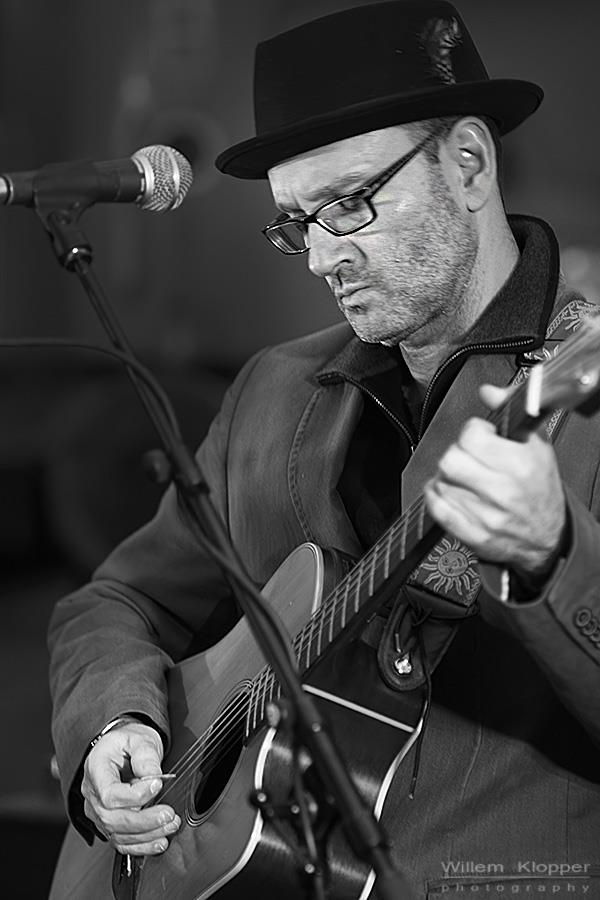
AP BBT
Andy Poole by Willem Klopper.

AP: The ideal package for us is a presentation of the words, music & images. The artwork is integral and we have been very fortunate over the years to have teamed-up with Michael Griffiths, Jim Trainer and Matthew Sefton who have each provided inspiring works that both complement & advance the sensory delivery of our albums.

Growing up with vinyl in the 70’s, you had an ingrained sense of interacting physically with an album … the touch, feel & smell of a new gatefold release was savored and an essential part of the experience … quite apart from placing a stylus in the groove and being aurally transformed to a progressive world of music where none of the old rules applied.

The initial advent of hurriedly released compact discs in their horrid plastic jewel cases and Lilliputian inserts amounted to instantly inferior packaging largely forgiven by consumers for the promise of digital sound.

We migrated to digipaks for the enhanced tactile experience, albeit in miniature compared to vinyl, and greater flexibility to represent the visual artists who collaborate with Big Big Train.

Although it is tempting to suggest and hope that other bands disregard the importance of physical product packaging to our advantage, I actually believe that it behooves us all to raise the quality bar up high and to the reasonable limits of affordability.

DG: It was certainly a very important factor with XTC. Andy Partridge claimed that every time he finished writing a song, he’d design a sleeve for it just in case it was chosen as a single! But then, he’s a very talented artist and can’t help himself. I’m certain sales of many of our releases were multiplied as a result of the packaging, as well as boosting the band’s ‘arty’ credentials.

Progarchy (BB):  I’m always amazed at what a community BBT is. That is, it’s clear–from the music as well as things such as FB posts, etc.–that you each really like one another. There’s no sense of brilliant radical individuals working next to each other (such as in certain early Yes albums), but a true sense of group brilliance, an organic whole. What do you think accounts for this?

GS: From my point of view I come back to something I’ve said before – surround yourselves with talented people and things start to happen. There is something else as well though, and that is that the guys in the band are all thoroughly good chaps. We’ll all hold strong positions from time-to-time and we say what we think but good manners are important. Speaking of Manners, you’re the new boy, Danny, do you have any observations?

DM: Some of it is simply that there are no huge egos in the band, whether by luck or by conscious or unconscious choice. (Medium sized, maybe, but not huge!)  However, one musical thing that strikes me is that the band members aren’t over-specialized – BBT doesn’t consist of “the singer”, “the drummer”, “the guitarist”, etc., all vying for the spotlight.  Everyone is a multi-instrumentalist to at least some extent, and everyone also has writing and/or arranging experience, so there’s much more focus on making the music work as a whole.

DG: Don’t forget also that we’re grown men, not ambitious youngsters. We are focused on the music at all times, because we love it. Both Greg and David, as writers, are extremely accommodating in terms of accepting ideas and contributions from all of us; they have yet to display any serious proprietorial tendencies when it comes to protecting their original vision. Which is not to suggest that it’s an open free-for-all; we live with the songs for months, plenty of time to assimilate their essence, so we’re generally united in the common aim, ultimately.

Progarchy (BB):  And, how do you see the role of Rob as engineer or any guest musicians you bring in? That is, how integral are they to a BBT sound, if such a particular thing exists.

146BBT1
The Seventh Train and Phill Brown of our age: Rob Aubrey. Photo by Amy Mumford.

GS: It’s an evolving sound and it will continue to develop. We have some really important collaborators at the moment and I envisage we will continue to work with many of them in the long-term. Certainly, Dave Desmond (who plays trombone and arranges the brass band) and violinist Rachel Hall will have significant input into Station Masters. As for Rob, he’s the seventh Train and our dear friend.

Progarchy (BB):  Where do you see BBT after Station Masters?

GS: I’d like us to be playing some shows at some stage. It would be good to do something around the time of Station Masters and then something around each release after that. As mentioned earlier, we have another album well underway and have started recording it so that is likely to come out in 2015.

Progarchy (BB):  Any final thoughts on the current and future state of rock?

GS: In Britain, the last of the high-street record stores has gone into administration. I guess there are similar issues in other countries. The supermarkets have stepped into the breach and will only really sell music in the pop charts, so the route through traditional music-distribution is closing down to most progressive bands. However, online, the choice is very broad and the issue there is getting noticed amongst all of the competition. Making a living out of music is going to get harder still but it’s been a labour of love for most folk and jazz musicians for years and I don’t see why it should be different for rock bands.ee2
 English Electric Part 2 enters the world on March 4, 2013.  To order, go to Big Big Train’s online shop.

[Well, what does one say after such amazing interview, except—thank you.  Thank you to BBT for giving us so much time for this interview.  An even bigger thank you for making the world just a little bit brighter.—Ed.]

Brown M&Ms, Writing Grooves, Natural Historians, and Big Big Train: The 2013 Interview, Part I

I would love to give an elaborate introduction, but, really, I’ll be very honest with myself–you’re here to read the words of Andy, Dave, Danny, and Greg.  They very graciously gave us a significant amount of their time.  All Progarchists eagerly await the release of Big Big Train’s much anticipated conclusion to the highly successful English Electric Part One.  The first half released only last year represents, for me at least, the finest album in the rock world since Talk Talk’s 1988, “Spirit of Eden.”  No pressure, guys.

Ok, Brad, remember you promised to bloviate only very, very little. . . .

Progarchy proudly presents an exclusive interview with Big Big Train (though, feel free to make this less exclusive and repost anywhere and everywhere).

Spawton bass
Photo by Willem Klopper.

N.B. AP is Andy Poole, DG is Dave Gregory, DM is Danny Manners, GS is Greg Spawton.  Progarchy interview conducted by Brad.

***

Progarchy: Greg, EE1 did extremely well in terms of critical response. Did its success surprise you at all? If so, what part of it surprised you?

GS: We believed we had made a strong album but by the time the mix is finished, all objectivity goes out of the window so you never really know what will happen when others get to hear it. I think we were a little anxious about the number of other albums being released last year, and English Electric started shipping at around the same time as Sounds That Can’t Be Made, so we worried about whether it would get lost amongst all of the attention that CD was going to receive. A couple of weeks ago, Prog magazine published its readers’ polls for 2012. It only really hit home to us when we saw the results of those polls as to quite how much reach English Electric has achieved. It was surprising and very pleasing to be up there with Rush, Marillion, Porcupine Tree and Anathema.

Progarchy: Does its success change at all what you think about BBT?

GS: BBT is six chaps making music. However well we do, that’s all I think of it as.

DM: We haven’t reached the stage yet where our rider has a “no brown M&Ms” clause.

brown_mm_10703016
Photo not by Willem Klopper.

GS: I suspect it has changed how others view us. I read a couple of reviews recently where the album was described as being ‘hyped’ and I felt a little indignant as that misrepresents us. We’ve promoted it sure, but not in an excessive way. If other people write or talk about something, that isn’t hype.

Progarchy: How much of EE2 was written before EE1? That is, how much of this album is a response to the last? Or, are they really two parts of a whole?

GS: All of the songs were written and recorded as part of the same sessions. Any of the songs on Part Two could have been on Part One instead and we had mixes of all 15 tracks before EE1 was released. However, once we knew the track-listing for EE1, those eight songs on the first part got our maximum attention to make sure they were ready for release. As soon as EE1 was out we then went back to the EE2 tracks and continued to work on them.

AP: We wanted to take full advantage of the 6 month gap between the two albums to make sure all of the songs were at their best. That sometimes meant a bit of a rethink about the arrangements. East Coast Racer, in particular, benefitted from us being able to spend more time on it. We always thought it was a good track but now I think it’s one of our best.

Progarchy: Was the writing process much the same as the last album and previous albums? David clearly offered much in terms of lyrics and song ideas. It it the same with EE2?

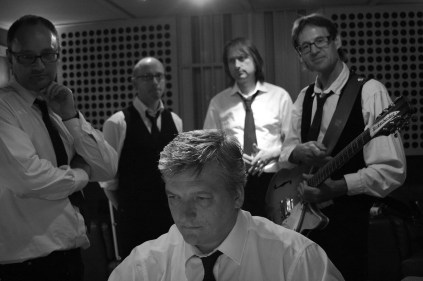
Nick, Andy, Dave, David, Danny, Greg.  Photo by Willem Klopper.
Nick, Andy, Dave, David, Danny, Greg. Photo by Willem Klopper.

GS: We’re really in a groove with the writing now and have very established way of working within the band. I’ve written more of EE2 than EE1, but that’s just to do with how the track-listing fell. In fact, David has already written a lot of material for our next studio album and we’ve recorded Nick’s drums for some of the songs. The other guys are heavily involved in arrangement and, in truth, there can be a blurry line between writing and arranging. The accepted practise is that the songwriter is the person that composes the chord sequence, the main melody and the words. However, sometimes the parts written by the musicians for those chord sequences and melodies can be as important as the underlying music. So, the songs evolve at the hands of all of us.

Progarchy: Can you tell us about some of the themes–musically and lyrically–of EE2. The titles are poetically enticing, and there’s, of course, a huge anticipation on the web as to what the titles mean. Curator of Butterflies? Worked Out? The Permanent Way? Keeper of Abbeys (my favourite title)? For better or worse, I have lots of James Marsh images floating around in my head as I visualize the possible meanings of the titles.

GS: English Electric isn’t a concept album but it is an album with a number of themes linking many of the songs. On EE2 some of the songs pick up on the subject matter of songs from EE1 whilst others head off in different directions. Swan Hunter and Worked Out are both about lost working communities (from the shipyards and the mines) so those follow on from songs like Summoned By Bells. East Coast Racer is set in the 1930’s when a group of people designed and built a steam train called Mallard which ran very fast indeed. It’s a great adventure story. Leopards is a love song and provides an important contrast with some of the more epic material. Keeper of Abbeys is about a chap I met at a ruined abbey in the north of England. This man worked from dawn until dusk every day, tending to the stones. I got to know him a little bit but used my imagination to join up the missing parts of his story. Curator of Butterflies is inspired by a woman called Blanca Huertas who is the Curator Lepidoptera at the Natural History Museum. I read an article about her where she said the study of butterflies can allow so many tales to be told. The song is about how narrow the line is between life and death. I was very anxious about it sounding trite and so I wove a character into it to make it a story and tempt me away from spouting platitudes. Finally, The Permanent Way is the pivotal track where we try to bring everything together.

Progarchy: There’s lots of excitement about you joining, Danny. Can you tell us a little bit about yourself and how you came to join BBT?

DM: Well, I started off learning classical piano from a young age, and later became very interested in twentieth century classical music – at one point I was fairly obsessed with Stravinsky and had serious ambitions to be a composer. In my teens I also took up double bass (and later bass guitar) and got heavily into modern jazz and jazz-rock. You could say I was always into “progressive” music in the broadest sense of the word. But also, I was at school in the mid-seventies when some of the classic prog rock albums were being released, or had recently been released, and handed round on vinyl. I remember really liking early Yes, and Gentle Giant – still a favourite band. After that, I was more interested in the Canterbury end of prog, probably because of the jazzier connections. At university, as the eighties started, I became fascinated with some of the new wave bands that were combining the more advanced musical ideas I was already into with the stripped-down aesthetic of punk, which I’d initially been completely affronted by! XTC became a particular favourite, and a big influence on a university band I played bass guitar in and wrote for. (It got nowhere, although the members all had interesting careers in music afterwards.)

After that I played a lot of jazz, and some free improvised music, on the London scene – on double bass.  I joined a big band, The Happy End, which mixed up Kurt Weill, Sun Ra, swing, and protest songs from around the globe into a joyful, ramshackle stew, and got heavily involved for a few years gigging and writing arrangements for them – a highlight was working with Robert Wyatt, who made a guest appearance on a Happy End album. Gradually, I also became involved with various alt, leftfield or indie rock/pop singer-songwriters. The notable ones were: Sandy Dillon – that’s a female Sandy – originally from the US, whose band mixed blues and roots with the avant-garde, with Tom Waits and Captain Beefheart as major influences; Cathal Coughlan, one of the best lyric writers I know, whose voice and songs can range from beautiful ballads to corruscating anger; and, most importantly, Louis Philippe, a Frenchman resident in London, whose music mixes influences from the great pop writers like Brian Wilson or Burt Bacharach, classical music, jazz, French chanson…. I’ve worked with Louis for 25 years now, initially as a bassist, but later also as keyboard player and arranger, and as a participant in some of his production work for other artists.

In 1995, I think, Louis showed me a letter he’d been sent by a fan, who turned out to be David Longdon. David had included some of his own music, and was obviously hugely talented as a singer, songwriter, instrumentalist and arranger. So Louis had no hesitation in asking him to do a gig with us, and then to participate in Louis’s next few albums. (Also featured on those was Dave Gregory, who Louis had met when arranging and producing an album for labelmate Martin Newell.) I stayed friends with David, and he kept us informed about the Genesis near-miss, but we didn’t see each other for a while after that as we were both busy with young families. I do remember him telling me he’d joined a prog band, although the name Big Big Train meant absolutely nothing to me at that point. (I hadn’t kept up with contemporary prog at all.) Then a couple of years ago, he asked if I’d put down some double bass for a song called British Racing Green…ee2

Happily, the band liked it. I think David had possibly recommended me for the keyboard chair earlier than this, but Greg and Andy may have been wary because I didn’t have any track record specifically in the prog field. However, when they started work in earnest on EE1 they asked me to see if I could do anything with the piano on a couple of songs. Again, it turned out to our mutual satisfaction, and in the end I contributed to almost every track, did a bit of arranging on Summoned By Bells, and stuck my nose in at the mixing stage as well.  By the time attention turned to finishing off EE2, I was pretty much fully involved, so it made sense to them to ask me to join the band officially. I really liked the fusion they’d arrived at on EE, blending folk  and acoustic instruments into the prog and other elements already there, and it was a great opportunity to work with fabulous players like Dave G and Nick, so I didn’t have any hesitation in accepting.

On EE2 I’m playing keyboards a bit more – including an honest-to-goodness, “I’m prog and I’m proud” synth solo – and it’s going to be quite exciting exploring further on future releases.

Part II tomorrow.–Ed.  To order English Electric Part II, please go here–BBT’s official shop.

Willem Klopper and BBT

Some wonderful photos appeared on Big Big Train’s FB page today.  All taken by Willem Klopper.

Spawton bass


longdon flute

http://www.facebook.com/media/set/?set=a.452175891514753.106940.203751903023821&type=1

Danny Manners Boards Big Big Train

Nick, Andy, Dave, David, Danny, Greg.  Photo by Willem Klopper.
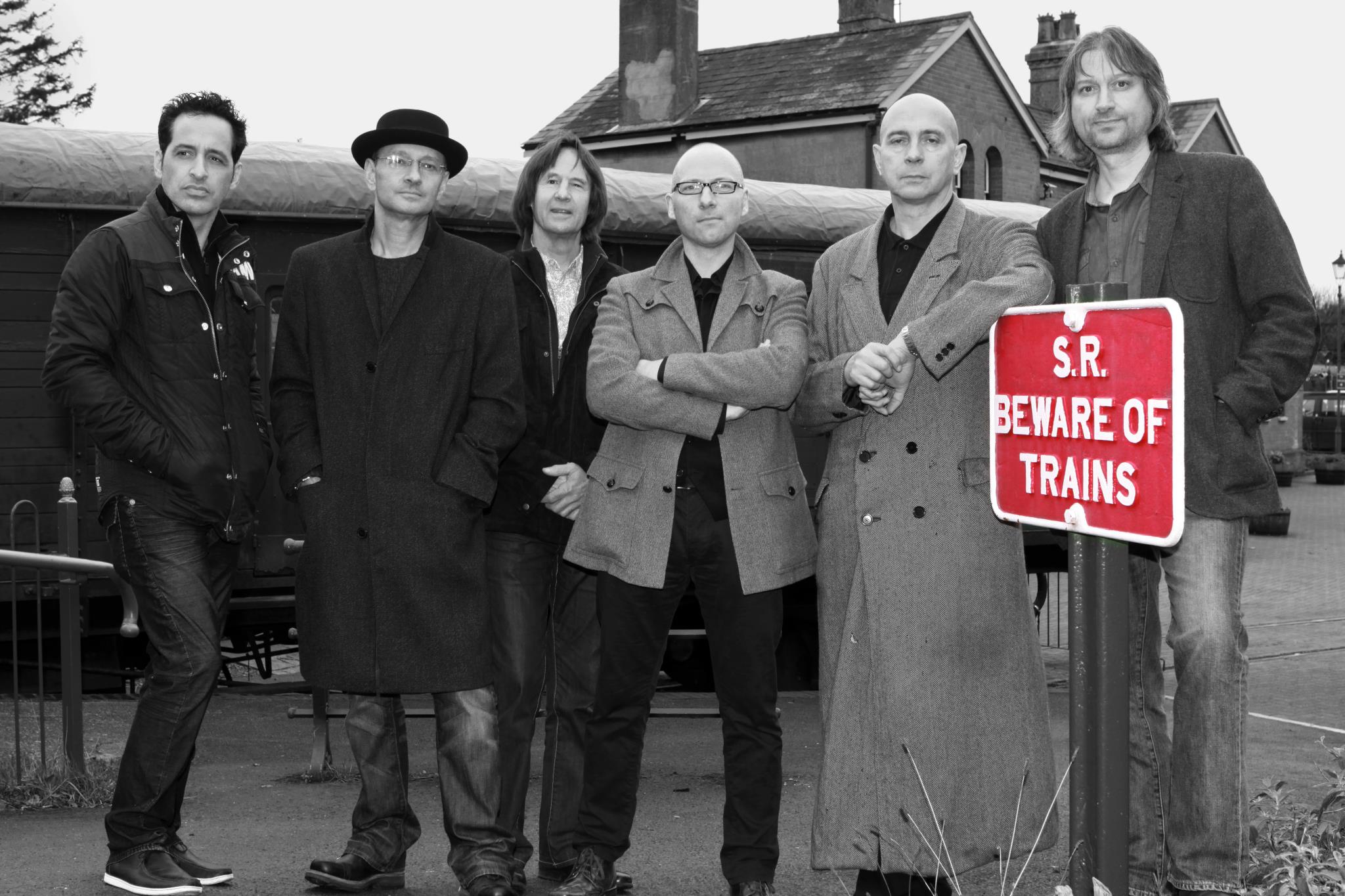
Nick, Andy, Dave, David, Danny, big red sign, Greg.
Photo by Willem Klopper.

Great news today on Facebook from the station master himself, Greg Spawton of Big Big Train.  Bassist and keyboardist Danny Manners has officially become a member of the band, joining Spawton, Andy Poole, David Longdon, Dave Gregory, and Nick D’Virgilio.

Spawton wrote:

We are pleased to announce that Danny Manners has joined Big Big Train as the band’s keyboard player. Danny made a significant contribution to English Electric Part One, playing keyboards and double bass and we are delighted that Danny has accepted our offer to join the band in time for the release of English Electric Part Two on March 4th. Danny’s past credits include Louis Philippe and Cathal Coughlan.

Manners’s training has been mostly in classical and jazz.  He writes of himself at his website:

For those who have stumbled across me: I’m a double bassist, electric bassist, pianist, arranger and composer living in London, England. Starting with classical music as a child and teenager, I worked my way backwards through jazz and finally worked out how to play pop half-decently in my thirties. Along the way I’ve also been involved in improvised and “leftfield” musics. At the moment I’m lucky enough to be doing a little bit of all of these…

He also lists an impressive discography, having played extensively with Louis Phillippe, Louise Le May, Cathal Coughlan, Sandy Dillon, and Muse: http://www.dannymanners.co.uk/albums.html

I must admit, I’m (I–ed., Brad) thoroughly impressed with this addition.  Over twenty years old, beginning with original members, Spawton and Poole, Big Big Train has never ceased to grow, take grand chances, and transform into what is arguably one of the greatest–if not THE greatest–rock band of our era.  With their near collapse after the recording “Bard,” Spawton and Poole have developed the group tremendously with “Gathering Speed,” “The Difference Machine”, “The Underfall Yard”, and “Far Skies Deep Time”.  Their 2012 release, “English Electric Part One”, has received rave reviews and has been labeled the single finest release of 2012 by a number of critics.

To this critic, “English Electric Part One” is not just the best of 2012, it’s the best rock release since Talk Talk’s 1988 magnum opus, “Spirit of Eden.”  Before that, one would have to jump back to Yes’s “Close to the Edge” or Genesis’s “Selling England By the Pound” in the early 1970s or to Dave Brubeck’s “Time Out” to find comparable works of music in the last half century.

It should be noted as well that the engineer for Big Big Train, Rob Aubrey, is the Phill Brown of our era as well.

Finally, Manners has worked with David Longdon before, and–I assume–connected Big Big Train to the famous bassist and keyboardist.

The second part of English Electric will be released on March 4 of this year.  American drummer, Nick D’Virgilio, a full-time member of the band, just finished recording the final drum parts for “English Electric Part Two.”  Additionally, the band will be releasing a limited edition of the full “English Electric” in the fall and the re-imaging of previous tracks on “Station Masters” in 2014.

Sending Art Downstream

Sending Art Downstream

I’m sharing a link here to a wonderful Pitchfork essay by Galaxie 500′s (and Damon and Naomi’s) Damon Krukowski, on streaming and the economics of sonic art.  One high point: Damon’s observation that Galaxie 500’s first record was first released only as an LP, and his next will mostly likely be released only as an LP, because streaming music services like Pandora and Spotify have made the idea of selling one’s art for a profit obsolete.  For all the bands we love on Progarchy, my guess is they face the same economic hurdles, something David Longdon of Big Big Train shared with me at any rate: they make no money, it’s a labor of love they’re lucky they’re not losing their shirts on.  On a somewhat unrelated note, I love the convenience of digital, streamed music, but I also am skeptical of it satisfying the same benefits many of us (I think) got from the LP.  Rewarded patience, a linear experience as imagined by the artist, the tactile and visual experience of the sleeve…. If streamed music also means a watering down of the artist’s reward, my skepticism grows.

Craig Breaden, January 5, 2013

But Is It Good? The Dreaded Year’s End List

Years ago, I had something of an obsession with the movie Jimi Hendrix, which was made shortly after his death, and which along with Bob Dylan’s Don’t Look Back got heavy rotation in the VCR (I had ‘em back to back on a fuzzed out VHS cassette).  Once, after watching it and glowing about it and Hendrix to my girlfriend at the time, she asked me, with a sly smile, “But was he good?”

It was a bizarre and funny question, a great question.  Because of course my first reaction, most people’s first reaction, to that question regarding Hendrix, would be, “Of course he was !#$*&^!! good!  You can’t get more good.  None.  None more good.”

But, she was testing me in a good way.  What she was asking, really, was did all that talent create something worthwhile? Shouldn’t received wisdom about art be less immutable than it often is? And suggesting, too, that even established (and dead) rock gods need new evaluation, continued consideration. This is why I think year’s best lists are something of a conceit and are really part of the pop world.  In reflecting on my favorite records of the year, I realize: there are no “new” artists in my brief list; only two of the albums were released this year; and, one of the albums is actually over 30 years old.  But ah well, nobody ever accused me of being at the cutting edge of pop.  I’m always just catching up.  These are the records that were new to me in 2012, would be of some relevance to the prog listener, and which answered in the affirmative the question, “But is it good?”

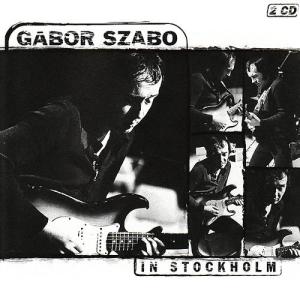
GaborSzaboIn Stockholm by Gabor Szabo (1978) – A jazz guitar master whose work with Chico Hamilton in the early 1960s landed him a solo career on the venerable Impulse! label, Szabo was at once an emblem of swingin’ 60s lounge pop and serious jazz improviser.  His Eastern European gypsy roots are all over his records, which typically capture Szabo working out a handful of originals against a backdrop of covers (these can veer towards the cheesy, but his cover of Donovan’s “Three Kingfishers” is stunning, and his interpretation of Sonny and Cher’s “Bang Bang” (with vocal!) absolutely without peer.  His 60s work is topped by “Gypsy Queen,” which a lot of us already know as the tail end/outro of Santana’s cover of “Black Magic Woman.”  Carlos loved his Gabor.  But instrumental jazz pop had a short shelf life, and the 70s saw the hits wane.  Szabo went back to Europe to record, and the album In Stockholm compiles two sessions, one recorded in 1972 and one in 1978, with Janne Schaffer (best known as Abba’s guitarist!) joining Szabo on guitar.  This is pure jam music, with rock and jazz getting equal voicings.  Bass and drums create droning, searching backgrounds on extended versions of Szabo classics like “Mizrab” and “24 Carat.”  The only distraction on the set is a nod to Szabo’s lounge-pop leanings, with the overripe chestnut “People” probably getting the best treatment it’s ever gotten but, come on, it’s “People who need people” and I personally don’t need it.  The rest of the double album more than makes up for this pale first track though.  This is first-rate stuff — really mindblowing.

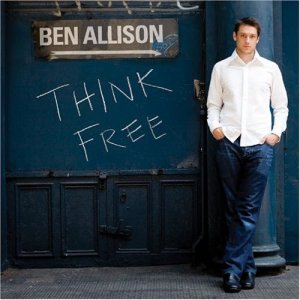
BenAllisonThink Free by Ben Allison (2009) – I love Ben Allison’s work.  He’s one of the few modern jazz composers I keep up with, and his records always have something to say.  Think Free is kind of an amalgam of older and new compositions, with “Green Al” and “Peace Pipe” getting fresh makeovers with the addition of guitar by Steve Cardenas, who’s been working with Allison the last few years.  This is melody-driven jazz that never strays into smooth territory; if anything, it verges on rock (although not as much Allison’s wonderful Cowboy Justice from 2006).  The recording is organic, earthy, with Jenny Scheinman’s violin contributing an almost rustic feel to some of the tracks.  I caught up with Think Free late and since then Allison’s released Action Refraction as well, which is also great, but the nice thing about Think Free is that I think it stands as a great introduction to his work in general.

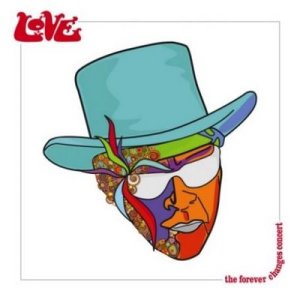
LOVE FC LThe Forever Changes Concert by Arthur Lee & Love (2003) – I may be preaching to the choir, I know, but if there is one rock album from the psychedelic era that has stood the test of time it is Love’s Forever Changes (1967).  A sonically bright, lyrically dark masterpiece, Forever Changes combined rock with smooth jazz, Spanish classical music, and garage punk, forging what is in my opinion the first American progressive rock record.  Arthur Lee, the cracked master behind Love, refused to tour outside of California, and never capitalized on the potential of Forever Changes or its two predecessors (both wonderful in their own way, and classics as well).  Jack Holzman, head of Elektra Records, has called Lee one of the few musical geniuses he ever met and signed (these are big, big words), but Arthur Lee could never translate that genius into success.  Drug problems, jail time, on-again off-again performances through the 70s, 80s, and 90s did nothing to help his legacy.  Then came word that he was gigging regularly with Baby Lemonade, a West Coast psych revival band who took their name from a song by another 60s casualty, Syd Barrett.  And in 2003, this band, with Lee fronting, performed the entirety of Forever Changes in London, a performance not only beautifully executed but also wonderfully recorded.  In fine vocal shape, Lee delivers on the promise of what Forever Changes could have been for him had he pursued it with such ferocity 35 years earlier.  That he got this down before he died is a gift to us all.  I’m embarrassed to say that although I’ve long been a fan of Forever Changes (easily in my top 5 of all time), I hadn’t heard this concert until this year.  So do yourself a favor….

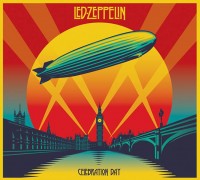
CelebrationDayCelebration Day by Led Zeppelin (2012) – Like the Forever Changes Concert, Celebration Day captures Led Zeppelin performing one show, the Ahmet Ertegun tribute in 2007.  Of course, this Zep isn’t the Zep of yore, as John Bonham’s son Jason is behind the drums, but Jason Bonham has long been the replacement of choice for his legendary father.  The wonderful thing about live Led Zeppelin is that they are like they are on their records but more so.  Make sense? Jimmy Page and Robert Plant always tend, intentionally, towards the unpredictable, even messy — and make no mistake, this is an Art — and sometimes it works, sometimes it doesn’t.  It works here.  Celebration Day finds Plant, Page, and John Paul Jones in fine trim.  Robert Plant, working the lower register, has really never sounded better, and Page is, well, Page.  He is a master of infusing the big hard rock riff with soul, wit, and the hammer of the gods.  John Paul Jones, an absolute anchor, is in a way the real puppet master of this band.  He and Bonham tie down the dirigible that is Page/Plant.  This was one show, one take, with songs that speak to fans who wore out the deep cuts:  “In My Time of Dying” (really??? Yippee!!), “Nobody’s Fault But Mine,” “For Your Life”….  Although the band has been well-documented now regarding its live performances during its heyday, this is the best live Zeppelin I’ve heard.

david_sylvian_robert_fripp_damage_reissueDamage by David Sylivian & Robert Fripp (2002) – A fellow Progarchist turned me onto this record and I was immediately blown away.  Somewhat familiar with Sylvian’s work, and holding Fripp in high esteem for his adventurousness, my first reaction to hearing song’s like “God’s Monkey” and “Brightness Falls” was an affirmation that artists like Fripp and Sylvian do better working in pairs than strictly solo.  This live set, recorded during their 1993 tour, draws songs primarily from an LP they made together, The First Day.  Fripps poetics on guitar and “Frippertronics” are matched by Sylvian’s words and voice, and backed by Trey Gunn on stick (a sort of bass with a cazillion strings), drummer Pat Mastelatto, and guitarist Michael Brook, there is a confidence in delivery that comes from two artists well into the second, third, fourth phases of their careers.  The sound is hard, funky, emotive, the sound of Fripp and Sylvian unmistakable.  The set misses “Jean the Birdman,” which they did perform on the tour but is not included here.  Otherwise this is a gem, and I’m probably going to spend 2013 tracking down more on Sylvian.

StormCorrosionStorm Corrosion by Storm Corrosion (2012) – I reviewed Storm Corrosion on Progarchy this fall so won’t go into it in great detail, but I find it a marvelous collaboration.  Like Fripp and Sylvian, Mikael Akerfeldt and Steven Wilson seem to do better working in collaboration rather than as heading groups or as strictly solo.  Perhaps it’s the balance.  In any case, this is a rich and wonderful album I look forward to getting even more out of in the next year.

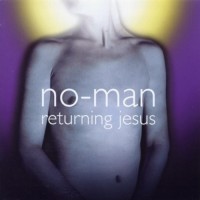
ReturningJesusReturning Jesus by No-Man (2001) – In preparing for my Storm Corrosion review, I came across No-Man, which I had never heard before.  A collaboration of Steven Wilson (instruments) and Tim Bowness (vocal), No-Man has made a lot more records than I’m comfortable thinking about because I’ve had my head in the sand this entire time.  On the other hand, there appears to be much to discover.  Returning Jesus is a great starting point.  This is slow, crooning stuff, and is much more in the vein of David Sylvian/Bryan Ferry British vocal music.  Wilson is restrained, and there is service to the song lyric here that isn’t present in all his music.  Romantic, rainy-day music, this could also be comfortable next to Johnny Hartman’s early 60s recordings.  Really, really prime.

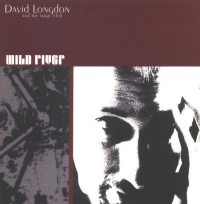
Wild riverWild River by David Longdon (2004) – I reviewed David Longdon’s Wild River on Progarchy and really would like to give it another thumbs up.  Wonderful acoustic instrumentation and production accompany David’s supple vocal, on a recording that goes fairly effortlessly from British soul ala Seal to more rustic excursions reminiscent of Ronnie Lane.  I’ll be listening to this record a lot in 2013.

That about wraps it up.  I could say that in 2013 I’ll make more of an effort to listen to new releases, but that would be a cheap promise I wouldn’t have much interest in keeping.  I’d much rather pick and choose records I haven’t heard yet, and listen because they’re good.

Happy new year!

Craig Breaden, December 29, 2013

Songs from the Hedgerow: Preliminary Awards, 2012

146BBT1by Brad Birzer, Progarchist Editor

Though Progarchy is only two months old, I’m absolutely thrilled with its successes.  A thanks, first, to all of you out in the world (it’s a blast to look at the google map of who checks us out daily) who read us.  I hope you keep coming back to us.

Second, though, an immense thanks to all of the Progarchist writers.  Everything written here is purely voluntary.  We each have full-time jobs and families, but we do this because we love it.

We’re certainly not the biggest music website, but I believe that–in terms of sheer literary quality–no other website matches us.  I would hold any one of our writers (individually or collectively) against any other group of writers in the blogosphere.  If this sounds cocky, I apologize.  But, as editor, I find it quite humbling.  We really like each other, but we also believe that the importance of the music demands that we write and try to match with our utmost abilities.  On this, I think we’ve succeeded.

Additionally, though the site is based in the western Great Lakes of North America, we also have writers from the U.K., Brazil, and New Zealand.  We’re hoping to have someone from Antarctica soon—Penguin Prog?—but, it’s been more difficult than one might first imagine.

As 2012 comes to its necessary and inescapable end, each of the Progarchists has been asked—as time permits—to rank her or his favorite albums of the past year.

I’ll be ranking my top fifteen albums as well, and I’m sure my number one pick of the year, which I think is the best album of the last twenty-four years, will probably come as no surprise to anyone.

Continue reading “Songs from the Hedgerow: Preliminary Awards, 2012”

David Longdon’s Wild River

David Longdon, Wild River (2004)

Those of us who grew up in the era of 70s rock remember a time when American FM stations played everything under the sun, and didn’t bother too much with categories, straight-ahead, punk, progressive, or otherwise.  There wasn’t really a point, because whether it was Buddy Holly one moment or Yes the next, it just all kind of got lumped together as rock — a young art, then, with lots of potential.  I think this achieved a certain illumination in those of us tuned in, to the potential of finding complex worlds even in the simplest of songs, and fresh air in a 12-minute time-changing epic.  There’s a lot of discussion on Progarchy, veiled and explicit, about what prog is.  This is as it should be, because there are so many reasons for why music achieves progressiveness.  It can be a splatter-art dionysian revelry or a heavily-mannered architecture, but it is the intention that is perhaps similar in the various executions of the art, and why, as I mentioned in another review, prog is riskier, more failure-prone, than, say, old time music or country blues or punk.  It is duty-bound to ‘prog’-ress.

I believe one of the ironies of the story of progressive rock is its oft-pointed-to golden period, roughly the early- and mid-70s, when the storied and hairy pioneers of the genre rolled in semi-trucks over the land, painting broad swaths of sidelong vinyl canvas with twiddly squonks and noodly solos, periodically emerging with a real gem that actually sold respectable numbers of triple gatefolds.  Genesis, King Crimson, Yes, Supertramp, Rush, Barclay James Harvest, those semi-truckers ELP, and the hosts of second stringers who got enough traction with either the freakout crowd (Hawkwind, Gong) or the Middle Earthers (Uriah Heep, Gentle Giant) to keep working bands out on the road for decades longer than anyone would imagine.  Then, chapter two, punk raises its head, and the proggers flee their patch bays for the comfort of (often very good, and often quite proggishly weird) new wave pop, digestible without having to get up for a pee mid-song.  Yup.  For every Foxtrot there are thousands of copies of Abacab, for every Close to the Edge there are bins-full of 90125.  Shall I enumerate the ratios for Rush and Supertramp, too, to this crowd? I think not.  You hear me.  This eventuality was not a bad thing — the proggers were striving to keep their muse alive in an era of undeniably important cultural change — and I think it by and large says a lot about the survival instincts and musicianship of the first-stringers.  Yes, I will always wish Rush had another “Xanadu” in them, but am also glad they figured out how to edit.  Now to the irony:  the prog “revival” tends to focus on the lengthy suites favored by the hairy period of prog, rather than the pop songcraft that came with short back and sides.

David Longdon’s record Wild River fits into the song-driven, streamlined version of progressive rock circa 1980.  Not to say it’s retrograde, but rather that it is essentially a pop record with a prog pedigree.  Longdon, who joined Big Big Train as vocalist in 2009, has a vocal timbre very close to Phil Collins and Peter Gabriel, and in fact worked with Genesis as a possible replacement for Collins in the early aughts.  He did better finding Big Big Train, I think, and Genesis probably did worse in not choosing him.  In the interim, Longdon produced 2004’s Wild River, a lovely collection of succinct tunes that I find expressive and joyful, light (as in luminous), and full of the twists and turns that should keep close listeners tuned in.

“Always” opens the record with a briskly fingerpicked guitar, bass, and drums, and a nice Hammond organ.  Longdon’s vocal is fluid, jazzier than his closest comparisons Gabriel/Collins, and the song has “hit” written all over it.  It is like Seal’s best work, and is also reminiscent of that period in the early 90s when the pendulum was swinging from both grunge and synth pop to a more organic sound championed by producers like T. Bone Burnett.  The balance of the record lives up to these set expectations, with an earthy, upbeat acoustic approach brightening the songs.  The sex romp of “Honey Trap” is fun, nice and hooky, darkened by the mixed emotions of the narrator.  “Mandy” is where the mandolin kicks in (Mandy/mandolin?), but there is no forced quaint-ization because of it; flanked by organ, drums, and electric guitar, with a ska section in the chorus, it actually works. That said, a mandolin and an English singer always makes me think of the venerable and much-missed Ronnie Lane, who knew himself how to work these elements, and who I could see singing the hell out of this song.  Thankfully, Longdon does this himself, doing justice to a tune about, as far as I can tell, the politics of relationships (nothing new, but effectively and hazily wrought).  Here’s the thing: I’m one of those listeners who discerns the lyrics last — I’m just much more interested in how a song’s layers and textures fit together.  I listened to this song about five times and until I wrote this review I didn’t care what the lyrics were about, it’s just a great tune, where the vocal is another instrument.  Which is why I knew I was going to like this record.  It works as a musical piece first, and the lyrics work as lyrics should, a combination of poetry, narrative, and tune.  It’s a master working who can take a line like “You decide, my feet are on the ground,” and shape it to a melodic hook.  “About Time” adds strings and a creeping dissonance, again with a short ska section in the chorus (and again effectively done — this is not a worn device).  While comparisons fall short, I see a certain Nick Drake angle working here, with Bryan Ferry looking on.  The Englishness, in other words, is more than apparent, but that’s what this music is, and it works.  “Vertigo” boasts the line, “Vertigo, look out below, all my surroundings are spinning around, must be the masochist in me that wants another chance.”  I find this compelling rather than precious, and the arrangement is so variegated that I’m shaking my head:  this is a pop tune.  Broadway should be knocking at Longdon’s door, but he’s better than that, I think.  His are not vocal gymnastics for the sake of impressive technique.  He serves his songs.  And that’s perhaps what makes this album transcend.  To reference Bryan Ferry again, Longdon has the similar ability to create a soundscape that centers on his vocal but doesn’t depend on it solely.  The mid-paced title track sets the tone for the record and is its literal centrepiece.  “Life is a wild river, not a low cut stream, and I need to believe, I need to hang on, to hold on to someone,” Longdon sings, his British R&B working a ground often neglected since the death of Dusty Springfield.  It works as the album’s middle piece, and the followup track, “Loving and Giving,” is reflective, slowing the pace further.  But with “In Essence” the valley is crossed, the ground rises and the pace picks back up.  This is album crafting, and “This House” rocks out, harmonica hitting a soul note with a bullet mic vocal treatment and dirty guitar giving the lie to wallowing in one’s self-pity.  “This house doesn’t feel like a home anymore” might read like a pop-psych platitude, but Longdon sings it like the universal sentiment it can be, tapping into a commonality we can all relate to.  “Joely” goes to guitar and string quartet, with a hoedown fiddle, profiling what I imagine is a young woman whose life has gotten away from her:  “Joely, the world’s your oyster, Take a knife, open the shell, and sever the creature.” How can this sound so good? But it does. Progress. And then the spoken poem at the end….  Poetry. Narrative. Tune.  “Falling Down” follows, with a rubbery bass and a Gabriel-esque delivery, balances holding on to the past with working towards the future.  This may be the mate to “Wild River,” urging onward in the face of history — “I can’t say I’m not dissapointed,” Longdon sings, and I don’t know about you, but I can relate to this some of the time — dashed expectations happen, they don’t have to define our lives, but they’re there.  The final track, “On to the Headland,” is an optimistic last salvo, solo guitar and voice.  Lighters up, please.  We’re moving forward, damn the torpedoes.

I really like this record and I’ll be presumptuous and say you should too.  But be prepared to only find it on Big Big Train’s site.  Not on iTunes, not at Amazon, not at Emusic.  What the ?#@>????  There is no reason on earth this shouldn’t be out there.  N.B. David Longdon and BBT:  give it up, proggers. Great records deserve a listen.

[David’s album, Wild River, can be ordered here.]

A Beginner’s Guide to Big Big Train

Dear Progarchists,

My apologies for the absence of posts yesterday, November 15.  I’m in the middle of round two of grading freshmen papers and midterms, and life overtook me this week.

It’s late Friday afternoon as I type this in Michigan, but I still have one more academic event today.  At six (in about 2 hours), I’m giving a lecture on The Killing Fields, the sublime 1984 movie about the holocaust in Cambodia, 1975-1978.  As I think about watching that movie for the first time, I get chills.  What horrors humanity creates for itself.  But, that’s a different topic.

As the sun streams into my office window, I’m in the mood for much more pleasant things.

In particular, I’m thinking about the majesty and wonder that is Big Big Train.  I saw a Twitter post two days ago from a friend who expressed shock at the intensity and greatness of BBT.  In a way, I’m incredibly jealous those who have yet to experience BBT for the first time.  So, for those who have not had the grand pleasure that is listening to BBT, here’s a guide.

And, just so I make myself as clear as possible: the new BBT album, EEP1, is the equal in greatness of Talk Talk’s 1988 “Spirit of Eden” and Genesis’s 1973, “Selling England By the Pound.”  This is, without question, a must own for any lover of music, progressive or otherwise.

As many times as I’ve heard it, there are several tracks that still make me what to blaze a path toward social justice and there are several that just make me smile, for the opening note to the last.

But, certainly, nothing on this album is frivolous.   Each track is fraught with meaning.

***

On September 3, 2012, Big Big Train released its latest best studio album, English Electric Part One.  It is a thing of truth, beauty, and goodness in every way.  Part Two arrives in March.  From what I’ve seen on the web and through brief correspondence, it looks as though Part Two will be every bit as intense and glorious as Part One.

Thank to the good will of webeditors, Winston Elliott, Josh Mercer, and Carl Olson (the last, being a full fledged citizen of Progarchy), I’ve had the joy of writing about BBT a number of times..  Last summer, the band released an epic single dealing with the life of St. Edith.  To see this, click here.  http://www.catholicvote.org/discuss/index.php?p=19315

If you’re new to the genre of progressive rock, which its fans rightly consider every bit as good if not better than the best of jazz (equal in musicianship, but superior in inventiveness and, of course, lyrics, since jazz is generally without vocals), I’ve tried to explain and defend the genre to specialized audiences here: http://www.nationalreview.com/articles/299126/different-kind-progressive-bradley-j-birzer

And, here: http://www.ignatiusinsight.com/features2011/bbirzer_progrock_may2011.asp

On my personal blog, Stormfields (www.bradleybirzer.com), I’ve had the great pleasure of writing about some of my favorite bands: Big Big Train, Matt Stevens and his The Fierce and the Dead, Talk Talk, the Cure, Rush, The Reasoning, Arjen Lucassen, Tin Spirits, and XTC.

At my main professional site, TIC (founded by Winston Elliott, the main editor and brain behind it), I’ve also had the good fortune of writing extensively about Big Big Train:http://www.imaginativeconservative.org/search/label/Greg%20Spawton

While I couldn’t even come close to calculating how many words I’ve employed in writing about progressive rock over the years, the same would be even more true regarding my favorite, Big Big Train.

The latest BBT release, English Electric Part One, is not only BBT at its best, it is art at its absolute best.  Best described as pastoral, Georgian, and bucolic, the new album is also eccentric (without ever losing its center), intense, brooding, meandering, reflective, joyous, and deeply vernal.  This is something new, as BBT has traditionally explored the more autumnal aspects of life.

It’s also simply hard not to love these guys on a personal level.  I started corresponding with Greg Spawton several years ago, and he responded immediately and with what I quickly discovered was his characteristic wit and kindness.  After all, who was I–just some goofy guy from the U.S. who happened to fall over myself explaining why I loved BBT.  I once wrote something similar to Neal Peart.  I got a nice postcard back two years later.  But, from Greg, a friendship emerged.  Now, my kids even color pictures for him and ask how my “English rock star friend” is doing.  I have found that all of the members of this band are similar in this regard, and it’s very, very clear by their art that they love one another in a way only brothers can.  Indeed, they face the world not as individual artists, each pulsating with radical individuality, but as a band, ready to leaven all that is good in the world.

A quick look at the wide-ranging debates on the BBT FB page shows how many wonderful and meaningful folks gravitate toward this band and remain to talk some more!  Some of these people have also become good friends, though I’ve yet to meet a single one, face to face.

Greg Spawton and Andy Poole formed the band in the early 1990s, and they’ve since added some of the absolute finest musicians of our day: American drummer Nick D’Virgilio (rivaled in drumming only by Neal Peart of Rush and Mike Portnoy, formerly of Dream Theater), guitarist Dave Gregory (formerly of XTC and currently of Tin Spirits) and flautist and singer, David Longdon, a music professor and folklore and folk music expert.  Augmented by a professional team, in particular engineer and producer, Rob Aubrey, BBT makes music that reflects not only the woes, sufferings, and glories of this world, but without timidity, of the next world.  Imagine the three parts of The Divine Comedy come to life, and you’ll get a sense of what BBT is doing.

Spawton and Longdon, the two main writers of the lyrics, are clearly well read and articulate.  Listening to a 2-hour interview with David “Wilf” Elliott (no relation to the famous Texan cultural critic, Winston Elliott) this past weekend reminded me once again how excellent true conversation among friends and professionals can be.  I would give much for our loud talk show (Mike Church excepted, as always) and TV show hosts in this country to take notice of what educated and purposeful English gentlemen can do.  To here the interview, go here: http://www.theeuropeanperspective.com/?p=1764.  I would not be surprised if these five would’ve been welcomed in the Thursday evening discussion in the 1930s in C.S. Lewis’s rooms at Oxford.

It’s also worth calling Rob Aubrey, who engineered the album, a sixth member of the band.  Aubrey is the Phill Brown of our generation.

To conclude this late Friday afternoon piece, let me encourage you to purchase a cd from Big Big Train. http://www.bigbigtrain.com/ This is a band that not only pursues, as mentioned above, the Good, the True, and Beautiful, but they are entrepreneurs, each trying to make his way in this rather fallen world.  For over twenty years, they have chosen not to pursue the commercial path of pop culture sensations and corporate conformity.  Every writer for and reader of Progarchy knows too well that the once successful system of patronage is long gone.  We must be willing to support culture and art where it emerges.  I promise you, the music of Spawton, Longdon, and Co. will not disappoint, and the band is well worth supporting.

If you’re still not convinced, try one of their many songs for free here: http://www.bigbigtrain.com/main/listen

They’ve certainly changed my life and only for the better.