Bridging Distance and Defying Genres: An Interview with Flip a Coin on Their Debut Album Reunion

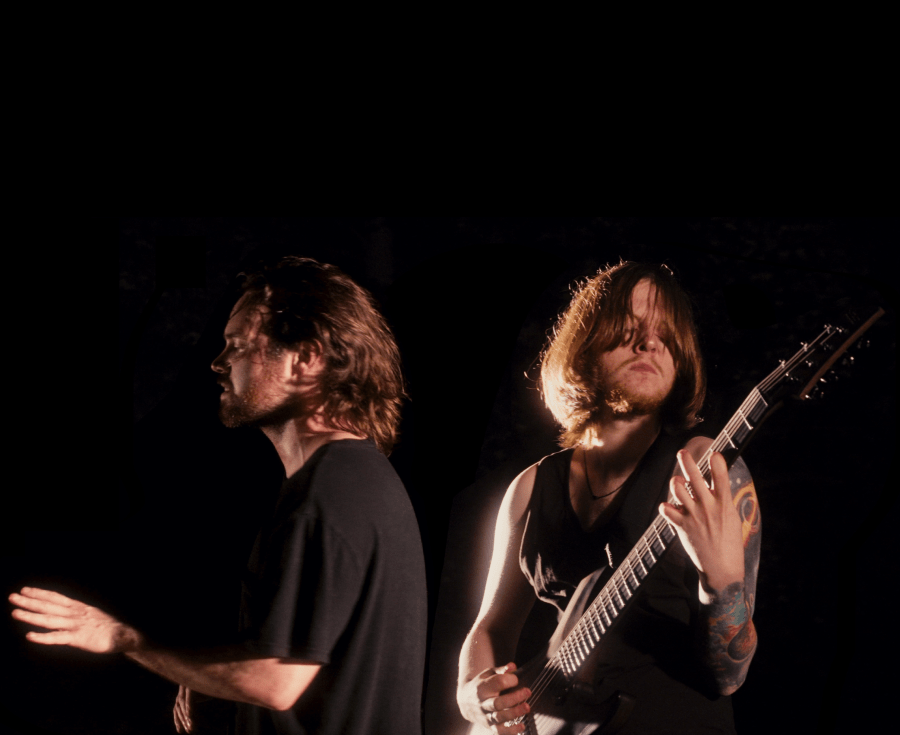
Flip a Coin is an international progressive metalcore duo, comprised of Czech guitarist and songwriter Tomáš Biza and American vocalist Heyden Smith. Despite the challenges of collaborating across a seven-hour time difference, the duo released their highly anticipated debut album Reunion in June 2024. Blending elements of melodic post-hardcore, deathcore, and progressive metal, Reunion showcases the band’s versatility and willingness to experiment with diverse sounds. In this interview, Tomáš and Heyden discuss their collaborative process, the creative evolution of Reunion, and how they navigate the unique challenges of being an international band.

How did Flip a Coin come together as an international duo, and what challenges have you faced working across a seven-hour time difference?

Tomáš: The distance between us brings forth challenges both in the creative and production side of things. Being able to sit in the same room and just vibe and bounce ideas one from each other in real-time is something I think we both long for. Production-wise, we both depend on just our own knowledge of how to actually record ourselves and use our gear in the best way possible, which can be a limiting factor sometimes.

Heyden: There’s limited amount of time in the day to talk about things in real time. Shout out Tômas for being willing to have midnight video calls in his time zone. I do feel like we’ve developed a pretty good process of collaborating over the past few years.
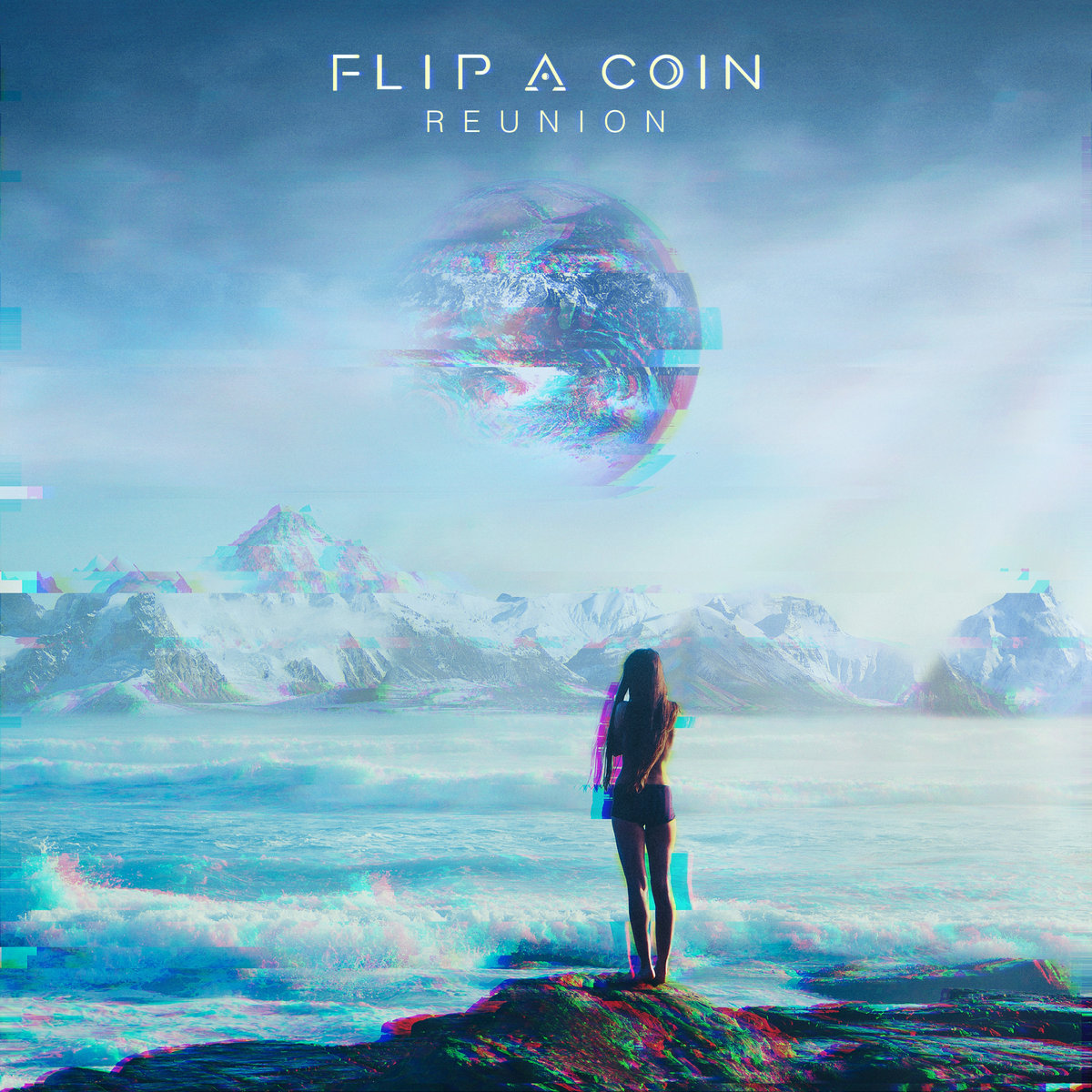
Your debut album “Reunion” represents four years of creative growth. How did the collaborative process evolve over those years, and what were some of the key milestones?

Tomáš: I think the most key moment came from before this album even happened, and that was the release of our first single called Haven four years ago.  Once that was out, we knew like, yeah. We can actually do this. And that was super affirming. During the process of working on Reunion, though, I’d say fully finishing the longest song on that record, False Promises, felt like a real landmark.

Heyden: These songs weren’t recorded in one batch. There wasn’t really a demo process. We were kind of writing and recording them at the same time, and I think you can hear that across the different songs. “Lifestream” and “False Promises” were recorded close to a couple years apart, so I definitely think we brought some new tricks with us into that song.


The album spans multiple subgenres, from melodic post-hardcore to borderline deathcore and progressive metal. How did you decide to embrace such a diverse range of sounds on “Reunion”?

Tomáš: To be honest, that was not a completely conscious decision! My music taste leans towards albums where I feel like each song has it’s own identity, that every song does something a little bit different from the rest. And so that’s just where my songwriting takes me naturally.

Heyden: I’m a fan of bands that fall into all of those subgenres, and plenty of non-metal stuff too. I’m always excited to experiment with songs that are outside of what I’m used to performing. It’s a huge reason I joined Flip a Coin.

How do you manage to maintain a cohesive sound across the album when experimenting with so many different styles?

Tomáš: But do we really? Haha. I believe that is mostly Heyden’s work, he brings his own vocal style into each song and that sort of ties it all together and makes the differences less jarring. If it wasn’t for his singing the album would feel much more disjointed since the instrumentals are so vastly different.

While the songs are pretty different from each other, I think we both have our own style that we bring into every song. At this point I’ve jammed our demos enough to know a Tomâš riff when I hear one…and the riffs he’s cooking up are quite tasty. 

“Reunion” feels like a very cinematic album. How do you approach writing music that feels as immersive and dynamic as your tracks on this record?

Tomáš: I’m so happy you used the words immersive and cinematic, because that is exactly what I was trying to achieve with the sound of this record! I did this with layering many different instruments – guitars, synth pads, strings – on top of each other; just when I thought it was enough I always tried to take it one step further. Then contrasting these parts with more raw sounding sections creates that sort of experience. Also lots of samples and special effects. I wanted each song to feel almost like a movie, sort to speak.

Heyden: That’s all Tomâš. I think this aspect of our music lent itself well to the lyrics that are more story-driven in “False Promises” and “Passengers”. My inner theatre kid definitely came out in my vocal delivery for those. 

Tracks like “Lotus” and “Lifestream” have a strong melodic focus, while others like “Amaterasu” lean towards a heavier, deathcore sound. How do you balance melody and aggression in your songwriting?

Tomáš: It’s very much about where I’m at life during the time of writing, or what bands I’m currently listening to, or just the mood and feeling I’m trying to capture. I have a good image in my head of what kind of song I’m trying to write almost every time before I even pick up my guitar.  Sometimes I’m going for a rather pretty and melodic sound, other times I want to write something dark and heavy. Songs like Lifestream or Passengers strike a good balance of both, I think.

Heyden: It all starts with what Tomáš brings to the table instrumentally, although I try to avoid predictability when I’m writing vocals. There’s kind of a tired trope of singing on melodic parts and screaming on heavy parts in a lot of modern metal, which I find boring. Ultimately though, I try to just embody the emotions the song makes me feel. 

Heyden, as a vocalist, how do you approach matching the intensity and emotion of the different styles of music on “Reunion”?

Heyden: I think all music that makes you feel something has a good grasp on tension and release. I try to tell a story with each song where it has ups and downs and recurring themes. Bringing back certain parts in a new way kind of helps tie everything together. Other than that, it’s getting out of my head when I’m tracking my takes. Trying to worry less about hitting a note perfectly and trying to be “in the song”, for lack of a better term. 

Tomáš, you not only wrote and played the music but also handled the production, mixing, and mastering. What were some of the biggest challenges of wearing so many hats on this album?

Tomáš: I’d say the biggest challenge for me is bridging the creative and production processes. Sometimes the parts I write end up sounding very different from what I heard in my head once they‘re recorded and fully fledged out. So failing to translate my ideas into the actual music can be frustrating. On the other hand, this can also make for some really cool, unexpected moments. Being in complete control over the entire process from start to finish is both a blessing and a curse.

The album features guest musicians like Michael McGinley on piano and Jake Maaka on vocals. How did these collaborations come about, and what did they bring to the project?

Tomáš: Jake was featured on a very heavy piece of music I was enjoying a lot a few years back, and when I wrote Amaterasu, I realized he’d be the perfect person to have a feature on it. The piano parts Michael wrote for Lifestream were the last piece of the puzzle that interlocked the different sections of the song. I still remember the moment when I heard what he wrote for the first time, I was honestly shocked by how well it hit the spot. 

Heyden: Michael McGinley is my dear friend and bandmate in my other project Flora Nova. Check that out if you want to hear more of him shredding on the keys. I thought Jake brought a visceral kind of aggression to “Amaterasu” that fits so well, and his delivery on the chorus had similarities to Tommy from Between the Buried and Me who is one of my favorite vocalists. I liked filling in on backing vocals for that song and playing off of his melodies. I think both features brought influences to the album that we wouldn’t have otherwise. 

“Amaterasu” is one of the heavier tracks on the album. Can you tell us more about how this song came together, and what inspired its powerful sound?

Tomáš: The first half of the song basically wrote itself over a span of a few days. At that time I already knew this one had to end up being a single because of the super straightforward structure and open chorus. I even think it’s the song with the earliest chorus on the album? However, then I hit a brick wall with the ending and it took me 2 years to come back to it. As far as inspiration goes, it’s a very Veil of Maya inspired song.

With “Reunion” being your debut album, how do you feel it sets the tone for Flip a Coin’s future? Are there any particular directions you’re excited to explore moving forward?

Tomáš: As you’ve mentioned, the album features a very wide sound palette, and I’m super happy about our debut album having this kind of character. That’s because it shows we can do it all, and it sort of leaves you wanting more while not knowing what to expect next at the same time!

Heyden: It’s good to have it out there! I’m excited to get more experimental with the next batch of songs and expand on the variety of sounds we were able to achieve on this album. 

What are some of the major influences, both musical and non-musical, that shaped the sound and themes of “Reunion”?

Tomáš: I started writing this album right after I moved away from my family and entered college at 19. Now I’m 23, and I think I don’t have to explain how so many things happen in a person’s life during this period. It was a rollercoaster and all these experiences served as a fuel for writing and are reflected in the album. Sound-wise, I drew inspiration from many of my favorite records which came out during that time, most notably from bands like Periphery, ERRA and Counterparts. 

Heyden: It probably comes as no surprise that I joined this band after seeing a post from Tomáš on the r/periphery subreddit. They’re definitely a huge influence for both of us. In the realm of prog and metal, Protest the Hero, The Contortionist, and Corelia have been pretty big influences on me. Both Tomâš and I are into sci-fi, so that’s where some of the more conceptual lyrics came from. The rest is inspired from both of our perspectives on past relationships, loss, mental health, and personal beliefs. 

Given the album’s independent release, how have you approached getting your music out to the world and building a fanbase for Flip a Coin?

Tomáš: Making music is an outlet for both of us, and so that’s the most important aspect before anything else for the band. I personally really enjoy the visual aspects as well, so coming up with the artwork and music video ideas was lots of fun and I feel like it can help connect with our audience. For our guitar oriented fans, I’ve also recorded guitar playthroughs for some of our songs and tabbed them out, you can find that stuff on our YouTube and Bandcamp.

Heyden: We put out music videos for “Lifestream” and “The Algorithm” and a few more visualizers for “Lotus”, “Insomnia”, and “Amaterasu”. We’ve also pitched music to some playlist curators. It’s tough when you can’t promote by playing shows and finding a scene to be a part of. Ultimately though, we’ll write this music whether there’s a fanbase or not. It’s first and foremost a passion project and an outlet for creative expression. 

Reunion is out now and is available from Bandcamp, Spotify and Apple Music. Follow Flip a Coin on Instagram, and like them on Facebook.

Concert Review: TesseracT Live in St. Louis, 10/21/23

TesseracT, Live at the Red Flag, St. Louis, MO, October 21, 2023
Opening acts: Alluvial and Intervals
TesseracT Setlist: Natural Disaster, Echoes, Of Mind – Nocturne, Dystopia, King, War of Being, Smile, The Arrow, Legion, The Grey, Juno
Encore: Concealing Fate Part 1: Acceptance, Concealing Fate Part 2: Deception

Hot off the heels of the release of their best album to date, TesseracT lit up St. Louis last night – quite literally. You’d be hard-pressed to find a band with a more interesting and atmospheric lighting setup. Between the strobes and the many light bars set up along the stage, the band creates a unique stage vibe with their light show. But I’m getting ahead of myself.

I’m a toddler TesseracT fan, having really only dug into them with the release of the brilliant livestream turned live album PORTALS in 2021. I’ve been aware of them since at least 2015 with the release of live album Odyssey. I would always give their records a chance, but at the time I didn’t really get it. I suppose the combination of my maturing tastes and the release of PORTALS perfectly coincided, and TesseracT have since become one of my favorite bands. I was very excited for the release of their latest album, War of Being (yes, I need to review it). With tickets pretty affordable, even for premium balcony seats at a small venue, I decided this show was not to be missed.

I hadn’t been to a show at the Red Flag before. It’s essentially a rectangular-shaped club with the stage on one of the long sides and a balcony on the back side and the left-hand short side. I got there early and was able to get a spot just to the left of the sound booth. I generally dislike these club-type shows because you have to stand for 4 hours, but the balcony had seats and a rail with a little table, so it was a super chill spot to watch the show, and the view was absolutely perfect.

The venue is in St. Louis’ midtown next to Saint Louis University. As such I figured there would be more options for food. Nope. The only two restaurants near the venue had stated closing times of 7pm on a Saturday, which is beyond lame, but even lamer was they were both closed by 6:15 because they sold out of food. So if you ever come to the Red Flag for food, don’t come hungry. Clearly I should have planned better, but come on. You expect food to be available near a concert venue on a weekend.

The guy behind me in line had a Soen shirt on, and after I had a run-in with a praying mantis that dropped onto me from the tree above, I struck up a conversation with him. Turns out he was from Chile in the US temporarily on business and had driven down from Milwaukee primarily to see Intervals, one of his favorite bands for a long time but that he had never had a chance to see. He also had a balcony ticket, so we hung out for the rest of the night chatting about prog and metal. It was great to meet you, Sebastion. I told him I always meet somebody cool at these prog concerts, and he commented about how chill prog and metal fans tend to be. I saw this in action when part of the crowd turned into a mosh pit multiple times during the night and every time someone fell down, the others in the pit immediately picked them up and made sure they were ok.

I was unfamiliar with both Alluvial and Intervals, but both put on solid performances. Alluvial could be described as more death metal, and as such I didn’t understand a single word of the vocals. But the band played heavy and tight and brought a solid energy to the room.

Intervals really surprised me. They are an all-instrumental melodic progressive metal band with some djent influences. They reminded me a lot of Polyphia. They played a blend of their old and new music, and even that reflected the changes Polyphia has made, with the older music being heavier and the newer far more technical. Intervals is the brainchild of lead guitarist Aaron Marshall, who can really shred. Sadly they had some tech issues multiple times. At one point, their entire sound went dead, so the drummer used it as a chance for an impromptu drum solo. Then during another song Marshall’s amp went dead. There wasn’t much he could do while his techs worked to fix it, so he played his solo anyways even though nobody could hear it. Despite the setbacks, they put on a solid show and are definitely worth checking out.

The stage was cleared for TesseracT, leaving them with a clean workspace, much appreciated I’m sure by the barefoot Amos Williams (bass). The stage setup featured a lineup of vertical light bars behind the band and several light boxes at the sides of the stage and around the drum kit. These were used to great effect throughout the set, along with the overhead lights and the smoke machine. Despite being a small stage, the clean layout and lighting made it seem much bigger.

The band jumped right into it with the first two tracks off their latest album, both of which are heavy and full of energy. These songs gave vocalist Dan Tompkins a great opportunity to show the range of his voice and the heavier edge that the new album has compared to their last few records.

Despite playing for only about one hour 15 minutes, the band played songs from every album, and every one was expertly performed and equally well received by the excited crowd. The band even got my lazy butt out of my balcony seat. The setlist on this tour includes “The Smile” and “The Arrow” played back-to-back for the first time. Those songs close off 2018’s Sonder, and they sounded fantastic live. That album also was well represented at the show with “King” and “Juno” getting played.

Some bands have musicians that stand out with flamboyant and virtuosic performances, but TesseracT’s members work together to create a wall of sound. The technicality is on full display when you watch the fingers of lead guitarist Acle Kahney, rhythm guitarist James Monteith (who looks like he’s 7 feet tall), and bassist Amos Williams. But they aren’t particularly showy about it – they let the music speak for itself. Williams is probably the most mobile of the band aside from Tompkins. Jay Postones is also a machine on the drums.

Due to the wall of sound style of production TesseracT uses, the band uses sequencers to fill out the background of their sound. The result is their live shows sound very similar to their albums, which is a win in my book.

The vocals are also heavily layered on the records, and you can hear those backing tracks in the live show too, which gives Tompkins some wiggle room if he isn’t feeling a particular note on a particular night. He easily has one of the best voices in the business. His range is impressive, and he has added new styles of distorted vocals on both the new album and in the live show. That was most pronounced on the tracks from the new album. My favorite is “Legion,” which I think may be my favorite TesseracT song overall. The performance certainly grabs your attention on the record, and it was equally impressive live. He hit some very high notes on that song, and the distorted vocals on the track are some of his best.

His banter with the crowd was also solid, giving him a firm command of the stage and the crowd. He mentioned the long five-year gap between albums, promising that it wouldn’t take that long for them to make a new album. He also hinted at a return to the US and St. Louis next year for another tour.

The light show certainly adds to TesseracT’s overall stage presence. If you’ve watched PORTALS or seen them live, you know what I’m talking about. The lighting often makes the band stand out as silhouettes, which furthers the idea of TesseracT’s sound coming from the whole rather than any one player. It can make it a little difficult to see clearly at times, but the total result is an impressive headbanging affair.

My only complaint would have to be with the length of the setlist. I definitely wanted more. Sure, it was a long night with two opening bands, but I really wanted to hear more from TesseracT. I was surprised to see how many people left after the band walked offstage after “Juno.” They gave it a minute or two before coming back on for an extremely heavy closer of “Concealing Fate” Parts 1 and 2. Even though it may have been short, it was a solid set. Every song was stellar, and the band played their heavier moments. With a longer set, I would expect some more extended atmospherics from the band, as we saw on PORTALS.

Overall I had a blast seeing TesseracT, as well as their openers Alluvial and Intervals. This was the first concert I’ve been to this year, and it didn’t disappoint. If you get a chance to see them on this tour, don’t miss it. The prices are reasonable, and the performance is stellar. They’re touring the western US and then the southern states over the next few weeks before traveling back to Europe for some shows in early 2014 and then a tour leg in Asia and Australia.

You can find upcoming tour dates at TesseracT’s website: https://www.tesseractband.co.uk

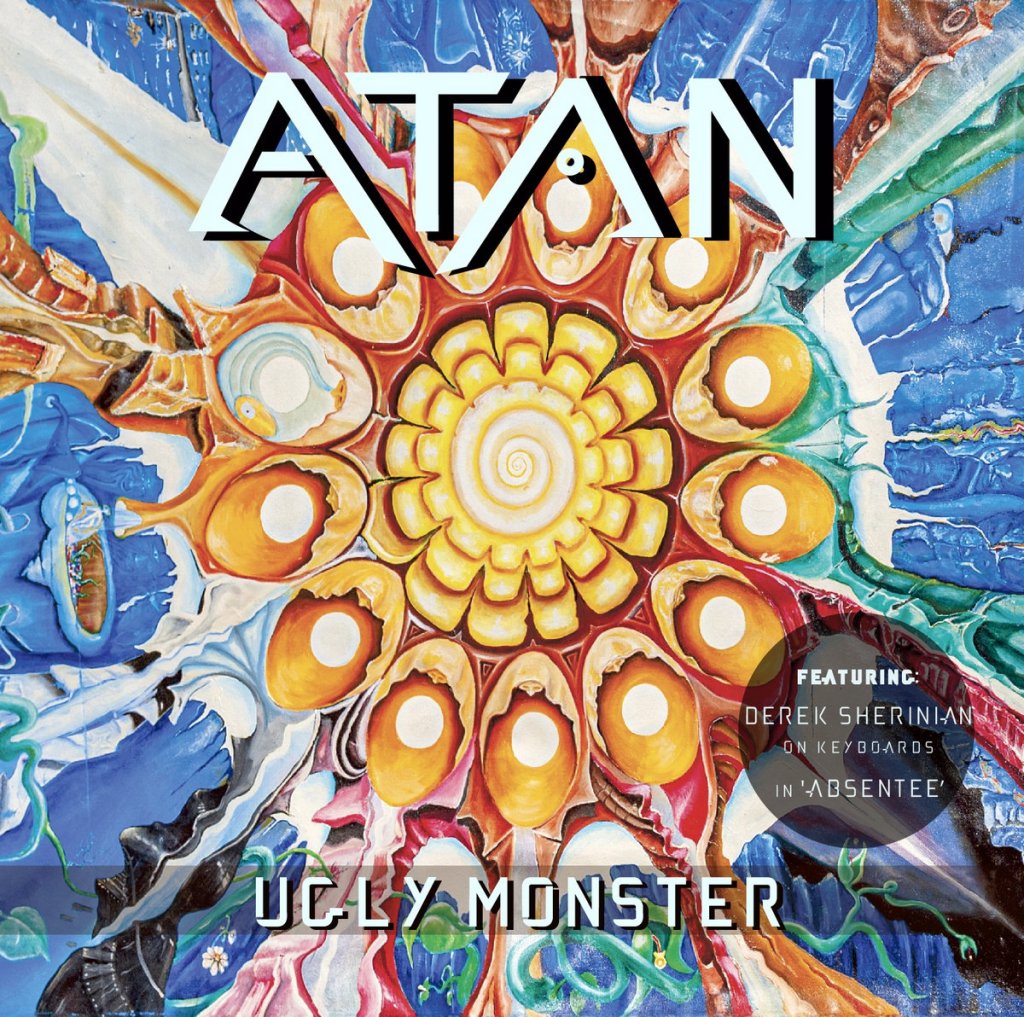
Album Review – Atan’s “Ugly Monster”

Atan, Ugly Monster, 2022
Tracks: Clenching Teeth (4:04), Abducted (5:30), Faces (4:33), Ugly Monster (3:36), Origami Doll (2:37), Protected (5:45), Words (5:30), Sorrow (5:41), The Mind (4:51), Second Fig (4:43), Absentee (Bonus Track featuring Derek Sherinian) (6:28)
Players: Claudia Moscoso (vocals), Andrzej Czaplewski (guitars, samples and synths), Jerry Sadowski (drums), Marcin Palider (bass)

While Atan recently released a new EP, here at Progarchy I seem to be stuck living in the past (I am an historian, after all). Last year’s Ugly Monster was the band’s debut, and it stands tall for a debut record. Featuring a blend of heavy progressive metal subgenres led by female vocals, Ugly Monster has offered a lot to enjoy on repeated listens.

Just as comfortable exploring a spaced out metal zone a la Tool as they are a smash-mouth djent riff, Atan easily and interestingly bend metal subgenres throughout the course of the album. The only song where it doesn’t work for me is “Origami Doll,” where the track takes on a Japanese-influenced style of metal. That likely appeals to some (like it or not, Babymetal is popular for a reason), but it isn’t my cup of tea. Thankfully that’s the shortest song on the album. Musically the song is fine, but the vocal lines do nothing for me.

Atan is at their best when they blend both ends of the metal spectrum – moving seamlessly in and out of heavy, gritty bass-driven djent riffs with passages of minor-key spacey metal brilliance. In many ways “Protected” sounds like it could have come off Meshuggah’s last album, which featured a healthy dose of quiet but densely brooding tracks. Atan also tries their hand at a wall of sound approach to metal with “Words.” A slower track, the guitars seem to create a wall in the midst of the mix. The result reminds me somewhat of Chevelle with a mix of Devin Townsend. Or Tool. That’s probably a better comparison. “The Mind” has a touch of Rush with the bombastic drums and towering guitars punctuated by higher end vocals.

The bonus track features some synthy noodling by Derek Sherinian, who often does keys for hire for bands looking to add a little something to their songs. I’m often skeptical when bigger name musicians do this, but it really does add a lot to this track and to Atan’s sound. I hope they add more keyboards to their sound in the future.

Atan really took me by surprise with this polished and mature record. It contains plenty of variety in terms of styles of metal without feeling disjointed. The album isn’t overly heavy or djenty, despite displaying those influences. As such, progressive rock fans more skeptical of the heavier end of the genre should still find much to appreciate on Ugly Monster. It holds its interest, and I think the band have a solid base to build upon in future releases.

http://www.atanband.com/index.php
https://www.facebook.com/ATAN.2020/
https://atan2020.bandcamp.com/album/ugly-monster-2

Immutable

My gun metal grey MESHUGGAH t-shirt invokes two types of responses – one is an awe-inspiring nod of approval and the other a curious grin. First reaction is from musicians and the second from older gentlemen who knows Hebrew. One is aware of the crazy genius of the band and the other knows meshuggah pretty much means crazy in Yiddish. Along with crossing genre boundaries, seems like even the typical demographic boundaries are blurred with this band.

The new album Immutable is pretty much signature MESHUGGAH, but mutating their unique mold in slightly new directions. Instead of the usual assault of mathematical precision riffs and polyrhythms, constantly slicing and exploding, we get blunt hammering of industrial tones, they are bordering on atmospheric. Even though these elements were always present, now they are shaping whole compositions. In short, while not completely immutable, they sound more or less settled in their ways. The band which discovered alien lifeforms like djent is now comfortable with their marginal revolutions.

Mark of a great genre or band is that ability to constantly chisel at the margins, and continuously evolve in surprising ways. Often illustrating layers and polycentric qualities. From that perspective MESHUGGAH has left their influence, obviously visible from their fanatic following. Then the question might be, can the world truly comprehend their crazy genius, can their disciples match and evolve the framework, even beyond the already dizzying benchmark set by the band.

Andreas Lawen, Fotandi, CC BY-SA 4.0 https://creativecommons.org/licenses/by-sa/4.0, via Wikimedia Commons

Review: The Blue Prison – Alchemist

The Blue Prison - Alchemist

Alchemist is a new EP release from a Japanese guitarist and composer Keigo Yoshida (The Blue Prison), residing in Los Angeles, CA.

Right from the start, the title song kicks off the EP incredibly strong with its toe-tappingly catchy rhythms and roaring guitars, followed by an equally solid djenty “Zenith,” presented with immaculate detail with ricocheting metalcoresque drums. “Kingdom” is far more edgy, with guitar solos tripping over the song’s plodding rhythm. “Red Sun” introduces a symphonic pattern forming a backbone for Yoshida’s immaculate soloing. Short closing piece “River” is an atmospheric piece that brings Alchemist to a solid closure.

Curiosity begs the question: what does The Blue Prison sound like outside the comfort of his niche he’s carved? Perhaps necessity will force him outside his signature sound before stagnation takes hold in future releases, but for now,  Yoshida has done his best: no-nonsense, tightly produced melodic prog.

Alchemist is out today; order it from Bandcamp.

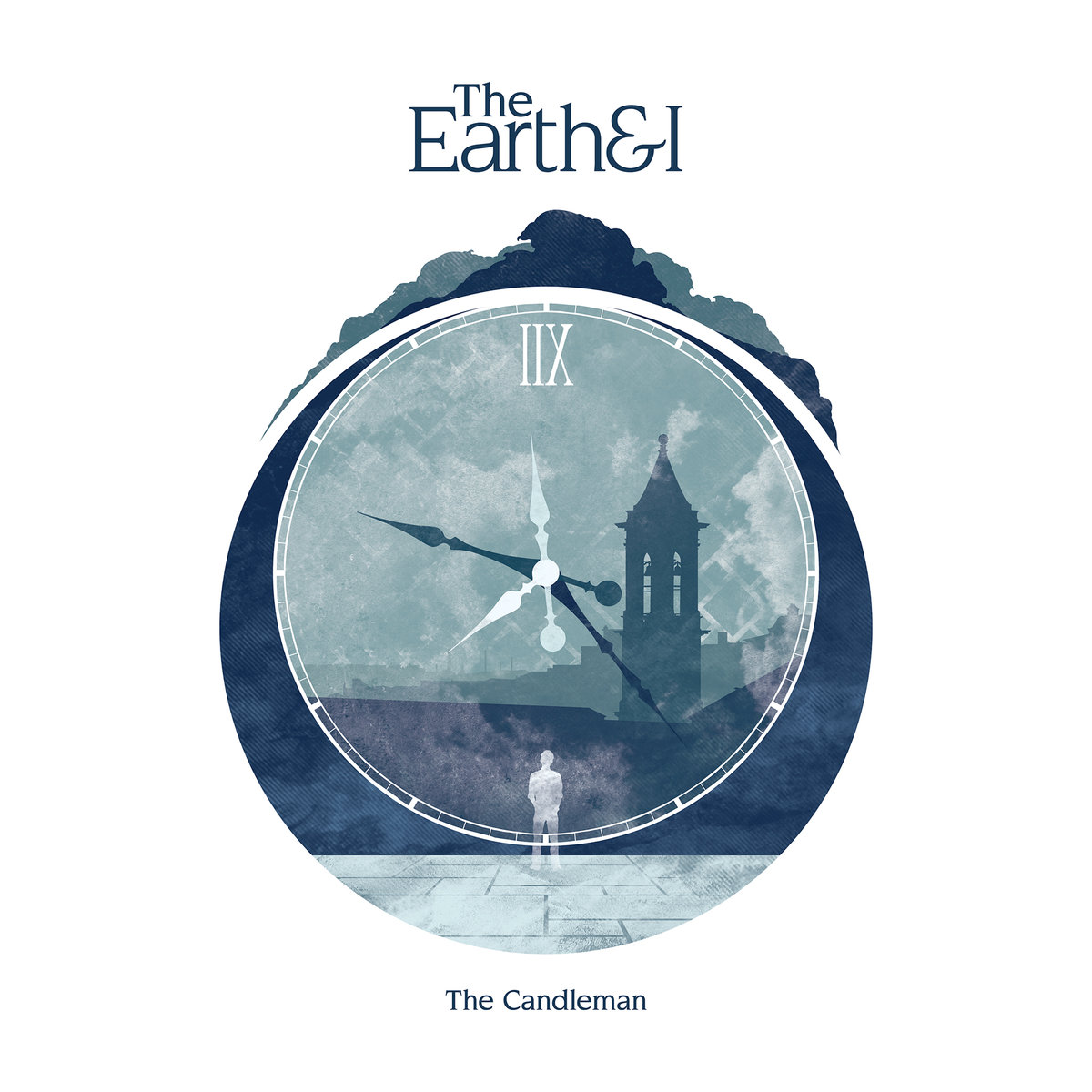
Album Review: The Earth and I – The Candleman

The Earth and I

New Yorkers The Earth and I are a new name on the progressive metal scene, and The Candleman is their debut album. This seven-track release really injects a breath of fresh air into the genre, mostly due to clean vocals of charismatic singer Kendyle Wolven. Mixing female vocals with prog metal / djent is not a new thing, but The Earth and I rise above other contemporary acts.

The Candleman

After a one-minute instrumental and atmospheric intro “The Lake Under the Desert,” The Candleman continues with “CGMTC (Life in the Sunset Zone)” which leaves a gashing mark on your ears. Very refreshing, the energy is genuinely vivid. Lots of double bass, djent riffing, excellent vocals; the group could not have chosen a perfect track to begin this ravenous journey. “Little Frames” brings very carnivourous riffage, unforgiving vocals, backed by a Periphery ambience. Overall, a bolstering chapter in the album. A personal favorite, “And Now for a Slight Departure,” is a wonderful melodic tune carried with Wolven’s voice. A thunderous foundation lures the listener deeper into an unholy light. Keeping things true and prog, this is about as direct as the album gets.

The Candleman promises to bring forth a dark and discarnate attitude. With extremely well executed instrumentals that push the adrenaline factor into the senses, the album will capture and ensnare the listener and bring them down to ecstatic sinister bliss. While that is said and done, more solos could have been implemented, but this is just personal preference. Once you set foot into The Candleman it will be virtually impossible to leave/escape. Consider yourself warned.

The Candleman is out now; get it from Bandcamp.

Interview: CIVORTEP

Civortep

Civortep is a progressive death metal project of Stefan Petrovic who gathered a group of guest musicians to help him with the creation and release of his debut EP “The Return.”

In the interview below, Stefan explains the meaning behind the project’s name, his writing process, and more.

What made you go for the name Civortep?

It is my last name backwards, I always thought it sounded neat so for my producer name I chose to have it as that.

How do you usually describe your music?

It has a little bit of everything in it! Not exclusive of any style, but I pretty much just go with what comes to mind and sounds equally as good.

What is your writing process like?

Write, Refine, Refine, Refine. For me I can’t play a lick and have it be a polished piece of gold from the beginning. It takes a lot of refining to get it to the point that I feel it is good enough to go with. And even then I may go back and build off of it even more.

Who or what is your inspiration, if you have any?

My biggest inspiration is independent musicians that can promote themselves and build an organic image without being manipulated both in their music and persona by the industry, which in my opinion produces clones, lacking in originality, like its existence depends on it.

Civortep - The Return

What is your favourite piece on the “The Return” album?

I’m stuck between Shadow Covenant and The Return as my two favorites. The words are definitely the strongest points in my opinion, and I felt that the way I sung them expressed the emotion I was going for very well.

What makes “The Return” different?

It has a lot of elements that are very scarce within the metal community. I don’t like to be gridlocked by a method or any single type of approach, so I went all out including elements with synths, orchestra parts, and tons of sound effects.

What should music lovers expect from “The Return”?

A ton of variety that can pretty much satisfy any taste, from heavy elements, to atmospheric and melodic.

What kind of emotions would you like your audience to feel when they listen to your music?

I approached this album with a vision of including all emotions, so I hope that would translate over to the listener. There’s definitely enough variety within it to satisfy pretty much the whole emotional spectrum.

Pick your three favourite albums that you would take on a desert island with you.

Keep of Kalessin – Epistemology
Immortal Technique – The Martyr
Omar Linx – City Of Ommz

Get “The Return” from Bandcamp here. Follow Civortep on SoundCloudYouTube and Facebook.

Review: Jay Matharu – These Clouds are So Undisciplined!

Jay Matharu

The Uppsala, Sweden-based song-writer, performer, guitarist and composer, Jay Matharu, is set out to explore a wide variety of genres and unleash his full creativity on his debut album “These Clouds are So Undisciplined!,” clearly stating that he is not into music to make it big, but more importantly, for his passion for creating music.

One of the most striking features of his music is definitely Jay’s ability to cross different genres and platforms, incorporating elements of music from different styles: from metal to jazz fusion and even some subtle hints of hard rock and djent in the form of really memorable arrangements.

On this material, Matharu is showing an incredible amount of versatility, as a composer, performer and musician, casting a beautifully diverse collection of songs. Fans of good instrumental guitar-oriented rock with jazz fusion and metal excursions are certainly in for a treat.

Get the album from Bandcamp here.

These Clouds Are So Undisciplined

Album Of The Year 2015 – Number 30

Here we are again, at year’s end. I can’t believe that another 12 months has passed since I began my countdown for 2014, it doesn’t seem that long ago. And yet, in the intervening period, a lot has happened. My eldest daughter has started nursery whilst my youngest has changed from a new born baby […]

https://manofmuchmetal.wordpress.com/2015/12/03/album-of-the-year-2015-number-30/