2113: Peartian Imaginings

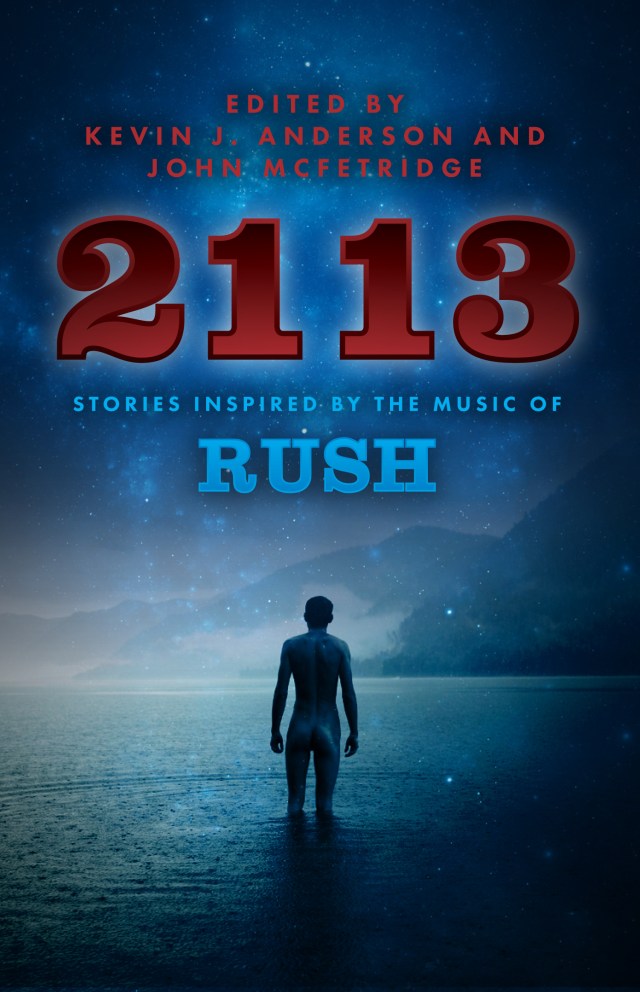
2113
ECW, 2016.

When it comes to edifying entertainment, three things top my personal list of favorites: listening to Rush and other progressive rock; reading the works of Kevin J. Anderson; and delving deeply into the nuances and permutations of various science-fiction mythologies.

But, greedily, I must ask: what if I can have all three at once?

What if science-fiction mastermind Kevin J. Anderson created massive worlds—exploring every great idea and every nook and cranny of an imagined universe—set to the vast sound and lyricscapes of Rush and Neil Peart?
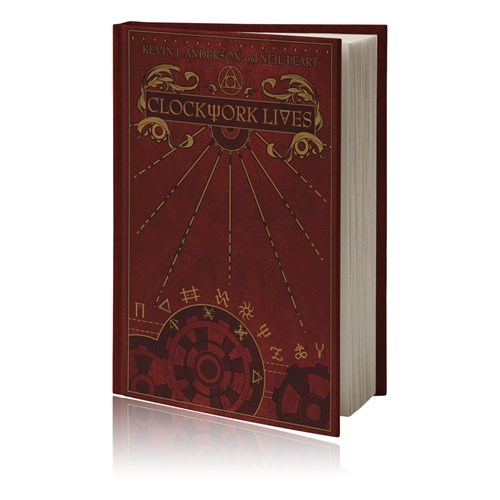
clockwork livesGloriously, Anderson has done just this, authoring and co-authoring a number of short stories, novels, and graphic novels set in the Rush universe.  There’s nothing Anderson has written that I wouldn’t hesitate to recommend with great enthusiasm, but he is at his absolute best when working with Neil Peart and with the worlds imagined by Rush as a band.  His Clockwork Angels and Clockwork Lives certainly represent some of the very best fantasies I have ever read, and I have read quite a few!  As I’ve noted in other reviews, Clockwork Angels and Clockwork Lives are each complex and compelling Chestertonian and Tolkienian faery tales.

Now, through the excellent and rather perfectionist Canadian press, ECW, Anderson and John McFetridge have edited a wide-ranging collection of stories, 2113, each tale inspired by a various Rush song.  Sometimes the influence is direct and obvious, but, just as often, the influence is indirect and sideways.  Anderson and McFetridge have clearly encouraged a range of expression.  If a theme emerges, it is, naturally, the story of the individual human person, endowed with integrity and will, fighting against the conformism of governments, societies, and corporations.

[Without giving too much away, let me note that Anderson brilliantly connects the world of 2112 to the world of Clockwork Angels in the final paragraph of his own rather Walter-Miller-esque short story, “2113.”]

While most of the tales are new, two come from that time before time, before Peart had joined Rush: Fritz Leiber’s 1967 “Gonna Roll the Bones,” and Richard Foster’s 1973 “A Nice Morning Drive.”  It is not only wise, but handy to have these tales included in this collection.

An “advanced reading copy” arrived at Progarchy HQ yesterday afternoon, and yours truly has been gloriously devouring it.  It is a satisfying, humbling, and inspiring book.

But, then. . . what else would I expect.  Rush?  Science fiction?  Short stories?  Alternate universes?  Neil Peart?  ECW?  Kevin J. Anderson?  Well, of course, it’s perfect.  You definitely need to add this thing of perfection to your own collection.

2113 comes out officially on April 12, 2016, and can be ordered from ECW and from Amazon.

***

Bradley J. Birzer is editor of progarchy.com and author of Neil Peart: Cultural (RE)Percussions (2015).


2113 Sampler: Kevin J. Anderson

2113 (1)
The sampler is now available.  Pre-order as soon as possible.

Kevin J. Anderson is a wonder.  When it comes to the mythology of Rush–whether it’s 2112 or CLOCKWORK ANGELS–Anderson might very well be the uncredited fourth member of the band.  In everything this Hugo-Nominated author does, he conquers and with absolute brilliance.

To preorder, go here: http://ecwpress.com/collections/science-fiction/products/2113


Boom! Making Clockwork Angels Even Better.

Clockwork Angels by Neil Peart, Kevin J. Anderson, and Nick Robles (Six-issue comic series from Boom! Studios, 2013-2014).

A sample page from the comic series, Clockwork Angels.  The reds and blues are brilliant, as are the emotions depicted.  Art by Nick Robles.
A sample page from the comic series, Clockwork Angels. The reds and blues are brilliant, as are the emotions depicted. Art by Nick Robles.

By any reckoning, Clockwork Angels has done rather well. It is a prog-rock album, a concert, a live concert album and video, a novel, an audiobook, and now a six-book comic series from the relatively young publisher, Boom! Studios. Soon, I’m sure, Boom! will collect these six issues into a graphic novel, perhaps with a new introduction by Peart.

As the great Rob Freedman has argued at his website, Rush Vault, it could readily become a movie or a tv-series. Maybe even complete with action figures. No, I’m not exaggerating, and I’m not being sarcastic. Clockwork Angels has done very well, and I couldn’t be happier for Peart.

The novel, co-authored by Kevin J. Anderson and Neil Peart is, in and of itself, quite stunning. At essence, the story is little different than the one Peart told with Hemispheres. Chaos and order vie for power, with the individual—armed with integrity, intelligence, and creativity—making his own path. Yet, Peart and Anderson have made this story as fresh as fresh can be by adopting the form of a fairy-tale. It’s a rather Chestertonian and Tolkienian fairy tale at that. Peart even inserts himself (but, not by name) as the grandfather-narrator, well pleased with his children and grandchildren.

Adorned with color prints by Hugh Syme and printed on the highest quality of paper, the ECW novel is a wonderful thing to hold and behold.

clockworkangels_01_PRESS-4At the time that Rush began to plan the tour for the album, Peart stated in no uncertain terms that certain aspects of the story could not be produced visually, as he hoped to keep them in the imagination. In particular, he was talking about the actual Clockwork Angels. Far better to leave them to the individual imagination than to the visual artists. Additionally, they needed to remain in an aura of mystery.

I must admit, when I first heard that the story would be produced in comic book form, I was apprehensive. I have nothing against comics and graphics novels. Indeed, I think the work of such giants as Frank Miller and Alan Moore probably inspired and certainly anticipated the iPads and other tablets we know all wield—a perfect blending of word and image. But, I wondered, wow could Peart’s desire be adhered to, when transferring the story to a visual medium. Would the art do justice to the story, or would it simply detract? I realize I’m in the minority in this view, but I firmly believe that Peter Jackson has come close to destroying the beauty and integrity of Tolkien’s world. Tolkien’s world is too strong to be destroyed by such technological mimicry, but still. . . I didn’t want Boom! to do the same thing to Peart’s work.

Now that all six issues have appeared, I can render judgment. The artist, Nick Robles, has done admirable work. True to the fairy-like intent of the story, Robles presents all of his images as something between a water-color painting and modern (think Jim Lee of DC) superhero art.

clockworkangels_01_PRESS-7While Robles attempts to illustrate the Clockwork Angels, he does so in a way to minimize the destruction of imagination. Various lights and shadows, thankfully, obscure the more mysterious parts. Equally important, Robles not only draws the human face beautifully, rendering each with personality, light, and emotion, but his coloring makes some of the expressions jump off the page. His reds and blues are especially good. In other words, Robles really does augment the word with image, and I found myself appreciating this story in different ways than I had the original album and novel.

Robles and Boom! have done something I didn’t expect: they’ve made a brilliant story even better. Or least, they made me look at it in a very new way. What’s not to love? Gorgeous art; Peartian wisdom; and a story that mixes the best of Chesterton, Tolkien, and Ray Bradbury.

For ordering information, go here: Boom! Studios.