I’ll skip my usual apologia attempting to explain my long absence from this fine blog and instead spend my limited, if not valuable time, remarking on four recent prog and proggy albums that have been found a home on my regular iTunes rotation. I may write longer reviews of a couple of these albums, but some short remarks are better than none.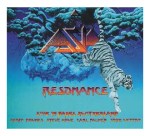
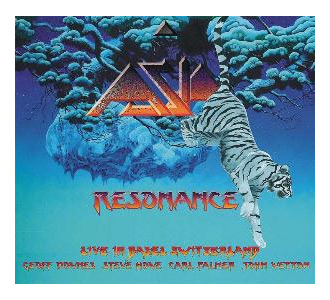
• Asia — Resonance (The Omega Tour, 2010; released 2012): After Kansas, Asia was the group that first introduced me into the world of prog, back in the early to mid-1980s, when I was an innocent small town Montana boy making my way through high school. I recall seeking out books and magazines that explained the musical pedigree of Downes, Howe, Palmer, and Wetton, and thus being introduced to early King Crimson, ELP, Yes, and more. I know that Asia has been a source of debate among prog fans, some of whom dismiss and even deride the group; I’ll just say that I really liked and still do like the first two albums, Asia and Alpha, and make no excuses for the warm and gratifying nostalgia they bring to the surface whenever I play them. And, truth be told, I’m partial to the third album, Astra, which marked the first of two billion line-up changes (Mandy Meyer took over guitar from Howe, who had departed), as it is actually a good, hook-heavy example of what might be call “arena prog” or “pop prog” or something similar. Anyhow, the original line-up has been back for a while—and getting solid to excellent reviews—and this live album documents the group’s 2010 tour. I’ve heard cuts from earlier live albums by Asia, and have found most of them disappointing, especially in the vocal department. But this album, dare I say it, is rather stunning, both in terms of the outstanding sound quality and the amazing power and clarity of Wetton’s voice. Wetton, to my ear, sounds just as good as he did on the studio cuts from the early and mid ’80s, which is saying something. The playing is excellent, of course; my only small beef is that the drums seem a bit back in the mix, although there is an extended and fine drum solo on “The Heat Goes On”. Otherwise, a great mix of cuts, with some nice acoustic-oriented variations of old hits such as “Don’t Cry” and “The Smile Has Left Your Eyes”.
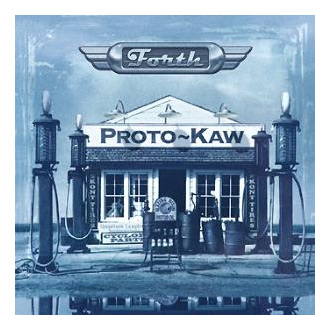
• Proto-kaw: Forth (2011): Speaking of Kansas, the group Proto-kaw was the second of three early incarnations of what eventually became simply “Kansas” in 1973. The key constant in 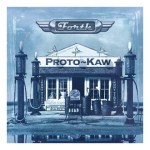 those groups was songwriter, lyricist, guitarist, and keyboardist Kerry Livgren, who conquered the world with Kansas in the 1970s (“Dust in the Wind”, anyone?), had a run of contemporary Christian rock albums in the 1980s (both solo and with the group AD), and then reformed Kansas and Proto-kaw in the 1990s. (Fun fact: metal legend Ronny James Dio sang lead on two songs on Livgren’s first solo album, “Seeds of Change”, in 1980.) All three of the newer Proto-kaw albums are worth checking out, and that is especially true of Forth, the most cohesive and fully realized album yet by the group. What strikes me, as a longtime fan of Kansas, is how much classical influence there is in Livgren’s writing, as his songs often have a suite-like quality that builds on either strings or keyboards/guitars that act as a strings section. Proto-kaw, like all Livgren-led bands, has dual lead singers (yes, Steve Walsh was a the primary singer in Kansas, but Robby Steinhardt sang lead or co-lead on numerous songs), and features excellent and often complex harmonies, masterfully constructed arrangements, and strong songwriting. One distinctive element is the presence of saxophone and flute (John Bolton), used to great affect in song such as “Pilgrim’s Wake”, one of my favorite cuts on Forth. A must listen for anyone with a soft spot for 1970s Kansas. And, speaking of Kansas (again!), this year marks the 40th anniversary of the group’s founding; I plan a couple of posts about the group and some of my favorite Kansas albums and songs.
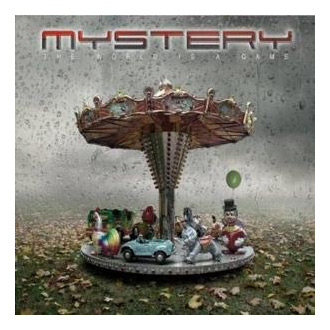
• Mystery: The World Is a Game (2012): How embarrassing it is to admit that prior to the Yes album, Fly From Here (2011), I had no idea who Benoît David was. Having replaced Jon Anderson and toured with Yes—and then having himself been replaced due to his own respiratory issues—the talented vocalist worked on his third album with veteran Canadian proggers 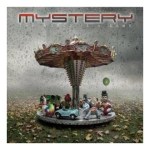 Mystery, a group he had joined in 1999. Having not heard any of his work with Mystery (which my iTunes annoyingly tagged as “The Mystery”), I was surprised—in a good way—that David did not sound like Anderson and that the group does not sound much like Yes, although the influence is present. In fact, at times David sounds more like another great Canadian singer, Geddy Lee. The two words that keep coming to mind after repeated listens of this exceptional album are “melodic” and “soaring”. The vocals soar, the guitars (by band founder, guitarist, lyricist, and producer Michel St-Père) soar, and the songs soar with a wonderful sense of discovery, melancholy, joy, and introspection, a not-so-easy mixture to navigate. And then there is the drumming of Nick D’Virgilio, who is rightly revered as one of the finest drummers in the prog/rock world. His drumming is, in a word, orchestral, and it is reason alone for buying this fine release. But, for me (a vocalist junkie), it is David who is the revelation here, especially after hearing his solid but rather emotionless performance on Fly From Here. In the words of a reviewer on ProgArchives.com, “Finally vocalist Benoit David proves what a versatile and commanding singer he is, a million miles away from the Yes/Jon Anderson clone dismissals. It’s also great to hear his voice so full of human feeling and compassion again after being so over-produced and rendered mostly lifeless on the Yes album `Fly From Here’!” Exactly right.
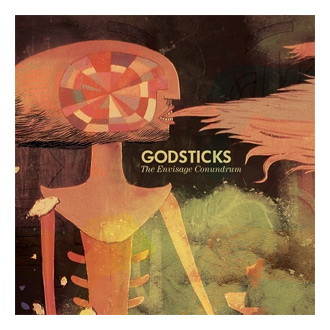
• Godsticks: The Envisage Conundrum (2013): Here is a group (from South Wales) I knew nothing about a week ago, but has captured my attention in a way that only a few groups have on first listen. Explaining why is a bit difficult; the difficulty arises, in part, from the most enjoyable fact this is a group that is very hard to describe or label or situate in the universe of 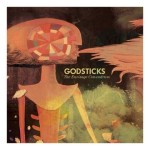 prog/rock music. Nearly every review I’ve read says the same, and rightly so. One of those reviews, by Adrian Bloxham, puts it well: ” The world of Godsticks is not straightforward; they seem to have baffled other reviewers trying to pigeon hole them. They make their own brand of what they describe as ‘progressive rock/pop, but it is very much their own take on the sound. You get the idea that this is exactly the music they have inside their heads trying to get out and if you like it they will be pleased but that’s not why they do what they do.” The one influence I hear is later King Crimson, but even that is hard to pinpoint, although the angular, often astonishing guitar work by guitarist/singer Darran Charles brings it to mind in several places. None of the songs are longer than seven minutes in length, but some of them pack in more twists, turns, veers, swerves, and surprises in five or six minutes than many bands can pack into songs three times as long. The title cut is a perfect example. It begins with a chugging, almost “boogie” riff out of which emerges a spider-like flurry of notes, leading into a wall of harmonized vocals over a heavy, grunge-like riff backed by the tight, slightly funky, never quite straight forward rhythm section of Steve Roberts (drums, keys) and Dan Nelson (bass). Charles’ voice is part of the mystery here, a strong, clear instrument that manages to be intense, detached, soulful, and slyly humorous (and occasionally darkly smirking) all at once. There is an abundance of odd chords, meters, notes, and harmonies, sometimes, to my ear, sounding like a Robert Fripp-inspired space alien sibling of Soundgarden. And did I mention the album features a 3:49 piano solo by Roberts that could easily have made it onto one of Keith Jarrett’s solo albums? Followed by a three-part suite—”Borderstomp”, parts 1-3—that sometimes calls to mind Steve Vai? Not straightforward, indeed!


 Progarchy