Bedeviled or blessed, progressive rock’s classic bands took it upon themselves to discover what can happen when rock frees itself from the restraint of the three-minute single. And because Procol Harum, Yes, Genesis, King Crimson, and ELP didn’t merely see what would come out of jamming, but meticulously planned and executed album sides worth of material, there was an idea that these bands were making some sort of…progress. Codified as “prog rock,” the body of work that emerged from the late 60s and early 70s continues to inspire failure and success in groups intent on recapturing the form, if not always the spirit, of progressive rock.
Forty-some years on, and thirty years after most of the original prog bands found that trimming their sound back to that three-minute (or so) mark could bring substantial commercial success, progressive rock is in the middle of a full-blown and full-length revival, international in scope and as layered and interesting as the first generation. Many of the musicians associated with prog today are less revivalists than rock veterans, pursuing for years their passion with little fanfare but with fierce fandom. One of their leaders appears to be Big Big Train.
A disclaimer: I am one of the few Progarchist writers who was not familiar with Big Big Train during the genesis of Progarchy, which owes its existence at least partly to the enthusiasm Big Big Train inspired in its editors. I tend to watch prog from the edges, my tastes running to the rougher cuts, the drones, freakouts and new music noise-fests. Classically-inspired keyboard soloing — noodling — isn’t really my thing. I like the dirty-ness of art’s residue, big messy riffs that fray at the edges with some punk abandon, like you might hear in King Crimson’s “Starless” or Amon Duul II’s “Archangels Thunderbird.” In other words, I probably lean more towards the rock than the prog in prog rock. Which is why early listens to BBT impressed me with the musicianship I heard and the obvious dedication of the group, but left me wanting…something. Continue reading “A Movie Soundtrack: BBT’s English Electric V2”→
To me, ‘progressive’ is a term which describes a genre of music. That genre emerged from the rock and pop music of the 60’s and became fully defined in the early 70’s. But what I think may be the sub-text behind your question is whether bands writing and performing music in the progressive genre need, by definition, to be striving for some sort of statement of originality in everything they do. I think not, but I am aware that many others take a more absolutist view of things and this has caused an endless debate. In The Music’s All That Matters, Paul Stump makes some very interesting observations. Early on in the book, he correctly identifies that the main problem with progressive rock is its name (he calls it ‘the most self-consciously adjectival genre in all rock’.) Another point that Paul Stump makes is about what unites the musicians of the genre. He says they have ‘a hankering after the transcendent’. I really like that phrase as it can take on a broader meaning than ‘progressive’. In Big Big Train, we combine our influences in a way, which is often original. But trying to do something different isn’t the be-all-and-end-all. What we are really trying to do is to make extraordinary music.–Greg Spawton, Summer 2012
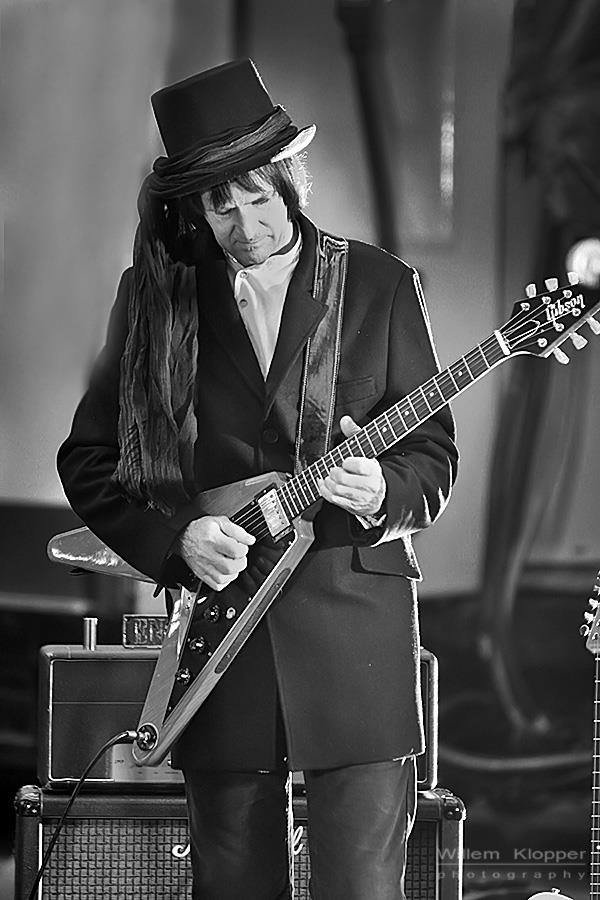
Photo of Dave Gregory, courtesy of the excellent Willem Klopper.
I must admit, I’m a little lost for words when it comes to reviewing the new release from Big Big Train, English Electric Vol. 2 (officially out today). And, as my wife, my kids, my friends, and my students can attest, I’m almost never at a loss for words. I’m sure there are times when they’d like me to be!
My problem is this. The music is so very good, so very much beyond the bounds of normal description and descriptives, and I want in the worst way for the quality of my writing and my thoughts to do it justice. Frankly, I’m not sure I’m capable. Not being shy enough or humble enough, I will just jump in. . .
When I first heard The Underfall Yard, I thought music could get no better than this. Especially listening to Longdon’s voice. Schnikees. Could that guy get any better? And, those lyrics. Who wouldn’t want to visit the Victorian Brickyard, meet Mr. Delia, dive into that watery purgatory below Winchester Cathedral, or watch electrical storms moving away from England?
Then, I heard Far Skies Deep Time. Ok, they’d reached the top this time, for sure. They have to have done so. Where could they go after this? Again, such wonder. If I caught a plane to England, might I still be able to see Fat Billy just before he died on that beach, a bloated alcoholic with the waves calling him home? Or, how about that English girl who tore my heart out or that other one with the berry-stained lips? No, too late. But, maybe, just maybe, I can be reminded that if we only have love, we have enough.
Then, I heard English Electric Vol. 1. Ok, what to do was my first thought? Everything I’d known and believed about music was blown apart. Nothing had so moved me since I’d first listened to an advanced copy of Talk Talk’s Spirit of Eden back in September 1988. Oh, Mark Hollis, where art thou?
I try to walk at least four miles a day. I’ve been doing this much of my life, and I find the time walking absolutely necessary to keep my mind focused when I’m writing, to de-stress when I need to de-stress, to listen to fiction on my ipod, and, especially, to have alone time with my favorite music.
N.B. AP is Andy Poole, DG is Dave Gregory, DM is Danny Manners, GS is Greg Spawton. Progarchy interview conducted by Brad.
***
Progarchy (BB):When you put EE1 and EE2 together, how do you expect the listeners to see the whole EE? Say, 20 years from now, few will have had the experience of getting one, then the other. It will most likely be just EE. Do you expect your listeners–me, for example, or anyone else–interpreting EE1 differently in light of EE2? In particular, I think about a track like Hedgerow. As you probably know, Greg, I consider this the single finest conclusion to any album. Ever. Period. Even better than Abbey Road, which had that position for me prior to hearing EE1. But, when I do get to hear EE2, I will now see Hedgerow as the middle song.
GS: You’ve put your finger on something that has caused us a fair bit of soul-searching Brad. At first, we had a fairly straightforward view on this which was simply: ‘it’s a double album, but we’ll split it into two separate releases’. Our reasoning was that 2 hours of music is a lot for the listener to get their head around which can initially cause under-appreciation of the double album in question. We were also aware that if you release so much music at one time, you get one round of publicity then the world moves on. If you split the release into two, the band is in the spotlight for a longer period of time. The only downside to this release strategy is that English Electric becomes seen as two separate pieces of work and so we always planned to release a special double edition bringing it all together. The thing is though, and as your question makes clear, it’s not as simple as we thought it would be. If you’re splitting an album into two you do have to try to make two satisfying separate halves, which is what we have tried to do. And that isn’t the same as sequencing a whole double album. So, the question we began to ask is: what do we do when we prepare the double Full Power edition? Do we simply stick Part One and Two together or do we start from scratch and re-sequence it as a double album? You mention Hedgerow as being a strong concluding track but we’ve also got Curator of Butterflies which is, we think, another strong end-piece. Which one of those takes precedence and gets to close the double album? And what happens with the three extra tracks we’re including? Where do they fit in? What we now think we’ll do is to start again from scratch and re-sequence Full Power as a double album without any reference to the orders on EE1 and EE2. It may be that we find some of the sequencing on EE1 and EE2 also works for EEFP and if it does, it does. Or it may be that the sequencing is completely different. In any case, the additional tracks will inevitably change the feel of things. The other question you raise is what happens when EEFP is released? Does that mean that EE1 and EE2 should go out of print? If not, will any new listeners buy them or will they go straight to EEFP? This is, I think, something we’ll have to keep under review. If EEFP turns out to feel like a very different listening experience to EE1 and EE2, then it makes sense to keep them all in print. Of course, the extra tracks will also be available on an EP and as downloads to make sure listeners don’t feel obligated to buy a double album just to hear three new songs. So, for many people their experience of English Electric will be as three separate releases.
Progarchy (BB):Tell me about the additional songs added to the full package? Will there be much new artwork?
GS: There are three strong new songs. They are not leftovers from the original sessions but have been recorded specifically for EE Full Power. One of them is a sort of bookend love song to go with Leopards. Another builds on the main album themes of working communities and the English landscape. And the final one is something very different for us.
AP: As regards the artwork, I’m working on a lavish design with a comprehensive booklet telling the stories behind the songs and behind the album.
Progarchy (BB):After EE2, you’ve announced plans to release Station Masters. Can you give us some details about this? Will it be reworked older tunes? Are there some new tunes?
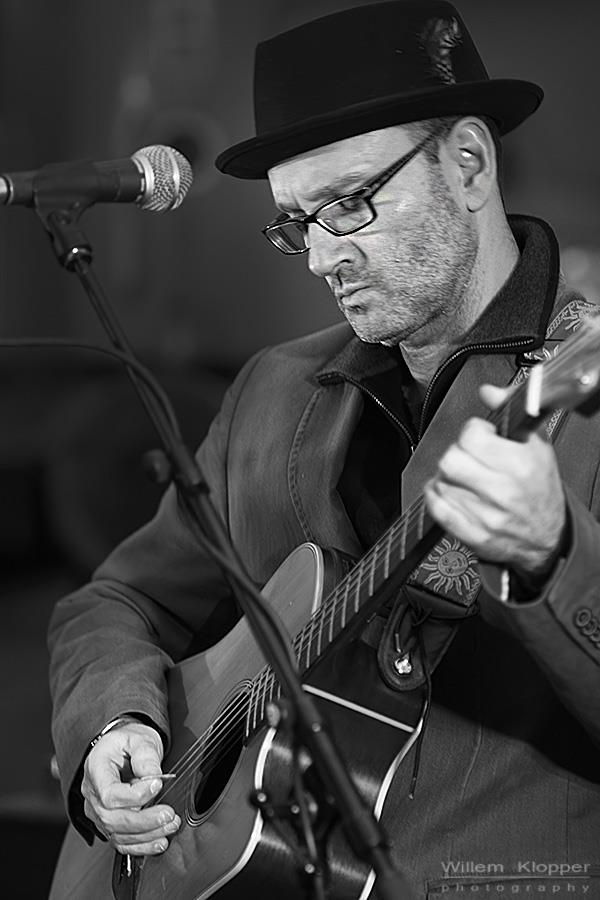
NDV by Willem Klopper.
GS: It’s a triple CD which aims to tell the story of the band. All recordings will be with the new line-up so songs from albums prior to The Underfall Yard will be entirely re-recorded. Some of these are radically re-worked, others are fairly close to the originals but with the strong performances that the current line-up is capable of. Even more recent material may be reworked to some extent. For example, I always wanted to feature violin in The Underfall Yard but we didn’t have a violinist at the time. Rachel Hall will feature on the updated version. Wherever we look back and think something could have been better, we’ll make it better.
Progarchy (BB):Will anything else come with the CDs? Any kind of BBT timeline or a poster? Concert DVD?
AP: There may be some video or other visual material. We haven’t made any final decisions on that yet.
Progarchy (BB):Where do you see BBT’s place the history of rock and the history of prog rock?
GS: I think it’s too early to make an assessment. There are many drafts of history. I hope we’ll find ourselves as more than just a footnote when later drafts are written. However, progressive rock is a fairly contained world and we’re a long way away from making any sort of breakthrough in the broader rock and pop worlds.
Progarchy (BB):You have an immensely large and loyal fanbase. How does this affect you or the band’s approach to music and the music world?
GS: We’re really lucky with our fanbase. They seem to us in all of our interactions to be a thoroughly decent and likeable bunch. The feedback we’ve had over the years has been really important. To hear that what we like to write about resonates with others and particularly that we’ve moved people with our music makes a huge difference.
Progarchy (BB):What is your view on packaging the material? You sell lots of downloads, and we live in a download world (for better and worse), but you also put a lot into the packaging of your CDs. Which I love. As you might remember, after I downloaded all of your albums up to The Underfall Yard, I contacted you because I wanted to purchase physical copies. And, it was worth the investment. Why do you consider it so important for BBT to have such beautiful packaging, especially in day and age? And, would you say such quality packaging should be important for all bands?
Andy Poole by Willem Klopper.
AP: The ideal package for us is a presentation of the words, music & images. The artwork is integral and we have been very fortunate over the years to have teamed-up with Michael Griffiths, Jim Trainer and Matthew Sefton who have each provided inspiring works that both complement & advance the sensory delivery of our albums.
Growing up with vinyl in the 70’s, you had an ingrained sense of interacting physically with an album … the touch, feel & smell of a new gatefold release was savored and an essential part of the experience … quite apart from placing a stylus in the groove and being aurally transformed to a progressive world of music where none of the old rules applied.
The initial advent of hurriedly released compact discs in their horrid plastic jewel cases and Lilliputian inserts amounted to instantly inferior packaging largely forgiven by consumers for the promise of digital sound.
We migrated to digipaks for the enhanced tactile experience, albeit in miniature compared to vinyl, and greater flexibility to represent the visual artists who collaborate with Big Big Train.
Although it is tempting to suggest and hope that other bands disregard the importance of physical product packaging to our advantage, I actually believe that it behooves us all to raise the quality bar up high and to the reasonable limits of affordability.
DG: It was certainly a very important factor with XTC. Andy Partridge claimed that every time he finished writing a song, he’d design a sleeve for it just in case it was chosen as a single! But then, he’s a very talented artist and can’t help himself. I’m certain sales of many of our releases were multiplied as a result of the packaging, as well as boosting the band’s ‘arty’ credentials.
Progarchy (BB):I’m always amazed at what a community BBT is. That is, it’s clear–from the music as well as things such as FB posts, etc.–that you each really like one another. There’s no sense of brilliant radical individuals working next to each other (such as in certain early Yes albums), but a true sense of group brilliance, an organic whole. What do you think accounts for this?
GS: From my point of view I come back to something I’ve said before – surround yourselves with talented people and things start to happen. There is something else as well though, and that is that the guys in the band are all thoroughly good chaps. We’ll all hold strong positions from time-to-time and we say what we think but good manners are important. Speaking of Manners, you’re the new boy, Danny, do you have any observations?
DM: Some of it is simply that there are no huge egos in the band, whether by luck or by conscious or unconscious choice. (Medium sized, maybe, but not huge!) However, one musical thing that strikes me is that the band members aren’t over-specialized – BBT doesn’t consist of “the singer”, “the drummer”, “the guitarist”, etc., all vying for the spotlight. Everyone is a multi-instrumentalist to at least some extent, and everyone also has writing and/or arranging experience, so there’s much more focus on making the music work as a whole.
DG: Don’t forget also that we’re grown men, not ambitious youngsters. We are focused on the music at all times, because we love it. Both Greg and David, as writers, are extremely accommodating in terms of accepting ideas and contributions from all of us; they have yet to display any serious proprietorial tendencies when it comes to protecting their original vision. Which is not to suggest that it’s an open free-for-all; we live with the songs for months, plenty of time to assimilate their essence, so we’re generally united in the common aim, ultimately.
Progarchy (BB):And, how do you see the role of Rob as engineer or any guest musicians you bring in? That is, how integral are they to a BBT sound, if such a particular thing exists.
The Seventh Train and Phill Brown of our age: Rob Aubrey. Photo by Amy Mumford.
GS: It’s an evolving sound and it will continue to develop. We have some really important collaborators at the moment and I envisage we will continue to work with many of them in the long-term. Certainly, Dave Desmond (who plays trombone and arranges the brass band) and violinist Rachel Hall will have significant input into Station Masters. As for Rob, he’s the seventh Train and our dear friend.
Progarchy (BB):Where do you see BBT after Station Masters?
GS: I’d like us to be playing some shows at some stage. It would be good to do something around the time of Station Masters and then something around each release after that. As mentioned earlier, we have another album well underway and have started recording it so that is likely to come out in 2015.
Progarchy (BB):Any final thoughts on the current and future state of rock?
GS: In Britain, the last of the high-street record stores has gone into administration. I guess there are similar issues in other countries. The supermarkets have stepped into the breach and will only really sell music in the pop charts, so the route through traditional music-distribution is closing down to most progressive bands. However, online, the choice is very broad and the issue there is getting noticed amongst all of the competition. Making a living out of music is going to get harder still but it’s been a labour of love for most folk and jazz musicians for years and I don’t see why it should be different for rock bands.
[Well, what does one say after such amazing interview, except—thank you. Thank you to BBT for giving us so much time for this interview. An even bigger thank you for making the world just a little bit brighter.—Ed.]




 Progarchy