

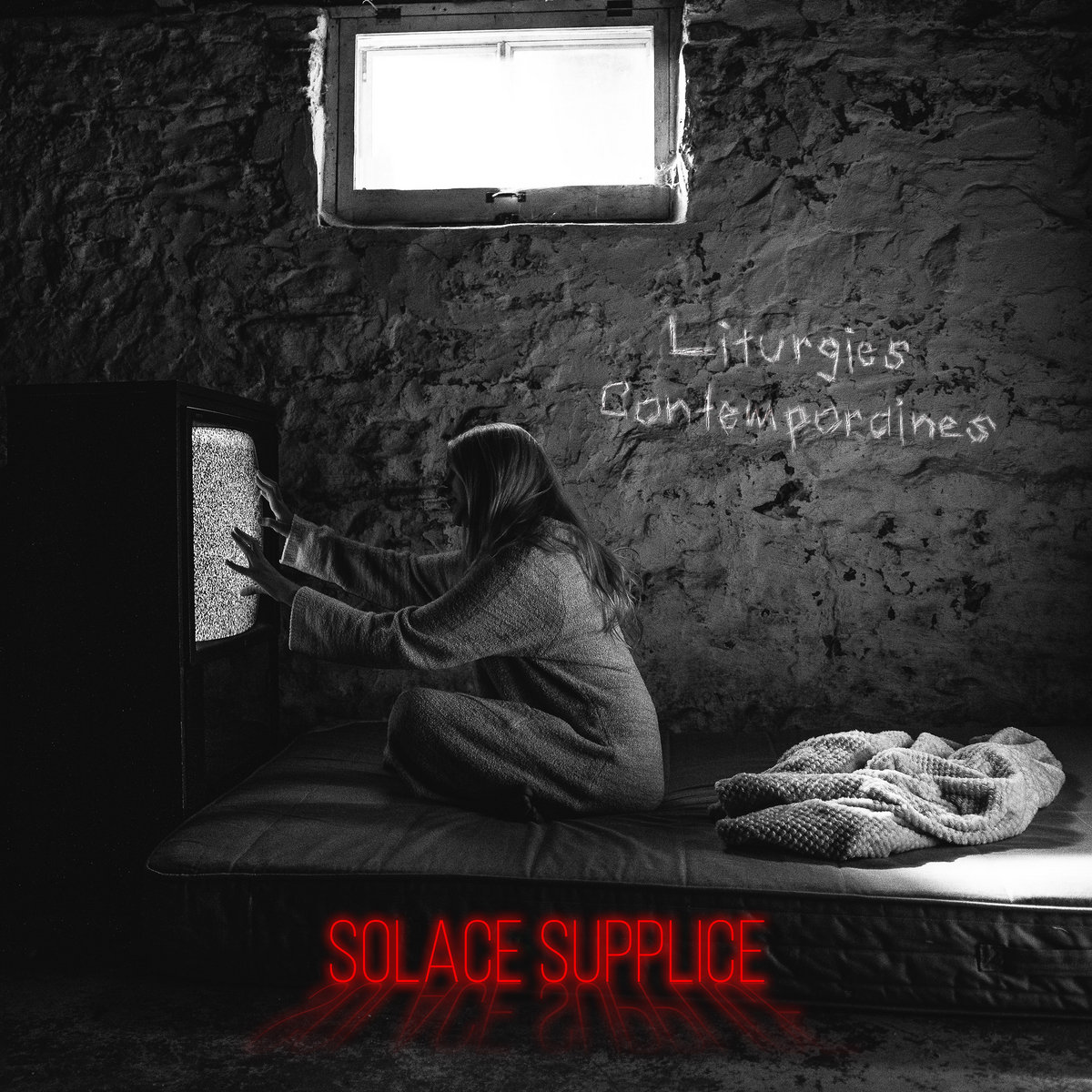
 Solace Supplice, Liturgies Contemporaines, June 15, 2022
Tracks: Le Tartuffe Exemplaire (5:12), Sunset Street (4:12), A Demi-Maux (4:03), Les Miradors (6:46), Cosmos Adultérin (3:57), Schizophrénie Paranoïde (3:14), Au Cirque Des Âmes (4:10), En Guidant Les Hussards (4:19), Liturgies Contemporaines (3:53), Dans La Couche Du Diable (4:46), Marasmes Et Décadence (4:33)
[Edit: I discovered just after finishing this review and posting it that primary band member Eric Bouillette passed away last month. Our deepest condolences to his family and the band. He was an incredibly talented musician and artist.]
For my third review of recent French releases (see 1 and 2), I bring you Solace Supplice’s Liturgies Contemporaines. Ok, I’m cheating. The band is technically based in England, but the lyrics are in French and the primary players are French. The album has a solid soundscape that is both moody and epic, with a variety of musical textures and sounds.
Primary members Eric Bouillette and Anne-Claire Rallo are members of Nine Skies, a fine band that has made some waves in prog circles in recent years. Both are multi-instrumentalists, with Bouillette playing guitars, keyboards, and violins as well as singing. Rallo plays keyboards and bass. They are joined by Jimmy Pallagrosi on drums, Laurent Benhamou on saxophone on a couple tracks, and Willow Beggs (Nick Beggs’ daughter) on bass on several tracks.
The record opens with an old English-language clip from the BBC. The song quickly dives into a fast-paced guitar-driven gallop, with that BBC clip popping up again periodically. I liked the inclusion of that clip because it elevates the scope of the record just a bit – makes things feel a little bit more epic.
The title track, “Liturgies Contemporaines,” is probably my favorite on the record. It is brooding and atmospheric, slightly reminiscent of Steven Wilson or Porcupine Tree. The vocals and guitars really shine over the repeating keyboard line and simple drum riff. Bouillette’s vocals really stand out on this song. The tone he creates on this is rather different than on the rest of the record, and I think he sounds best on this song. Sometimes his vocals are a bit monotonous when singing the French lyrics, but his voice is very dynamic on the title track.
Lyrically the album leans on the more obscure, allowing for more interpretation. It also helps that they’re in French, forcing English listeners to either dig deep (lyrics posted on their website), or just appreciate them for the way they sound. Bouillette’s style of singing works well on “Dans La Couche Du Diable.” The song starts quieter with piano and acoustic guitar, over which he gently sings. A pounding guitar and drum riff kicks in with a marching beat, and the vocals march along with it. The result is quite effective, especially as the song builds towards the end. The track swells towards the end as the keyboards swirl in the background. With a little extra working at the end, I think it would have made a better ending track to close the album, as “Marasmes Et Décadence” doesn’t go much of anywhere musically for most of the song until the guitar solo, bass, and keyboard solo kick in at the end. “Dans La Couche Du Diable” sounds more like an album closer to me.
Bouillette’s guitar work is dynamic throughout the record, with clean solos on “A Demi-Maux” and grittier shredding on “Les Miradors.” The atmospheric guitar on the title track really shows the range of his capabilities, with the guitar contributing to the soundscape and standing center-stage in the second half of the song. The band scatter in some unexpected musical moments to keep us on our toes. Bouillette’s violin on “Au Cirque Des Âmes” has a gypsy jazz feel to it, and the saxophone on “En Guidant Les Hussards” adds a jazzy and atmospheric sound.
I’ve found Liturgies Contemporaines compelling on repeated listens. It has a solid rock drive with multiple textures and a variety of sounds that manages to remain cohesive. The title track really makes the album for me – I just wish it were longer. The songs could have also been edited to flow together a little better, as the general production value strikes me as being a concept album. All the same, the record is worth multiple listens for fans of contemporary prog. Certainly fans of Nine Skies will want to check it out, if they haven’t already.
https://solacesupplice.weebly.com
https://www.facebook.com/solacesupplice/
https://twitter.com/SolaceSupplice
https://www.instagram.com/solace_supplice/
https://solacesupplice.bandcamp.com/album/liturgies-contemporaines
 Drifting Sun, Forsaken Innocence, 2021
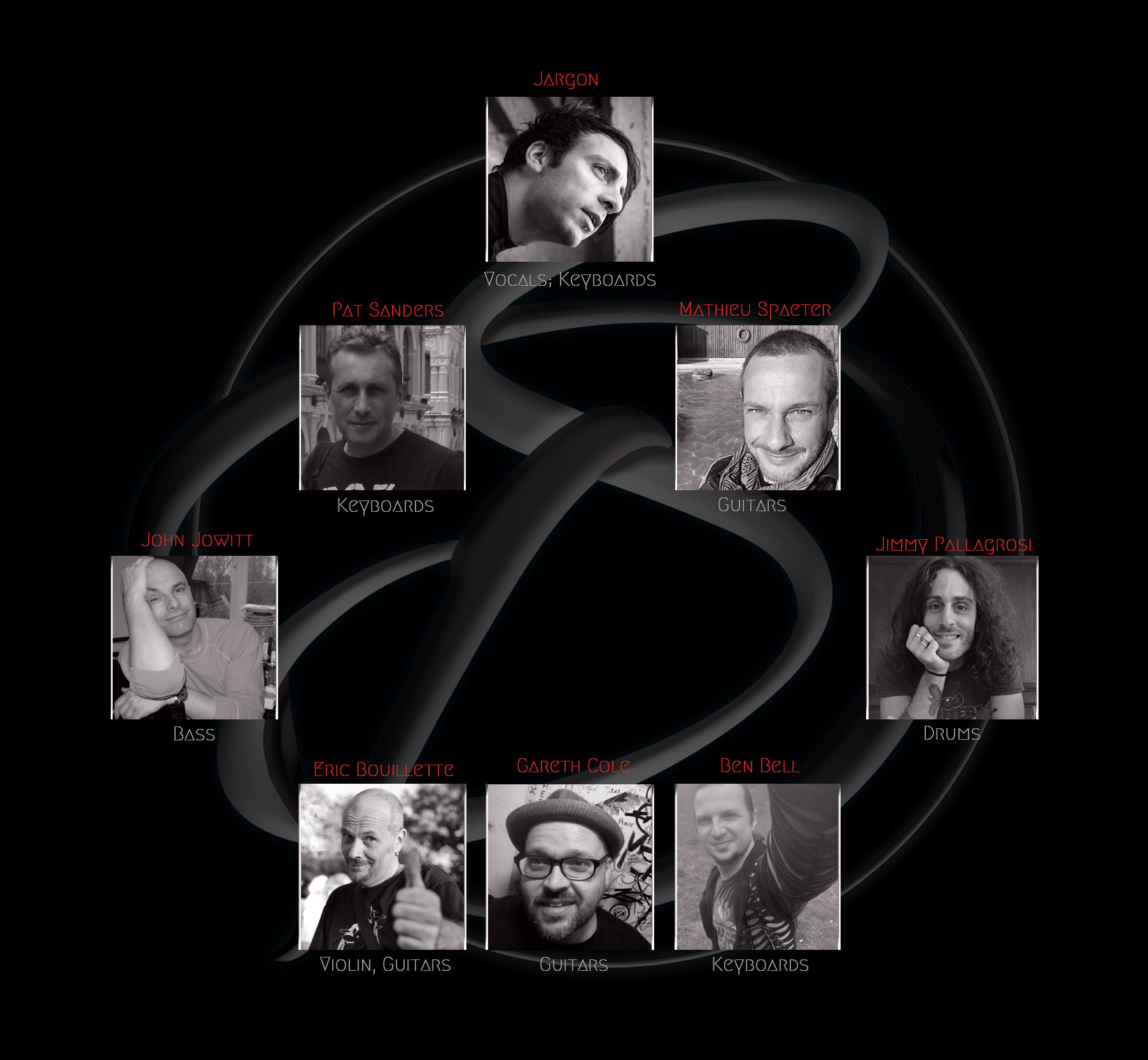 The wonderful Gareth Cole also plays guitar on “Time to Go,” along with Eric Bouillette, who also plays the violin on “King of the Country” and “Forsaken Innocence Part 1.” The violin adds a nice touch, which perhaps could have been used even more throughout. Even so the album sounds great as is. Jimmy Pallagrosi’s drums pull everything together in gentle crashes of snare and cymbal.
 Progarchy