Ransom-ed Prog: Glass Hammer

Glass Hammer-Birzer Collection
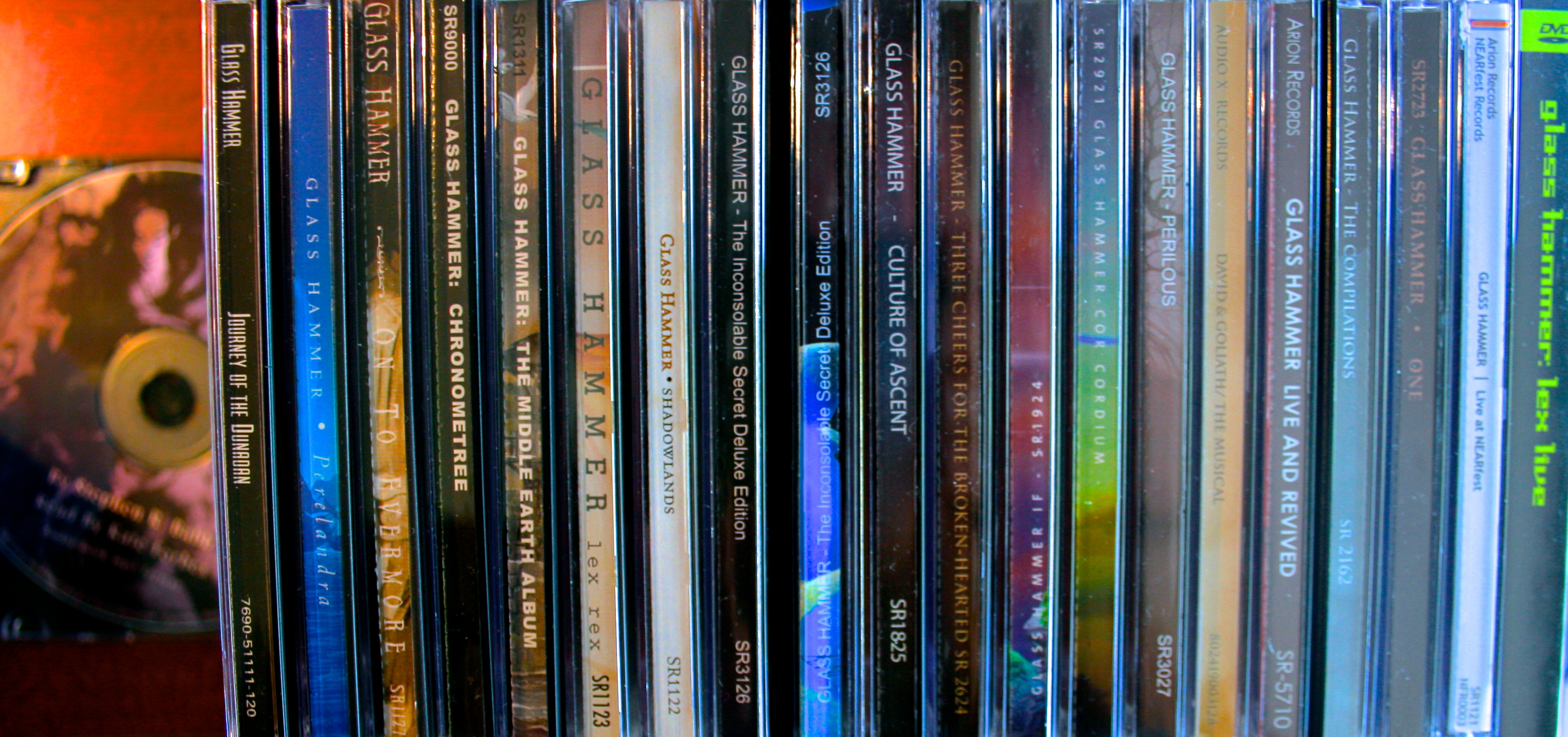
Progarchist Birzer doesn’t like doing ANY thing half way–his love for GH is tangible. He also owns the t-shirt.

Feel free to call me a “Glass Hammer Junkie.”  Steve and Fred might not approve, but it is the truth.  Ever since my great friend, Amy Sturgis, introduced me to their music, days or so before LEX REX appeared in 2002, I’ve been hooked.  As you can see by the accompanying photograph, I’m pretty much a completist as well.  After all, why like anything halfway?  Besides, Glass Hammer isn’t a “half-way” kind of love.  You either love them completely, or you don’t know them.

Some reviewers have–in an almost obligatory way–compared their music to that produced during the first decade of Yes.  As Babb has joked, GH admires Jon Anderson and Yes deeply, but he’s merely acknowledging the debt in his own music, not mimicking it.  And, frankly, from my perspective, GH has much more of a “Leftoverature” feel than a Yes one.  Regardless, Babb and Schendel are artists, pure and simple, indebted and original all at once.

There is so much I could write about GH, a book really.  But, for now, let me state that there will be more much about GH at progarchy, as well as an extensive analysis and history of the band over at Carl Olson’s brilliant, Catholic World Report.  Additionally, we’ll have a long interview with GH co-founder, Steve Babb.

As many of you know, I’m not a huge fan of labels, as they tend to narrow the beauty of a thing.  If you forced me to label Glass Hammer’s music, though, I’d probably claim it as “Ransom Prog,” the kind of music Elwin Ransom would’ve written while on Malacandra.  For one (or three, really) of the things to love about GH is the “voice” of the band.  And, I don’t mean the vocalists.  There are lots of vocalists for GH, and there have been since the band’s beginning, the release of their first cd back in 1993, twenty years ago.  There quite good.  I’m especially fond of Susie Bogdanowicz.  Phew, can she sing or what?  Her rendition of Yes’s “South Side of the Sky” is simply breathtaking.  The vocal equivalent would be Dawn Upshaw singing Gorecki’s Third Symphony.  Yes, Bogdanowicz is THAT good.

The real voice of the band, however, can be found in three very different things.  Second and third, the distinctiveness of the bass and keyboards, a profound mixture of the punctuated, the soaring, and the lush.  But, first and foremost, are the lyrics.  Glass Hammer contains some of the best lyrics in rock history.  No exaggeration.  Last year, just as 2012 was winding down, I was utterly blown away by Perilous.  I even held up my “best of” because of the album.  It went from not being on my radar in October to being one of the top releases of the year by early December.   The music is, certainly, excellent.  But, the lyrics are top notch–meaningful, imagist, and philosophical.
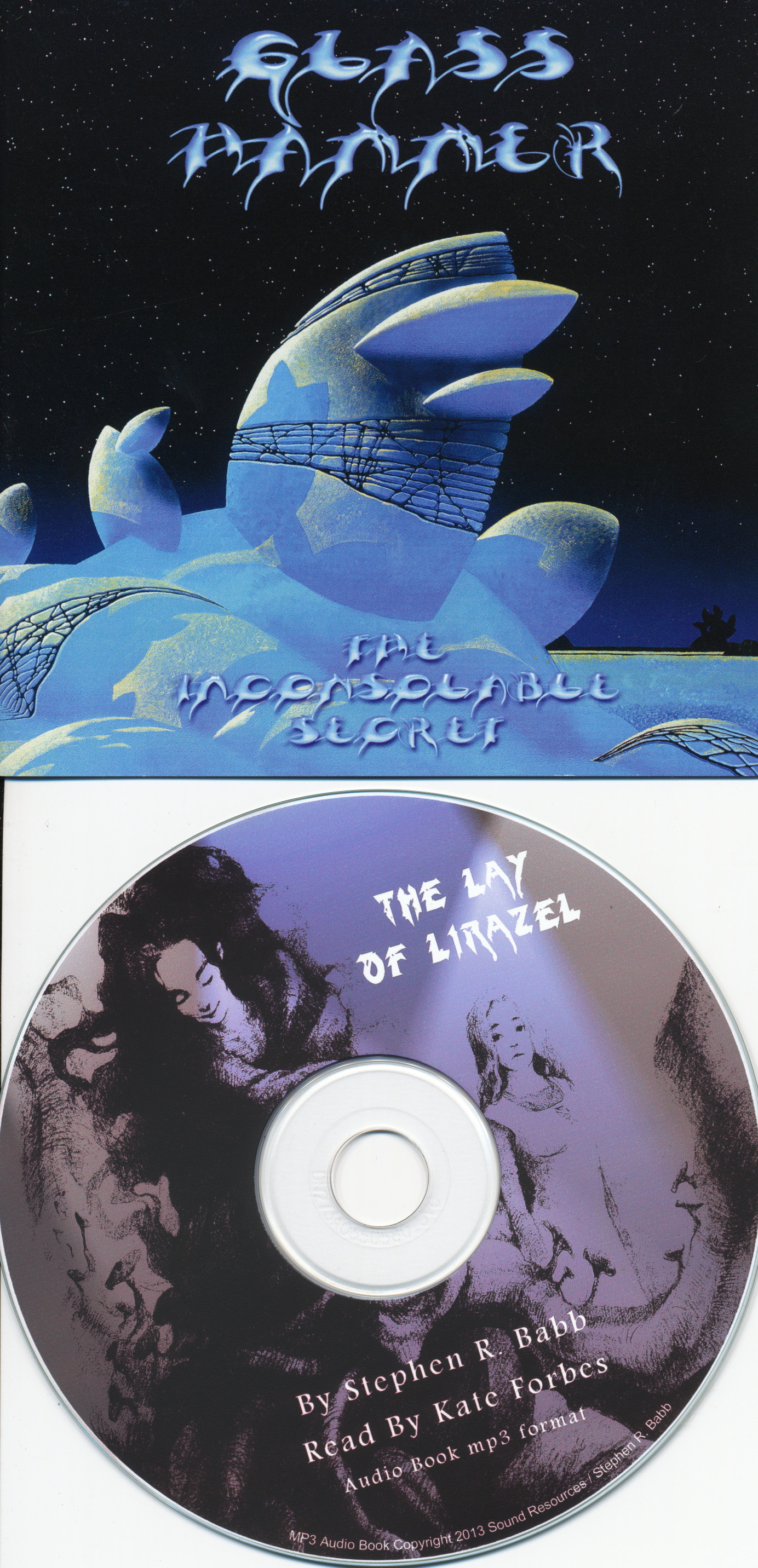
IMGI think the lack of recognition of excellent lyric writing is one of the great faults in reviewing and assessing this third wave of prog (as our own Brian Watson labels it).  After all, look at the lyrics of Spawton, Longdon, and Tillison, the lyrics of the Tin Spirits, of Gazpacho, or Ayreon (the plot of Ayreon is also mind boggling–but this is for another post), and others.  The lyrics for GH are at this top.  They are as good as the music, and the two–lyrics and music–serve one another.  The lyrics are at once mythic and deeply moving.  Here’s just one example from Inconsolable Secret:

This is where we draw the line
And here is where we make our stand
You’ll gather all our forces here for
Here we stand on hallowed ground
And here the foe will surely fall
We’ll send his army scattering for
This is where we draw the line
And here is where we make our stand
Now sound the trumpets, form the battle line
Hold the line

Babb’s lyrics reflect those of the Beowulf poet as well as the poet of the Battle of Maldon.  Certainly, Babb is drawing upon these medieval sources, and, probably, a bit of Chesterton’ s Everlasting Man.

There’s a really nice review of the rereleased and remixed version of Glass Hammer’s masterful, Inconsolable Secret, over at http://www.progrocket.com.  Sadly, I can’t figure out who the author is, or I’d give her or him explicit credit.

One of the quintessential modern-day symphonic progressive rock bands, Glass Hammer recently re-released their 2005 album The Inconsolable Secret. The new “deluxe edition” contains all the original material from the two-disc album, as well as a third disc featuring remixes of several of the songs, two with new vocal tracks from present lead singer Jon Davison, who is currently the lead singer for Yes. Glass Hammer is led by multi-instrumentalists Steve Babb and Fred Schendel.–Progrocket.

To keep reading this excellent review, click here.

For Glass Hammer’s official website, click here.

The Madness of Glass Hammer

The horror!  The horror!

Ok, it’s not yet the Feast of St. Valentine, so I won’t go into complete terror.

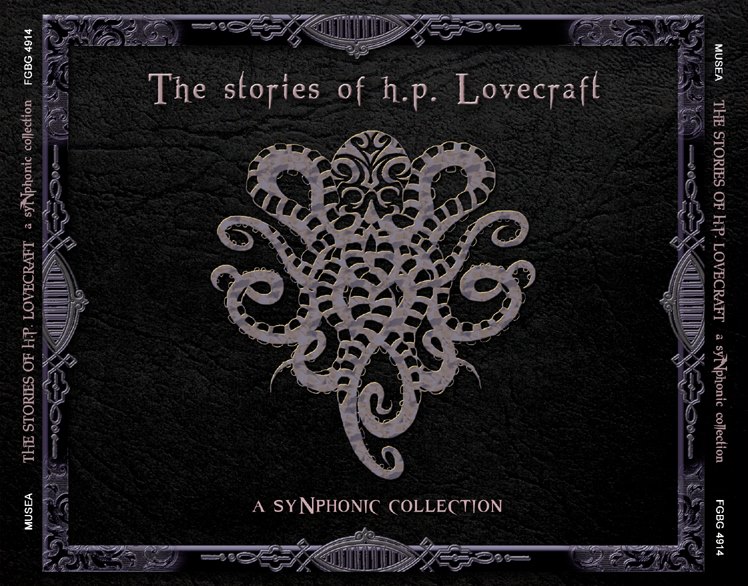
If you have a moment and if you (in the U.S. at least) possess $.99, there’s little better you can do with that money than purchase Glass Hammer’s latest single, “Cool Air.”stories synphonic

It’s their only contribution to a project exploring–through prog–the stories of H.P. Lovecraft.  It’s cleverly subtitled “A Synphonic Collection.”  Here’s the link at amazon.com:

http://www.amazon.com/Cool-Air/dp/B00ASHC30A/ref=sr_1_1?ie=UTF8&qid=1359585412&sr=8-1&keywords=glass+hammer+cool+air

Considering the typical Glass Hammer themes of nobility, whimsy (Steve and Fred can be hilarious), and struggle, the lyrics to “Cool Air” are a bit shocking.  I can’t quite piece the whole story together, but I think it’s about a man who tries to use science (and some kind of gnostic magic) to preserve and extend his life.  He, of course, fails, and the story of the song seems to take place 18 years after his death.

The horror, indeed.

The song has everything: brilliant Glass Hammer music; narration; and creepy lyrics.

I doubt if I’ll listen to the song over and over again, as I do with other Glass Hammer songs and albums, but only because I don’t think I want all of the lyrics running around my head or soul.  Still, it is pretty great, if unusual.

The Best 15 Albums of 2012, The Greatest Year in Prog. Ever.

IMG_3725by Brad Birzer, Progarchy editor

One of my greatest pleasures of 2012–and there have been many–has been listening to massive quantities of progressive rock, mostly for pleasure.

Being a literary and humanities guy, I’d contemplated rejecting the entire numerical ranking scheme.  Rather, I thought about labeling each of my best albums with various qualities of myth.  These albums achieved the level of Virgil; these of Dante; these of Tolkien, etc.  But, I finally decided this was way too pretentious . . . even for me.

Below are my rankings for the year.  Anyone who knows me will not be surprised by any of these choices.  I’m not exactly subtle in what I like and dislike.  Before listing them, though, I must state three things.

First, I loved all of these albums, or I wouldn’t be listing them here.  That is, once you’ve made it to Valhalla or Olympus, why bother with too many distinctions.  The differences between my appreciation of number 8 and number 2, for example, are marginal at best.

Second, I am intentionally leaving a couple of releases out of the rankings: releases from Echolyn, The Enid, Minstrel’s Ghost, Galahad, and Kompendium, in particular, as I simply did not have time to digest them.  Though, from what I’ve heard, I like each very much.

Third, I think that 2012 has proven to be the single greatest year in prog history.  DPRP’s Brian Watson has argued that we’re in the “third wave of prog.”  He might very well be right.  But, I don’t think we’ve ever surpassed the sheer quality of albums released this year.  This is not to belittle anything that has come before.  Quite the contrary.  I am, after all, a historian by profession and training.  The past is always prologue.  Close to the Edge, Selling England by the Pound, and  Spirit of Eden will always be the great markers of the past.

Ok, be quiet, Brad.  On with the rankings.

Continue reading “The Best 15 Albums of 2012, The Greatest Year in Prog. Ever.”

Songs from the Hedgerow: Preliminary Awards, 2012

146BBT1by Brad Birzer, Progarchist Editor

Though Progarchy is only two months old, I’m absolutely thrilled with its successes.  A thanks, first, to all of you out in the world (it’s a blast to look at the google map of who checks us out daily) who read us.  I hope you keep coming back to us.

Second, though, an immense thanks to all of the Progarchist writers.  Everything written here is purely voluntary.  We each have full-time jobs and families, but we do this because we love it.

We’re certainly not the biggest music website, but I believe that–in terms of sheer literary quality–no other website matches us.  I would hold any one of our writers (individually or collectively) against any other group of writers in the blogosphere.  If this sounds cocky, I apologize.  But, as editor, I find it quite humbling.  We really like each other, but we also believe that the importance of the music demands that we write and try to match with our utmost abilities.  On this, I think we’ve succeeded.

Additionally, though the site is based in the western Great Lakes of North America, we also have writers from the U.K., Brazil, and New Zealand.  We’re hoping to have someone from Antarctica soon—Penguin Prog?—but, it’s been more difficult than one might first imagine.

As 2012 comes to its necessary and inescapable end, each of the Progarchists has been asked—as time permits—to rank her or his favorite albums of the past year.

I’ll be ranking my top fifteen albums as well, and I’m sure my number one pick of the year, which I think is the best album of the last twenty-four years, will probably come as no surprise to anyone.

Continue reading “Songs from the Hedgerow: Preliminary Awards, 2012”

The Lyrics of “Perilous”

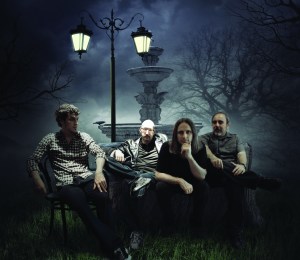
GHgroupcolor_000If any of you are looking for profundity in rock, look no further than the new Glass Hammer album, PERILOUS. I finally had the chance to read through the entire story and lyrics last night. What a moment. Indeed, I really doubt that I’ll ever forget that reading.

From the opening line, I fully entered into the story, an immersion that only T.S. Eliot and Big Big Train (Greg Spawton!) have offered me before.

Steve Babb has explained that the lyrics are an allegory, meant to be discovered by each listener.  I must admit, I’m still not sure I’ve figured out the allegory despite having this CD in rotation almost constantly since it arrived in late October.  But, the imagery of the lyrics–or, more properly, the “Imagism”–is more than a bit boggling to the mind.

The best way to describe the obvious meaning of the text is of a man (whether alive or dead; or perhaps on a journey through the purgatory in a Dantesque or Bradburyesque fashion) is of a man crossing through a grave yard, meeting many souls (redeemed, damned, and otherwise) and being offered distractions and temptations the entire way.

Babb is somewhat famous in the prog community for being a master storyteller as well as for being a satirist.  But, these lyrics are even something special for the already brilliant Babb.  This is the kind of album that reminds me progressive rock is not just “rock plus” but true art.


Even if you’re not a prog fan, you will almost certainly find the lyrics stunning.  I’ll offer a full review of the album very soon, but I had to post this now–such is my state of euphoria regarding this album.


Our Progarchist Week

GlassHammerPerilous2012borders_001Just in case you missed any of this, we had yet another brilliant week at Progarchy.  Dr. Nick and Alison Henderson reviewed the new Steve Hackett album, Genesis Revisited II (Insideout).  Tad Wert posted about guitarist Michael Hedges.  Chris Morrissey reviewed (briefly) one of his favorite albums of the year, the debut album from Flying Colors, and he posted about the excellence of Mike Portnoy.  I had the great privilege of interviewing Blake McQueen of Coralspin.  Ian Greatorex (doesn’t everyone want an ubercool last name such as Greatorex?) looked at the past of Beardfish.  Roger O’Donnell remembered his time recording Disintegration with The Cure.  Jazz legend, Dave Brubeck, passed away, the day before turning 92.  Carl Olson offered a nice review of his career.  Finally, our Englishman, turned-Kiwi, Russell Clarke, explained why Big Big Train allows him to remember, fondly, his homeland.

Forthcoming, more reviews of Steve Hackett (at least one more, maybe two) as well as a review of the forthcoming King Bathmat.  Several (if not all!) Progarchists will also be explaining our “best of 2012.”  Lots and lots to come before 2012 is done.

On a personal note, I’ve spent much of my free time this week, going back through the myriad interviews with the various members of American prog demi-gods, Glass Hammer.  There’s plenty of quotable material from these guys.  My favorite, though, comes from a 2002 interview with one of my oldest friends, Amy Sturgis.  In response to one of her questions, Steve Babb stated: “We were attempting to repackage progressive rock (which we though had long since vanished) as fantasy rock.”

Continue reading “Our Progarchist Week”