“The word ‘bombastic’ keeps coming up as if it were some trap I keep falling into … when I’m bombastic, I have my reasons. I want to be bombastic. Take it or leave it.” – Dave Brubeck
What were they thinking?
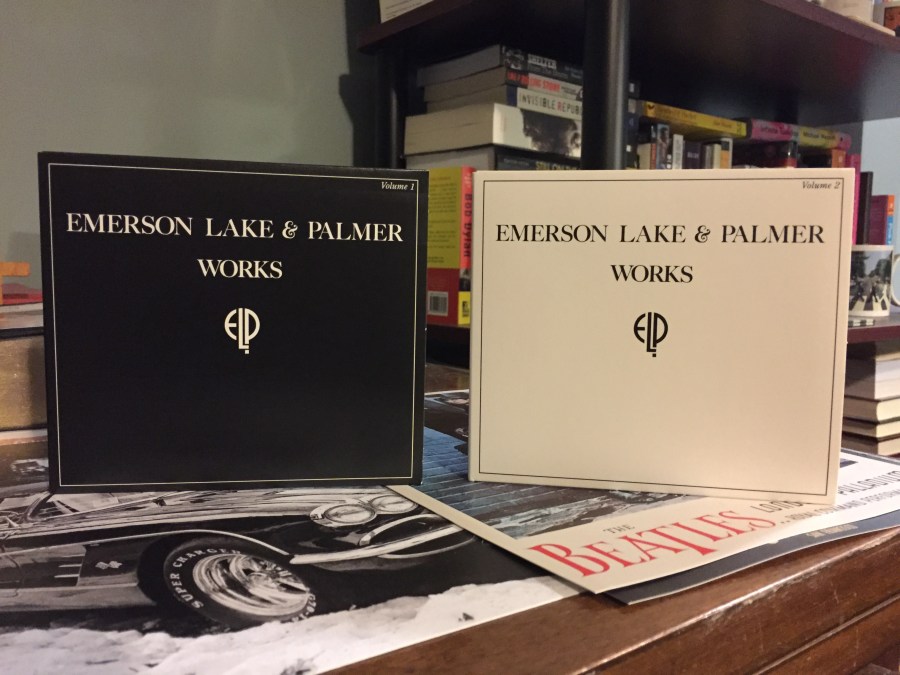
You’re Emerson, Lake & Palmer, coming off a three-year layoff — though admittedly, you were at the top of the charts and your game when you downed tools. To regain your fan base and add to your audience, would you come back with a double album that had one side of material by each band member (with guest players and full orchestras) and only one side of ELP playing together? And then, would you take a 59-piece orchestra and 6-voice choir on the road with you? To most people, that would sound like a recipe for disaster.
Bruce Frohnen has an essay over at TIC about ELP, arguing that they are “the most important musical group of the rock era.” Here’s part of his argument:
“Karn Evil 9” is not overblown, it is genuinely and intentionally music on a grand scale, combining classical techniques with multiple, interlacing rhythms, and polyphony to immerse the listener in a web of sound that for a time creates its own reality.
“Counterpoint” is a concept (not to say a reality) little understood among most rock musicians; but it was crucial to ELP’s ability to produce sounds that made sense at a level frankly higher than can be achieved in most blues-based music, with its emphasis on a single, simple melody underscored by rhythms deeply rooted in a single beat. At their usual best, Emerson, Lake, and Palmer performed according to a vision of rock music as rooted in the classical past. They produced both direct classical adaptations (“Fanfare for the Common Man” being the most famous) and original compositions that likewise combined modern rhythm and technique with melodic sophistication to create genuine art—pieces of beauty capable of affecting the souls of listeners.
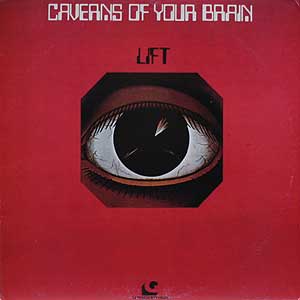
I bring to you yet another fine American band that would have been sadly forgotten if not for the saving graces of the Internet. Hailing from New Orleans, Lift released one album in 1974, the curiously titled Caverns of Your Brain. It is probably the best obscure prog album I’ve ever listened to. All five band members are more than capable when it comes to handling the complex rhythms and lengthy compositions that distinguishes progressive rock from other musical genres. Fans of Yes, ELP, Hawkwind, and even Premiata Forneria Marconi will enjoy this album. Lead singer and flautist Courtenay Hilton-Green sounds similar to Jon Anderson (sans Lancashire accent) and Franz di Cioccio (of PFM fame). Cody Kelleher’s bass guitar sounds similar to Greg Lake and, at times, Chris Squire (from his pre-Fragile days). The standout on the album, however, is keyboardist Chip Gremillion. His work on all four songs is comparable to that of Tony Kaye, and he does a superb job on each piece. Guitarist J. Richard Huxen and drummer Chip Grevemberg are excellent on their respective instruments as well. Now to the songs:
Simplicity – excellent opening song; similar in sound to Yes’s debut album; catchy bass and keyboard intro
Caverns – more tranquil and “spacy” song, similar in vein to Hawkwind and Gabriel-era Genesis; piano solo reminiscent of Tony Banks’s finest work; and a superb acid guitar solo (reminds me of Gilmour)
Buttercup Boogie – more frenetic than the others; exceptional keyboard work yet again; fine drum and bass anchor the piece
Trippin’ Over the Rainbow – another great keyboard and bass intro (bass sounds similar to Greg Lake’s best work); excellent synthesizer work gives song a space/acid rock feel; part of the bass line includes the Peter Gunn theme (famously played by ELP in concert)
These are four well executed songs. For those of you who enjoy the symphonic side of prog, this is an album for you.
Hope everyone had an enjoyable beginning to the New Year. Let’s hope it’s a good year for freedom!



 Progarchy