Big Big Train, FOLKLORE (Giant Electric Pea, 2016).
The band: Greg Spawton; Andy Poole; Danny Manners; David Longdon; Dave Gregory; Rachel Hall; Nick D’Virgilio; and Rikard Sjöblom. Engineered by Rob Aubrey.
Tracks: Folklore; London Plane; Along the Ridgeway; Salisbury Giant; The Transit of Venus Across the Sun; Wassail; Winkie; Brooklands; and Telling the Bees.
By chance, the new issue of PROG arrived at the same time as FOLKLORE. A glorious day.
The centerpiece of third-wave prog, Big Big Train, matters. How they write music matters; how they write lyrics matters; how often they perform live matters; how they package their music matters; and how they market what they do matters. They are a band that has evolved significantly over twenty-plus years of existence, a restless band that never quite settles on this or that, but rather keeps moving forward even as they never stop looking back. In their art, they move forward; in their ideas, they move backward. All to the good.
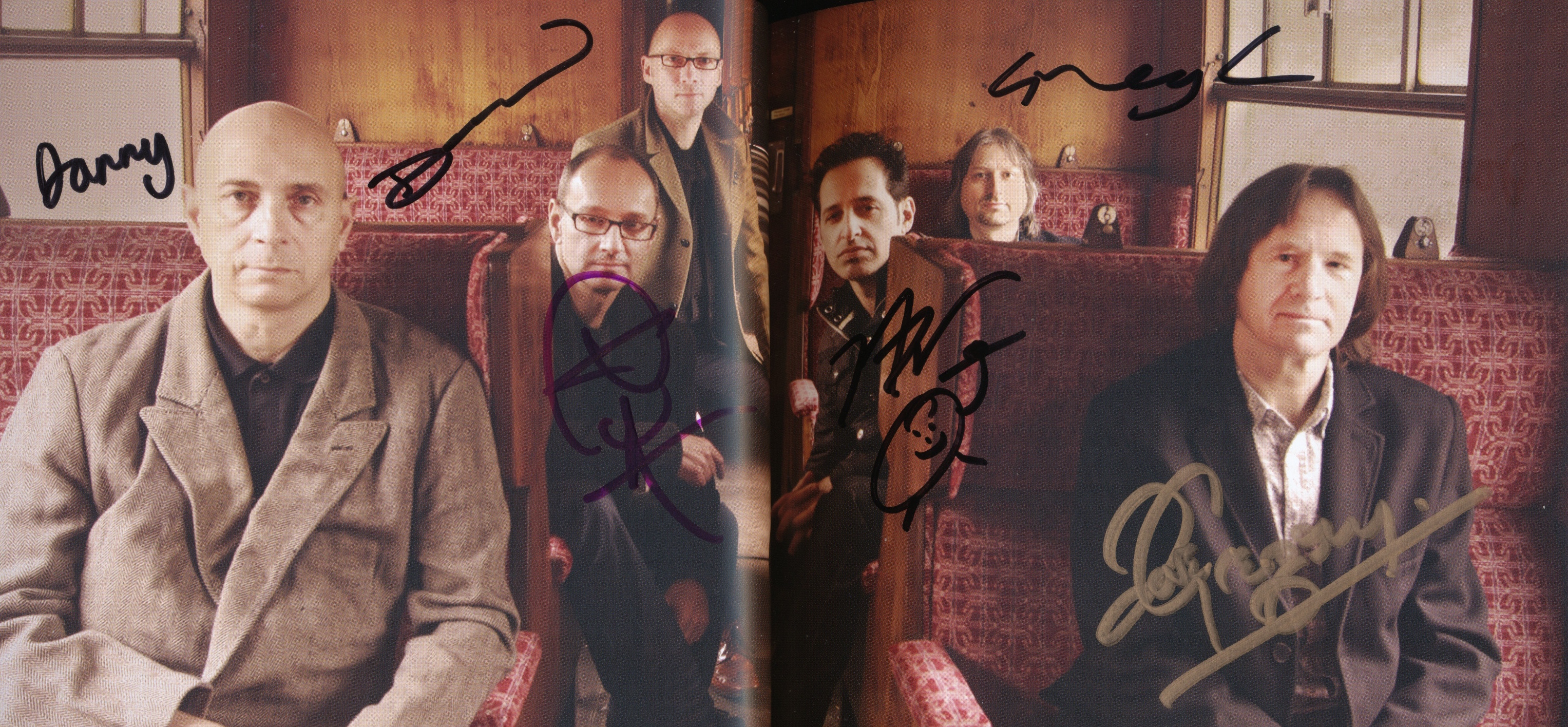
It’s not everyday that a Big Big Train album appears in my mailbox. An immense thanks to Kathy Spawton and Greg Spawton for sending it, and to the band for signing it!
Veronica Rose celebrates with SONGS FROM THE BIG CHAIR, BBT style.
I will admit, I find it hard to believe that Steven Wilson’s HAND.CANNOT.ERASE. is now fourteen months old. It arrived on my doorstep—courtesy of amazon.com—on the day it was released, and I played it immediately, of course. At the time, however, I had become truly skeptical of anything Wilson was doing at that moment. My dislike and distrust had not come on me suddenly, but, rather over a relatively long period of time. As I mentioned in a previous post, I didn’t come across his work until a random turning on of album rock radio in Fort Wayne played an incredible song—“Trains” if I remember correctly—just as Porcupine Tree had released IN ABSENTIA. I not only purchased that album that day at a Fort Wayne Bestbuy, but I also searched out an independent CD/record store, and purchased much of PT’s back catalogue. To say that a decade of obsession (in the healthy, fan sense; not in the psychotic sense) with Wilson and all of his art set in. I was certainly a completest. If it had Wilson’s name on it, I owned it.
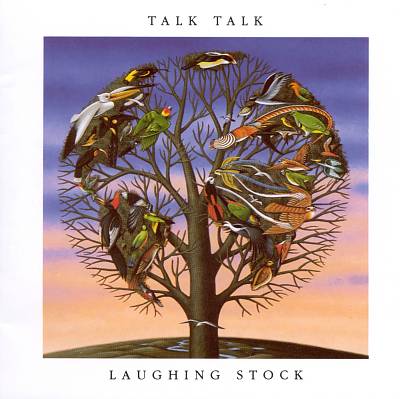
Twenty-five years ago this fall, progarchist editor Craig Breaden and I were in Waterloo Records, Austin, Texas. There it was on the shelves—the final Talk Talk album, LAUGHING STOCK, in all of its James Marsh-esque glory. Of course, I purchased it as quickly as possible. After all, it had just come out, and Craig and I were living in pre-internet days in northern Utah. We had a music store nearby, but however good it was—and, frankly, it was pretty good—it wouldn’t have dreamt of carrying anything by a band so strange as Talk Talk.
Talk Talk’s last album, 1991. A masterpiece at every level and in every way. Arguably the single greatest album of the rock era.
So fortunate we were at a history conference in Texas at the same moment as LAUGHING STOCK’s release.
Craig and I were not only officemates and apartment mates, but we were best friends and music mates. How many hours flew by with Craig and I devouring music—old and new—and then discussing and analyzing every bit of it. I still cherish these nights and even weekend-days as some of the best of my life. Though I’d grown up in a house that respected nearly every form of music, I had never been introduced to some of the great psychedelic and experimental rock acts of the late 1960s and early 1970s. Unless it was by Yes, Genesis, or Jethro Tull, I really didn’t know it. Craig played Procol Harum, Soft Machine, Spooky Tooth, and Traffic for me. I fell in love with each. As the time Craig and I (and another close friend, Joel) were spending so much time together, the music scene itself was going through a bit of a psychedelic revival—with World Party, Charlatans, and others—and this only added to our excitement.
As soon as we returned from Austin, I recorded the full album of LAUGHING STOCK on each side of a double-sided TDK cassette and enthusiastically played this tape over and over and over and over. . . . Even though Craig and I had shared many enthusiasms with each other, this obsession with Talk Talk seemed more than a bit too enthusiastic to Craig.
Understandably so.
By sheer force of will, I fear, Craig had to accept this or our friendship would suffer! Of course, here we are, a quarter of a century later, still very close friends and co-editors of progarchy. . . . You know the story ended well.
For nearly thirty years, I instantly answered the question of “what is your favorite band” with Talk Talk and Rush. If pushed a bit more, I would add Tears for Fears and, depending on my mood, Genesis or Yes or XTC. This rote answer became almost proudly knee-jerk on my part.
When challenged about this opinion, I rather haughtily pointed to THE COLOUR OF SPRING, SPIRIT OF EDEN, and LAUGHING STOCK. After all, who could top fourteen months a shot, recording in dark, deserted churches, challenging every single bit of corporate conformity in the music business.
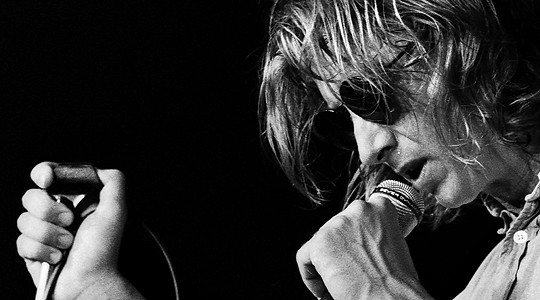
Mark Hollis, 1986. At the very edge of Valhalla.
Mark Hollis, Tim-Friese-Green, and Phill Brown were not just three more musicians in the industry, they lingered as demi-gods at the very edge of Valhalla itself, ready to release Ragnoräk at any moment. And, power to them! As far as I was concerned, the music industry needed and deserved a revolution.
Recently, I’ve realized that Talk Talk no longer holds top spot in my mind when it comes to bands (Big Big Train has finally replaced Talk Talk in my mind and in my soul), but it will always be in the top three for me. For too many years, Talk Talk was my go-to band, my comfort and my first love in the world of music. To this day—and, I presume, to the end of my days—the final three albums the band made will always be the three by which I judge every other release in the music world. Few albums or bands, then or now, can measure up to such heights. But, such is my mind and soul.
Part II to come soon. . . . In the meantime, enjoy 19 minutes of Hollis talking about LAUGHING STOCK.
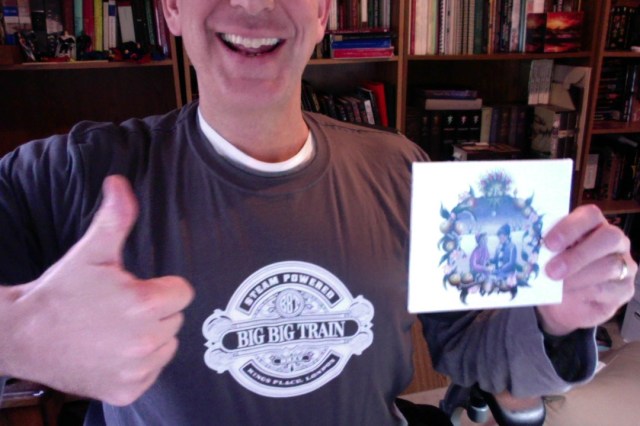
A personal note of thanks to one of my favorite English-humans, Andrew Craske, for his incredibly kind gift. I now own one of the single best t-shirts in all of North America. Perhaps in all of the new world.
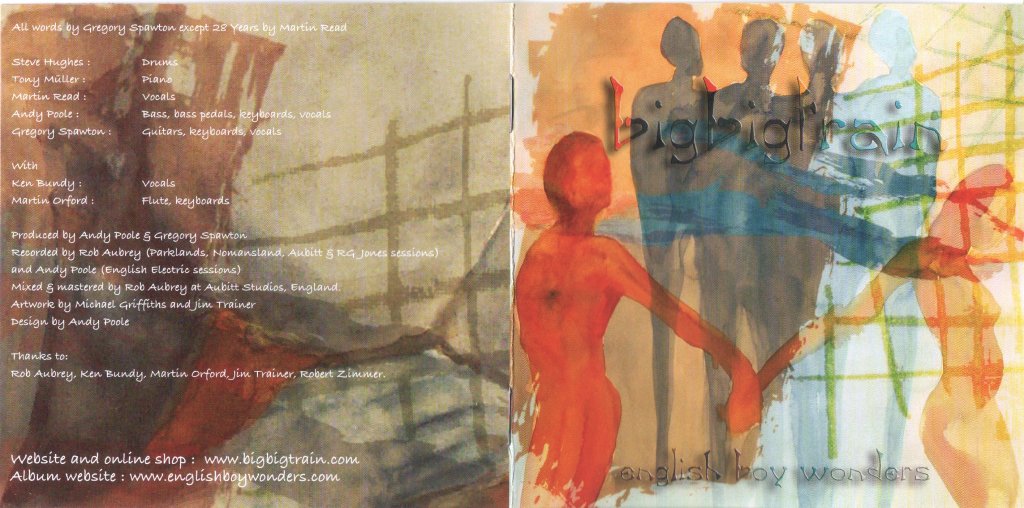
Big Big Train, ENGLISH BOY WONDERS (Giant Electric Pea, 1997; 2008)
14 Tracks on the re-released version, 2008. Interior/booklet art by Jim Trainer.
The interior art of English Boy Wonders. All interior art and design by Jim Trainer.
ENGLISH BOY WONDERS is, by far, the most “English” of all of Big Big Train’s albums. Articulate, intelligent, penetrating, and romantic, the album should properly be listened to under grey skies with fog clinging to the land, an iron-gated cemetery to one side and a beautiful pale-skinned, red-headed woman just out of reach on the other, with a slight bit of drizzle in 55-degree weather. The listener, of course, should be wearing tweed and fiddling with his pipe. Perhaps, he should also have a battered, leather copy of Wordsworth or Tennyson as well.
I exaggerate, but only slightly.
As explained at the EBW promotional site:
English Boy Wonders was originally recorded on a limited budget & released by GEP in a semi-complete state in 1997. It has been unavailable for many years. For the 2008 re-release, Big Big Train have returned to the original master tapes & have re-recorded much of the album. Additional sections of music have also been written to complete the album as it was once intended. A bonus track featuring Martin Orford has been included & the album has been completely remixed & remastered by Rob Aubrey.
English Boy Wonders tells the heart breaking story of a doomed relationship across its 80 minutes of music & words. The album is a unique blend of progressive rock & English pop featuring many of Big Big Train’s finest songs.
Never shy about his melancholic, autumnal imagination, Greg Spawton actively and openly wrote a heart-wrenching story about loss on this second Big Big Train album. And, not just loss. . . but desire, hope, longing, and unrequited love.
For those of us—and we are becoming immense in our numbers—who have come to fall in love with David Longdon’s voice (a voice I consider to be the single finest in the current era of rock), it’s difficult to hear BBT without him. And, yet, on EBW, it was so. No Longdon. Not yet. He’s not the only one missing. A quick look reveals, of course, no Manners. No D’Virgilio. No Gregory.
Holy schnikees, what is this thing I hold so delicately in my hands? How can it be so great as it is without those four distinctive personalities?
Well, at least Poole and Spawton are here. And, thank the Northern pantheon of gods, very much so. One can hear them and their brilliance in every note. Not only is EBW so very English, it is so very BBT. The complexity of the arrangements, the searing guitar, the swirling keyboards, the anxious drums, and Spawton’s heart rending lyrics. Yes, this is Big Big Train. With all BBT releases, Spawton and Poole never shy away from reflecting those they admire. There’s some mid-period Genesis here, but there is also quite a bit of atmospheric jazz, with keyboards and drums far more daring than Collins and Banks ever tried.
And, for the newer release, the unofficial member of the band, that Anglos-audiophilic genius Rob Aubrey lends his extraordinary skills to EBW.
While the entire album is excellent and a must own, the tracks that lodge themselves firmly in the soul and mind are “Albion Perfide,” “Out of It,” “Reaching for John Dowland” and “The Shipping Forecast.”
Greg Spawton needs no introduction to this audience. He is one of the founders of Big Big Train, its bass player, and, now, one of its two main songwriters and leaders in the band. He is also, not surprisingly, a true renaissance man, interested in everything imaginable and not just large railroad cars! He reads, he travels, he explores. He’s also quite “normal.” He’s a father as well as a husband. He’s, frankly, an all-around great guy.
As most of you probably also know, the five original editors founded progarchy initially as an unofficial Big Big Train fan website. Though we have grown to analyze all music, we will never forget our original purpose. And, thank the good Lord that BBT continues to earn such love and admiration.
The set (missing a few EPs).
*****
Progarchy: Greg, thanks so much for taking the time to talk with us. It’s always a pleasure. What was it like working in Peter Gabriel’s studio? Did it feel like it was a once-in-a-lifetime experience? Was it a learning experience, or was it really just recording in a large studio, bigger than your normal one?
Spawton: Real World is a unique environment: historic mill buildings converted to cutting-edge recording rooms and facilities set in a beautiful rural location. The studio is fully residential so you eat and sleep on site. The sound engineers are extremely talented and knowledgeable and all of the staff are friendly people who do all they can to make the time that musicians have on site productive and enjoyable. We have spent two weeks there now on two separate occasions and will be recording there again in November so it has become one of our main bases.
Progarchy: Since we last talked, Greg, you’ve added two new members to the BBT lineup? Can you tell us a bit about each and what they’ve brought to the band?
Spawton: Rachel and Rikard have proven to be superb recruits to the band. Initially, they were brought in to help realise the songs in the live environment, with Rachel providing string parts and Rikard guitar and keyboard. However, both are intensely musical individuals and they have added a huge amount to our musical firepower. They are also both lovely people. At this stage in my life, I don’t want to waste any time working with people I don’t get on with, or who are not on our wavelength. The fit with Rachel and Rikard is perfect.
Add Rachel and Rickard (and Rob Aubrey) and you have BBT.
Progarchy: Nice. Can you give us a run down on upcoming BBT projects—any details about content and release dates?
Spawton: There are quite a few things in the pipeline. First to be released should be STONE AND STEEL which will be a DVD / Blu-Ray featuring in-studio live performances from 2014 plus some documentary footage of the band evolving from the studio to the stage. We also hope to include some footage from our recent gigs. The aim is for a November release.
We have a new album which we are working on at the moment. This is called FOLKLORE and will feature up to an hour of new music. It will be released in early June 2016.
Alongside FOLKLORE, we are working on STATION MASTERS which is a three CD release which will serve as an overview of the band’s music up to FOLKLORE. All of the older songs featured (songs from before David became lead singer in 2009) will be re-recorded with the new line-up. This is planned for Spring 2017 and will be released at the time of our next live shows.
Progarchy: Phew. Amazing. Well, that’s a cornucopia for all Passengers! About 2 years ago, in an interview with PROGRESSION [no. 65] magazine, you’d mentioned BBT would release a concept album. Is this the same as FOLKLORE? Or, was that a different project altogether?
Spawton: It is a separate release which will be a double concept album. Much of the music is written for this and some of it has already been recorded. However, it is a big project and we knew we wouldn’t get it finished in the next year, so we decided to write a separate set of songs for FOLKLORE as we wanted to release an album in 2016. We aim to have the double album out in 2017 or 2018.
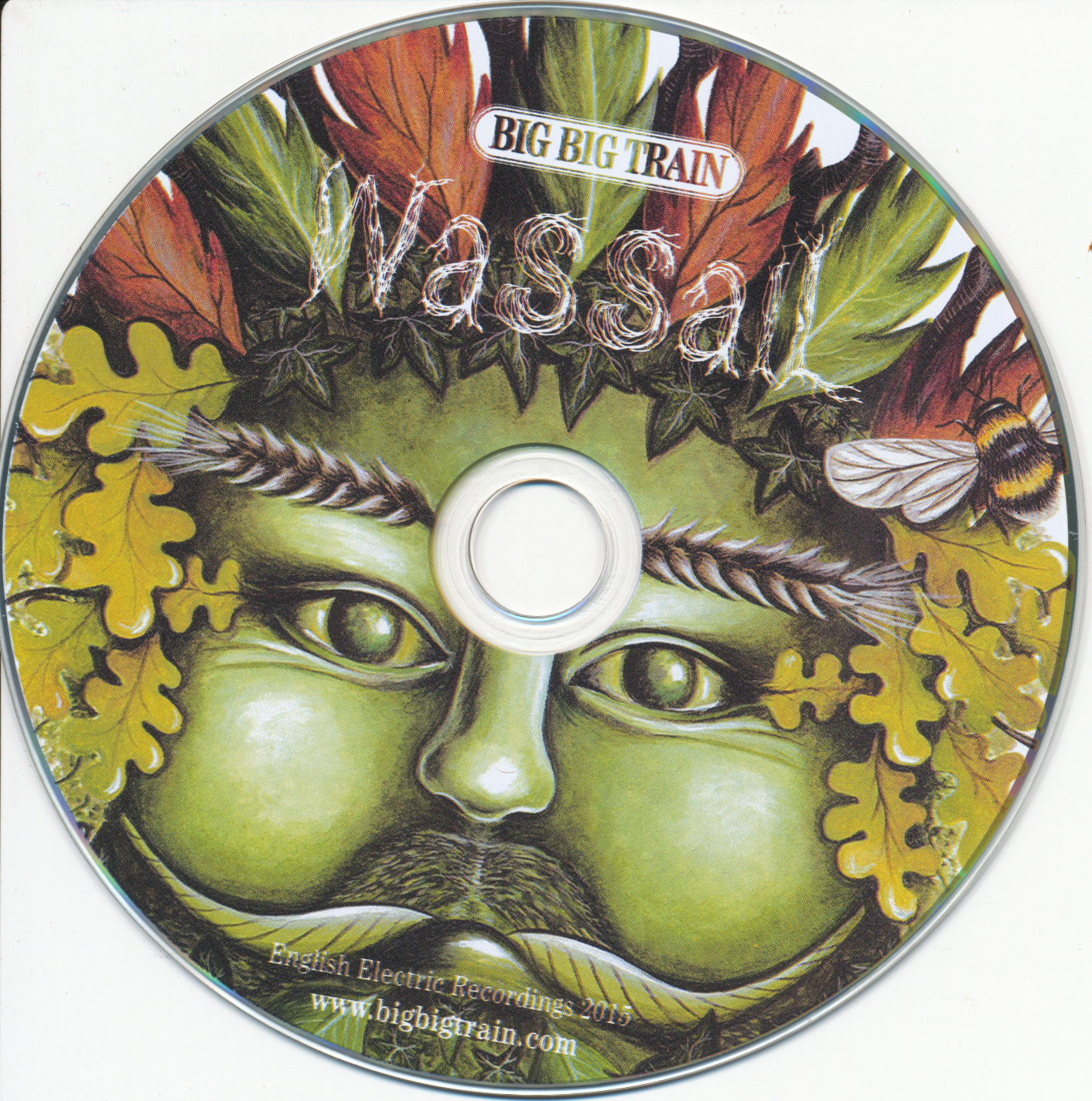
The Green Man sees all.
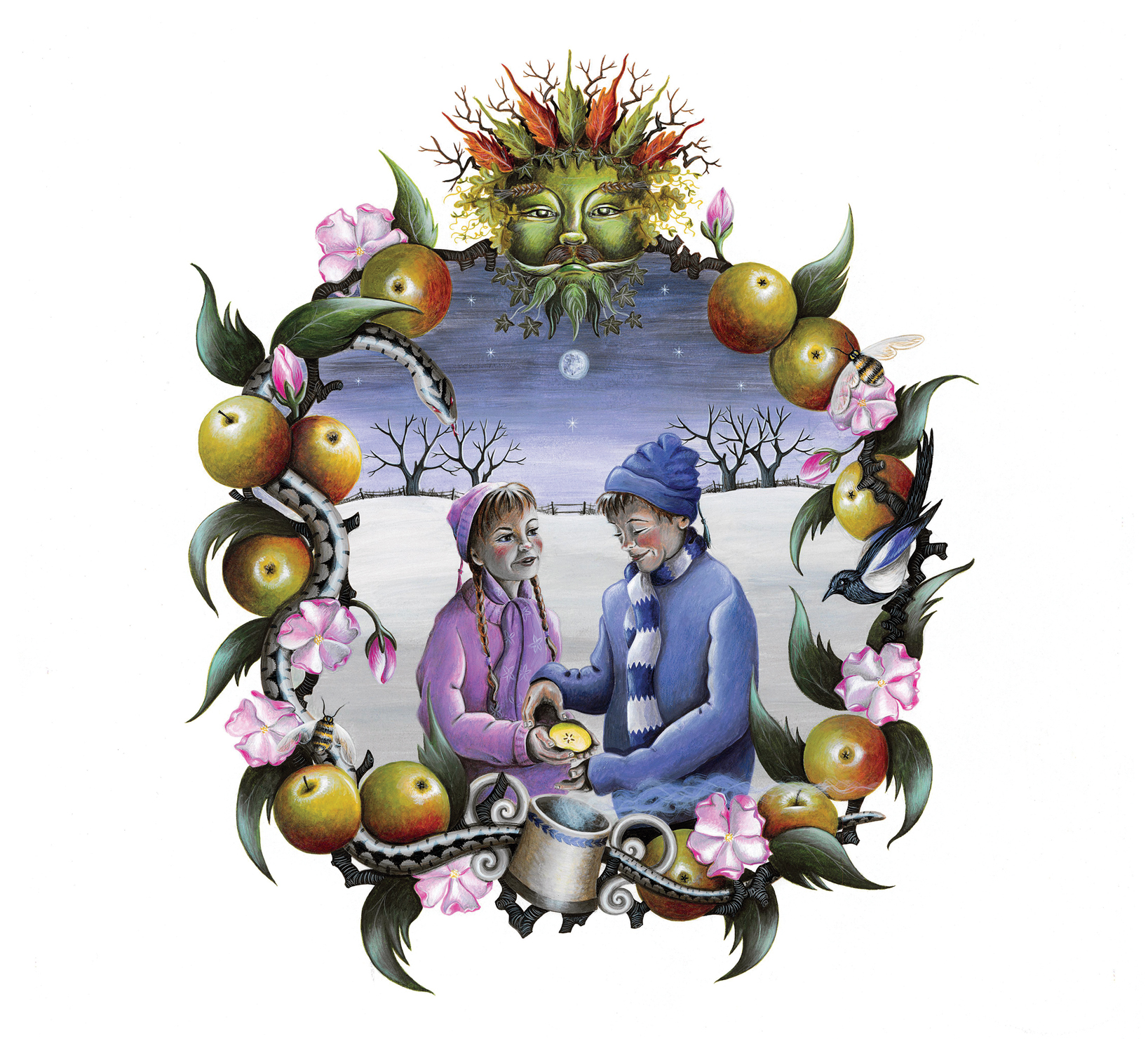
Progarchy: One of the things that so permeates WASSAIL—all four songs—is the deep layering of mythologies and symbols. From the Judeo-Christian to the Anglo-Saxon mythology of apples, for example, on WASSAIL. Do you intentionally set out to do this, or does this come naturally to BBT?
Spawton: It just happens, really. Themes emerge through conversation between me and David or through our own research. We are both quite ‘bookish’ when it comes to writing lyrics. We like to write about something.
Progarchy: A follow up to the previous question. Where do you see yourself in the current music scene? Would you label yourselves as anything in particular or just as prog rock or rock, broadly defined? A recent issue of PROG, of course, called you folk-prog.
Spawton: They can call us what they like as long as they are listening. We are always very happy to be defined as a prog rock band. Progressive music draws from so many different sources and enables bands to cover so much musical territory. We don’t find the label, or the genre itself, restrictive in any way. A lot of people call us pastoral and there is certainly a folk influence in some of what we do, but we listen and absorb influences from many different types of music. Anything we enjoy, really.
Progarchy: Again, another follow-up, if you don’t mind. It’s possible that the most powerful moment in all of your music is the reading by John Betjeman and the honor you give it and him. Would you do something like this again, and, if so, with what figure(s)?
Spawton: The inclusion of Betjeman’s voice was suggested by Andy Tillison [The Tangent, as almost every one of you knows—ed.]. When I heard it I just thought: ‘of course.’ Subsequently, I have been in touch with the historian Michael Wood and we have discussed using his voice in a spoken word moment. Michael Wood is a very well known English historian and has been a big influence on me. I would like to feature his voice at some stage.
Progarchy: A lot has happened to you this past month. What were your impressions of offering the three shows in London? In personal correspondence many years back now, you’d mentioned to me that you thought the last time you toured, it was a bit unpleasant. My word, not yours, Greg. But, I think I’m close in describing what you wrote to me. Were these three August shows redemption?
Rust never sleeps. It remains alive in song.
Spawton: The last gig played by Big Big Train prior to the shows this year was back in the late 1990’s and didn’t go well. It was at a festival in the Netherlands and we faced lots of technical problems. Our music didn’t fit the festival very well either, so it wasn’t a good experience. However, I don’t connect that in any way to our recent live experiences. Different era, different line-up. If there is any sense of redemption it is more in the overall trajectory of the band. We have turned things around in the last few years. Some of that is through sheer bloody-mindedness, mostly it is because we now have the right line-up for the band’s songs which has taken the music to another level.
Progarchy: During the tour, what moments worked best? Were there any moments in which you thought, “Ok, this is exactly why we wrote or recorded this.” When I lecture, for example, things I’ve always believed become somehow more real or tangible as I state them and place those ideas between me and my students. Did something similar happen with playing the music for you in London?
Spawton: Yes, I know exactly what you mean. There were many moments like that, where things felt fully realised. A few things spring to mind, for example the early instrumental sections in THE UNDERFALL YARD where things really groove now and it takes on a sort of fusion feel and WASSAIL, which is such a fun song to play as an ensemble. One particular bit at one of the gigs sticks in my mind, which was during the faster section in “East Coast Racer” starting with the electric piano solo and ending with the ‘she flies’ moment. I remember looking up at the screen which was showing some film footage and then looking up at the brass band who were in full flow and then seeing a guy in the balcony standing up and extending his arms out as if they were wings and I thought ‘we’re really flying here.’
Progarchy: A personal question, Greg, if you don’t mind. Chris Squire (RIP) just passed away. As a bass player, was he much of an influence on you?
Spawton: Chris Squire developed a particular way of playing which gave him a strong signature. Sometimes, when I become aware that I may be straying onto his territory, I step back. His was an exceptional talent and it is hard to believe he won’t be seen on a stage again.
Progarchy: Beautifully put. And, a fine tribute. On another topic, you’re an avid reader. What are you reading now? History? Fiction? Anything you’ve read recently that really struck you as meaningful?
Spawton: Mainly history at the moment. I have been reading a few books about the dawn of civilisation in recent weeks, back to the Sumerians. Ancient Worlds by Richard Miles is very good. I am trying to follow things through from there and get a good broad grasp of the timelines. Right now I am reading a book by Tom Holland on the Persian / Greek conflict, the original clash between East and West. In the next week or so I need to start some research into the stories I am writing about on FOLKLORE, so there will be some different books coming down from the shelves.
Progarchy: What music are you listening to at the moment?
Spawton: Elbow released a nice EP a couple of weeks ago. And I am still listening to the recent Mew album. The best new thing I have heard recently was by Sweet Billy Pilgrim. I suspect I will be getting all of their albums. I do have some cool gigs coming up. I am seeing King Crimson with David. I also have tickets for PFM, The Unthanks and an acoustic show by Mew.
Progarchy: Thank you so much, Greg. Not to embarrass you too much, but every progarchist is a huge fan of your work. We’re proud not only to know you, but to see the excellence you continue to pursue. Congratulations on all of your recent successes. All well deserved.
Tracks: Wassail; Lost Rivers of London; Mudlarks; and Master James of St. George.
Wassail, the new EP from Big Big Train
As far as I know, I’ve never tasted Wassail.
Of course, I come from Bavarian peasant stock and possess, sadly, not a drop of Anglo-Saxon or Celtic blood in my veins. My wife, however, is blessed with Celtic as well as Swedish ancestry, and I’m more than happy to have played a role in passing those genes on to our rather large gaggle of children.
As far back as I remember, though, my very German-American family drank something that sounds quite similar, at least in essence if not in accidents, to Wassail, Gluhwein. Even the very word Gluhwein conjures not just the scents of warm cinnamon, cloves, and anise, but also the idea of heavenly comfort and satiation.
Much the same could be said of all of Big Big Train’s music. Not that it doesn’t have its share of tensions and darker moments within the music, but, it’s hard to imagine a band in the world today that better understands the goods and beauties of this world than does Big Big Train. They find glory in even the most ordinary of things. And, rightly so.
A beautifully rendered cover, layered with symbolism equal to the music in every way.
Wassail is a triumph, frankly. Not a huge triumph in the way The Underfall Yard or English Electric were each immense, almost overwhelming, triumphs, but a triumph, nonetheless.
A good, little truth.
In Greek, one would employ a word that has become utterly perverted over the last hundred years to describe Wassail best: a “dogma.” Literally, translating it from Greek to Latin, a dogma means a “good little thing,” a thing good in and of itself whether we understand its relation to larger truths or not.
Such is Wassail. A good little truth, whether we understand its relation to anything else or not. Only four songs at 25 minutes and 39 seconds, Wassail ends all too quickly. And, yet, for those nearly 26 mintues it plays, it fills our souls to the brim.
The opening song, “Wassail,” is a sing-songy English folk tune, completely with poetic and thoughtful lyrics. Here is the apple—the symbol of the devil, the instrument that caused the Fall, and the fruit that, to this day, brings so much love and joy. How can one thing be so loaded down by so many meanings—from the very existence of the universe and our relation in it, to the very thing that serves at the heart of what our grandmothers make best? This is a Longdon song, pure and simple. It is, for all intents and purposes, the sequel to Hedgerow, but without the rock edge.
The second song, “Lost Rivers of London,” is as much a Greg Spawton-song as the first was a Longdon song. What remains of the ancient world under the very streets of the city that represents so much good and truth in this world? What has nature wrought, our ancestors cultivated, and our current generation forgotten? These are quintessential Spawton questions, and, of course, true to Gregorian form, he serves as our modern natural historian, our urban archeologist, and our prog bard.
The third song, “Mudlarks,” is also a Spawton song, but its fullness comes across as a Big Big Train song more than the song of any one person. On “Mudlarks,” every member of the band, contributes and plays his or her heart out. Of the four songs, this is the most pop-rock oriented, despite the use of a whole set of rather folksy strings.
The final song of the EP, “Master James of St. George,” reveals just how much the band has evolved since the song first appeared—rather gloriously—on The Underfall Yard. Recorded live at Peter Gabriel’s Real World Studios, this version of “Master James” is much more layered than the original. Whereas the original offered a folksy minimalism, this version is layered almost beyond reason. The new strings add much but what really comes to the fore in this version is Danny Manner’s keyboards.
Big Big Train in Real World Studios.
The Wassail version of “Master James” in no way makes the original obsolete. Quite the opposite. This new version just makes those of us who love BBT justifiably a little prouder of them. For, really, this version shows just how truly alive their music is, how much depth it possesses, and long it will be remembered. . . long after any of us have vanished from this world.
Let us just hope when we get there (wherever “there” is), we know which apple to choose. It’s pretty clear that BBT wishes us well, and they’ve even kindly provided the soundtrack for that journey.
This coming Tuesday evening, I will have the great pleasure of giving an academic lecture on the meaning of progressive music as best expressed in the work of Big Big Train. Unfortunately, this lecture will not be open to the public. I will, however, make an audio recording–should any progarchists be interested.
For the same event, I’ll also be giving two lectures on the work of J.R.R. Tolkien and one on the same of G.K. Chesterton.
Having had a chance to listen to a stream (a review copy from the fine folks B/W/R PR) of the new Steven Wilson, I’m very glad to write that it’s profound and good and true and wonderful. I wasn’t so taken with the last album (the RAVEN one), though I thought the first two solo albums quite astounding. And, I pulled out my Chicago DVD show of Porcupine Tree. Sheesh, when Wilson wants to be, he’s incredible. The last solo album I thought a poor mimicry of the work of that ever-wonderful genius, Andy Tillison.
This new album pays homage to late 1970s Rush, but it does so in a way that honors Rush. All to the good.
As the Grammy’s are happening as I write this, I remember how utterly disappointed I was with Wilson a few years ago when he tweeted how sad he was not to have won a Grammy. I responded in my own tweet: “Dear Lord, you are so much better than that!” Or something akin to this.
I meant it.
A Grammy is an albatrossian weight, not a mark or a sign of anything other than bland, tapioca conformity on a corporate scale.
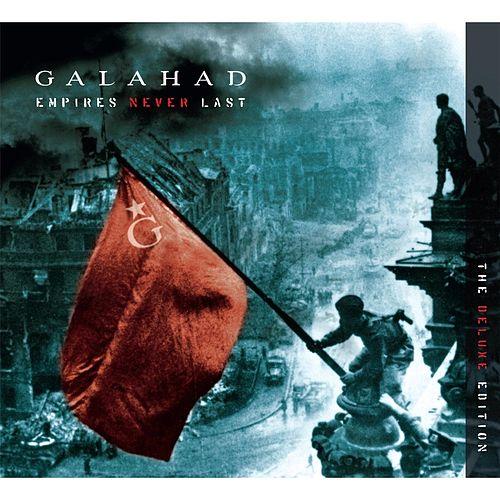
Not watching the Grammy’s, I can happily report that I’m listening to the brand new, deluxe version of Galahad’s EMPIRES NEVER LAST. Let me offer another “sheesh.” What a great album, made even better through remixing and editing. Glorious.
Yesterday, my family and I devoured the new Neal Morse, THE GRAND EXPERIMENT. We are all rather smitten.
Today, I listened to all of Dave Kerzner’s NEW WORLD (deluxe edition) as I made Sunday evening pizza. Again, I’m a rather happy fan.
I also read Bryan Morey’s insightful review of Mike Kershaw’s latest EP, DEPARTURE, featuring lots of FRACTAL MIRROR talent. This got me to thinking about Greg Spawton and his ability to form communities–not only around himself immediately in BBT, but also through the internet. Kershaw, Urbaniak, Kull. . . what a crazy bunch of proggers we all are. And, that Morey. He’s a natural.
And, now, I patiently await the arrival of the new Glass Hammer.
I’m sorry–what awards show is going on tonight? Yeah, I’ve got much better things to listen to, thank you very much.








 Progarchy