


Tag: Kevin J. Anderson
Kevin J. Anderson Hugo Nomination!
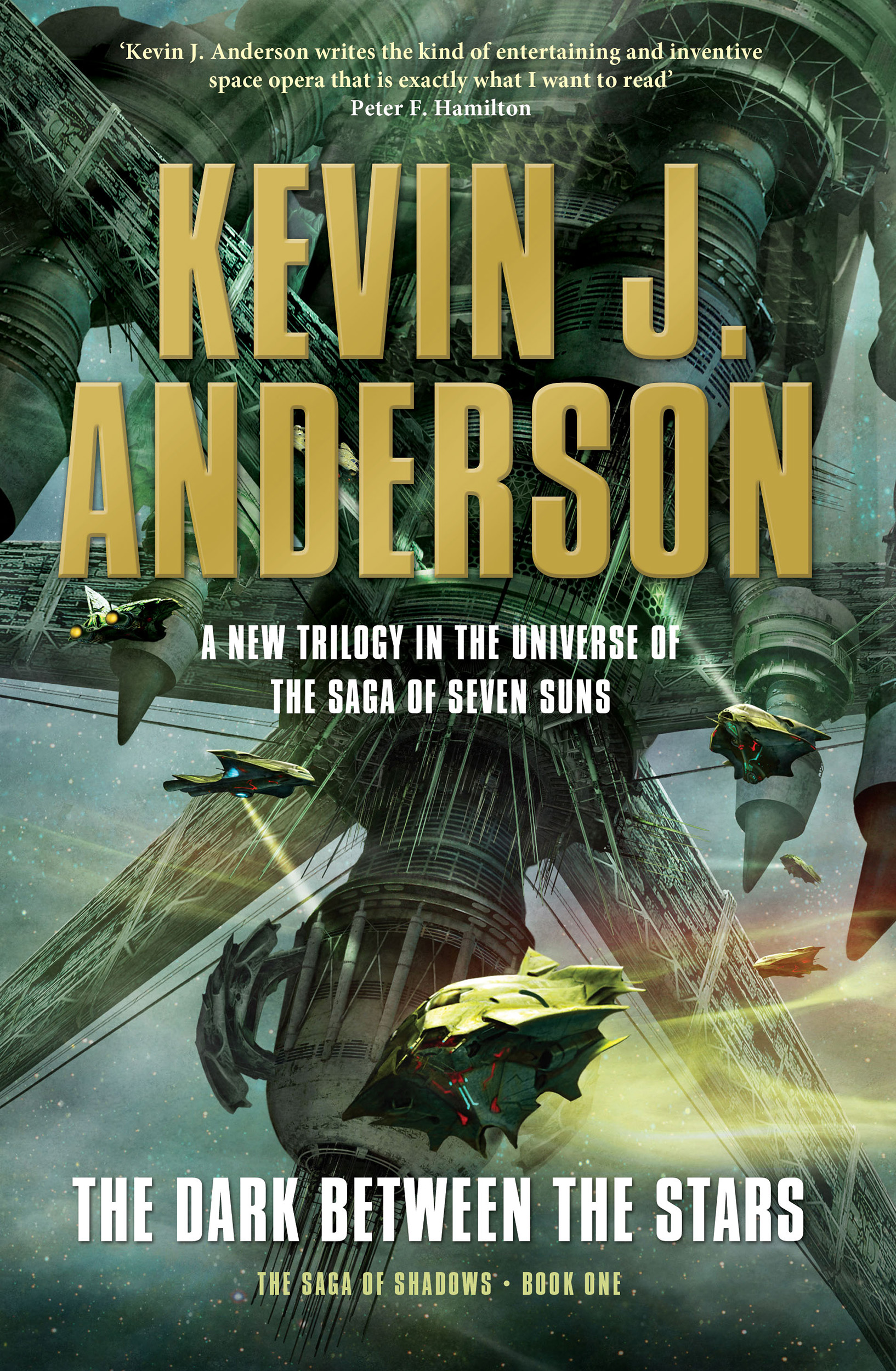 Science-fiction master, Neil Peart friend, and prog-rock lyricist (Roswell Six) Kevin J. Anderson just found out this morning that he’s been nominated for a Hugo Award–the single highest award in science fiction–for his novel, The Dark Between the Stars.
The nomination: for best science fiction novel of the year!
Excellent, Kevin! Absolutely excellent. Every progarchist sends her or his good thoughts your way. Whoo-hoo!
Clockwork Lives Cover
Kevin J. Anderson, co-author with Neil Peart, of Clockwork Angels, the novel, has just revealed publicly the cover of the sequel, Clockwork Lives. It looks quite stunning.

2112 => 2113
Admittedly, I’ve been a Rush fan since 1981. But, I’ve also been a fan of Kevin J. Anderson’s work for over two decades. Peart and Anderson together. What a brilliant way to expand the larger Rush mythos.

This from Anderson’s blog:
Announcing “2113: Stories Inspired by the Music of Rush”
For my entire writing career, my stories have been inspired by the music of Rush. And I’m not the only one. After the publication of my “Drumbeats” and CLOCKWORK ANGELS with Neil Peart, many other writers have approached me to talk about Rush.
It certainly made sense that we could find plenty of well-known writers interested in writing original stories inspired by Rush songs—enough to fill an entire anthology. Canadian author John McFetridge first approached ECW Press (publisher of CLOCKWORK ANGELS) with the idea, and they liked it; shortly afterward, they brought me on board to co-edit with John. We approached Neil Peart to make certain he supported the idea, since the stories would be based on his lyrics. While Neil isn’t directly involved in the project, he granted his approval, turning us loose to see what stories we could track down.
And I’m doing an original novella, 2113.
The many other authors who signed on include numerous award-winners, New York Times bestsellers, well-known writers of science fiction, fantasy, mystery, thrillers. We will have original pieces by me, David Farland, Mercedes Lackey, Greg van Eekhout, Dayton Ward, David Mack, Steven Savile, Brian Hodge, Michael Z. Williamson, Brad R. Torgersen, David Niall Wilson, Ron Collins, Mark Leslie, Larry Dixon, John McFetridge, and Tim Lasiuta. AND we will include a reprint of Richard Foster’s story “A Nice Morning Drive”—the original inspiration for “Red Barchetta”—and Fritz Leiber’s “Roll the Bones.”
Just today I finished the last scene in 2113, which I’ll be polishing while waiting for all those other cool stories to roll in.
No firm release date yet from ECW, probably in about a year. Meanwhile, I can’t wait to read it myself!
To read the original story, go here.
I Want One!
I had no idea this thing existed until about 10 minutes ago. I really want one. Call me a materialist pig dog!
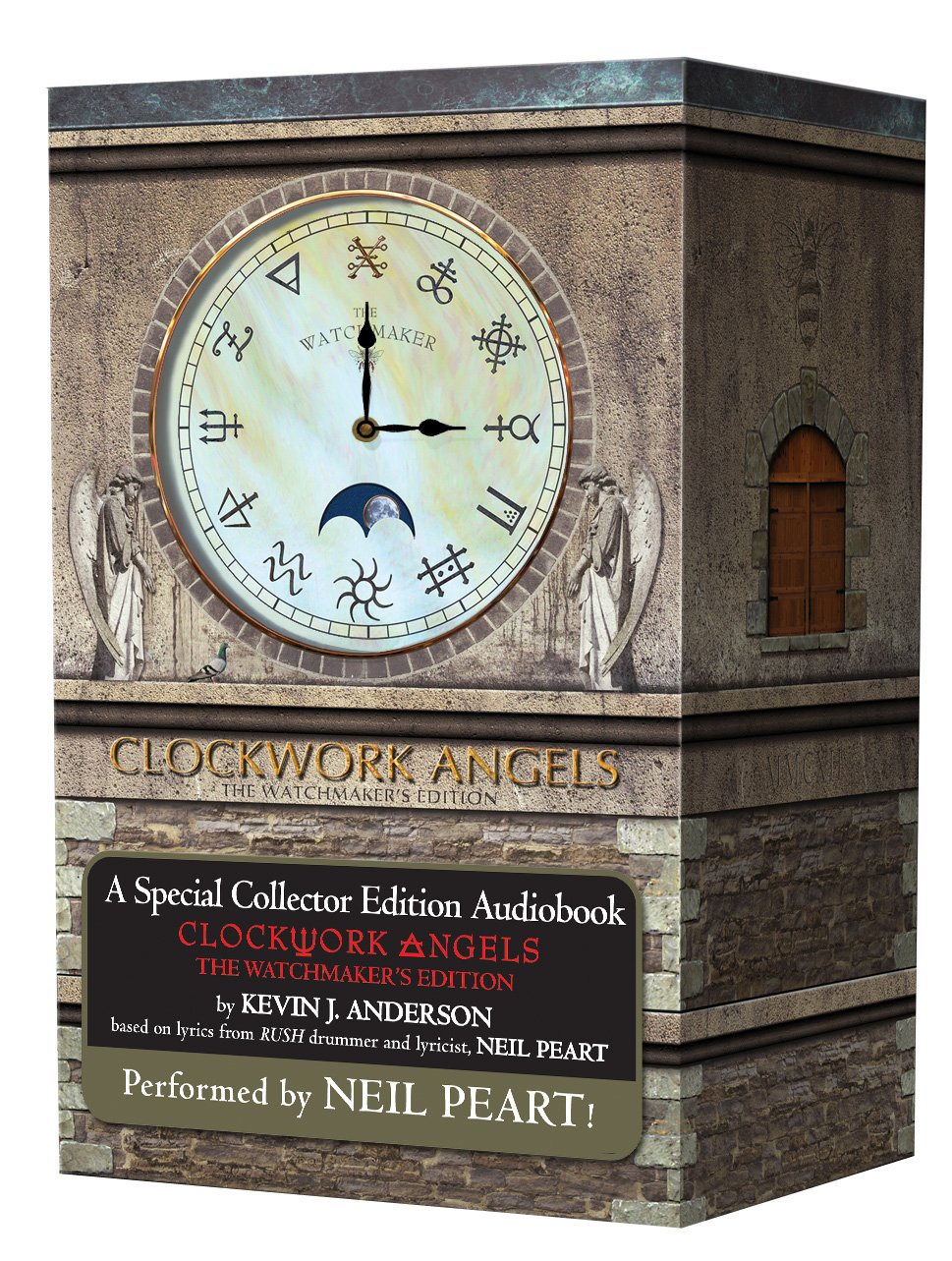
Kevin J. Anderson: Well Beyond a Clockwork Imagination
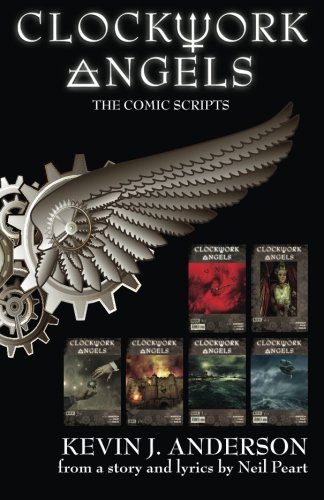
A review of Kevin J. Anderson, CLOCKWORK ANGELS: THE COMIC SCRIPTS (Monument, CO: Wordfire Press, 2014); from a story and lyrics by Neil Peart.
Birzer rating: 10/10.
Two things need to be stated before I even get into the heart of this review. Well, ok, let me put this in active form, before my students yell “foul!” I, Brad, need to state two things before getting into this review.
First, one could write a long and interesting article just about the convoluted and circuitous publishing history of CLOCKWORK ANGELS. And, why not? What a fascinating history. In the beginning, CLOCKWORK ANGELS was an album by Rush (remember, though, the first two songs came out almost two full years before the album itself).
Then, it was a best-selling novel by Kevin J. Anderson and Neil Peart.
Then, it was a huge worldwide rock concert tour, a live album, and a live concert DVD.
Then, it came out from BOOM! Studios in comic book form, illustrated by the extremely talented Nick Robles, over six issues. These six issues, of course, will be released in graphic-novel form in the spring (April 2015) with, I’m guessing, an intro or conclusion by Peart.
Now, however, CLOCKWORK ANGELS has come out from Anderson’s WordFire Press as THE COMIC SCRIPTS.
Soon, there will be a sequel, CLOCKWORK LIVES, which Anderson has only recently happily finished with the equally happy blessing of Neil Peart.
It’s possible the whole cycle might start over with the sequel.
And, if Rob Freedman is correct, CLOCKWORK ANGELS will probably grab the fancy of some Hollywood producer, direct, and acting talent, and it will be made into a major motion picture. If so—and, let’s pray this happens—the script is completely written, the scenes already storyboarded by Anderson, a true master of the art.
Second caveat. It’s no secret—at least to readers of progarchy—that I’ve been following the career of Neil Peart very closely since the spring of 1981. Since the age of 13, Peart has been as much a part of my life as has Ray Bradbury, J.R.R. Tolkien, Mark Twain, T.S. Eliot, and the list could go on.

Since some time in the early 1990s, however, I can also state the same about Kevin J. Anderson. Among modern science-fiction writers, the only other person I’ve followed as closely is J. Michael Straczynski. I’m absolutely fascinated by their writings as well as the trajectory of their careers. Each is a expert of his craft and an imaginative perfectionist. Each is also very much in-tune with his audience and the possibilities the internet presents. And, as probably well known, each has advanced the cause of progressive rock in a variety of ways. Straczynski had done so by promoting the career of Christopher Franke and Anderson by writing with Peart, producing the story and lyrics (along with his wife) for Roswell Six, and through a myriad of other ways. Each, also, fully embraces the comic and graphic novel worlds. Straczynski tends toward horror and the gnostic, and Anderson tends toward science fiction and the mythic, but, otherwise, the two have a great deal in common.
So, these two caveats stated, let’s get back to Anderson’s latest, THE COMIC SCRIPTS.
Even from a cursory examination of Peart’s song lyrics, the story of CLOCKWORK ANGELS seems a nicely updated version of 1978’s HEMISPHERES. There’s the side of order, and there’s the side of chaos. The hero, choosing not to embrace either extreme, finds a via media, making his own path and his own choices. He finds, in reality, that his choices are limited, however, but choice does exist. So, free will exists, but it does so only within certain bounds.
Anderson’s novel offers a wondrous exploration of Peart’s universe. Employing the literary devices of utopia and dystopia, Anderson, a sci-fi demigod, gives the story a much needed and beautifully executed Tolkien-esque and Chestertonian fairy-tale ethos and atmosphere. We discover why the Clockmaker craves surety and the Anarchist disorder. We also discover why Owen must reject both and become, for all intents and purposes, the everyman version of Cygnus.
Not limited to lyrics for twelve songs merely, Anderson explores, lulls, mulls, and lingers. With his deft hand, the world of Owen and the CLOCKWORK ANGELS becomes rich, full, and tangible. Though many have labeled this world as Steampunk—a label neither Anderson nor Peart would deny—it is much more than Steampunk as well. The pastoral quality of parts is truly pastoral and adds the Tolkienian fantastic to it all. Indeed, Anderson’s best writing—while always superb—truly shines when he is detailing the cultures that arise in distant and rural landscapes.
Equally important, though, is that Anderson is not only a great friend of Peart’s, he’s also a huge fan of Rush (and Hugh Syme). These loves show in almost every word and on every page of CLOCKWORK ANGELS. For those of us obsessed with Rush, Anderson ably rewards the reader, throwing into his novel (and the comics, and, thus, THE COMIC SCRIPTS) Easter eggs galore.
What surprises me most about THE COMIC SCRIPTS, however, is how utterly and brilliantly visual Anderson’s imagination is. Frankly, after having read much of his science fiction and some of his detective fiction, I really have no right to be surprised by any of this! Anderson is a genius at nearly every level, but he is especially excellent in and at creating a MYTHOS around, behind, and near every one of his novels. There’s a reason major international serials praised his own renditions of the XFILES as some of the best sci-fi of the 1990s. Sure, the XFILES was a great TV show. But, Anderson’s skill made the characters and the MYTHOS a thousand times better. I suppose my surprise at Anderson’s ability to visualize and imagine is, if anything, an indication of my own lack of imagination.
Looking at THE COMIC SCRIPTS, one readily sees that Anderson anticipated and then directed every single panel of the comics. He describes the emotions on the faces as well as the technology that will (certainly) jolt the reader into a sort of glee. Anderson presents every aspect of the CLOCKWORK world in all of its alchemical madness and glory.
By describing every thing visually, Anderson paints an interesting portrait of this world that could tease the Rush fan and the sci-fi/fantasy reader without end. Some day, lit crit folks will have a field day deconstructing all of this. For example, per both Peart’s and Anderson’s desires, the reader never actually sees the faces of the angels. This must be left to the individual mystery and imagination. Or, one sees that the symbol of the order-loving Clockmaker is a beehive and honeybee. The beehive looks suspiciously like the symbol of Utah, the Mormons, and the former State/Empire of Deseret. Is this intentional? I don’t know.
Or, how about the description of our hero, Owen? He is truly everyman—“He is non-ethnically specific,” Anderson explains. He “should have darker/olive skin, dark eyes, dark hair.” Anderson describes the cities of his world as Manhattan with a twist of old Berlin with a huge touch of the art deco. Could this be Gotham? Metropolis? Dark City? Of course.
Ok, but what surprises me most? That Hollywood hasn’t snatched up Anderson in a major way. Holy Moses, this guy can think, he can write, and he can imagine.
So, should you buy this latest offering from Anderson?
Do you like Rush? Yes.
Do you like science fiction? Yes.
Do you like intelligence and imagination in your fiction? Yes.
Do you like the visual arts? Yes.
For me, THE COMIC SCRIPTS is another brilliant exploration of the CLOCKWORK world. But, even if you’d never heard of Rush or even if you’ve never read the novel or the comics, this is still well worth owning. Anderson’s writing is so good, and his visual imagination is so fascinating, that THE COMIC SCRIPTS could easily (and does) stand on its own as a screenplay or as an actual stage play.
I promise—you’ll be riveted from pages 10 to 253.
Enjoy. And, Merry Christmas.
Boom! Making Clockwork Angels Even Better.
Clockwork Angels by Neil Peart, Kevin J. Anderson, and Nick Robles (Six-issue comic series from Boom! Studios, 2013-2014).

By any reckoning, Clockwork Angels has done rather well. It is a prog-rock album, a concert, a live concert album and video, a novel, an audiobook, and now a six-book comic series from the relatively young publisher, Boom! Studios. Soon, I’m sure, Boom! will collect these six issues into a graphic novel, perhaps with a new introduction by Peart.
As the great Rob Freedman has argued at his website, Rush Vault, it could readily become a movie or a tv-series. Maybe even complete with action figures. No, I’m not exaggerating, and I’m not being sarcastic. Clockwork Angels has done very well, and I couldn’t be happier for Peart.
The novel, co-authored by Kevin J. Anderson and Neil Peart is, in and of itself, quite stunning. At essence, the story is little different than the one Peart told with Hemispheres. Chaos and order vie for power, with the individual—armed with integrity, intelligence, and creativity—making his own path. Yet, Peart and Anderson have made this story as fresh as fresh can be by adopting the form of a fairy-tale. It’s a rather Chestertonian and Tolkienian fairy tale at that. Peart even inserts himself (but, not by name) as the grandfather-narrator, well pleased with his children and grandchildren.
Adorned with color prints by Hugh Syme and printed on the highest quality of paper, the ECW novel is a wonderful thing to hold and behold.
 At the time that Rush began to plan the tour for the album, Peart stated in no uncertain terms that certain aspects of the story could not be produced visually, as he hoped to keep them in the imagination. In particular, he was talking about the actual Clockwork Angels. Far better to leave them to the individual imagination than to the visual artists. Additionally, they needed to remain in an aura of mystery.
I must admit, when I first heard that the story would be produced in comic book form, I was apprehensive. I have nothing against comics and graphics novels. Indeed, I think the work of such giants as Frank Miller and Alan Moore probably inspired and certainly anticipated the iPads and other tablets we know all wield—a perfect blending of word and image. But, I wondered, wow could Peart’s desire be adhered to, when transferring the story to a visual medium. Would the art do justice to the story, or would it simply detract? I realize I’m in the minority in this view, but I firmly believe that Peter Jackson has come close to destroying the beauty and integrity of Tolkien’s world. Tolkien’s world is too strong to be destroyed by such technological mimicry, but still. . . I didn’t want Boom! to do the same thing to Peart’s work.
Now that all six issues have appeared, I can render judgment. The artist, Nick Robles, has done admirable work. True to the fairy-like intent of the story, Robles presents all of his images as something between a water-color painting and modern (think Jim Lee of DC) superhero art.
 While Robles attempts to illustrate the Clockwork Angels, he does so in a way to minimize the destruction of imagination. Various lights and shadows, thankfully, obscure the more mysterious parts. Equally important, Robles not only draws the human face beautifully, rendering each with personality, light, and emotion, but his coloring makes some of the expressions jump off the page. His reds and blues are especially good. In other words, Robles really does augment the word with image, and I found myself appreciating this story in different ways than I had the original album and novel.
Robles and Boom! have done something I didn’t expect: they’ve made a brilliant story even better. Or least, they made me look at it in a very new way. What’s not to love? Gorgeous art; Peartian wisdom; and a story that mixes the best of Chesterton, Tolkien, and Ray Bradbury.
For ordering information, go here: Boom! Studios.
Preview: Clockwork Angels #4 (Comic)
If you’re into Rush or comics, you should check this out. If you’re into Rush and comics, you must check this out.
A nice five-page preview of the fourth (of six) issue. Story by Neil Peart and Kevin J. Anderson, artwork by Nick Robles (and Hugh Syme).

http://www.comicbookresources.com/?page=preview&id=22851
Time Warp in Boulder and Clockwork Angels
 After spending my first afternoon at the University of Colorado, I stopped by Time Warp Comics (http://www.time-warp.com). As it turns out, Neil Peart, Kevin J. Anderson, and Nick Robles have been producing a six-part comic book series of Clockwork Angels.
The first three issues are out, and I was even able to purchase a signed (by Anderson) copy of issue 1.
And, equally important, I found out that several of the guys working at Time Warp are proggers. They were also just–not surprisingly–fantastic guys (and a gal). So, a huge thanks to Clayton, Garrett, Michael, and Georgia!
What a store. I’ll certainly be stopping by again.
If you’re in Boulder, make sure you check out Time Warp.

 Progarchy