Steve Howe leaves Asia (again), talks guitar

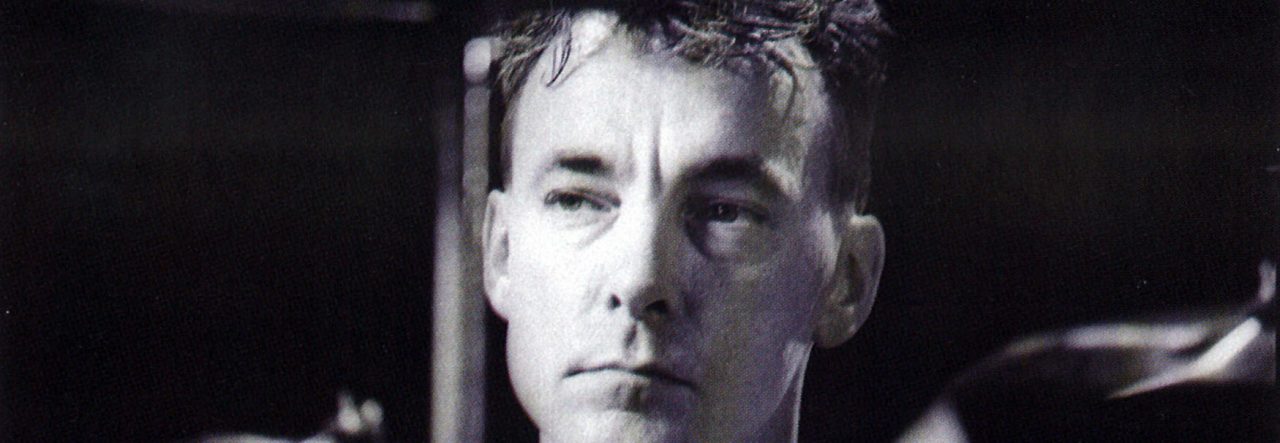
Someone with time on their hands and prog trivia on their brains should do some careful historical research in search of the answer to this question: “Which prog group has the most line-up changes all-time?” Three groups come to mind immediately: Yes, Asia, and King Crimson. And the three are, of course, bound together by all sorts of personnel connections and such, as SteveHowe1970swell as having been around for decades, which surely is part of the ongoing drama of departing, returning, reuniting, breaking up, reforming, guesting, and so forth. Anyhow, legendary guitarist Steve Howe has announced that he is leaving Asia so he can concentrate on solo work and (it appears) his commitments to Yes. Just as (or more) interesting are his remarks on playing guitar. From the ProgRockMag.com site:

The pressures of attending to the requirements of two large-scale acts was also getting to him, he admits. “Over the last year I started to think, ‘Boy, when Yes extend a tour then Asia start a day early, I’m the guy getting squeezed.’ I couldn’t do it much longer without feeling that I was running on autopilot. I want to be in control of my musical direction and follow my calling.”

That calling will include the Cross Styles Music Retreat, during which Howe hopes to share his passion and experience of guitar with attendees. But he’s wary of the “unique” label: “It sounds like I’ve set myself up for a fall there,” he laughs. “All I’m saying is: I’m not educated, I don’t read music, I didn’t go to music school, I don’t have the theory. All I have is my experience, and presumably people want that, otherwise I wouldn’t be selling any tickets.

“I’ve done these things before. I walk in and say, ‘Don’t talk to me about demi-semiquavers. Don’t talk to me about time signatures.’ I play. Everything I do and everything I’ve learned is by ear.

“You don’t have to drive yourself mad reading dots. If you want to play classical music you should; but where I’m coming from, improvisation, composition. I’m bringing in an unschooled – I wouldn’t say rebellious, but individual – approach to guitar.

“I’m not going to pose that it’s going to be anything else. You get me, I play tunes and I talk about guitar. I’ve managed to make that interesting for myself for over 50 years, so there must be something!”

Howe states that he’s never believed in straight-out practising. “Playing scales would have driven me stark raving bonkers,” he says. “That’s not what I call music. It might be an essential part of keeping your muscles and fingers in good order and I don’t say it’s terrible. But my central thing is improvisation. Play stuff – make stuff up. That’s how I keep interested: by interacting with it, not just being a mechanical, physical observer.”

He didn’t enjoy his school days, finding London’s Holloway School “oppressive, violent, mixed with racial and religious prejudices.” But he’s never found that a lack of a “proper” musical education held him back – except when he tried to learn to play flute and discovered it was too distant from guitar to make the transfer comfortable.

As a result of being self-taught he does encounter people who are better technicians than he is. “But I don’t feel particularly threatened,” he explains. “What I feel is: ‘They’re very advanced in their technique – how advanced are they in their general view of music?’

“Guitarists can get fanatical about guitarists; but in the end we’re musicians. We make sound. It’s the sound that’s got to be pleasing – not how you made the sound. Who cares how you play it? What’s important is what comes out the other end.”

And one of the key lessons he hopes to impart at Cross Styles is: “Musicians are lucky; we can break the rules. There’s no such thing as the ‘music police’ – they’re not going to come round and say ‘You shouldn’t have played a D-flat, it should have been a D. You can do what you want – live and die by the musical sword!”

In addition to the retreat he’s planning a solo tour and a new Steve Howe Trio album and tour. “We’re just about to launch some dates. I’ve got two or three weeks of solo dates in June, which I haven’t done in a very long time due to my demanding schedule of keeping two bands happy. In September we’re doing the trio again. We should have a new recording before that.”

His desire to move away from the band environment is much more than just a whim, Howe notes. “My solo guitar work is pretty central to my musical existence. I’m not a blues, rock or jazz guitarist – I’m a guitarist, and the central thing is solo playing.

Read the entire piece. Glancing over his bio on Wikipedia (yes, I know, forgive me), I was a bit surprised to learn that Howe was the first player to be inducted into the Guitar Player Hall of Fame, and one of the few in the GP’s “Gallery of Greats”, which comes with being selected best overall guitarist at least five times (although it appears the criteria has now been modified). Howe’s playing has long intrigued me because of the obvious jazz influences; he was influenced by Wes Montgomery, as well as Chet Atkins, whose mark on Howe can be seen in Yes songs that have a country-type feel to them, quite unique within the prog realm.
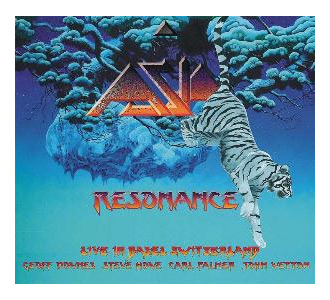
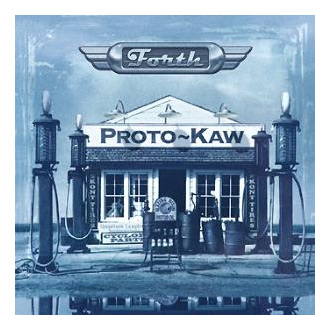
Short reviews of new music from Asia, Proto-kaw, Mystery, and Godstick

I’ll skip my usual apologia attempting to explain my long absence from this fine blog and instead spend my limited, if not valuable time, remarking on four recent prog and proggy albums that have been found a home on my regular iTunes rotation. I may write longer reviews of a couple of these albums, but some short remarks are better than none.asia_resonance

Asia — Resonance (The Omega Tour, 2010; released 2012): After Kansas, Asia was the group that first introduced me into the world of prog, back in the early to mid-1980s, when I was an innocent small town Montana boy making my way through high school. I recall seeking out books and magazines that explained the musical pedigree of Downes, Howe, Palmer, and Wetton, and thus being introduced to early King Crimson, ELP, Yes, and more. I know that Asia has been a source of debate among prog fans, some of whom dismiss and even deride the group; I’ll just say that I really liked and still do like the first two albums, Asia and Alpha, and make no excuses for the warm and gratifying nostalgia they bring to the surface whenever I play them. And, truth be told, I’m partial to the third album, Astra, which marked the first of two billion line-up changes (Mandy Meyer took over guitar from Howe, who had departed), as it is actually a good, hook-heavy example of what might be call “arena prog” or “pop prog” or something similar. Anyhow, the original line-up has been back for a while—and getting solid to excellent reviews—and this live album documents the group’s 2010 tour. I’ve heard cuts from earlier live albums by Asia, and have found most of them disappointing, especially in the vocal department. But this album, dare I say it, is rather stunning, both in terms of the outstanding sound quality and the amazing power and clarity of Wetton’s voice. Wetton, to my ear, sounds just as good as he did on the studio cuts from the early and mid ’80s, which is saying something. The playing is excellent, of course; my only small beef is that the drums seem a bit back in the mix, although there is an extended and fine drum solo on “The Heat Goes On”. Otherwise, a great mix of cuts, with some nice acoustic-oriented variations of old hits such as “Don’t Cry” and “The Smile Has Left Your Eyes”.

• Proto-kaw: Forth (2011): Speaking of Kansas, the group Proto-kaw was the second of three early incarnations of what eventually became simply “Kansas” in 1973. The key constant in protokaw_forththose groups was songwriter, lyricist, guitarist, and keyboardist Kerry Livgren, who conquered the world with Kansas in the 1970s (“Dust in the Wind”, anyone?), had a run of contemporary Christian rock albums in the 1980s (both solo and with the group AD), and then reformed Kansas and Proto-kaw in the 1990s. (Fun fact: metal legend Ronny James Dio sang lead on two songs on Livgren’s first solo album, “Seeds of Change”, in 1980.) All three of the newer Proto-kaw albums are worth checking out, and that is especially true of Forth, the most cohesive and fully realized album yet by the group. What strikes me, as a longtime fan of Kansas, is how much classical influence there is in Livgren’s writing, as his songs often have a suite-like quality that builds on either strings or keyboards/guitars that act as a strings section. Proto-kaw, like all Livgren-led bands, has dual lead singers (yes, Steve Walsh was a the primary singer in Kansas, but Robby Steinhardt sang lead or co-lead on numerous songs), and features excellent and often complex harmonies, masterfully constructed arrangements, and strong songwriting. One distinctive element is the presence of saxophone and flute (John Bolton), used to great affect in song such as “Pilgrim’s Wake”, one of my favorite cuts on Forth. A must listen for anyone with a soft spot for 1970s Kansas. And, speaking of Kansas (again!), this year marks the 40th anniversary of the group’s founding; I plan a couple of posts about the group and some of my favorite Kansas albums and songs.

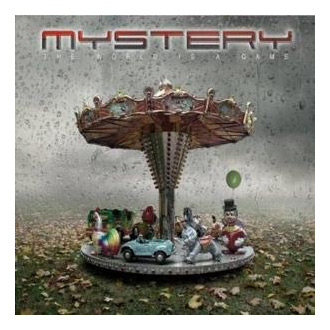
• Mystery: The World Is a Game (2012): How embarrassing it is to admit that prior to the Yes album, Fly From Here (2011), I had no idea who Benoît David was. Having replaced Jon Anderson and toured with Yes—and then having himself been replaced due to his own respiratory issues—the talented vocalist worked on his third album with veteran Canadian proggers mystery_worldMystery, a group he had joined in 1999. Having not heard any of his work with Mystery (which my iTunes annoyingly tagged as “The Mystery”), I was surprised—in a good way—that David did not sound like Anderson and that the group does not sound much like Yes, although the influence is present. In fact, at times David sounds more like another great Canadian singer, Geddy Lee. The two words that keep coming to mind after repeated listens of this exceptional album are “melodic” and “soaring”. The vocals soar, the guitars (by band founder, guitarist, lyricist, and producer Michel St-Père) soar, and the songs soar with a wonderful sense of discovery, melancholy, joy, and introspection, a not-so-easy mixture to navigate. And then there is the drumming of Nick D’Virgilio, who is rightly revered as one of the finest drummers in the prog/rock world. His drumming is, in a word, orchestral, and it is reason alone for buying this fine release. But, for me (a vocalist junkie), it is David who is the revelation here, especially after hearing his solid but rather emotionless performance on Fly From Here. In the words of a reviewer on ProgArchives.com, “Finally vocalist Benoit David proves what a versatile and commanding singer he is, a million miles away from the Yes/Jon Anderson clone dismissals. It’s also great to hear his voice so full of human feeling and compassion again after being so over-produced and rendered mostly lifeless on the Yes album `Fly From Here’!” Exactly right.

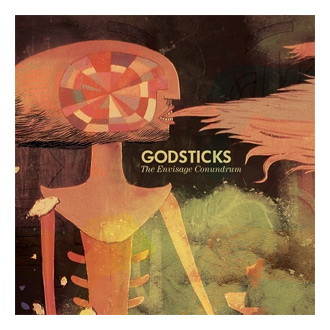
Godsticks: The Envisage Conundrum (2013): Here is a group (from South Wales) I knew nothing about a week ago, but has captured my attention in a way that only a few groups have on first listen. Explaining why is a bit difficult; the difficulty arises, in part, from the most enjoyable fact this is a group that is very hard to describe or label or situate in the universe of godsticks_conundrumprog/rock music. Nearly every review I’ve read says the same, and rightly so. One of those reviews, by Adrian Bloxham, puts it well: ” The world of Godsticks is not straightforward; they seem to have baffled other reviewers trying to pigeon hole them. They make their own brand of what they describe as ‘progressive rock/pop, but it is very much their own take on the sound. You get the idea that this is exactly the music they have inside their heads trying to get out and if you like it they will be pleased but that’s not why they do what they do.” The one influence I hear is later King Crimson, but even that is hard to pinpoint, although the angular, often astonishing guitar work by guitarist/singer Darran Charles brings it to mind in several places. None of the songs are longer than seven minutes in length, but some of them pack in more twists, turns, veers, swerves, and surprises in five or six minutes than many bands can pack into songs three times as long. The title cut is a perfect example. It begins with a chugging, almost “boogie” riff out of which emerges a spider-like flurry of notes, leading into a wall of harmonized vocals over a heavy, grunge-like riff backed by the tight, slightly funky, never quite straight forward rhythm section of Steve Roberts (drums, keys) and Dan Nelson (bass). Charles’ voice is part of the mystery here, a strong, clear instrument that manages to be intense, detached, soulful, and slyly humorous (and occasionally darkly smirking) all at once. There is an abundance of odd chords, meters, notes, and harmonies, sometimes, to my ear, sounding like a Robert Fripp-inspired space alien sibling of Soundgarden. And did I mention the album features a 3:49 piano solo by Roberts that could easily have made it onto one of Keith Jarrett’s solo albums? Followed by a three-part suite—”Borderstomp”, parts 1-3—that sometimes calls to mind Steve Vai? Not straightforward, indeed!

A Different Kind of Truth (Best of 2012 — Part 6)

Van Halen

Mike Portnoy, in an interview with iDrum magazine, made an interesting remark about all the guys in the supergroup Flying Colors; namely, their running joke during the writing process:

We almost felt like the Village People! I’m the metal guy, Neil Morse the prog guy, Casey McPherson the pop guy, [Steve] Morse the country guy and Dave LaRue the funky guy!

I feel the same way about the supergroup team here at Progarchy. In addition to our shared loves, we also have our distinctive tastes. Me, I’m the metal guy; Brad Birzer is the prog guy; Carl Olson is the jazz guy; Kevin McCormick is the classical guy…

Continue reading “A Different Kind of Truth (Best of 2012 — Part 6)”

Detailed review: “Citizens of Hope and Glory: The Story of Progressive Rock”

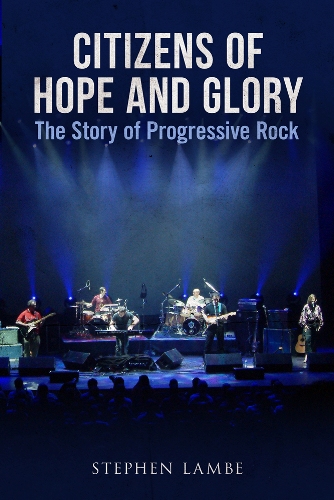
Citizens of Hope and Glory: The Story of Progressive Rock (Amberley Publishing, 2012) by Stephen Lambe

Ten years ago, my wife and I had the pleasure of spending a day in Belize as part of a week-long Caribbean cruise. Our tour guide, oddly enough, was from Germany; he and his family had moved to Belize some twenty years prior. I’ve never been a tour guide, but I assume it must be challenging in many ways: dealing with difficult and clueless tourists, recounting the same information again and again, trying to find the right combination of being informative and entertaining, and being the leader of the tour while not making the tour about yourself, but about the country, the culture, and the sites. This tour guide was exceptional: he was informative and detailed without being obsessive about every nook and cranny; he had a passion for his adopted homeland but also a knowing sense of objectivity; he mixed together trivia and humor and history with ease; he helped us experience Belize with the knowledge that we were in capable hands. It made for a delightful day.

Stephen Lambe, author of the recently published book, Citizens of Hope and Glory: The Story of Progressive Rock, reminds me of that tour guide. Now fifty years old, Lambe is something of a late-comer to prog, although he states so with a certain British dryness. He begins with with a wink and wry sigh: “To my constant irritation, I missed it. I was born in 1962, so by the time I had had my Prog epiphany in 1978 it was all over.” Only two sentences in and you have a nice phrase to insert into your next musical conversation: “Prog epiphany”. Lambe recounts how hearing the 1971 Yes album, Fragile, “blew my mind”; that was in 1978, as punk was rudely clawing and pawing its way onto the musical throne, albeit briefly.

And so the tour begins, with Lambe making it quite clear from the start what he hopes to accomplish—and what he will not try to do, for this or that good reason. It’s a small thing, but also significant. Having written a couple of books myself (and trying to finish a couple more at the moment), I think certain books—especially non-fiction works intended to educate and inform on a particular topic—should state from the start what they will and will not do. Lambe’s book is the third book I’ve bought that is dedicated solely to prog music. And, without naming the other two, I’ll simply note that this is the first of the three to be straight up about what the reader will find between the covers. (The other two are collections of essays, and are more academic in tone; they are mixed bags at best.)

What parameters does Lambe set? First, he focuses mostly on “symphonic” prog groups, with some mention of progressive metal, electronic music, and certain pop/rock groups, such as Talk Talk, XTC, Kate Bush, Tears for Fears, Elbow, and Radiohead, that have embraced many elements of prog without themselves being or becoming prog. Secondly, Lambe uses almost no quotes from either musicians or other publications. “I have chosen”, he states, “to make this book a personal history … in the hope that my experience and opinions will strike a chord with other fans of the genre. This book contains fact and opinion. … In the end this is a history of Progressive Rock filtered through my own tastes and experiences and I hope it is all the better for that.”

Some readers might be put off by such a statement, and I can appreciate their concerns. Lambe the tourist guide has spent over thirty years living in the land of Prog, and he has definite opinions about the sights and sounds therein. Personally, I like the approach. It reminds me of the similar tack taken by the exceptional American music critic, Will Friedwald (just a year old than Lambe, by the way), whose books on Sinatra and other popular and jazz singers from the early and mid-twentieth century are opinionated, informative, occasional quirky, often humorous, and never dull. Granted, Lambe is not the writer Friedwald is—but few people are. But Lambe, like Friedwald, is both knowledgeable and reasonable; he has his preferences, but he never pontificates, lambasts, or chides. On the contrary, he is agreeably positive; his occasional criticisms are almost always along the lines of noting that Album B is simply not quite as good as Album A by the same artist—and here are some reasons why.

Third, Lambe points out that since he is English, he tends to focus on artists from the UK, especially when he writes about the 1970s. Fair enough, especially since England in the 1970s was the center of the prog universe. The book is a chronological history; it does not try to be cute and jump around needlessly. Over the course of the book’s ten chapters, Lambe highlights about sixty essential prog albums, what he calls “pivotal albums”. These are not necessarily the “best” prog albums, he takes pains to note, but are a good, solid start to any prog library. Groups that receive substantial attention from the ’70s include Yes, Genesis, King Crimson, Gentle Giant, and Emerson, Lake and Palmer. Later groups include Marillion, The Enid, Twelfth Night, Rush, Magnum, Dream Theater, and Porcupine Tree, among many others. Due attention is given to American and European bands, including groups from Poland, Italy, and Germany.

Lambe is at his best when he makes connections, highlights influences, shares his personal experiences, and places bands and albums within both immediate and larger contexts. Here is a good example of his approach, about halfway into the book, in the chapter, “The 1980s: A Short-Lived Revival”:

Much more of a surprise than the last gasp of Yes was the seemingly sudden emergence of King Crimson. Towards the end of the 1970s, Robert Fripp had been increasingly active. This included an excellent solo album, Exposure, and work with Daryll Hall, Peter Gabriel and his own band, The League of Gentlemen. Working largely in the USA, he had managed to re-invent himself as a pioneer of the New Wave rather than a Progressive Rock dinosaur. In 1980, he set about forming a new band.

This time, Fripp had a different style of music in mind, something informed by the post-punk pop of Talking Heads (from which band he stole innovative guitarist and vocalist Adrian Belew), the intricate minimalism of Steve Reich and the rhythmic complexity of the old King Crimson. With a rhythm section comprising Tony Levin (on bass and the strange Chapman Stick) and Bill Bruford (drums), the band began rehearsing in Britain before taking a short set on tour in small British venues. I caught this tour at Keele University and was very impressed, although despite playing Crimson classics ‘Red’ and ‘Larks Tongues in Aspic’, they had less an hour’s worth of material. They were called Disciples at that point, although it was no surprise when they changed their name to King Crimson.

The resultant album, with its striking, minimalist cover, is a masterwork. It mixes Talking Heads-style vocals and song structures with a Prog style that few people had heard before. Belew sounds like he is having a whale of a time, his vocals clearly heavily influenced by David Byrne of his former band, but his melodic sense superbly utilized. His inventive guitar playing dips in and out of Fripp’s more intricate patterns. Bruford and Levin sound like they were born to play this music, with Levin’s intricate and inventive Chapman Stick work particularly impressive. But Fripp was the boss, and his remarkable guitar patterns are what make Discipline so memorable.

Of the ten chapters, six are devoted to history, groups, and albums; the other four are about the important relationship between technology and prog, the various aspects of live performances, prog art and design, and the content of prog lyrics. I would have preferred, if push came to shove, for the latter four to have been grouped together as the second part of the book rather than be dispersed among the historical chapters, where they break up the narrative flow. As it was, I skimmed some of those four chapters; however, I’ve no doubt they will prove informative to readers interested in those specific topics, especially musicians, producers, and others actually involved in creating music. The Epilogue, “Darlings of the Press at Last?”, notes that “Progressive Rock is a specialist genre once again, with an aging audience. However, the success of Porcupine Tree, Dream Theater and Elbow should give us all hope. Wherever there are people are willing to put in a little work to get more than a catchy tune and a trite lyric out of music, then Progressive Rock, in some form, has some hope for survival.” I suspect that most of the contributors and readers of Progarchy.com agree completely.

Lambe’s book is, I think, a near perfect introduction to progressive rock for nearly anyone interested in the topic. Passionate, obsessive prog fans who have spent years reading and collecting and communicating may find it a bit “101” at times. But even they will likely appreciate how Lambe has put together a cohesive narrative that makes many connections and fills in many holes without losing sight of the forest for the trees. This is a tour worthy taking, with a very adept and enjoyable tour guide. Highly recommended.

Ne Obliviscamur

From Eric Tamm’s terrific book, Robert Fripp:

“Requiem” begins with a Fripp guitar solo over Frippertronics backing. A gloomy minor mode, fully appropriate for a mass for the dead, prevails. Before long, as Fripp works his initial statement to a climax, the other musicians enter, and soon it is free-form freakout time, the spirit of “Moonchild” and improvising King Crimson III all over again. When the thrashing subsides, the Frippertronics backing has changed to an eerie augmented harmony — the transfiguration of the soul?