Gazpacho’s Molok: Norway’s Latest Mystery

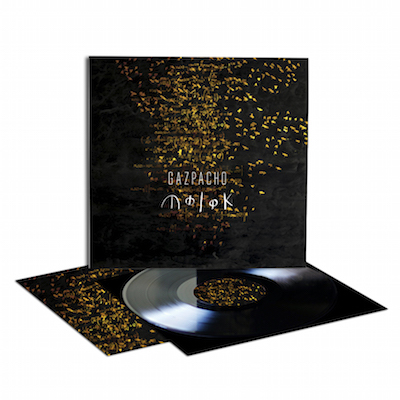
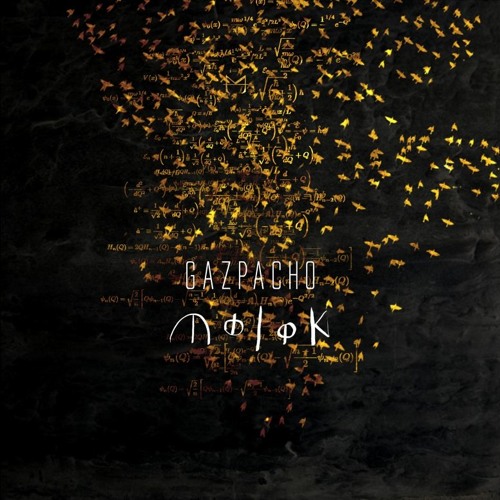
Gazpacho's latest album, MOLOK (Kscope, 2015).
Gazpacho’s latest album, MOLOK (Kscope, 2015).

Gazpacho, MOLOK (Kscope, 2015).

Every time I delve into a new Gazpacho album, I fail to understand at what level I should comprehend and analyze the lyrics.  Are they meant literally or symbolically?  Is the band writing poetry or recording a nightmare?  As always, Gazpacho presents puzzles, usually quite Gnostic, that might or might not sort themselves out after many listens.  The latest album, Molok, is not only no different in this respect than their previous albums, but it is also much more frustrating to comprehend.

Molok, of course, is neither a good god nor a good guy.  He’s a terror and a horror to all that is decent and civilized.

In English, his name is generally rendered as Moloch, and he is best remembered in the western tradition (through the Jews) as the god who demands the blood sacrifice of children.  He is, simply put, a demon and an abomination.  Across the centuries, almost no one has defended Moloch as anything other than a horror.

In the 1920s, especially, he made several cultural appearances.  In Willa Cather’s stunning American novel, DEATH COMES FOR THE ARCHBISHOP, Archbishop Latour retches upon finding the cave in which the natives once threw their children to the gods.

In that same decade, film director Fritz Lang depicted Moloch as the modern machine of industrialization—raping and pillaging life, while demanding conformity in all things.

In the 20s and 30s, many in the West would associate Moloch with the machines being erected in fascist Italy, German, Portugal, Poland, and Austria.

Interestingly, Gazpacho sets their album in 1920.

After listening to the disc close to twenty times and delving deeply into the lyrics, I still don’t know what the album is about.  When asked by TeamRock (Prog and Classic Rock), the keyboardist answered:

Molok is about a man that, sometime around 1920, decides that wherever anyone worships a God, they always seem to be worshipping stone in some form. Whether it’s a grand cathedral, the stone in Mecca or Stonehenge, God seems to have been chased by his worshipers into stone, never to return.  This harkens back to Norwegian folk myths, where, if a troll was exposed to sunlight, it would turn to stone. But it also reflects the way God has been incommunicado for a very long time.

I get the second part of the statement, but the first part baffles me.  Indeed, it begs more questions than it answers.

I find it hard to believe that a band as seemingly humane and dignified as Gazpacho would ever have anything positive to state about an abomination or a fascist.  Indeed, such an interpretation flies in the face of everything that seems true about the band.

Presuming, then, that Gazpacho is not promoting any form of fascism or an abomination, I find myself scratching my head.  What on God’s green earth are they talking about?

The lyrics refer to two important figures in the Western tradition, the pre-Socratic philosopher, Zeno (not the Stoic one of later centuries), and the Hessian-Anglo composer and astronomer, William Herschel.

I’m no closer to an answer.

I first came across the Norwegian art rock band around 2007 when the band released its magnum opus, NIGHT.  Since then, the band has never NOT taken chances.  Importantly, as they’ve explored the mystical in their lyrics, they’ve successfully incorporated a variety of folk music and folk instruments into their rock.  As far as I know, they rarely promote themselves as art rock rather than prog.  This is fine, of course, and it applies.  Gazpacho is nothing if not arty.

The new album, MOLOK, is a real treat.  As I admitted, I’m still not sure what the story is.  But, in no way has this lessened my enjoyment of the album.  I’ll keep exploring, as I’m bound and determined to figure this thing out.  Until then. . . any thoughts are more than welcomed.
RochaNews: Gazpacho’s Latest, MOLOK

A review copy of the latest Gazpacho showed up about three or four days ago, and I’ve been listening to it, over and over again.  My first thought: what is this?  My second thought: wow, this is really subtle.  My third thought: there’s something really profound going on here.  My fourth (and most recent) thought: this is freaking incredible.  I still need to listen with headphones, but my thoughts (collectively) after about five listens–MOLOK is a thing of intense beauty, the best Gazpacho has made since MISSA ANTROPOS.  More to come. . . .

Molok.  In English, Moloch, a king who demands the sacrifice of children.
Molok. In English, Moloch, a king who demands the sacrifice of children.

GAZPACHO TO RELEASE NEW ALBUM “MOLOK” THIS WEEK ON KSCOPE

First single “Know Your Time” streaming online

NORWAY – Norwegian art-rock progressive outfit Gazpacho will release its brand new studio album Molok through Kscope this Friday, October 23. Molok can be pre-ordered on CD and LP via the Kscope web-store at: www.kscopemusic.com/store. The CD version will feature an additional instrumental track “Algorithm.”

The first single, “Know Your Time,” is streaming on Soundcloud at: https://soundcloud.com/kscopemusic/gazpacho-know-your-time-taken-from-new-studio-album-molok/s-dBSqz.

1. Park Bench

2. The Master’s Voice

3. Bela Kiss

4. Know Your Time

5. Choir of Ancestors

6. ABC

7. Algorithm

8. Alarm

9. Molok Rising

Molok, the follow up to the acclaimed 2014 album Demon, sees the band continue to push the boundaries for creating the most complicated and strangest concepts for a record while simultaneously becoming the first band ever to actively try to destroy the universe with an album. A small code that sounds like a strange noise at the end of the album will cause the correction software that runs in all CD players to generate a random number every time the CD is played. If that number should correspond to the actual position of all electrons in the universe then technically the universe could be destroyed.

Dr. Adam Washington from the University of Sheffield confirms that this is science fact rather than fiction: “The random signal produced by the end of the disk contains enough bits of information to express a measurement of the total number of fundamental particles present in the universe. If the noise actually contained such a measurement, and that measurement was performed rapidly enough, the universe’s total particle count could be fixed under the Quantum Zeno effect. Locking the total particle count would prevent the pair production that forms a fundamental part of the decay of black holes. Without such decay forces, black holes would remain stable forever, without the need for nearby matter or the cosmic microwave background to keep them fed. This would greatly hasten the practical end of the universe.”

The band further commented: “If it can be destroyed by such minute creatures within it, if it is just a chemical reaction, then does it have any spiritual value? In this scenario there is no good or bad, just an absence of meaning.”

Across the album there are religious themes going head to head with modern day new science ideas and theories, Gazpacho’s Thomas Andersen states, “the album itself is about a man that sometime around 1920 decides that wherever anyone worships a God they always seem to be worshipping stone in some form. Whether it is a grand cathedral, the stone in Mecca or Stonehenge. God seems to have been chased by his worshipers into stone never to return. This harkens back to Norwegian folk myths where if a troll was exposed to sunlight it would turn to stone but it also reflects the way God has been incommunicado for a very long time.”

The band goes on to say: “In a mechanistic view of the universe all events in the universe are a consequence of a previous event. This means that with enough information you should be able to calculate the past and the future and this is what he does. He names the machine ‘Molok’ after the biblical demon into whose jaws children were sacrificed because his machine crunches numbers. On solstice day he starts the machine and it quickly gains some form of intelligence as it races through history undergoing its own evolution.”

Throughout Molok Gazpacho focuses on the idea that without God/a god to guide us, humanity is unsure of the meaning of life, that while we attempt to fill the void with other things we’ve still not found the answer; without a master to lean on we are very much alone in this universe.

On the album Gazpacho makes a direct connection with history. Norwegian music archaeologist Gjermund Kolltveit appears on the song “Molok Rising,” playing his reconstruction of stone-age instruments with an educated guess at what the early songs of worship must have sounded like. This includes small stones, moose jaws and an assortment of flutes and stringed instruments. He also plays the Skåra stone, a singing stone which has a strong possibility of having been in use since the last ice age ended 10,000 years ago. Technically this means that the album uses the oldest original instrument ever recorded on an album.

The band is also joined by world-renowned Norwegian accordion player Stian Carstensen who is a central member of Balkan-jazz orchestra Farmers Market.

Stay tuned for more information on Gazpacho and Molok, out this week on Kscope.

-###-

Gazpacho online…

www.kscopemusic.com/gazpacho

www.gazpachoworld.com

https://www.facebook.com/Gazpacho.Official.BandPage