When it comes to edifying entertainment, three things top my personal list of favorites: listening to Rush and other progressive rock; reading the works of Kevin J. Anderson; and delving deeply into the nuances and permutations of various science-fiction mythologies.
But, greedily, I must ask: what if I can have all three at once?
What if science-fiction mastermind Kevin J. Anderson created massive worlds—exploring every great idea and every nook and cranny of an imagined universe—set to the vast sound and lyricscapes of Rush and Neil Peart?
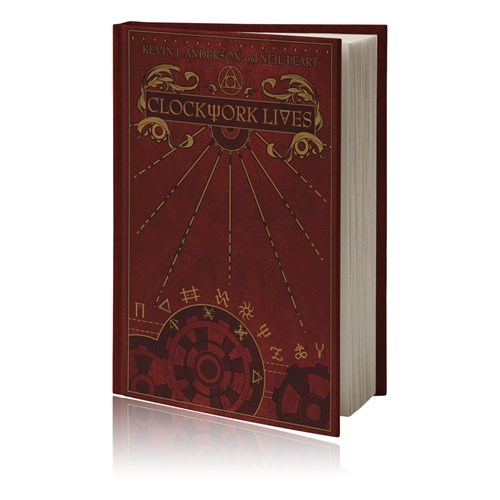 Gloriously, Anderson has done just this, authoring and co-authoring a number of short stories, novels, and graphic novels set in the Rush universe. There’s nothing Anderson has written that I wouldn’t hesitate to recommend with great enthusiasm, but he is at his absolute best when working with Neil Peart and with the worlds imagined by Rush as a band. His Clockwork Angels and Clockwork Lives certainly represent some of the very best fantasies I have ever read, and I have read quite a few! As I’ve noted in other reviews, Clockwork Angels and Clockwork Lives are each complex and compelling Chestertonian and Tolkienian faery tales.
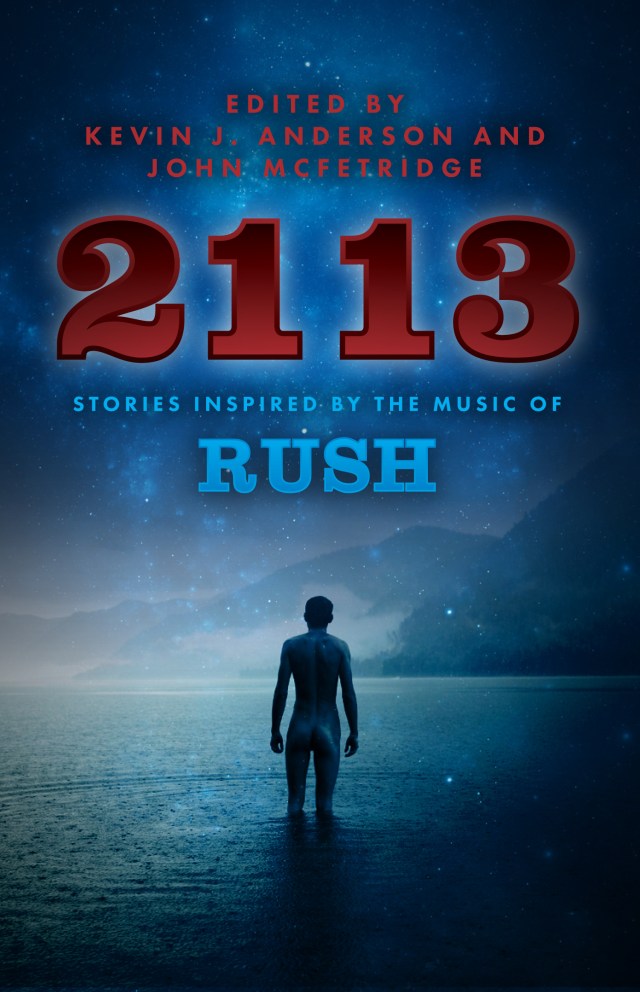
Now, through the excellent and rather perfectionist Canadian press, ECW, Anderson and John McFetridge have edited a wide-ranging collection of stories, 2113, each tale inspired by a various Rush song. Sometimes the influence is direct and obvious, but, just as often, the influence is indirect and sideways. Anderson and McFetridge have clearly encouraged a range of expression. If a theme emerges, it is, naturally, the story of the individual human person, endowed with integrity and will, fighting against the conformism of governments, societies, and corporations.
[Without giving too much away, let me note that Anderson brilliantly connects the world of 2112 to the world of Clockwork Angels in the final paragraph of his own rather Walter-Miller-esque short story, “2113.”]
While most of the tales are new, two come from that time before time, before Peart had joined Rush: Fritz Leiber’s 1967 “Gonna Roll the Bones,” and Richard Foster’s 1973 “A Nice Morning Drive.” It is not only wise, but handy to have these tales included in this collection.
An “advanced reading copy” arrived at Progarchy HQ yesterday afternoon, and yours truly has been gloriously devouring it. It is a satisfying, humbling, and inspiring book.
But, then. . . what else would I expect. Rush? Science fiction? Short stories? Alternate universes? Neil Peart? ECW? Kevin J. Anderson? Well, of course, it’s perfect. You definitely need to add this thing of perfection to your own collection.
2113 comes out officially on April 12, 2016, and can be ordered from ECW and from Amazon.
***
Bradley J. Birzer is editor of progarchy.com and author of Neil Peart: Cultural (RE)Percussions (2015).

 An outstanding performance by the boys from Norway. Even through tricky time signatures that require lockstep coordination of playing, Gazpacho delivers an emotional and beautiful show. Jan Henrik Ohme’s vocals are spellbinding – delicate and tremulous one minute, powerful and commanding the next. While he’s caressing the microphone, his bandmates play their hearts out. Songs I thought I knew take on new meaning and accessibility. This set is a perfect introduction to someone curious about this somewhat enigmatic and definitely magical group.
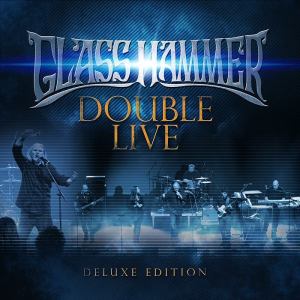 As light as Gazpacho is dark, Glass Hammer has been riding a high for the past few years – Ode To Echo and The Breaking Of The World are both instant classics. Double Live features the best cuts from those albums, as well as a terrific rendition of the epic “The Knight Of The North”. Steve Babb and Fred Schendel have been together so long they are telepathic onstage. Aaron Raulston is excellent on drums while Kamran Alan Shikoh has matured into an astonishingly inventive guitarist. Carl Groves is the best male vocalist GH has ever had, and Susie Bogdanowicz steals the show with her performance. No fancy camera work here – the music and performance are strong enough to speak for themselves.
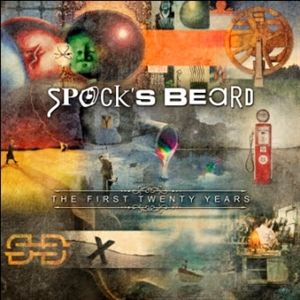 This is a fine collection of Spock’s Beard tracks. The first disc features the best of the “Neal Morse Years”, while disc two has six tracks from Beard versions 2 and 3 (featuring Nick D’Virgilio and Ted Leonard) and a new epic featuring a big reunion of everyone. You might think that losing your lead vocalist and sole songwriter would mean the end of a band, but the Beard is nothing if not resilient. The songs from the post-Morse era certainly hold their own against anything from the first six albums. I wish they had included “The Great Nothing”, but there’s only so much space on a compact disc! Of course, long-time Beard fans want to know how the new epic, “Falling Forever” stacks up. To my ears, it’s a pleasant listen, but not particularly memorable. It’s clear that Neal’s path has diverged from the Beard’s, and each camp has its own strengths that don’t necessarily mesh into a powerful whole anymore. The DVD features performances from 1997’s Progfest interspersed with contemporary interviews of the band. It’s illuminating for the hardcore fan, but not essential.
 Phenomenal growth from this band. As mentioned in the interviews included in the Blu-ray, the first album had the members somewhat tentative about critiquing each other, while during the recording of Second Flight they were much more collaborative. This is set is a terrific performance that showcases the talents of each member. Casey McPherson is a very confident frontman, and an amazing vocalist. Steve Morse’s guitar work is jaw-dropping good, and Dave LaRue almost steals the show with his bass solos. Mike Portnoy is, as usual, controlled chaos on the drums. Neal Morse plays more of a supporting role in this group, keeping in the background for the most part. “Cosmic Symphony” and “Mask Machine” are highlights, while the segue from “Colder Months” into “Peaceful Harbor” is one of the most beautiful musical moments I’ve ever heard. The quality of the Blu-ray is top-notch, both in sound and video. An excellent choice for the prog fan who enjoys the likes of Boston, or even classic Journey.
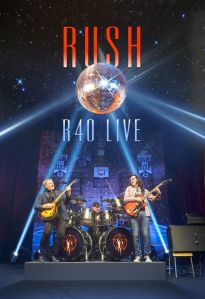 Which brings us to the big release of the year: Rush’s R40 Live. I have every live DVD Rush has released, and this isn’t the best performance. But there is something so special about this show that it will probably be the one I return to most often. There were times I caught myself thinking, “Gosh. they are looking old!”, but then I had to remind myself they’ve given of themselves so generously for 40 years. 40 years! How many bands have kept the same lineup for that long, and are still talking to each other? ZZ Top is the only one that comes to mind. The fact that this show is from Toronto makes it even more moving.