

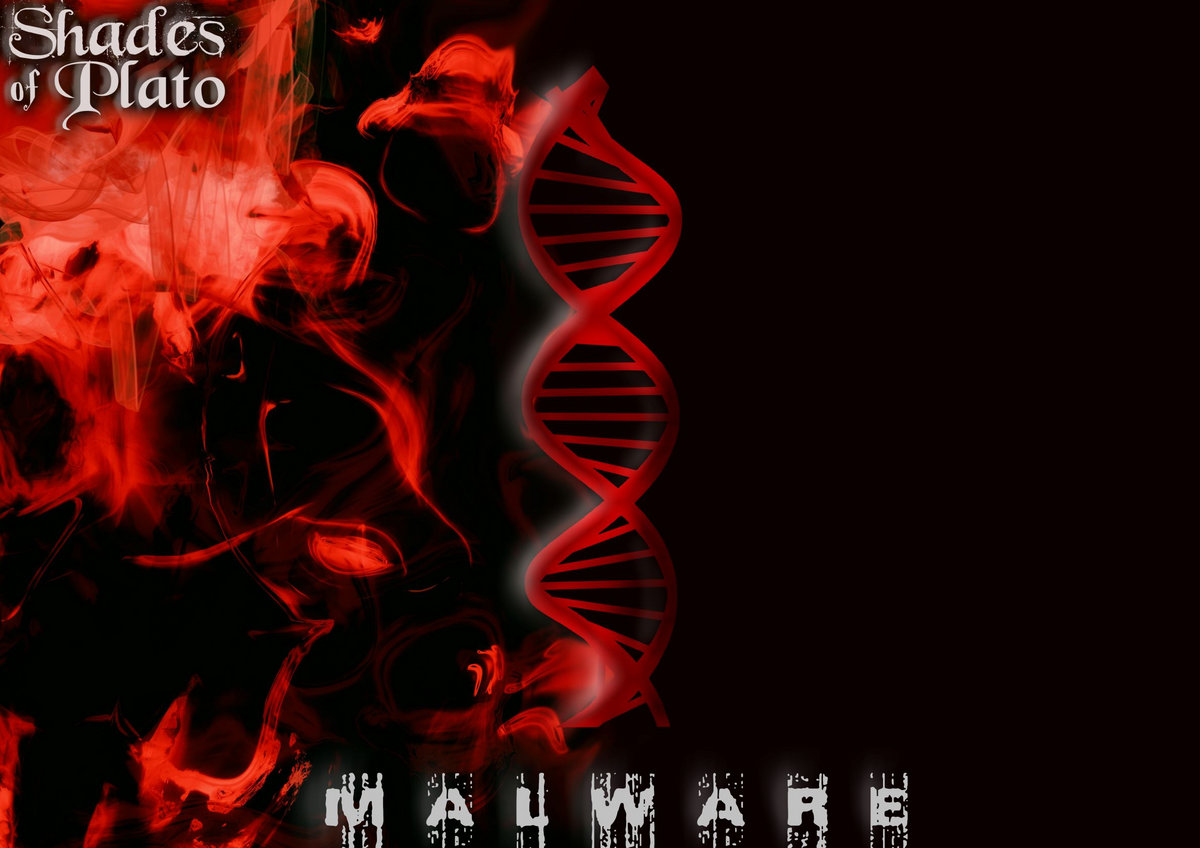
 Shades of Plato, Malware, March 28, 2022
Tracks: Malware (3:57), Death Of Me (4:23), All Women To Me (3:11), Oliver Reed (3:44), Clickbait (3:59), Time Is Not Your Friend (3:49), Ecdysis (3:57), Une Place Au Soleil (5:14), A Little Learning (3:53), She’s Always Hitting On Me (4:41), No Friend To Me (3:35), The Dead Don’t Dance (3:38), Mr. Von Hugo (3:22), People Suck (6:14), Don’t Let Your Dreams Be Shadows (4:54)
Three years in the making and five years after their debut album, UK band Shades of Plato’s sophomore album Malware blends musical and lyrical influences into a compelling and hard-hitting rock album. The result sounds a bit like Jethro Tull minus the folk influence. Sprinkle in a bit of Canterbury scene influence (hey, the album was recorded in Kent) and straight up hard-rock, and you have a pretty good idea of their overall sound. Frank Zappa’s eclecticism also seems to be a pretty strong influence.
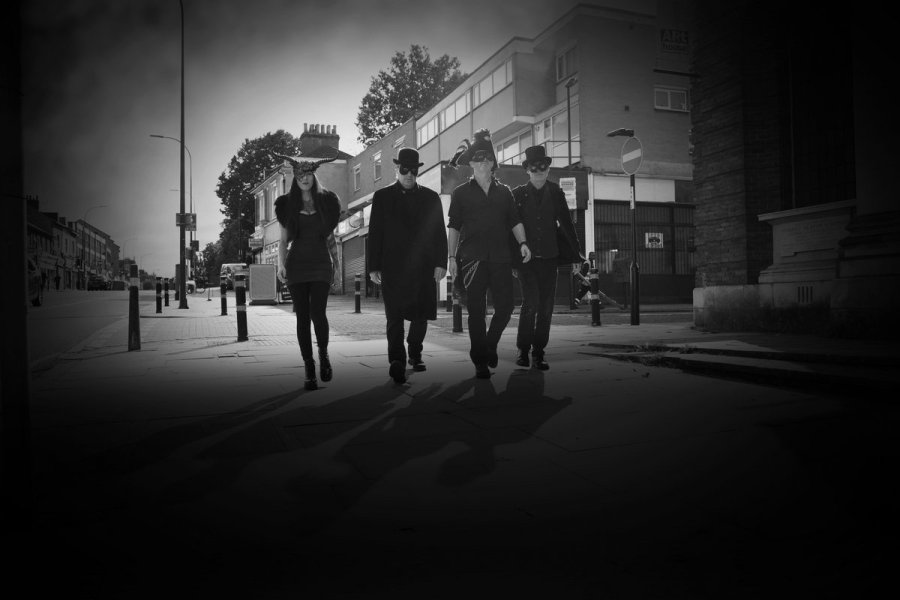
The four band members play behind pseudonyms: Ol’ Dirty Flute on vocals and flute, Captain Black on bass and keyboards, Jack Sorrow on guitars and keyboards, and Pandora on drums. Ol’ Dirty Flute’s voice is very reminiscent of Ian Anderson, albeit without the range Anderson had in his prime. His flute make the Tull influence unmistakable, yet it manages to still not sound pastoral at all.
The music itself leans perhaps more classic rock than prog as we might think of it today. The tracks are on the shorter side, and they tend to show off varying influences while still maintaining a cohesive sound across the record. The bass on the title track has a heavy Tool sound, while the opening rhythm of “Death Of Me” reminds me a lot of early Black Sabbath, a sound maintained in the song by a distinct guitar crunch.
The songs contain memorable hooks and melodies, which help serve the quite exceptional lyrics. The band even shows some quirkiness with a track like “Mr. Von Hugo,” which has a catchy repetitive chorus. The vocals on the album could be a bit stronger, as the limited range does seem cause the vocals to fade back into the mix a little bit. Having the lyric sheet included with the digipack CD is a help.
The lyrics really stand out on this record. As the band’s name might suggest, Plato is a big influence here, with his ideas spread throughout the record. The philosophic bend to the lyrics reminds me of Neil Peart’s lyrics at times, especially in the middle period of Rush’s career. Shades of Plato also have a strong grasp on contemporary culture, and as such there are some great critiques of modern ills. “Clickbait” brings up the negative aspects of the internet, such as the ability of it to radicalize people or turn them into virulent “activists” in ways they might not be in real life.
You can be an activist
“Clickbait”
It takes one finger to enlist
Virtue-signalling your friends
With whatever twitter trends
Share the same ideology
Hash tag haters by decree
Then selfie surfeit Instagram
Like a good Kardashian
“Time Is Not Your Friend” is a good reminder that life is fleeting. Things you wanted to tell your loved ones but didn’t should be said when you get the chance. No matter how far away we think the end is, it is indeed there waiting for us, and that should cause us to act.
Counting on your demise
“Time Is Not Your Friend”
As a far distant event
Well think again, it sits in wait
At every hour you are sent
Time is not your friend
And you’re always close to the end
And you can’t go round again
“A Little Learning” is fantastic. Every big-name musician or any actor who decides to use their platform to push beliefs which have nothing to do with how they make their living really should take this song to heart.
I’d put a sock in what you’ve said so far
You ain’t changing shit with your guitar
Keep your polemics to yourself
Your audience, they don’t share your wealthDon’t proselytize on my timeline
Your diatribes don’t define
My anarchy, it’s not okay
Keep your own counsel, is what I sawA little learning is a dangerous thing
“A Little Learning”
I’m going to duck you in the Pyrian spring…
Shades of Plato save the best for last: the final track, “Don’t Let Your Dreams Be Shadows,” takes its influence from Plato’s Allegory of the Cave. For those unfamiliar with said allegory, the short version is everyone is living in the darkness of a cave where their reality is limited to shadows cast by a candle. Someone escapes from the cave and discovers the brightness of reality in the outside world. That person (the philosopher) returns to the cave to bring everyone else out into reality, but they refuse to leave their world of shadows. Shades of Plato similarly call the listeners not to “let your dreams be shadows,” choosing instead to “run free through orchid meadows / Unhindered by the hedgerows.” Experience life as it really is, not as the internet projects it to be (see “Clickbait”).
And I’ll be waiting for you
“Don’t Let Your Dreams Be Shadows”
Here on the outside
When light comes streaming through
I’ll be your guide
Until you’re accustomed to
The cosmos in your eyes
And our ascent to the firmament
Is assured; undying; heaven-sent.
Earlier I said this album had more of a classic rock edge, but this is no mere straightforward hard-rock album. The lyrics move far beyond that, and combined with the subtle keyboard washes and the recurring flute, this album begins to take on a progressive edge. While not necessarily a concept album, there are lyrical themes that pop up across the album that connect with each other in subtle ways, some of which I have touched on in this review. The album is worth digging into for the lyrics alone, but you’ll also find the music very rewarding.
The album is available at Bandcamp for download or a CD – both priced at £5.
https://www.facebook.com/shadesofplato/
https://shadesofplato1.bandcamp.com/album/m-a-l-w-a-r-e

 Progarchy