

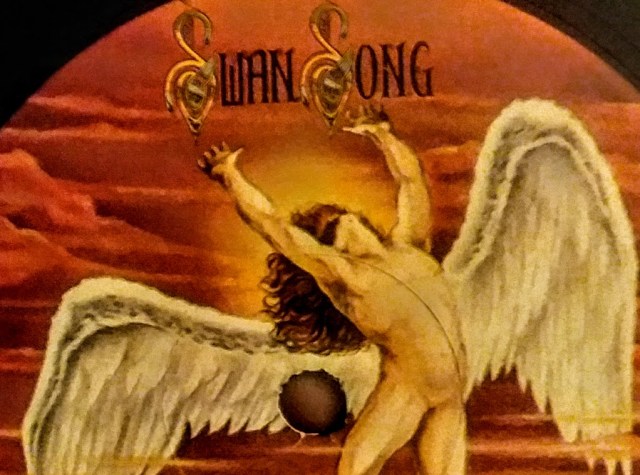
 Consider Blueshammer. Fictional, yes, short-lived, definitely (seconds at most). Daniel Clowes and Terry Zwigoff made no bones in their film Ghost World (from Clowes’ graphic novel) about white blues musicians — that is, Blueshammer — who drowned out the source of their inspiration through sheer volume, and the thoughtlessness of the fans who followed them. It’s easy pickings, sure, but there’s also some truth there, and as practitioners of the art of the blues hammer, it wasn’t the first time Led Zeppelin and their peers were skewered in pop culture (see Spinal Tap), nor would it prevent other very capable white bro’ blues artists from on the one hand shredding and posturing, and on the other (and doubly suspect I think) donning the Ray-Bans and porkpie hats and a-how-how-howing through thousands of dollars of instruments, cables, amps, etc. to legions of adoring fans. Shall we name names? No. You and they and I know who they and I and you are.
Even at their emergence, many rock royalty decried the bludgeoning the mighty Zeppelin gave the blues, and certainly their excesses were as clear as their achievements. But, they achieved a lot: between their approach to traditional music of all stripes (they bludgeoned everything equally, often with finesse), their revolutionary production techniques, Jimmy Page’s ability to find the sweet spot between technique and feeling (and Robert Plant’s cock-of-the-walk wail, and John Bonham’s pounding, and John Paul Jones’s rock steady everything else), and their marketing prowess, it’s hard to sell Led Zeppelin short. As they would have it, it might be blues hammer, but it was blues hammer of the gods, straight outta Valhalla. And they were pretty much right, the most powerfully potent rock band of the 1970s, so successful that the only thing they risked was radio fatigue from overplay — a risk that proved all too real for a lot us (I’d never surrender my Zep LPs, but do I listen to them….?). When Bonham drank himself to death it probably wasn’t the worst thing to happen to the band in terms of its own legacy: across eight seamlessly consistent studio albums they managed not to make one dud, as they threw most everything against the wall. It all stuck. Their apex was 1975’s Physical Graffiti, a double album opus that sprawled and summed, peaking with the epic “Kashmir.” It was a landmark of progressive hard rock, an ego-driven nod to world music in all its variegated unfolding, and even as Zep dressed their song in the North African and eastern themes that captured their imaginations as strongly as the Mississippi Delta or the Welsh hills had, there was never any doubt that this music was completely theirs, and that it was nobly and spiritedly done.
Here is “Kashmir” from Celebration Day, the concert Zeppelin gave in 2007 in honor of Ahmet Ertegun, Atlantic Records founder. It may be their greatest live moment, even minus their legendary drummer, as the band (with Bonham’s son Jason ably thundering), healthy and aged and all in, describe why they were worth listening to in the first place, and why, really, they were never just a hammer of the blues, but indeed a hammer of the gods.
soundstreamsunday presents one song or live set by an artist each week, and in theory wants to be an infinite linear mix tape where the songs relate and progress as a whole. For the complete playlist, go here: soundstreamsunday archive and playlist, or check related articles by clicking on”soundstreamsunday” in the tags section.

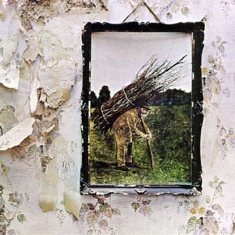 “standard” rock sound, the rest of the album is undoubtably unique in its composition. The Battle of Evermore, an explicit reference to Middle Earth, and Misty Mountain Hop pay homage to Plant’s favorite literary land. Going to California is a pleasant yet intricate folk song dedicated to Joni Mitchell, the Canadian singer who supposedly captured the hearts of both Page and Plant. Four Sticks may be the first “math rock” song ever composed, a song so complex that it was only performed by the band once in concert. When the Levee Breaks features explosive drums from John Bonham and fine harmonica work from Plant. Finally, there is the iconic Stairway to Heaven, an eight minute long epic with enigmatic lyrics that starts off slowly and builds up to a climax of one of the most impressive guitar solos in rock history. If that does not fit the “progressive” mold, then I don’t know what does.
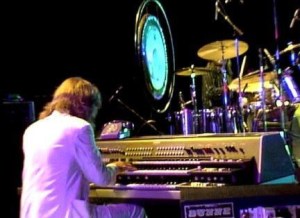 , but it is his frenetic yet dexterous playing on the lengthy and cryptic Carouselambra that established Jones’ place in the canon of great prog rock keyboardists. This claim may be a stretch to some, as most identify Jones as a bassist, but I would urge the reader to listen to these songs mentioned above before arguing otherwise.
 Progarchy