

When I was back in college, fellow progarchist and professional musician, Kevin McCormick, and I used to spend hours upon hours talking music, chord structures, album marketing strategies, and, especially, the meaning of lyrics. For us, the lyrics of good rock and prog were akin to poetry.
And, frankly, as someone who studies literature for a living, I can state in hindsight that many of the lyrics written at the time by Peter Gabriel, Roger Waters, and, especially, Neil Peart and Mark Hollis warranted such praise. At their highest, each lyricist reached toward the best modernist writers of the twentieth-century.
Some might argue that we could’ve and should’ve more wisely spent our time studying and doing our school work.
There’s much to argue against this, however.
First, our conversations solidified a life-long friendship. Second, they fired our imaginations. And, third, they allowed us to think it very direct ways about how art can influence society. Indeed, all three of these things have not only been critical to my own intellectual and professional development, but also to my very source of happiness.
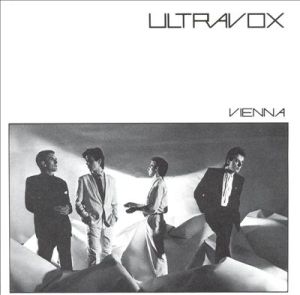
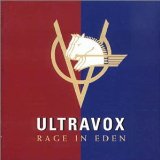
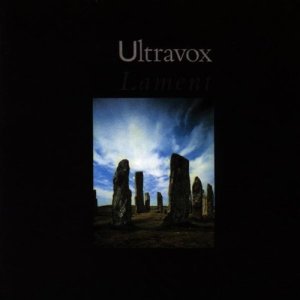
Sometime during our freshman year at the University of Notre Dame, Kevin introduced me to a band that had never reached my ears in my childhood in Kansas, the music of Ultravox. Through Kevin, I became absolutely enamored with three of Ultravox’s albums: VIENNA; RAGE IN EDEN; and LAMENT. I liked Quartet as well, but it seems the poppiest and shallowest of the three. It had some catchy things, but it just simply couldn’t compare in depth to VIENNA, to RAGE IN EDEN, or to LAMENT. The lyrics to VIENNA opened the world of Europe up to me. RAGE IN EDEN struck me as literature, pure and simple. LAMENT seemed an extraordinary comment on the sorrows of the world of the time (and, frankly, still).
We sit and watch these lifeless forms stark and petrified
The high suspense of an empty stage drawing, in clutching to its breastWith murmured words we sigh and focus on the main facade
Beyond the hard reluctant windows news from magazinesWe wrote their names on books we’d borrowed as if to bring us closer still
And threw it all away to focus on the main facade
Rage in Eden jigsaw sequence, but no one could see the endAnd they were the new gods and they shone on high
Their heavy perfume on the night sucked them down in red tide–Rage in Eden
As probably many college students do, Kevin and I each had pretentions to a literary career. Kevin had already become a rather accomplished poet, and his senior-year poem dealing with Arvo Part won the award for the best poem written by a college student in 1990. Extraordinary! I had no such skills, but I still wanted to be a writer. I, however, had no desire to write poetry or fiction. Instead, I wanted to write histories, biographies, and cultural criticism.
Regardless, what prompted this post was my relistening to Ultravox. When Kevin first introduced me to RAGE IN EDEN, he told me to listen as carefully as possible to the lyrics. He hoped, he claimed then, that he would one day write a book of cultural criticism using not only the titles of each song for the titles of his own chapters, respectively, but that he would base the ideas of his own book on the lyrics.
Kevin has pursued other interested in his professional career.
Still, it’s a great idea, and I hope he takes up his own challenge to himself, delivered to me in Cavanaugh Hall, thirty years ago this coming fall.
I can say with absolute certainty that I write about prog rock because I know that it inspired me in 1981, in 1986, in 1992, and continues to do so. Indeed, there’s nothing I’ve published that hasn’t had a prog or rock soundtrack behind it.
Reading passages of ancient rhyme
Cut so deep, so old
Telling tales of travelers and mystery
Hearing spirits never far removed
Calling out aloud
When the time comes, they’ll talk to me–Man of Two Worlds
 Progarchy