Lest anyone think the lack of Jem Godfrey’s often hilarious “Frost* Reports” means the band have been hibernating, fear not: The boys are back with a new DVD just in time for the holidays!
Aside from brilliant re-workings of Frost* staples, the photography and lighting are REALLY good here, so do check out this trailer. Cheers!
I’ve been keeping an “Album Of The Year” list going back to 1977 or so, before which I didn’t own or properly listen to any music of note. Since then, there has usually been one album every year that stood above the others, or, if I’m lucky, an album that I’d truly cherish for years to come.
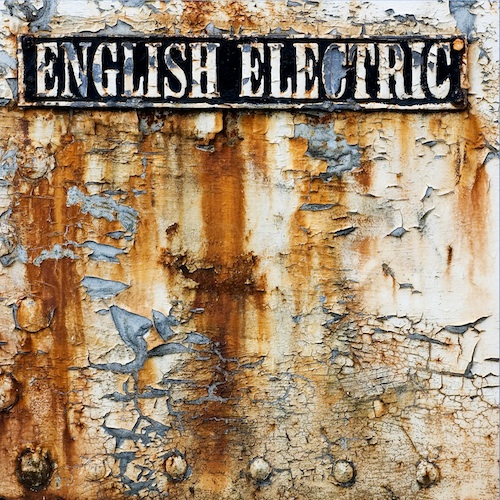
Over the last 10 years, I’ve been fortunate to have encountered a few such albums: “Everything Must Go” by Steely Dan, “Everybody Loves A Happy Ending” by Tears For Fears, “Milliontown” by Frost*, “English Electric Part 1” by Big Big Train, and “The Tall Ships” by It Bites. Unfortunately, there have been a few years where I’ve had to pretty much force myself to pick an album that might not otherwise top a “best of” list, simply because nothing really spoke to me that year…let’s not list those, eh?
For 2013, I can list three albums that meets at least one of two criteria: Will I want to listen to these again in 2014 and/or will it be an album I treasure for a lifetime.
They are:
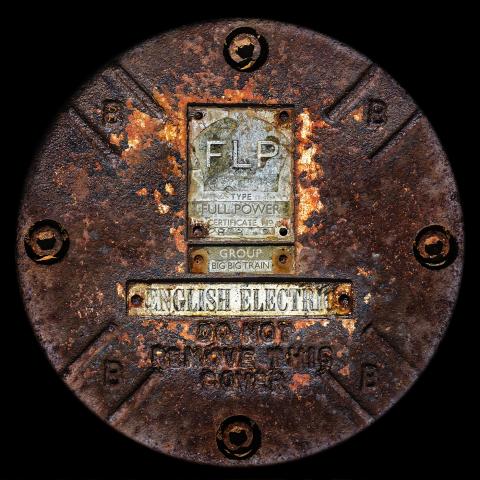
“English Electric Full Power” – Big Big Train
Yes, nearly half of this album was the Album Of The Year for many in 2012 (including myself), and I’m not sure “English Electric 2” would have topped my AotY list by itself – it’d have been a strong #2 for sure – but to hear the new tracks from “Full Power” arranged among the revised tracklisting for this, the band’s final statement for this project, makes this an album that easily meet both criteria noted above.
Despite “English Electric” not being a concept album in a story sense, I do struggle a bit with how the leadoff track, “Make Some Noise,” fits in with the rest of the album, but having been that kid they sing about, I simply imagine how carefree life was in the summers of my youth, being able to play music with friends, before true responsibility knocked.
I can’t really add any meaningful superlatives to my appreciation of this album that haven’t been said time and again by others. Suffice to say: It’s magnificent.
“Dream Theater” – Dream Theater
Despite my glowing review of “The Enemy Inside,” the first single from Dream Theater’s self-titled album, I began to think that if I was in for an album-length assault in the vein of that track, this wouldn’t be a standout album for me. It’s obvious that I hadn’t learned to listen to an entire album before judging it, because this album stands out as one of their finest and a fine successor to “A Dramatic Turn Of Events.”
With the talent stockpiled in this band – especially now with a drummer in Mike Mangini possessing the technique and training on par with Jordan Rudess – it would have been easy for Dream Theater to overplay in every time signature for 75 minutes straight, but what we get instead is an incredibly balanced effort that keeps the technical playing mostly in check, letting the music breathe.
If I have any gripes – and this may be my problem – it’s that while each section of “Illumination Theory” is fantastic on its own (how about the section with the strings!), I was hoping the end of the track would reprise the themes from the beginning. Otherwise, it feels to me as if they took us out on a journey and didn’t quite bring us back (of course, that’s well within their rights as artists). Yes, I do hear the reference to one of the early guitar riffs later in the track, but somehow the end didn’t “tie the room together.” 🙂
However, I reserve the right to be wrong here, so fellow progheads, I’m counting on you to set me straight if I’m missing something! In any case, don’t miss this album.
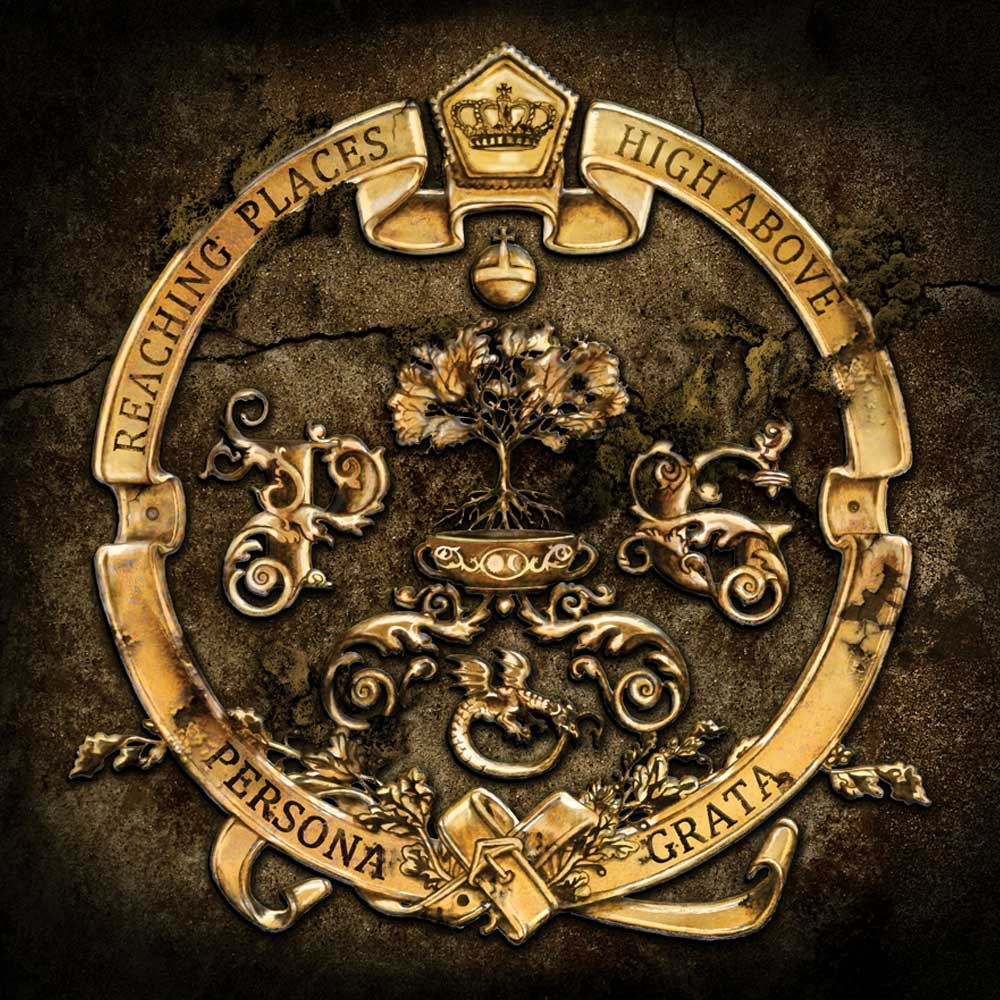
“Reaching Places High Above” – Persona Grata
Just as Big Big Train’s “English Electric 1” was a late-in-the-year find for me in 2012, this release from Bratislava’s Persona Grata (nice rhyme there) was that way this year. This six-song effort features three prog tunes in the vein of Dream Theater, plus a three-track instrumental arc in the middle that takes you on a thematic journey paralleling the titles of the tunes.
Beyond the writing, singing and playing on this album, I was most impressed with their attention to the arrangements. Of the many prog albums that I gave a spins to this year, “Reaching Places High Above” grabbed me from the first listen.
******
Finally, if I have a single of the year award to bestow, it’s for “Pale Blue Dot” by Sound Of Contact, part of a fine overall album. I dare you not to have Simon Collins’ melodies from the verses and chorus stuck in your head for days on end. Great track!
Of course, there are many more albums out there likely deserving inclusion on my list, but these three (and Sound Of Contact) will be the ones that I’ll be spinning for years on end. Since our community of proggers is a tight-knit one that includes both artists and fans in a way that I doubt most other genres do, artists should note that I’m often a “late bloomer” with many albums, whether because it was completely off or under my radar, so don’t be surprised if I someday anoint your album as AotY that was released years before, like I did with “Once Around The World” by It Bites; it “only” took me some 20 years to learn who they were!
Another brilliant year for progressive rock, to be sure!
It’s probably a blessing and a curse that I tend to compartmentalize progressive rock into sub-genres in order to sort out what I’m hearing. It’s likely a blessing in terms of having “signposts” of historical reference when trying to determine where a band’s music fits within the prog category, but perhaps a curse that I feel the need to shoehorn the band and music into a sub-genre in the first place, for we all know that progressive music rarely fits neatly into one “slot.”
No matter the reasoning, let’s just say that the Slovak proggers Persona Grata surprised the heck out of me with their new release, “Reaching Places High Above,” which for this prog fan fits nicely into the sub-genre where Dream Theater camps out – one that I’ll call “heavy prog” – and made this album an absolute pleasure to listen to.
“Reaching Places High Above” is at times aggressive, intricate, mellow, adventurous, and dynamic, but always progressive in scope, and a delight to listen to. Sound a bit like Dream Theater there?
It should. Listeners will be treated to a group that, like DT, fires on all cylinders with tight songwriting and arrangements, along with the technical prowess that easily puts them in a league with top-tier prog bands. It’s worth mentioning in advance that the album is produced and mixed wonderfully, which can’t always be said for up-and-coming groups. It’s a big plus.
“Ace” preps us for the places we’ll go with some airline samples and radio dial tuning, eventually morphing into the track’s intro. Those who may not be a fan of the two vocal wails at the beginning, fear not – it’s not indicative of what’s exclusively in store from the vocals department; singer/guitarist Martin Stavrovsky has plenty of range and, unlike some capable of wailing in prog, he doesn’t loiter in the high register all that much. The band moves from section to section in rapid pace with plenty of playing that’ll impress anyone who fancies quite a bit of playing in their prog. However, they steer clear of what sometimes turns people off about virtuosic prog – shredding for shredding’s sake. The band does a fine job of keeping the song in check thematically and the song seems over before it starts.
“Edge Of Insanity” brings things down a notch with an intro electric guitar and flute (man, the flute sure is back in prog, innit?), moving to a first verse that features a lovely male/female harmony verse. The band then crescendoes with layers of aggressiveness for the next set of verses before heading back to the harmony vocals of the first verse. However, dust never settles on Persona Grata, for the prog returns almost as quickly, building to a heavy section of soloing. Halfway though the track, the band pulls back to a section of acoustic guitar, flute and synth that brings us back to the feel of a couple of the early verses. They build back up to full-tilt, heavy prog, but seeing the bigger picture of arrangement, they bring it back down to reprise the intro. Fab track.
The band then takes us on a three-instrumental, cross continental-themed musical journey starting with the brief “Istanbul,” which calls to mind elements of DT’s “Home” with sitar/guitar playing over a Tool-esque drum pattern. We’re then taken aboard the “Orient Express,” full of twists and turns in the vein of “The Dance Of Eternity” at nearly 10 minutes in length, then the band brings things to a close with the concluding “Venice” piece, done on harpsichord.
The album’s epic ender, “I Am You,” has an ambient start, then sees the band floating over an intricate, 5/4 piano part, then moving to a heavy yet cinematic feel that’s all ear candy. Again, the band has a great ear for arrangements, never bleeding a riff to death and flowing from one section to another naturally. The song’s halfway point sees the band put the brakes on the heaviness a la Frost*, giving way to plucked strings that build into a full instrumental section. The harpsichord from “Venice” is back for part of the section and after one more “drop out” to a quiet section, the band cranks up to a fever pitch, followed by the obligatory anthemic finish, fading out to the ambient keyboards we heard at the beginning.
It seems like every year brings a surprise for me amidst the mass of prog releases; last year it was Big Big Train – truly a once-every-decade find for me – and this year has brought Persona Grata to the forefront of my new music listening. Those bands certainly occupy two different sub-genres of prog, but neither lack in creativity. With “Reaching Places High Above,” Persona Grata have put themselves near the summit of the the heavy prog-rock peak.
More information: http://personagrataofficial.tumblr.com
Set in stone. Chiseled, carved, done. Or, at the very least, set in digital stone.
For the ever-growing number of Big Big Train devotees (now, called “Passengers” at the official Facebook BBT page, administered by everyone’s most huggable rugged handsome non-axe wielding, non-berserker Viking, Tobbe Janson), questions have been raised and discussed as to how BBT might successfully combine and meld English Electric 1 with 2 plus add 4 new songs.
How would they do it with what they’re calling English Electric Full Power? Would they make it all more of a story? Would the album become a full-blown concept with this final version? Where might Uncle Jack, his dog, or the curator stand at the end of the album? Actually, where do they stand in eternity?
The members of BBT have already stated that EE as a whole calls to mind–at least with a minimum of interpretation–the dignity of labor. Would the new ordering and the four new songs augment or detract from this noble theme?
Somewhat presumptuously, many of us Passengers proposed what we believed should be the track order, and I even took it upon myself to email Greg last spring with a list. Well, I am from Kansas, and we’re not known for being timid–look at that freak, Carrie Nation, who dedicated her life to hacking kegs and stills to bits, or to that well-intentioned but dehumanizing terrorist, John Brown, who cut the heads off of unsuspecting German immigrants.
And, then, there’s the fact, for those who know me, that I can produce track lists like I can produce kids. No planning and lots and lots of results.
Or, that other pesky fact, that I’m so far into BBT that I could never even pretend objectivity. [Or, as one angry young man wrote to me after I praised The Tangent, “your head is so far up Andy’s @ss, you can’t even see sunlight.” Cool!; who wants to spend tons of time writing and thinking about things one doesn’t like? Not me! As Plato said, love what you love and hate what you hate, and be willing to state both. Guess what? I love BBT and The Tangent! And, just for the record, I’ve never even met Andy in person, so what was suggested is simply physically impossible.]
Admittedly, maybe I’m such such a fanboy that I’ve gone past subjective and into some kind of bizarre objectivity. You know, in the way Coleridge was so heretical that he approached orthodoxy. Or, maybe I’m just hoping that Greg and Co. will ask me to write the retrospective liner notes for the 20th anniversary release of EE Full Power. I’ll only be 66 then. Who knows? Even if I’m in the happy hunting grounds (I’m REALLY presuming now), I could ask the leader for some earth time. . . .
If you’ve read my bloviations this far, and you’re still interested in my thoughts on English Electric Full Volume, well, God bless you. A real editor would have removed the above rather quickly.
The members of Big Big Train with Dutch photographer, Willem Klopper.
Back from the Blessed Isles of soulful prog realms. . . .
In my reviews of English Electric 1 and 2, I stated that these albums were the height of prog music perfection, the Selling England By the Pound of our day. I wouldn’t hesitate to proclaim this again and, perhaps, even more vocally and with more descriptives.
At the risk of turning off some of my friends, I would say that EEFP is even superior to its 1973 counterpart. How could it not be, really? Selling England is now an intimate and vital part of the prog and the rock music traditions, and it has been for forty years. Add that album and hundreds of others to the integrity, dedication,and purposeful intelligence, imagination, and talents of Greg Spawton, David Longdon, Andy Poole, Dave Gregory, Nick d’Virgilio, Danny Manners, and Rob Aubrey. Putting all of this together, well, of course, you’d demand genius.
You’d expect genius.
And, you’d be correct.
It’s the height of justice that Jerry Ewing of PROG awarded Big Big Train with the Prog Magazine Breakthrough Award.
That breakthrough started with that meaningful paean to British and western patriotism in Gathering Speed, reached toward sublime spheres in The Difference Machine, found a form of edenic Edenic perfection in The Underfall Yard and Far Skies (it’s hard for me to separate these two albums for some reason), and then embraced transcendent perfection in English Electric 1 and 2. Each member who has joined the original Greg and Andy has only added to the latest albums. Nick, the perfectionist drummer; Dave, the perfectionist guitarist; Danny, the perfectionist keyboardist; Rob, the audiophile. And by perfectionist, I don’t mean it in its modern usage, as without flaw, but rather as each having reached his purpose.
I don’t think this point can be stressed enough: these guys are perfectionist NOT against each other but with, around, near, above, and below each other. They are a unit of playful perfectionist individuals who become MORE individual, not less, in their community.
Looking at the history of art from even a quasi-detached and objective viewpoint, I think we all have to admit, this is more than a bit unusual.
Breakthrough, indeed, Mr. Ewing. Breakthrough, indeed.
Greg and Andy don’t become less Greg and Andy as the band grows beyond what they have founded, they become more Greg and more Andy. In the first and second wave of prog, how many bands are known for only getting better and better with each album? Those that did are certainly the exceptions. One of the most important differences of this third wave of prog is that the best only get better, even after twenty years of playing. Exhaustion and writers-block seem to be of another era.
BBT exemplifies this trend of improvement in this movement we now call the third wave of prog. And, not surprisingly, when BBT asks artists to guest with them, they invite those with similar trajectories–Andy Tillison and Robin Armstrong to name the most obvious.
David Longdon. Photo by the Willem Klopper.
Longdon
Again, if you’ve made it this far in this review, you should be asking–hey, Birzer left out David Longdon above, what the schnikees?
Yes, I did. So, let me now praise famous Davids (with apologies to Sirach). I’ve not been shy in past writings (well, over the last four years) to note that I believe David is the finest singer in the rock world at the moment. He has some rather stiff competition, of course, and I reject the notion that he sounds just like “Phil Collins.”
No, David is his own man and his own singer. I do love and appreciate the quality of David’s tone and voice. He possesses a beautiful and talented natural one, to be sure. Nature or God (pick your theology) gave this to David in abundance, and he’s used his own drive and tenacity to bring his voice to the height of his profession.
But, what I love most about David is that he means every single thing he sings. These aren’t “Yeah, baby, let’s do it” lyrics. These are the lyrics of a bard (Greg’s lyrics are just as excellent, of course, as I’ve noted in a number of other articles; these are two of my favorite lyricists of the rock era–rivaling even Mark Hollis).
Longdon can make me as happy as one of my kids running to the playground on the first day the snow thaws (“Let’s Make Some Noise”); he can make me want to beat the living snot out of a child abuser (“ABoy in Darkness”); and he can make me want to start a novena for a butterfly curator.
In no small part, Longdon has a voice that makes me want to trust and follow him.
Put David and Greg together, and their lyrical abilities really knows no known bounds. They are the best writing team, to me, in the last fifty years. I know most would pick Lennon/McCartney, but I’m a firm believer that “electrical storms moving out to sea” trump “I am the walrus.”
Master of many things, Greg Mark Aurelius Spawton. Photo by Willem Klopper.
EEFP
So, what about this third manifestation of English Electric, English Electric Full Power? Well, all I can state with some paradoxical certainty, Spawton, Longdon, and five others, have now shown it is possible to perfect perfection. I’ll use perfect here in its proper sense: not as without flaw (though that would apply as well) but as having reached its ultimate purpose, as I noted above.
EEFP is still very much about the dignity of labor, and, as such, it has to deal with the dignity of the laborer, that is, the fundamental character of the human person in all of his or her stages.
The song order of EEFP, consequently, follows this natural logic.
The opening track, a new one penned by Longdon, celebrates the joys of innocence. David has said it was his goal to invoke the glam rock of his childhood. For me, it invokes the rock of my mother’s college days. A shimmering, pre-Rolling Stones rock.
The video that the band released just makes me smile every time I watch it. The video also confirms my belief that these six (and Rob, the seventh member) really, really like each other.
Rather gloriously, “Make Some Noise” fades into one of the heroic of BBT tracks, “The First Rebreather.” This makes “The First Rebreather” even better, especially when contrasted with the innocence of track one. After all, in The First Rebreather, the hero encounters beings from Dante’s Fifth Circle of Hell (wrath).
The second new song, “Seen Better Days,” begins with a strong post-rock (read: Colour of Spring) feel, before breaking into a gorgeous jazz (more Brubeck than Davis) rock song. All of the instruments blend together rather intimately, and David sings about the founders and maintainers of early to mid 20th century British laboring towns, while lamenting the lost “power and the glory” as that old world as faded almost beyond memory. The interplay of the piano and flute is especially effective.
The third track, “Edgelands,” begins immediately upon the end of “Seen Better Days,” but it’s short. Only 86 seconds long and purely a Manner’s piano tune, it connects “Seen Better Days” with “Summoned by the Bells.” If at the end of those 86 seconds the listener doesn’t realize the creative talents of Mr. Manners, he’s not thinking correctly.
The fourth new track, “The Lovers,” appears on disk two, after “Winchester” and before “Leopards.” The most traditionally romantic and folkish song of the four new ones, Longdon’s voice has a very “Canterbury” feel on this tune, and the tune provides a number of surprises in the various directions it takes.
What’s next for BBT?
Thanks to the delights of social networking, we know that Danny’s kids are concerned that he doesn’t look “rock” enough (he needs to show them some Peter Gabriel videos from Gabriel’s last studio album), and we know that Greg’s middle name is Mark.
Ok, yes, I’m being silly (though all of the above is true).
We do know that Big Big Train is working on a retrospective of their history, but with the current lineup. I don’t think any of us need worry that this (Station Masters) will be some kind of EMI Picasso-esque deconstruction of Talk Talk with a “History Revisited: The Remixes.” Station Masters will be as tasteful, elegant, and becoming as we would expect from Greg and Co.
After that, we know that BBT is writing a full-fledged concept album, their first since The Difference Machine. We know that the boys are in the studio at the very moment that I’m typing this (NDV included).
Perhaps most importantly, though, we trust and have faith that Greg and Co. are leading progressive rock in every way, shape, or form. EEFP is the final version of EE. At least for now. But, BBT is not just breaking through, it’s bringing a vast audience, sensibility, and leadership to the entire third movement of prog. And, for this, I give thanks. Immense thanks.
When it comes to BBT, perfection only gets more interesting.
Attention Rush fans: Have room on your media shelf for yet another Rush concert tour video?
In what is now a familiar pattern of documenting every tour, the recent Rock & Roll Hall of Fame inductees announced a concert video from their 2012-13 Clockwork Angels tour over the summer. Today, the 2-DVD/single BluRay received a release date: November 19th.
Captured in November 2012 at the American Airlines Arena in Dallas, the “Clockwork Angels” setlist pulls heavily from Rush’s 80’s output with tracks such as “Middletown Dreams,” “The Body Electric” and “Grand Designs,” as well as a predictable, heavy dose of material from “Clockwork Angels,” Rush’s first-ever concept album, released last year.
Of course, Rush fans know that a highlight of this tour was the eight-piece string ensemble that added their touch to the “Clockwork Angels” music as well as classic Rush tracks such as “YYZ,” marking the first time in their career that the trio brought additional musicians on tour to enhance their music.
Another big highlight was not one, but three drum solos from Neil Peart, all of which are featured in the video. What’s more, fans will be treated to numerous special features including a new documentary, “Can’t Stop Thinking Big,” profiling the behind the scenes goings-on.
For years, Rush fans lamented how few DVD’s the group released, but since “Vapor Trails,” the group has been prolific in getting both current and past releases out. “Clockwork Angels” figures to be a must-have for both hardcore Rush fans and prog enthusiasts.
Set One Subdivisions The Big Money Force Ten Grand Designs The Body Electric Territories The Analog Kid Bravado Where’s My Thing?/Drum Solo #1 Far Cry
Set Two Caravan Clockwork Angels The Anarchist Carnies The Wreckers Headlong Flight/Drum Solo #2 Peke’s Repose/Halo Effect Seven Cities of Gold Wish Them Well The Garden Dreamline Drum Solo #3 Red Sector A YYZ The Spirit of Radio Encore Tom Sawyer 2112
Special Features Can’t Stop Thinking Big (tour documentary) Behind The Scenes Outtakes Interview With Dwush Family Goy Family Sawyer The Watchmaker (intermission tour film) Office Of The Watchmaker (closing tour film)
The “red-headed” one. Stolen from Tillison’s FB page. Without permission but not with malice.
Andy posted this at his personal facebook page. Very well worth reading and yet another reminder as to why Andy is a sheer modern (well, maybe post-modern) genius.
Some thoughts on the Prog Awards that took place in KEW, London last week. First of all, I had a great time and as I have already shown off on another thread, I got to share a table with three quarters of Transatlantic, Arjen Lucassen and the people from Insideout music who’d invited me. This in itself was a bit of a “wow” thing.
Looking around at the famous faces was worrying. I kind of realised that some hanger-on-to-1979-NME “everything must die so that punk may live” journalist could probably have wiped the genre from the face of the earth with a dodgy batch of Salmon Mousse. Rick Wakeman was right behind me, Ian Anderson, Dave Brock, Steve Hillage, Steve Hackett, Robert John Godfrey – Jeez!!! – if anyone had told me when I was at school that I’d be at this thing I’d have not believed them.
Most of my friends know that this kind of shindig is not really my scene. I felt a bit awkward in all posh clothes, a bit nervous to be with all the great and good – and this is not something that applies just to awards ceremonies, it goes back as far as “terror of the sixth form disco” and those student parties where you really DID find me, always in the kitchen. I’m just a bit nervous of formal events. Can’t be myself and that’s as simple as I can put it.
The formalities of the awards kicked off after a meal. Some of you know that my personal relationship with the organisation (PROG magazine) did not start quite as well as it might. My relationship with the editor and big chief there, Jerry Ewing, was worse than frosty for more than a year. Actually my fault when all is said and done – I really think most of it was to do with a bit of Northern Cantankerousness mixed with sense of humour failure and a little bit too much pride. And the fact that the mag had said that The Tangent looked like a bunch of Sheep Farmers and Accountants. I SHOULD have had a right old laugh about that. Because at the time, my partner Sally was working in accounts and we DID live in the middle of a sheep farm. Maybe it was just too close to the bone.
Ewing kicked off the proceedings with what, to my surprise and delight, was the most motivational speech of the night. It focussed heavily on the new bands both “real new” and “established new” and far from being corporate gesturing which is so often evident at this type of event, I got a real feeling that he MEANT it all, and that he didn’t actually see the third and fourth waves of Prog as some kind of pro-active fan club of the first and second. That was more than refreshing. And to watch the Von Hertzen Brothers claim their award, Big Big Train and Steven Wilson etc was great, knowing that there is, was and will be a lot of life in the genre AFTER 1977.
I’m always gonna be happier in jeans and a t-shirt, wrestling with a monitor mix at The Peel, The CRS, Summer’s End or Celebr8 than at a posh three course meal. And of course I did note that there were more people at the awards than are at most of the gigs. If all the musicians were to support each other at each others events we could significantly audience sizes – (but NOT ask to be on the guest list!!). But what’s really really great about these awards is that we’re all HERE, the old heroes and legends, the guys who want to follow them and the people who want to make it happen. I’ve always felt as a Prog musician to be “part of something” – of course I have.. but where so many negative correspondents have portrayed Prog as a safe, middle class and system supporting genre, I have always seen it as sticking up two fingers to the classical music establishment and saying “we can do that too” After all the shit, lies, misrepresentations and misunderstandings we’re ALL STILL HERE. Bring on the Salmon Mousse!!! We’ll survive that too!–Andy Tillison, Facebook, September 8, 2013
(Note: This post has been on my personal blog for some time, but in light of having recently read two columns about this topic, I figured, “Perhaps it’s not just me” and decided to share it here)
There’s one thing that seems to be common among most albums I listen to these days:
Most of them are long – certainly longer than the albums of my youth – and that’s not always a good thing.
Believe me, I’ve never taken an album’s length into consideration before purchasing and don’t plan to, but I’ve come to realize that the longer an album is, the greater the possibility that it won’t be one that’s treasured by this listener.
For most prog/rock/pop albums I truly love, the total running time isn’t a consideration, but when I think about the landmark albums of the last 40 years – especially progressive rock albums, being my favorite genre – you figure that many of them were recorded back when LP’s and cassettes were the norm and, by design, resulted in shorter-length albums unless a band thought they needed a double album to get the point/concept/noodling across.
I’ve posted elsewhere about this phenomenon of albums sometimes suffering from being too long and was usually met with some ridicule from a few respondents, though I should have polled their ages to see if they were even alive before the CD format; did they know anything other than a physical format that could hold over 70 minutes of music?
Perhaps it’s conditioning. Perhaps it’s a shorter attention span on the part of this author.
However, I kept thinking there was something to my point.
That point was driven home for me by Rush’s latest album, “Clockwork Angels.” As with pretty much all of their albums since “Test For Echo,” I haven’t liked more than, say, half of the tracks, whereas I adored 75-100 percent of everything they did through “Counterparts.”
After numerous spins of “Clockwork Angels” and finding that I was skipping through several tracks every time – just as I was doing with most of their work since “Test For Echo” – I began to wonder how long the album was and how long it’d be if the tracks I didn’t like weren’t on it. In turn, that again got me thinking about the trend of albums more or less getting longer since the advent of the CD – do bands really have that much great music in them every time out?
To illustrate, I’ll “pick on” my all-time favorite band and their album lengths since 1976 (according to Wikipedia):
2112 – 38:46 A Farewell To Kings – 37:37 Hemispheres – 36:14 Permanent Waves – 35:35 Moving Pictures – 40:07 Signals – 42:18 Grace Under Pressure – 39:23 Power Windows – 44:44
(CD format taking hold around this time)
Hold Your Fire – 50:21 Presto – 52:11 Roll The Bones – 48:04 Counterparts – 54:17 Test For Echo – 53:25
Now, if I take out my least favorite tracks from “Clockwork Angels” – the ones I will likely skip over every time – the album would be around 46 minutes. That’s with me losing “The Anarchist,” “Carnies,” “Seven Cities Of Gold,” and “BU2B2.” That’d put the album length near “Power Windows” and “Hold Your Fire,” and then I’d likely say that “Clockwork Angels” was their best effort since “Roll The Bones,” which so happens to be their shortest-length album between 1987 and 1996 (and my favorite from that time span). Then again, I’d be killing the concept of “Clockwork Angels” as released.
There should be little argument among fellow progheads that Rush’s “landmark” period was from 1976 to 1981. The first three albums, while progressing in scope each time, aren’t spoken of with the reverence that the “2112” through “Moving Pictures” albums are. Some of you may wish to add albums around that period to that list, but as we all know, “2112” was the turning point in Rush’s career and the epic-length tracks were gone starting with 1982’s “Signals.” I’ve enjoyed all of Rush’s albums since then, but not treasured them the way I do the ones from, in my case, 1977 through 1981 (sorry, gang, I’m not the biggest “2112” nut).
Okay, I’ll stop picking on the recent Rock & Roll Hall of Fame inductees…how about some other prog bands and popular albums they made?
Yes’ “90125” came in at 44 minutes while “The Ladder” (randomly chosen) was 60…and for those who can’t believe I cited a “YesWest” release, it bears noting that “The Yes Album” and “Fragile” were under 42 minutes, and “Close To The Edge” was under 37 minutes.
Dream Theater’s “Images & Words” was 57 minutes while “Systematic Chaos” (randomly chosen) was 78.
Saga’s “Worlds Apart” was 43 minutes while some of their latest efforts have been over 50…okay, not a big difference there.
“Beware of Darkness” by Spock’s Beard was 58 minutes…”X?” Nearly 80 minutes. Their new album is generating glowing reviews (and new fans, judging by some reviews) and it clocks in at a “mere” 55 minutes.
You’ll undoubtedly cite some worthy exceptions to this premise but like I said, we all have favorite albums and pay no mind to how long they might be. I randomly chose five of my “Albums Of The Year” from the last 10 years and the average length was exactly 60 minutes – nearly an album side longer than the LP format.
Now that digital downloads have become more popular than physical sales, it’ll be interesting to see if, in the future, album lengths contract, stay the same or expand due to an artist having no physical media restraints.
I’ve never been a huge follower or fan of Sacramento’s music scene. Even with popular groups such as Cake and Tesla hailing from my hometown, the only local group ever I really dug was ’80s eclectic pop group Bourgeois Tagg (I highly recommend their two albums).
So, some 25 years later, it was a lovely surprise to see that Tim Morse’s second CD, ‘Faithscience,” the follow-up to his 2005 debut album, “Transformation,” was generating buzz among fellow progheads.
I’ve known of Morse for years through his involvement with Parallels, a Yes tribute band that I believe I once spoke to him about drumming for (but regrettably skipped out on). Since then, Morse has occasionally popped up on my radar either for Parallels or for After The Beatles, a group that covers the solo work of the Fab Four.
So, it’s fitting and with a strong dose of local pride that “Faithscience” is my first album review.
Initially conceived as a concept album about the life of Charles Lindbergh, the themes on “Faithscience” grew to include themes of love, spirituality and loss taken from Morse’s real-life experiences. It kicks off with an instrumental opener, “Descent,” calling to mind a Neal Morse/Spock’s Beard overture. It’s clear that Morse has no shortage of ideas to present and here he makes a bold statement about his progressive rock prowess.
“Voyager” feels much like a a two-movement track. The first part combines traditional prog stylings with a tight, song-oriented arrangement, leading to a dense, anthemic solo section – a chill-inducing moment. As the section gradually winds down, one would think the next song is about to begin. Rather, a second section of “Voyager” begins, fueled by a melodic bass line, leading to some fine soloing before an intricate synth sequence picks up an earlier acoustic guitar pattern and leads us out.
“Closer” is another prog showcase with its many twists, tuns and tones, and just when I think the track might leave us in a sonic place far from where it began seven minutes prior, Morse reprises the song’s intro to wrap things up nicely.
Morse provides a soft landing to the thrill ride that are the first three tracks with “Window,” a nylon-string guitar interlude that immediately reminded me how Steve Howe’s “Masquerade” on Yes’ “Union” – yes, a “Union” reference; sue me – broke up “I Would Have Waited Forever” and “Shock To The System” on one side and “Lift Me Up” on the other. The accompanying crickets provide a dreamy background for the guitar to lull us into a daydream, which Morse then extends with “Numb,” the companion to “Window,” that features wonderful piano/acoustic guitar interplay accented by strings and oboe.
“Myth” shakes us from the daydream with an arena rock intro, haunting verses sections and even a touch of “prog swing” – Progarchists, I hold a copyright on that term – to lead us out. “Found It” and “Rome” are tracks where Morse’s songwriting skills really stand out. He kicks off “Found It” with a MiniMoog-esque solo over a synth soundscape, then thunders into the track with arguably the heaviest riffs on the album, plus we’re treated to fantastic guitar soloing over the last half of the song.
“Rome” gives us a lyric delivery reminiscent of the late, great Kevin Gilbert in the verses and chorus. Again, Morse has no shortage of ideas in his “prog arsenal” but I found these more traditional song arrangements more to my taste. The track closes with a fine violin solo courtesy of guest David Ragsdale of Kansas, blending soulful playing with technical prowess.
Morse throws the proverbial kitchen sink at the instrumental “The Last Wave,” kicking off with a Beard-like section of stops and starts, along with syncopated melodies and rhythms. A quieter guitar section takes over in the vein of “Thrak”-era King Crimson with its chorsed, delayed guitar parts, and from there it’s more prog goodness to the end. This one is really all over the place yet Morse makes it work, ending with a heavy riff we heard at the start.
The album closes on emotional notes, first with the soulful “Afterword,” a tribute to those who help shape one’s life, beginning as a ballad and ending on an more upbeat tone. Finally, Morse brings us to “The Corners,” inspired by the tragic death of a former student of Morse’s and somewhat structurally reminiscent of “Exit Song,” the emotional epilogue to It Bites’ “Map Of The Past.” An oft-quoted passage from Thornton Wilder’s play, “Our Town,” is spoken over a moving piano part – perfectly fitting for this – then transforms into an anthemic, symphonic conclusion, taking us from grief to a sense of hope…all in just under two minutes. Beautiful.
The fine collection of progressive rock songs on “Faithscience” showcase Morse’s command of the genre. My hometown is all the much better with a talent like Tim Morse making great music in it and we’re all better off that he shares his talents with us. Do give it a listen.





 Progarchy