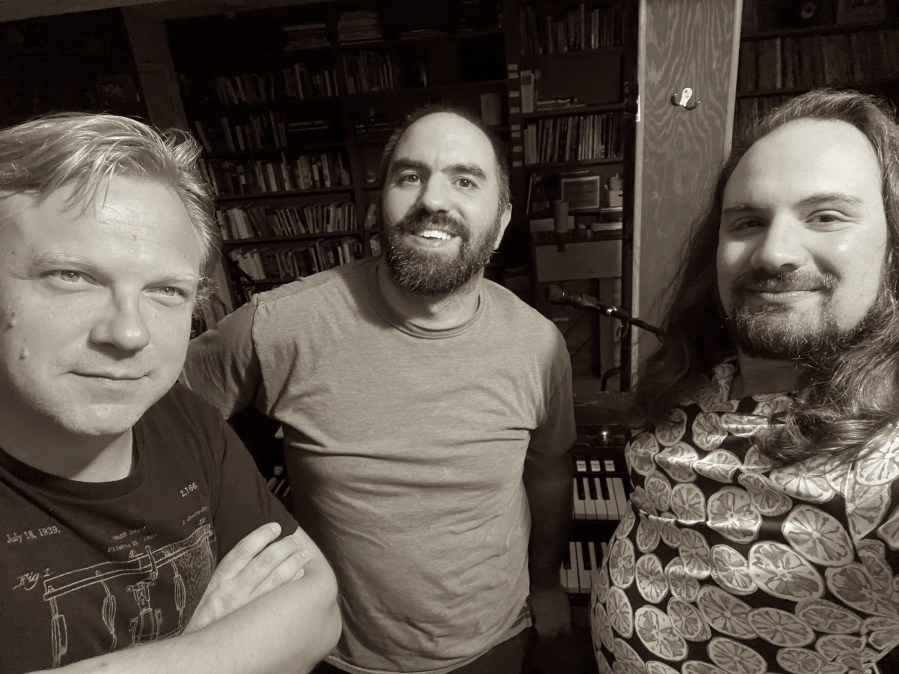
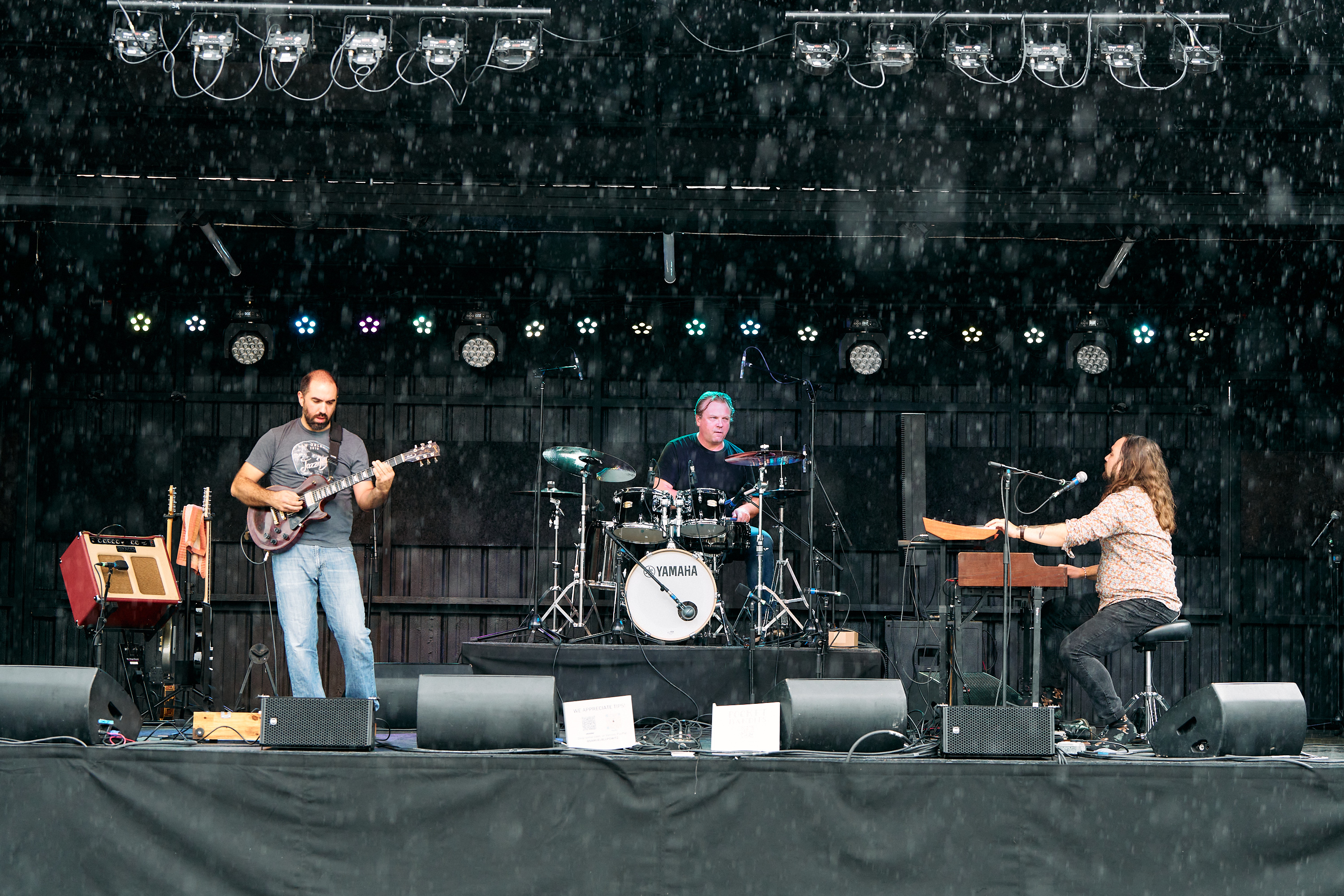
New York-based progressive fusion trio Pocket Bandits are on the verge of launching their full-length debut album titled Nine. The nine-tracker is full of adventurous, improvised, but also calculated musical elements that as a whole work splendidly well. The members of the band—Simon Bjarning (drums), Samuel B. Lupowitz (organ), and Joe Massa (guitars)—speak for Progarchy about the upcoming release, inspiration, influences, and more.
“Nine” is your debut album—what’s the story behind its creation, and why did you choose the title “Nine”?
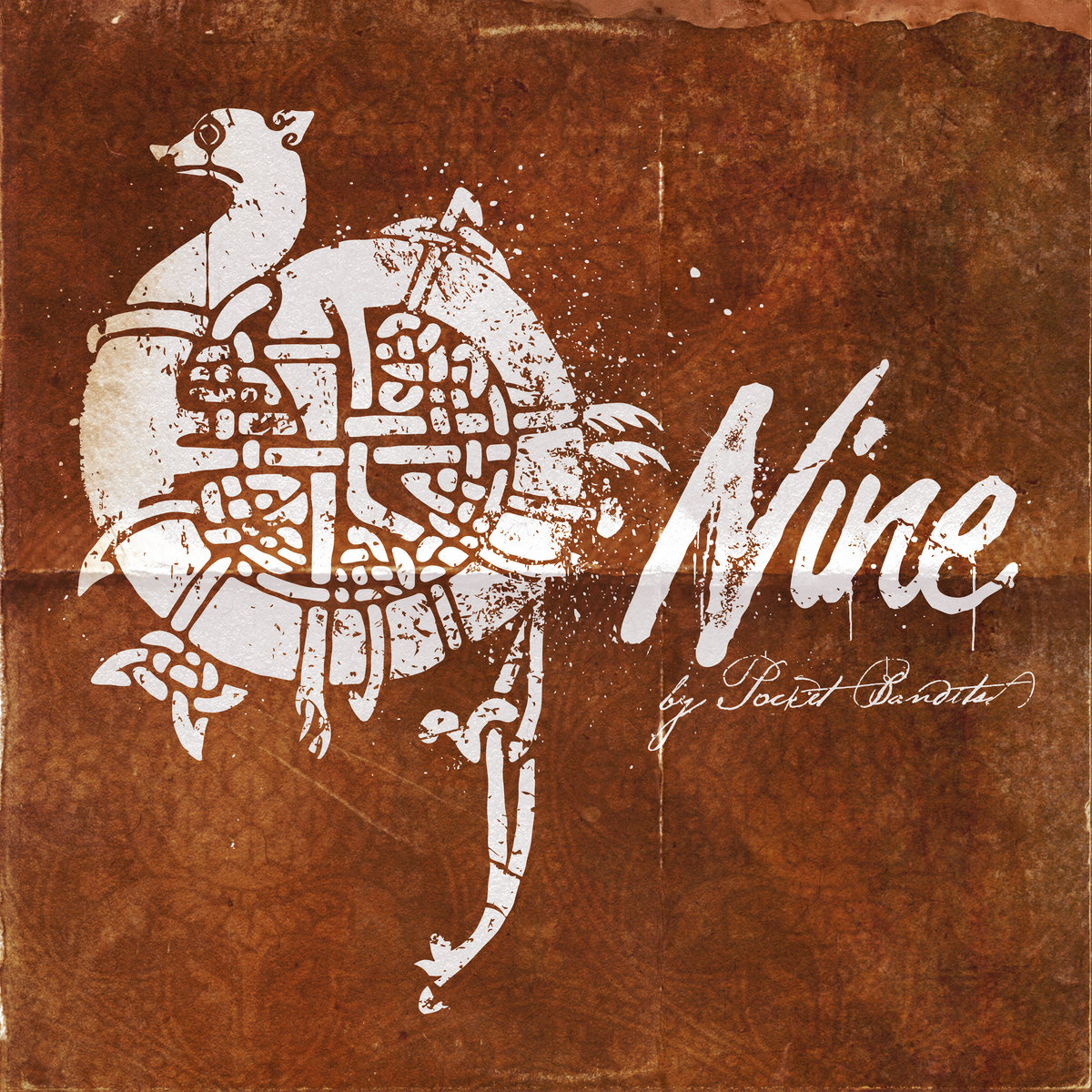
SAM: We were into the idea of doing a retro-sounding, not-quite-self-titled debut, something like With the Beatles or Ladies and Gentlemen: The Rolling Stones. I think Simon suggested By Pocket Bandits, and when we thought about what was by Pocket Bandits — an album? A bunch of songs? Nine songs! — we wound up with Nine by Pocket Bandits.
SIMON: We all have a love for the Beatles and since there are nine tracks on the album, we also decided to make a reference to “Revolution 9” from the White Album.
Your sound is described as a modern twist on the old-school organ trio. What inspired you to explore this format, and how do you make it your own?
SAM: One of my musical heroes, John Paul Jones from Led Zeppelin, once said he learned to cover bass parts while playing keyboards so he could switch instruments without having to worry about “some bass player” messing him up. I work as a keyboard player 90% of the time these days, but I love playing bass, and I was really inspired by the challenge and the liberation of covering both. Joe was the one who had the initial idea to put an organ trio together; he’s a big fan of Eric Krasno and Soulive, and Simon came into the fold with a real love of three-piece bands of any instrumentation. But I think early on any attempts to play “traditional” jazz organ trio music went by the wayside; we just kind of play and write what we like and make it work with this instrumentation, which winds up sounding pretty far from, say, Jimmy Smith or Delvon Lamarr.
Each of you brings a distinct musical background to Pocket Bandits. How do your individual experiences shape the band’s sound?
SAM: I think spending the majority of my musical life accompanying vocalists and writing lyrics has been a huge influence on how I approach playing in an instrumental ensemble. As much as we like to write complex, unexpected, intricate music, we also prioritize melody and arrangement. We want you to be able to sing and dance to our music as much as if there were vocals.
SIMON: We are very open to how each member plays, and we immediately explore our own sounds to be a good fit.
Can you walk us through the creative process for a song like “The Pocket Bandit” or “Second Drink”? Where do you start, and how do the tracks evolve?
SIMON: “The Pocket Bandit” was actually quite simple. I wrote a bass line – almost making the riff the melody. It’s a funny little tune and I had no idea what to call it so the working title became “The Pocket Bandit” and it stuck 🙂
SAM: As collaborative as the end results wind up being, all three of us are pretty self-sufficient as composers. Generally one of us will bring in a demo with the tune and arrangement (with at least rough examples of the full instrumentation). Once we get in a room together, our natural personalities tend to color in the black-and-white outline of the demo, even if the tune is mostly written already. Often one of us will start filling in melodies or extra hooks that become a crucial part of the song, but if you listened to Joe’s pandemic-era demo of Second Drink, most of what’s on the record is there, at least in an embryonic state. You’d miss a couple of things though — like, imagine “Come Together” without Paul McCartney’s bass part. It’s not the same tune, even though, technically, it is.
Simon, you’ve performed with everyone from Evanescence to symphony orchestras. How does your background in classical and rock influence your approach to drums in Pocket Bandits?
SIMON: Yeah, it’s been a fun and diverse ride for sure. Those gigs were Livenation gigs, and I performed with bands like Evanescence and others as a percussionist. The thing (one of many) I love about Pocket Bandits is that I’m kind of leaving the idea of genre behind. Of course, we’ll have approaches as we work on tunes, but most of the time, I’m just letting my ears guide my hands and feet.
I guess my background spoke louder years back, but as I’m getting older – in my case anyway – I’m becoming more my own player and actually liking what I do, haha. I grew up in Copenhagen, Denmark, and as it is over there as well as here, there’s a bit of pigeon holing going on in regards to being a jazzer or a rocker or a classical player. I’ve always been a little bothered by that, so maybe unintentionally I’ve never thought I was one type of player. I do, however, try to stay inspired, listen to my own sound, develop that, and discover new recordings or check out videos on YouTube, etc. I’m sure that there’s a pattern somewhere that reveals the true nature of my background, hahaha. Some days I listen more to heavier styles, some days it’s more jazz, and I have my classical periods as well.
Sam, as the Hammond organist and multi-tasker juggling basslines, melodies, and harmonies, how do you balance the demands of your role in the trio?
SAM: it’s been an exercise in balancing what comes naturally to me with how far I can push my chops. As an organist and as a bass player, I have strong opinions about what I would want each instrument to do on its own, and I will hit the woodshed until I’m able to execute those independent parts together. That said, the most important thing is that the music FEELS good. As much as I want my left hand (and foot) to be James Jamerson, and as much as I want my right hand to sound like Billy Preston or Cory Henry, it’s also been educational to learn that sometimes less is more. Being crafty and finding ways to play the two roles in a way that locks together rhythmically, rather than trying to integrate two independent parts, has made for some slicker arrangement choices that sit in the pocket better than when I’m trying to force it too much.
Joe, your electric guitar work on the album is described as vibrant and intense. Who are your biggest influences, and how do you approach your tone and phrasing?
JOE: Influences include but are certainly not limited to: Larry Carlton, George Harrison, John Frusciante, Eric Krasno, John Scofield, Andy Summers.
The biggest factor in approach is not having to account for a vocalist so it’s important to keep a balance between creating interesting and captivating melodies and making sure all the chord changes/harmonies are covered. Being an instrumental group also opens up some more options when it comes to composition as well, both from a structural and melodic standpoint and it’s a fun challenge to walk the balance of pushing the envelope while still trying to be as accessible as possible.
You’ve mentioned being inspired by bands like Soulive and Snarky Puppy. What elements of their music do you admire, and how do you incorporate those influences into your own compositions?
SIMON: Those guys are so good! The inspiration no 1:-). As a drummer, I use the energy and the jazzy and gospel-like elements to stay inspired. I pay attention to where Sam and Joe are going and I structure my parts around what they’re doing, leaving room for improv, in the same fashion as SP and Soulive.
SAM: We love complex music that makes you dance! These bands have chops and progressive ideas for days, but it’s always the groove that grabs your attention first.
The album closes with “The Sidler,” a jazzy and bombastic track. What was the inspiration for that piece, and how do you approach the challenge of ending an album with such a bold statement?
JOE: I honestly wrote this song with the intention of using it as an album closer. I had written the outro separately from the first part of the song and once I put the two sections together, it came out pretty seamlessly.
SAM: This was definitely the song we put the most extra studio production into — more layers of guitars, keyboards, and percussion than we have access to live as a three piece. Playing “Sidler” live has forced us to be really thoughtful about dynamics and textures, making sure we really let it build gradually and not peak too early. We certainly kept that concept in mind for the studio, but being able to build in extra parts and utilize some different instruments to expand the orchestral palette really helped us intensify the build.
Beyond your original compositions, you’re known for unique covers of artists ranging from The Beatles, Steely Dan to Super Mario Brothers. How do you choose which songs to reimagine, and what do you hope to bring to those renditions?
SIMON: My approach is usually “Hey, I like this tune. Should we cover it?” Nothing deeper than that on my end. We cover Life On Mars as well as Kid Charlemagne. Those are very far apart stylistically, but they have in common that they are really great tunes. That’s a big draw for us.
SAM: We just want to have fun! We love to choose songs that get a little “aha” from the audience, especially songs that land in an interesting way without lyrics or vocals. I think music from video games or movies or TV would be harder to integrate into a band with a singer, but the themes from Succession or Super Mario 64 are familiar in a different way than what might come up on a Spotify playlist. And I don’t think people generally expect three white guys around middle age to bust out contemporary pop tunes, and while our audiences have been very receptive to our more challenging music, I love to feel the lift from the audience when we hit the chorus of a Chappell Roan or Billie Eilish song. And sometimes our song choices are just about a power move. We can cover Kid Charlemagne because Joe can crush the guitar solo. We can bust out Kashmir because we can give it the weight and grandeur that it requires without it feeling like an underwhelming bar band version (and I don’t have to try to sing or dress like Robert Plant). We like to flex those muscles! We’re in a weird, challenging time for live music, and I think we all want to make sure we deliver freshness and surprise while still being inviting, rather than alienating.
How has the Central New York music scene shaped your journey as a band, and how do you see your music reaching audiences beyond the region?
SAM: Joe is born and raised in this area, his father is also a musician, so he knows this scene well. Simon and I both moved to this area from other parts of the world in the last decade or two, and I think we both love the opportunity and diversity of musicians and styles we’ve connected with. Pocket Bandits seems to fill a musical niche that’s different than a lot of other things going on in our area, but it’s also engaging and (to my surprise and delight) accessible to people stumbling across us at a bar. But part of the appeal of this project has been that it’s a little easier to pack up and go — we’ve all got families and extramusical commitments, but we all want to get out there and play for as many people as possible, and I’m hoping some jazz and progressive rock festivals, along with breweries and other small indie venues, will take to us too, as we begin to book gigs in support of Nine by Pocket Bandits.
Your live performances are clearly a big part of your identity. What do you think makes a Pocket Bandits show special and memorable for your audience?
SAM: I think it’s our chemistry, that we’re having a great time seeing where the music is going to take us. I think that joy is infectious. These guys make me play better, and I’m always as excited as anyone to see what’s going to happen when we get going!
SIMON: I think our focus on musical diversity and our striving towards virtuosity. And to put smiles on people’s faces. Positive energy is important to us.
The pandemic played a role in forming Pocket Bandits. How did that period of reflection and limitation influence the band’s vision and music?
SAM: Joe and I had been playing together in multiple bands nonstop for so many years, and I think the two of us were just dying to get back to playing together after this sudden, unplanned hard stop. With all the challenges around lockdown and people taking care of their families and the other life changes that came with Covid, something small and low maintenance (with no vocals, you don’t even need a PA system) made sense. It just felt more manageable to try for something more intimate than the seven-to-ten-piece bands with horns and a bunch of vocalists we’d been working in. And the downtime meant Simon was available, and we’d been admiring his playing in the region and hoping for a chance to work more closely with him.
But all that said, the stress and anxiety of that time did make it challenging for me to rise to the occasion of covering organ and bass on this very complex music. It was a couple of years of casually working on music as a trio before I felt I could get it together to really commit. After those first few variant waves were past us, we really hit the ground running with writing and gigging.
Funk, jazz, progressive rock—your music spans multiple genres. How do you strike a balance between these influences while staying true to your sound?
SAM: Honestly, I think it’s just what comes out when we play! We’re all heavily inspired by those genres in different ways, and it all becomes part of the stew. It feels authentic because it is authentic — not a lot of thought about “is this too jazzy, is this too aggressive.” It’s just what we like and what we do!
What’s next for Pocket Bandits after the release of “Nine”? Are there plans for touring, new music, or other projects in the works?
SAM: We’re not looking to hit the road for months at a time, but we’re trying to travel around the northeast US and beyond as much as we can, anywhere that will have us. It’s always a challenge getting a new ensemble off the ground, but with this album out in the world, we’re really looking forward to playing for as many people in as many places as possible. And we’re always writing, so I don’t think it will be very long until the next record is underway!
Pocket Bandits’ Nine is out on January 24, and is available for pre-order on Bandcamp. For more about Pocket Bandits, visit their website. Follow the band on Facebook and Instagram.
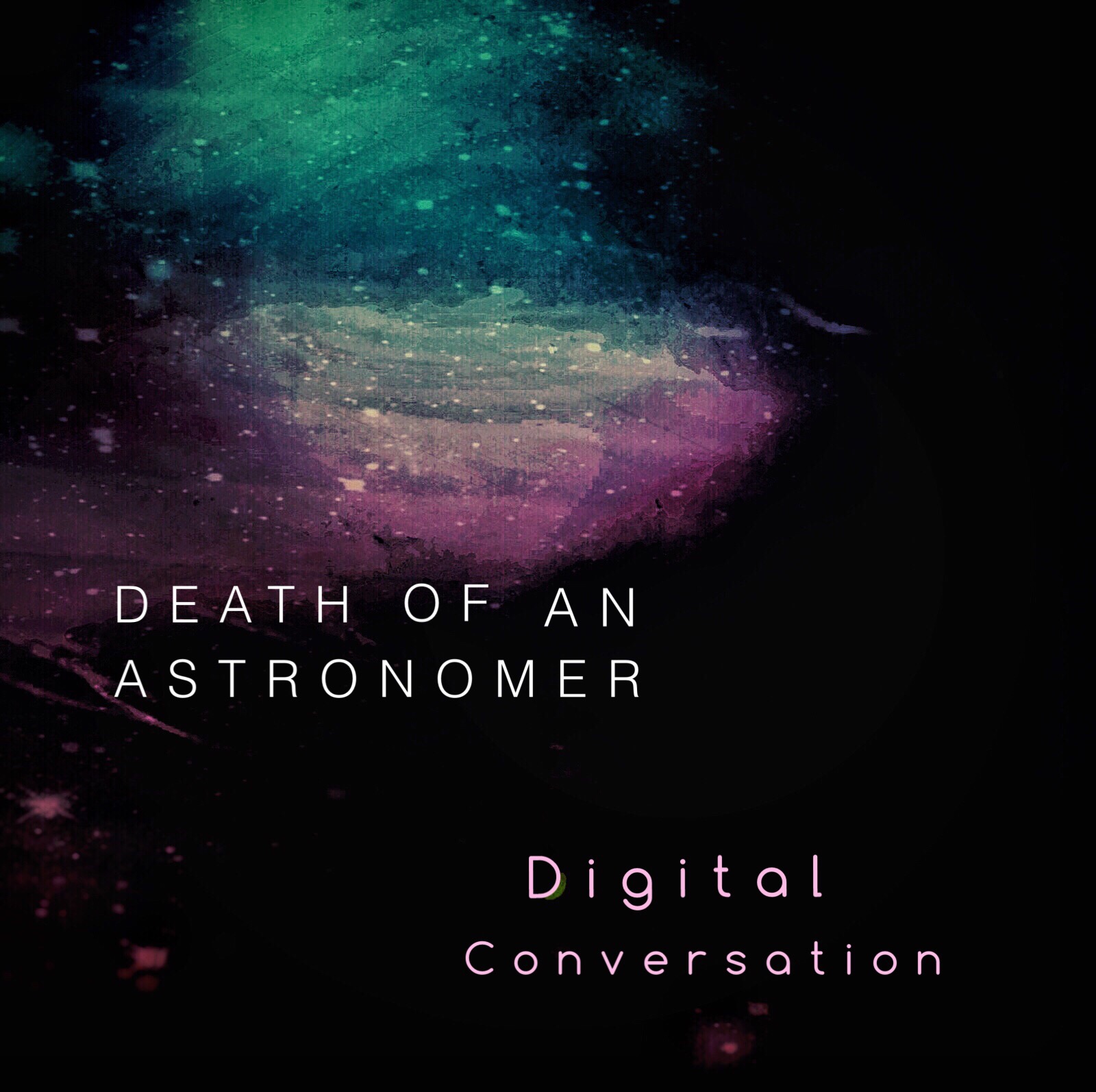
Sometimes, metal guys want to play jazz fusion, and that is something that Los Angeles based keyboardist, guitarist and composer Jairo Estrada does with his project Death is an Astronomer on the recently released single “Digital Conversation.”
Estrada offers up striking, highly progressive metallic fusion music that never bores or ventures too far off into aimless territory. Highly complex yet flowing, “Digital Conversation” sees weaving guitar and bass melodies twisting and turning around each other, the drums, following along every step of the way but keeping it all grounded. Arrangements just grab hold of you and take you on a mind altering journey. Nothing here is overly heavy, but there is just enough crunch in the guitar to keep this in the metal camp, yet when Estrada goes for some soaring, thought provoking chops, it’s classic jazz fusion/prog rock all the way.
If you like adventurous, classy instrumental metal fusion, Death of an Astronomer’s debut single is a something you need to seek out immediately. But to make it easy, here is where you can get it.


 Progarchy