Progressive-rock and jazz-rock often share a common bond, yet many artists either tilt the scale towards technical gymnastics or focus on strong song-form and fine-tune the balance of justice with judicious soloing spots. “Unsafe Places” marks the first album by Italian guitarist and songwriter Emanuele Bodo, who gathered a line-up of highly skilled musicians to help him with his musical vision.
The musicians uphold a well-defined, group-centric line of attack, consisting of foot-stomping fuzoid rockers, often tempered by Bodo’s sonorous phrasings. His zinging crunch chords and soaring single note leads are contrasted by keyboardist Davide Cristofoli’s fluidly streaming lines. Moreover, the band integrates catchy themes into these impacting works. Thankfully, the group attains an equilibrium, where dynamics are acutely employed among the swirling interludes and off-kilter time signatures that instill a sense of adventure into the grand mix.
A portion of their sound is designed with brief nods to the days of progressive-rock yore, with a manifesto that transmits a hip group-centric disposition, tinged with modernist tendencies. Overall, the material reigns supreme, and it’s easy to discern that this is not an album that was recklessly slapped together. Emanuele Bodo’s self-titled recording debut is a persuasive one, indeed. Get if from here.
Human Brain is a project by composer and guitarist Adam Green who has been teasing his upcoming debut album with the release of “Spaces” single. In an interview for Progarchy, Adam talks about the project, and he sheds light on the album.
Hey Adam! Thanks for responding to this interview. How have you been lately?
Been great, thanks!
How might you introduce yourselves to new potential listeners?
I like to write for everyone with multiple musical tastes. If you like super hard-hitting, energetic and emotional music, you’ll love Human Brain!
What inspired the name of the project — Human Brain?
Brain dump basically. I have quite a bit of emotion and passion flowing through my brain on a daily basis that I wanted to release into my writing.
How did Human Brain initially form?
Human Brain essentially started about 3 years ago when I began getting more serious about my writing in general. I decided it was time to put an official name to it and yearned for the fulfillment of it being heard by others. I’ve been inspired by many of the great metal artists on YouTube and wanted to get my brand out there in a similar fashion.
You are about to release a debut album. What can you tell me about it? Where did the inspiration for it come from and how did you go about the whole process of writing and recording it?
10 songs spanning multiple genres including everything from alternative rock to metal. Inspiration for the album basically came from the answer above for what inspired the project as a whole.
What can be expected from the upcoming album? Would you say the released single for “Spaces” is an accurate sample?
Yes, Spaces is for sure though I will say every song has it’s own thing going on. Some are more mellow than others and many different guitars were used throughout.
What’s your songwriting process like?
My typical approach is to flesh out a track that incorporates all of the musical styles I love most (metal, rock, progressive) while taking the listener on a roller coaster of a ride with meaningful changes throughout. I wrote all of the parts in my head and laid them down in iPhone voice memos initially. From there, I tracked everything in Logic using my Kemper Profiler Power Rack, Apollo Twin and Toontrack.
What are your ultimate hopes for Human Brain?
For the music to be heard and resonate with people across the world on multiple levels just like it does for me.
Do you have any bigger plans for the future?
TV, Film, Label with some gigging sprinkled in.
The last words are yours.
I’m beyond excited to give everyone a glimpse inside my Human Brain!
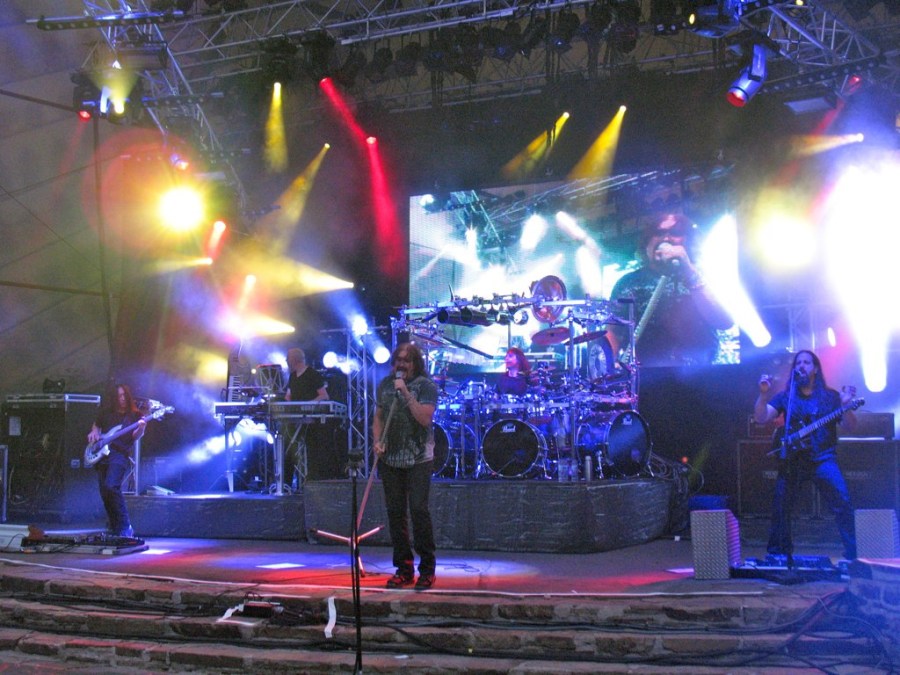
I’m interrupting a summer (now gone) of digging deep into the recently-released Dave Matthews Band album, the two excellent Southern Empire albums (do pick them up), and my autumnal tradition of listening to all that is Big Big Train to report what’s been making the rounds on this midterm Election Day in America: Prog metal kings Dream Theater have announced a new album, “Distance Over Time,” which will be released 22 February, 2019.
The band will then hit the road for a North American tour starting in March, and while concertgoers will no doubt be treated to newly-released material from “DoT” (or, as a nod to Rush, should it be “d/t?”), the highlight of the tour will no doubt be the news of the band celebrating 20 years of their landmark album, “Metropolis Part 2: Scenes From A Memory.”
A short teaser from the forthcoming album, which was produced by guitarist John Petrucci and with sweet artwork by Hugh Syme, can be heard here:
Here are the “Distance Over Time” tour dates for America and Canada. The band also plans to follow the U.S. dates with a show in Mexico City in early May.
March 2019
20 – San Diego, CA
21 – Los Angeles, CA
22 – Los Angeles, CA
24 – San Francisco, CA
26 – Denver, CO
28 – St. Paul, MN
29 – Chicago, IL
31 – Milwaukee, WI
April 2019
2 – Detroit, MI
4 – Toronto, Ont.
5 – Montreal, Que.
6 – Quebec City, Que.
8 – Boston, MA
9 – Oakdale, CT
10 – Red Bank, NJ
12 – New York, NY
13 – Upper Darby, PA
15 – Washington, D.C.
17 – Nashville, TN
22 – Charlotte, NC
23 – Atlanta, GA
24 – Orlando, FL
26 – St. Petersburg, FL
27 – Jacksonville, FL
29 – Dallas, TX
30 – Houston, TX
May 2019
1 – Austin, TX
While I initially gave a solid review of their previous release, “The Astonishing,” I’ve since given it few listens when compared to the albums that came before it, especially the song-oriented releases (rather than concept albums). I don’t know that any information about the tracks on “Distance Over Time” has been made public, but I’m fairly certain that given the scope of “The Astonishing,” DT would likely return to a song-oriented effort on the next one, so I’m very much looking forward to hearing what’s next from the gang.
Indian prog rockers Rainburn return on November 7th with the release of a new album “Insignify” (read our review here). In an interview for Progarchy, singer and guitarist Vats Iyengar tells us about the meaning behind the band’s name, their working process, new songs, and more.
Hello! Thanks for responding to this interview. How have you guys been lately?
Thank you for hosting us! We’ve been good. Gearing up for the album release, and also starting rehearsals for the tour soon.
How might you introduce yourselves to new potential listeners?
I’d say our music covers a lot of ground and touches upon many different styles without sounding forced or gimmicky. We also have a nice mix of the old and the new, some modern music and some classic influences. If you like emotionally-heavy music that is creative and diverse, you should check us out.
What inspired the name of the band — Rainburn?
We wanted an oxymoron, to suggest that we cover a wide spectrum of music, from soft to heavy, moments of light and darkness – and everything in-between – in our music, so we went with this name. Our drummer, Praveen, came up with the name. It’s a pretty established tradition as far as band names go. Like Black Sabbath, for example.
How did Rainburn initially form as a creative unit?
We had a keyboard player in the beginning and only one guitarist (me). It was actually his idea that we form a band together. We added a bassist and a drummer soon after, played quite a few gigs with that lineup, even recorded a couple of demos. But as we started finding our sound, we decided two guitars worked better.
You are about to release a new album titled “Insignify.” Where did the inspiration for it come from and how did you go about the whole process of writing and recording it?
‘Insignify’ has been a two-and-a-half-year labour of love that started as a seed in my head. It took a long time to take shape and form fully but once it did, the music was created very quickly, because the concept was so clear and detailed. I think it’d take a few listens, at least, to fully digest and “get” the album. The record was mixed by Thejus Nair, a brilliant young engineer who operates Eleven Gauge Recordings in Bangalore, our hometown. Mastering was done by Tony Lindgren at Sweden’s Fascination Street Studios, where so much good progressive music comes out of these days.
What can be expected from the upcoming album? Would you say the released singles (“Suicide Note” and “Mirrors”) are accurate samples?
They’re fairly good samplers but as to whether they’re completely representative of the album – not by a long way. Apart from what’s in those songs, we have moments of funk, fusion, a bit of jazz, even a vocal fugue on the record. No two songs really sound alike.
What’s your songwriting process like?
It’s usually me writing and making demos at home that I then present to the band, and they tailor or modify their parts according to their style. But for some stuff, we changed the formula. Like, ‘Someone New’ started with Praveen composing an entire drum track that I then wrote riffs and melodies over. That was a very interesting way to write!
What are your ultimate hopes for Rainburn as a band?
To be an internationally touring band, to make some great records so we can leave a musical legacy behind and – the holy grail – to be able to sustain ourselves, financially, with our music.
Do you have any bigger plans for the future?
Well, we’ll be going on a national tour early next year – our second one. And hope to play some gigs outside India next year as well.
The last words are yours.
To your readers – If you’ve somehow managed to read this far, I hope you’ll check out our album when it’s out (November 7th). Listen to the two singles for a taste, and also to the snippets we’ve been posting on our Facebook page of various songs from the record.
To Progarchy – thank you for supporting our music.
Below write-up is eleven years old, and slightly edited for my present sensibilities.But the album is still timeless.
Opeth’s ‘Still Life’ – that perfect arrangement of death, progression and blues. Always listen to this record uninterrupted from “The Moor” to “White Cluster”, the band simply extends the boundaries of progressive death. There is always that one album which defines the artist and forms the cornerstone of their whole music. But with “Still Life”, Opeth has pushed their own creativity to insane heights — of near impossible emulation.
Here the band actually transcend the normal decorum of mathematics, high (means progressive) and low (means death metal) mixed together isn’t a big nothing. Akerfeldt must have been simultaneously strung up on Alcohol and grass when he wrote ‘Still Life’. Mind you, the record doesn’t hit you hard, instead it methodically seeps into every iota of musical nerve and gets ingrained there. Been listening to this band for over fifteen years and can convincingly claim this is the pinnacle of their prog death years.
“Still Life” has an ambiance which perfectly blends contrasting elements — those dank deathly growls, progressive riffs, bluesy folk acoustic melody, and clean vocals. It’s a sort of a real life musical analogy to Speedball – in other words, these songs simultaneously stimulates and depresses your brain. The beauty of this torment is simply beyond comprehension.
Lyrics are mostly grim, and when combined with the growls create an ambiance of a cold winter morning – probably spent in retrospection about lost life. It might be illegal to make music this inscrutable; it’s not easy when you are unable to comprehend how melancholy “Benighted” can effortlessly transition into the aggressive “Moonlapse Vertigo”, and end in a mournfully poetic “Face Of Melinda”. When the guitar slowly fades, you wonder if it can get any better.
Traces of early black metal are still felt in the last two tracks; otherwise the record sticks to good progressive death and progressive metal. One of the high points is the sheer quality of riffs that literally form the backbone. Compared to their early works, Still Life has lot more clean vocals and acoustic guitar, and integrates even more of a number of transitions between the textures they usually exhibit. This was also a quantum leap in terms of production quality and can perfectly satiate the musical appetite of any progressive metal fanatic.
Could never confront the idea of reviewing ‘Still Life’; no vocabulary prowess can do justice to such a complex form of musical expression. A rather obvious infatuation with this music might just heave me into a cavalcade of clichés, which I have hopefully refrained from ’til now.
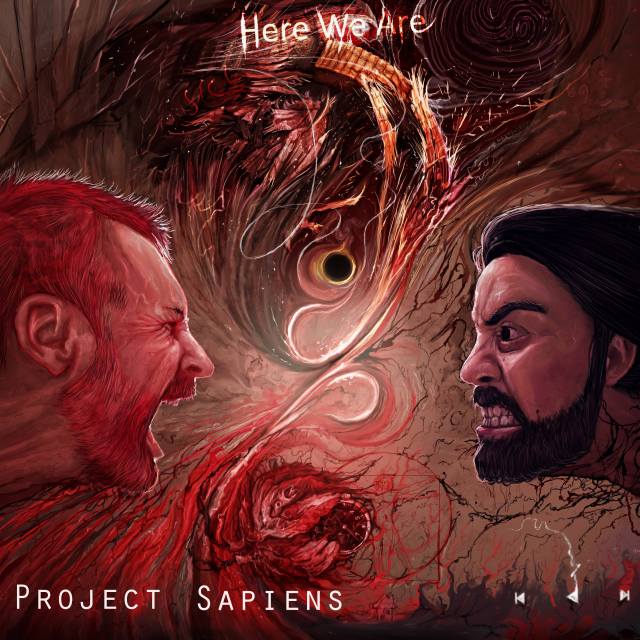
“Here We Are” is a debut EP release from a Copenhagen-based alternative/progressive metal act Project Sapiens, comprised of five songs.
Kicking off with the title track, “Here We Are” hints its diversity. Elements ranging from hard rock, heavy metal to Opeth-influenced Prog Metal and alternative motifs are included.
There is definitely potential here, and “Uprising” and “My Prison Cell” prove that. The transition between different parts is rather smooth. “Anger” starts with a very nice melody provided by a clean guitar of Poul Jakobsen and clean vocals by Mads Rahbaek. The guitar riffs that can be heard on this one, and throughout the record, are another highlight and an element that makes difference. Closing “Keepers of the Realm” starts very atmospherically, but it doesn’t take too long to become a hybrid child of Alice in Chains, Soundgarden and Porcupine Tree.
What is important here is that Project Sapiens made a brave step to produce a release that is stylistically very different, and with the experience called “Here We Are” I’m sure that they will take the best out of it and use that knowledge on their next release.
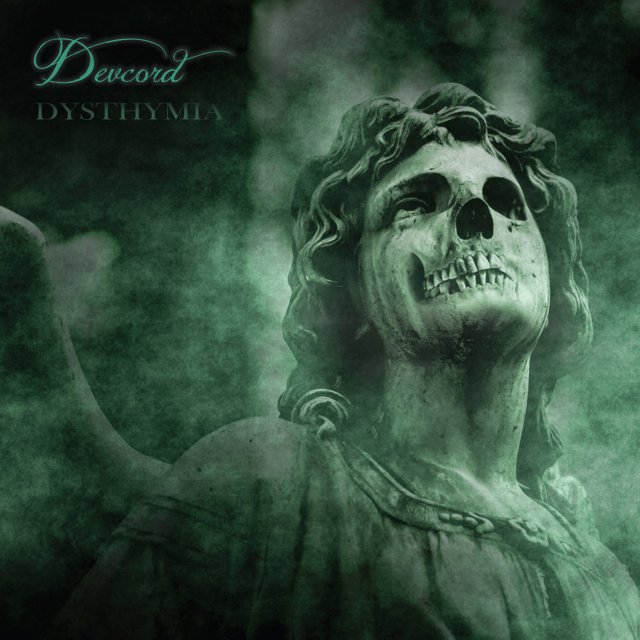
Dysthymia, the debut studio album from Spillern, Austria’s one-man band Devcord, is a roller coaster of aural delight, distress, and progressive imagery that is bound to be a career defining moment.
The nuanced atmospheres and melodic sensibilities that composer Peter Royburger brings to each of the nine songs on Dysthymia are nothing short of brilliant. As the lines blur between romantic-classical period music, progressive metal, and almost ‘70s style prog rock it becomes apparent that Dysthymia is one of the most progressively challenging albums to be released in 2018, so far.
Songs like the opening “The Mortician,” which has a dark, eerie intro and powerful guitar riffs that evolve into orchestral stabs of Royburger’s vocals, demonstrate the ease at which Devcord slips in and out of catchy hooks and technically sound orchestral song writing.
The discourse between the dueling guitars — acoustic and electric — places the listener into perfect attunement with the melodies and growl vocals. Dysthymia sounds like chaos tamed and controlled. This works to the project’s advantage on album highlights — the title track and especially “Reaper’s Helpers,” where Royburger is structurally coherent enough to be catchy yet throw enough curve balls to keep you invested for the full 10+ minutes. “Fade” and “Jerk Pitch Rape” that close the record are impressive on all fronts, but the instrumentation on these two pieces is splendid.
It is not only technically challenging and perfectly executed as a piece of musical literature, but it is also an album that demands the listener’s attention and ability to think on a multitude of spectrums they may not be used to. Overall, Dysthymia is an album that takes the listener on a cerebral journey through many mysterious and technically awe-inspiring landscapes that not so many groups are able to achieve.
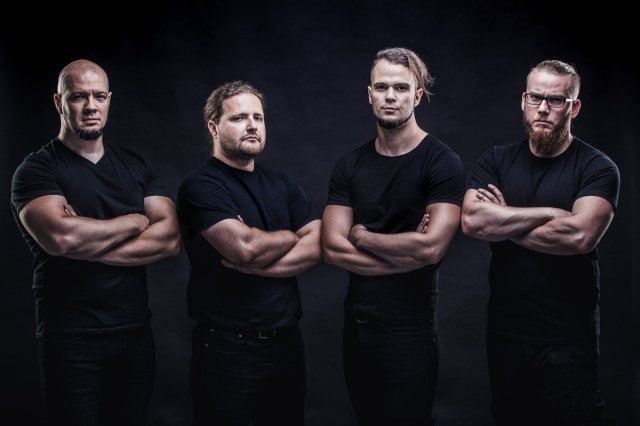
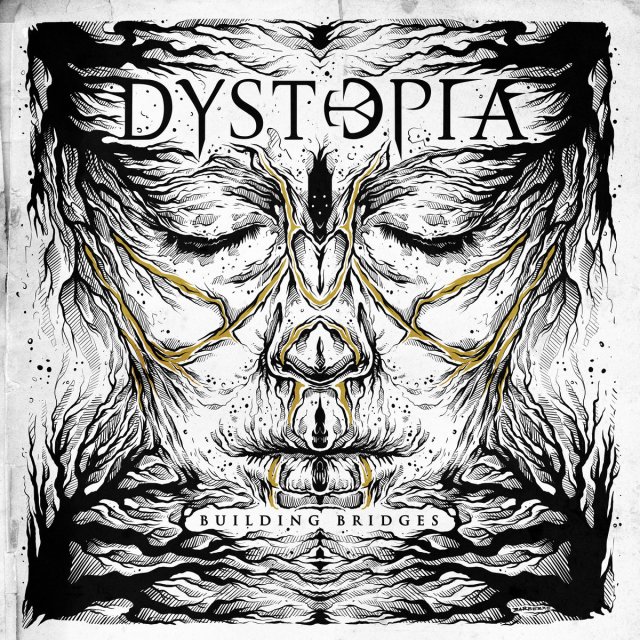
Hungarian quartet Dystopia are here to assault your senses with their unique mixture of heavy, modern and groove metal. With some obvious influences from Pantera, Lamb of God, and Gojira, Dystopia was formed in 2004. With two full-length albums under their belt, Dystopia is back once again and excited to launch their third full-length album, Building Bridges which was released on July 12, 2018.
It’s the snarling groove that first gains the attention on Dystopia’s beast. “Free-Fall” has some meaty riffs and a deceptive level of groove running through it. It’s an opener that makes a hell of a statement.
Breathing fire and brimstone, Dystopia smash their way through track after track slipping effortlessly through ferocious modern metal, alternative and classic flourishes of traditional heavy metal. An album that surprises as much as it delights.
For most of the album’s run it does a great job of keeping your attention. Anytime the mind does begin to wander, Dystopa stamp hard on feet to get all attention back on them. Those who are willing to allow their musical perceptions be challenged will be heavily rewarded, and will most certainly regard Building Bridges as a truly special album.
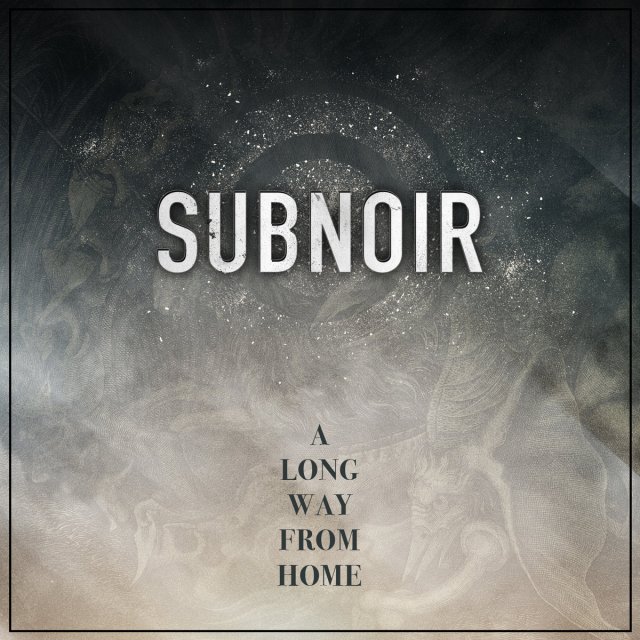
Prejudice. It’s something all of us have. As a product of human error, all of us sometimes unfairly judge based off stereotypes and predetermined opinions, musical or not. I have always had a prominent discrimination against something many people love. That something is metal music. My opinion on metal music was harsh and unfair, quickly dismissing it as shallow and insignificant. To me, metal always consisted of repeated chugging chords and strange animal noises replacing actual singing, with cheesy and soft sections interspersed. I thought of metal as a self-indulgent form of music, that served only to please the ostentatious and overblown bands and their ridiculously loyal fans. It was a brutal criticism of a genre I didn’t know well at all, and it served only to damage my listening experience. The worst part was, I believed myself for the longest time. That is, until I listened to Subnoir’s debut masterpiece A Long Way From Home. Rarely can a single album give you a completely different outlook on an entire genre, but the album did it, and if I have one regret about it, it’s not listening to it sooner.
What makes ALWFH differ from other metal albums A.D. is that it’s simply a way in for anybody who doesn’t warm to metal easily. It effortlessly mixes elements of indie rock, sludge metal, post-rock, progressive, and even ambient into its own unique hybridization of genres. However, it’s still recognizable as metal (and some damn good metal at that): its rich and heavy chords and growling vocals are staples of the genre done one better, and its unconventional song structure recalls progressive metal bands such as Opeth or even Mastodon. However, Subnoir remember something so many metal bands seem to forget: to make their music beautiful. When not pounding out chords so rich they seem tangible, the band are creating softly meandering interludes that are nothing short of gorgeous (if in a subtly menacing way).
In addition to improving on already-established standards of metal, Subnoir constantly find new ways to innovate and expand the genre’s depths. The album is “progressive” in every sense of the word. Subnoir also constantly show restraint on the album; instead of taking the “easy way out” and constantly letting the songs devolve into sludgy jam sessions, the band choose to take longer musical paths and let the songs build themselves to beautiful apexes. The band constantly discard conventional structure in favor of an infinitely more interesting way of building their songs: sometimes subtly disquieting passages will suddenly give way to triumphantly blasting guitar chords, or the band will introduce an unexpected riff, or even give ad-lib nods to other genres. Whatever it is they end up doing, the band always excite and are never predictable, giving the album an impulsive edge.
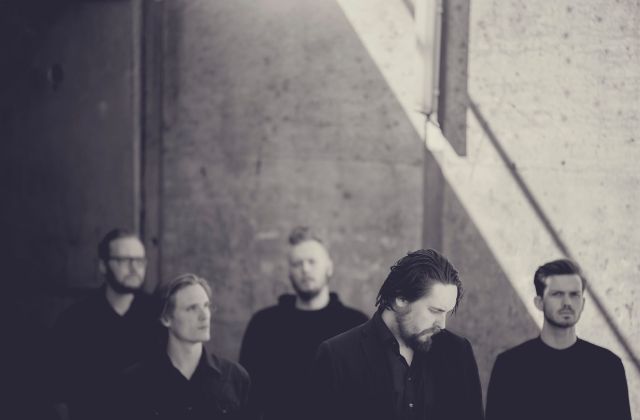
While they show brilliance in the songwriting category, the band’s members also make it known that they sure as hell know what they’re doing with their instruments. Frontman Kenneth Mellum is the best of both worlds: his singing has a gruff yet affecting edge, while his growling never feels forced or laughably indulgent, like so many others do. His voice fits perfectly with the astoundingly rich chords played on the guitars, and, both his voice and the guitars acting as instruments, the pair is one you won’t likely see bettered in almost any metal band. Subnoir excel in other instrumental fields as well: the drumming is consistently strong, while the atmospheric tones that complement the quieter sections are always placed to near-perfection.
A Long Way From Home is not an album that can be taken apart track-by-track. While each track makes for a fascinating individual listen, the album is best taken as a whole. The length of the album’s songs (the album spans eight songs and 50 minutes) may seem a little daunting for the uninitiated, but the album is easily welcoming for anyone willing to give it their undivided attention. The album is a seductive experience, trading in structure and melody for overall sound and tone. It may not be the most accessible metal album on the market, but it should have any listener quickly scrambling for their future works. I know I will.
Until then support Subnoir by checking out A Long Way From Home on Bandcamp.









 Progarchy

