Gazpacho’s Molok: Norway’s Latest Mystery

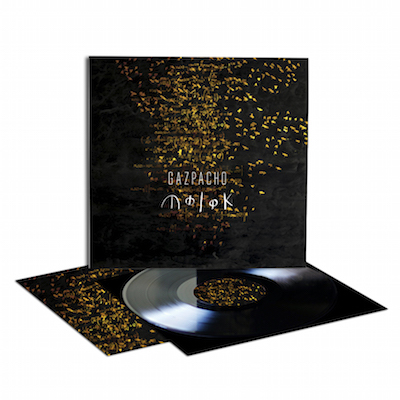
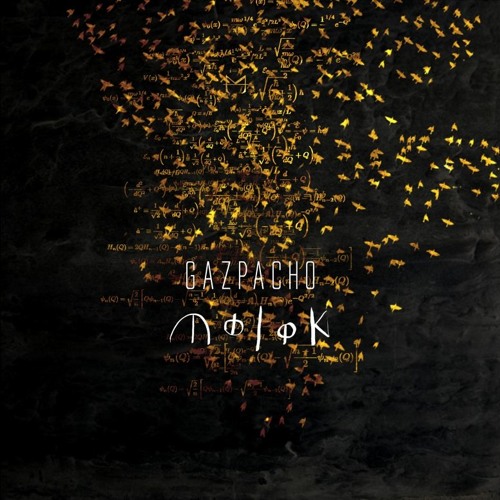
Gazpacho's latest album, MOLOK (Kscope, 2015).
Gazpacho’s latest album, MOLOK (Kscope, 2015).

Gazpacho, MOLOK (Kscope, 2015).

Every time I delve into a new Gazpacho album, I fail to understand at what level I should comprehend and analyze the lyrics.  Are they meant literally or symbolically?  Is the band writing poetry or recording a nightmare?  As always, Gazpacho presents puzzles, usually quite Gnostic, that might or might not sort themselves out after many listens.  The latest album, Molok, is not only no different in this respect than their previous albums, but it is also much more frustrating to comprehend.

Molok, of course, is neither a good god nor a good guy.  He’s a terror and a horror to all that is decent and civilized.

In English, his name is generally rendered as Moloch, and he is best remembered in the western tradition (through the Jews) as the god who demands the blood sacrifice of children.  He is, simply put, a demon and an abomination.  Across the centuries, almost no one has defended Moloch as anything other than a horror.

In the 1920s, especially, he made several cultural appearances.  In Willa Cather’s stunning American novel, DEATH COMES FOR THE ARCHBISHOP, Archbishop Latour retches upon finding the cave in which the natives once threw their children to the gods.

In that same decade, film director Fritz Lang depicted Moloch as the modern machine of industrialization—raping and pillaging life, while demanding conformity in all things.

In the 20s and 30s, many in the West would associate Moloch with the machines being erected in fascist Italy, German, Portugal, Poland, and Austria.

Interestingly, Gazpacho sets their album in 1920.

After listening to the disc close to twenty times and delving deeply into the lyrics, I still don’t know what the album is about.  When asked by TeamRock (Prog and Classic Rock), the keyboardist answered:

Molok is about a man that, sometime around 1920, decides that wherever anyone worships a God, they always seem to be worshipping stone in some form. Whether it’s a grand cathedral, the stone in Mecca or Stonehenge, God seems to have been chased by his worshipers into stone, never to return.  This harkens back to Norwegian folk myths, where, if a troll was exposed to sunlight, it would turn to stone. But it also reflects the way God has been incommunicado for a very long time.

I get the second part of the statement, but the first part baffles me.  Indeed, it begs more questions than it answers.

I find it hard to believe that a band as seemingly humane and dignified as Gazpacho would ever have anything positive to state about an abomination or a fascist.  Indeed, such an interpretation flies in the face of everything that seems true about the band.

Presuming, then, that Gazpacho is not promoting any form of fascism or an abomination, I find myself scratching my head.  What on God’s green earth are they talking about?

The lyrics refer to two important figures in the Western tradition, the pre-Socratic philosopher, Zeno (not the Stoic one of later centuries), and the Hessian-Anglo composer and astronomer, William Herschel.

I’m no closer to an answer.

I first came across the Norwegian art rock band around 2007 when the band released its magnum opus, NIGHT.  Since then, the band has never NOT taken chances.  Importantly, as they’ve explored the mystical in their lyrics, they’ve successfully incorporated a variety of folk music and folk instruments into their rock.  As far as I know, they rarely promote themselves as art rock rather than prog.  This is fine, of course, and it applies.  Gazpacho is nothing if not arty.

The new album, MOLOK, is a real treat.  As I admitted, I’m still not sure what the story is.  But, in no way has this lessened my enjoyment of the album.  I’ll keep exploring, as I’m bound and determined to figure this thing out.  Until then. . . any thoughts are more than welcomed.
RochaNews: Gazpacho’s Latest, MOLOK

A review copy of the latest Gazpacho showed up about three or four days ago, and I’ve been listening to it, over and over again.  My first thought: what is this?  My second thought: wow, this is really subtle.  My third thought: there’s something really profound going on here.  My fourth (and most recent) thought: this is freaking incredible.  I still need to listen with headphones, but my thoughts (collectively) after about five listens–MOLOK is a thing of intense beauty, the best Gazpacho has made since MISSA ANTROPOS.  More to come. . . .

Molok.  In English, Moloch, a king who demands the sacrifice of children.
Molok. In English, Moloch, a king who demands the sacrifice of children.

GAZPACHO TO RELEASE NEW ALBUM “MOLOK” THIS WEEK ON KSCOPE

First single “Know Your Time” streaming online

NORWAY – Norwegian art-rock progressive outfit Gazpacho will release its brand new studio album Molok through Kscope this Friday, October 23. Molok can be pre-ordered on CD and LP via the Kscope web-store at: www.kscopemusic.com/store. The CD version will feature an additional instrumental track “Algorithm.”

The first single, “Know Your Time,” is streaming on Soundcloud at: https://soundcloud.com/kscopemusic/gazpacho-know-your-time-taken-from-new-studio-album-molok/s-dBSqz.

1. Park Bench

2. The Master’s Voice

3. Bela Kiss

4. Know Your Time

5. Choir of Ancestors

6. ABC

7. Algorithm

8. Alarm

9. Molok Rising

Molok, the follow up to the acclaimed 2014 album Demon, sees the band continue to push the boundaries for creating the most complicated and strangest concepts for a record while simultaneously becoming the first band ever to actively try to destroy the universe with an album. A small code that sounds like a strange noise at the end of the album will cause the correction software that runs in all CD players to generate a random number every time the CD is played. If that number should correspond to the actual position of all electrons in the universe then technically the universe could be destroyed.

Dr. Adam Washington from the University of Sheffield confirms that this is science fact rather than fiction: “The random signal produced by the end of the disk contains enough bits of information to express a measurement of the total number of fundamental particles present in the universe. If the noise actually contained such a measurement, and that measurement was performed rapidly enough, the universe’s total particle count could be fixed under the Quantum Zeno effect. Locking the total particle count would prevent the pair production that forms a fundamental part of the decay of black holes. Without such decay forces, black holes would remain stable forever, without the need for nearby matter or the cosmic microwave background to keep them fed. This would greatly hasten the practical end of the universe.”

The band further commented: “If it can be destroyed by such minute creatures within it, if it is just a chemical reaction, then does it have any spiritual value? In this scenario there is no good or bad, just an absence of meaning.”

Across the album there are religious themes going head to head with modern day new science ideas and theories, Gazpacho’s Thomas Andersen states, “the album itself is about a man that sometime around 1920 decides that wherever anyone worships a God they always seem to be worshipping stone in some form. Whether it is a grand cathedral, the stone in Mecca or Stonehenge. God seems to have been chased by his worshipers into stone never to return. This harkens back to Norwegian folk myths where if a troll was exposed to sunlight it would turn to stone but it also reflects the way God has been incommunicado for a very long time.”

The band goes on to say: “In a mechanistic view of the universe all events in the universe are a consequence of a previous event. This means that with enough information you should be able to calculate the past and the future and this is what he does. He names the machine ‘Molok’ after the biblical demon into whose jaws children were sacrificed because his machine crunches numbers. On solstice day he starts the machine and it quickly gains some form of intelligence as it races through history undergoing its own evolution.”

Throughout Molok Gazpacho focuses on the idea that without God/a god to guide us, humanity is unsure of the meaning of life, that while we attempt to fill the void with other things we’ve still not found the answer; without a master to lean on we are very much alone in this universe.

On the album Gazpacho makes a direct connection with history. Norwegian music archaeologist Gjermund Kolltveit appears on the song “Molok Rising,” playing his reconstruction of stone-age instruments with an educated guess at what the early songs of worship must have sounded like. This includes small stones, moose jaws and an assortment of flutes and stringed instruments. He also plays the Skåra stone, a singing stone which has a strong possibility of having been in use since the last ice age ended 10,000 years ago. Technically this means that the album uses the oldest original instrument ever recorded on an album.

The band is also joined by world-renowned Norwegian accordion player Stian Carstensen who is a central member of Balkan-jazz orchestra Farmers Market.

Stay tuned for more information on Gazpacho and Molok, out this week on Kscope.

-###-

Gazpacho online…

www.kscopemusic.com/gazpacho

www.gazpachoworld.com

https://www.facebook.com/Gazpacho.Official.BandPage

Coheed and Cambria: Beyond the Wars

Coheed and Cambria, THE COLOR BEFORE THE SUN (2015).

The Amory Wars have quieted into a cease fire with the latest album.

Granted, I can’t answer the perennial question so many of us ask: are they prog or not?  I really have no idea, and I’m not sure what they’d say about themselves.  Regardless, Coheed and Cambria are always artful, intense, and professional (at least in the music, if not necessarily in the lyrics).  Regardless, they produce very progressive rock, even if they don’t consider themselves apart of the prog fraternity.

The latest album—THE COLOR BEFORE THE SUN—is the band’s first full-length studio album not to fit into their larger mythology, THE AMORY WARS.  Of course, they’ve produced a number of songs not related to their larger story—such as songs about the U.S. Supreme Court (no, I’m not joking—it’s quite humorous) and about Batman (again, not joking—but this is the first album to dare not to continue their own science fiction epic.

The end result?  It’s quite good.  Definitely, the album rocks.  Imagine Smashing Pumpkins taken to 11, and you’d have Coheed and Cambria’s THE COLOR BEFORE THE SUN.  I must admit, I have a hard time judging the album, as I love their more tradition non-traditional approach to music.

Of the ten songs, “Atlas” (track six) is probably the best.

Still, strangely enough, my favorite part of the album is the title of it.  What a gorgeous title, full of promise and imagination.  Utterly Platonic and enticing.

Robin Armstrong on the Physical Art of Prog

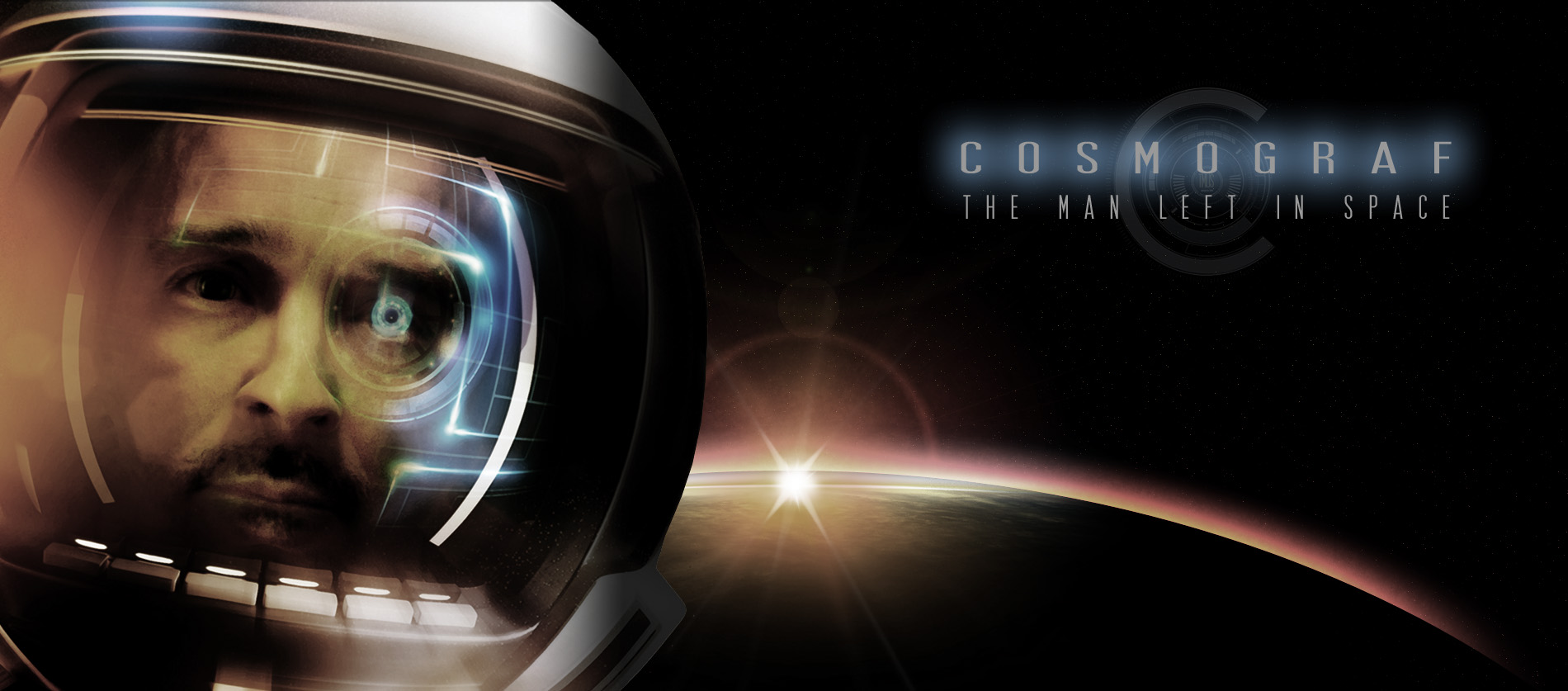
Not atypically stunning artwork from Cosmograf.

Robin Armstrong (Cosmograf) has some very important things to write about the actual, tangible, physical art of prog.

A few folk have been asking about the availability of lyrics for the Cosmograf Albums. We don’t provide these in any other form other than in the CD booklets. The reason for that is that we want to protect the remaining value of the physical product in a world where it is being increasingly marginalised alongside less and less available income streams for bands. A huge amount of work goes into our booklets with superb artwork and photography, which often never gets seen by those buying from digital platforms. When you buy a CD not only do you get a great audio experience you get the great artwork and the printed lyrics too.

Amen, Robin.  Amen.

Earthside – “A Dream in Static”

Read about the immense debut album from Earthside.

http://theprogmind.com/2015/10/12/earthside-a-dream-in-static/

Galahad’s SOLIDARITY: When Live is Even Better than Studio

Galahad, SOLIDARITY: LIVE IN KONIN (2015).  Tracks: Salvation I and II; Guardian Angel; Empires Never Last; Secret Kingdoms and Secret Worlds; Singularity; Beyond the Barbed Wire; This Life Could Be My Last; Sleepers; Guardian Angel (reprise); Painted Lady; Seize the Day.

Birzer rating: blissfully stunned.

Out toady: Galahad's latest live album, SOLIDARITY.
Out today: Galahad’s latest live album, SOLIDARITY.

Sheesh.  What to say?  What to write?  Today is the release date of Galahad’s latest live album, SOLIDARITY: LIVE IN KONIN.  As with all live albums, of course, these are songs that had been perfected in the studio and on the mixing boards.  Our ears become rather use to these things of perfection.  And, certainly, few modern prog bands sound as good as Galahad when it comes to the studio releases.  It’s clear that the band comes together in amazing ways, all songs perfectly nurtured and engineered.

I wasn’t, however, quite sure how Galahad’s more recent music would translate live, though I know the band possesses a rather strong reputation as a live act.  As I understand it from my British and European friends, this comes from 1) the tightness of the band; and 2) the rather natural showmanship of Stu Nicholson.

Well, let me just state as bluntly as possible: SOLIDARITY is a gorgeous album.  Not only does the music sound every bit as good as on the studio albums, but Galahad clearly has some fun playing around with live sounds.  Additionally, the band has crafted a concert that has has much art to it as any placement of the tracks on a studio album.  That is, SOLIDARITY sounds like something beautifully crafted as an album, in and of itself.  It’s akin to a brand new studio release.  The positioning of tracks allows the band to present a long and relatively coherent story.  The placement of “Guardian Angel” toward the beginning and the end of the concert But, most of all, it’s Nicholson’s voice that stands out on SOLIDARITY.  If anything, he sounds even better live than he does in the studio!  And, this is about the highest praise I could give any vocalist.

The prog rock world is not only different from what it was a decade ago, but it’s also significantly different from just two years ago.  Galahad has made its own style of music since 1985, and the band has continued to hone that sound in vastly creative ways.

Long live, Galahad!

Journeys Through Beauty and Honesty: Kinetic Element’s TRAVELOG

Kinetic Element: Mike Visaggio (keys and vocals); Michael Murray (drums and vocals); Todd Russell (guitars); and Mark Tupko (bass).

Travelog tracks: War Song; Travelog; Into the Lair; Her; and Vision.

Birzer rating: Mysterious and perfect

If I had to put a label on this. . . I would label it. . . .

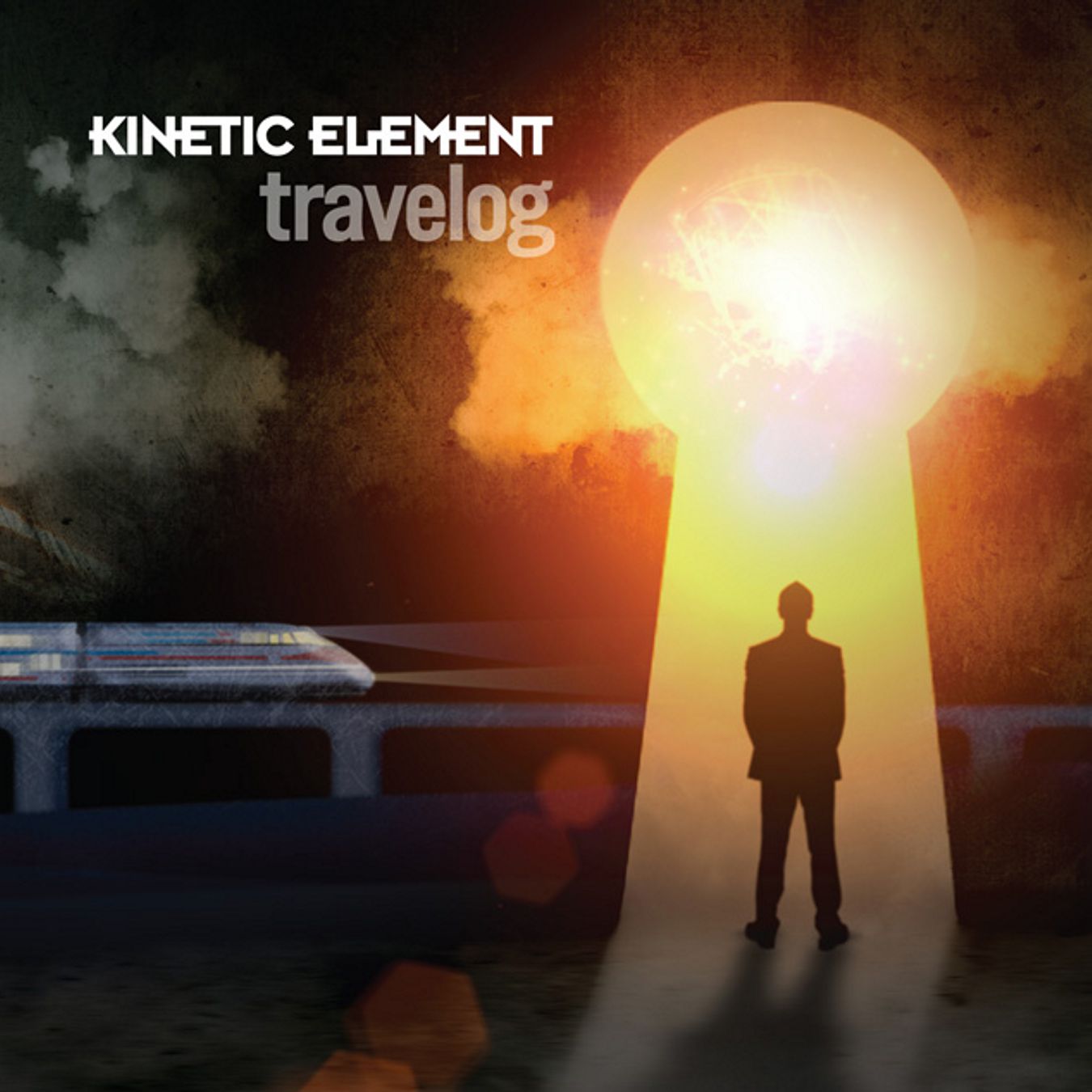
Kinetic Element's second release, TRAVELOG, a thing of mystery and beauty.
Kinetic Element’s second release, TRAVELOG, a thing of mystery and beauty.

As much as I hate labels and labeling as forms of dismissal, I also recognize how important labels can be for finding context.  Every once in a while, I find a thing that is so beautiful it defies any labels or categorization.  Such is the new Kinetic Element album, TRAVELOG.  I’ve had a review copy for about 2 weeks, and I’ve enjoyed every listen.  Yes, every single one.  Indeed, “enjoy” is simply too weak.  This is an absolutely incredible album at every level.

For some reason, as I listen, I can’t get fanciful mergers and conglomerations out of my head.  TRAVELOG could be, an Americanized Flower Kings album.  This is what comes to mind most frequently.  Yet, I hear elements of Zebra and Saga and Triumph and Glass Hammer.  There’s psychedelia and folk and prog.  Lots and lots of prog.  No one would mistake this as anything other than a very authentic American expression of prog.  But, what kind of prog?

If early Styx wrote A TRICK OF THE TAIL.  If 1971 Allman Brothers wrote TORMATO.  If 1975 Kansas wrote the one and only Blind Faith album.  Yes, it’s this last one that fits best.  If you can imagine Livgren and co writing and performing “Do What You Like,” you’ll start to get the idea of Kinetic Element.

I love this album.  It’s a thing of intense and meandering beauty.  Just as the title of the album suggests, TRAVELOG is a journey through the dark night of the soul, finding doubts but also vistas of joy and, amazingly, patriotism.

Though over 20 minutes long, “War Song,” the opening track to the album, pulls the listener into the journey, full immersion, demanding a complete surrender of the will.  Though dominated by instrumental excursions—all heavenly—the minimal appearance of the lyrics makes the vocals all the more important.  The protagonist must choose between his love of country and his love of a specific woman.  Nothing is easy, and the choices demands sacrifice.  The listener feels every aspect of the pain the man goes through in his decision.

Track two stunned me.  A reworking of “America the Beautiful,” the song made me cynically wonder at what point would the band proclaim the irony of what they’re doing.  There is no such irony.  These guys absolutely mean what they say: America is beautiful, and we denigrate it at our own peril.  Honestly, as an American who rather proudly came of age in the 1980s in Kansas, I’ve not felt this proud to be American since 1989.  Thank you, Kinetic Element.  This is a song that could’ve gone wrong at every point.  It never does.

The third track, “Into the Lair,” is a cry against conformity, mediocrity, and a duplicitous Leviathan.  A new voice takes the lead vocals, a more folky version of Glass Hammer’s Suzie Bogdanowicz.

Track four, “Her” begins with unrelentingly romantic keys, but the lyrics reveals that the woman is not all she seems on the surface, seeking to devour her prey.

The final track, “Vision of a New Dawn,” is almost as long as the first track and certainly as epic.  Lyrically, it’s an anthem, a call for integrity, openness, and honesty.  This is Kinetic Element at its most Peartian.

To purchase the album, please go here: http://melodicrevolutionrecords.com/album/travelog

A final note, it wasn’t until I’d finished this review that I realized that Steve Babb and Fred Schendel mixed this album.  A lot more makes sense now—all to the good!

Anglo-Saxon Perfection: English Boy Wonders by Big Big Train

Big Big Train, ENGLISH BOY WONDERS (Giant Electric Pea, 1997; 2008)

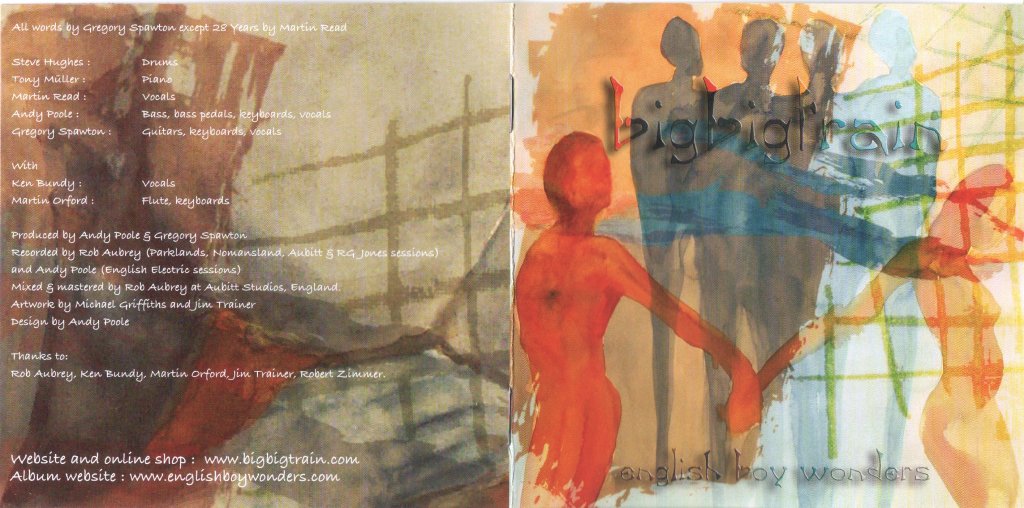
14 Tracks on the re-released version, 2008.  Interior/booklet art by Jim Trainer.

The interior art of English Boy Wonders.  All interior art and design by Jim Trainer.
The interior art of English Boy Wonders. All interior art and design by Jim Trainer.

ENGLISH BOY WONDERS is, by far, the most “English” of all of Big Big Train’s albums.  Articulate, intelligent, penetrating, and romantic, the album should properly be listened to under grey skies with fog clinging to the land, an iron-gated cemetery to one side and a beautiful pale-skinned, red-headed woman just out of reach on the other, with a slight bit of drizzle in 55-degree weather.  The listener, of course, should be wearing tweed and fiddling with his pipe.  Perhaps, he should also have a battered, leather copy of Wordsworth or Tennyson as well.

I exaggerate, but only slightly.

As explained at the EBW promotional site:

English Boy Wonders was originally recorded on a limited budget & released by GEP in a semi-complete state in 1997. It has been unavailable for many years. For the 2008 re-release, Big Big Train have returned to the original master tapes & have re-recorded much of the album. Additional sections of music have also been written to complete the album as it was once intended. A bonus track featuring Martin Orford has been included & the album has been completely remixed & remastered by Rob Aubrey.

English Boy Wonders tells the heart breaking story of a doomed relationship across its 80 minutes of music & words. The album is a unique blend of progressive rock & English pop featuring many of Big Big Train’s finest songs.

Never shy about his melancholic, autumnal imagination, Greg Spawton actively and openly wrote a heart-wrenching story about loss on this second Big Big Train album.  And, not just loss. . . but desire, hope, longing, and unrequited love.

For those of us—and we are becoming immense in our numbers—who have come to fall in love with David Longdon’s voice (a voice I consider to be the single finest in the current era of rock), it’s difficult to hear BBT without him.  And, yet, on EBW, it was so.  No Longdon.  Not yet.  He’s not the only one missing.  A quick look reveals, of course, no Manners.  No D’Virgilio.  No Gregory.

Holy schnikees, what is this thing I hold so delicately in my hands?  How can it be so great as it is without those four distinctive personalities?

Well, at least Poole and Spawton are here.  And, thank the Northern pantheon of gods, very much so.  One can hear them and their brilliance in every note.  Not only is EBW so very English, it is so very BBT.  The complexity of the arrangements, the searing guitar, the swirling keyboards, the anxious drums, and Spawton’s heart rending lyrics.  Yes, this is Big Big Train.  With all BBT releases, Spawton and Poole never shy away from reflecting those they admire.  There’s some mid-period Genesis here, but there is also quite a bit of atmospheric jazz, with keyboards and drums far more daring than Collins and Banks ever tried.

And, for the newer release, the unofficial member of the band, that Anglos-audiophilic genius Rob Aubrey lends his extraordinary skills to EBW.

While the entire album is excellent and a must own, the tracks that lodge themselves firmly in the soul and mind are “Albion Perfide,” “Out of It,” “Reaching for John Dowland” and “The Shipping Forecast.”

Jim Trainer and Greg Spawton offer a nice look at the remake of the album and what needed to be done in 2008 in this interview: http://www.englishboywonders.com/ebw_interview.html