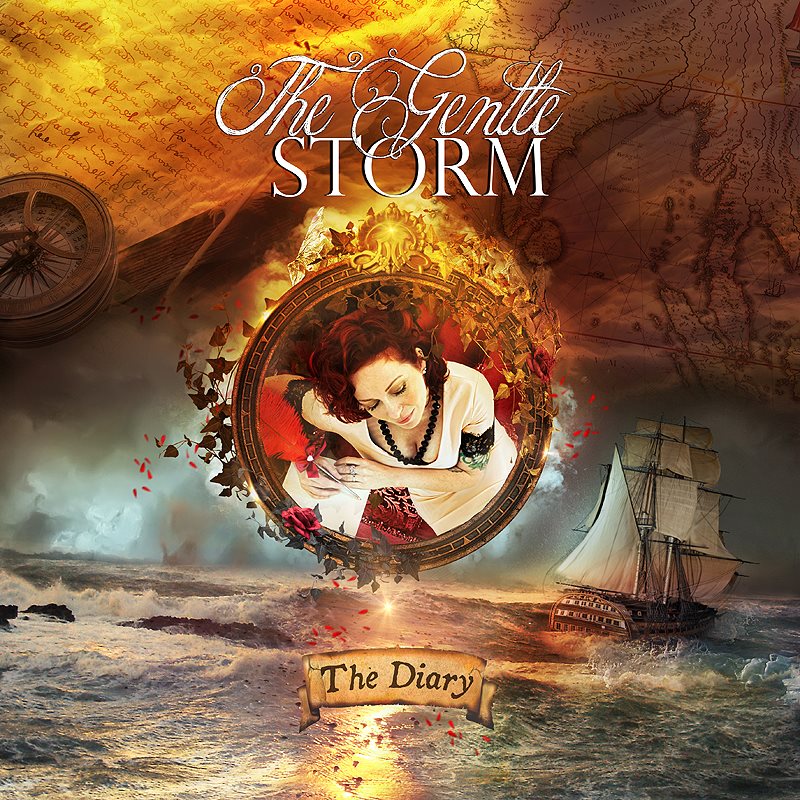
Don’t miss the preview of The Gentle Storm’s first song released from the new album.
As PROG writes:
Exclusive: View lyric video from Arjen Lucassen and Anneke van Giersbergen collaboration
Ayreon mastermind Arjen Lucassen and former The Gathering singer Anneke van Giersbergen and have premiered Endless Sea, the first track from their Gentle Storm project, with Prog and TeamRock.
The launch will be supported with a European tour including three UK dates,although Lucassen won’t hit the road with van Giersbergen, backing vocalist Marcela Bovoi, guitarist Merel Bechtold, guitarist Ferry Duijsens, keyboardist Joost van der Broek, bassist Johan van Stratum and drummer Ed Warby.
The Diary is set in the 17th century and tells the story of a Dutch sailor and his wife, separated by his two-year voyage, and the letters they write to each other.
The leading duo say of Endless Sea: “The album opener serves as an introduction to our story-based album. Susanne, the main character, sings about her husband Joseph, who has just sailed out on another long voyage to the Far East. We are very excited to offer everybody a first taste – this is such a special album to the both of us.”
Lucassen guests with van Giersbergen on a run of acoustic shows next month, and takes part in the “unintentional supergroup’s” first show in the Netherlands on March 26.
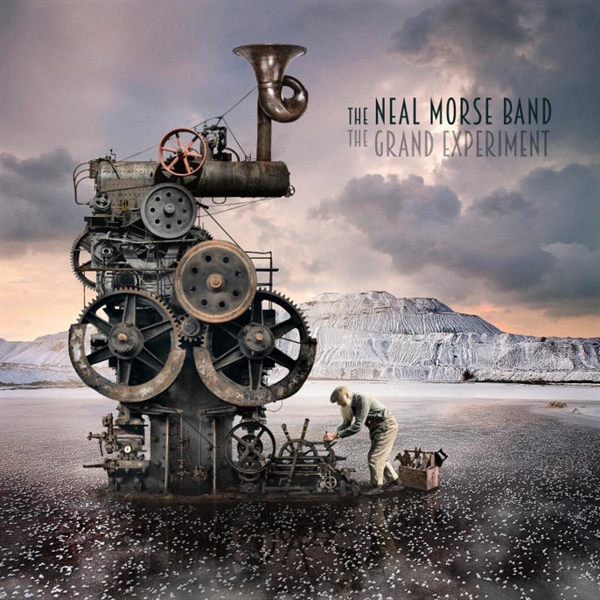
The Neal Morse Band, The Grand Experiment (Radiant Records, 2015), Special Edition. Tracks: The Call; The Grand Experiment; Waterfall; Agenda; Alive Again; New Jerusalem (Freedom is Coming); Doomsday Destiny; MacArthur Park; The Creation (Live); and Reunion (Live).
Not as beautiful as last year’s Flying Color’s SECOND NATURE album cover, but just as intriguing.
Birzer rating: 9.5/10.
“The Call” begins with a multipart gospel/Trevor Rabin-Yes era harmony before breaking into a wild keyboard/drum sequence that is pure third-wave prog. Quickly, all instruments play at full blast. It’s a rather ingenious immersion into the album.
Everything soars with a precision and beauty. “With every beating of my heart. . . I am engulfed in who you are.” Morse is doing for the listener what God’s grace has done for him. As the lyrics suggest, the only thing that prevents disaster of an eternal magnitude is an embracing of “The Call,” unique to each person.
A little past the halfway mark in the song, the Neal Morse Band breaks into a harrowing Transatlantic/Flower Kings moment of dread and introspection. Randy George’s bass, especially, steals the moment as things only slowly resolve into a hyperfrenetic mass of sound.
After Momentum, I had thought Morse had become rather comfortable in his Christianity, thus allowing it to become a part of his art, a foundation, rather than an explosion. That is, Momentum might very well have been written by a seriously religious person whose sensibilities had been shaped dramatically by his faith but who felt no need to proclaim it as though by one recently saved. This album, though, is an explosion of religious enthusiasm and praise. Clearly, “The Grand Experiment” is prog meets worship in a significant way.
Whether the listener will agree with Morse’s religious perspective or not matters little, as the music is so strong and the conviction so real that one can’t help but admire Morse for writing about and proclaiming what he loves most. I might not go to his Church, but he certainly makes his faith look extremely attractive, open, warm, and loving. This is not the kind of evangelicalism that condemns all who do not understand or agree 100% to some form of a brimstone hell. Instead, Morse chooses to critique the world but praise the potential of each individual as endowed by grace.
“The Grand Experiment,” the second track, opens with a more blues-based sound than I’d normally expect from Morse, but it has a strong Kansas, Styx, Allman Brothers feel as Morse almost growls his way through the beginning of the song. This is rather heavy. A short song at only 5 and ½ minutes, “The Grand Experiment” remains very heavy throughout—again, in a 1970’s American prog-gish fashion. Backwards keyboard sounds even swirl from speaker to speaker. It’s with this song that I realize how astounding the engineering, production, and mastering of this album is. An audiophile’s dream.
Tasteful acoustic guitar opens the third track, “Waterfall,” and the intertwining vocals carry a soft Crosby, Stills, Nash, and Young folk lilt throughout. “Waterfall” could easily have been a Flying Colors song. Most interestingly, the song morphs into a mid-period Genesis song, something off of Trick of the Tail or Wind and Wuthering mixed with a bit of early solo Sting. The trajectory of this six and ½ minute song is nothing short of extraordinary, and it proves just how brilliant Morse is as a musician.
“Agenda,” the fourth track, is another extremely hard-rock track, though less than 4 minutes in length. Despite the hard-rock elements of the instruments, Morse sings in a sweet poppish way, and the entire song reminds me of the best of Cheap Trick and The Pretenders.
The final sing of the main disc, “Alive Again,” is a nearly twenty-seven minute prog success. In every way, it’s a masterpiece. No hyperbole needed to explain this one. Indeed, the song is hyperbole made manifest! No one in the music world can write songs of this length in the way that Morse can. It is with this song that the Nashville progger reveals not only his brilliance and genius, but his very mastery of and over the genre. Rather than feeling like a series of songs thrust together with interesting bridges, “Alive Again” flows logically from part to part, telling a cohesive and compelling story. It has the structure of a classical symphony, but with all of the rock elements one would expect. The lyrics and vocal harmonies (again, think mid-1970s Kansas) guide, glue, and predominate, while the song never shies away from 1978 Rush-style atmospherics and percussion. Intensely religious, this song carries more respect for creation and the Creator than almost any formal church music produced over the last three decades. The song also features a psychedelic part with one of the members of the band (not Morse; Portnoy, maybe?) singing a testimonial. It works.
The bonus disc has three new songs—“New Jerusalem (Freedom is Coming)”; “Doomsday Destiny”; and “MacArthur Park”—as well as two songs recorded from last November’s Morsefest, “The Creation” and “Reunion.” Each of the new songs is absolutely gorgeous, and I’m not at all sure they didn’t make it as a part of the original, main album. While “New Jerusalem” has a bit of a Relayer aspect to it, nothing on the entire album has been shy about paying homage to earlier bands. Musically, this might very well be the best song on the two discs. There’s a bit more funk in “Doomsday Destiny,” for example, than anything on the main disc, but it would still fit well with the lyrical themes of The Grand Experiment. “MacArthur Park” seems to be an homage, at least musically, to Kansas, Yes, Jethro Tull, and ELP, despite the rather Peartian title.
My advice, make sure you get the entire package—the main disc as well as the special edition. The only reason I’m not giving this release a perfect 10 is simply because the album is confusing with its variations. But, the bonus disc is every bit as good as the main disc, and you’ll kick yourself in the future if you pass up these “bonus” songs. They are, to my ears, absolutely essential.
One last thing. I must praise the individual musicians. Morse might be the leader, the touchstone, and the fountainhead, but he has created a community of artists around him, artists who clearly love Morse, the art, each other, and the listener. No one of the five members of the Neal Morse Band gives only a part of himself. Each gives every single thing he has. George’s bass, Gillette’s guitar, Hubauer’s many, many instruments each boggle the mind.
But, I have to single out Portnoy. I’ve been listening to him since 1992. Since, I have regarded him as one of the three greatest drummers in the rock world, along with Peart and D’Virgilio. Over the past 23 years, though, I would’ve always put the caveat that Portnoy is the best hard rock drummer, lacking the subtly of Peart or D’Virgilio. For what it’s worth, I now officially revise that claim. Portnoy’s drumming and percussion absolutely, completely, and totally blow me away on this album. Holy Moses! The drumming and percussion is just so, so good that words fail me. Portnoy reveals sides to himself that I had no idea existed. On a personal note, he is just three or four months older than I am. I can’t tell you–the reader–how happy I am to see his growth, his desire to become what he is capable of. Thank you, Mr. Portnoy. I bow to your excellence.
Whatever the reason–Morse’s charisma or God’s grace or some mixture of both–“The Grand Experiment” is a true success, an explosion of enthusiasm, a true work of art. Nothing halfway here. This is the real deal. This is what we proggers live for.
Update, January 18, 2015–Chris Thompson, who works closely with Morse at Radiant, posted this on Facebook: “”The Grand Experiment” was written by everyone in the band. Neal came to the writing sessions with nothing, planning to co-write the entire album, with a piece of each member framed perfectly throughout each song.” Thanks, Chris!
Admittedly, I’ve been a Rush fan since 1981. But, I’ve also been a fan of Kevin J. Anderson’s work for over two decades. Peart and Anderson together. What a brilliant way to expand the larger Rush mythos.
For my entire writing career, my stories have been inspired by the music of Rush. And I’m not the only one. After the publication of my “Drumbeats” and CLOCKWORK ANGELS with Neil Peart, many other writers have approached me to talk about Rush.
It certainly made sense that we could find plenty of well-known writers interested in writing original stories inspired by Rush songs—enough to fill an entire anthology. Canadian author John McFetridge first approached ECW Press (publisher of CLOCKWORK ANGELS) with the idea, and they liked it; shortly afterward, they brought me on board to co-edit with John. We approached Neil Peart to make certain he supported the idea, since the stories would be based on his lyrics. While Neil isn’t directly involved in the project, he granted his approval, turning us loose to see what stories we could track down.
And I’m doing an original novella, 2113.
The many other authors who signed on include numerous award-winners, New York Times bestsellers, well-known writers of science fiction, fantasy, mystery, thrillers. We will have original pieces by me, David Farland, Mercedes Lackey, Greg van Eekhout, Dayton Ward, David Mack, Steven Savile, Brian Hodge, Michael Z. Williamson, Brad R. Torgersen, David Niall Wilson, Ron Collins, Mark Leslie, Larry Dixon, John McFetridge, and Tim Lasiuta. AND we will include a reprint of Richard Foster’s story “A Nice Morning Drive”—the original inspiration for “Red Barchetta”—and Fritz Leiber’s “Roll the Bones.”
Just today I finished the last scene in 2113, which I’ll be polishing while waiting for all those other cool stories to roll in.
No firm release date yet from ECW, probably in about a year. Meanwhile, I can’t wait to read it myself!
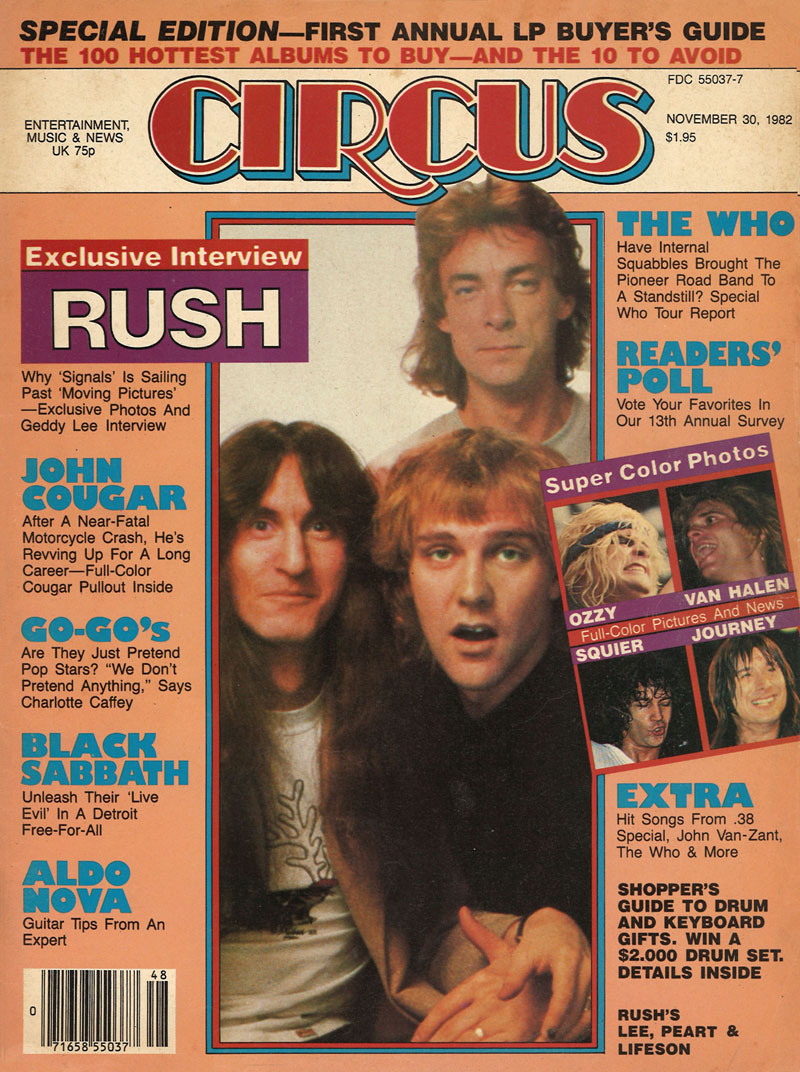
“If there’s one thing rock journalists dread more than watery drinks at press functions, it’s facing the wrath of Rush fans disgruntled over a less than favorable review.Not only are they a vocal lot who will gladly spring for the postage in order to castigate the offending scribe, but they’re unusually articulate.”—Philip Basche, CIRCUS (November 30, 1982)
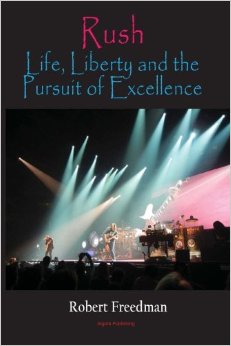
A month or so ago, I wrote a very long, very personal review of Rob Freedman’s excellent book, Rush: Life, Liberty, and the Pursuit of Excellence, entitled “The Saving Grace of Neil Peart.” In it, I offered almost nothing but praise for Freedman. But, I had two criticisms. The first was that he gave too much time and attention to Peart’s critics, and the second was that I felt Freedman should have discussed stoicism. There’s no need to go into the second criticism, but here’s what I wrote in the first:
As a lover of Rush, I have a few (very few) quibbles with Freedman’s take. Mostly, from my not so humble perspective, Freedman gives way too much space to such charlatans as Barry Miles of the English New Music Express who claimed Rush promoted neo-fascism in the late 1970s. Freedman, while disagreeing with Miles, bends over backwards defending Miles’s point of view, as it did carry immense weight in the 1970s and wounded the band deeply. From my perspective, there is no excuse for Miles. He maliciously manipulated and twisted the words of Peart—using his lyrics and a personal interview—which were as deeply anti-fascistic as one could possibly imagine (paeans to creativity and individualism) and caused unnecessary damage to the reputation of three men, two of whom who had parents who had survived the horrors of the twentieth-century ideologues, as noted above. Miles’s take on Rush is simply inexcusable and no amount of justification explains his wickedness and cthluthic insensibilities toward three great artists. Dante best understood where such “men” spent eternity.
So, reading back over this, maybe I owe two apologies to Freedman. First, what a goofy thing I wrote when I started my criticism with “As a lover of Rush. . .” Of course, I love Rush. But, then, so does Freedman!
Second, I’ve spent the last week reading every review of/article on Rush from 1974 to 1981—thanks to the Mighty Eric Hansen at http://2112.net/powerwindows/transcripts/Transcripts.htm. And, now, having read every review in chronological order, I see exactly why Freedman gave as much attention to Peart’s critics as he did.
Rob, my apologies to you. You were and are absolutely correct in the manner you dealt with the criticisms.
To New Music Express and Rolling Stone: I lift my hands to you. And, each hand has one finger held high. Just in case this is too subtle for your soulless, corporate, tapioca conformist brains. . . it’s the middle one.
STEVEN WILSON WEAVES CHILLING MUSICAL TALE WITH HAND. CANNOT. ERASE.
Album Available March 3, 2015 – North American Tour Begins May 21
(January 7, 2015) – Groundbreaking songwriter, four-time Grammy-nominated artist, multi-instrumentalist and producer, Steven Wilson, is set to release his fourth solo album,
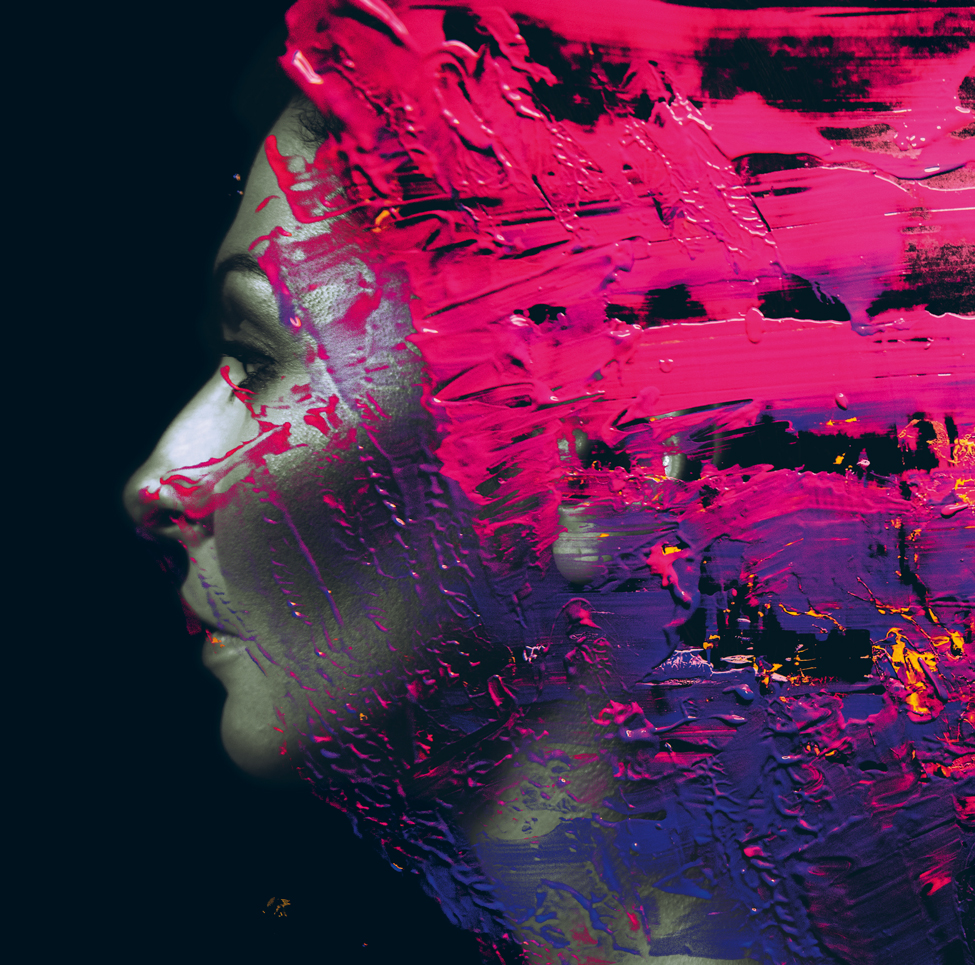
Hand. Cannot. Erase. (Kscope) on March 3, 2015. Hand. Cannot. Erase. will be available at retailers nationwide and digitallywith a limited deluxe edition for pre-order via Kscope (http://bit.ly/1DhHN6c). Wilson and his band will embark on a tour through the UK and Europe in March and April 2015, then head to North America dedicating much of the summer beginning on May 21 in Albany – itinerary below.
This latest collection from the prolific song-writer is a dynamic 11-song conceptual set, bringing together diverse aspects of his expansive sonic history. Recorded in September 2014 at AIR Studios London, Hand. Cannot. Erase. features the guitar-driven power, infectious melodies, and progressive sensibility of Wilson’s sprawling body of work.
Wilson describes the collection as inspired by a news story, of a woman who died in her apartment and went undiscovered for three years. “The basic concept of the record – it’s about a woman growing up, who goes to live in the city, very isolated, and she disappears one day and no one notices. Now, your initial reaction when you hear a story like that is, ‘Ah, little old bag lady that no one notices; no one cares about.’ But she was young; she was popular; she was attractive; she had many friends; she had family, but for whatever reason, nobody missed her for three years.” The dramatic theme of Hand. Cannot. Erase. is punctuated with moments of rhythmic urgency, somber introspection, and soaring beauty. Fans are invited to follow the blog entries at http://Handcannoterase.com.
Tracklisting:
“First Regret”
“3 Years Older“
“Hand Cannot Erase”
“Perfect Life”
“Routine”
“Home Invasion”
“Regret #9”
“Transience”
“Ancestral”
“Happy Returns”
“Ascendant Here On…”
Best known as founder and front man of British rock act Porcupine Tree, Wilson has produced and collaborated with diverse acts as Opeth, Blackfield, Yes, Roxy Music, and XTC. His prolific engineering work can be heard on his mixes of classic releases from King Crimson, Jethro Tull, and most recently the 5.1 surround sound version of Tears For Fears’ classic Songs From The Big Chair reissue, released in November 2014. Porcupine Tree’s last album went top 30 in both the UK and USA, and the tour climaxed with sold out shows at Royal Albert Hall in London and Radio City Music Hall in New York.
Following the release of his critically acclaimed 2012 release, The Raven That Refused to Sing, Wilson set out on a world tour, having assembled a virtuoso band – Marco Minnemann (drums), Nick Beggs (bass), Theo Travis (flute and sax), Adam Holzman (keys) and Guthrie Govan (guitar). His latest studio creation completed, the cinematic Hand. Cannot. Erase.features dynamic performances by Wilson, his touring ensemble, and vocal accompaniment from Ninet Tayeb.
From the forthcoming album, The Grand Experiment (Radiant, 2015).
For more information, please check out Radiant’s website: https://www.radiantrecords.com/default.aspx. Pre-orders begin January 10 (though, the Radiant website also lists January 13 as the pre-order date).
Who wouldn’t love this cover? Holy schnikees, it’s gorgeous. Admittedly, I’m a rather huge fan of Jerry Ewing. But, he’s outdone himself with this one. I’m drooling. . . .