Rick’s Quick Takes: A Season of Plenty

“What is so rare as a day in June?” Certainly not good music! There’s much fine listening on many fronts this month – hence, the elongated article. Listening links are embedded in album titles; where necessary, purchase links are included (in parentheses) at the end of reviews.
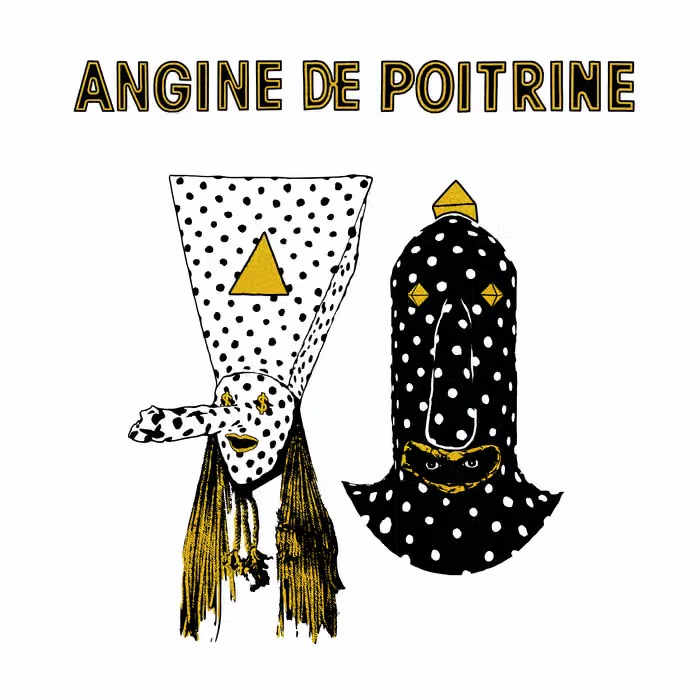
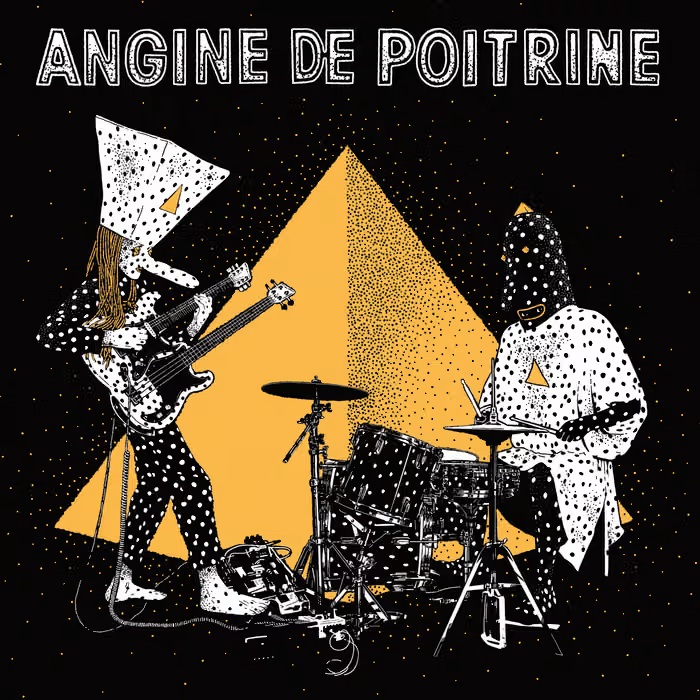
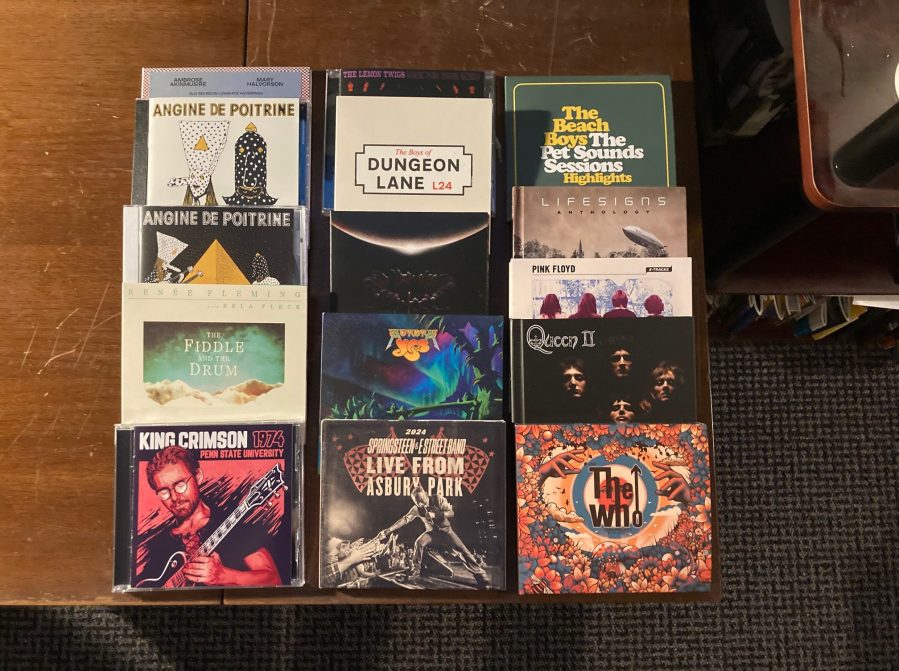
The buzz of 2026’s experimental scene has unmistakably been Angine de Poitrine. After all, when was the last time you saw and heard a duo of self-proclaimed alien beings (hailing from Quebec) burning up social media with microtonal minimalist surf prog? Kudos to AdP for packaging challenging if familiar ideas with striking if freaky visuals (papier-mache heads? Pyramids and suspicious dice? Pickled herrings and a hot dog?). The proof’s in the tuneage, though: on 2024’s Vol. I and the new Vol. II guitarist Khn and drummer Klek generate one tightly controlled, surprisingly addictive perpetual motion frenzy after another. Fans of Steve Reich, 1980s King Crimson and math-rock in general will resonate with it all. Whether AdP have staying power beyond this initial splash remains to be seen, but they’ve made a good fist of a start.

Also on the out-there end: two of my favorite avant-jazzers, trumpeter Ambrose Akinmusere and guitarist Mary Halvorson took advantage of a common record label to stage a welcome summit meeting. Slo-Mo Neon Luminate Hoverings is a pretty solid description of what the result sounds like; from the conventional beauty of Akinmusere’s “Prelude in the Ash” through the loop-based drone dialogue of the joint “Soundcheck” to Halvorson’s polytonality-meets-power-chords “Blood & Sand”, you rarely know what’s coming next, but there’s plenty of sonic space to navigate without a map. Akinmusere shouts, twists, flurries and floats, singing as much as playing through his instrument; Halvorson brings her pointed tone, scribbly runs, wiry chords, and mastery of effects to bear; their ongoing dialogue is sombre, witty, affecting, completely simpatico. An attentive collaboration that leaves the listener engrossed, hanging on every cryptic gesture.
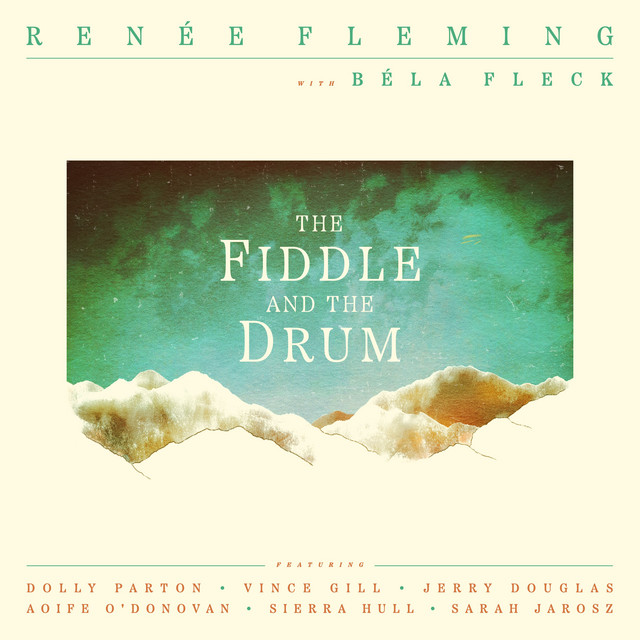
Opera/art song diva Renee Fleming has occasionally detoured into crossover territory, with mixed results. (Excursions into jazz: usually solid. An album of indie rock tunes from Muse, Arcade Fire, The Mars Volta, etc: not great.) Her latest, co-billed with progressive bluegrass heavyweight Bela Fleck, is a self-released passion project — and it’s quite good! The Fiddle and the Drum focuses on songs of love and war, ranging from Carter Family classics through Joni Mitchell’s Vietnam-era title track to Elvis Costello’s cinematic period piece “The Scarlet Tide”. If Fleming is sometimes overly reverent toward the material, she’s also thoroughly committed; her duets with dobro master Jerry Douglas are the most intense moments here, though the closing a cappella trio “Pretty Bird” (with Americana sirens Sierra Hull & Sarah Jarosz) comes close. Add guest vocals by country titans Dolly Parton and Vince Gill, Fleck’s steady hand in the studio and a tasty backing band, and you have a luxuriously upholstered yet idiomatic homage to the Appalachian folk tradition. (Buy from Bela Fleck’s webstore.)
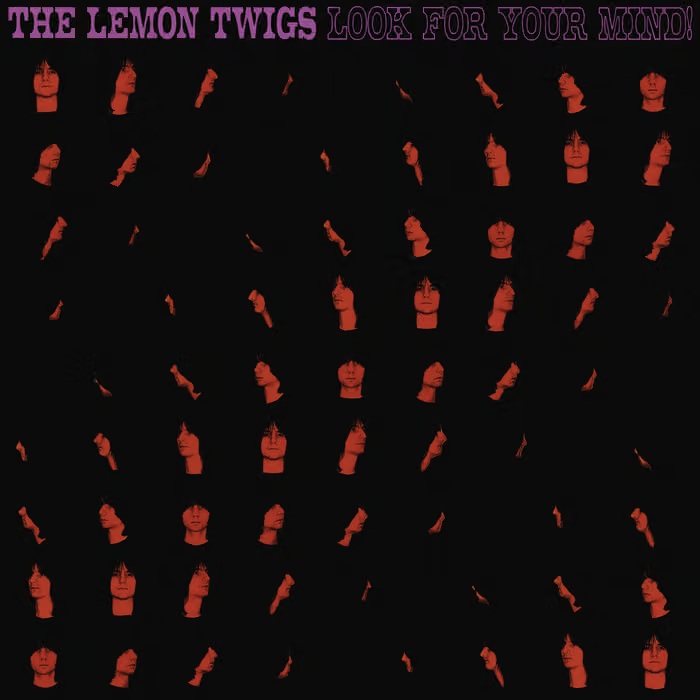
Suddenly everything old in rock and roll seems new yet again: witness The Lemon Twigs, brothers from New York City who write, sing and play multiple instruments like angels heralding the resurgence of power pop. Their sixth album Look For Your Mind! is much more than an exercise in retro pastiche, even though the guitars jangle and ring, the vocal harmonies swoon and swoop, and a wall of orchestral sound ebbs and flows. Brian D’Addario’s soaring, melodic balladry and brother Michael’s chunky, adenoidal rock chops meld into one overarching style like never before, with the Twigs’ road band and female fellow-travelers Tchotchke contributing to a warm new “live in the studio” feel. And the songs! Sweet odd-couple romance “2 Or 3”, stomping protest rocker “Bring You Down”, break-up chamber-pop “Joy” (with the solo taken by a French horn section!) are just the tip of the iceberg; every single tune is a near-perfect blend of craft and sincere sentiment, bursting with riffs and melodies that stick like chewing gum through every surprise bridge and delightfully inevitable key change. This is the album where the Twigs have made their influences (Beatles, Byrds, Beach Boys, Big Star – and that’s just the Bs) their own, and a record that stands up marvelously in such august company. Already a hands-down 2026 Favorite, and the album I recommend most highly from this batch.
Of course, it’s not like all the grizzled veterans are sitting home, twiddling their thumbs. Paul McCartney has been striking nostalgic chords by summoning up his past for at least thirty years, and his new The Boys of Dungeon Lane delves further into lyrical and musical reminiscence. “Days We Left Behind” meditates on history and change, spotlightling a newly fragile cragginess in Macca’s voice; “Down South” mates a memory of hitchiking with George Harrison to gentle acoustic busking. Plus, there’s “Home to Us” – a duet with Ringo! (On vocals and drums!) Not to mention the “When I’m 64” shuffle of “Life Can Be Hard”, a callback to “And I Love Her” on “First Star of the Night”, plenty of energetic rock guitar, fuzz bass, and even Paul playing trumpet (on “Salesman Saint”, a tribute to his parents that’s the album’s most moving love song). McCartney’s melodic gift and textural instincts are at a peak, and Andrew Watt’s widescreen production cannily matches the enticing, confiding tone of his voice. Lovely overall, thoroughly charming and frequently stirring, slotting easily into the upper reaches of Macca’s more adventurous solo efforts. (Buy from his webstore.)
And then there’s Muse – as over the top and bonkers as ever for their latest return to action, The Wow! Signal. You know what you’re in for when opener “The Dark Forest” contains both a direct steal from the soundtrack to Lawrence of Arabia and quasi-liturgical Latin chanting; the willful genre-hopping never stops, both between songs (EDM/Taylor Swift-wannabe single “Night Shift Superstar”, synthprog/rifferama medley “Hexagons/The Sickness in You and I/Unraveling”) and within them (“Be With You” is a hymn! No, it’s dubstep! No, it’s metal! With a choir!) Credit to Matt Bellamy, Chris Wolstenholme and Dominic Howard for pulling together yet another smorgasboard of sensory overload into a surprisingly coherent concept album – and for injecting unexpected emotional depth, as melancholic coda “Space Debris” casts down-to-earth shadows over what had seemed just another grandiose conspiracy/UFO narrative. After a couple of enjoyable but not particularly memorable releases, this one feels like a real step forward. (Buy from their webstore.)
As does Yes‘ latest, Aurora – though the Steve Howe-led version of this band has been gaining momentum for a couple of albums now. There’s plenty of newfound ambition in the tunesmithing, and the band plays with commitment and animation. Howe’s style and sound on electric, acoustic and steel guitars is unmistakable, while Geoff Downes’ synth and organ work is straightforward and appropriate; Billy Sherwood and Jay Schellen lay down nicely propulsive grooves; and orchestral flourishes on the title track and “Ariadne” complement the group sound instead of distracting from it. Jon Davison’s found his way forward as well; whether on the harmonious “Turnaround Situtation”, the four-part suite “Countermovement”, or the anthemic closer “Emotional Intelligence” his singing slots in confidently, with a pleasant amount of grit seasoning his usual sunny vibe. Don’t expect the adrenaline rush or angularity of Yes’ most innovative era; these are mostly distance runs instead of sprints or marathons, paced as such, but the restraint works, even on riff-rocker “All Hands On Deck”. Take Aurora on its own terms, and there’s genuine satisfaction to be found. (Buy from Inside Out.)

Reissues and live releases follow the jump . . .

Continue reading “Rick’s Quick Takes: A Season of Plenty”
The Best Prog Bands You’ve Never Heard Of (Part Twelve): Fruupp

Well, perhaps you actually have heard of these chaps. Although they never made much of a name for themselves, Fruupp opened up for some of the biggest names in progressive rock, including Genesis, Queen, and King Crimson, in the early 1970s.

Founded in 1971 by Irish guitarist Vincent McClusker, Fruupp included classically trained Stephen Houston on keyboards and oboe; Peter Farrelly on lead vocals, bass guitar, and flute; and Martin Foye on drums. They recorded four albums in their five year tenure, but the sudden departure of Houston in 1975 (he became a clergyman) and poor record sales eventually forced the band to call it a day.

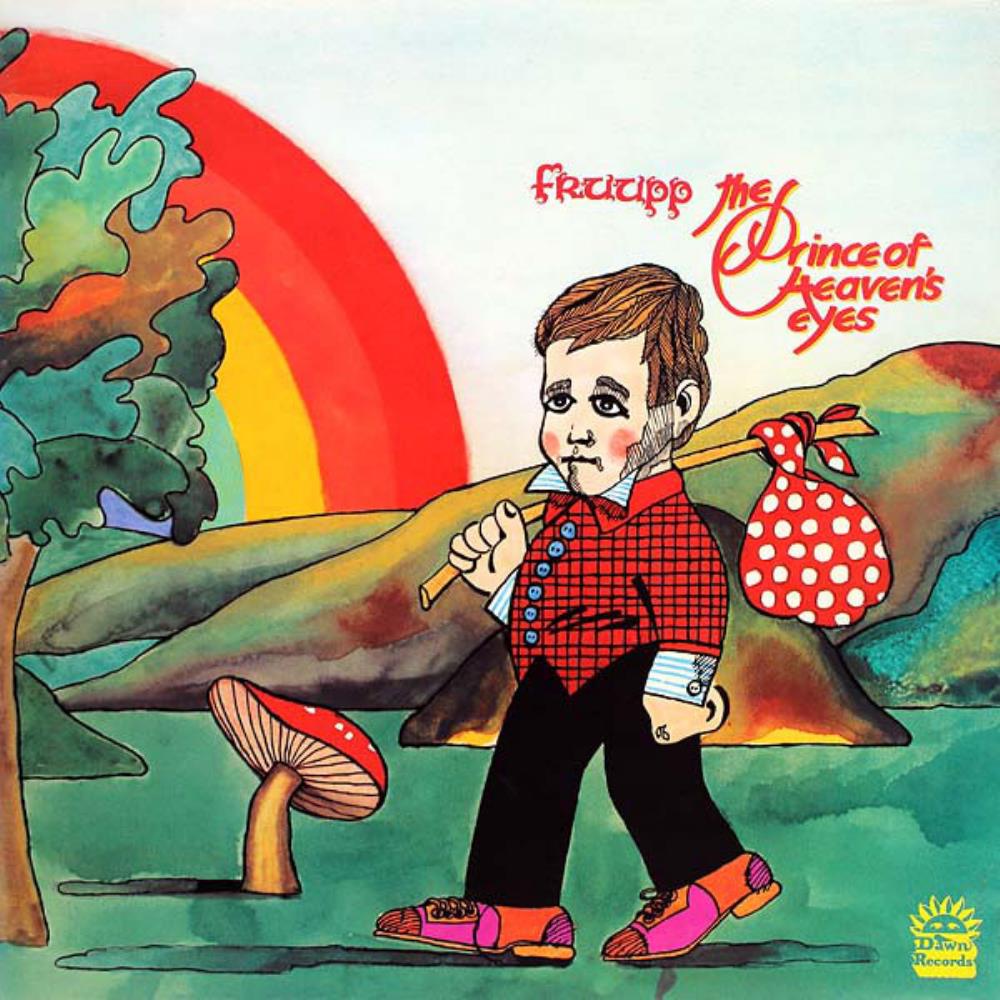
Fruupp’s third album, The Prince of Heaven’s Eyes, is considered their masterpiece. A concept album (based on a short story by Paul Charles), it tells the tale of a lad named Mud Flanagan, who, after the death of his parents, traverses the Irish countryside looking for the end of the rainbow. The influence of Genesis, especially in the songwriting, vocals, and keyboards, is evident throughout the album, but Fruupp are not mere copycats.

The album opens with a beautiful symphonic piece titled “It’s All Up Now”: Flanagan has made the decision to leave home and journey out into the wilds of the Emerald Isle. But shortly after his departure, “The Prince of Darkness” – a song that would fit nicely into the sinister world of Nursery Cryme – interrupts young Mud’s pleasant travels. Thankfully, our hero manages to avoid the road to hell and continues on his way, encountering a beautiful woman and experiencing several strange visions before reaching his journey’s end in the lengthy but uplifting “The Perfect Wish.”

Houston’s keyboards steal the show on this album, although McClusker and Foye are able to showcase their talents on guitar and drums, respectively, on the heavier “Annie Austere” and “Crystal Brook” (the latter also features some gorgeous flute courtesy of Farrelly).

It’s a shame Fruupp never enjoyed the success that other symphonic bands did, as this album certainly offers hints of bigger things that might have been. The Prince of Heaven’s Eyes may not reach the heights of Foxtrot or Selling England By the Pound, but it is certainly a worthy addition to the traditional symphonic prog canon.

Stay tuned for obscure prog band number thirteen!

One CEO’s 50 (or so) favorite pop albums

seal1

Inspired by Brad’s fascinating and very New Wave-ish post “My 49 Favorite Pop Albums”, I decided to try my hand at listing the same. One difficulty, it turns out, is defining “pop”. Brad didn’t list Radiohead’s “OK Computer” (one of my Top 10 pop/rock albums) because he figured it was too proggy, which is hard to disagree with. But I have it in my list, and also included a couple more albums that are certainly in the realm of prog: “Queen II”, “Point of Know Return”, and “A Momentary Lapse of Reason”. But, on the whole, I think most everything here fits on the “pop” spectrum, even if it veers into rocky territory (Muse, Journey, Soundgarden) on occasion.

Also, I could have easily included several more albums by Sinatra and Torme, and I feel a bit guilty to not have anything by, say, Nancy Wilson, Sarah Vaughn, Rosemary Clooney, or Nat King Cole. But I’ve tried to capture a certain breadth chronologically while being true to what I like and return to. And that is a key criteria: all of these are albums I revisit and never tire of.  Finally, it might be surprising that the only artist who shows up here three times is Seal. But no Beatles? Rolling Stones? Simon and Garfunkel? Lady GaGa? Go figure!

1950s-60s:
Frank Sinatra: IN THE WEE SMALL HOURS (1955)
Frank Sinatra: SONGS FOR SWINGIN’ LOVERS! (1956)
Mel Tormé: IT’S A BLUE WORLD (1956)
Roy Orbison: IN DREAMS (1963)
Mel Tormé: THAT’S ALL (1965)

1970s:
Van Morrison: MOONDANCE (1970)
Elton John: ELTON JOHN (1970)
Queen: QUEEN II (1974)
Queen: NIGHT AT THE OPERA (1975)
Kansas: POINT OF KNOW RETURN (1977)
Electric Light Orchestra: OUT OF THE BLUE (1977)

1980s:
Journey: ESCAPE (1981)
ABBA: THE VISITORS (1981)
Asia: ASIA (1982)
The Police: SYNCHRONICITY (1983)
Big Country: THE CROSSING (1983)
Mr. Mister: WELCOME TO THE REAL WORLD (1985)
John Fogerty: CENTERFIELD (1985)
The Moody Blues: THE OTHER SIDE OF LIFE (1986)
Sting: NOTHING LIKE THE SUN (1987)
Pink Floyd: A MOMENTARY LAPSE OF REASON (1987)
Sam Phillips: THE INDESCRIBABLE WOW (1988)
Kate Bush: THE SENSUAL WORLD (1989)
Van Morrison: AVALON SUNSET (1989)

1990s:
The Choir: CIRCLE SLIDE (1990)
George Michael: LISTEN WITHOUT PREJUDICE, VOL. 1 (1990)
U2: ACHTUNG BABY (1991)
Seal: SEAL (1991)
Tori Amos: LITTLE EARTHQUAKES (1992)
Maria McKee: YOU GOTTA SIN TO GET SAVED (1993)
Chris Isaak: SAN FRANCISCO DAYS (1993)
The Cranberries: EVERYONE ELSE IS DOING IT, SO WHY CAN’T WE? (1993)
Sarah McLachlan: FUMBLING TOWARDS ECSTASY (1993)
Seal: SEAL (1994)
Portishead: DUMMY (1994)
Soundgarden: SUPERUNKNOWN (1994)
Jeff Buckley: GRACE (1994)
Jars of Clay: JARS OF CLAY (1995)
The Mavericks: MUSIC FOR ALL OCCASIONS (1995)
Duncan Sheik: DUNCAN SHEIK (1996)
Radiohead: OK COMPUTER (1997)
Seal: HUMAN BEING (1998)
Burlap to Cashmere: ANYBODY OUT THERE? (1998)
Moby: PLAY (1999)

2000 on:
Martin Sexton: LIVE WIDE OPEN (2002)
Muse: BLACK HOLES AND REVELATIONS (2006)
Brandi Carlile: THE STORY (2007)
A Fine Frenzy: ONE CELL IN THE SEA (2007)
Sia: SOME PEOPLE HAVE REAL PROBLEMS (2008)
Sara Bareilles: KALEIDOSCOPE HEART (2010)
Lake Street Dive: BAD SELF PORTRAITS (2014)
Kevin Max: BROKEN TEMPLES (2015)

Queen — “We Will Rock You” (Fast version)

It’s been on live albums before, but here’s a version from Queen’s last BBC sessions of the 70s: “We Will Rock You” done faster than usual.

Queen on Air: The Complete BBC Sessions will be released on Nov. 4 in a double-disc CD edition, triple-disc vinyl, digital or a deluxe six-disc package with extra performances and interviews.

CD1
Session 1:
1. My Fairy King
2. Keep Yourself Alive
3. Doing All Right
4. Liar
Session 2:
5. See What A Fool I’ve Been
6. Keep Yourself Alive
7. Liar
8. Son And Daughter
Session 3:
9. Ogre Battle
10. Modern Times Rock’n’Roll
11. Great King Rat
12. Son And Daughter

CD 2
Session 4:
1. Modern Times Rock’n’Roll
2. Nevermore
3. White Queen (As It Began)
Session 5:
4. Now I’m Here
5. Stone Cold Crazy
6. Flick Of The Wrist
7. Tenement Funster
Session 6:
8. We Will Rock You
9. We Will Rock You (Fast)
10. Spread Your Wings
11. It’s Late
12. My Melancholy Blues

An asteroid named after Freddie Mercury to mark 70th anniversary of singer’s birth

Farrokh Bulsara was born on this day in 1946; he died on November 24, 1991. Freddie Mercury would have been 70 years old if still alive today. From RollingStone.com:

To mark what would have been Freddie Mercury’s 70th birthday, Queen guitarist and actual astrophysicist Brian May announced that an asteroid orbiting around Mars and Jupiter has been named after the singer.

“I’m happy to be able to announce that the International Astronomical Union’s Minor Planet Center has today designated Asteroid 17473, discovered 1991, in Freddie’s name, timed to honor his 70th Birthday,” May said in a statement. “Henceforth this object will be known as Asteroid 17473 Freddiemercury.”

Not content with the Queen singer sharing his last name with a planet, May teamed with the International Astronomical Union to reveal Mercury’s asteroid at a Montreux, Switzerland celebration for Mercury, who died in November 1991, roughly around the time Belgian astronomer Henri Debehogne first discovered the asteroid.

Early Queen, especially “Queen II” (my favorite Queen album as a whole), incorporated many elements of progressive rock, featuring all sorts of interesting chords, time changes, and wild lyrical material. A perfect example is “Fairy Feller’s Master Stroke”, penned by Mercury, which is based on the singer’s obsession with the mid-19th century painting of the same name by English artist Richard Dadd:

“Innuendo”, the group’s final album prior to Mercury’s death, had some prog-gish moments, notably on the lengthy and adventuresome title cut, which featured a stunning flamenco guitar solo by the great Steve Howe:

Although Mercury was flamboyant and extroverted on stage, he was quite shy in private (and rarely did interviews), and some of his reflective nature is found in a large number of songs, including the rather gut-wrenching cut “Who Wants To Live Forever?”, from the 1986 album “A Kind of Magic”:

Science Fiction, Prog, and Prog Metal: A Lecture

Arjen, Lego Style
Arjen, Lego Style

I had the great privilege of lecturing for John J. Miller’s college course, Hon252, THE GOOD, THE TRUE, AND IRON MAIDEN.  If you’re interested, here’s my lecture on “To Tame a Land,” and the connection between science fiction and progressive music.  From Yes and ELP to Cosmograf and Aryeon.

iron miller

LSD and the best cover ever of “Bohemian Rhapsody”

LSD = Lake Street Dive.

This is totally hilarious and completely awesome. One of the greatest covers I have ever seen and heard! Hat tip to Carl for alerting us to this.

A few comments from Carl:

I discovered Lake Street Dive via the work of lead singer Rachael Price, who is a fabulously gifted jazz singer. While still in a teen, in 2003, Price received an honorable mention at the Montreux Jazz Festival’s International Jazz Vocal Competition and the following year she was a semi-finalist and the youngest competitor in the history of the Thelonious Monk Institute Vocal Competition. Despite her impeccable jazz chops, she never received the sort of adulation heaped upon female jazz singers such as Diane Krall. In 2004 she began performing in Lake Street Dive, consisting of classmates from New England Conservatory of Music in Boston: Mike “McDuck” Olson (trumpet, guitar), Bridget Kearney (upright bass), and Mike Calabrese (drums). The band was the brain child of Olson and was originally envisioned to be a “free country band” (!). All four members have a deep background in both classical and jazz music, and all four have made known their love for 1960s R&B, soul, rock, and related music. And, in fact, the band first started to gain traction when a self-shot video of their performance of Michael Jackson’s “I Want You Back” went viral.

So, hardly a prog band! But anyone who prefers their pop to be quirky, smart, occasionally edgy, often fun, and always played with impeccable chops and taste, Lake Street Dive is the band for you. And they do have fun taste in cover songs, ranging from ABBA to Fleetwood Mac to Hall & Oates (their version of “Rich Girl” is smokin’, as they say) and Paul McCartney.

Their cover of “Bohemian Rhapsody” is part of a series of Halloween vidoes they’ve produced in recent years. On one hand, it is quite campy (perfectly fitting for a Freddie Mercury classic) and quite fun, but also impressively sang and played, with some rather brilliant instrumentation. At the heart of it all, as always, are the harmonies and the lead vocals of Price. (Anyone interested in 3:30 of vocal bliss should watch her sing “What Am I Doing Here”).

60 Years, Twelve Albums, One Man’s Favorites

(us.fotolia.com | Zarya Maxim)

I began writing this post several months ago, in January, carried along on the brief rush of excitement that comes with a new year. “2015! How about noting a bunch of anniversaries of great albums?” And, in fact, one of the great strengths of Progarchy.com is the sense of music history and the awareness of anniversaries: “Forty year ago….thirty years ago….twenty-five years ago…twenty years ago…”, as opposed to the dominant model out there, which is “Forty minutes ago…thirty seconds ago…twenty tweets ago…” But then life overwhelmed me and the burst of focused energy dissipated for a while. Now it’s back. Best strike while the vinyl is hot—or something along those lines.

The idea here is very simple: I listen to hundreds of new albums every year, along with hundreds of older albums that I come back to for various reasons; but how much of that music has real staying power? And what, in the end, makes a person return repeatedly to This Album rather than That Album? Sure, of course it is because of impeccable taste and a rare instinct for timeless music. (Duh.) But there is a wonderful mystery to it all, for so much of what resonates in a particular album comes from accidental things: the time, the place, the event, the moment. Certain songs bring back great memories; certain songs make you want to jump off a cliff (yes, I’m looking at you, Olivia Newton-John’s “Physical”).

But it isn’t simply a matter of nostalgia, which can only go so far; it is, I hope, more often a matter of discovery, of hearing something new—or, in some cases, hearing something old and suddenly hearing it. Really hearing it.

My criteria is this: what albums from 60, 50, 40, 30, 25, 20, and 10 years ago do I still listen to now on a regular basis? And never tire of hearing? And why? With that, here goes!

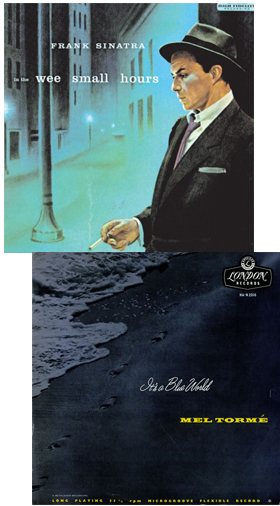
sinatra_torme1955: In the Wee Small Hours by Frank Sinatra and It’s a Blue World by Mel Tormé. I was not raised on Sinatra’s music; quite the contrary—I was raised on decent hymns and mediocre to rotten “Christian” music; I hardly paid attention to Top 40 pop and rock until I was in junior high. And I didn’t really listen to Sinatra or Tormé until a dozen years ago. Prior to that, I simply didn’t “get it”. Then I did. Why? I’m not sure. But since then, I’ve collected some 1300 Sinatra songs. The Chairman of the Board produced many classic albums, but this one is my personal favorite: dark, lush, aching, beautiful, gut-wrenching, perfect. I sometimes fall to sleep listening to it, especially when it’s 2:00 in the morning and I’m wide awake. Sinatra had the rare gift of making you, the listener, believe The Voice was singing only to and for you. It’s impossible to describe; it simply has to be heard and experienced. And don’t forget: Sinatra is the God Father of Prog. Really. Sinatra, by the way, was born a hundred years ago this year.

Tormé did not have the edge or darkness of Sinatra, nor did he ever plumb the depths of emotional despair as did  the legend ten years his senior. But Tormé had range, talent, and genius to burn, not just as one of the greatest vocalists of the 20th century, but also as an accomplished songsmith (he penned 250 songs or so), fabulous arranger, top-notch drummer (and decent pianist), novelist, biographer, author, actor, screen writer, consummate showman, and collector (guns, cars, movies, etc.). It’s a Blue World is a lush, impeccable set of songs, likely influenced by Sinatra’s Wee Small Hours. While Sinatra packs an emotional punch, Tormé thrills with pure beauty and dazzling musicality, all delivered with an effortless ease that reminds me of watching Roger Federer play tennis at Wimbledon. Bing Crosby, asked late in life to name his favorite musicians, named only one vocalist–Tormé–saying, “Any singer that goes to hear this guy sing has got to go and cut his throat.” For a taste, check out Tormé singing Duke Ellington’s “I’ve Got It Bad, And That Ain’t Good”. Continue reading “60 Years, Twelve Albums, One Man’s Favorites”