(Belated) Best of 2016

Please forgive my late entry, for I did not listen to as many new albums as I should have in 2016; I suppose I still have an affinity for the “classics.” Anyway, here is my all too brief list (in no particular order) of the best albums of 2016:moonpool

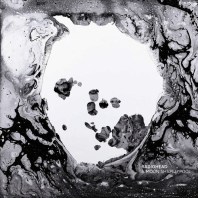
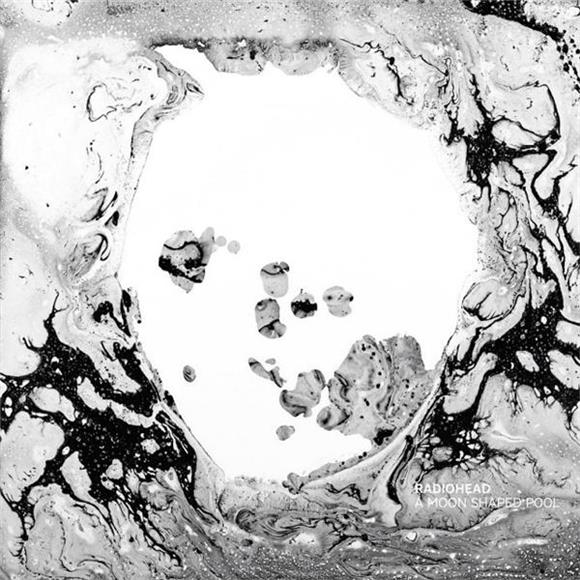
A Moon Shaped Pool (Radiohead): This was my first exposure to Radiohead, and I was impressed. The atmospheric, almost hypnotic vocals of Thom Yorke, supported by Jonny Greenwood’s haunting string arrangements, make this a work of eerie beauty. Burn the Witch and Daydreaming are the two stand out pieces, but the album overall is excellent.

Say So (Bent Knee): Not as well-known as the other two, but a gem nonetheless. This innovative band from Boston features the inbentkneecredible vocals of Courtney Swain, whose range will impress prog and non-prog lovers alike. You can check out my review of their first album here.
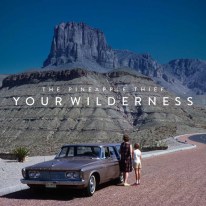

Your Wilderness
(The Pineapple Thief): I must admit that I enjoy just about anything created by Bruce Soord. The man is quite the talent – as a songwriter, vocalist, and guitarist. His latest effort is no exception; it is filled with well-crafted and accessible songs. Overall, it is a great followup to 2014’s Magnoliayour-wilderness


What I Liked This Year

I wasn’t too adventurous in my listening this year – maybe because artists I’m already familiar with released so much good music that they kept me busy!

Here’s what I liked in 2016 in the world of prog:

Tales_from_Topographic_Oceans_(Yes_album)10. Yes: Tales From Topographic Oceans (Blu-ray ed.)
Technically not a 2016 release, but with Steven Wilson’s 5.1 mix, this is a new album to my ears. This has everything a Yes fan could ask for – versions of TFTO that include the original mix, a radio promo, a “needle-drop” vinyl transfer, an instrumental version, in addition to Wilson’s new mixes – literally hours of music. A sometimes maligned work gets its proper release, and it really shines.


The Mute Gods9. The Mute Gods: Do Nothing Till You Hear From Me

I love Nick Beggs’ blend of 70s – era FM rock with snappy songwriting. Turns out he’s much more than one of the best bassists ever.


Continue reading “What I Liked This Year”

After 15 Years, RADIOHEAD is Back!

moonshapedpool
Radiohead’s best album since 2001.

I remember very well the day I bought Radiohead’s OK COMPUTER.  I was living in Helena, Montana, for the year, and I made a not atypical trip down to my favorite weirdo store, Hastings, to get some comics.  You know, the usual batch of Batman and sci-fi titles.

While there, I spotted a stack of CDs labeled something like “prog for a new era.”  Intrigued, I had to check them out.  They turned out to be the Radiohead cd, OK COMPUTER.  Money was rather tight in those days, so I decided to get the cd rather than the stack of comics (I bought just two comics on that weekly trip—such restraint!).

As with almost every other American my age, I had heard Radiohead all of the time during their “Creep” days.  Not only had American alternative radio played the G-verion of “Creep” nonstop, but then Tears for Fears did a cover of it.  It was everywhere in the early 90s, a defining song for the alternative rock movement.

Continue reading “After 15 Years, RADIOHEAD is Back!”

Radiohead — “Daydreaming” Video

The new album drops tomorrow.

In the meantime, the track “Daydreaming” and a video for it directed by Paul Thomas Anderson, in which Thom Yorke plays a wandering homeless dude (who does some pretty cool snoring at the end):

Radiohead — “Burn the Witch” Video & @BradJersak Review

Here’s the video for the new Radiohead song.


Added bonus: some theological commentary.

Radiohead and Prince

I think it’s awesome that Thom Yorke pulled rank on Prince and kept this on Youtube!

By the way, Prince’s best album, IMHO, is Lotusflow3r.

60 Years, Twelve Albums, One Man’s Favorites

(us.fotolia.com | Zarya Maxim)

I began writing this post several months ago, in January, carried along on the brief rush of excitement that comes with a new year. “2015! How about noting a bunch of anniversaries of great albums?” And, in fact, one of the great strengths of Progarchy.com is the sense of music history and the awareness of anniversaries: “Forty year ago….thirty years ago….twenty-five years ago…twenty years ago…”, as opposed to the dominant model out there, which is “Forty minutes ago…thirty seconds ago…twenty tweets ago…” But then life overwhelmed me and the burst of focused energy dissipated for a while. Now it’s back. Best strike while the vinyl is hot—or something along those lines.

The idea here is very simple: I listen to hundreds of new albums every year, along with hundreds of older albums that I come back to for various reasons; but how much of that music has real staying power? And what, in the end, makes a person return repeatedly to This Album rather than That Album? Sure, of course it is because of impeccable taste and a rare instinct for timeless music. (Duh.) But there is a wonderful mystery to it all, for so much of what resonates in a particular album comes from accidental things: the time, the place, the event, the moment. Certain songs bring back great memories; certain songs make you want to jump off a cliff (yes, I’m looking at you, Olivia Newton-John’s “Physical”).

But it isn’t simply a matter of nostalgia, which can only go so far; it is, I hope, more often a matter of discovery, of hearing something new—or, in some cases, hearing something old and suddenly hearing it. Really hearing it.

My criteria is this: what albums from 60, 50, 40, 30, 25, 20, and 10 years ago do I still listen to now on a regular basis? And never tire of hearing? And why? With that, here goes!

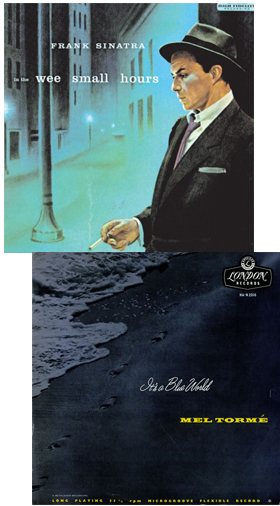
sinatra_torme1955: In the Wee Small Hours by Frank Sinatra and It’s a Blue World by Mel Tormé. I was not raised on Sinatra’s music; quite the contrary—I was raised on decent hymns and mediocre to rotten “Christian” music; I hardly paid attention to Top 40 pop and rock until I was in junior high. And I didn’t really listen to Sinatra or Tormé until a dozen years ago. Prior to that, I simply didn’t “get it”. Then I did. Why? I’m not sure. But since then, I’ve collected some 1300 Sinatra songs. The Chairman of the Board produced many classic albums, but this one is my personal favorite: dark, lush, aching, beautiful, gut-wrenching, perfect. I sometimes fall to sleep listening to it, especially when it’s 2:00 in the morning and I’m wide awake. Sinatra had the rare gift of making you, the listener, believe The Voice was singing only to and for you. It’s impossible to describe; it simply has to be heard and experienced. And don’t forget: Sinatra is the God Father of Prog. Really. Sinatra, by the way, was born a hundred years ago this year.

Tormé did not have the edge or darkness of Sinatra, nor did he ever plumb the depths of emotional despair as did  the legend ten years his senior. But Tormé had range, talent, and genius to burn, not just as one of the greatest vocalists of the 20th century, but also as an accomplished songsmith (he penned 250 songs or so), fabulous arranger, top-notch drummer (and decent pianist), novelist, biographer, author, actor, screen writer, consummate showman, and collector (guns, cars, movies, etc.). It’s a Blue World is a lush, impeccable set of songs, likely influenced by Sinatra’s Wee Small Hours. While Sinatra packs an emotional punch, Tormé thrills with pure beauty and dazzling musicality, all delivered with an effortless ease that reminds me of watching Roger Federer play tennis at Wimbledon. Bing Crosby, asked late in life to name his favorite musicians, named only one vocalist–Tormé–saying, “Any singer that goes to hear this guy sing has got to go and cut his throat.” For a taste, check out Tormé singing Duke Ellington’s “I’ve Got It Bad, And That Ain’t Good”. Continue reading “60 Years, Twelve Albums, One Man’s Favorites”

The Highlands are Alive with the Sound of NAO

North-Atlantic-Oscillation

A review of North Atlantic Oscillation, The Third Day (Kscope; October 2014).

Tracks: Great Plains II; Elsewhere; August; A Nice Little Place; Penrose; Do Something Useful; Wires; Pines of Eden; Dust; and When to Stop.

NAO: Sam Healy (lead vocals, guitar, and keyboards; Ben Martin (drums); and Chris Howard (bass).  The Third Day mixed by Sam Healy.  Artwork by Ross Macrae and Brendan McCarthy.

Highest recommendation.

***

What do you do with a problem like Sam Healy? Queue image of an Irishman-turned-Scotsman dancing around a high mountain top. Oh, and did I mention, he’s really, really smart? That is, really, really smart. Or, did I mention this already?

Of the many joys of editing progarchy for the past two years, one of the greatest has been getting to know a whole slew of truly creative, interesting, serious, perfectionist artists. Of those who reside at the very top of the top—at least in this editor’s not so humble opinion—sits Healy, dressed as an Austrian nun or not. His correspondence reveals that Sam always has that twinkle, that spark in his eye and soul. Though, he doesn’t believe in the latter, it’s there in abundance.

When I received a review copy of The Third Day, North Atlantic Oscillation’s latest aural ecstasy, I scratched my head, a little confused. This isn’t the first time I’ve been a bit perplexed by NAO’s music. When I first received a copy of the band’s second album, Fog Electric, I set it aside for a while as I just didn’t understand what it was trying to accomplish. When I picked it up again, months after its release, I realized how brilliant it was. It hit me over the head, truly a Eureka! moment. For some reason, it just took some time and several listens “to get it.” Now that “I get it,” I regard it as one of the finest albums I’ve heard in my almost four decades of listening to rock music.

This wasn’t the case, for whatever reason, when I first listened to NAO’s Grappling Hooks. That first album by the band grabbed me from the opening moments. I found it as enticing as possibly imaginable. What attracted me most to Grappling Hooks was the way in which Healy’s voice matched the music—and the music, Healy’s voice—so perfectly. The vocals sound like some of the best of early rock—the rock of my mom’s generation, the late 1950s—but mixed with the complicated and layered sonic delights made possible only by the most modern production and engineering. And, certainly, the unique quality of Sam’s ear. Well, the two of them.

Of course, there’s always the flow of the music as well. This matters for any band and any album, but none more so than for NAO. The secret to each of the band’s albums is figuring out the flow of the thing. Why did the band place this song next to this song? Or that song next to that song? Sometimes—in fact, quite often—NAO loves throwing in a curve ball, especially when the music pretends to change tracks. When you look at the chronometer, though, you quickly realize what you thought to be a track change was merely (and, by merely, I mean with genius) a shift in time signature or in the mood of a single piece. How often has it happened that I’ve looked down to see what the “new track” is called only to see the track information indicating there is still two or three minutes left of the piece you had thought had already flown by.

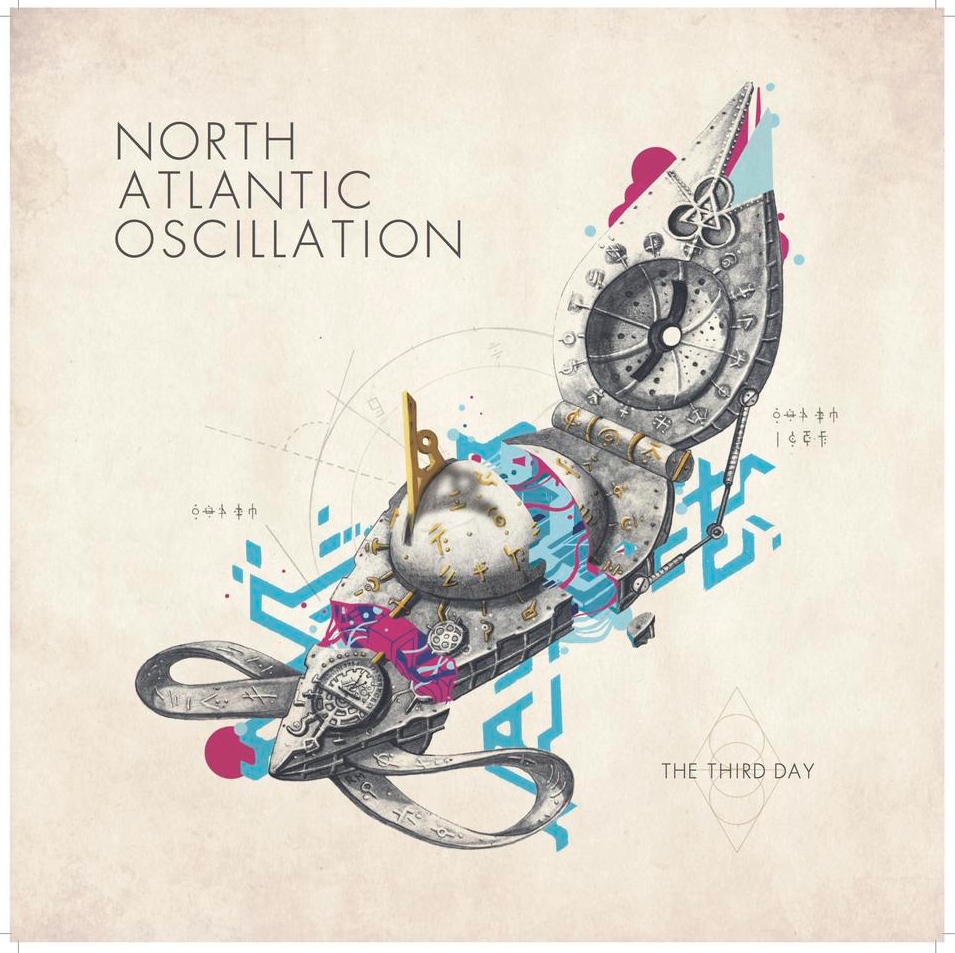
As evidence for the deep mystery and flow of each NAO album, simply check out the album cover of the forthcoming The Third Day.

NAO, The Third Day (Kscope, 2014).

What’s going on here? Pagan, zodiac, Plotinian, and Christian symbols intermixed (intermixing?) on some kind of biotechnology. Layers, of course, but with the infinite loop pointing us toward . . . well, whatever is beyond infinity. Only Buzz Lightyear and William Shatner really know. Under the DaVinci-esque biotech sundial doobob is a flat, Jonathan Ive type computer chip. Add in Hugh Syme-like characters and fonts from the previous two Rush albums, and you might—just maybe—start to understand the convoluted riddle that is a NAO album. I’m getting a bit dizzy just looking at the image.

Steady, Birzer, steady.

Well, I must admit, I was even more perplexed by The Third Day than by Fog Electric. I wanted so badly to like it when the review copy landed in my inbox. After all, I really like NAO and Sam. But, my reaction was somewhat muted. What was going on? It all sounded a bit “samey” to me (I’m having a hard time writing this now, as I’m laughing that it ever sounded “samey”; and, by the way is “samey” even a word?). As with Fog Electric, The Third Day took about a month and a number of listens for me to absorb. Now, though, I think I “get it.” In fact, it’s mind-bogglingly good.

Far from the neoterist “samey” the album is complex, musically as well as lyrically. It is brilliant, stunning, and glowing. While I like the entire album, tracks 6 through 10 are especially good. Far more than on the first two albums, NAO wears its influences a bit more openly on this album and especially with these last five songs. Elements of Radiohead and the Beatles emerge without trepidation. Whereas I thought Anathema almost mimicked Radiohead on their latest release, NAO honors them on The Third Day. If anything, the homage paid to Radiohead and the Beatles only increases my respect for the complete honesty of Healy and co.

Well, I’ve gone on long enough. My summary—buy the album as soon as you possibly can. NAO is, unquestionably, one of the most important and most interesting bands on the current scene. Sam Healy and co. are the future of our beloved genre.

The beautiful, subtle flight of One Thousand Wings

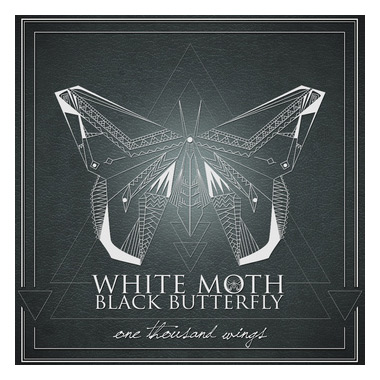
Making my way through the November 2013 issue of Prog (#40) a couple of weeks ago—it takes a while for it to swim across the Pond and trudge through the heartlands to the West Coast—I came upon a short review of the album, “White Moth Black Butterfly” (WMBB henceforth), from the group One Thousand Wings. I noted that the group was headed by ex-Tesseract vocalist Dan Tompkins, whose talents I discovered last year (Tesseract’s 2012 EP, “Perspective”), and then read that the reviewer believed WMBB to be “an absolutely essential work” and, in sum: “Experimental, accessible and quite brilliant, this ranks high among this year’s progressive releases.”onethousandwings_wmbb

Having now listened to WMBB a dozen times, I’d say the reviewer, if anything, undersells the brilliance of Tompkins’ album. And it is, really, Tompkin’s album, as he wrote nearly all the material, played most of the instruments, sang most of the vocals, and co-produced/mixed/edited as well. The One Thousand Wings Band Camp site tags WMBB with descriptives including ambient, cinematic, electronic, and experimental, and they indicate that while the album is “prog,” it is not guitar-driven, features nothing that resembles a solo, and is not really “rock” in any obvious way. While we tend to avoid needless labels here on Progarchy.com, I would suggest “ambient/folk electronica prog.” That aside, simply listen to the album on the Band Camp site.

Listening to WMBB, three other artists come to mind, the first two perhaps expected; the third likely not. Although Tompkins does not sound like Jeff Buckley, I would recommend to this album to Buckley fans, as Tompkins, first, has a tremendous and distinctive voice—clear, piercing, soothing, aching, lovely, strong, subtle, powerful—and, secondly, creates a distinct world, something Buckley did as well on “Grace” (one of my favorite albums, regardless of genre). I should note that the aforementioned  “Perspective” EP includes an impressive cover of Buckley’s “Dream Brother,” which can be viewed/heard on YouTube.

Secondly, there is a fleeting whisper of Radiohead’s Thom Yorke in the mix, specifically, his 2006 solo album, “The Eraser”. That album was far more abrupt and percussive and obviously electronica-ish than WmBB, but there are echoes (even if only in my head). But while “The Eraser” has a more overtly bristling and edgy quality, WMBB is guarded, like a candle fighting against an inevitable night. If Yorke is angry and sometimes snarling, Hopkins is wounded and searching; many of the songs might simply be described as “laments”. Finally—and this is strange—I’m reminded of George Michael. Much of that is due to vocals on songs such as “Equinox”, where Hopkins sounds just like Michael—at least a younger version (not the “Symphonica” version, from what I’ve heard). Take it for what it is!

Instrumentally, WMBB is a beautiful mixture of electronica and acoustic, with deep swells, rich textures, and subtle touches and details, usually in the form of tasteful acoustic guitar or ringing piano. As for lyrics, which is something I’m always interested in, it’s hard to tell as many of them are hard to make out. But the song titles—”Ties of Grace”, “Midnight Rivers”, “Certainty”, “Omen”, “Faith”, Paradise”—suggest some heavy duty rumination, perhaps just as much metaphysical as relational. Again, highly recommended!

Jazz phenom Eldar Djangirov performs Radiohead’s “Morning Bell”

The young pianist Eldar Djangirov (website) has already released several exceptional albums, featuring a wealth of stunning virtuosity and musicality. Dave Brubeck, who knew a thing or two about jazz piano, called him a “genius”, which gives you a sense of his talents. His early albums were sometimes criticized (and fairly so) for being heavy on flash and flair and light on interpretive depth and emotional resonance. But his work has matured with each release and I think his new album, “Breakthrough”, is his finest work yet. And I was pleasantly surprised to see that he took a page from the great Brad Mehldau and performs a Radiohead tune, the lovely “Morning Bell”. Here it is: