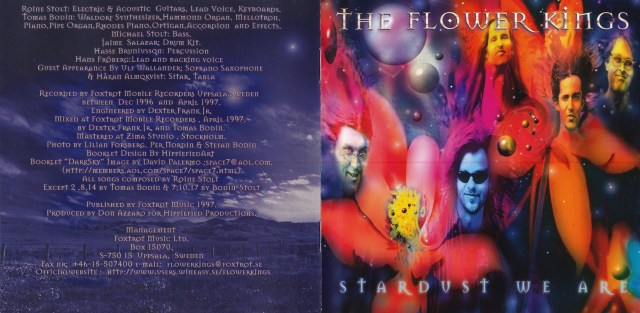
The Flower Kings, STARDUST WE ARE (Insideout Music, 1997). Two disks, 20 tracks.
Every once in a while, I see some progger comment on the internet, “I don’t get The Flower Kings,” to which I always want to yell: “What’s not to get? Hippie prog love and lots and lots of it.”
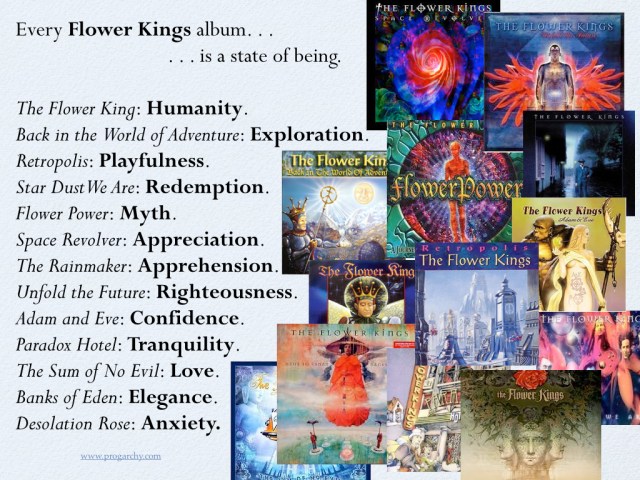
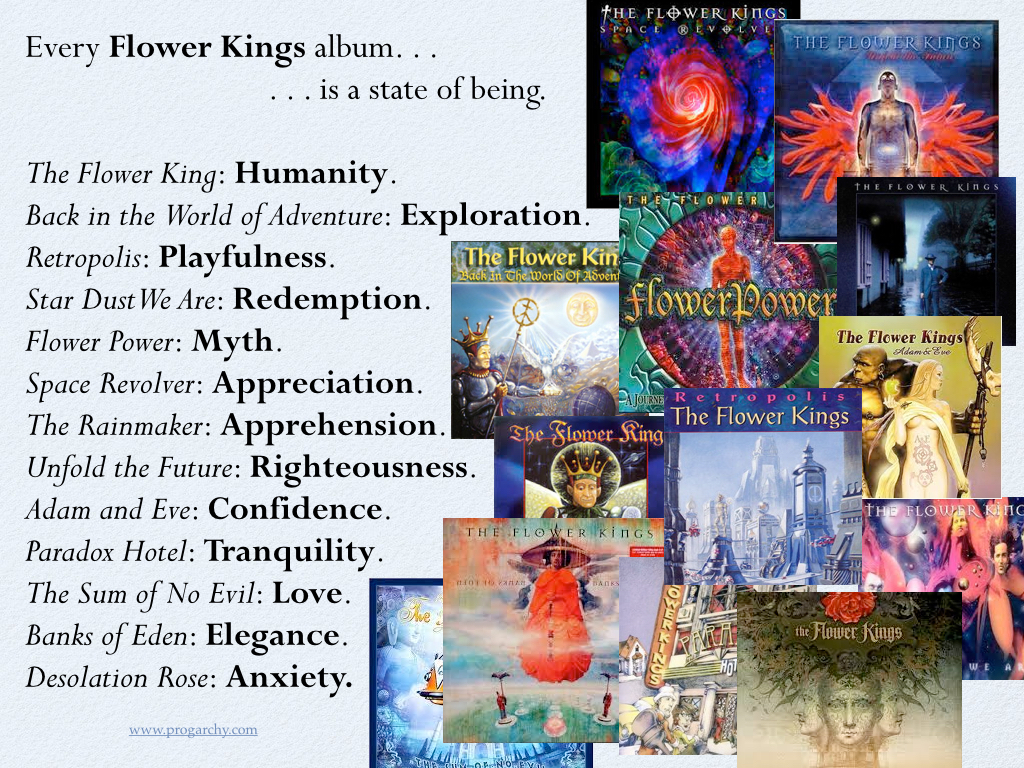
Admittedly, I’m a huge fanboy when it comes to Roine Stolt and The Flower Kings. I’ve listened to them so much over the past two decades that there’s no way I could ever be objective when analyzing the band or its music. To me, every album by The Flower Kings is a small but mighty celebration of the goodness in the world. Each album represents a mood, a state of mind, a sense of being.
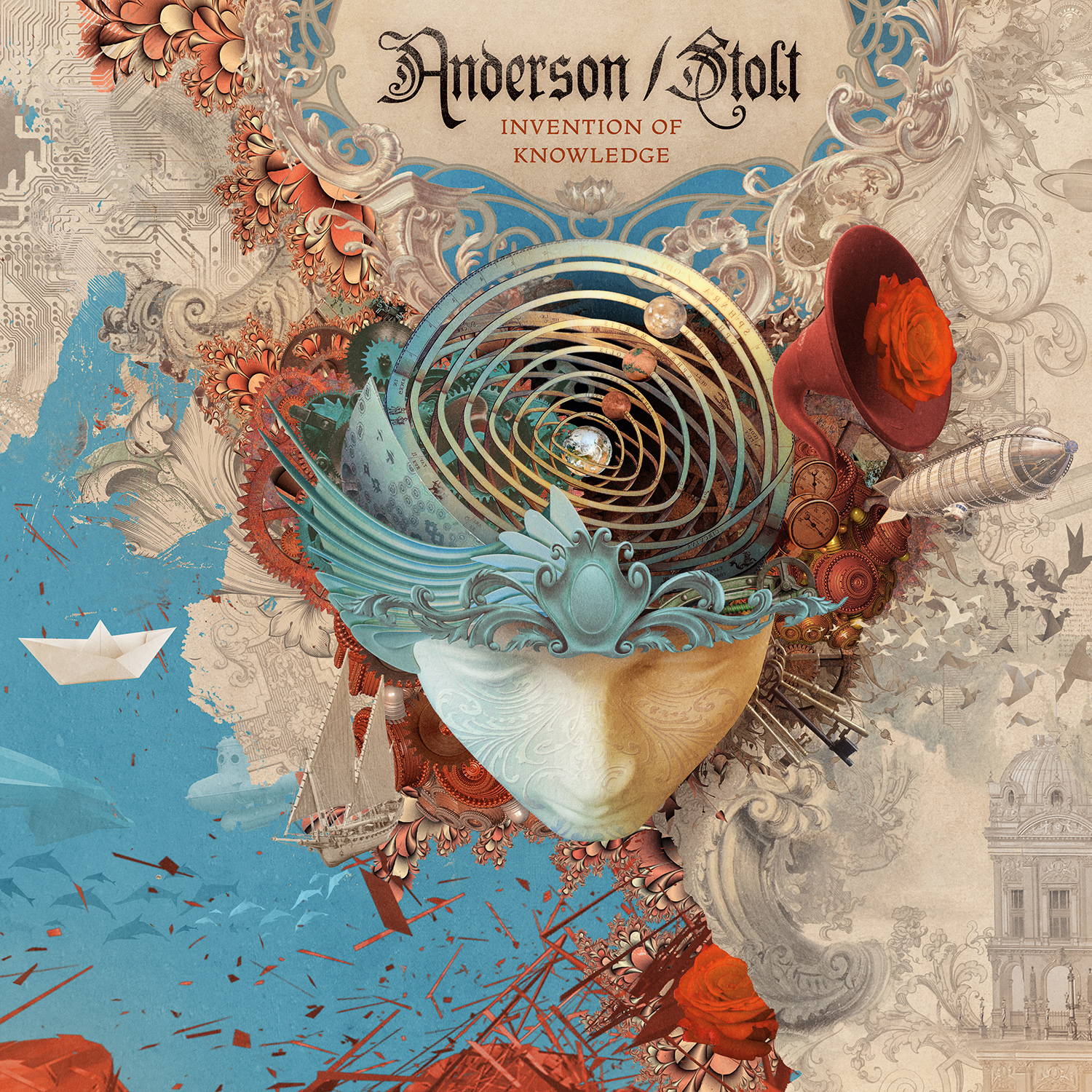
The great folks over at the DPRP (where I am proud to be a writer, as well) have just released a Round Table Review of the new Anderson/Stolt album, Invention of Knowledge. Three great reviews of a fantastic album.
If you like classic 70s Yes and you also like Roine Stolt’s godlike work on the guitar, then this is the album for you.
Check out InsideOut for more info on the album, and be sure and read the DPRP reviews.
Two masters from different eras working together? That’s one way of looking at the combination of Jon Anderson and Roine Stolt. But this isn’t just two giants from the progressive world pooling their considerable natural resources. But a project with a fresh sound, in the process making music that spans the ages.
For me, this is an album that will prove to be timeless,” says Stolt. “In the way that you can put on a Yes album from the ’70s now and it still sounds fresh, so I feel people will be able to listen to what we have done here in 10 years’ time and it will still make an impact.
The idea to bring together the Yes legend and The Flower Kings/Transatlantic maestro actually came from InsideOut owner Thomas Waber.
It was Thomas who originally told me that I should work with Jon Anderson,” recalls Stolt. “But at the time, Jon was just so busy that I couldn’t see any way this might happen.
But fate, as it can sometimes do, already had laid plans for this alliance. So, in February 2014, the pair were brought together on the Progressive Nation At Sea cruise.
Mike Portnoy suggested Transatlantic should do a couple of songs live with Jon, when he agreed to join the cruise. It was meant to be a surprise for everyone, and no more than a 20 minute set. But then Jon emailed and suggested we should also do the first side of the ‘Tales From Topographic Oceans’ album. Now, I love that music, but it was an extra 20 minutes to learn. But we were all really keen to do this. So, we spent three hours on board the boat rehearsing, and then performed for an hour or so with Jon, doing ‘The Revealing Science Of God (Dance Of The Dawn)’ (the aforementioned ‘…Topographic Oceans’ piece), ‘Long Distance Runaround’, ‘And You And I’ and ‘Starship Trooper’. That was the first time I had ever met Jon, but we got on very well.”
“Roine and I had a wonderful instant connection when we met on that boat out of Miami two years ago,” adds Anderson.
From this beginning, Anderson and Stolt began exchanging musical ideas across the world.
The foundation of the songs started many moons ago via the internet,” explains Anderson. “Even though we are at opposite ends of the world, we have been able to co-create this very special album, thanks to the modern technological world we live in.”
“Jon began to send me through files with ideas he had,” adds Stolt. “And I took these, chopped them into bits and began to assemble the tracks for the album. This process began in the summer of 2014 and over the next six months or so, everything came together. Because of the time difference, Jon would get up in the morning and send me over demos he had been creating with musicians out there, and I would then take these and develop them.
And Stolt was delighted with the way things worked out.
It was like going back to the ’70s in one way. Because there were no rules. We were drawing inspiration from all sorts of musical heritages across the world. There were no restrictions. Jon said he didn’t want us to do a traditional progressive rock album, but rather wanted it to be progressive music. It took me a little while to understand what he meant. However, the point was that we didn’t need to aim at producing a rock record. We should be prepared to bring in any musical elements we wanted. And he was right. We took inspiration from anywhere and everywhere. There is so much music out there to be excited by, so why deny yourself that possibility?”
However, there is still a familiarity in the way the music sounds, something Stolt was keen to keep at the core of what has been achieved.
Yes, I felt we should keep it all on recognisable territory. Both of us have a history of music behind us. To take on something completely new wasn’t really something either of us wanted to do. However, this is definitely the most complicated and detailed music that I have ever done. And that’s so exciting.
The recording process began a year ago, with Stolt going into the studio with three old friends to record the basic tracks.
I worked with The Flowers Kings duo of Jonas Reingold on bass and Felix Lehrmann on drums, with Tom Brislin on keyboards. Tom had done the Yes Symphonic Tour, and I knew him well. It was important for me to be comfortable with the musicians at this stage, because that way I was more relaxed about telling them how we wanted it all to sound. If I had been in the studio with people who were strangers, then I might have felt more restricted.
Stolt of course handled all the guitars parts, and subsequently other musicians were inveigled into the tapestry. These included Nad Sylvan plus Pain Of Salvation’s Daniel Gildenlow both on backing vocals, joined by female singers Anja Obermayer, Maria Rerych and Kristina Westas.
I also did some of the backing vocals,” reveals Stolt. “But none of the lead ones. Jon did all of those, as well as writing the melodies and lyrics. And he was happy with me to work with the musicians I chose in the studio. He trusted my instincts.
“Jon recorded his vocals in California, and I constructed these parts of the songs from the files he sent me.
The album, which is titled ‘Invention Of Knowledge’, has been co-produced by the two main protagonists. And Stolt was very impressed with Anderson’s attention to detail.
He was very specific in what he believed was needed. I have never worked with anyone who had so many creative ideas. I loved it. For instance, he might suggest that there was a need for a tribal rhythm at 12 minutes and 43 seconds into a track. Or, that his vocal needed a little effect at seven minutes and 12 seconds. It was so easy working with him. Not in the least what anyone might believe.
The album has just four tracks – ‘Invention Of Knowledge’, ‘Everybody Heals’, ‘Know’ and ‘Knowing’. “As you would expect, these are very long,” suggests Stolt. “It is difficult to describe the way they sound. You’ll have to hear for yourself. There is so much going on musically. As I said earlier, it does reflect the attitude in the ’70s, when artists didn’t allow their creativity to be confined to a linear dimension.”
Working with Roine has been such a musical mystical journey for me,” muses Anderson. “I’ve had so many musical adventures in music over the past decade, and feel the time is just right to release some of the songs that came to me with the help of fellow musicians. Roine has proved to be an excellent producer, as well as a very soulful guitarist and all round musician. We decided to create long-form musical journeys for people to take time to relax, listen and enjoy the results of our labours.
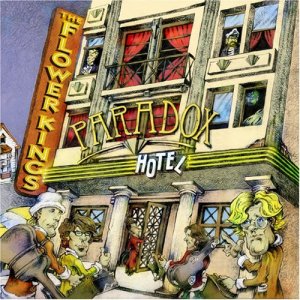
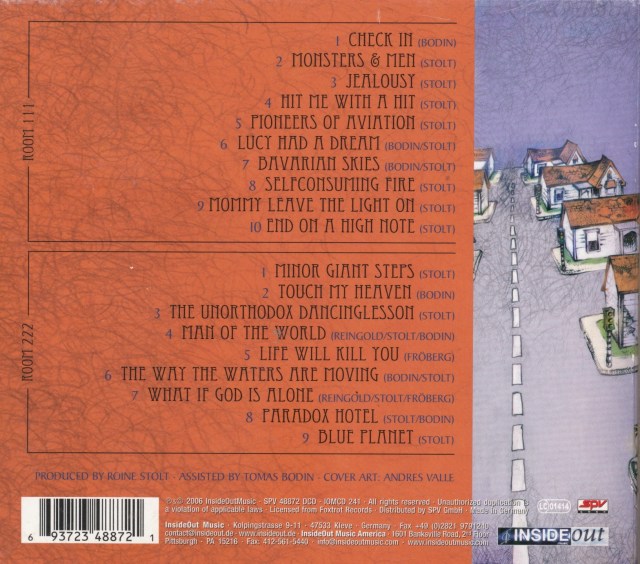
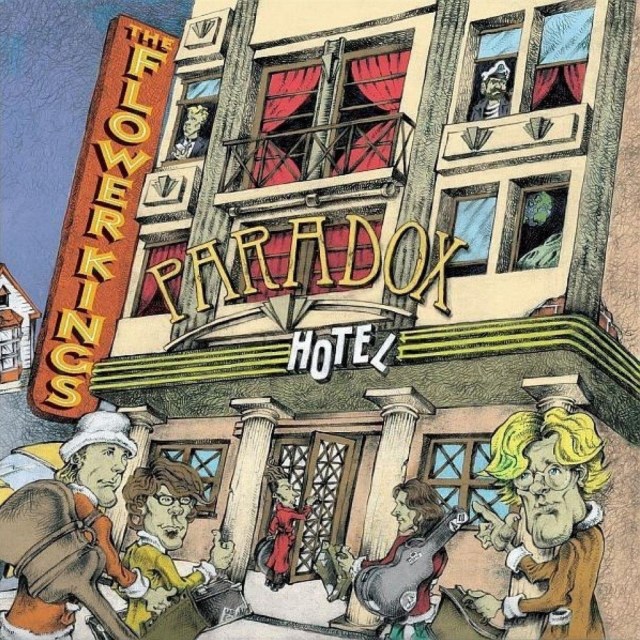
In just two days, one of my all-time favorite albums will turn 10-years old. Happy birthday, PARADOX HOTEL (Insideout Music, 2006).
Insideout, 2006.
I still remember well the day it arrived from amazon.com. I had thought the previous album, ADAM AND EVE, outstanding, but I was looking for something a bit more expansive in terms of music as well as lyrical scope. Given that this new album would be a return to a two-disk format, I’d assumed that Roine and Co. would not disappoint.
Not only did the band NOT disappoint, but they soared.
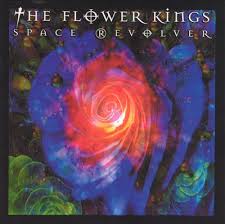
If forced to rank this cd within the Flower Kings’ discography, PARADOX HOTEL would sit very comfortably in the second best position, just below their best album, SPACE REVOLVER.
Expansive.
Interestingly enough, when PARADOX HOTEL came out, Stolt expressed some concern. Usually, a band hypes its latest album as its best (well, “hype” it too strong, as bands earnestly believe this to be true, as they should), but Stolt argued that he had thought the music of ADAM AND EVE more interesting and complex. Yet, the fans had not responded to ADAM AND EVE as the band had hoped, so they had returned to a poppier sound with PARADOX HOTEL.
As is always the case with The Flower Kings, the band alternates between incredibly complicated and tight jazz-fusion-esque music to more loose and open progressive-pop and rock. If ADAM AND EVE tended toward the former, PARADOX HOTEL certainly embraces the latter.
And, yet, while the complexity might not exist track by track, it does overall. It contains some of the darkest music the band has ever written, such as track seven on the first disk, “Bavarian Skies,” but it also reveals the most expansive and joyous the band has ever been with tracks such as “End on a High Note.”
This is a fascinating album in terms of its flow and its story. Though I do not know exactly what the album is about, I have interpreted it—from my first listen to it a decade ago—as a rather Dantesque examination of some form of purgatory. The Paradox Hotel is not quite the Mansion with Many Rooms of Heaven, but it is certainly a way station between this world and the next. After all, immediately upon checking in we meet monsters, men, U2 (I think, in “Hit Me With a Hit”), aviators, the young, Nazis, moms, the jealous, the violent, and the egotistical avaricious. Yet, through all of this, hope remains. Dreams and lights keep us centered on the end of the journey.
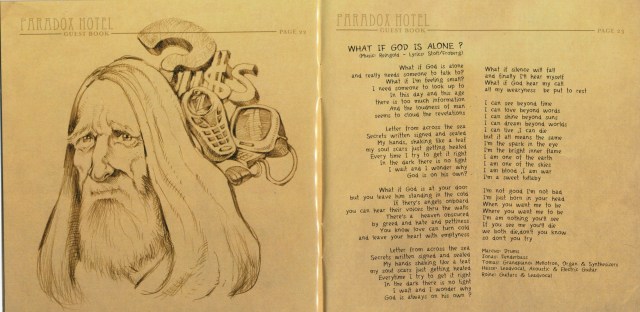
Disk two, by far the more experimental of the two disks, gives us even more glimpses of heaven, allowing us to touch, step toward, and dance in anticipation. Further, we learn that life will kill us and come to the nearly penultimate doubts in asking the most theological existential question ever offered: what if God is alone?
Definitely the most theologically existential song in the history of prog.
Finally, on track eight of disk two, we meet many of the dead who have moved through the hotel from time to time (or time to eternity, more likely), and we end with the glorious “Blue Planet,” seeing what voyages yet remain as we get caught in the revolving hotel doors.
It really could get no more C.S. Lewis and The Great Divorce or J.R.R. Tolkien and “Leaf by Niggle” than this. Indeed, if the Inklings had made prog albums, they would’ve made PARADOX HOTEL.
Or, maybe it really is a Swedish meditation on Dante’s Purgatorio.
Truly, this is some of the most satisfying, thought-provoking, and comforting music I have encountered in my own 48 years in this world. Yet one more reason to praise Stolt and Co. for the glories they see and reveal to all of us.
On April 4, 2006, the Flower Kings released PARADOX HOTEL, not just a seminal album for the band, but a seminal album for third-wave prog.
At the time of its release, Roine Stolt expressed some reluctance with the album, noting that it had not been as complicated, complex, or nuanced as the previous release, ADAM AND EVE (2004). PARADOX HOTEL, he sighed (or, so I’ve interpreted the interview he gave to/with DPRP.net), was just another release of a prog album, but not as progressive as the 2004 album.
While everything the Flower Kings does is excellent, it’s hard not to rate PARADOX HOTEL as extraordinary, even for an extraordinary band. In hindsight, PARADOX HOTEL is probably regarded as a much stronger album than ADAM AND EVE.
Regardless, we’ll be giving PARADOX HOTEL close scrutiny as we celebrate its tenth birthday.
There are few bands that perform as well live as they do in the studio. And, of course, there are some for which the opposite is true.
One band that only gets that much more interesting live is Andy Tillison’s ever-evolving The Tangent. This year, amazingly enough, is the tenth anniversary of the first live The Tangent release, PYRAMIDS AND STARS. Looking at the line up for that tour, one has to wonder if one is caught in some kind of heavenly time-loop or fantasy prog game. Andy Tillison, Roine Stolt, Jonas Reingold, Sam Baines, and Zoltan Csorsz. The lineup could be for a Flower Kings album or, perhaps, a Steven Wilson album.
2005. Very rare.
The ever, endlessly talented Ed Unitsky painted the cover, and, of course, it’s gorgeous.
Only six songs make up this 77-minute feast: The World That We Drive Through; The Canterbury Sequence; The Winning Game; The Music That Died Alone; In Darkest Dreams; and the only song under six minutes in length, a cover version of (ELP) Lucky Man.
The songs—all of which come from the first two The Tangent albums—sound as gorgeous as Unitsky’s cover art would suggest. This is The Tangent, but it’s The Tangent fully alive. What happened in the studio is merely prologue. That the embryo, this the fine young man come of age.
Andy and Roine are especially playful and open to the spirit of the muses. Their love of this music is palatable.
Sadly, this live album is extremely hard to find, and I made it a point several years ago to dig deeply across and through the internet to find a copy. It was well worth the hunt, for I treasure this album like no other. It’s a precious thing to behold.
Maybe it’s the professional historian in me, but I love dates, and I love anniversaries.
This year is the fifteenth anniversary of Transatlantic’s first album, the rather stunning and never aging SMPTe.
I’d not heard of the project until one of my students handed me a copy of the CD in the fall of 2000, about six months or so after its release. I knew Morse (I’d been one of the first–if not the first–persons in Bloomington, Indiana, to purchase THE LIGHT from Spock’s Beard), I knew Trewavas (having been a Marillion fan since BRAVE), and I knew Mike Portnoy, having purchased every Dream Theater release since 1992’s IMAGES AND WORDS. Roine Stolt? Didn’t have a clue at that point, though I’d heard of The Flower Kings.
My first reaction upon seeing the CD cover was one of elation. This looked like a very modernized Yes cover. And, of course, I loved the starship/blimp. I thought the album title, SMPTe, was kind of weird, as I didn’t quite get why the names of the members were so important, but, then, it was a “supergroup.”
Looking at the credits, I thought, “Ok, this is a Morse project. I wonder why he isn’t finding enough fulfillment in Spock’s Beard?” Not that I knew much about anything going on in any of the bands represented in Transatlantic. I knew the music, but I didn’t know any details about any of the bands.
In fact, the only real music news I kept up on at the time was for Rush, Yes, Tears for Fears, and Talk Talk. Admittedly, I did a very good job of keeping up with these bands, but I was aided by some really good user groups and news groups (remember those?!!?).
When I put the Transatlantic cd on my stereo, I was completely floored. The first minute of sound effects not only grabbed me, but all 31 minutes of the epic rooted me in place. I was utterly blown away. Yes had given us songs at 22-24 minutes, and Rush had come close, but 31 minutes? Holy schnikees. This was flat out amazing. Then, “We All Need Some Light,” which I thought sounded much like a Spock’s Beard song. Thus, I Iiked it. And, it was the perfect breather after “All of the Above.” I didn’t fall in love with this track, though, until I heard it live on LIVE IN AMERICA.
The third track, “Mystery Train,” really caught my attention as well, pulling me back into the depths of the album. I loved the psychedelia of it, and I was especially taken with the Beatle-esque refrain. This was an updated version of something off of the MAGICAL MYSTERY TOUR–yet it was an homage not a mimicry.
If I’d been captivated by tracks 1 and 3, I was once again thrown into a tizzy as I listened to the sixteen minutes of “My New World.” The references to the Doors and Jimi Hendrix sold me. And, I’m a sucker for Stolt’s voice. As soon as I heard this album, I immediately purchased all of The Flower Kings up to that point.
SPACE REVOLVER, by the way, became and remains one of my top ten favorite all-time albums.
As I looked back over the first four tracks of SMPTe, I came to realize how very different each song had been. There was no distinctive “Transatlantic” song. They each hit me in different ways.
Then, as though I deserved dessert (which I didn’t!), Transatlantic gave me a remake of one of the best Procol Harum songs ever written. Granted, it wasn’t “Simple Sister” but it was the next best thing.
When Transatlantic played live over the internet, I listened. When the live album of that recording, LIVE IN AMERICA, came out, I bought it–the day it came out. And, I’ve done the same with every single live or studio CD since. I will admit that I was horribly shocked by Portnoy’s language on the live releases. At the time, I was only recently married. My wife comes from a very conservative Texas family, and she knew nothing about prog. As I was listening and Portnoy said inappropriate things, I cringed. Astoundingly, my wife either didn’t hear Portnoy or chose not to hear. She’s now as much a Morse/Portnoy fan as I am. So, all’s well that ends well!
I will admit that it’s a bit hard for me to accept that I first heard SMPTe fifteen years ago. At that point, I was newly married, and my oldest child was just a year old! Now, he’s sixteen, and he has six siblings! Sheesh.
And, my wife is now a prog fan. Again, the times do change.
A huge thank you to Morse, Portnoy, Trewavas, and Stolt. That one album from a decade and a half ago introduced me to the Flower Kings, and it made me realize that third-wave prog was and remains pure, unadulterated love and beauty.
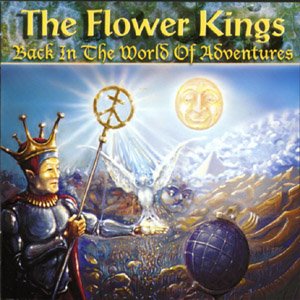
The Flower Kings, BACK IN THE WORLD OF ADVENTURES
1995 Foxtrot Music/Insideout Music
71 minutes; 10 tracks: Back in the World of Adventures; The Prince/Kaleidoscope; Go West Judas; Train to Nowhere; Oblivion Road; Theme for a Hero; Temple of the Snakes; My Comic Lover; The Wonder Wheel; Big Puzzle.
All lyrics and music by Roine Stolt (b. 1956).
The first official Flower Kings album.
In 1994, famed (justly so) Swedish guitarist, Roine Stolt, released a solo album under the title of the FLOWER KING. Less than a year later, he formed—around himself and the band he’d used for the FLOWER KING—the Flower Kings. It’s never quite clear who the FLOWER KING exactly is, but he seems be the embodiment of Jesus. Or, at the very least, a very peace loving Johannine hippie Jesus, and his betrayer is Judas Iscariot. In the opening song of the 1994 album, with the same name as the album, Stolt sings:
We believe in the light we believe in love, every precious little thing
We believe you can still surrender, you can serve the Flower King
And, in the grand song, “Humanizzimo,” Stolt becomes even more blatant:
Did someone pray for the long lost souls
or the tired ones who lost their goal
When the seventh angel rise his sword
Can you hear the one voice of the Lord
With the blood of Jesus on the nail
we turn the balance on a scale
In pain and fearless suffering
lies a message from the King of Kings
I don’t know if Stolt has any particular religious leanings, but he’s obviously very, very pro Jesus. At times I’ve wondered if he’s Roman Catholic, as he possesses a truly sacramental view of the world, but he might also—logically, given the Swedish background—be Lutheran. Again, I’m not sure labeling the song writer with any particular denomination totally matters. Stolt clearly loves what is humane, true, good, and beautiful, and his religious views are more poetic and mythic than “in your face.”
States of Being.
It would be hard to exaggerate the importance of the album to what we love as our current and overwhelming deluge of progressive rock. In 1990, prog looked pretty much dead as a genre. Sure, there were plenty of rock, pop, and so-called alternative bands—Pearl Jam, Dave Matthews, Phish, and Smashing Pumpkins were the most obvious–employing aspects of prog, but almost no one admitted to the label.
Then, 1994 hit.
Marillion’s BRAVE and Roine Stolt’s THE FLOWER KING emerged as though from the gods themselves. How could these albums not be prog? They were as prog as prog could be. Unapologetically, blatantly, and deliriously prog. As our beloved progarchist friend, Andy Tillison, would later explain, this was the beginning of third-wave prog, a wave that has lasted for at least 19, maybe 20, years.
In many ways, though, 1994 would prove a trial run, a glimpse, merely, of what was coming. It was 1995 that witnessed the full arrival and onslaught of third-wave prog. Consider the releases: THE LIGHT by Spock’s Beard; AFRAID OF SUNLIGHT by Marillion; and THE SKY MOVES SIDEWAYS by Porcupine Tree.
And, of course, there was the first official Flower Kings’ album, BACK IN THE WORLD OF ADVENTURES. The title couldn’t be more perfect, and we might as well refer to it as the opening statement of third-wave prog. Stolt, indeed, was joyously leading us back to the adventure that had seemed to have fallen so undramatically in 1980 or so.
The first Flower Kings’ album begins with the title song, an upbeat psychedelic excursion. “Welcome back. . . welcome back to the world.” One of the nicest things about Stolt’s writing is his uncanny and ingenious ability to mix taste and class with exploration. Though his writings fits so nicely in the genre of rock, its playfulness has much in common with jazz fusion. And, Stolt is eminently smart and inquisitive.
Soaring vocal harmonies (rather complex at times), jazz-like runs, and humane and gorgeous lyrics help define almost all of Stolt’s music. In recent years, he’s revealed a darker, more critical side in and with his lyrics, but this has been well earned. On Desolation Rose, the latest album by the Flower Kings, Stolt’s observations are wise and sad rather than bitter and distraught.
Interesting sound effects and atmospherics emerge unexpectedly around every corner of the first album. Whistles, trains, dings, scratches, bells, Latin rhythms, woodwinds, references to Hitchcock movies, and a general state of contentment pervade the entire work. Some songs don’t even reach the two-minute mark, while the opening and final tracks exceed 13 minutes each.
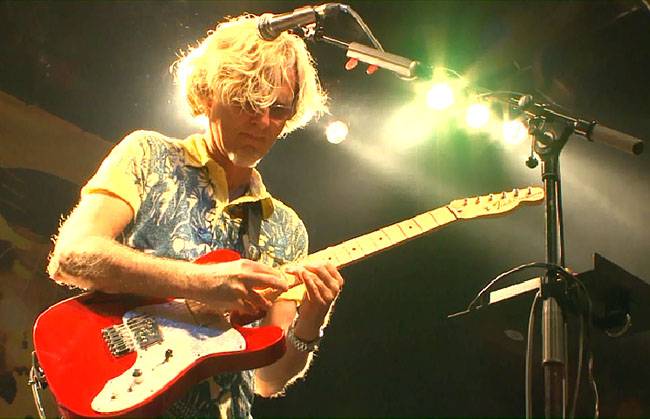
Roine Stolt. The Pale Rider and a Flower King.
Interestingly enough, BACK TO THE WORLD OF ADVENTURES is roughly divided between instrumental numbers and vocal numbers—but the album is merely a shadow of what is and was to come. Mystery had beckoned and Stolt consented. Don’t get me wrong. BACK is an outstanding album in every way, but it really is only a beginning of a majestic journey that continues to this day. Reviewers and admirers almost always point out how “prolific” Stolt is. What an understatement. Not only would 11 more studio albums from the band follow—with Stolt leading all—but there were still solo albums, the Tangent albums, Transatlantic albums, Kaipa albums, Agents of Mercy albums, and . . . the list continues. Looking at Stolt’s complete discography is simply mind boggling. Never a moment of dullness in the Swede’s life. I envy his biographer.
Twenty years old. Happy birthday, Flower Kings. Sadly, I didn’t meet you until your fifth birthday. Still, it’s been a brilliant decade and a half ride with you.




 Progarchy