Did Dave Grohl admit that Soundgarden was a far better band than Nirvana?

The former drummer of Nirvana (#3 on my personal list of Most Overrated Rock Bands of Alltime), recently spoke with Rolling Stone magazine about Soundgarden’s album, Superunknown, released twenty years ago. Superunknown, in my completely objective opinion (ha!), is the greatest album to come out of the Nineties grunge scene in Seattle. And, frankly, it sounds as if Grohl, now frontman for Foo Fighters—a group I far, far prefer to Nirvana—seems to agree:

Superunknown is, in my book, right up there with ’90s classics such as Radiohead’s OK Computer, Jeff Buckley’s Grace and U2’s Achtung Baby. I always found Nirvana to be rather boring, just as I found Pearl Jam to be rather boring and rather pretentious (I don’t usually care for bands who try to constantly make Big Statements); it doesn’t help that I cannot stand Eddie Vetter’s weird, warbling voice. But, hey, let’s focus on the good stuff. Soundgarden is coming out with various deluxe packages of the remastered Superunknown (my copy should arrive this week), and Chris Cornell—who was good friends with Buckley—spoke recently to Radio.com about the album’s anniversary:

Cornell, I should remind readers, once said, “I was a nerdy shut-in who listened to prog-rock.” And while Soundgarden is constantly compared to Led Zeppelin, the group was more influenced by Black Sabbath, the Beatles (Cornell’s favorite group), Kraut rock, the Stooges, the Clash and other punk-ish groups.

Speaking of the hit song, “Black Hole Sun,” Grohl remarks, “It was so much more melodically sophisticated than anything any of the other bands in Seattle were doing. It was a big deal.” The same could be said for the entire album, which is, musically and lyrically, one of most eclectic and sophisticated hard rock albums ever produced. Billboard.com has a really good piece about the album that gives a track-by-track tour of the entire 70 minutes. Apparently the making of Superunknown pushed the limits of the technology involved:

Michael Beinhorn, who produced the album with the band at Seattle’s Bad Animals studio in the summer of 1993, told Billboard in 1994 of how he’d overload “tape to the point of distortion, using massive EQ, massive compression. We experimented with chains of four equalizers and four compressors in one signal chain, on one instrument. The end result is a record that is both incredibly dense and overwhelmingly present. There is a tangible sense of air being moved.”

Another interesting note, new to me: the final song, “Like Suicide,” was inspired by a dead bird. Death and mortality, of course, figure heavily in the album; there is a sense of apocalyptic foreboding that is equally chilling and compelling, in large part because the songs are so, well, singable (beware, however, trying to match Cornell’s high notes). My favorite track, “Limo Wreck,” features all sorts of weird tunings and time signatures at the service of a haunting, dirge-ish cut that swells in intensity as Cornell wails: “Under the shelf/The shelf of the sky/Two eyes, two suns/Too heavenly blinds/Swallowing rivers/Belongs to the sea/When the whole thing washes away/Don’t run to me.”

Once I’ve had a chance to listen to the remastered album, I’ll share some more thoughts.

My Wave: Soundgarden and Superunknown

.@soundgarden performed at #itunesfestival at SXSW. Watch the free show http://itunes.com/festival.

Rolling Stone reports:

Things got super-heavy on night three of the inaugural iTunes Festival at SXSW in Austin last night, as Soundgarden dove back into the thundering grooves of 1994’s Superunknown, performing the career-defining album in full for the first time. It was a lesson in grunge at its prime, delivered with swagger and Chris Cornell’s perfectly unhinged wail, still as piercing and musical as ever.

The sound was dark and slippery, and in 2014 seemed as tough and timeless as key hard rock influences Black Sabbath and Led Zeppelin.

Here’s the video for “My Wave.”

The Winery Dogs (Best of 2013 — Part 10)

Coming in the #10 slot (in alphabetical order) on my Best of 2013 list is this supergroup’s eponymous bolt of lightning:

The Winery Dogs

Wow. This album blew me away.

One of my all-time favorite prog drummers, Mike Portnoy, teamed up with Richie Kotzen and Billy Sheehan this year, and they demonstrate to us all the unbeatable power of the power trio when it is done right.

The thrill of listening to these catchy songs, and to the virtuoso musical chops on display in them, evoked a lot of happy musical memories of musical “first encounters” for me.

First, there is the rush of listening to Rush. Like I say, there is nothing quite as exciting as the hard rock power of the power trio when it is done right. The Winery Dogs evoke for me the musical joy I experienced when first listening to Rush in high school. Of course, the greatness of Rush is still there to be savored with every listen. But there is nothing quite like the first ten times that you listen to a truly great album. With this release from The Winery Dogs, we get to experience that kind of magic again, as for the first time.

Second, there is the sonic adrenaline that I love to tap into by listening to Chris Cornell and Audioslave. Therefore I am dedicating my Winery Dogs nomination here for the Best of 2013 to Carl, my fellow Soundgarden aficionado in the republic of Progarchy, in case he has not heard it yet. It’s remarkably satisfying, for those of us who can’t get enough of such upper-echelon vocal stylings, how well Richie Kotzen can recreate the thrill of listening to Chris Cornell.

Third, there is the undefinable excitement that skilled musicianship can bring to enhance and elevate any genre’s tropes. Suddenly, as you round what seems to be a familiar musical corner, you are blindsided and pleasantly surprised by an unexpected display of virtuosity that showers you with musical grace. When Billy Sheehan works his otherworldly magic here on bass guitar, or when Richie Kotzen transports us into ordinarily inaccessible dimensions of guitarcraft, or when Mike Portnoy muscles his way out of the speakers and right into the room next to you, I am reminded of those magical younger days when my friends and I first began listening to all those great, lesser-known albums by “musicians’ musicians.” Those discs opened up musical pathways that most of our schoolmates were missing out on. For some reason, when listening to The Winery Dogs, memories of listening to The Steve Morse Band come to mind for me. But each of you will find that your own personal memories of your first listens to “the greats” will be evoked by this album’s dazzling display of virtuosity.

Best of all, this album is a perfect cure for the dragon sickness of any nascent prog tendency to become a tribal, self-enclosed musical world. It makes the joy of music available to anyone with the ears to listen.

This disc is a perfect illustration of how musical men with prog chops can quite simply put their musical skills in the noble service of simply rocking out. Anyone with a heart can relate to this cause. I invite you to happily endorse it with the simplest of gestures, like a fist pump or an air guitar solo.

Rock on, gentlemen.

Review: Chris Cornell at The Shedd (Eugene, Oregon) on October 19, 2013:

chriscornell_progarchy

No “Black Hole Sun”? No “Billie Jean”? No electric guitars or drums? No ten-minute versions of “Slaves and Bulldozers”?

No problem.

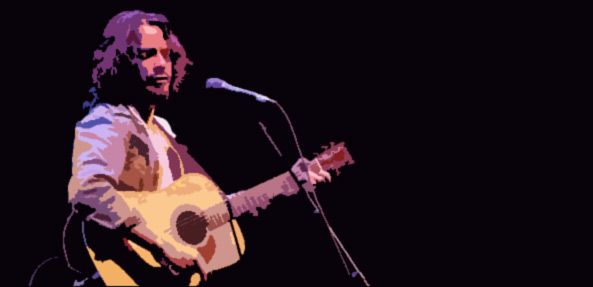
Chris Cornell, the once-again front man of Seattle’s legendary Soundgarden (see my review of King Animal) and one-time front man of super group Audioslave, walked onto the stage without any introduction at 9:00 pm promptly, setting off an eruption of applause and whistles from the sold-out crowd. The Shedd is an intimate (and somewhat cramped) venue that seats around 700 or so, and my wife and I had excellent seats: dead center, front of the balcony. The lanky Cornell is fit and relaxed; he acknowledged the crowd with a warm grin, placed the needle on the record player set up in front of seven guitars, and launched into “Scar On the Sky,” from his second solo album, Carry On (2007), which happens to be the first full Cornell album I ever heard.

Although Soundgarden achieved fame while I was in college, I didn’t pay attention to Cornell until years later, having mostly ignored the entire grunge movement during the 1990s, mostly because of a dislike for the music of Nirvana—a dislike I maintain to this day, without apology. Nirvana may have sold more albums, and Kurt Cobain may have attained a semi-mythical status because of his suicide at the age of 27, but Cornell, who is now nearly 50 years old, has earned respect the old-fashioned way: by staying alive, writing songs about suicide rather than committing suicide, producing a steady stream of good to great albums and songs, and by touring often in recent years in support of the same.

Some rock stars burst onto the scene as bright stars and then become fading, falling stars—or drug-addled recluses, muttering nut-cases, or sad shells of their former selves. But others, such as Cornell, start slowly, build steadily, hesitate for a while (oddly enough, I think of Sinatra going silent in his late 30s before embarking on his stunning albums for Capitol in the ’50s), and then find their footing at a decisive point in mid-career, and demonstrate that they are, in fact, real musicians and not just brands and products.

Cornell’s two-hour-plus long set this past Saturday was a case in point, for it highlighted both the legendary voice—which was in exceptional form—and the stellar and varied songwriting. The former is the immediate draw, for there is nothing quite like Cornell’s multi-octave, raw, amazingly textured voice, which can move from face-melting howl to falsetto sweetness to blurred darkness to startling, clear heights—often all in the course of a single song. But the acoustic show brought out facets of Cornell’s songs not always obvious in full studio dress: the unusual chords and progressions, the subtle shifts in tempo and tone, and the masterful balance of melody and rhythm. “Sunshower”, for example, is a ballad-like number that slowly builds and morphs into a series of gospel-ish chords full of longing and a sense of rhapsody.

Conversely, the rocker, “You Know My Name” (from the 007 film, “Casino Royale”) is one of Cornell’s most straight forward (and popular) tunes, albeit with some sly humor: “I’ve seen angels fall from blinding heights/But you yourself are nothing so divine/Just next in line…” While he is not a finger-picking virtuoso, Cornell is a more than capable guitarist, energetically wringing out walls of sound at one moment and then playing delicate, swirling lines the next.

Between songs, Cornell’s banter was often quite funny and self-deprecating, as when he recalled that he had only played in Eugene once before, with Soundgarden in the late 1980s, “in somebody’s basement, with two people in the crowd: the guy who booked the show and the janitor. No one even bothered showing up just to get drunk!” He noted that his first solo acoustic show, so to speak, was a small event in Sweden while touring with Audioslave; although it was “nerve wracking,” it was also surprisingly enjoyable, like walking a tightrope without a net: “If you screw up, everyone knows!” While the younger Cornell sometimes seemed intent on playing rock god—and unleashing his aggressive, freakish wail on audiences—the middle-aged Cornell seems to truly enjoy digging into the songs and revealing their more subtle riches.

Crowd favorites included the beautiful “Seasons,” the Temple of the Dog classic, “Hunger Strike” (with opening act, Bhi Bhiman, performing the vocal part originally performed by a certain Eddie Vetter), and Soundgarden’s “Fell on Black Days,” which featured the full range of Cornell’s vocal powers.

Somewhat surprisingly, the huge hit, “Black Hole Sun” did not make the evening’s set list, despite plenty of screamed requests. Nor did Cornell’s cover of Michael Jackson’s “Billie Jean,” although he did joke of how one reviewer thought it was an “ill-advised” song to record. But it was a delight to hear under-appreciated gems such as “The Day I Tried to Live” (one of my favorite Soundgarden songs, from the classic album, Superunknown), the Audioslave tune, “Like a Stone”, and the piano-driven, gospel-ly “When I’m Down” (from Euphoria Morning, Cornell’s first solo album). An unusual twist came when Cornell played U2’s “One”—but using the lyrics from Metallica’s “One,” a mash-up that proved the value of combining musical talent and a wry sense of humor.

For an encore, Cornell played a new song, the blue-inflected “Misery Chain,” written for the upcoming film, “12 Years of Slavery,” and concluded the show with an extended version of “Blow Up the Outside World,” the dreamy-to-screamy, controversial hit from the 1996 Soundgarden album, Down On the Upside.

Here is video of Cornell singing “Fell On Black Days” at The Shedd:

And my concert of the year is…

No, no, no: this is not a post about choosing my favorite concert of 2013 out of fifty concerts attended—for the simple reason that I’ve not attended a single rock concert this year. Not one. (However, I did attend an organ concert a couple of months ago, and it was stunning. But that’s another post.) The fact is, I am one of those pathetic souls (I’m only being half-self-deprecating) who owns some 60,000 songs and has been to very few concerts over the years. In fact, I’ve attended so few relative to my love for music that the one concert that really stands out to me is one I missed: Jeff Buckley in Portland, Oregon, on May 8, 1995. I thought of going, but it was on a Monday night, I had to work early the next morning, I was newly married (and my wife wasn’t a Buckley fan)—and then Buckley drowned two years later. Rock concerts that stand out for the right reason—that is, I actually attended them—include Seal (1994), Martin Sexton (three times), Brandi Carlile (three times), and Def Leppard (1988). I’ve never attended a true prog concert, which probably should get me kicked off of Progarchy.com.

However, I’ve had better luck with jazz—my favorite musical form, when push comes to shove—having seen Herbie Hancock, Dave Holland, Brad Mehldau (twice), Michael Brecker, Roy Hargrove, and Wayne Shorter in concert, all here in Eugene, Oregon, of all places. Eugene, the home of the University of Oregon (or Nike, if you will), does have some big names drop in on occasion—Elton John was here a couple of years ago, as was the Dali Lama, who did not sing—but not many. Portland is two hours away, but rarely has prog groups perform, as far as I know.

All of which to say that my concert of the year is going to be a solo Chris Cornell show in a couple of weeks at The Shedd, a wonderful and intimate venue (see here and here) all of five minutes from my house. And, yes, my wife is going with me, because she’s game for hearing Cornell with just an acoustic guitar; I doubt she’d go for a Soundgarden gig. This is Cornell’s second “Songbook” tour, and his performances on the first tour earned rave reviews, leading to the release of the “Songbook” album, which featured plenty of great Cornell tunes and some covers (“Imagine”, “Thank You”, and “Billie Jean” being favorites). Cornell is a triple threat: a great rock singer, a fabulous (if often under appreciated) songwriter, and a fine interpreter who likes to go into surprising territory at times, as his cover of Michael Jackson’s “Billie Jean” demonstrates (he first played it about ten years ago in Sweden). Those who have read my, ahem, detailed review of Soundgarden’s “King Animal” know that I find Cornell’s lyrics to be particular fascinating. A good example of the lyrical prowess is evident in a little known but intriguing Cornell song, “Scar on the Sky” from his second solo album, “Carry On”. Meanwhile, I plan to write about the concert, which will likely be free of prog but still long on great music.

As I fall I leave this scar upon the sky
A simple note for you, I’ll wait for your reply
And in your answer I’ll regain my will to try

So hover in the diving light
We will rip the night
Out of the arms of the sun one more time
Close your eyes and we will fly
Above the clouded sky
And over the dumbstruck world we will run

In these hills they wash the golden grains away
To the valley under all of this I lay
And may you dig me out unearthed and saved

Short reviews of new music from Asia, Proto-kaw, Mystery, and Godstick

I’ll skip my usual apologia attempting to explain my long absence from this fine blog and instead spend my limited, if not valuable time, remarking on four recent prog and proggy albums that have been found a home on my regular iTunes rotation. I may write longer reviews of a couple of these albums, but some short remarks are better than none.asia_resonance
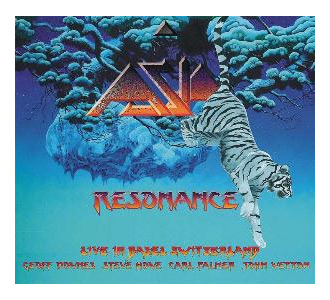
Asia — Resonance (The Omega Tour, 2010; released 2012): After Kansas, Asia was the group that first introduced me into the world of prog, back in the early to mid-1980s, when I was an innocent small town Montana boy making my way through high school. I recall seeking out books and magazines that explained the musical pedigree of Downes, Howe, Palmer, and Wetton, and thus being introduced to early King Crimson, ELP, Yes, and more. I know that Asia has been a source of debate among prog fans, some of whom dismiss and even deride the group; I’ll just say that I really liked and still do like the first two albums, Asia and Alpha, and make no excuses for the warm and gratifying nostalgia they bring to the surface whenever I play them. And, truth be told, I’m partial to the third album, Astra, which marked the first of two billion line-up changes (Mandy Meyer took over guitar from Howe, who had departed), as it is actually a good, hook-heavy example of what might be call “arena prog” or “pop prog” or something similar. Anyhow, the original line-up has been back for a while—and getting solid to excellent reviews—and this live album documents the group’s 2010 tour. I’ve heard cuts from earlier live albums by Asia, and have found most of them disappointing, especially in the vocal department. But this album, dare I say it, is rather stunning, both in terms of the outstanding sound quality and the amazing power and clarity of Wetton’s voice. Wetton, to my ear, sounds just as good as he did on the studio cuts from the early and mid ’80s, which is saying something. The playing is excellent, of course; my only small beef is that the drums seem a bit back in the mix, although there is an extended and fine drum solo on “The Heat Goes On”. Otherwise, a great mix of cuts, with some nice acoustic-oriented variations of old hits such as “Don’t Cry” and “The Smile Has Left Your Eyes”.

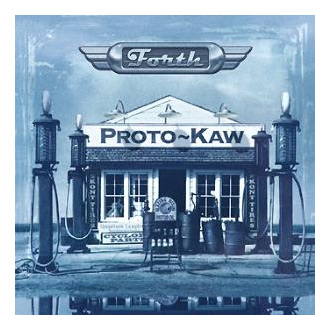
• Proto-kaw: Forth (2011): Speaking of Kansas, the group Proto-kaw was the second of three early incarnations of what eventually became simply “Kansas” in 1973. The key constant in protokaw_forththose groups was songwriter, lyricist, guitarist, and keyboardist Kerry Livgren, who conquered the world with Kansas in the 1970s (“Dust in the Wind”, anyone?), had a run of contemporary Christian rock albums in the 1980s (both solo and with the group AD), and then reformed Kansas and Proto-kaw in the 1990s. (Fun fact: metal legend Ronny James Dio sang lead on two songs on Livgren’s first solo album, “Seeds of Change”, in 1980.) All three of the newer Proto-kaw albums are worth checking out, and that is especially true of Forth, the most cohesive and fully realized album yet by the group. What strikes me, as a longtime fan of Kansas, is how much classical influence there is in Livgren’s writing, as his songs often have a suite-like quality that builds on either strings or keyboards/guitars that act as a strings section. Proto-kaw, like all Livgren-led bands, has dual lead singers (yes, Steve Walsh was a the primary singer in Kansas, but Robby Steinhardt sang lead or co-lead on numerous songs), and features excellent and often complex harmonies, masterfully constructed arrangements, and strong songwriting. One distinctive element is the presence of saxophone and flute (John Bolton), used to great affect in song such as “Pilgrim’s Wake”, one of my favorite cuts on Forth. A must listen for anyone with a soft spot for 1970s Kansas. And, speaking of Kansas (again!), this year marks the 40th anniversary of the group’s founding; I plan a couple of posts about the group and some of my favorite Kansas albums and songs.
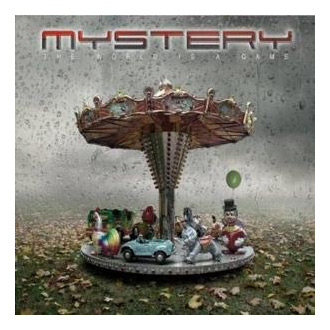
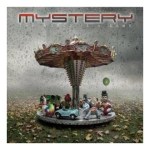
• Mystery: The World Is a Game (2012): How embarrassing it is to admit that prior to the Yes album, Fly From Here (2011), I had no idea who Benoît David was. Having replaced Jon Anderson and toured with Yes—and then having himself been replaced due to his own respiratory issues—the talented vocalist worked on his third album with veteran Canadian proggers mystery_worldMystery, a group he had joined in 1999. Having not heard any of his work with Mystery (which my iTunes annoyingly tagged as “The Mystery”), I was surprised—in a good way—that David did not sound like Anderson and that the group does not sound much like Yes, although the influence is present. In fact, at times David sounds more like another great Canadian singer, Geddy Lee. The two words that keep coming to mind after repeated listens of this exceptional album are “melodic” and “soaring”. The vocals soar, the guitars (by band founder, guitarist, lyricist, and producer Michel St-Père) soar, and the songs soar with a wonderful sense of discovery, melancholy, joy, and introspection, a not-so-easy mixture to navigate. And then there is the drumming of Nick D’Virgilio, who is rightly revered as one of the finest drummers in the prog/rock world. His drumming is, in a word, orchestral, and it is reason alone for buying this fine release. But, for me (a vocalist junkie), it is David who is the revelation here, especially after hearing his solid but rather emotionless performance on Fly From Here. In the words of a reviewer on ProgArchives.com, “Finally vocalist Benoit David proves what a versatile and commanding singer he is, a million miles away from the Yes/Jon Anderson clone dismissals. It’s also great to hear his voice so full of human feeling and compassion again after being so over-produced and rendered mostly lifeless on the Yes album `Fly From Here’!” Exactly right.
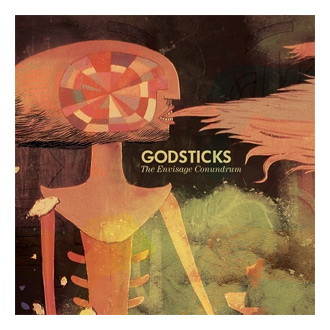
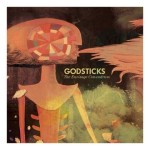
Godsticks: The Envisage Conundrum (2013): Here is a group (from South Wales) I knew nothing about a week ago, but has captured my attention in a way that only a few groups have on first listen. Explaining why is a bit difficult; the difficulty arises, in part, from the most enjoyable fact this is a group that is very hard to describe or label or situate in the universe of godsticks_conundrumprog/rock music. Nearly every review I’ve read says the same, and rightly so. One of those reviews, by Adrian Bloxham, puts it well: ” The world of Godsticks is not straightforward; they seem to have baffled other reviewers trying to pigeon hole them. They make their own brand of what they describe as ‘progressive rock/pop, but it is very much their own take on the sound. You get the idea that this is exactly the music they have inside their heads trying to get out and if you like it they will be pleased but that’s not why they do what they do.” The one influence I hear is later King Crimson, but even that is hard to pinpoint, although the angular, often astonishing guitar work by guitarist/singer Darran Charles brings it to mind in several places. None of the songs are longer than seven minutes in length, but some of them pack in more twists, turns, veers, swerves, and surprises in five or six minutes than many bands can pack into songs three times as long. The title cut is a perfect example. It begins with a chugging, almost “boogie” riff out of which emerges a spider-like flurry of notes, leading into a wall of harmonized vocals over a heavy, grunge-like riff backed by the tight, slightly funky, never quite straight forward rhythm section of Steve Roberts (drums, keys) and Dan Nelson (bass). Charles’ voice is part of the mystery here, a strong, clear instrument that manages to be intense, detached, soulful, and slyly humorous (and occasionally darkly smirking) all at once. There is an abundance of odd chords, meters, notes, and harmonies, sometimes, to my ear, sounding like a Robert Fripp-inspired space alien sibling of Soundgarden. And did I mention the album features a 3:49 piano solo by Roberts that could easily have made it onto one of Keith Jarrett’s solo albums? Followed by a three-part suite—”Borderstomp”, parts 1-3—that sometimes calls to mind Steve Vai? Not straightforward, indeed!
The Strange Case of … (Best of 2012 — Part 10)

Halestorm

The final album in my Top Ten for 2012 is Halestorm’s The Strange Case of …, on which Lzzy Hale showcases her stadium-calibre rock voice and her split personality (“Mz. Hyde“): just as the album title alludes to Robert Louis Stevenson’s novella The Strange Case of Dr Jekyll and Mr Hyde, the theme here is how a jaded maneater’s tough outer shell (tracks 1-4 and tracks 8-12) encases a true romantic hidden inside (tracks 5-7: the thermonuclear love ballads “Beautiful With You”, “In Your Room”, and “Break In”). This meta-concept album thereby allows Lzzy to showcase her softer side and reveal how her well-rounded, multifaceted rock talent has her destined for mega-stardom.

It’s been a massive year for Halestorm and they’re ending 2012 with a bang! It was just announced that the group and their song ‘Love Bites (So Do I)’ off of their latest album ‘The Strange Case Of…’ were nominated in the Best Hard Rock/Metal Performance category for the upcoming 55th annual Grammy Awards, taking place Feb. 10, 2013, in Los Angeles.

The accolades for Lzzy and her band are well-deserved. Her talent even registered on (my fave) Mike Portnoy‘s radar, as this year Lzzy sang with Adrenaline Mob on their impressive Omertà album, doing guest vocals on the track, “Come Undone” (which is a hilariously deadly reworking of the Duran Duran song).

I had reserved the last slot on my 2012 Top Ten list for Soundgarden’s new album, King Animal. But in the end, the album just didn’t make the cut. Carl has a great review of the album, and his analysis of the lyrics (through the lens of T.S. Eliot!) will no doubt have me revisiting the album in the months to come and reconsidering, since I pretty much paid attention only to the music and not to the lyrics. Hence it was the absence of killer guitar solos on King Animal that led me to give it the boot. That whole anti-guitar solo grunge mentality is too anti-prog in my books, and therefore a fatal flaw.

Don’t get me wrong, I am a huge Chris Cornell fan, but I like his Audioslave oeuvre the best, as well as his solo work. (Where does Soundgarden ever have the left-field magical moments of Audioslave’s Tom Morello guitar solos?) And I note that Carl’s review of King Animal spends way more time referencing great Audioslave moments than it does King Animal! For me, that was just confirmation that I was right to give Soundgarden the boot from my Top Ten.

For a while, The Cult’s unexpectedly amazing 2012 disc, Choice of Weapon (be sure to buy the bonus track version at the same price), was a strong contender for my Top Ten, thanks to standout tracks like “Lucifer”, “A Pale Horse”, “The Wolf”, and “For the Animals”. Only because The Cult is the band from the past and Halestorm is the band from the future do I give the nod to Lzzy over Ian. But both albums are solid, upper-echelon material.

I also toyed with the idea of putting Adrenaline Mob’s Omertà in the last slot of my Top Ten, because it has some tremendously accomplished metal. Mike Orlando’s guitar solos are astonishing, especially when combined with Mike Portnoy’s drumming. But the album is also a mixed bag. I found that I would carve it up into an EP for my playlists, because the only tracks that could consistently hold my musical interest were “Indifferent”, “All on the Line”, “Feelin’ Me”, “Come Undone”, and “Believe Me”.

So Omertà had to get the boot because it wasn’t solid from front to back. Yet by giving the final slot in my Top Ten to Halestorm, I get the best of both worlds — because Adrenaline Mob still gets paid an indirect tribute by way of my choice, thanks to their own recognition of Lzzy’s amazing talent (via “Come Undone”).

Halestorm

2012 has been a great year for music! A big thank you to all my fellow Progarchists for sharing their musical experiences here, thereby expanding my own.

I’ll see you back here on New Year’s Day, when I will reveal the name of my fave EP from 2012 — since EPs do not count towards the Top Ten list, which (in good prog fashion) I always dedicate to the recognition of the best contributions towards the keeping alive of The Art of the Album (and we all know who wins the top title for 2012 in that regard — Best Album of the Year).

A sprawling, highly subjective review of Soundgarden’s “King Animal”

“I’ve been away for too long …” — “Been Away Too Long”, opening song from King Animal
“Don’t know where I’m going/I just keep on rowing” — “Rowing”, closing song from King Animal

I suppose that first lyric could, alas, be applied to my postings on this fine blog. The past few weeks have been incredibly busy, with each day passed the cause for more muttering on my part about all of the brilliant, world-changing posts I should be foisting upon Progarchy readers. But since brilliant, world-changing posts are difficult to write, I’ll settle for writing a long and highly subjective review of the new Soundgarden album, King Animal, to be followed later this week with my “Favorite Music of 2012”, which I’ve now narrowed down to less than a hundred releases.

But before the review, a note of thanks. First, to the amazing Brad Birzer, the Sleepless and Tireless One, whose leadership and energy have really made Progarchy.com into the fabulous, progressive site that it is (and, yes, that’s the only time I’ll write “fabulous, progressive site” in my life). Thank you, Brad. You took the flimsy whim of my fleeting brain drizzle and turned into a lively, robust, and darned fun site. Hat’s off! And, secondly, to everyone who has contributed, thank you. I’ve tried to read every single post, and I’ve never been disappointed. The variety of perspectives, insights, tastes, eccentricities, and musical journeys has been fabulous to behold. Kudos!

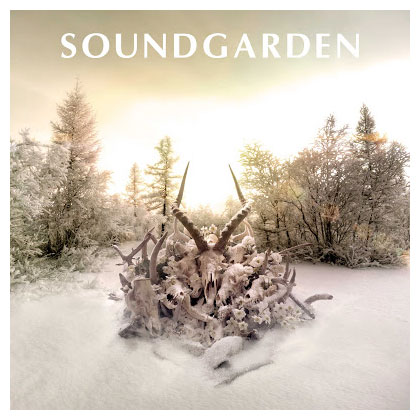
One problem I have writing a review of King Animal is that I am tempted to turn it into something far more: a rambling, semi-coherent tribute to one of my favorite bands ever, late discovered (c. 2005) but perpetually played since; a sprawling rant about the word “grunge” and why Nirvana is (ahem) an incredibly overrated band and Pearl Jam leaves me completely cold (although I acknowledge that group’s abilities); a circling soliloquy about how Soundgarden—despite not being “prog”—has managed to do something that great prog bands do: create music that is soundgarden_kinganimalrestless, impossible to pin down either musically or lyrically, and incorporate a bazillion different influences and styles while producing a sound that is so distinctive that any rock fan worth their salt will shout, “Soundgarden!” after hearing just a handful of notes of any given song.

I’ve now listened to King Animal over three dozen times, and here, in short, is my take: it is not a perfect album, but it is a great album (a 9 out of 10, if I used such a system). And when you consider the thirteen-year long break (sixteen years between new albums), the fact that most reuniting bands play it safe and easy, and that the band members have always had quite different musical perspectives and approaches, it is a really great album. And, in fact, it has received solid to glowing reviews, as it should. I won’t bother pointing to this or that review, although there have been some good ones. However, if you want a great track-by-track description, here the place to start. And if you want to listen to the album online, here you go. Or, if you just have time for a single, defining moment from the album, be sure to here the song, “Bones of Birds”, which is perhaps the most stunning track among several stunning tracks.

Chris Cornell, the legendary voice and primary lyricist for the band, said recently, “The album is a story. It has a lot of twists and turns.” That jumped off the page (well, screen) at me because as I’ve listened to the album and reflected a bit on the lyrics, I keep coming back to (ready for it, Brad?) my favorite T. S. Eliot poem, “Ash Wednesday”. That poem is about spiritual struggle and ascent, the tension between the past and all of its failures and demons, and the future, which is filled with hope (ultimately eternal and God given) as well as fraught with peril. It refers to twists and turns, to the mystical ladder of ascent:

 At the first turning of the second stair
I turned and saw below
The same shape twisted on the banister
Under the vapour in the fetid air
Struggling with the devil of the stairs who wears
The deceitful face of hope and of despair.

At the second turning of the second stair
I left them twisting, turning below;
There were no more faces and the stair was dark,
Damp, jagged, like an old man’s mouth drivelling, beyond repair,
Or the toothed gullet of an aged shark.

One of the reasons Soundgarden has fascinated me over the past few years is because so many of their songs explore and reflect the spiritual struggle and existential crisis so evident in the modern/post-modern world. And rather than being trite, didactic, preachy, posturing, or narcissistic, those songs have tended to be both very honest and very fragmentary, as if Cornell (primarily) is looking into a shattered glass and trying to put it back together, like a mosaic both broken and coveted. Think, for example, of their huge (and unexpected) hit, “Black Hole Sun”, from the masterwork, Superunknown (1994):

In my eyes,/Indisposed,
In disguise/As no one knows.
Hides the face,/Lies the snake,
And the sun  …
In my shoes,/A walking sleep,
And my youth/I pray to keep.
Heaven send Hell away,/No one
Sings like you anymore.

Like who, exactly? The brilliance of such lyrics is, again, the shard-like ambiguity and artful lack of full resolution. But there is no denying the longing, and how that longing is rooted in a quite Catholic perspective, even if it resists any and all systematic explication. Cornell was raised in a Catholic home, and while he had, by all accounts, a fairly miserable childhood (alcoholic father, etc.), he has repeatedly used Catholic motifs and more generally theistic language in his songs. Some of more overt references can be found on the first Audioslave album, as in the song, “Show Me How To Live”: Continue reading “A sprawling, highly subjective review of Soundgarden’s “King Animal””

Yes, A Floydian Rush to Jazz!

I’ve been buried with real work and real reality, but I do have grand designs for review posts of the new Soundgarden CD, “King Animal”, which released today, and Stephen Lambe’s book, Citizens of Hope and Glory: The Story of Progressive Rock, which I’ve almost completed reading (very short review: 4.5 stars out of 5, recommended). In the meantime, in my unrelenting quest to show the many wonderful connections between prog and jazz, here are three covers of prog classics, performed by the trio, Bad Plus (band site).

For those who aren’t familiar with Bad Plus, the trio—Reid Anderson, Ethan Iverson and David King—has made its name by being, in two word, distinctive and controversial. Part of their distinct (and controversial, to some) approach has been to cover tunes that aren’t a part of the usual jazz canon. For example, have you heard many true jazz covers of ABBA’s “Knowing Me, Knowing You”, Heart’s “Barracuda” (with singer, Wendy Lewis), or Black Sabbath’s “Iron Man”? No, I didn’t think so. And those covers, in my opinion, are excellent; they not only get your attention but they reveal aspects and possibilities in the original songs that weren’t obvious before. And it is done with a winning mixture of intensity, fabulous interplay, respect for the material, sly humor, and some “out there” moments. The Guardian puts it well when it describes the trio in this way: “If the Coen Brothers put together a jazz trio, perhaps it would be like this, the comic and the dramatic rolled together.”

And how about the fact the trio titled its 2007 album, “Prog”? Fabulous! Here, then, are Bad Plus covers of Rush’s “Tom Sawyer”, Pink Floyd’s “Comfortably Numb”, and Yes’s “Long Distance Runaround”:

Who said it? “I was a nerdy shut-in who listened to prog-rock…”

Surprise, surprise, the lead of singer of Soundgarden (and Audioslave), in this April 2012 interview in Details magazine:

DETAILS: What were you like growing up?
Chris Cornell: Wild. And reclusive. Sometime between 12 and 14 I smoked PCP and had a real bad reaction. By the time I was high-school age, I didn’t want to do drugs anymore, so I went a couple years without having any friends. I got in touch with the creative process between the age of 14 and 16, mainly because I was alone so much.

DETAILS: And yet you became a frontman. Did playing music change you?
Chris Cornell: I was a nerdy shut-in who listened to prog-rock—and then I got on stage. Most frontmen are not born hams like David Lee Roth. We’re more like Joey Ramone: awkward geeks who somehow find our place in the world on the stage. Nobody ever said a positive thing to me, ever, in my life, until they heard me play music.

DETAILS: I bet it helped you meet girls, too.
Chris Cornell: Oh yeah. Initially I was a drummer, and I remember standing somewhere in public with a pair of drumsticks, and these cute girls came up and started talking to me. We hadn’t even played yet! It was actually uncomfortable. I thought, “Is that all I have to do? Just hold drumsticks?” It immediately made me not like the girls.

Ha! Gotta love the sense of slightly twisted humor. Cornell also has this to say about the state of rock music:
DETAILS: There’s been a lot of talk recently, most of it negative, about the current state of rock music. What’s your take? Is rock dead?
Chris Cornell: It’s definitely lost its place at the center of the musical universe. Rock never meant the same thing to everyone, but when I was growing up in the late seventies, everyone could identify the five, ten bands that formed the center. Even if you preferred the fringe—the Clash over, say, Van Halen—you still knew what the center was. Now kids turn on the radio and hear Eminem or Kanye, so that’s what they gravitate toward. They’re making music on iPhones. Everything’s fractured. The reason there’s no modern-day Shakespeare is because he didn’t have anything to do except sit in a room with a candle and think.
So, what Cornell song is most proggy? That’s nearly impossible to say, as the “prog” elements (strange chords, odd time signatures, epic and semi-mythical lyrics) used by Cornell and Co. are seamlessly mixed into a delicious musical stew that also draws on early metal, Krautrock, punk, pop (the Beatles, to be exact), blues, gospel, and even Middle Eastern music. But here is my choice: “Limo Wreck” from Soundgarden; it is one of my 5 favorite Soundgarden songs, but was never a single or a hit:
>