Mark Hollis in Ecstasy, Live in 1986

In the spring of 1987, while browsing the new music at the Hammes Bookstore at the University of Notre Dame, I fortuitously came across an album called “The Colour of Spring” by a group I had previously dismissed as nothing more than a trendy New Wave band with the bizarre name of Talk Talk.

Though I knew next to nothing about Talk Talk or their music, I was quite taken with the cover, a James Marsh painting of a number of butterflies and moths with a variety of surreal designs on them.  Judging the album by its cover, I decided to take a chance and make a spontaneous purchase.

After a listen to “The Colour of Spring” back in my dorm room in Zahm Hall, I was a convinced Talk Talk fan, and I’ve been ever since.  Indeed, I’d never heard anything like the music or the lyrics.

In the opening track, Hollis sings with astounding conviction:

“Try to teach my children/To recognise excuse before it acts/From love & conviction to pray.”

In the concluding song, Hollis again brings in a religious theme–this time of the nature of evil, and the power of good to overcome it:

“As bad as bad becomes/It’s not a part of you/Contempt is ever breeding/Trapped in itself/Time it’s time to live”

With at least fifteen musicians and two choirs performing on the album, including Traffic’s venerable Steve Winwood, “The Colour of Spring” is complex, religious, and dramatic.  It was made by musicians who clearly love what they do and who enter into music as fully as humanly possible.  Even to this day, I feel chills when I hear the album.  It’s not lost any of its quality, even after twenty-two years.

Two years later, in the fall of 1988, when I was working at as a classical host and a rock DJ at WSND-FM, Talk Talk released its fourth album, “The Spirit of Eden.”  Now regarded as the foundation of the post-rock movement, the album might be one of the finest non-classical albums ever made.  Intense, moody, and deeply meaningful, the “Spirit of Eden” captures and propels the imagination for a little over a 40 minutes.  Costing an outrageous sum of money to produce, taking 14 months to make, and employing 16 musicians and a choir, the “Spirit of Eden” simply confused the music industry.

In a radio interview (available on the Talk Talk facebook page), Hollis acknowledged that the lyrics—based on the notion of creation and destruction, on the loss of real and traditional communities in the modern world, and on the disturbing absence of silence—have a profound meaning for him.  In the middle of the opening 18-minute song, Hollis sings:

“Summer bled of Eden/Easter’s heir uncrowns/Another destiny lies leeched upon the ground.”

Another song, “Wealth,” rewrites the famous “Prayer of St. Ignatius of Loyola.”

Talk Talk’s final album, “Laughing Stock,” has a similar feel to “Spirit of Eden,” in terms of music and lyrics.  On the fifth track, “New Grass,” Hollis sings:

“A hunger uncurbed by nature’s calling/Seven sacraments to song/Versed in Christ/Should strength desert me. . . . Lifted up/Reflected in returning love you sing/Heaven waits/Someday Christendom may come/Westward.”

*****

Photo from: http://skyarts.sky.com/talk-talk-live-at-montreux-1986

After twenty-two years, Talk Talk released its first live DVD.  Recorded July 11, 1986, in Montreaux, Switzerland,” the band—Mark Hollis, Lee Harris (drummer), Paul Webb (bassist), two keyboard players, and two percussionists—offers the small Swiss audience every single thing they have to offer over roughly 90 minutes.  The concert, consisting of 15 songs (fourteen listed, but the best song by far, the 1 minute 30-second long “Chameleon Day,” receives no official notice in the packaging) is nothing short of inspiring and heady, and the music—even the earlier poppier stuff such as “My Foolish Friend”—has an organic, impressionistic, jazzish, progressive feel.

Some songs unexpectedly come to life in fascinating ways, such as “Does Caroline Know,” a relatively weak studio cut.  In concert, though, it stuns and comes off as a progressive rock epic.

Every person on the stage seems to be enjoying himself immensely, each a professional and artist fully in sync with every other person.  Harris, especially, plays with such steady ferocity that I feared his drum kit might collapse during the concert.  It didn’t, and Harris played with passionate verve throughout.  He clearly holds the varied instruments and musicians into a centric and cohesive whole.

But, most importantly, Hollis sings as though he is standing before the court of God, afraid to squander any precious talent bestowed upon him.  As strange as this might read, he appears as though he is full ecstasy. I mean ecstasy in its original sense—not as something sexual, but as something divine.

He seems the perfect medieval saint, enraptured by the Divine.  There are moments during the concert when he walks back to a bench/seat in front of the drum kit and simply collapses.  Yet, even in these down moments, he is fully and completely one with the music, if his body movements, swayings, and motions are any indication of the state of his soul.  Indeed, from roughly the third song to the end, he seems to be completely immersed in the art and intensity of the music.

At the end of the concert, when Hollis says:  “Thank you very much.  Good night.  God bless.  Thank you very much,” he seems to mean every word of it.

James Marsh Talk Talks

Over at Album Cover Hall of Fame is an excellent interview with James Marsh, the artist responsible for all of Talk Talk’s album covers. He provides some fascinating background on how each cover was chosen for Spirit of EdenLaughing Stock, and After the Flood.

Here’s a sample:

“When asked to consider producing a cover for SOE, I recall being consciously aware of permeating undertones from the natural world that were somehow imbued on the album, as far as I had heard on the sample tracks, so it seemed quite apt for me to suggest something containing naturalistic imagery. I produced some visuals to discuss at the next meeting, along-side showing Keith a selection of transparencies of my personal, unpublished work, a painting titled “Fruit Tree” being one of them. It was a simple case of him saying “Oh, I like that image, I’d like to show it to the band”, or words to that effect, which he promptly did and shortly afterwards a unanimous decision was taken to use it.”

Storm Corrosion – Review

Review – Storm Corrosion (Roadrunner Records, 2012)

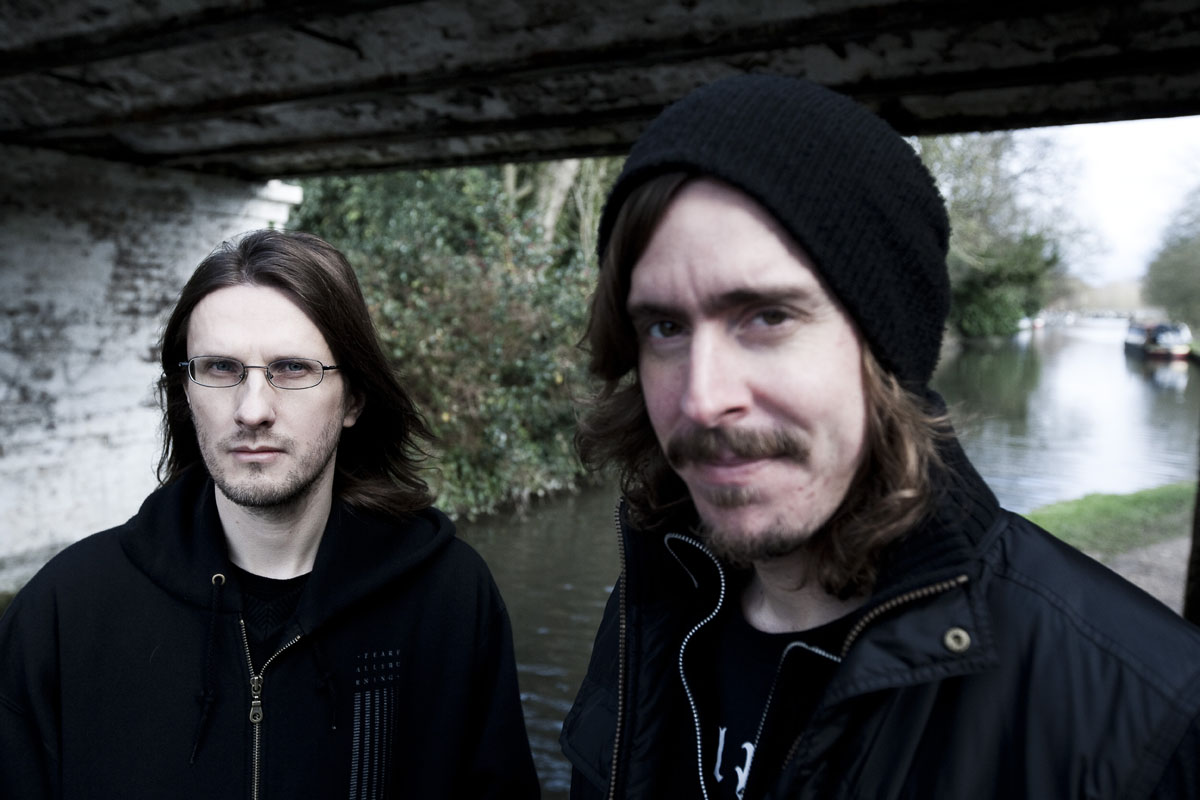
Mikael Akerfeldt is right, with a few qualifications.  On the website for the new Storm Corrosion album, a collaboration between Opeth frontman Akerfeldt and psych/prog stalwart Steven Wilson, Akerfeldt says, “It’s a demanding record. If you’re doing other shit as you listen to it, it’s going to pass by like elevator muzak. You really have to sit down and pay attention! If you allow it to sink in, it could be a life companion.”  Any fan of Opeth or Wilson (No-Man, Porcupine Tree) will be looking for reasons to like this album, but also hoping that it achieves a distinctiveness apart from previous projects.  And this is problematic, because Akerfeldt and Wilson have been collaborating since 2001, when Wilson produced Opeth’s fifth album, the landmark Blackwater Park, a layered, dense, progressive version of death metal (or death metal version of progressive rock).  Take a moment (okay, 9+ minutes — nothing about any of this music is succinct, nor, really, should it be) and check out Bleak from Blackwater Park:

http://www.youtube.com/watch?v=p8atiEPs0bQ

Wilson and Opeth, which around this time Akerfeldt began to make his own (at least from a fan’s perspective), really hit their stride with the dual albums Damnation and Deliverance.  Where Deliverance followed up on the electric, distorted heaviness of Blackwater Park, and utilized to great effect Akerfeldt’s signature take on the growled vocal delivery common in death and black metal, Damnation was the mindblower, indebted I think fairly heavily to the work Wilson was doing with No-Man.  It was a heavy album where the acoustic and electric guitars (Akerfeldt and fellow Opeth guitarist Peter Lindgren used Paul Reed Smith electrics, an important aesthetic and tonal detail that set them apart in their genre) are stripped of their distorted treatments, Akerfeldt’s beautiful straight-ahead vocal delivery is featured across the album, and the songs are minor-key, droney, melancholic, but melodic and dynamically arranged.  It’s heaviness comes from its complete approach, rather than its sonics alone, and for this it’s an incredible achievement.  To get the full effect of this record (and its companion Deliverance), you really need to check out the marvelous Lamentations DVD, which captures Opeth at Shepherd’s Bush Empire in 2003 (and, bonus, shows them working in the studio with Wilson). Here’s an amped version of Closure, originally on the Damnation album, from Lamentations:

http://www.youtube.com/watch?v=hodPV0XglVg

It is Damnation, and perhaps No-Man’s Returning Jesus (with its Talk Talk influences, something Storm Corrosion’s creators have also explicitly mentioned), that Storm Corrosion most closely resembles in character, it’s low-key, meditational approach standing outside the typical Opeth or Porcupine Tree record, but demonstrating the restlessness that underlies both Akerfeldt’s and Wilson’s work.  The record begins with “Drag Ropes,” which sets the tone:  fingerpicked guitars, minor-key arpeggios, strings and woodwinds, and cinematic snippets of lyric in service to the tune.

(The video for “Drag Ropes” is a darkly gothic theme — not unexpected, given the death metal connections I suppose — leavened and made creepier by animator Jess Cope, whose take on the song’s stripped-down lyrics is a story in itself, and is nothing like what my mind conjures as I hear the song.  See her take on it here: http://jesscopeanimation.tumblr.com/dragropes.  I like this because these songs are of a type best finished by the listener.)

I am reminded of Deep Purple’s lofty Concerto for Group and Orchestra, which I always rather liked (and I think Akerfeldt must have too, as the cover art of that record was duped for Opeth’s In Live Concert at the Royal Albert Hall).  The orchestra/group approach has come full flower here, but with far greater and personal effect, and the album’s title track is also redolent of that particular period of British rock’s embrace of the orchestra, this time a fair and beautiful reminder of Ray Thomas’s flute work for prime era Moody Blues.  The flute is replaced in the second half of the song by a vocal line that speaks to the vox-ness of this record.  Both Wilson and Akerfeldt are capable of affecting, fragile vocalizations, sometimes bordering on too delicate, an irony given Akerfeldt’s former Opethian growlings.  “Hag,” the third track, demonstrates the necessity of the softer vocal timbres in this record, while also reminding me most of Damnation, with its dramatic drum breaks and dynamic shifts.  These drums gave me a breathless pause.  They are low-fi, almost seemingly intentionally so.  Nothing these cats do is low-fi, and I searched my brain for a WHY until it lit upon a purchase:  it transported me to the drumming on Popol Vuh’s Letzte Tage Letzte Nachte.  Mikael Akerfeldt has claimed Popol Vuh as a major influence before, and explicitly in an interview regarding Storm Corrosion.  Not to stretch the point, but a good bit of this record has a Popol Vuh/krautrock thing happening, particularly the closing song, “Ljudet Innan,” a grand, drifting piece that opens with a jazz-ish vocal from Akerfeldt before some major drift that would be right at home on PV’s Affenstunde or Aguirre.  Getting there, we’re also treated to an instrumental piece, “Lock Howl,” that energizes us before the finale and reminds me why pacing is so important to an album, an LP relic often forgotten in the MP3 era.

I like this record and wish more like it were made today.  If Wilson and Akerfeldt were jazz musicians (which, from a musicianly point-of-view, they are), they would have just made this record 15 years ago, no big thing, then guested as leaders on each of their respective groups’ albums and collaborated every other year until they were 80.  That they’re associated with rock means they have to carry the weight of “supergroup” to any sort of collaboration like Storm Corrosion, which is something of a pity.  I don’t feel like this record is loaded with trying to live up to expectations, or an ego trip or anything else associated with supergroupness.  Beyond the whys and influences and connections this album has, if it were released anonymously, and I had no context to hang my thoughts on, I think I’d have the same reaction to it.  Yes, there is aural history here, a moogish mellotronish flutes’n’strings thing, but these are not derivative of 70s prog: they are necessary to the songs.  Storm Corrosion is a worthy achievement from two artists who have a significant history creating groundbreaking music, together and apart.  While the record has many touchstones, it is not the sum or product of a record collection, but an original and expressive statement of two consummate musician-composers who are rewarded by their ongoing collaboration.

Craig Breaden, November 2012

Music and Me

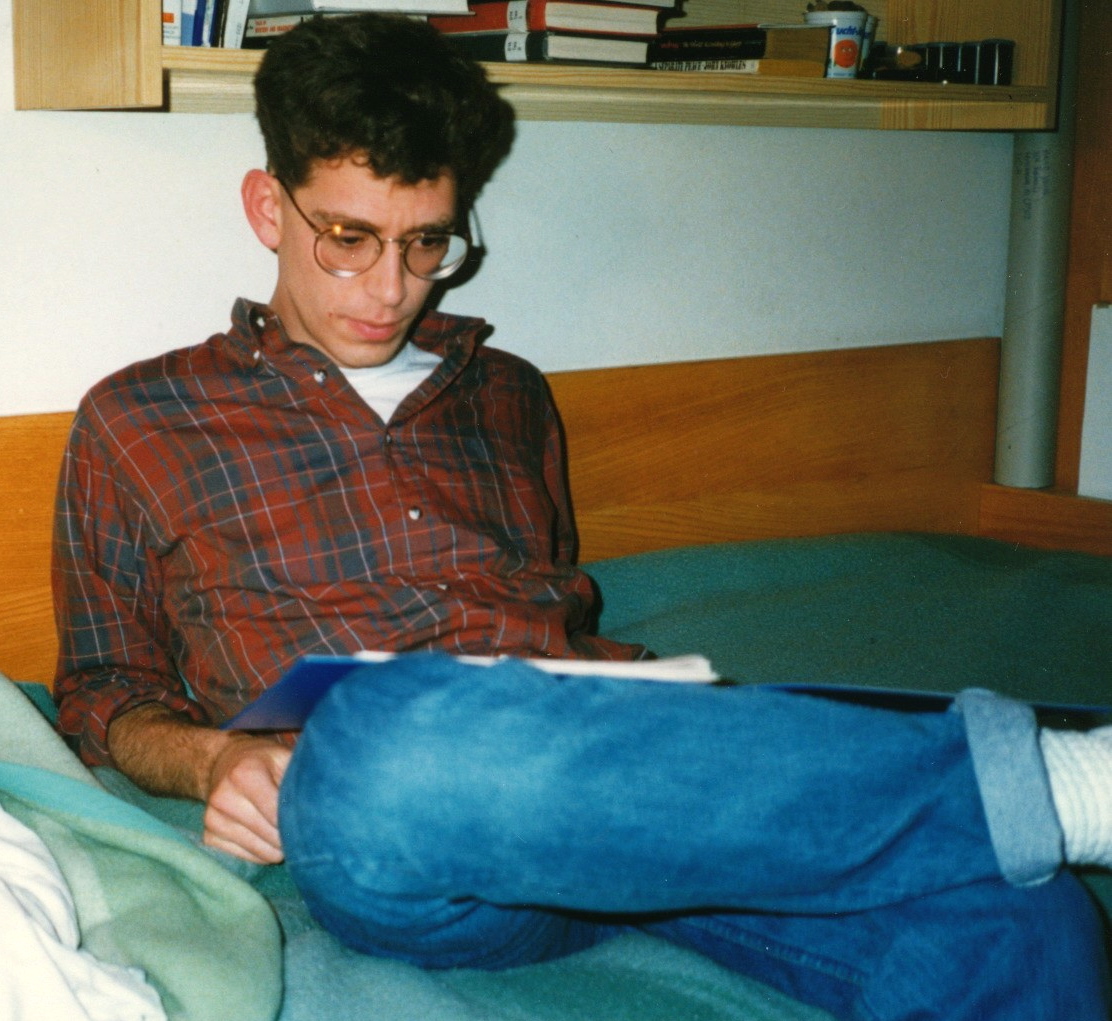
Me, sophomore year of college, fall 1987.

A few days ago, Progarchist and classical philosopher Chris Morrissey asked about our first introductions to music.

The youngest of three boys, born in the summer of love (September 6, 1967—only 3 months and five days after the release of “Sgt. Pepper’s Lonely Hearts Club Band” by the Beatles), and coming of age in the late 1970s and early 1980s, I grew up on progressive rock: Yes, Kansas, Genesis, and the Moody Blues.  We faithfully shunned the 3-minute pop format and we sought mightily the 20- and 30-minute epics of European (usually liturgically derived) symphonic music with rock instrumentation and bizarre time signatures.

I remember hearing lots of longish, prog songs as early as 1971 or 1972.  Though I’ve never played an instrument with any degree of passion, I’m assured by my mom and two older brothers that I was obsessed with music even as a toddler.  Somehow, I figured out how to crawl out of my crib and down the stairs to the family stereo.  Even as a one-year old, I would wake the entire household up, blaring the Banana Splits or Snoopy and the Red Baron at 3 in the morning.

My first great awakening came, though, from seeing the sleeves of YesSongs.  I spent hours trying to figure out how the animals made it from one floating island to the next.  And, I’ll never forget the first time I played side one of YesSongs—I was overwhelmed by the depth and complexity of it.

As is now well recognized, the prog lyrics as well as the cover art tended to be fantastic, pretentious, overblown, and theological.  There have even been some interesting scholarly articles about progressive rock thriving in the western and midwestern states of America, mostly among middle-class, conservative kids.  And, of course, we, with great confidence, derided disco and top-40 music through junior high, high school, and college.  Disco and top-40 music, as we understood it, were decadent and vacuous.  As far as we were concerned, progressive rock artists (and some New Wavers) were the only real musicians outside of the classical and jazz world.

In many ways, progressive rock helped define my own childhood and teenage years.  I will never forget seeing abolitionist John Brown on the cover of a 1974 Kansas album (it sparked all kinds of historical questions re: Kansas, abolitionism, and the American Civil War); hearing Pink Floyd’s “The Wall” at the University of Notre Dame in the fall of 1979; being introduced to Rush’s 1981 “Moving Pictures” in the Liberty Junior High School library in Hutchinson, Kansas; or listening to Yes’s “Fragile” over and over again and trying to figure out the “deep” meaning of the lyrics.  In high school, I worked as on overnight D.J. at a local rock station (KWHK), which doesn’t exist anymore.  And, while in college at Notre Dame, I had a Friday-night progressive rock show (WSND) my junior and senior years, often playing two hour blocks of Rush or other groups.

As powerful as any of the albums just mentioned, though, was my first listen to Talk Talk’s Colour of Spring in the spring of 1987 and, even more so, my first listen to Talk Talk’s Spirit of Eden in September 1988.

My comrade in arms in college was the singer of the most popular band on campus, St. Paul and the Martyrs.  They even opened for Phish when Phish played on campus, spring 1990.  The leader singer, Kevin McCormick, even became my oldest son’s godfather!  Now, he’s a well-known classical guitarist and even a Progarchist.

But, I’ll never forget the two of us listening to Spirit of Eden for the first time.  We were just stunned and in complete silence as we explored every note and every silence of the album.

Having turned 13 in the autumn of 1980, I also, of course, grew up with New Wave: Thomas Dolby, Kate Bush, The Police, The Cure, Oingo Boingo, XTC, Siouxie and the Banshees, and Echo and the Bunnymen.  Over the Wall!

Our local Kansas radio station—KWHK—had briefly been formatted for New Wave, so I was able to get every new album sent by the record labels.  The one that hit me hardest was XTC’s Skylarking.

My college radio show at Notre Dame focused on progressive rock, as mentioned above, but I threw in a lot of New Wave.  New Wave just seemed the more radio-friendly version of progressive rock.  And, by the early 1980s, progressive rock seemed to have run its course.  Could Asia really claim to be the successor of Yes?  Or, could Genesis without Peter Gabriel or Steve Hackett really be Genesis?  We answered with a resounding “no.”  That left us with New Wave.

After all, in 1990, we still had a few years before Dream Theater and Spock’s Beard re-introduced—in the states—a new wave of Progressive Rock.

A quarter of a century later, I realize that music took on religious significance for me and my friends.  Those who embraced disco, pop, or top 40 music were heretics, and we supporters of progressive rock were the orthodox.

***

A year or so ago, some former students asked me to write about my listening tastes in the 1980s.  Here’s what I wrote for them:

High School was a long time ago for me, but I still remember it well.  During the summers, I had one of the best jobs in the world–I was a DJ at our local AM-station, KWHK.  Not only did I DJ, but I also got to write and produce commercials, and I served as a liaison between the sheriff’s department and the National Weather Service.  I grew up in central Kansas, so we had tornados and tornado warnings quite frequently.  Great job.  I’ve also been into collecting music (mostly progressive and alternative rock, some jazz, and a bit of classical) since second grade.  I started young, and, for better or worse, I’ve never stopped.  My kids (13 and under) can name bassists, singers, and drummers of the major progressive bands.  And, yes, I’m proud of them.

Freshman year of high school, 1982-1983.  It was freshman year that I really discovered New Wave.  I had been listening, almost exclusively, to progressive rock and what’s now called classic rock during the 1970s and earliest part of the 1980s.  The father of a friend of mine owned a record store, and we were introduced to all kinds of music through the store in 9th grade.  In particular, I listened to Thomas Dolby’s Golden Age of Wireless (favorite song: One of Our Submarines is Missing).  I had this on one side of a tape and ABC’s The Lexicon of Love (favorite song: 4 Ever 2 Gether).  Also lots of U2’s War (favorite song: Sunday Bloody Sunday).  Progressive Rock was never far from my heart, and I listened to Rush’s Signals (favorite song: Subdivisions) pretty much non-stop, Peter Gabriel’s IV (favorite song: Lay Your Hands on Me), and Roxy Music’s Avalon (favorite song: Take a Chance with Me).

Sophomore year of high school, 1983-1984.  This was a huge year for music.  Genesis released their self-titled album (favorite song: Home by the Sea, Parts I and II); the Police released Synchronicity (favorite song: Synchronicity II); and Yes released 90125 (favorite song: Cinema).

Junior year, 1984-1985.  Rush’s Grace under Pressure (favorite song: Between the Wheels) dominated every other album that year.  Frankly, this was THE album.  If I had to name a favorite album of high school, this would be it.  My sophomore year in college, I wrote a paper using only the lyrics from the album.  I even got an A.  I also listened a lot to The Smiths’ Hatful of Hollow (favorite song: Please, Please, Please), Oingo Boingo’s Dead Man’s Party (favorite song: same as title), and Thomas Dolby’s second album, The Flat Earth (Favorite song: same as title).

Senior year, 1985-1986.  Another great year for music, but mostly for former proggers going pop.  Albums that year included, at the top of the list: Sting, Dream of the Blue Turtles (favorite song: Fortress Around Your Heart), Peter Gabriel, So (favorite song: In Yours Eyes), Tears for Fears, Songs from the Big Chair (favorite song: Broken), and XTC, Skylarking (favorite song: The Man Who Sailed Around His Soul).  The other album I played constantly was the soundtrack to To Live and Die in LA (a pop band, Wang Chung, playing a very proggy style).  Lots of Kate Bush, Hounds of Love, too (favorite song: Hello Earth).

It wasn’t until my freshman year (1986-1987) of college that I really got into Talk Talk, the Cure, and Echo and the Bunnymen.  I also really liked Blancmange (kind of a really smart Talking Heads) and New Model Army and a few others.  That year, U2 released “The Joshua Tree.”  I’ll never forget sitting in the car with a friend, being about 1/2 through the album and just breaking down (not something I did very often) because of the beautiful intensity of the album.  Crazy.  At the time, I was horrified by RATTLE AND HUM.  Now, I think The Joshua Tree as a whole is really good, not brilliant.  Side two, maybe, is brilliant.  Side one has a brilliant moment–bullet the blue sky.  And, RATTLE AND HUM seems better than it did to me then.

In high school, I also remember listening to some A-ha, B-Movie, b-52s, Erasure, Depeche Mode, and Communards.  I don’t think I would’ve chosen to listen to these groups, but they would’ve been pretty hard to escape then.  I would’ve always preferred something prog–unless we were dancing.  Had an all night party at my house once my senior year when my mom was out of town.  Late, late into the evening, a group of us were trying to analyze a 1977 Genesis concert we’d taped off of PBS!  I’ll never forget that night.  Lots of analyzing Pink Floyd, too.

Spirit of Talk Talk: A Well-Deserved and Respectful Tribute

The sound experience which I prefer to all others, is the experience of silence.

John Cage

A shared pleasure among some of the writers of this blog is an appreciation for the 1980’s British group Talk Talk. They began as a slick synthpop band, but quickly outgrew that genre. By the time they released Colour of Spring, their third album, their music had become something unique and very special.

Spirit of Eden came next in 1988, and the music press was utterly befuddled when confronted with a real work of art that had an almost sacred feel to it. In my 1992 edition of Rolling Stone Album Guide, J. D. Considine rated Spirit of Eden one star, saying, “Good bands usually improve over time, while bad bands generally just fall apart. But Talk Talk took a different approach with its musical growth; instead of getting better or worse, this band simply grew more pretentious with each passing year…..by Spirit of Eden, Mark Hollis’ Pete Townshend-on-Dramamine vocals have been pushed aside by the band’s pointless noodling.”

What Considine and other critics didn’t get was Mark Hollis’ and producer Tim Friese-Greene’s desire to pare the music down to its absolute essentials. This included the use of silence as a compositional element. Spirit of Eden works, because everything extraneous is ruthlessly stripped away, and we are left with the beauty of the bare structure of the melodies. Just as the most effective way to get an audience’s attention is to speak softly, Talk Talk used space and “pushed aside” vocals to draw the listener into their music. And a funny thing happened. As the years passed, the reputation of Talk Talk grew in stature, and Spirit of Eden is now seen to be the visionary and influential work of art it was back in 1988. Case in point: it’s hard to imagine Radiohead’s Kid A ever being released without Talk Talk’s groundbreaking work.

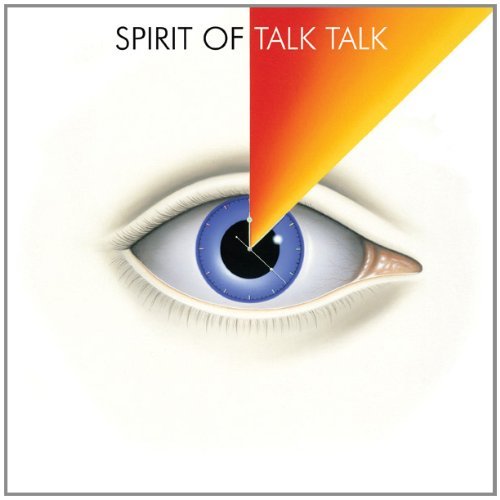
Which brings me to the topic of this post: a Talk Talk tribute album that has recently been released by Fierce Panda Records. Spirit of Talk Talk is a 2-disc collection of Talk Talk songs interpreted by 30 different artists. Alan Wilder, of Depeche Mode and Recoil fame, is the executive music producer and supervisor. James Marsh, the artist whose distinctive visual style was as much a part of the Talk Talk experience as their music, has done the cover art (Marsh loves visual puns: look for the clock in the cover shown above).

Tribute albums can be dicey affairs, often being attempts by deservedly obscure artists to get some attention. Spirit of Talk Talk is an album of respectful and sensitive interpretations of the original songs, while providing new insights into them. Imagine how even the poppiest early songs from The Party’s Over would sound if they were done in the style of Laughing Stock, and you get an idea of what this collection sounds like. The song selection favors tracks from Spirit of Eden and Laughing Stock, with some songs getting two different interpretations.

The first track, “Wealth”, performed by Lone Wolf, sets the tone for the album with a beautiful rendition that is almost liturgical in its plea to

Create upon my flesh
Create approach upon my breath
Bring me salvation if I fear
Take my freedom
A sacred love
Create upon my breath
Create reflection on my flesh
The wealth of love
Bear me a witness to the years
Take my freedom
Let my freedom up
Take my freedom for giving me a sacred love

Other highlights include a smoldering Duncan Sheik/Rachael Yamagata duet on “Life’s What You Make It”, King Creosote’s folk-polka performance of “Give It Up”, an intimate acoustic jazz performance of “April 5th” by the Matthias Vogt Trio, and the final song, “I Believe In You” by Arcade Fire’s Richard Reed Parry, whose hushed, multi-tracked vocals conjure up echoes of Thomas Tallis.

One of the most pleasant surprises for me has been hearing the Laughing Stock songs in a new light. I had not fully appreciated their beautiful melodies and lyrics until these interpretations showed me new facets of them. It’s been like seeing an old friend after several years’ absence, and discovering even more reasons for the friendship.

Even though it has been more than twenty years since Talk Talk has recorded, it is nice to see them finally get the praise and respect they deserve. Since it seems unlikely we’ll ever hear Mark Hollis sing again, we’ll have to make do with Spirit of Talk Talk. Fortunately, Fierce Panda has offered us an excellent and worthy substitute.

Lone Wolf Performing Wealth: