

 I had the fortune last evening, unbelievably as part of my job, to see what is only the third screening of David Gatten’s new digital movie, The Extravagant Shadows. Gatten, who typically works in film, introduced his work and apologized in advance for its length. At three hours, the movie is a departure for the filmmaker, who typically works in short films. But “I play for keeps,” he said, “I put all my marbles in the circle.” I admire that.
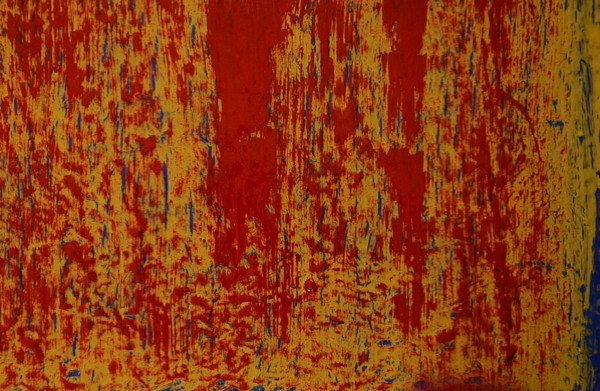
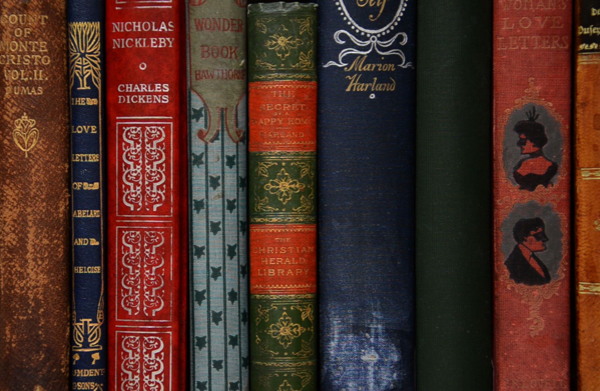
While I am unfamiliar with Gatten’s other films, so can’t bring to it the kind of context I would like, I was struck by its musicality and thought it appropriate I write about it on the pages of Progarchy. It is a layered work, composed but also improvisatory, rhythmic and surprising. And, while it is difficult to describe in terms of story or narrative, its physicality is fairly simple: A song by Merrilee Rush — whose songs play at intervals through the movie, including her 1968 hit “Angel of the Morning” — plays over a blank screen, and as it fades out the frame is filled by a shelf of perhaps 10 or 11 books, their colorful spines revealing early 20th century editions of works by James, Dickens, Dumas, and others. Into this static shot slides a glass panel, and we briefly see Gatten and the DSLR he used to shoot the movie. The artist, and his tools, are present in this film, which subsequently became even more apparent, as a hand and a brush loaded with paint enters the frame, and proceeds to paint the panel. Over the course of 175 minutes this panel is painted and repainted, bright and muted colors blending, contrasting, drying and cracking, revealing layers underneath. Between new coats being applied text appears and disappears on the screen, stories and descriptions emerging, disappearing, running into one another, suggesting to me the magic realism of Borges or Pynchon.
 Progarchy