Prog Magazine 31 (iPad) Now Available

Sadly, for North American prog fans, it’s really, really difficult to get ahold of the excellent British magazine, Prog.  When I do find copies in some of the larger bookstores, the issues are always several months behind.  One good solution for those of us not living in the U.K. or Europe is to get the iPad version.  It comes out when the magazine is released, and the content (everything but the CD) is complete.

The new issue (31) came out yesterday, and it’s excellent.

https://itunes.apple.com/gb/app/id453737964?mt=8&affId=1621074&ign-mpt=uo%3D6

Mini-review: The Cure, “Disintegration”

Two years ago, an issue of WIRED hit me hard.  Page 55 especially intrigued me. “What’s wired this month” featured the following: “The Cure:Disintegration, deluxe addition — everyone has a favorite Cure album, but anyone who says Disintegration isn’t the best should have their black eyeliner confiscated. The 21st anniversary of this goth-pop classic from godfather of gloom Robert Smith is being celebrated in style. The three-disc set includes rare tracks and a live Wembley Arena recording from 1989.”

21 years? Simply astounding to me at the time I read this.  Now, two years later, I’m still astounded.  We’re coming up on the 25th anniversary of the album.

I have owned and listened to Disintegration for roughly half of my life. It came out right before the Berlin Wall fell (no connection, as far as I know; though, the title of the album is telling), the summer between my junior and senior years at Notre Dame. What had come before—Japanese WhispersHead on the Door, etc.—was really good, and I had played each frequently on my turntable. But this 1989 album—Disintegration—ranks up there with Security, Hounds of LoveSpirit of EdenThe Color of SpringThe Flat Earth, Heaven Up Here, and Ocean Rain as one of the best albums of the 1980s. This wasn’t typical rock, “music with an attitude,” but music as art. It still is.

When pushed on this, I have argued Disintegration is one of my top 15 non-classical albums of all time. Though the older I get, the less taken I am with such rankings, even my own.  But Disintegration?   Is there a flaw in the album?  Nearly every note is perfectly placed, and the music holds together beautifully from the opening track, “Plainsong,” to the strange finale, “Untitled.” Lyrical intensity, driving bass, timeless keyboard work, and even some periodic optimism, ala Eliot, fashion, predominates on the album.  The Cure’s great flaw is their attempt (commercially lucrative, to be sure) to write bouncy pop songs.  While songs such as “Friday, I’m in Love,” are fun, they have absolutely no staying power.  If I never hear any of these pop songs again, I will not be sad.

But, “Disintegration” avoids all attempts at commercialism.  It succeeds brilliantly.

There are some truly weird songs on the album, such as “Lullaby.”  Taken in isolation, “Lullaby,” would not be special.  But, in the context of the album, it is stunning.

Many people, especially those older than I am, tend to think of Robert Smith only in terms of nihilism and drugs. These things about Smith are undoubtedly true.

But, frankly, I find much of his work haunting and inspiring. I would much rather spend time listening to Smith’s 1981 Gothic anthem, “Faith,” then any song/hymn I know of by either Dan Shutte or Marty Haugen, modern Catholic drivel. Raised Roman Catholic himself, Smith — no matter how drug-induced his music and lyrics are — possesses a rare sense of the contemplative and even, dare I write it, the liturgical. Thankfully, his music never gets political, but it is always intellectually, spiritually, and emotionally stimulating.

Though the Cure achievesthe creation of some profound moments on their following albums, about 1/2 of Wish (1992), Bloodflowers (2000), and The Cure (2004), Smith and co. never quite reached the level that they established with Disintegration.

1989’s Disintegration serves as the adagio of the Cure trilogy: beginning in 1982 and ending in 2004. To me, the album only has one serious flaw — the few seconds of silence between each song.

Rainbow re-release

Got a really nice email and press release today from James Parrish.  Thanks much, James

*****

LONG AWAITED DELUXE REISSUES OF RAINBOW SET FOR RELEASE THIS NOVEMBER

Rainbow are set to release Deluxe Reissues of On Stage and Long Live Rock N’ Roll this November.

Rainbow, lead by the guitarist, Ritchie Blackmore, became synonymous with some of the most well regarded and popular charting Rock songs of the seventies and eighties. From ‘Stargazer’ and ‘Man On A Silver Mountain’ to ‘All Night Long’, ‘Long Live Rock And Roll’ and ‘Since You Been Gone’, each year in the decade of Rainbow was marked by some of the best songs and performances captured both on record and in concert.

Passing through the band were some of the best the genre had to offer. Vocalists Ronnie James Dio and Graham Bonnet, bass player and producer Roger Glover and drummer Cozy Powell, each brought their individual talent to the table to record some of Rock’s best loved hard rock on those albums and singles.

On Stage is a live album originally released in 1977. The album was recorded live over several German and Japanese dates in late 1976 during the Rising world tour. Producer Martin Birch spliced many of the tracks together from different dates. The recording features the customary introduction to a Rainbow show – the classic quote from The Wizard of Oz,”Toto: I have a feeling we’re not in Kansas anymore. We must be over the rainbow!” with the last word repeated as an echo, then the actual band plays a musical phrase from the song ‘Somewhere over the Rainbow’ before breaking into ‘Kill the King’.

Long Live Rock ‘n’ Roll is the third studio album released in 1978. This was Rainbow’s last album to feature Ronnie James Dio on vocals.


Disc 1

Over The Rainbow

Kill The King

Medley: Man On The Silver Mountain

Blues

Starstruck

Catch The Rainbow

Mistreated

Sixteenth Century Greensleeves

Still I’m Sad


Disc 2 (bonus tracks) – Live Osaka 9/12/1976

Kill The King

Mistreated

Sixteenth Century Greensleeves

Catch The Rainbow

Medley: Man On The Silver Mountain

Stargazer

Still I’m Sad

Do You Close Your Eyes


(Previously unreleased)

Long Live Rock N’ Roll

Disc 1

Long Live Rock ‘n’ Roll

Lady Of The Lake

LA Connection

Gates Of Babylon

Kill The King

The Shed (subtle)

Sensitive To Light

Rainbow Eyes


Disc 2 Rough Mix’s 02/07/1977:

Lady Of The Lake

Sensitive To Light

LA Connection

Kill The King

The Shed (subtle)

Long Live Rock N Roll

Kill The King


Shepperton Studio Rehearsals:

Long Live Rock ‘n’ Roll

Rainbow Eyes Don


Don Kirschner Show with Alt Vocals:

Long Live Rock ‘n’ Roll

Kill The King

Long Live Rock ‘n’ Roll

LA Connection

Gates Of Babylon


For more information please contact James Parrish at Prescription PR at james@prescriptionpr.co.uk

James Marsh Talk Talks

Over at Album Cover Hall of Fame is an excellent interview with James Marsh, the artist responsible for all of Talk Talk’s album covers. He provides some fascinating background on how each cover was chosen for Spirit of EdenLaughing Stock, and After the Flood.

Here’s a sample:

“When asked to consider producing a cover for SOE, I recall being consciously aware of permeating undertones from the natural world that were somehow imbued on the album, as far as I had heard on the sample tracks, so it seemed quite apt for me to suggest something containing naturalistic imagery. I produced some visuals to discuss at the next meeting, along-side showing Keith a selection of transparencies of my personal, unpublished work, a painting titled “Fruit Tree” being one of them. It was a simple case of him saying “Oh, I like that image, I’d like to show it to the band”, or words to that effect, which he promptly did and shortly afterwards a unanimous decision was taken to use it.”

Great Moments in Prog — Part 3


Temple blocks! Cowbells! OK, citizens, let’s go exit stage left (see video below), for “The Trees”… where things really get interesting at 1:46; the tension starts to build at 2:24; and — whoa! — now, here we go at 2:52! Alex’s amazingly effective solo starts at 3:08. And then, one of my favorite “great moments in prog” happens from 3:25 to 3:54.

The rest of the song is appropriate election commentary.

Peart fans: check out the drum part analysis starting on p.43 of Neil Peart: Taking Center Stage – A Lifetime of Live Performance Book. And this book has all the info you need in order to build your own replica of the drum kit used in the song!

Stabbing That Dead Horse a Second Time!

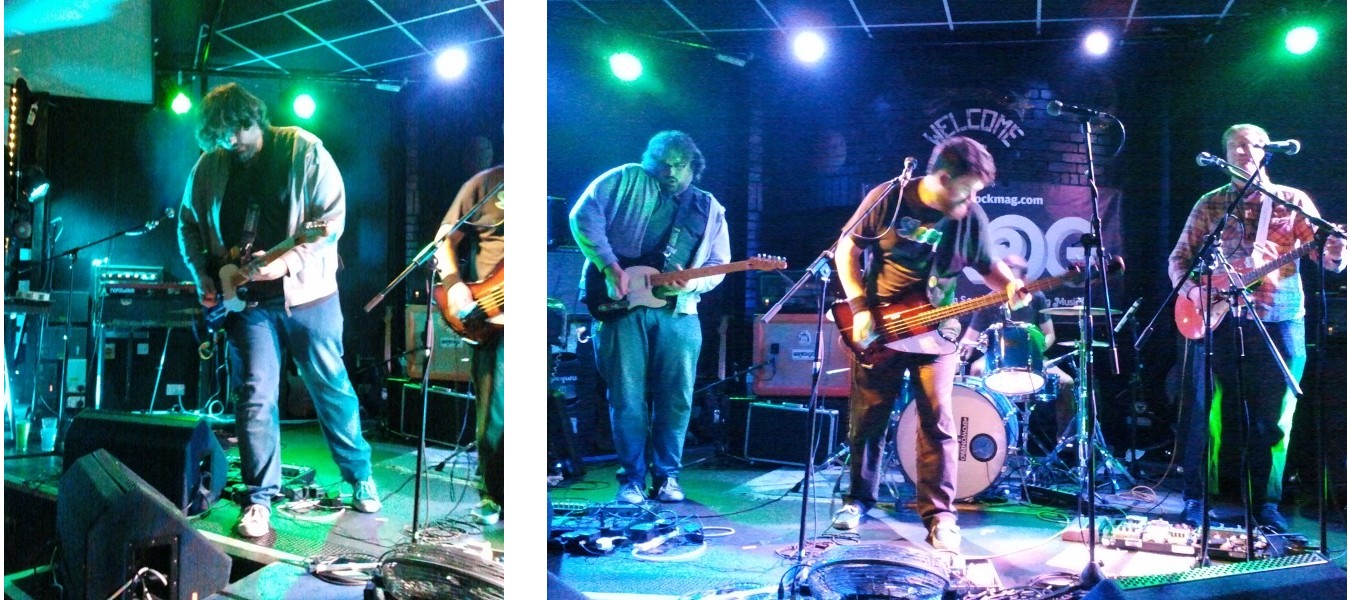
Thanks to The Chaos Engineers (at least we hope they don’t mind that we use this photo)

[N.B.  I asked my friend, Ian, to write this up.  He told me that he wasn’t “really a writer, but that he’d give it a go.”  As you can readily see, Ian is a spirited writer!  And, I’m very proud to have him among this group of insane progarchists.  And, for attentive readers, you know that we’ve posted another review of the tour here.  Thanks to Ian and Nick for such excellent insights.  And, yes, Matt Stevens, we obviously really love you.]


The Lexington, London Friday 2nd November 2012

I had never been to the Lexington before. 5 minutes walk from the centre of Islington, The Lexington is a bustling pub down the Pentonville Road. Downstairs is a pleasingly traditional bar selling an impressive selection of real ales and lagers, including some from the USA (Sierra Nevada Torpedo 7.3%!!!). Upstairs is a large room converted into a small music venue with a raised bar area looking down on a standing area and stage.

This was the last leg of the brief UK Tour featuring Trojan Horse, The Fierce and the Dead and headliners Knifeworld. Sponsored by Prog magazine but effectively funded by the bands themselves, the tour had reached as far north as Glasgow but was finishing in the home town of members of TFATD and Knifeworld.

Pigshackle

To warm proceedings up, local 4 piece band Pigshackle, who have been around for 8-10 years, took to the stage. They treated us to a blend of dissonant, experimental music and, metal (in all its various guises) with an obvious King Crimson influence (which the band themselves quite happily admit).

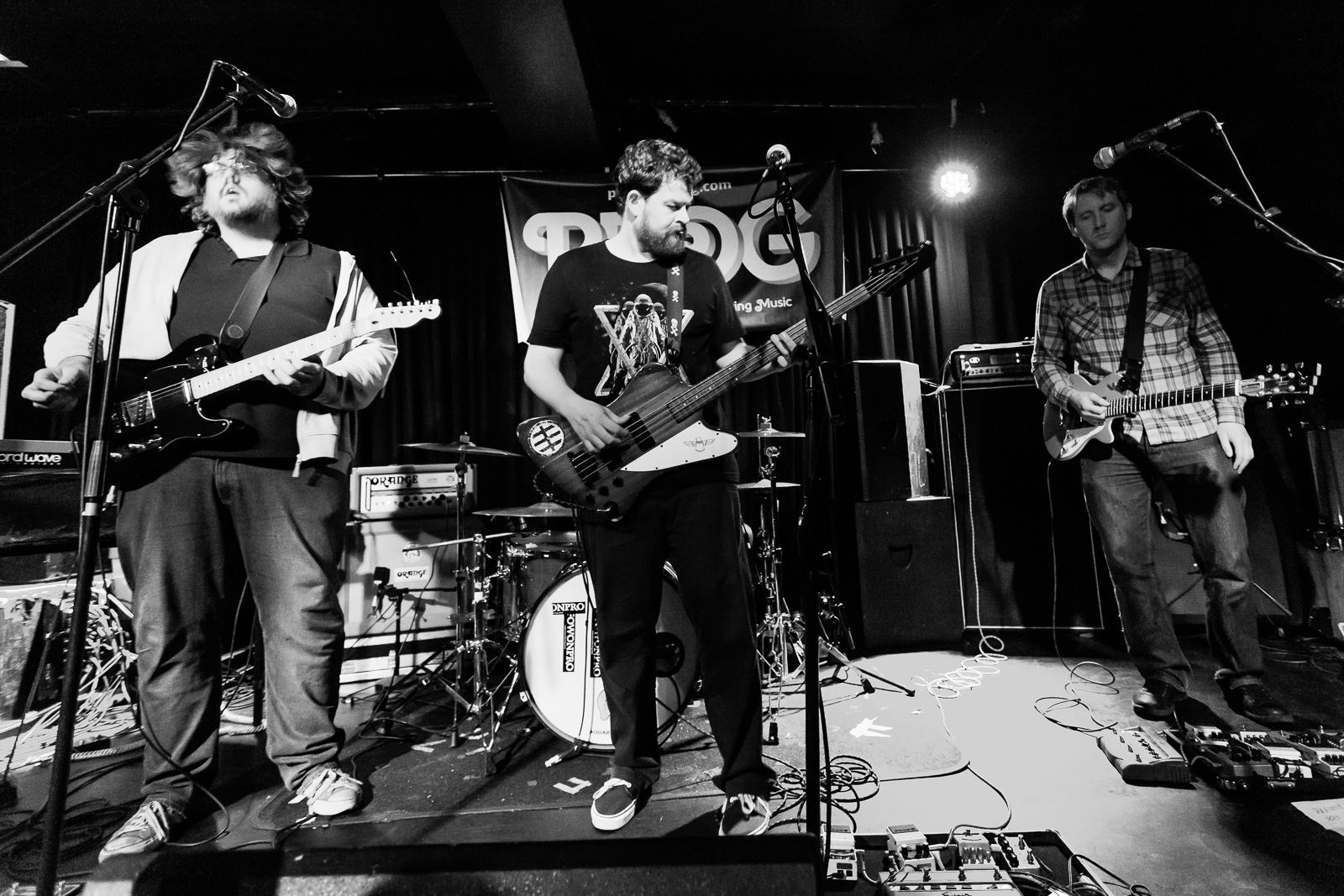
One of my friends said they initially reminded him of free jazz group Last Exit (Bill Laswell, Sonny Sharrock etc) although he later retracted this, pointing out that Last Exit make a free form unstructured ‘noise’ whereas Pigshackle play a tightly disciplined ‘noise’. The set appeared to consist of one long track lasting about 30 minutes although as I discovered afterwards talking to the band, they, in fact, had played 4 tracks. The music was punctuated with occasional growling, shouting and screaming, some in death metal mode; discordant saxophone and frequent key and time signature changes for the lead guitarist, whose array of effects pedals was reminiscent of NASA Mission Control. Obviously skilled musicians, Pigshackle were tight and disciplined. The sound quality excellent with an emphasis on LOUD, so loud at times it was seriously chest-filling. The music pushes the boundaries and is challenging, at times gloomy with very few uplifting melodies but its worth having a listen to. Check out their recent album Unplug the Sun on Bandcamp.

Trojan Horse

Hailing from Salford, this 4 piece band, with their checked shirts and beards and looking like hillbillies from the Appalachians, conjured up music in my mind that would follow a similar path, i.e. with instruments including fiddle, harmonica and Jew’s harp. I was very wrong. Their website claims they have brought Yes, King Crimson and Tull ‘…kicking and screaming through the subsequent decades…’. So I was intrigued… Unfortunately things started badly with an amp being blown causing a hiatus lasting about 10 minutes with the other members of the band ‘filling in’ while the keyboard player franticly tried to get his keyboard working. Amusing banter from the band maintained a good atmosphere while the technical gremlins were sorted out but it obviously affected  their set.

Personally I find it difficult to define their music as Prog, well certainly not in the traditional sense. The opener ‘Fire’ from their recent EP sounded more reminiscent of classic indie-punk and at about 2 minutes long was the right length for this genre (pronk, prunk?). However the rest of the set was energetic and intelligent music, at times heavy, with even a touch of ‘funk’. A special mention for a bravura performance from the bass player (great posturing!). Check them out.

The Fierce and the Dead

Next up was Matt Steven’s (relatively) new vehicle, TFATD, a 4 piece band playing purely instrumental music. Matt is a gifted guitarist, totally in control of his instrument but like all the bands on view during the evening, all the band members were exceptional. TFATD have recently released a new EP ‘On VHS’ following their unusually titled album from 2011 ‘If It Carries On Like This We Are Moving To Morecambe’. Well, if it carries on like this they should achieve the recognition they deserve and be playing bigger venues than Morecambe (for the benefit of non-UK readers, Morecambe is a rather old-fashioned seaside resort in the north of England). The music is held together by strong bass-lines and very energetic drumming and is characterised by simple, ‘catchy’ melodies and riffs. At times Mogwai-esqe without the multi-layered guitars, the music was both heavy and light and I would say they occupy the post-rock side of the ‘Prog spectrum’. Played with plenty of creativity and enthusiasm the set finished far too quickly for my liking. Excellent stuff.

Knifeworld

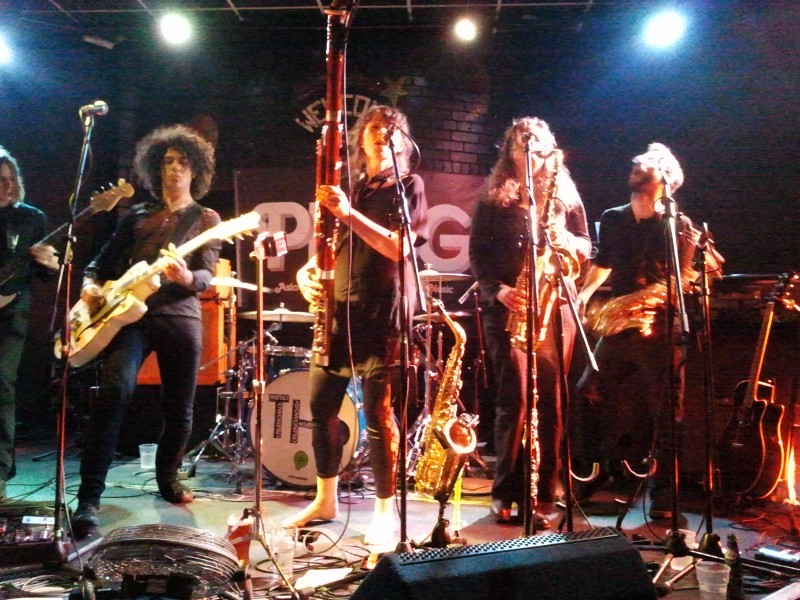
By the time Knifeworld took the stage the venue was almost full and there was an atmosphere of heightened expectancy… could they add the icing to the cake? Led by Kavus Torabi, known for his work with the Cardiacs, I’ve read that this is experimental, psychedelic, art-rock. An 8 piece band including saxophone(s), bassoon(!) and multiple backing singers. Torabi is a natural ‘rock star’, full of charisma, with his witty, intelligent remarks going down well with the crowd.  He is also an exceptionally gifted songwriter and guitarist. My first impression that the music was going to be different was the look in Kavus’s eyes that to me indicated a likeable form of mild insanity. The complexity of the arrangements were superbly handled on a crowded stage with a small PA system. It’s difficult to categorise or describe the music as it’s, in a sense, ‘genre-less’. The music is involving and journey-like, twisting and turning in different directions. The encore, a song from the new EP, ended up with the members of all four bands singing along which was a nice touch, as was Kavus’s dedication to Cardiacs front man Tim Smith. Highly recommended.

This gig attracted some peer group interest as spotted in the crowd were a number of prog ‘celebrities’ – Sel Balamir of Amplifier and John Mitchell of It Bites/Frost/Kino amongst them. Also enjoying the music was Steve Davis, snooker legend, long-time prog-rock fan and now radio presenter.

Overall what impressed me with this gig was not just the superb musicianship, variety, complexity and originality of the music but the real enthusiasm shown by all the bands. It’s great to see bands enjoying themselves, interacting with the audience and helping each other out (fixing technical problems,videoing each other and joining each other on stage). This attitude is infectious and creates a great atmosphere.

With bands like this around the state of modern prog is in good hands.

Ian Greatorex is a 50 yr old accountant with more time on his hands now both his children are (sort of) adults. He has a love for all types of music from classical through jazz to heavy rock and metal. 

These Birds Have Flown

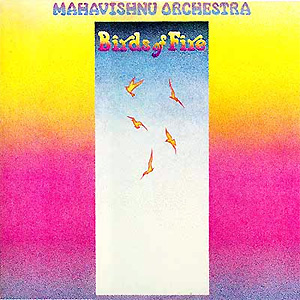
Remembering:  Mahavishnu Orchestra, Birds of Fire (1973)

One of THE touchstones for the merging of jazz and rock sensibilities in the 1970’s.  Birds of Fire arguably brought the jazz impulses of the players closer to the hearts of rock fans than had their prior album (The Inner Mounting Flame), by capitalizing explicitly on a short song format for maximization of intensity and impact.  Yet within that more restrained format, John McLaughlin’s range, in both composition and performance, insistently burns with its trademark spiritual glow.

And “that album cover”!  (See my prior post on this topic.)  The flame is there, and its center burns white-hot, but its presence on that cover has an uncanny subtlety and softness.  It’s a flame to which we are invited; it beckons quietly into the not-so-quiet world of sound within.  I remember the impulse to hug the album to my chest, hoping to fly with those birds, while realizing once I heard the music that in doing so, I would have burned my hands.  When I listen now, I still feel the heat.

But the album also never loses sight of the implied silence that sound transgresses, or of the darkness without which the glow of the fire could not be made manifest.  Sri Chinmoy’s poem seeks to capture the passage:

No more my heart shall sob or grieve.
My days and nights dissolve in God’s own Light.
Above the toil of life my soul
Is a Bird of Fire winging the Infinite.

These birds have flown.  Listen, and they might fly again.  Isn’t it good?

Approaching Olympus: Ave, Aryeon!

What would happen if Led Zeppelin and Queen joined forces to write not just a soundtrack but a full-fledged movie with a story told in the grand tradition of Ray Bradbury’s Farenheit 451, Aldous Huxley’s Brave New World, George Orwell’s 1984, or, the best of all, Walter Miller’s Canticle of Leibowitz?  Maybe Vernor Vinge might contribute as well.  Or, what if all five authors came together to produce one absolutely huge science-fiction story dealing with life, death, amusement, boredom, hypocrisy, statism, ideology, eco-destruction, godlessness, and every other issue that really matters but which we more often than not find convenient to ignore?

And, what might happen if you found Ridley Scott or Chris Nolan or Alex Proyas to direct?

Maybe you could throw some elements of The Island or Dark City or Equilibrium or Brazil into the film?  The serious issues raised by the first, the film noir of the second, the violent intensity of the third, and the dark humor of the fourth.

And, maybe you might be able to get the man who made replicants feel so very, very real to lead this surreal dark descent into an ideological and inhumane dystopia (it’s worth remembering that when Plato used the Greek word, “utopia,” he chose the word because it meant “no where”)?

And, what if instead of Led Zeppelin and Queen you found a man who could not only write compelling space operas but who also had the courage to state some really uncomfortable truths about the post-modern world and where we might, as a species, be headed?  And. . . who could also sing well and seemingly play very well every instrument known to the rock world?

And not just well, but really, really, really well?

If you could bring all of these disparate things together, you might find at the center of this eccentric collection one of the most interesting and original science-fiction story tellers of our day, a perfectionist by the name of Arjen Anthony Lucassen.  Or, as he playfully puts it in the liner notes: “Recorded, produced, mixed and mastered by Arjen ‘I’m not a control freak’ Lucassen at the Electric Castle.”  Oh, I like this man, and I’ve never had the grand privilege of meeting him.

And, you might find that all of his previous work–with the prog operas of Ayreon, the theatric romance of Ambeon, the prog metal of Star One, and the driving Goth prog of Guilt Machine–led to this most recent story, “Lost in the New Real.”

Lucassen has created a prog and science-fiction masterpiece with this brand new release.  Every thing is perfect–the story, the lyrics, the narration (by Rutger Hauer, of Blade Runner fame), and even the CD booklet.  Every thing.  Perfect.

And, what an over-the-top bombast of thought–all connected, all meaningful–a trip through so many emotions and realizations.  A blast, to be sure.

In his video promo for the album, Lucassen states the “Lost in New Real” is a culmination of every thing he’s done before in terms of musical styles: a mixture of psychedelic, of prog, of power pop, and of metal.  But, the story is so compelling and immersive and the types of music so appropriate to each respective part of the story, all feels like one centric whole, no matter the style changes.

With Hauer’s narration and Lucassen’s flawless delivery, I happily journeyed down this rabbit hole.

The story revolves around a Mr. L, revived in the future and guided by an omnipresent “hardheaded shrink” (Rutger Hauer) to help this man of the past adjust to the future.

The future, known as “The New Real,” hasn’t worked out too well.  For one thing, their history is totally off: Ronald Reagan won numerous Oscars; the Rolling Stones never touched drugs; and Madonna was actually a virgin.

At some point in the not so distant past of this future, Yellowstone blew, spewing toxic fumes around the world.  Now all that remains of western North America is, presumably, a plaque to commemorate “Yellowstone Memorial Day,” the day that the human race finally learned that Mother Nature ultimately always trumps technology.

The e-police (a wonderful play on Cheap Trick’s famous song of yesteryear) watch over every thing and privacy is a thing long forgotten.  Humans live to 164 and find life incredibly boring.  Thankfully, though, Dr. Slumber will happily euthanize you into the next world, complete with pretty nurses and bouncy Beatle-like music.

Most interestingly, though, the government has instituted a “Parental Procreation” policy, and parents must submit official forms to the state for approval to bring children into the world.  (I can guarantee the reader that should Mr. Lucassen’s vision ever become reality, your current reviewer and his family would be in serious trouble.)

In the end, Mr. L cannot determine if he’s human anymore or if he has become mechanized beyond recognition.  “I’m alive . . . But in a dream.  Am I only. . .a machine?”  Whatever Mr. L’s fate, the story ends with his despair.  Even the narrator seems to have given up after giving a bit of a tricksterish chuckle.

Ok, so let’s bring in not just Bradbury, Huxley, and Orwell (who appears in the story–he “was hot!”) but also every important critic of modernity, postmodernity, and extreme glorification of technology: from Romano Guardini to Russell Kirk to Marshall McLuhan.  All of this can be found in this magical mystery tour through the whirligig of our post-modern abyss.

But, it’s not over.  Disk Two (yes, Lucassen seems constitutionally incapable of doing any thing only partially) is full of really interesting covers (Pink Floyd (an absolutely stunning metal cover of “Welcome to the Machine”), Led Zeppelin, Alan Parsons, and Frank Zappa) as well as glorious original tunes–vignettes, if you will–of the world of the “New Real.”  After exploring the essential questions of our humanity on Disk One, Lucassen asks the larger existential questions respecting the universe.  The most intriguing question he asks (“Our Imperfect Race” and “So Is There No God?”): would it be better for aliens to exist or not?  Wouldn’t it actually be the more horrible of the two possibilities if all of existence and life and purpose really did rest on us–and us alone–in the entirety of existence, time, and space?

As I stated earlier, this two-disk affair is one seamless, intelligent, and mischievous blast of sound and ideas.  As many times as I’ve listened to it already, I can’t stop smiling.  Every line, every transition just makes me thankful such a thing as this exists.

I’ve enjoyed every thing Lucassen has done over the past fifteen years, though he’s often much heavier in his music than I would have thought I would have liked–I being a Big Big Train, Talk Talk, Genesis, Marillion, Tin Spirits, Gazpacho, Matt Stevens kind of guy.  (Still, I’m a huge Rush, The Reasoning, Riverside, and Oceansize fan–so maybe there’s more heaviness in my tastes than I often think).

But, I like every thing Lucassen has accomplished, and I’m certainly not alone.  There’s a strong following behind Lucassen, and, I assume, it will grow only much wider and much deeper with this latest album.  He is a man willing to take any number of chances, and, thus far, the deities of prog have been faithful to him.

With “Lost in the New Real,” Lucassen approaches as closely to Olympus as the gods will allow.  Ave!


[A slightly different version of this appeared on my personal blog this past summer–ed.]

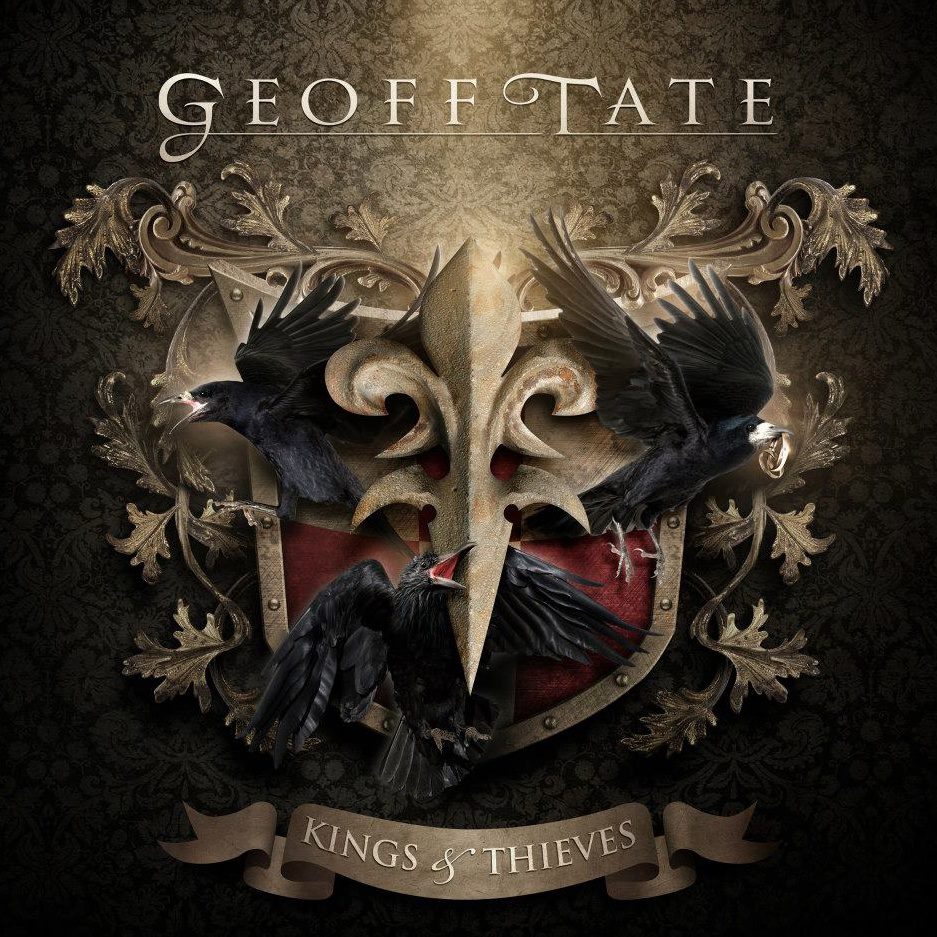
Kings and Thieves / Geoff Tate – Review

Kings and Thieves / Geoff Tate – Review

(Insideout Records, available Tuesday, November 6, 2012)

Received wisdom from the now far-distant era of grunge has things playing out thus: hair metal, riding high through the 80s in various forms, from NWOBHM to G’n’R, was coffin-ed by Nirvana and their Seattle brethren, who brought the music back to rock basics in 1991 with a DIY ethic and no-frills aesthetic.  But like a lot of stories that have been settled on for historical convenience, the Grunge-Killed-the-Metal-Star fable is over-weighted by victim and victor alike.  Hair metal had been killing itself slowly starting about the time of Aerosmith’s remarkable reinvention as an AOR band, blazing a suspect trail based on power balladry that had a lot of us ready to impale ourselves on our air guitars.  Add to this that grunge, if not so-called, had been healthy and growing for years in bands like Husker Du and Pixies.

I think if grunge, as made popular by Nirvana’s pop nugget Nevermind, did anything for metal it was to make it healthier in the long run, and Geoff Tate’s album, which is a solid rock record, is a good case in point.  I’m not going to pretend to know a lot about him, as my familiarity with his band Queensryche pretty much begins and ends with “Silent Lucidity” — one of the aforementioned power ballads that chased me, screaming, to the edges of mainstream metal in the late 80s — but I’m impressed with this record, and have probably missed out on more than I’d like to admit.  Technically gifted vocalists like Tate have a natural advantage in hard rock, where the bar can sometimes be very high (Paul Rodgers, Rob Halford, David Coverdale, Chris Cornell, Ronnie James Dio), and with a good lyric and a good riff can continue to make great records for years.

That’s certainly the case with Kings and Thieves’ opener, “She Slipped Away,” complete with a classic rocking opening progression reminiscent of the Eagles’ “Chug All Night,” an anthemic chorus, really nice guitar soloing, and a well worn, but true, take on relationships and highways.  Here and in other tracks (“In the Dirt,” particularly) I’m also struck by a real Peter Murphy-ish sound, part of which is Tate’s vocal tone, but also in the song structures, which want to tend toward pop even as they’re definitely coming out of metal (in Murphy’s case, goth).  It’s as if there’s a desire for rebirth or newness, and even when this fails, as it does in the playa’ attempt of “The Way I Roll” (the man’s no Eminem or Kid Rock, and he shouldn’t feel he needs to be) I have to admire that he’s going after it.

The low-end grind of “Take a Bullet” and “In the Dirt” makes for awesome, straight-up hard rock perfect for the open highway.  Tate knows how to make his voice match a lyric and a lick, and carries it off even when he’s lyrically pushing things a bit (“She’s got moves like I’ve never seen, rides me hard like an exercise machine” … really? Smell the Glove, anyone?).  This record is like all those hard rock albums that came out on the various Columbia subsidiaries of the 70s — it’s like a Nugent record, where you’d get a handful of duff tracks but the rest rocks out enough to make you want to flash the horns, and between it and the next record you’d get enough great tracks for your one-band mixtape.

For those wanting a return to 80s power glory, look no further than “Tomorrow,” with its Kashmir-ish break and vocal choruses of “Tomorrow starts today…sometimes love is not enough….”  This is a bow to fans from back in the day, but Tate can really pull it off, convincingly and refreshingly.  Kashmir, interestingly, is referenced again in the next song, as “Evil” recycles another part of that indefatigable Zep riff, but it’s hard to care, because Tate really brings it to the mic.  “Dark Money,” with its stab at privilege and eco-political power, is an odd moment, not terribly well-matched by the absolute rock star howl that Tate can whip up (kind of like if Ian Gillan led Deep Purple through a ditty about the gas crisis of the 1970s).  “Glory Days” may suffer from the same problem, but again, is buoyed by Tate’s delivery and a crack band, which is really together throughout the album.  It’s a guitars and drums forward record, live sounding, with a rumbling bass lending metal grind to the tunes.  Pianos and synths illuminate when necessary, and keep me thinking, this is a really tastefully produced rock record that fans of classic Queensryche and hard rock in the new millenium can enjoy.

The last two tracks, “Change” and “Waiting,” make well-chosen closers, bringing it down a bit, showing how Tate and company influenced the metal side of grunge (Pearl Jam or Alice in Chains would be at home here), and making me appreciate how much classic metal and hard rock really benefited from the shifts that happened a generation ago.

Craig Breaden, November 2012

Gig Review: Stabbing a Dead Horse, 30 October 2012

Last Tuesday evening, I took a short walk from my place of work to the Brudenell Social Club in Leeds, that night’s venue for the Stabbing a Dead Horse tour. This unnerving title derives from the names of the tour’s participants: Trojan Horse, The Fierce & The Dead and Knifeworld. All three bands are leading lights of a vibrant ‘modern progressive’ movement here in the UK.

Trojan Horse opened proceedings with a cover of Neil Young’s Ohio before attacking their own material – four songs in total – with gusto. From the short and sweet staccato prog-punk of Fire from their latest EP through to the brooding 8-minute epic Mr Engels Says from their eponymous debut album, this was powerful, uncompromising stuff, played with an infectious manic energy by the Salford-based four-piece. I was particularly taken by the jerking and pirouetting of Lawrence Duke, who wielded his bass guitar as if it were an untamed beast, and by the mad dash of brother Eden through the audience during Mr Engels Says, as he attempted single-handedly to get us all singing the “Yo ho ho and a bottle of rum” lyric.

Then it was time for The Fierce & The Dead, who treated us to a masterclass in instrumental music drawn from their recent EP On VHS and from debut album If It Carries On Like This We Are Moving To Morecambe, with a new piece called Arc (Ark?) as a bonus. There is something very special about the aural landscapes created by this band. On the face of it, their sound is very sparse and modern, and yet somehow the solid groove created by Stu Marshall’s drums and Kev Feazey’s powerful bass combines with the hypnotic interplay of Steve Cleaton’s and Matt Stevens’ guitars to conjure beguilingly rich, intricate and expansive music. There was complete commitment on display here, and real showmanship, too – albeit of a less demonstrative kind than that of Trojan Horse. It was clear from TFATD’s interactions with the audience that they were having a blast, despite the low turn-out.

Headliners Knifeworld, performing as an eight-piece ensemble, brought the evening to a suitably exciting conclusion with a set drawing heavily on the terrific 2009 album Buried Alone: Tales Of Crushing Defeat and recent EP Clairvoyant Fortnight. It also featured an excellent new song, whose name I unfortunately didn’t catch.

Saxophones are relatively commonplace, but I’d hazard a guess that you don’t often see a rock band performing on stage with a bassoon. It’s a powerful symbol of just how unique Knifeworld are in their approach. I find it difficult to articulate just why I find them so interesting, but the fact that they are so gloriously unpredictable must have something to do with it. You never quite know where they are going with a song; heavy riffing can give way to a blast of Mellotron, then delicate vocal harmonies, then glockenspiel and sax, before guitar takes the reins again. A typical piece will feature unusual chord progressions and time signature changes galore. Any band trying to stuff that many ideas into a four- or five-minute tune is treading a fine line, but Knifeworld usually manage to stay the right side of it, leaving you exhilarated rather than exhausted.

The final verdict? A truly excellent night’s entertainment, and outstanding value for money at only £7 for the ticket. The only disappointment was that so few had shown up. I can only hope that the poor attendance doesn’t dissuade any of these bands from coming back to Leeds at some point in the future.