New Aryeon Album for 2013

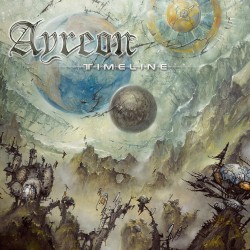
ImageWhile I’m still digesting the entire first part of the Ayreon trilogy (and have been for half of a decade or more), Arjen Lucassen has announced a new Ayreon album for 2013.

To write that I’m thrilled would be an understatement.  Nothing this man does is unimportant, and nothing he accomplishes is not accomplished without perfection.  Prog, of course, is full of hyperperfectionists, but Arjen is one of the most perfectionist of the perfectionists.  And, I write that as supreme praise.

Here’s the rather humorous video announcing the new Aryeon.  http://www.youtube.com/watch?v=D776GI1qYwI

Just FYI, I’ve been trying to piece together the brilliant but outrageously complex story that is Ayreon (even using the timeline provided in Timeline).  I hope to post about it once, twice, or many times relatively soon.

This, That, and Steve Wilson talks jazz (and much more)

First, my thanks to Brad for taking my brain drizzle and turning it into cyber sunshine. Brad’s energy and get-it-done approach is astounding!

I’ve been blogging for almost ten years now, first as editor of Envoy magazine (Catholic apologetics) and, since 2003, as editor of Ignatius Insight (Catholic books, theology, history, etc.) and additionally, since late last year, as editor of Catholic World Report. (I’ve also written two books and am working on three more at the moment.) Over the years I’ve written a number of posts about music, several of them lists of my favorite albums of the year. For example, here is a list of my favorite 68 albums of 2011. But I’ve long mulled over the possibility of a forum in which I could simply throw out my .02 worth about this or that album, artist, or musical whatever without worrying about puzzling readers or perplexing those who pay the bills. In fact, the folks at Ignatius Press have always been incredibly supportive of my excursions into musical commentary, despite the fact I am about as qualified to write about music as Lady GaGa is qualified to write and perform music. But some—well, most—of my opinions and musings about music are far, far better suited for a blog such as Progarchy. Here’s hoping I don’t wear out my welcome too soon!

Anyhow, I plan to write an incredibly self-indulgent, noodling, bombastic, and yet oddly homespun post (think “Queen II” meets “Song for America”) very soon about my musical tastes and such, but for the moment am content to point to a long and most interesting article about Steve Wilson that was recently posted, of all places, on one of the more popular jazz sites, AllAboutJazz.com. My two big musical loves are jazz and prog, (in that order), and so it was gratifying to read an article that considers Wilson’s impressive body of work in the light of jazz. Here is the opening:

There was a time when progressive rock really meant what its name suggested: progressive music, music that pushed the boundaries of what rock music was, often by integrating elements of classical music and jazz into the mix. Milestone groups ranging from better-knowns like Yes, Genesis, King Crimson, Jethro Tull, Gentle Giant and Van der Graaf Generator all provided the opportunity for musicians to apply their diverse musical upbringings to create something that Chuck Berry and Bill Haley couldn’t possibly have envisaged when they first began playing the music that would come to be known as rock ‘n’ roll. Lesser-knowns like Hatfield and the North, Caravan, Soft Machine and Gong further explored the nexus of electrified music with the aesthetic and, in some cases, the language of jazz; even groups like Procol Harum and Fairport Convention were considered to be progressive artists, as they looked to incorporate classical music, in the case of Procol Harum, and traditional British folk music, in the case of Fairport Convention.

Four decades later and, if anything, progressive rock has experienced a revival that may not sell the kinds of records it used to back in its late- 1960s/1970s heyday—before the advent of punk rock turned many of its fans fickle and they deserted it in droves and made it into a niche music- -but it has resulted in an unexpected resurgence of interest, thanks in part to the power of the internet in creating global communities joined together by common interests. This new golden age has seen, alongside a bevy of new acts, the revival of many legacy acts, some still capable of creating new music that stands alongside their 1970s classics, like Van der Graaf Generator, others capitalizing on past glories but ultimately proving to be mere bloated shadows of their former selves, like Yes. Rather than suggesting music that’s progressing, in many ways progressive rock has fossilized into a series of subgenres that, rigidly defined and proprietarily protected by their fans, may be great music but all too often function with both feet firmly planted in the past—rather than having at least one of them stepping forward into the future—forgetting what the music is really supposed to be about.

Steven Wilson, since going solo after 20 years of fronting Porcupine Tree—a group that began as a solo project in the most DIY sense of the word but later became a group when the guitarist/keyboardist/singer/writer needed a band to play his music live— pines for the days when progressive rock music meant more than stylistic pigeonholing. Since his first solo recording under his own name, 2009’s Insurgentes (Kscope), he’s progressed in leaps and bounds. 2011’s Grace for Drowning (Kscope) was a major compositional statement, one which also reflected Wilson’s experiences as the de facto surround-sound remix “go-to guy” for groups like King Crimson, as well as his recent work with Jethro Tull, Caravan and Emerson, and Lake & Palmer.

But Grace for Drowning was more than a leap forward for Wilson as a writer and performer; his subsequent 2011 and 2012 tours in support of his two solo recordings have seen the formation of a band that brings a whole new language, a whole new vibrancy and a whole new degree of unpredictability to his music. It isn’t jazz—it isn’t even, as some fans say, “jazzy”; but with a group whose collective resume includes work with everyone from Soft Machine Legacy to Miles Davis, Wilson has a group whose approach to the music irrefutably speaks with the language of jazz, albeit in a more progressive-rock context. If progressive rock has, for its fans, often been a gateway drug to jazz, then perhaps it’s time to consider the reverse, and let jazz become a gateway drug to progressive music.

And here are two later quotes that jumped out at me:

When people talk to me and they ask me what my influences are, I mention people like Abba and The Carpenters, and the kind of reaction I get sometimes is a chuckle or a sarcastic kind of ‘knowing.’ And I’m not being sarcastic, I’m not trying to be postmodernist, and I’m not trying to be ironic. I think those records are extraordinary. Abba’s Arrival (Polar, 1976) is just as extraordinary as any progressive rock or so-called serious record. And I think that Nick is totally like that, too; he gets just as much buzz from playing with Nik Kershaw as he does with Steve Hackett as he does with John Paul Jones as he does with Kim Wilde as he does with me, and I like that about him—this complete lack of musical snobbery.” …

“I’ve never been particularly interested in pure jazz; I don’t dislike it, it’s just not my thing. But I love jazz hybrids. I love music that has elements of jazz, whether it’s the ECM catalog or progressive rock bands like Magma, Crimson, Tull and some of the Kraut rock bands. But that idea of combining music seems to be less easy to do these days. I think part of the reason—the same problem, probably, that was always there—is how do you sell music that is not generic?”

Read the entire piece at AllAboutJazz.com.

Yeti – Amon Duul II

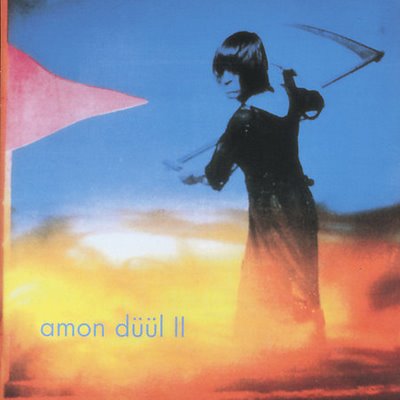
It’s easy to over-think the meaningfulness of German rock (Krautrock) of the late 60s and early 70s, especially since its image has always been somewhat cerebral and cold in itself. Too much from the head, not enough from the crotch, some have complained. Its players meant for it to be “head” music certainly, and all that implies – there was an intention to the music, a commitment to experiment and improvisation sparked by the intellectual and chemical freedoms of the 60s. But at its best Krautrock conjured a mood distinct unto itself, which in its post-WWII teutonic heaviness could be as threatening and scary as any music ever made, and in its experimental innocence also convey a warmth and humor that speaks to the soul. The album Yeti does both these things. Amon Duul II’s second record is a double-album monument of dark European soundscapes that possess a Led Zeppelin heaviness without an over-reliance on the blues or a dependency on rock cliches. The hard riffing has a much more exotic, eastern European or central Asian tone, and the improvisatory tenor, no matter how edited the music might have been in the end, contributes to the feeling that this is NOW music, that this music is happening in the present. Made in 1970, it could be straight out of any time in history. It’s as heavy as Beethoven, as Gothic as, well, the Goths, as free from the restrictions of language as Can, as art-y as Roxy Music, as punk as you think you are, and ROCKS in its way like the most electric god of all time. So yeah, it’s music that’s actually worth thinking about.

I wrote this review of Amon Duul II’s mighty “Yeti” in 1999, three years after purchasing the Japanese import in New York City (at Other Music, then across from Tower Records, a David and Goliath story if ever there was one) for not a crazy amount of money but more filthy luchre than usual for a CD. It ripped my musical head off my shoulders.  I’d been toting around Julian Cope’s classic Krautrocksampler (rarely has so little done so much for so few — we krautrockistas are few and far between) for a few months, and was finally purchasing some of his recommendations, many of which were back in print in small runs precisely because of this book. I’d walk the 80 or so blocks back to my apartment, roll a cig (a habit long abandoned, and not without some regret), and listen.  Then sometimes I’d wander across the Park to the Museum and stack up the visual on top of the aural.  I don’t think I did that with Yeti.  As its title suggests, it is indeed a monster.  You need to be laying down.

German rock became Krautrock kind of after the fact, like lots of things in pop culture —  valued down the line as a historically easy grouping.  Amon Duul II was a motley collection of Munich musical dissidents, the ones who kept playing their instruments after the rest of the commune (Amon Duul) got lost in the trip.  Luckily, the ones who stuck around were all stellar musicians, operating on the fringes of the jazz and classical avant garde — they’d show up again in various groupings of Popol Vuh, Embryo, and other Munich-based bands that pushed the limits and resisted definition.  English musicians would float through — Dave Anderson from Hawkwind stayed for three years — and there IS a Led Zeppelin comparison here: the bigness of the production (for 1970, the drums and bass are nicely separated and very spacious, something maybe only Black Sabbath and Zep were really doing, i.e., bringing heavy production to heavy music), the playing is fluid but not without spontaneity’s imperfections (Jimmy Page’s contribution to rock guitar and what kept Zep fresh can be heard in the guitar/violin interplay here), and the music’s composition balanced with improvisation is its real skin and bones.  Yeti was Amon Duul II’s second album — their first, Phallus Dei, is another story — with various members contributing to the original Amon Duul’s music as well (beware though, the original group’s records are trippy, scattershot, undisciplined affairs with flashes of brilliance but extended periods of over-indulgence).  A double album, it alternates between extended, suite-like proggish pieces (“Soap Shop Rock”), shorter instrumental drones (“Cerberus”) and anti-pop pop constructions (“Archangels Thunderbird”).  The album is capped by the title track, a long jam that manages not to disappear into its own navel gazing — not an easy task.  If the Allman Brothers grew up teutonic, the longer bits of “Fillmore East” would sound something like this.  The vocals on the record are all over the map, used for effect as much as relating narrative.  Renate Knaup’s voice conjures Grace Slick on “Archangels Thunderbird,” while the demented howl of “Eye Shaking King” is truly frightening.  Amon Duul II would go on to make a bunch of records, some pretty good, some overrated.  I think this is their real highpoint, where they built the template they’d continue to follow.  There’s a knife-edge here, a balancing act, that is palpable.

So 13 years after I wrote that review on Amazon you can buy Yeti there as a digital download for 8.99. Awesome.  But if you do I hope you bring to it the one thing so easily missed in downloading music: the element of ritual.  Give it space, give yourself room.  Be prepared.

Here’s the shortest track on the record, “The Return of Ruebezahl.”

http://www.youtube.com/watch?v=Sg67exWYxYw

— Craig Breaden

Astra and Cailyn: Proof of Revival

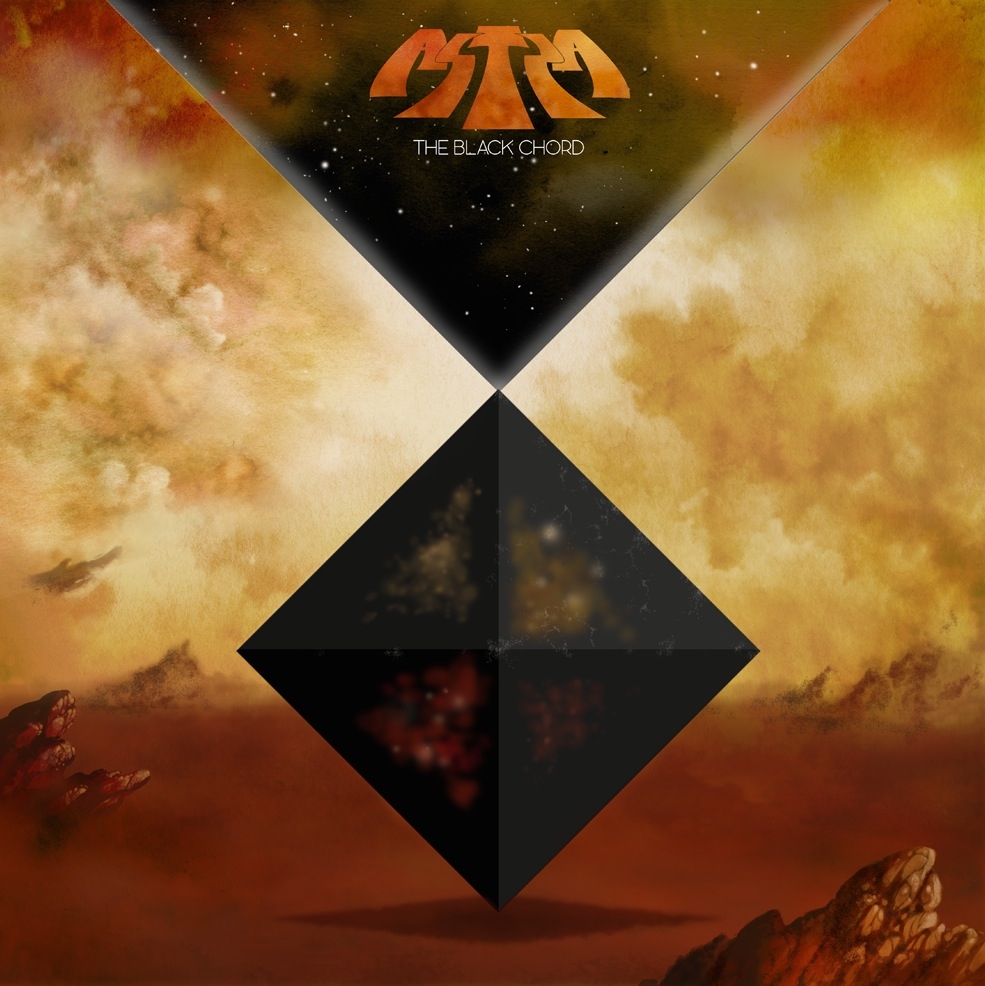
AImagestra, “The Black Chord,” (Metal Blade Records, 2012). As my English friend Richard Thresh has stated (and I’m paraphrasing here), “There are really only two types of folks in the world.  Those who love Astra and those who have yet to hear Astra.”  Richard’s right.  This is stunning stuff, but it’s not for the faint of heart.  Astra rocks more than just about any other band I can think of in the present day.  They never, however, venture into metal.  At least with the guitar.  The dirty organ has a metal feel at times.  Still, it is seriously hard, psychedelic, progressive rock.  In terms of writing and production, this album could’ve have emerged sometime around Iron Butterfly’s (also a San Diego band) 1968 “In-A-Gadda-Da-Vida” or Led Zeppelin’s first album in 1969.  “The Black Chord” is intense from the opening note to the last, and it really never gets old.  It also never stops moving; perpetual motion, it seems, once the Prime Mover kicks it off.  The gritty organ, the dark vocal harmonies, punctuated guitar riffs, roaring bass, and pounding drums make this, frankly, a real treat, and the band is to be congratulated for so brilliantly mixing the present and the past in a way that would be and is entirely acceptable for both.  My guess is that this album will become legend and this band will continue to grow, rather exponentially, in terms of its own abilities and in the audience it deserves.  At the risk of sounding jingoistic (for all that, I’m an Anglophile), I’m also glad to see some domestic prog living up to current British and Scandinavian standards of brilliance and excellence.

ImageCailyn, “Four Pieces,” (Land of Oz Music, 2012). Cailyn is another progressive act from the U.S. who is starting to garner attention, here and aboard, but her music sounds nothing like Astra’s.  These two albums, if nothing else, reveal the immense variety in the current progressive music scene.  Cailyn has taken three relatively well-known classical pieces–by Thomas Tallas, Antonin Dvorak, and Samuel Barber–and given them progressive rock arrangements.  Unlike some bands (such as Yes) that have unsuccessfully attempted to put orchestras behind their music, Cailyn follows much more in the tradition of Emerson, Lake, and Palmer.  Cailyn’s arrangements, though, are far more beautiful and tasteful than ELP’s recording, for examplel, of Pictures at an Exposition.  Much like the Dutch composer and musician, Arjen Anthony Lucassen, Cailyn can seemingly play any instrument, but she also plays everything well, with precision and charm.  Somewhat shockingly, the CD credits list her as guitarist (and it soars and is surprisingly bluesy; hard not to think of Stevie Ray Vaughn, though Cailyn is from Wisconsin, not Texas), bassist, keyboardist, and drummer.  If you’ve been trying to get someone interested in progressive rock, this would be a perfect place to start.  I give this my fullest recommendation for any lover of music.  I’m eager to see what she does next, and I hope she’ll make an appearance (or many) here at Progarchy sooner rather than later.

Fringe Season 4 , “A Short Story About Love”

Unbelievably creepy and effective moment when serial killer is killing to Jon Anderson’s song, “It Might Be Love.”  Dedra and I are slowly catching up to the present.

The Enemy

Anyone else get freaked out when Collins or Gabriel yell “Six six six” during “Supper’s Ready?”

Excellent Rush Sites

ImagePower Windows: http://www.2112.net/powerwindows/main/Home.htm

Rush Vault: http://rushvault.com/

Rush is a Band: http://www.rushisaband.com/

Each is run by a dedicated person, fan, and artist.  Enjoy.


Welcome to the Realm of Progarchy

Welcome.  As I explain on the “Progopolis*Progrepublic*Proghalla” page, four of us (with the help of many, many others) decided to create this blog.  Our model (and its founders and writers are to be admired and mimicked) is the Dutch Progressive Rock Page, which I (Brad) have been following for well over a decade.  Our goal–especially given DRPR’s emphasis on things English and European–is to show that the new world (Latin America, Canada, and the U.S.) is just as interested in all progressive music in rock, jazz, and in new and old forms of classical.  We hope to be geographically neutral, overall, just professing our fondness for whatever so moves us.  So, while we will appreciate, notice, and review everything from Radiant Records (yes, we think the world of you, Chris Thompson!), Neal Morse, Rush, Advent, Heliopolis, Cailyn, and Innerspace, as well as promote American radio icon, Richard Schwartz, we’ll also give all due and just consideration to Big Big Train, The Fierce and the Dead, The Reasoning, Ayreon, Gazpacho, The Flower Kings, David Elliott (that Amazing Wilf), etc.

The four founders of this blog have much in common–we’re all about the same age and we tend to have similar views about creativity and the world.  We are very intense in the things we do, and we rarely enjoy a thing unless it is done with exacting standards.  Most importantly, though, we love music.

I was born in 1967, only days after the release of the Magical Mystery Tour, and while I’ve been in love with music since the beginning (so my sainted mother can verify), I’ve been a Progarchist since about 1971.  I first became fully aware of prog, though, in 1973 with the arrival of YesSongs in my house.  I fell in love with the art first and the music second.  After a short while, though, I saw no real separation of the two.  But, it wasn’t just prog rock–I grew up in a house full of classical music as well as jazz.  As I see it (and the other three founders would agree), there’s no discontinuity in admiring Palestrina, Wagner, Dave Brubeck, Miles Davis, Neal Peart, Mark Hollis, Henryk Gorecki, Arvo Part, Greg Spawton, Nick D’Virgilio, and Matt Stevens.

So, please become naturalized citizens in our little happy corner of the world, Progarchy.  We will do our best to pursue all that is good, true, and beautiful.

Yours, Brad

***

And, a huge thanks to our many friends around the globe not already mentioned: Richard Thresh, Tobbe Janson, Thaddeus Wert, Robin Armstrong, Alison Henderson, Godfrey York, David Longdon, Captain Redbeard, Frank Urbaniak, Pablo Daniel Bujan Matas, Andy Wilson, Evert Classon, Lisa Mallen, John Deasey, Nick Efford, Craig Farham, Rob Aubrey, Phil Clemsford, Brian Watson, Paul Watson, Rob Benbow, Matt Cohen, Philip Lort, Steve Dunstan, Brian (of @progrocktweets), Julie Robison, Steve Horwitz, Aeon Skoble, Sarah Skwire, Dom D., Pete Blum, Steve Hayward, S.T. Karnick, Dan Bell, Mikael Stridh, Dan Crandall, Chuck Hicks, Brian Sullivan, and others!

A Different Kind of Progressive

A Different Kind of Progressive
Prog rock preserves Western traditions.
By Bradley J. Birzer

http://www.nationalreview.com/articles/299126/different-kind-progressive-bradley-j-birzer