Mike Portnoy’s Top Ten

From MikePortnoy.com:

MP’s Top 10 Albums of 2013
(in no particular order):

1. Steven Wilson – The Raven That Refused To Sing
2. Haken – The Mountain
3. Queens Of The Stone Age – …Like Clockwork
4. Biffy Clyro – Opposites
5. Black Sabbath – 13
6. The Ocean – Pelagial
7. Megadeth – Super Collider
8. Fates Warning – Darkness In A Different Light
9. Spock’s Beard – Brief Nocturnes And Dreamless Sleep
10. Stryper – No More Hell To Pay

Mike is right about the Stryper album being awesome metal!

And, in case you missed it, Stryper also released a nicely done retrospective album of re-recordings in  2013.

The Winery Dogs (Best of 2013 — Part 10)

Coming in the #10 slot (in alphabetical order) on my Best of 2013 list is this supergroup’s eponymous bolt of lightning:

The Winery Dogs

Wow. This album blew me away.

One of my all-time favorite prog drummers, Mike Portnoy, teamed up with Richie Kotzen and Billy Sheehan this year, and they demonstrate to us all the unbeatable power of the power trio when it is done right.

The thrill of listening to these catchy songs, and to the virtuoso musical chops on display in them, evoked a lot of happy musical memories of musical “first encounters” for me.

First, there is the rush of listening to Rush. Like I say, there is nothing quite as exciting as the hard rock power of the power trio when it is done right. The Winery Dogs evoke for me the musical joy I experienced when first listening to Rush in high school. Of course, the greatness of Rush is still there to be savored with every listen. But there is nothing quite like the first ten times that you listen to a truly great album. With this release from The Winery Dogs, we get to experience that kind of magic again, as for the first time.

Second, there is the sonic adrenaline that I love to tap into by listening to Chris Cornell and Audioslave. Therefore I am dedicating my Winery Dogs nomination here for the Best of 2013 to Carl, my fellow Soundgarden aficionado in the republic of Progarchy, in case he has not heard it yet. It’s remarkably satisfying, for those of us who can’t get enough of such upper-echelon vocal stylings, how well Richie Kotzen can recreate the thrill of listening to Chris Cornell.

Third, there is the undefinable excitement that skilled musicianship can bring to enhance and elevate any genre’s tropes. Suddenly, as you round what seems to be a familiar musical corner, you are blindsided and pleasantly surprised by an unexpected display of virtuosity that showers you with musical grace. When Billy Sheehan works his otherworldly magic here on bass guitar, or when Richie Kotzen transports us into ordinarily inaccessible dimensions of guitarcraft, or when Mike Portnoy muscles his way out of the speakers and right into the room next to you, I am reminded of those magical younger days when my friends and I first began listening to all those great, lesser-known albums by “musicians’ musicians.” Those discs opened up musical pathways that most of our schoolmates were missing out on. For some reason, when listening to The Winery Dogs, memories of listening to The Steve Morse Band come to mind for me. But each of you will find that your own personal memories of your first listens to “the greats” will be evoked by this album’s dazzling display of virtuosity.

Best of all, this album is a perfect cure for the dragon sickness of any nascent prog tendency to become a tribal, self-enclosed musical world. It makes the joy of music available to anyone with the ears to listen.

This disc is a perfect illustration of how musical men with prog chops can quite simply put their musical skills in the noble service of simply rocking out. Anyone with a heart can relate to this cause. I invite you to happily endorse it with the simplest of gestures, like a fist pump or an air guitar solo.

Rock on, gentlemen.

The Raven That Refused to Sing and other stories (Best of 2013 — Part 9)

Coming in the #9 slot (in alphabetical order) on my Best of 2013 list is the masterpiece from:

Steven Wilson

Also known as “Mr. Prog” — but that title for Mr. Wilson is currently up for debate here at Progarchy.com.

My two cents: A title like “Mr. Prog” should only be bestowed based on an objective standard of measurement: e.g., the sheer quantity of artistic output in a year; i.e., count up all the releases, the remixes, the live gigs, the collaborations, etc. Then, whoever has the biggest total, is “Mr. Prog” — whether you like his stuff the best or not.

Well, I haven’t done the math, so somebody else can tell me who the winner of the title is. (Maybe we will have to make a shortlist: Steven, Neal, Mike, et al.)

By the way, the winner of the math for each year should be called “Mr. Prog” for that year. So it should be an annual award, and not a one-time decision.

And then, if a long-term pattern does emerge (e.g., we have the same “Mr. Prog” year-after-year), that individual can be designated (after years of distinguished service to prog) as “The Godfather of Prog.”

Now that we have that out of the way, let me talk about “The Raven That Refused to Sing and other stories.

I don’t get it when people talk about this album as “cold,” or whatever. Go put on a sweater!

I don’t know what you’re talking about! Because this is the first album by Steven Wilson that has really elicited a deep emotional response from me.

All his previous work has received intellectual engagement from me, and I have noted and admired it all. But this magnificent Wilson disc is the first one that causes my heart to leap at the musical excitement that it generates.

Right from the beginning, “Luminol” elicits a response of joy. As in: Omigosh! Is that Chris Squire running around my living room playing bass? It sure sounds like it! Woo-hoo. We’re having a prog party! Hey, here he comes again…

And the album does not let up from there. It’s just layer after layer of beauty and complexity. For me, this album stands out from all of Wilson’s other work as going above and beyond, as a truly distinguished musical masterpiece.

After all, it ends with the title track, “The Raven That Refused to Sing,” which is simply the most gorgeous and moving song on the album. It possesses a rare quality of unusual beauty that transcends mere musical virtuosity (which is the usual stock-in-trade of prog), and rightly marks this album with the distinction of being an inspired, otherworldly product. How fitting that this gift of the Muses is memorialized in the album title!

Let me end on a controversial note. Brad has slagged this album as “The Tangent lite,” a remark which I shall myself reinterpret as a compliment: i.e., where The Tangent’s “Le Sacre du Travail” may err with the defect of pretentious satirical excess, Steven Wilson’s “The Raven That Refused to Sing” achieves the right aesthetic balance of the golden mean (a sober restraint that some may mistake for “coldness”).

Perhaps the comparison is also apt in other ways. Wilson’s “sad sack” vocals in the past have prevented me from placing his releases in the annual Top Ten upper echelons. I have a similar obstacle with The Tangent presently; the vocals are too histrionic, à la Roger Waters, for my taste. But now, with “The Raven That Refused to Sing,” I find that Wilson’s vocals have been honed to work to perfection, especially on the haunting final track of this distinguished work.

In conclusion, then, because The Tangent is Big Big Train’s evil twin, I must place The Tangent on my Best of 2013 list… but only in the mirror universe.

In this universe, the award goes to Steven Wilson’s “The Raven That Refused to Sing.”

Postscript:

Hey, I may be wrong about all this. I will have to keep listening to all these fine 2013 albums for years to come! Perhaps minds will change. In any event, the conversation at Progarchy will continue. After all, de gustibus est disputandum:

Perhaps the most persistent error in aesthetics is that contained in the Latin tag that de gustibus non est disputandum— that there is no disputing tastes. On the contrary, tastes are the things that are most vigorously disputed, precisely because this is the one area of human life where dispute is the whole point of it. As Kant argued, in matters of aesthetic judgement we are “suitors for agreement” with our fellows; we are inviting others to endorse our preferences and also exposing those preferences to criticism. And when we debate the point we do not merely rest our judgement in a bare “I like it” or “It looks fine to me”; we search our moral horizons for the considerations that can be brought to judgement’s aid. Just consider the debates over modernism in architecture. When Le Corbusier proposed his solution to the problem of Paris, which was to demolish the city and replace it with a park of scattered glass towers and raised walkways, with the proletariat neatly stacked in their boxes and encouraged to take restorative walks from time to time on the trampled grass below, he was expressing a judgement of taste. But he was not just saying, “I like it that way.” He was telling us that that is how it ought to be: he was conveying a vision of human life and its fulfilment, and proposing the forms that gave the best and most lucid expression to that vision. And it is because the city council of Paris was rightly repelled by that vision, on grounds as much moral and spiritual as purely formal, that Le Corbusier’s aesthetic was rejected and Paris saved.

Likewise, when I dispute with my leftist friends about the Dutch and Danish windmills— windmills whose blank and spectral faces are now beginning to stare across my native English woods and fields—we don’t just exchange likes and dislikes, as though discussing the rival merits of Cuban and Dominican cigars. We discuss the visual transformation of the countryside, the disruption, as I see it, of a long established experience of home, and what this means in the life of the farmer, and the presence, as my leftist friends see it, of the real symbols of modern life, which now stand on the horizon of the farmer’s world, summoning him to the realities which he has avoided for far too long. By disputing tastes in this way we are not just striving for agreement. We are working our way towards a consensual solution to long term problems of settlement: we are discovering the terms on which we might live side by side in a shared environment, and how that environment should look in order that we can put down roots in it. Conceived in this way aesthetic judgement is the primary form of environmental reasoning: it is the way in which human beings incorporate into their present decisions the long-term environmental impact of what they do.


Brief Nocturnes and Dreamless Sleep (Best of 2013 — Part 8)

Coming in the #8 slot (in alphabetical order) on my Best of 2013 list is this year’s perfect slice of prog from:

Spock’s Beard

This one completely caught me by surprise. I was not prepared for how awesome it is!

I was not expecting “Brief Nocturnes and Dreamless Sleep” to be soooooo good. I was not expecting to like it so much!

No Neal? No Nick? Wow, I was not expecting this to be one of the year’s best.

But holy smokes! I feel like this is the Beard’s best album ever!!

(Time will tell if I persist in that judgment. But so far my enthusiasm has not waned!)

I really love this disc a lot. Everything works here! All the tracks are amazing.

(And I have seen this album on a lot of Top Ten lists, so I know I am not alone in the republic of Progarchy with my enjoyment of this fantastic album.)

Congratulations, gentlemen! You have gone above and beyond, showing us all what true excellence in prog is.

The Humility of the Duke

Every once in a while, an album from my past jumps out at me.  How much thought, perspective, and perception went into it, I wonder?  What did these folks think as they were making it?   Did they think of it as a job?  Did they think of some abstraction such as Art, Beauty, Truth, Goodness, hoping against hope for the approval of the gods?  Did they make it to satisfy themselves or their friends or their families or their producers or their record label or their fans or some combination of all of these things?

Did they know it would still be touching the lives of others thirty-four years later?

Thank you so much, Phil, Tony, and Mike.  Whatever your intentions, Duke still speaks to me.  In volumes.  Yours, Brad

It is written in the book.

duke modern

Mr. Prog Meme

A gift from progarchist, Russell Clarke, this morning.

944839_636141709780782_1335142291_n

The piece in question: https://progarchy.com/2013/12/26/steven-wilson-a-minority-report/

David Longdon Reflects

The ever-wonderful David Longdon, lead singer of Big Big Train, looks back at his life, 2013.  A fine reflection.

Here we are at the end of another year and what a fantastic year it has been, not only for Big Big Train but also for Progressive Rock Music in general. There have been some tremendous releases in our genre this year.

This post is intended to be a brief overview of our year, from my ‘behind the mic’ viewpoint.

On the 2nd of January 2 2013, we found ourselves on location at theEastleigh Railway Works in Southampton. As you would expect, it was cold despite the addition of an industrial heater. The works were in use by the railway carriage engineers and we were in awe of the sheer scale of the work that these men carry out, as if it was nothing. It felt most strange performing along to our track in the midst of all this dramatic industrial scenery. Eventually though, after a few runs through, we began to get used to the absurdity of it and we adjusted to the weirdness of it. The video was made to give those who are interested in us, a glimpse of what it might be like, when we perform live. The video was directed by Peter Callow and upon it’s release in September this year, it has helped to opened up new possibilities for us.

To keep reading, go here: http://soundemporium.blogspot.com/?spref=fb

Dimensionaut (Best of 2013 — Part 7)

Coming in the #7 slot (in alphabetical order) on my Best of 2013 list is the incredible debut from:

Sound of Contact

I have written earlier about this amazing release at these links:

The Spiritual Vision of Dimensionaut

Return of the Giant Progweed

The Sound of Sound of Contact

Let’s bring the prog back!

Muse- Pop Prog?

th-5

Muse has been one of my favorite bands for a while now. In fact, they were probably one of my first introductions to the progressive genre, although I didn’t know it at the time. (My first real introduction to prog was through Rush when I was in sixth grade.) Over the years, Muse has been called many different things, including progressive rock, space rock, alternative rock (but what isn’t called that these days? Mumford and Sons is even called alternative rock. Ok.), and symphonic rock. Ok, so that all sounds like it fits nicely into prog. But there is one strange thing about Muse that does not quite add up. They are popular. Very popular, in fact. These days, it seems that if a band is popular across wide audiences and continents, they are making pretty bad music (there are obviously exceptions, and I am probably being too pessimistic), but Muse has been making excellent music for over ten years now.

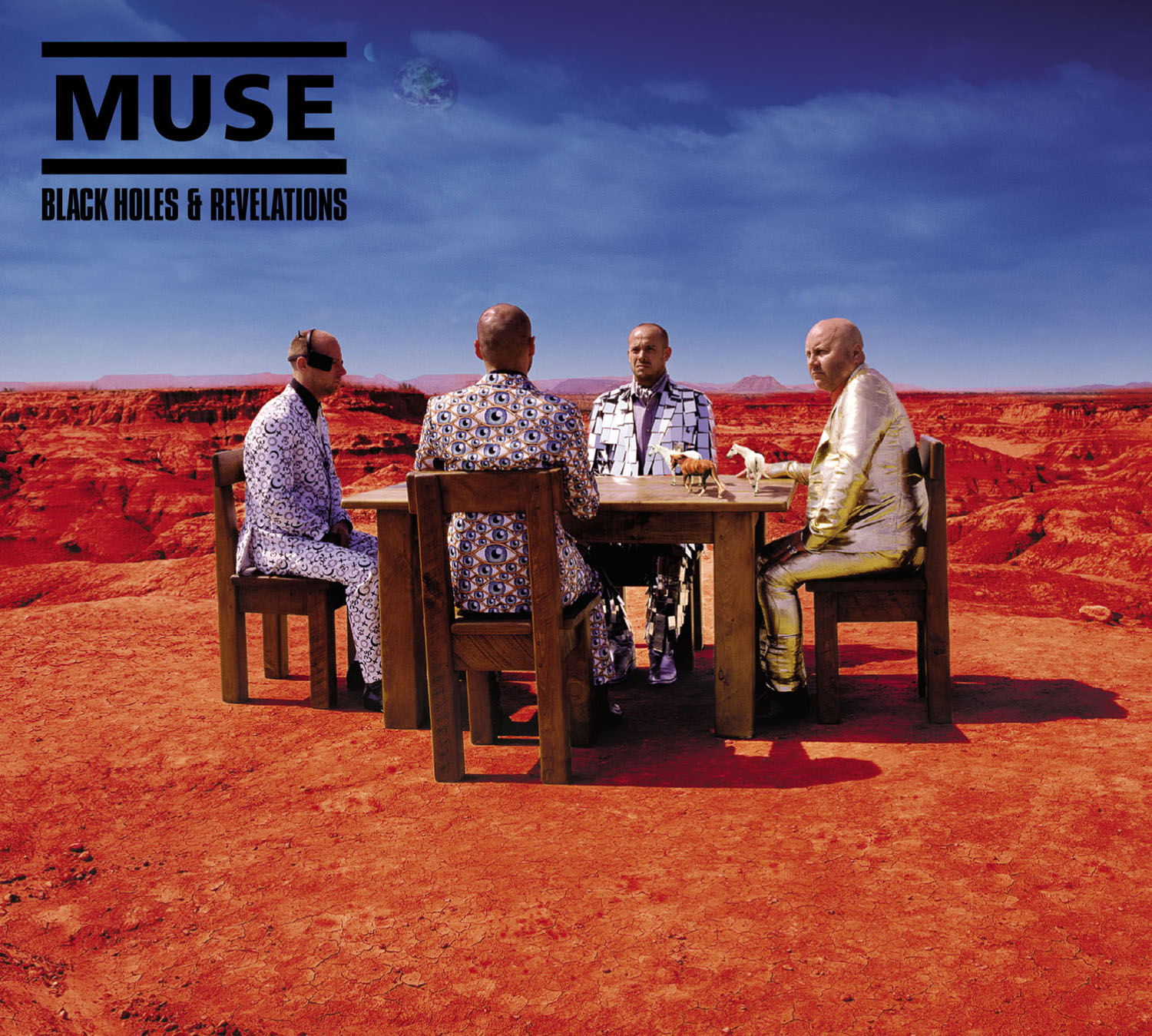
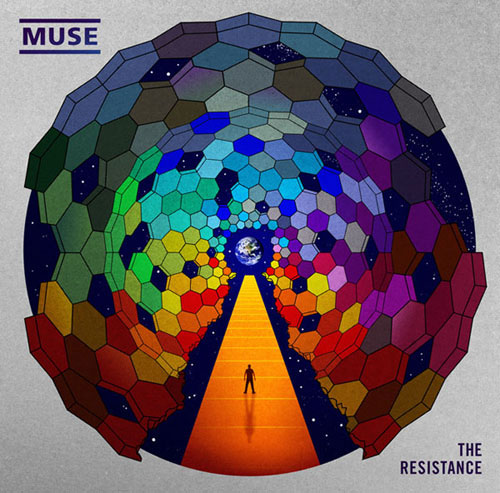
Muse’s best albums are Origin of Symmetry (2001), Absolution (2003, with cover art by the great Storm Thorgerson- Dark Side of the Moon), Black Holes and Revelations (2006), and The Resistance (2009). Their first album, Showbiz (1999), and their most recent album, The 2nd Law (2012), did not thrill me, but maybe I should give them another go around. Their sound is defined by singer/guitarist/studio keyboardist Matthew Bellamy’s magnificent voice. Bellamy is also an artist on the guitar, able to manipulate it to make almost any sound he wants. Often times, what sounds like synthesizer on the album is actually guitar in concert. Christopher Wolstenholme is no slouch on bass either. Many of their songs feature bass as the melody driving the song (ex. Starlight off of Black Holes and Revelations). Dominic Howard on drums is also an excellent percussionist, able to deliver both hard rocking drum riffs along with quieter, more technical drumming. Their use of keyboards and piano, along with a symphony on The Resistance, showcases their ability to explore different areas of the musical realm. They are more than willing to experiment with many different sounds, and more often than not it is breathtaking. Their technical, musical skill is some of the best in the modern, popular rock world.

51u+nJIOD3L._SL500_AA280_51LecLttTdL

Muse’s lyrics tend to deal with vague political ideas. They can be described as libertarian/anarchist, much like Rush. Origin of Symmetry deals with the dangers of new technology and what can happen when it is misused. Absolution is apocalyptic in nature, with songs ranging from the urgency of “Time is Running Out” to the symphonic beauty of “Blackout.” Black Holes and Revelations, probably their most popular album, deals with themes of science fiction and oppressive governments (Ayn Rand?). The Resistance discusses ideas of resisting governmental overreach, along with what the world would be like under a one world government. They end the album with a stunning three part symphonic piece that is very relaxing. All in all, Muse’s lyrics make the listener think, like all good prog should.

untitled

muse-the-resistance

Going back to Muse’s popularity, this is a band that can sell out arenas anywhere. From the 02 in London, to Lollapalooza in Chicago, Muse sells out venues to people who cannot get enough of their music. Is this a sign from God that the people are hungry for prog?! I certainly hope so. Deep down inside, every educated, thinking individual loves prog, and if Muse is a path by which millions of young people can be introduced to this wonderful genre, then more power to them. Here is to hoping that people listen to their Muse and are directed toward the beauty found in the genre of progressive rock.